Category: news

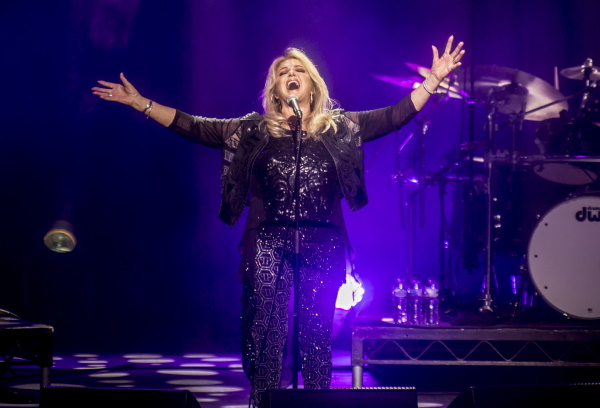
  • “Meat Loaf was really pissed off. He said, That song was meant for me!” How Bonnie Tyler became the ultimate power ballad diva thanks to the world’s favourite ‘vampire love song’, Total Eclipse Of The Heart

    On paper, the partnership looks weird. On one side there’s Bonnie Tyler, a pop and country singer and a coal-miner’s daughter from a Welsh village who’d struck global-chart gold with an MOR-tinged singalong in 1977, It’s A Heartache. On the other is Jim Steinman, a composer and record producer from New York, renowned for bringing Meat Loaf’s bombastic, sweat-soaked rock theatre to the masses with the mega-selling Bat Out Of Hell the same year.

    However, after her fourth studio album Goodbye To The Island in 1981, Tyler was distancing from her manager-songwriter-producers Steve Wolfe and Ronnie Scott (the pop writer, not the jazz club owner), who kept pursuing a soft country rock route.

    Tyler had a naturally bluesy, raspy voice – made even more so by a throat operation to remove nodules – and she wanted a change, to “sing more raunchy songs, songs with a bit of energy”. She was impressed with Bat Out Of Hell and asked her record company, CBS, to contact Jim Steinman, with a view to production and songwriting.

    “They said, ‘He’s never going to do it, Bonnie, it’s a long shot’,” Tyler told BBC Breakfast in 2021. “and I said ‘Please try’.”

    Steinman initially turned the offer down – he’d been knocked back by a fall-out and litigation with Meat Loaf – but after hearing demos from Tyler, said yes. He’d grown up on classical music and opera, and felt Tyler had that in her vocal skillset.

    “I was a little bit surprised they would ask me, but my second thought it was a real challenge because of that,” Steinman told Rolling Stone. “And I thought she [had] one of the most passionate voices I’d heard in rock’n’roll since Janis Joplin.”

    The two met at Steinman’s penthouse pad in Central Park. “[My manager and I] stepped out of the lift and we were met with a trail of M&Ms leading up to his front door… I knew we were in for a surreal experience,” Tyler recalled in 2020.

    Steinman tested Tyler’s music taste by playing her Creedence Clearwater Revival’s Have You Ever Seen The Rain and Ian Hunter’s Going Through The Motions. She loved them both, and the songs ended up on their first album together, 1983’s Faster Than The Speed Of Night.

    Steinman’s background in musical theatre, love of classical music and Phil Spector Wall-Of-Sound-style came through on one track in particular that he’d been refining for a long time, Total Eclipse Of The Heart. Originally a song called Come In The Night, from a high school musical he had written and starred in 1969, The Dream Engine, and he revisited it for a concept based on FW Murnau’s 1922 vampire film Nosferatu.

    Now titled Vampires In Love, and composed during a lunar eclipse by the nocturnally-industrious writer, Steinman needed someone to do it justice. He later stated: “[Bonnie’s] was the perfect voice for what I was trying to get across… her performance was like an exorcism.”

    “Jim never did any demos – I learned all the songs beside him at the piano,” Tyler told Tim’s Twitter Listening Party in 2020. “I’ll never forget the feeling when he played me Total Eclipse for the first time. [Regular collaborator] Rory Dodd sang the vocals. I couldn’t believe he was offering it to me.”

    Like all the songs on the upcoming album, takes were recorded live at The Power Station studio in New York. An all-star line-up surrounded Tyler – The E-Street band’s Roy Bittan and Max Weinberg reprised their roles from Bat Out Of Hell, joined on guitar by Rick Derringer, while Steve Buslowe – who played on Dead Ringer For Love and on Steinman’s own Bad For Good – contributed bass.

    They’d do nine takes of each track, listen to them at home, then come back the next day and discuss it. Total Eclipse… was Take Two of the session, with overdubbing undertaken on a more-is-more 64-track desk. Later, it would be mixed for over 12 hours by engineer Neil Dorfsman, who recalled to the FT that “Jim wanted the biggest drum sound ever recorded” but faders were at capacity and they “ran out of reverb”.

    Everything went into the near-seven-minute album track – Phantom Of The Opera organ, synth cannon sounds, a choir, even sleigh bells. And the legendary supernatural video – shot in Holloway Sanatorium, Surrey, and directed by seasoned pop clip producer Russell Mulcahy, who would go on to Highlander – was even more over-the-top than the track.

    At the end of recording, Steinman told Dorfsman, “This is going to be the biggest song you’ve ever recorded.” He was right; and not just in audio terms. At its peak it sold 60,000 copies a day and shot to Number 1 on both sides of the pond, and many other countries across the world.

    Tyler’s passionate, powerhouse performance was a triumph, and the song became a highlight of her live show. It’s Steinman’s most-streamed composition on Spotify with nearly 508 million plays, trumped only by the video’s 890 million views on YouTube.

    Total Eclipse… made Bonnie Tyler the ultimate power ballad diva, something she couldn’t be prouder of – and in 2021 she invited TikTok users to duet with her on the track.

    “It is an incredible song. I never get tired of singing it,” Tyler told Rock Cellar in 2021. “Every time I sing it is like the first time. I never would’ve dreamed when it was released that it would sell six million copies worldwide.”

    “Of course I met Meat Loaf – and he was really pissed off with Jim giving me that song!” she once told The Telegraph. “He said: ‘That song was meant for me!’ I said, Tough shit, I’ve got it. ”

    Watch Bonnie and Jim in rehearsal, and lip-syncing to Total Eclipse… for TV below.

  • “This band is like no other, what they stand for and what they’ve done”. The story of the Rage Against The Machine anthem that topped the Christmas charts 17 years after it was released

    Few rock songs have enjoyed an afterlife quite like Rage Against The Machine‘s Killing In The Name did. Its adoption by a Facebook campaign in December 2009, intended to put the blocks on X Factor winner Joe McElderry claiming that year’s Christmas No.1 spot, was a phenomenal success. Killing… raced to the top by racking up more than half a million downloads, leaving McElderry behind and becoming the fastest-selling digital single ever.

    The feat was all the more remarkable given that the track was 17 years old and peppered with potty-mouthed expletives – and the fact that Rage Against The Machine, who recorded it, had little to do with this second coming

    “It took us completely by surprise,” admits guitarist Tom Morello. “It was a tremendous David and Goliath story. We only joined the campaign in the final week. It was completely ruled by the fans, and was one of the greatest things in my life.”

    Killing In The Name was riven with meaning, written at a key moment in recent American history. The beating of black motorist Rodney King by four LAPD officers in March 1991, captured on CCTV footage, had enraged the nation after it was serially beamed across every news channel.

    It was an episode that fed directly into the wiring of Rage Against The Machine, a radical bunch of rap metal-heads who railed against all manner of societal and political ills. Formed in Orange County, California that year, they were led by singer Zack de la Rocha, son of a Chicano political artist and grandson of a Mexican revolutionary, and Morello, himself the scion of African insurrectionists.

    The track, Rage Against The Machine’s first single, bit hard on several levels. A righteous slam-bam of punk, hardcore and hip-hop, Killing In The Name was heavy on venomous polemic, burning its gaze into what the band saw as endemic racism in US security agencies. De la Rocha’s repeated mantra ‘Some of those that work forces are the same that burn crosses’ alludes directly to the Ku Klux Klan.

    “I was in LA when the whole Rodney King episode went down,” explains Garth Richardson, producer of the song and 1992’s self-titled parent album. “That was a big thing for the city. Zack and I had a long talk about the power of speech and how whatever he needed to say, he had to say it. Malcolm X was a major influence in Zack’s life, and this was not the time to back down.”

    The track’s slamming guitar motif, which echoed the no-compromise ferocity of its message, was more serendipitous.

    “I was actually in the middle of playing bass in a guitar lesson,” Morello recalls, “and was teaching a student about the drop-D tuning when it came to me. I said to him: ‘Hold on one second’, and scribbled it down. Then we went into rehearsals that night and worked it out. It was part of the second wave of songs we ever wrote.”

    Killing In The Name is particularly notorious for its final verse, in which de la Rocha, having built to something of a belligerent frenzy, hollers: ‘Fuck you! I won’t do what you tell me!’ no less than 16 times, topped off by: ‘Motherfucker! Uggh!’ It’s an extraordinary climax, made all the more primal by Richardson setting up the studio with a concert PA and recording the band as if it were a live show.

    “My jaw hit the floor,” he recalls. “The song was a standout for an anthem and it knocked me off my feet. We all felt this was going to be big. I knew that Tom’s sound was going to change the way guitars were being heard.”

    “Zack and I had a long talk about the power of speech and how whatever he needed to say, he had to say it. Malcolm X was a major influence in Zack’s life, and this was not the time to back down.”

    Garth Richardson, producer

    However, the band did not instantly earmark it as a single.

    “Heavens no!” Morello laughs. “We had a particular guy at the record company, Michael Goldstone, who was very sympathetic to what we were trying to say as a band. He was our ‘fifth Beatle’ for a while and very much high in our counsel. It was his suggestion that we release it as our first single.

    “It didn’t come from the band. So it was a case of, ‘Okay, let’s get this straight: it’s the record company who want our first record to be the one that goes, “Fuck you! I won’t do what you tell me!” 16 times, followed by a “motherfucker”?’ Sold! That wouldn’t have been my choice, but that’s how it worked.”

    Goldstone may have been adamant about its release, but he nevertheless felt the track was too long. He asked Rage to remove two sections, but the band were having none of it.

    “Michael called me, and I was the go-between with the band,” Richardson says. “It went like this. Michael: ‘I want you to cut out those parts’. The band: ‘Tell him to fuck off’. Michael: ‘Tell them to fuck off’. Band: ‘Fuck you’. We all knew this song was a huge hit. It had so much power that the band and I were unwilling to let anybody change it.”

    It drew even more potency by the time it was released on the album, in November 92. Rodney King’s police assailants had somehow been acquitted by a jury in court that April, a barely believable verdict that instantly triggered the LA riots. The whole affair did little to dispel the song’s claims of institutional racism in certain sections of American society.

    Killing In The Name, unsurprisingly enough, was slapped with a radio ban across most US stations. The unedited video version was also censored on MTV.

    It was instead left to Europe to carry the flag, where the song enjoyed substantial airplay (albeit in ‘clean’ form, apart from one priceless moment when Radio 1 jock Bruno Brookes unwittingly played the original version in full on his Top 40 run-down) and made No.2. in the UK in February 93.

    Bullet In The Head and Bulls On Parade were bigger UK hits for Rage in the 90s, but Killing In The Name remains their signifier.

    “Having a UK Christmas number one in 2009, after all that time was a thrill of a lifetime,” says Richardson. “It just shows how much power people have and what they can do when they work as a group.

    “This band is like no other, what they stand for and what they’ve done. I don’t think anyone will be able to copy them. They changed the musical landscape forever.”

  • CITIZEN Share New Single ‘I Can See You From Here’

    Toledo, OH rock powerhouse, Citizen, are gearing up for their highly anticipated new album, Halcyon Blues, and today they’re sharing another
  • Tim Montana – Long Long Year

    “Long Long Year” is the newest single from Tim Montana’s upcoming album Entire State of Tim Montana, arriving July 31. It’s a track loaded with emotional grit, built on Montana’s raw storytelling, soaring hooks, and punchy rock production. Blending Southern‑rock swagger with a modern hard‑rock edge, it offers a powerful glimpse into the album’s larger‑than‑life sound.

    I’m especially into the grunge flavour here; it feels straight out of the 90s in the best possible way. Short, direct, amazingly performed and produced. “Long Long Year” is a quality song from every angle. Hit play on the Spotify widget below and give it a spin. Also, follow Tim Montana on social media if you like what you hear.

    https://instagram.com/timmontana
    https://facebook.com/timmontana

  • Gig review: DEF LEPPARD + EXTREME – BP Pulse Live, Birmingham, 4 July 2026

    dl2BP Pulse Live was already humming with midsummer anticipation long before the first band stepped out. Birmingham crowds know their rock history, and on this night they welcomed two acts who helped shape it — Extreme and Def Leppard — … Continue reading

    The post Gig review: DEF LEPPARD + EXTREME – BP Pulse Live, Birmingham, 4 July 2026 appeared first on Get Ready to ROCK!.

  • Dale Valentine – 2000 Reasons


    Dale Valentine is the Melbourne-based solo project of Italian singer-songwriter Antonio Valentini, formerly the voice and guitarist of the alternative rock band “Kids on Neptune.” In 2017, the band released their album “Homeland,” which was well-received by critics and helped them make their debut in the music scene, performing at various clubs and festivals across Italy. After the band split in 2019, and following a period of reflection, denial, and the challenges of Covid, Antonio Valentini reinvented himself in Melbourne as Dale Valentine, his new artistic persona.

    2000 Reasons is the new single, and it stands as the most high-energy rock song on the EP “The Woods“. I love the catchy chorus, the energy, the no-frills attitude, the sound, and the break at minute 2. Lyrically, it “explores the cauterizing power of beauty hidden in the simplest, most fleeting details of our daily routines. 

    It’s an anthem about finding salvation in micro-moments (“The orange dress of the clouds before the sun leaves the sky… 2000 reasons you’ll find not to give up this life”),” says the artist. It’s a very cool song, straightforward, and it takes no prisoners. Give it a go by clicking on the Spotify player below and follow Dale Valentine if you like what you hear. 

  • Bonnie Tyler, Who Sang ‘Total Eclipse of the Heart,’ Dies at 75

    With a voice both weathered and operatic, she minted 1980s pop anthems like “Total Eclipse” and “Holding Out for a Hero.”
  • ‘Total Eclipse of the Heart’ Singer Bonnie Tyler Dead at 75

    Tyler's long career also included the hits "It's a Heartache" and "Holding Out for a Hero." Continue reading…
  • Bonnie Tyler dead at 75

    Bonnie Tyler has died at the age of 75.

    News of the Welsh singer’s death was announced in a short statement posted on her official website, reading: “Bonnie’s family and team are heartbroken to announce that Bonnie unexpectedly passed away last night in hospital in Portugal as a result of the illness that she was being treated for.

    “We will issue a further statement shortly but for now ask for privacy to deal with this tragedy.”

    In May, Tyler was put in a medically induced coma in a hospital in Faro, Portugal, after undergoing emergency intestinal surgery. At the time, a spokesperson for the singer said, “Bonnie has been put into an induced coma by her doctors to aid her recovery. We know that you all wish her well and ask for privacy at this difficult time, please. We will issue a further statement when we are able to.”

    Tyler had been set to perform at Sunshine Festival in Worcester this summer, and was also scheduled to play a number of European shows.

    Born Gaynor Hopkins on June 8, 1951, in Skewen, Wales, Tyler is best known for her iconic ’80s power ballads Total Eclipse of the Heart, which topped the charts on both sides of the Atlantic and sold more than six million copies worldwide, Holding Out for a Hero and It’s a Heartache.

    Across her career, the singer earned three Grammy nominations and three BRITs nominations (twice for Best British Female Solo Artist). In 2022, she was awarded an MBE for services to music.

    In a statement released at the time, the singer said, “I am truly honoured to be awarded an MBE and especially so in Her Majesty The Queen’s Platinum Jubilee year, which makes this even more special.

    “This honour just goes to show that anyone from any background can become a success, and be recognised by our wonderful country, if they put their minds and efforts into what they do.”

    “My mother always said, ‘Believe in yourself and go for it, because nobody’s going to do it for you’,” the singer said last year in an interview with The Telegraph. “To get to where I am now from where I was as a young teenager in a village in Wales, with nothing really, I never dreamed I would be a recording artist. I had self doubt, which is why I wanted to work with songwriter Jim Steinman because I knew I could do those powerful songs. He was bemused in the beginning but then he said, ‘Wow, I’ve got to meet this girl’.”

    Speaking about Total Eclipse of the Heart in 2021, Tyler told Rock Cellar, “It is an incredible song. I never get tired of singing it. Every time I sing it is like the first time. I never would’ve dreamed when it was released that it would sell six million copies worldwide.”

  • Bonnie Tyler / The Distinctive Voice Behind Total Eclipse Of The Heart Dies Aged 75

    Bonnie Tyler / The Distinctive Voice Behind Total Eclipse Of The Heart Dies Aged 75

    The family of Bonnie Tyler has announced her unexpected passing last night in a hospital in Portugal. The singer had been placed into an induced coma in May after having emergency intestinal surgery in Portugal, though last month her agents said she was out of the coma but remained “very unwell and in intensive care.”

    “Bonnie’s family and team are heartbroken to announce that Bonnie unexpectedly passed away last night in hospital in Portugal as a result of the illness that she was being treated for,” the statement from her family read.

    “We will issue a further statement shortly, but for now, ask for privacy to deal with this tragedy.”

    One of Wales’ most distinctive and enduring musical voices, Tyler rose to international fame with hits including Total Eclipse Of The Heart and Holding Out for A Hero, becoming one of the defining artists of the 1980s.

    MetalTalk covered her 2019 show with the Cats In Space, this was a golden night. Bonnie Tyler had planned to tour this year.

    The post Bonnie Tyler / The Distinctive Voice Behind Total Eclipse Of The Heart Dies Aged 75 first appeared on MetalTalk – Heavy Metal News, Reviews and Interviews.