The Jackson 5 began as a family group from Gary, Indiana, and became one of the most important pop and soul acts of the 20th century. From their Motown breakthrough with “I Want You Back” to their later years as The Jacksons, the group’s story is built around the voices, musicianship, and personalities of the Jackson family members who helped shape one of music’s most famous legacies. The Jackson 5, a musical phenomenon hailing from Gary, Indiana, was formed in 1964 by brothers Jackie, Tito, Jermaine, Marlon, and Michael Jackson. Under the guidance of their father, Joe Jackson, the group
The Rolling Stones have released footage of Mick Jagger and Ronnie Wood performing an impromptu version of Ringing Hollow, one of the highlights of their new Foreign Tongues album, at an intimate listening party in London.
The party was held last night (July 8) at the St Clement Hotel, a luxury establishment in Aldwych that officially opens to the public in September. Jagger and Wood were joined onstage by pianist Matt Clifford, a longtime collaborator of Jagger who also plays keyboards in The Rolling Stones’ touring band.
Last month, Jagger told Mojothat Ringing Hollow was written about the social and political climate in modern-day America.
“It’s about America as an idea,” said Jagger. “The American Dream is intact for some people, and I’m sure we can find some wonderful immigrant stories that happened in the last 12 months, but we read about the decline of the American Empire.
“Is the Iran war America’s Suez moment? Well, it’s not the same at all, but there are a lot of questions about imperial overreach and the lobbying system. The money spent on an election is absurd – it’s not corruption per se but unnecessary. Is it indicative of this administration, or is it something has been happening a long time? In any case, it’s not the same place as it was.”
Earlier this month, Keith Richards – who did not perform at the listening party – was asked by the Sunday Times if Ringing Hollow was specifically aimed at US President Donald Trump, but chose to answer diplomatically, saying the song was about “a nostalgic love affair with America, and [it being] a bit of a disappointment at the moment.”
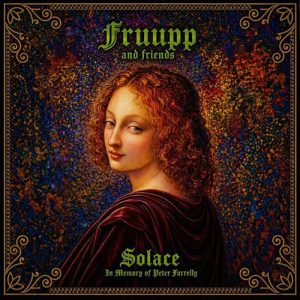
Some Facebook groups are for idle chatter; others work miracles. A group dedicated to FRUUPP, one of the most underrated British prog ensembles from the early ’70s belongs to the latter category – championing the band in ways both possible … Continue reading →
In the late 1960s, Uncle Sam was choking on a suffocating political machine run by men who traded favors in closed rooms while cities burned from civil unrest. The Cold War was raging, the civil rights movement was bleeding out on the pavement, and the US government was a closed loop designed to keep the marginalized permanently locked out of the room. Shirley Chisholm was a Brooklyn educator who looked at that rigged, impenetrable structure and decided to break it apart from the inside.
To understand what she was up against, you have to look at the American political hierarchy. The system is monopolized by two massive factions, the Democrats and Republicans, but it’s also rigidly layered. At the local level, there’s the State Assembly, which handles regional laws and budgets. Above that is the federal government, specifically the House of Representatives, where hundreds of politicians battle over national legislation. Sitting at the absolute top of the food chain is the President. The entire structure was an exclusive club, and candidates were expected to wait their turn and rely on party bosses for permission to climb that ladder.
Chisholm cut her political teeth in Bedford-Stuyvesant, Brooklyn, where she realized the local Democratic clubs were entirely disconnected from the decay of the actual neighborhoods. Bypassing the bosses, she organized directly with women and community groups who were exhausted from being ignored, channeling that stagnant frustration to win a New York State Assembly seat in 1964. By 1968, she aimed higher. Running under the legendary motto “Unbought and Unbossed,” she dismantled the establishment’s chosen candidate to become the first Black woman elected to the national House of Representatives. The Washington machine immediately tried to bury her by assigning her, a representative from a dense urban district, to the agricultural committee. Rather than accepting the insult quietly, she publicly demanded reassignment, forcing the institution to recognize that she would not be shoved into a corner.
The peak of her defiance was the 1972 presidential run, an act of pure, calculated disruption. She knew the presidency was statistically out of reach, but the campaign was a weapon to force the Democratic party to acknowledge the antiwar movement, the working class, and minorities. The establishment fought back hard, blocking her from participating in televised primary debates. Instead of backing down, she dragged the TV networks to federal court, citing the equal time rule, and legally forced them to give her the national airtime she was owed just to state her case.
That run was brutally isolating and physically dangerous. She survived multiple assassination attempts on the campaign trail, ultimately requiring the Secret Service to step in and protect her. Yet, worse than the physical threats was the betrayal from her own supposed allies. Prominent male civil rights leaders dismissed her campaign as a vanity project, and leading white feminist icons abandoned her when it became politically inconvenient, calculating that a white male candidate was a safer bet. She carried the campaign anyway, dragging the neglected reality of the marginalized onto the convention floor through sheer force of will.
The 1972 Democratic National Convention ultimately crowned a white, male establishment candidate, but Chisholm still arrived on the floor in Miami commanding 152 delegate votes. That block of votes was a weapon, giving her the leverage to force the party machinery to negotiate on issues they preferred to ignore. Once the convention ended, she returned to the House of Representatives and spent another decade drafting legislation for childcare, domestic workers, and the minimum wage, executing the unglamorous, brutal work of forcing the system to serve the people it despised.
What I, as a woman, take away from her story isn’t some sanitized, optimistic narrative about breaking glass ceilings or finding your tribe. Chisholm’s reality proves that the system will never willingly hand over the keys, and the people who are supposed to be your allies will often evaporate when things get difficult. Her legacy is about recognizing that standing your ground usually means standing completely alone, and that true power comes from remaining completely unbought and unbossed, refusing to dilute who you are just to make a broken establishment comfortable.
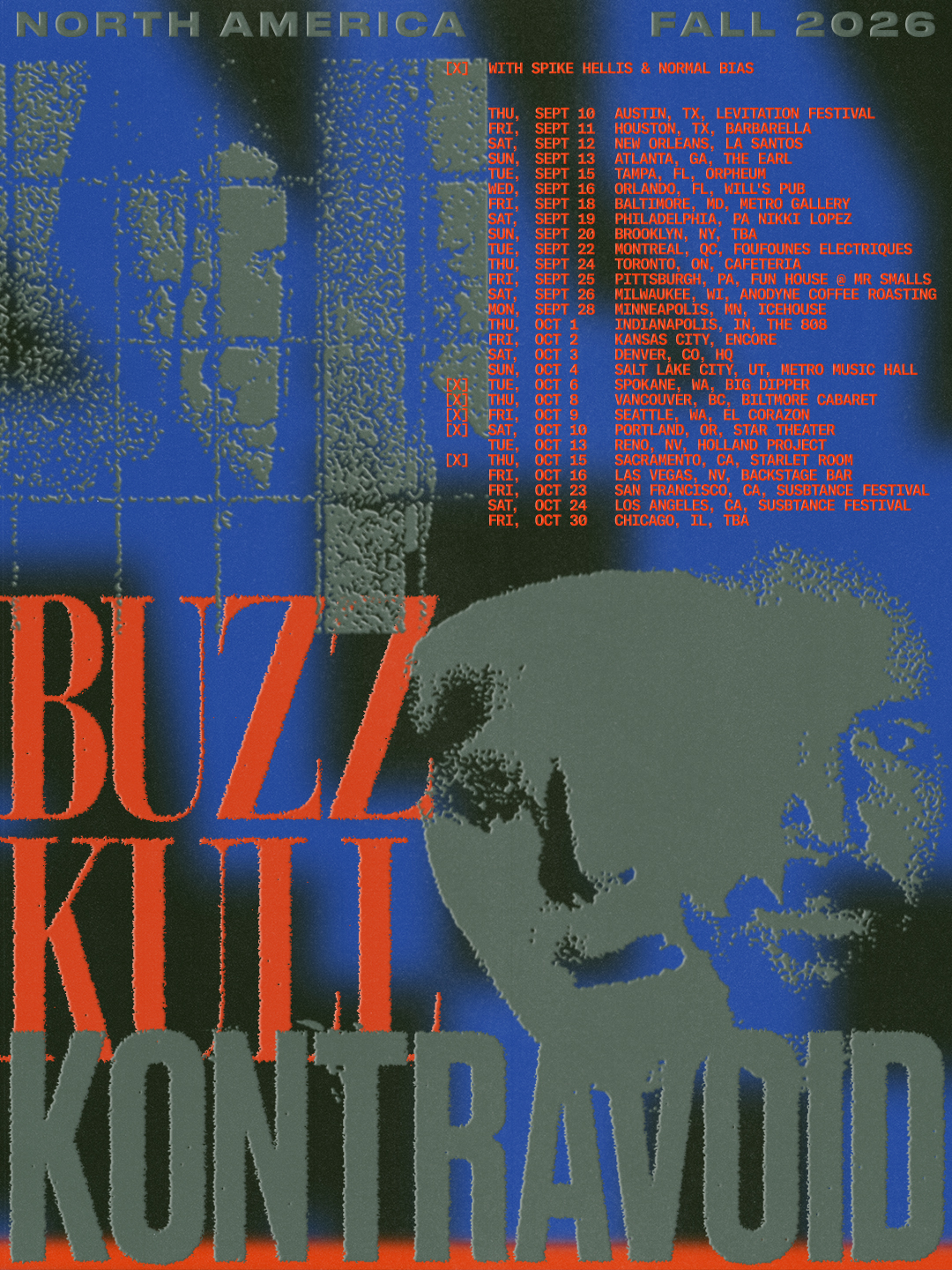
Two of dark electronic music’s most commanding forces are joining together for a fall run across North America. Buzz Kull and Kontravoid will bring their body-lit blend of darkwave, EBM, electro, and synth-pop to clubs and festivals beginning September 10 in Austin, with dates stretching through Texas, the South, the East Coast, Canada, the Midwest, the Pacific Northwest, and California. Five of those shows — in Spokane, Vancouver, Seattle, Portland, and Sacramento — will be shared with Spike Hellisand Normal Bias.
The pairing feels inevitable. Both artists have carved out distinct territories in the fogged-out corners of modern dark music: Buzz Kull with a severe, cinematic pulse that turns anxiety into motion, and Kontravoid with a masked, strobe-lit mystique that sharpened into dancefloor discipline.
See the full list of dates below.
Buzz Kull is the solo project of Sydney-based musician and producer Marc Dwyer. Since 2012, Buzz Kull has been blending elements of darkwave, EBM, and synth-pop into a sound that is dark, dissonant, and danceable. His early work, including his 2017 debut Chroma and 2018’s New Kind of Cross, was defined by stripped-back production and a fascination with minimal synth textures. These records drew from early industrial and post-punk traditions, pairing drum machine-led tracks with cool, monotonous vocals and moody atmospherics.
Over time, Dwyer’s sound has grown harder and more precise. His 2022 album Fascination, released through Italian label Avant! Records, marked a turning point: a sleek, focused collection of dark dance tracks that channel the energy of late-’80s body music. In 2026, Buzz Kull returned with Deep Hate, a four-song statement of intent: relentless, cinematic, and charged with nocturnal electricity. The release marks some of Buzz Kull’s most focused and ferocious work to date, a document of emotional clarity and mechanical pulse.
Outside of Buzz Kull, Dwyer is a frequent collaborator and remixer, working with artists across the darker ends of electronic music. He has toured extensively throughout Europe, the United States, Latin America, and Asia, sharing stages with contemporaries like Cold Cave, Boy Harsher, Kontravoid, and Spike Hellis.
Buzz Kull’s latest release is Deep Hate, out now via Heartworm Press. Watch the latest official video, “Human Force,” below.
Kontravoid’s masked mystique has remained intact for over a decade. Ever since the release of his self-titled LP in 2012, Canadian-born, Los Angeles-based Cameron Findlay has perfected a strain of dark pop that teeters between EBM, electro, and goth. His productions, such as 2019’s “Too Deep” and 2021’s “Faceless,” dive into the most derelict corners of foggy, strobe-lit clubs: there is no choice but to dance.
Still, beneath the harsh pulse, there is an uncanny softness and a clear songwriting instinct. Kontravoid’s work carries a capacity for heart-wrenching melody, with songs that are both captivating and drenched in melancholy. 2018’s “Undone,” released on Berlin’s Fleisch Records, has remained a fan favorite since its arrival.
Onstage, Kontravoid demands the audience’s attention with a powerful performance that balances harsh beats with signature bassline-driven rhythmic patterns. He has toured with Boy Harsher, ADULT., Drab Majesty, and Hide, and has remixed artists including Schwefelgelb and Kris Baha. Truly a man of the shadows, Kontravoid remains an unparalleled fixture in the dark electronic arena.
Kontravoid’s latest release is the 2026 single “Mortal,” out via Artoffact Records. Watch the video “For What It Is” below.