Category: news

  • In Loving Memory – Guitarist Died

    Jorge Araiz, the rhythm guitarist from Spanish death doom metal act In Loving Memory, has passed away following an intense battle with cancer.
    Read more

  • Todd Adelman – Hot As The Hinges


    Todd Adelman’s forthcoming release, “Western Soul”, is a fourteen-song prescription for what ails the American Dream. It’s as if Adelman has checked the vitals, extracted a little blood & scrutinized our diet of political chaos, rampant illness & overwhelming violence & recommended something honest & straight from the gut. Western Soul is a batch of songs born right out of the American Songwriting Tradition. An homage & a tribute to all those great records we know & love & feel like have been with us from the start. Like the mythical country singer Bad Blake says, “that’s the way it is with the good ones, you’re sure you’ve heard ‘em before”. &, like his predecessors, Petty & Kristofferson & Prine, Adelman is a Keeper of the Keys. An honest Rock ‘n’ Roller. A Country Gentleman. A Storyteller. 

    With seven albums under his belt, Singer, Songwriter, Producer & Engineer, Todd Adelman has arrived in the Catskills via Colorado & built a studio in the woods simply called: The Woods. A place reminiscent of where all your favorite records were made. Tape machines and vintage gear and, if you listen closely, the voices of those who came before. It was here in this new, old space that Adelman recorded Western Soul, straight to tape with the help of some choice friends. 

    The record was produced by Woodstock Producer/Musician Danny Blume, with production assistance from bassist Taras Prodaniuk and guitarist Doug Pettibone. Veteran Jim Christie joins them on the drums. Both Christie & Prodaniuk have played with: Dwight Yoakam, Lucinda Williams & Merle Haggard. Pettibone has played with Lucinda Williams, Zucchero, Marianne Faithfull, and Vic Chestnut, to name a few. Throw in some Woodstock locals such as Larry Campbell, John Medeski, Jeff Hill, Zack Djanikian, Pete Rubens, Tony Garnier, and Brian Mitchell & you have what adds up to a compelling line-up.

    I love the pace and the mood of the new single Hot As The Hinges. It’s extremely easy listening, catchy and quality from every point of view: performance, arrangement, and production. I totally recommend the song. A very enjoyable one, give it a go by clicking on the Spotify player below and following Todd Adelman on social media if you like what you hear.

    https://www.instagram.com/todd.adelman/

  • 250 Top American Metal Albums For 250 Years Of America, Part 1

    Hey, so, yeah, this nation is about to celebrate its SEMIQUINCENTENNIAL, which is a very fancy way of saying “America is celebrating the 250th anniversary of the Declaration of Independence.” Needless to say, it’s sort of a big deal, but it also has this strange way of feeling like less of a big deal because
 Well, who the hell wants to party like it’s 1776 when the overall climate is this volatile and the lines between parties remains this divisive? Sure, that’s not exactly anything new, but it’s been a hot minute since we’ve experienced, like, fully fractured families because of political affiliations. But hey, at least now we can blame skyrocketing gas prices for ditching the summer reunion instead of faking yet another injury, right? Find blessings inside of failures and YOU WILL, BY GOD, live a happier life.

    Still, 250 years
 That’s a hell of a milestone that’s difficult to ignore. Consequently, it came up a couple few weeks ago as the Last Rites Illuminati sat around a giant oak table at LR HQ and someone very suddenly remarked, “Pass the carrots, please, you thick Yank. Also, do you guys think we should find a clever way to celebrate the 4th of July this year?” And thus the concept for this series of articles didst bubble forth and into our collective brains.

    The premise is pretty simple: Celebrate  250 OF THE BEST AMERICAN METAL ALBUMS EVER â€”one album per band only. Did we take a few liberties with some records that push into hard rock? You bet your sweet ass we did!

    Sweet ’n’ spicy, no? Unfortunately, time was a bit of an issue, because we never seem to think of anything with plenty of room to scramble. As a result, do not expect an ordered list (mercifully) that somehow manages to rank the albums, and know that—as much as we would have liked to—we simply did not have time to blurb about every single record (whew).

    That being said, we are writers, for the most part, so we decided that each day’s corresponding list of 50 would also highlight a handful of albums with a casual blurb, all picked randomly by the cuddly LR staff. To be clear, the blurbed records you will see this week are not considered “better” or “more deserving of words” compared to the others, they’re simply
 random albums we opted to underscore, pure and simple. Ya dig? Cool cool cool.

    Also, we obviously had to lay down some definitive rules for “American metal albums,” so we decided to make it as simple as possible and set the parameters thusly: The band’s origin must be these United States of America. So, as an example, although most of us now consider The Chasm to be an American death metal band, their launch in Mexico disqualifies them from admission. (Side note: LISTEN TO MORE THE CHASSSSMMMMM.)

    Clear as a swarm of Midwestern midges on a hot July night? Beautiful. Let’s dive into PART ONE.

    And hey, Happy 250th, America, you loopy ol’ buzzard, you. [CAPTAIN]

    Cannibal CorpseKill

    Diamonds & Rust

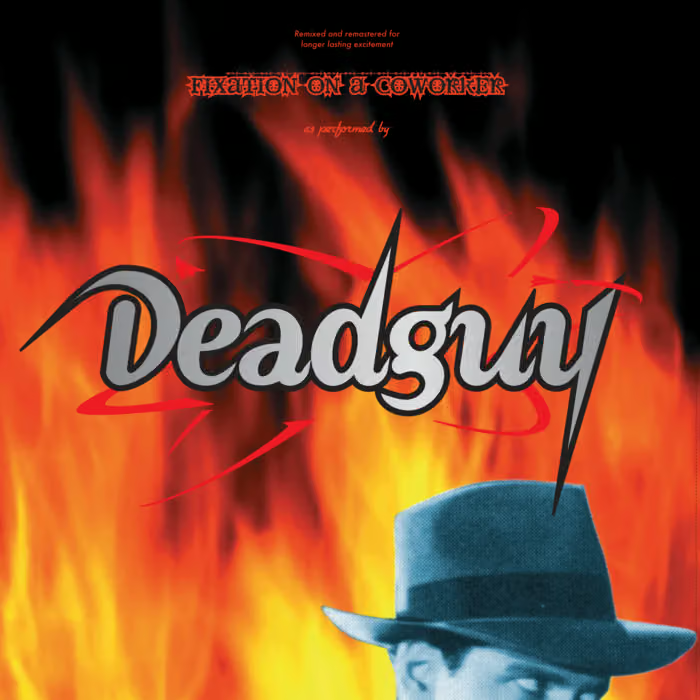
    Deadguy – Fixation On A Co-Worker

    OrodruinEpicurean Mass

    Rage Against The MachineRage Against The Machine

    The roots of Rage Against the Machine are similar to those of so much metal: blues rock, Zeppeliny riffs (and riffs upon riffs upon glorious Tom Morello riffs), Priest swagger, and a rhythm section so heavy the drummer was recruited to play in actual Black Sabbath. And holy lord the riffs. Did we mention the riffs? Morello puts on a clinic for how to hook the listener immediately, from the throwdown of opener “Bombtrack” through the necksnapping goodness of the main riff in “Know Your Enemy” all the way through to the opening motif of “Freedom” (good enough to make you ignore your prejudice against drop-D tuning). That they top it all off with rapping – itself one of the most quintessential American art forms – is only icing on the riff cake. Oh, you don’t think this belongs anywhere near a metal list? Fuck you, I won’t do what you tell me. [ZACH DUVALL]

    Midnight – Satanic Royalty

    Review

    Disincarnate – Dreams Of The Carrion Kind

    Hammers Of Misfortune – The August Engine

    A diamond in the American heavy metal underground crown, Hammers Of Misfortune made their indelible mark with a sound and style that can only really be accurately described by referencing the band that made it. The August Engine embodies this paradox as one of the genre’s most unique albums, even as it’s crafted from the requisite parts. Impeccable riffs and leads generate a traditional metal lattice to be interlaced with folk melodies and harmonies that feel as old as the hills, and John Cobbett’s songwriting sets those hooks deep by matching the mood of the music to lyrics that touch on the ache of sorrow and loneliness, social disillusionment, and the solemn magic of nature. And, as perhaps the greatest testament to its excellence, The August Engine sounds and feels every bit as rebelliously avant-garde 23 years on. [LONE WATIE]

    Review

    Brocas Helm – Defender Of The Crown

    Earthless – Rhythms From A Cosmic Sky

    Cinderella – Night Songs

    Vicious Rumors – Digital Dictator

    Yo, this smokes. Vicious Rumors, the band, is new to me, although the concept of vicious rumors is, unfortunately, not: Whatever they tell you, I didn’t know it was a pig. Digital Dictator, the California quintet’s second full-length, was first released on Shrapnel Records, which should clue you into the kind of shred that’s waiting to guitar your face off. Indeed, everyone comes to play, particularly the supreme six-string tandem of Geoff Thorpe and Mark McGee. That said, don’t discount the superb songwriting that puts everyone’s skills to good use, avoiding the typical guitar-slinger’s fate of technically impressive empty calories. Nope, Vicious Rumors isn’t an amp-humper; instead, it crafts powered-up heavy metal that’s catchier than swine flu. Or so I’ve been told. [SETH BUTTNAM]

    Human Remains – Using Sickness As A Hero

    Metallica – Ride The Lightning

    Withered – Dualitas

    Review

    Pentagram – Relentless

    Sentinel Beast – Depths Of Death

    Sentinel Beast’s lone album lives in that perfectly chewy landscape where it bites hard enough for thrash, spits mean enough for punk, blazes fast and rudely enough for speed, and churns the melodic stomp enough for traddy heavy metal while never committing to one particular camp or the other. In that way, it sometimes reminds me of Metal Church’s self-titled debut album, even though Debbie Gunn’s vocals make the more likely reference points those from fellow warriors like Dawn Crosby (RIP) in DĂ©tente, Lynda “Tam” Simpson in Sacrilege, and Nicole Lee in Znöwhite. But hell, a tune like “Dogs of War” could almost be a crude Norwegian black/thrash assault Ă  la Aura Noir, so you may take away whatever you bring with you. The closing cover of Maiden’s “Phantom of the Opera” done at about 150% speed really lays it out: Can we do cool shit like that and FAST? They can; they did. Come get it. [DAN OBSTKRIEG]

    Crowbar – Odd Fellows Rest

    Cirith Ungol – King Of The Dead

    Cirith Ungol Primer

    W.A.S.P. – W.A.S.P.

    A Devil’s Dozen: W.A.S.P.

    Dropdead – Dropdead (1993)

    I don’t consider myself an angry person, although I certainly have my moments. And yet, I gravitate towards some of the angriest music out there, and the more raging and furious, well… oftentimes, that’s for the better. Crusty Rhode Island grindcore / hardcore outfit Dropdead absolutely fits that bill, and has been among my favorites for decades now, and this, their first of three self-titled full-length salvos so far, is a prime example of why. Absolutely relentless across its twenty-four minutes — with thirty-four songs in all — Dropdead builds upon a hardcore punk framework but ratcheted up to metal levels of intensity. This is the sound of a Siege-esque ferocity, of Bob Otis’ sociopolitical activist fury, and more than anything, of an energy level almost unparalleled, and in that combination, Dropdead becomes a true landmark to righteous anger. Tear down the system; free your minds; love your four-legged friends (all of them); fight the fucking power; be a better person. These are the lessons contained within — learn them, and let’s all be angry and better together. [ANDREW EDMUNDS]

    Cauldron Born – Born Of The Cauldron

    Anacrusis – Screams And Whispers

    Anacrusis Primer

    Symphony X – The Divine Wings Of Tragedy

    Crescent Shield – The Last Of My Kind

    If you’re the sort of trad metal fan that thrives on deep dives into our realm’s innermost clefts and chasms, you’re likely already quite familiar with the brief but mighty crater left behind by LA USPM hitters Crescent Shield. And if they still remain a mystery, just know that Crescent Shield spent a handful of years across the early-ish 2000s as one of the more under-appreciated modern US power acts to ever roam these lands. The band was launched by one-time Destiny’s End (great band) axelord Dan Delucie (where is he now??) and former Onward vocalist Michael Grant (RIP; forever missed), and they produced two absolute noggin-crackers for any and all parties interested in fist-pumping fantasy / futurist trad metal that throws a very dignified bow to classic mid-80s’ US power. Both albums are very deserving of a list such as this, but The Last of My Kind wins out simply because it happened to hit our skulls first. [CAPTAIN]

    Deicide – Deicide

    Ministry – Psalm 69

    AssĂŒck – Misery Index

    Botch – We Are The Romans

    Review

    Obsequiae – Aria Of Vernal Tombs

    Including Obsequiae’s uber-melodic brand of medieval melodic black metal—which sounds vaguely European—on a list of best American heavy metal feels 
 a little awkward. And Aria of Vernal Tombs has inspired, at least in part, some adjacent movements in regions of the world that are decidedly not American. But there’s no doubt that it belongs on this list.

    When Obsequiae released Aria of Vernal Tombs, most were fairly hip to what the band was up to, the debut having been given an extra push a year prior by 20 Buck Spin. Yet Aria hit just a little bit harder. And it had a sway to it that was just a little bit more alluring.

    I don’t know that people were using this descriptor then, but in revisiting Aria, I was struck by how beautiful most of it was. An enchanting, special record. [CHRIS C]

    Nocturnus – The Key

    Warhorse – As Heaven Turns To Ash

    Mastodon – Remission

    Crimson Glory – Crimson Glory

    Diamonds & Rust

    Monstrosity – Millennium

    Why it belongs: For all we talk about the Tampa Death Metal “sound,” step back and consider the wild diversity the scene produced: Decide, Morbid Angel, Obituary 
 little binds these bands beyond their emergence on the dangling proboscis on Florida’s western coast. And yet, somehow, Monstrosity seems to cohere it all. The jagged riffing of the Benton Boys, the stop-on-a-dime compositional dipsy-dos of Trey’s gang, even the dreadful doominess found on the Executioner’s songs. On Millennium, Monstrosity sounds a little bit like all of their peers, and in doing so they were able to create a sonic monument that’s distinctly their own.

    What’s the most American thing about Monstrosity: Unlike European artists, who receive an annual dispensation from the politburo to produce Xeroxes of Dark Medieval Times, Monstrosity still look and play like a group of dudes who need to push their practice amps to the back corner of their garage to make room for the new landscaping truck they just financed. [DAVID FONSECA]

    Vital Remains – Let Us Pray

    Realm – Endless War

    Megadeth – Peace Sells… But Who’s Buying?

    Isis – Panopticon

    Brodequin – Methods Of Execution

    Methods of Execution simultaneously evokes the sound of bones snapping and cracking from a torture rack and the chilling sound of a guillotine dropping onto the neck of a suspecting victim. Raw, fast, and downright disgusting, Brodequin set the stage for what brutal death metal could be in terms of production and repulsiveness on LP number three.

    I understand why they stepped away for roughly two decades.

    Truth be told, there really isn’t a bad Brodequin album. However, Methods of Execution’s maximum level of Tennessee grit and mugginess create the atmosphere of an actual march to the electric chair, or whichever method of execution you prefer. “Slaves to the Pyre” opens like a bat out of hell, and it pretty much beats you over the head for the next half hour. Spin in agony from “The Gridiron’s” swirling riffs, succumb to the stoning drums on “Cast into Torment,” or the suffocating vocals that sound like final gasps for air on “Punishment Without Mercy,” but no matter which path you choose, you’ll find yourself right back at the same conclusion: this thing is BDM perfection and one of America’s greats. [BLIZZARD OF JOZZSH]

    Old Man Gloom – Seminar III: Zozobra

    Znöwhite – Act Of God

    Neurosis – Through Silver In Blood

    SubRosa – No Help For The Mighty Ones

    You didn’t think we’d write up America and forget about the Mormons, did you? Dumb, dumb, dumb (IYKYK). The violin was certainly not new to the world of heavy metal by the time this Utah quintet’s sophomore release came out in 2011, but few bands had made it so focal and essential to the writing. The core sound SubRosa worked from was sun-baked doom that they elevated to a significantly moodier, somber and moving affair with the integral work of Kim Pack and Sarah Pendleton. The riffs hit hard, while the violins snake in and out of the significant space the rest of the musicians afford them. The more workmanlike style of singing also gives everything a more folksy lilt, but in the telling of tales of yore way, rather than the bouncy accordion sense of the word.

    No Help For The Mighty Ones was permanently seared into my brain after I listened to it during a stretch of a 28-hour bus ride that was rolling through a desert that was literally engulfed in flames. Beauty met rage and power in nature, and SubRosa had crafted the perfect soundtrack. [SPENCER HOTZ]

    Review

    Wolves In The Throne Room – Two Hunters

    Leviathan – The Tenth Sub Level Of Suicide

    Arsis – A Celebration Of Guilt

    Review

    Racer X – Street Lethal

    High On Fire – Blessed Black Wings

    Though High on Fire’s first two albums were excellent. Bill Anderson’s murky production kept the band chained to Sleep’s legacy. For album number three, Blessed Black Wings, the band put its most ferocious batch of songs to date in the capable hands of Steve Albini, and the results were career-defining. Albini didn’t necessarily clean things up — this is a noisy, raucous record, to be sure — but he found a way to let each part punch through the mix and right into your face, most notably Des Kensel’s drums, which reach Bonham levels of thunder. As for the songs, they are as heavy as ever, but there is both more melody, and, crucially, more speed and aggression. Blessed Black Wings is High on Fire at its peak. [JEREMY MORSE]

    Review

    Monster Magnet – Spine Of God

    Manilla Road – Crystal Logic

    A Devil’s Dozen: Manilla Road

    THE FIRST 50
    Cannibal Corpse – Kill
    Deadguy – Fixation On A Co-Worker
    Orodruin – Epicurian Mass
    Rage Against The Machine – Rage Against The Machine
    Midnight – Satanic Royalty
    Disincarnate – Dreams Of The Carrion Kind
    Hammers Of Misfortune – The August Engine
    Brocas Helm – Defender Of The Crown
    Earthless – Rhythms From A Cosmic Sky
    Cinderella – Night Songs
    Vicious Rumors – Digital Dictator
    Human Remains – Using Sickness As A Hero
    Metallica – Ride The Lightning
    Withered – Dualitas
    Pentagram – Relentless
    Sentinel Beast – Depths Of Death
    Crowbar – Odd Fellows Past
    Cirith Ungol – King Of The Dead
    W.A.S.P. – W.A.S.P.
    Dropdead – Dropdead
    Cauldron Born – Cauldron Born
    Anacrusis – Screams And Whispers
    Symphony X – The Divine Wings Of Tragedy
    Crescent Shield – The Last Of My Kind
    Deicide – Deicide
    Ministry – Psalm 69
    AssĂŒck – Misery Index
    Botch – We Are The Romas
    Obsequiae – Aria Of Vernal Tombs
    Nocturnus – The Key
    Warhorse – As Heaven Turns To Ash
    Mastodon – Remission
    Crimson Glory – Crimson Glory
    Monstrosity – Millennium
    Vital Remains – Let Us Pray
    Realm – Endless War
    Megadeth – Peace Sells
 But Who’s Buying?
    Isis – Panopticon
    Brodequin – Methods Of Execution
    Old Man Gloom – Seminar III: Zozobra
    Znöwhite – Act Of God
    Neurosis – Through Silver In Blood
    SubRosa – No Help For The Mighty Ones
    Wolves In The Throne Room – Two Hunters
    Leviathan – The Tenth Sub Level Of Suicide
    Arsis – A Celebration Of Guilt
    Racer X – Street Lethal
    High On Fire – Blessed Black Wings
    Monster Magnet – Spine Of God
    Manilla Road – Crystal Logic

    The post 250 Top American Metal Albums For 250 Years Of America, Part 1 appeared first on Last Rites.

  • QueensrĂżche / A Night of Epic Metal Majesty in Islington Assembly Hall

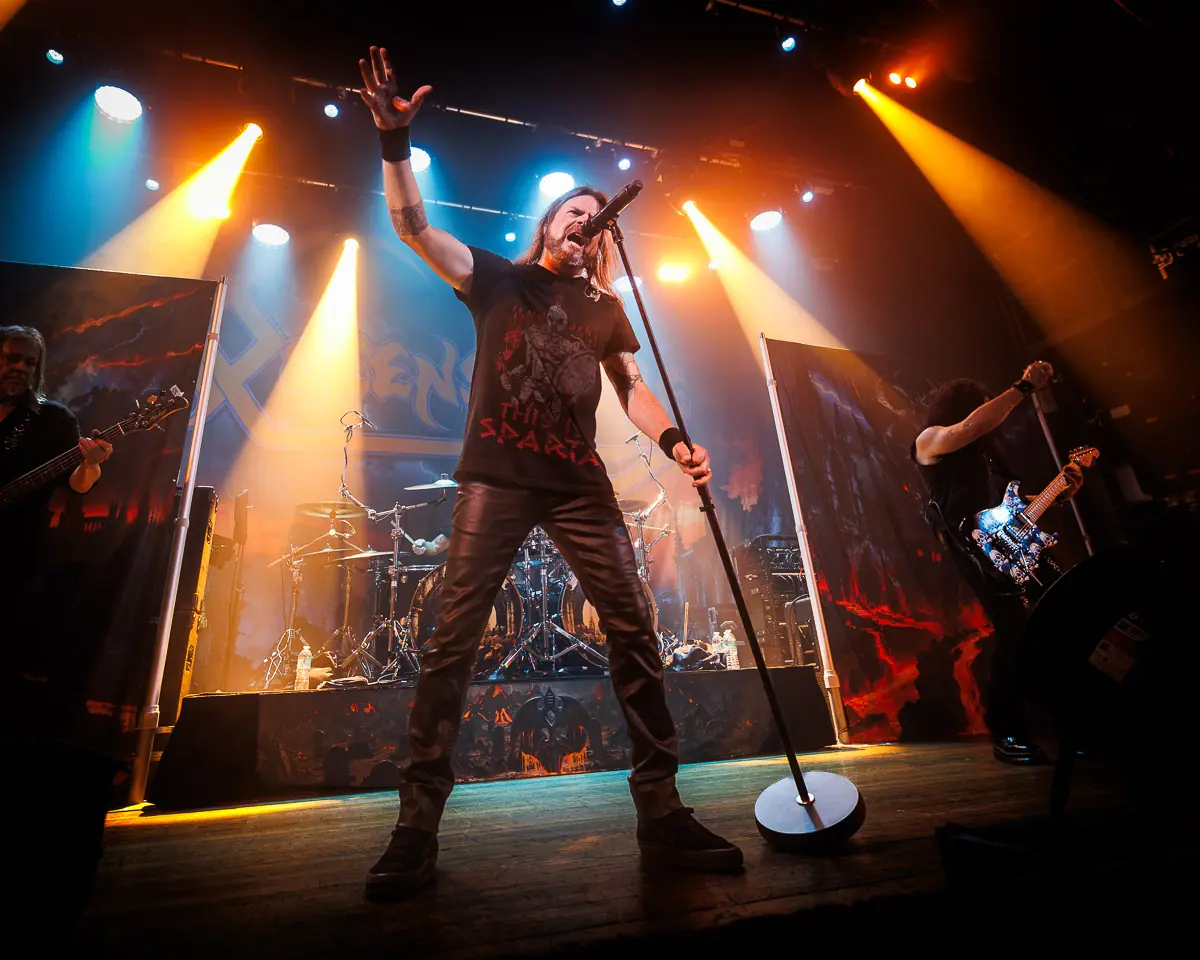
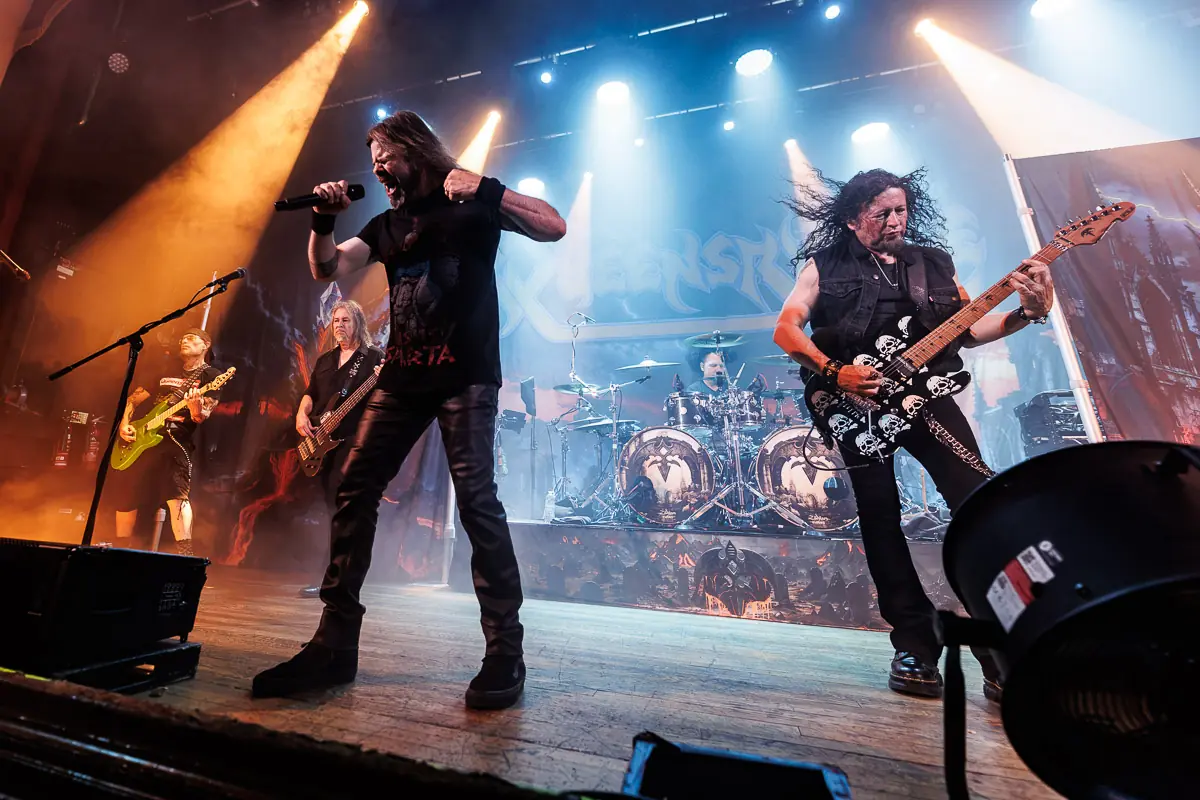
    Queensrÿche - Islington Assembly Hall, London – 23 June 2026. Photo: Manuela Langotsch/MetalTalk

    On one of the hottest nights of the year, QueensrĂżche descended upon Britain’s holy grounds with a dazzling set that ignited the Islington Assembly Hall.

    QueensrĂżche

    Islington Assembly Hall, London – 23 June 2026

    Words: Dany Jones

    Photography: Manuela Langotsch

    The Seattle veterans unleashed a relentless two-hour celebration of one of Progressive Metal’s most enduring catalogues.

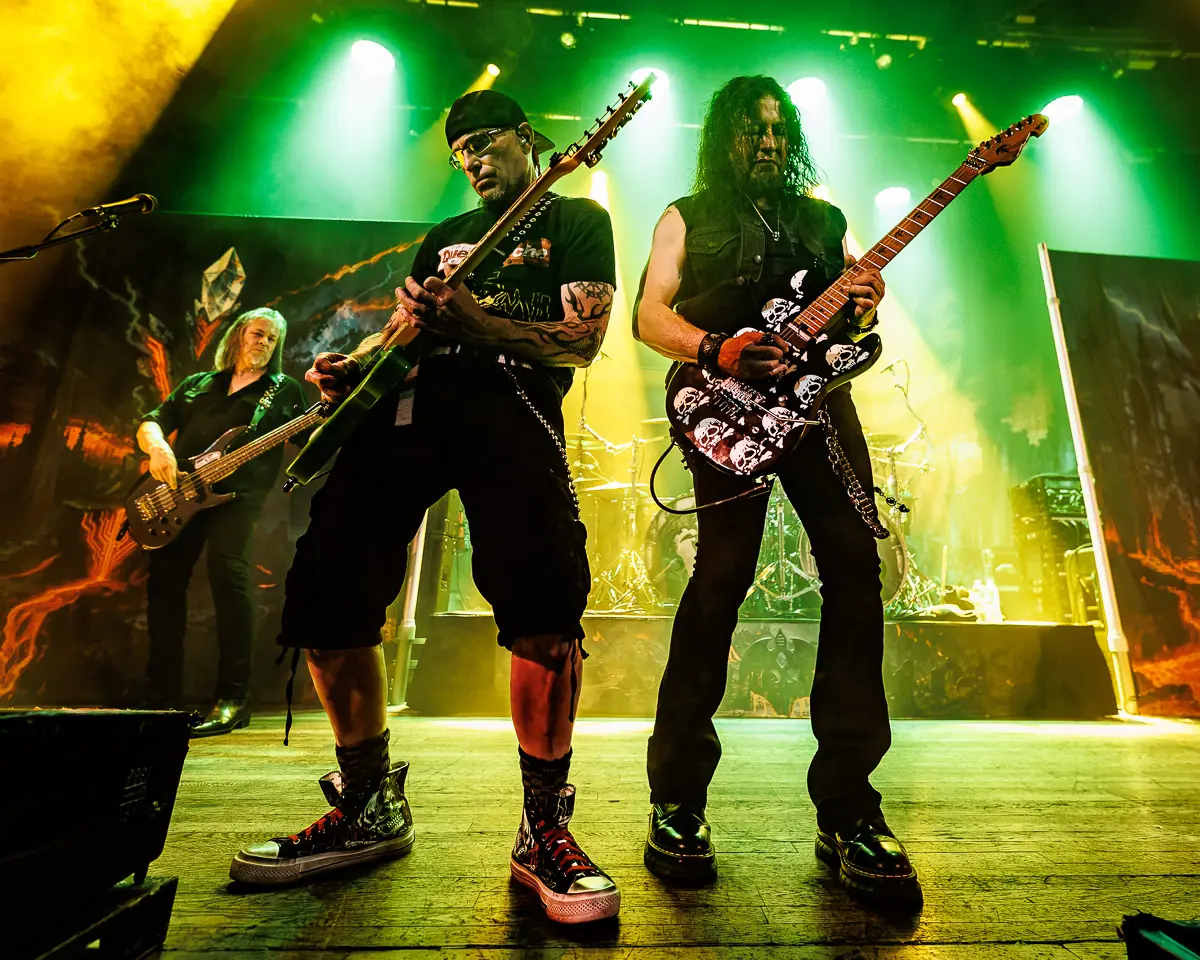
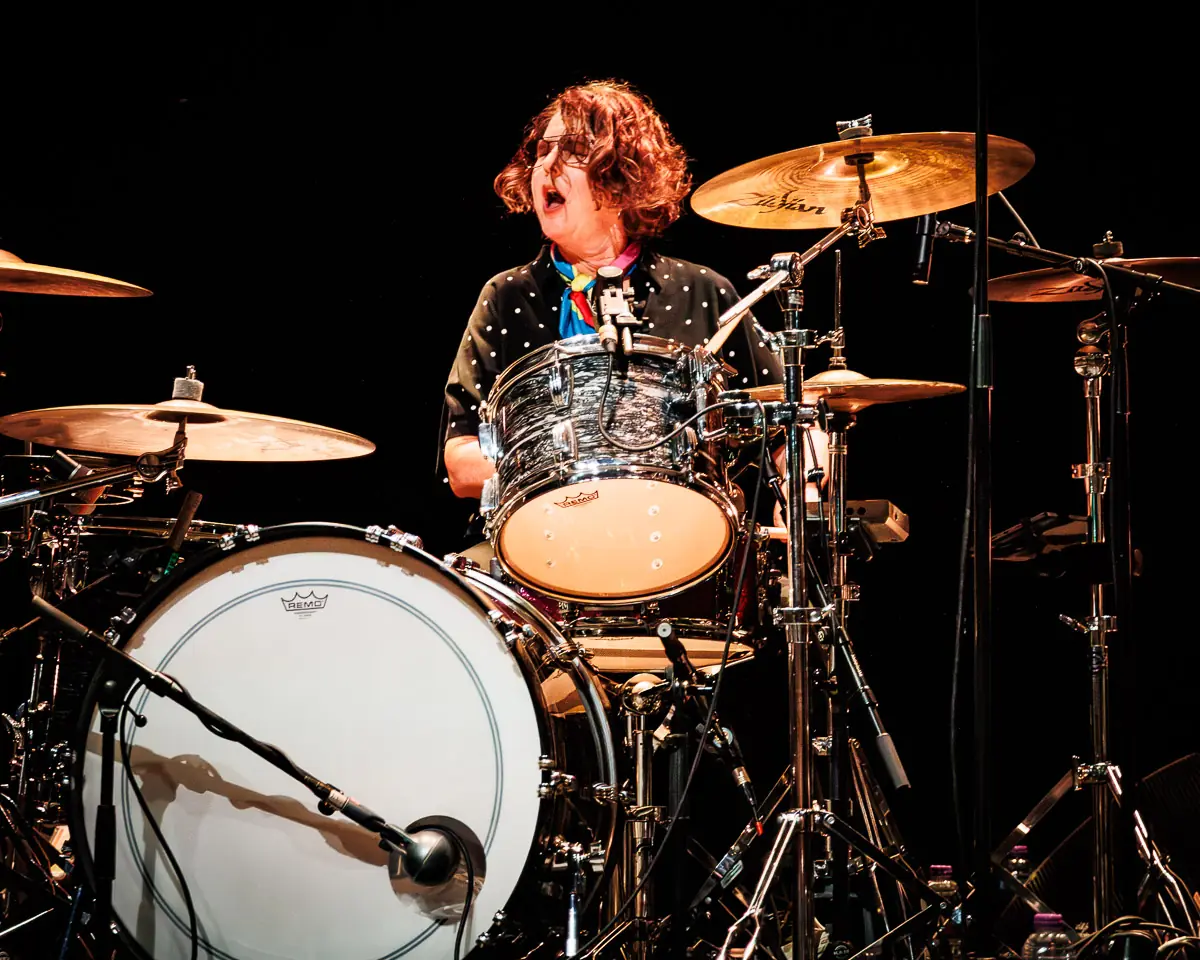
    Queensrÿche - Islington Assembly Hall, London – 23 June 2026. Photo: Manuela Langotsch/MetalTalk
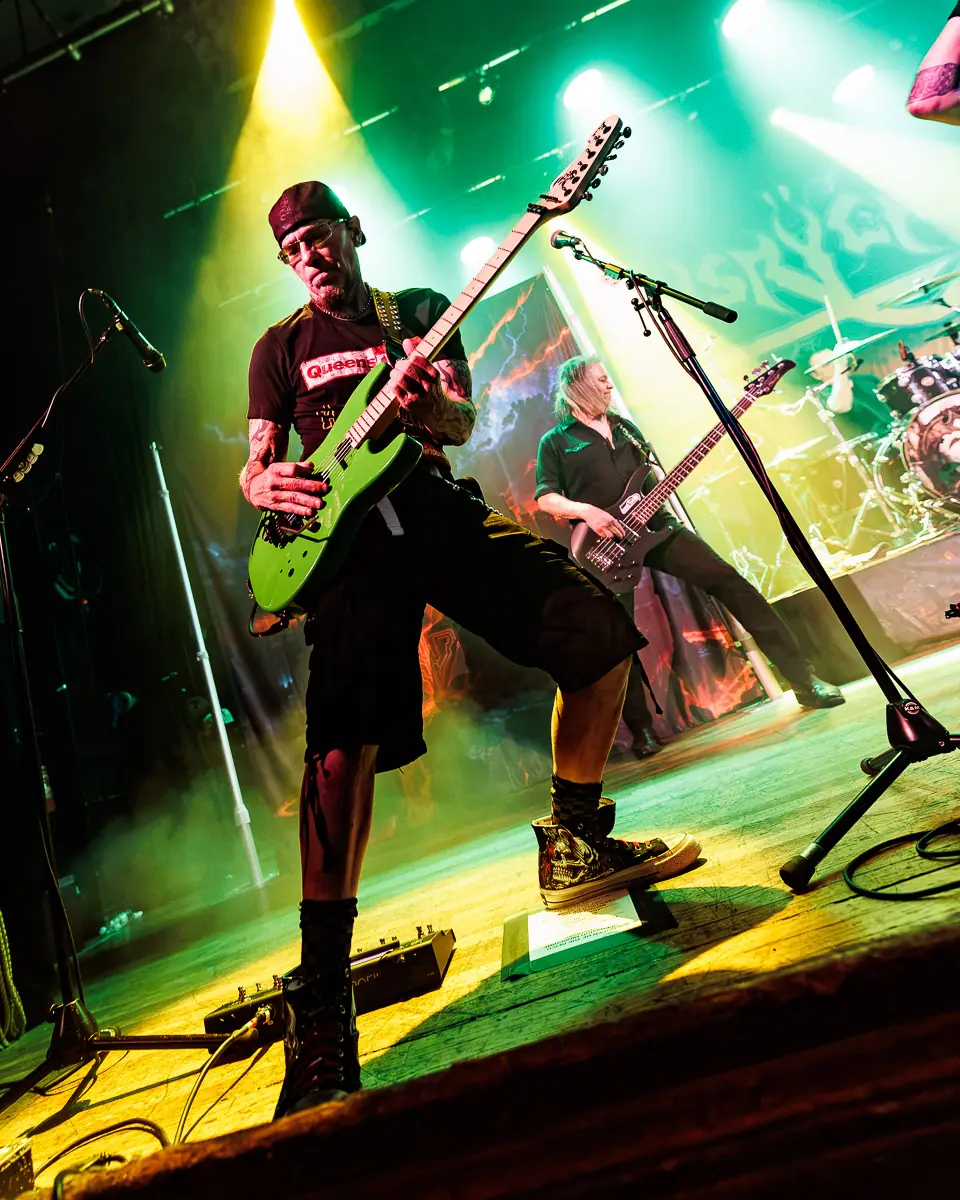
    QueensrĂżche – Islington Assembly Hall, London – 23 June 2026. Photo: Manuela Langotsch/MetalTalk

    Emerging in an era when the hard rock and Heavy Metal landscape was fiercely competitive, with bands such as Dokken, Iron Maiden and Judas Priest all fighting for the spotlight, QueensrĂżche distinguished themselves through a unique blend of Progressive ambition, eminent musicianship and intelligent songwriting.

    While many of their peers relied on sheer power and spectacle, the band carved out their own identity, creating a catalogue that continues to stand the test of time.

    And it is thanks to them paving the way that, in the USA, artists of the calibre of Dream Theater, Crimson Glory or Fates Warning quickly followed suit into a more sophisticated and complex sonic research.

    Navigating a back catalogue that spans more than four decades, QueensrĂżche have maintained proficiency throughout, offering a fresh and electrifying performance extremely well received by a visibly captivated audience.

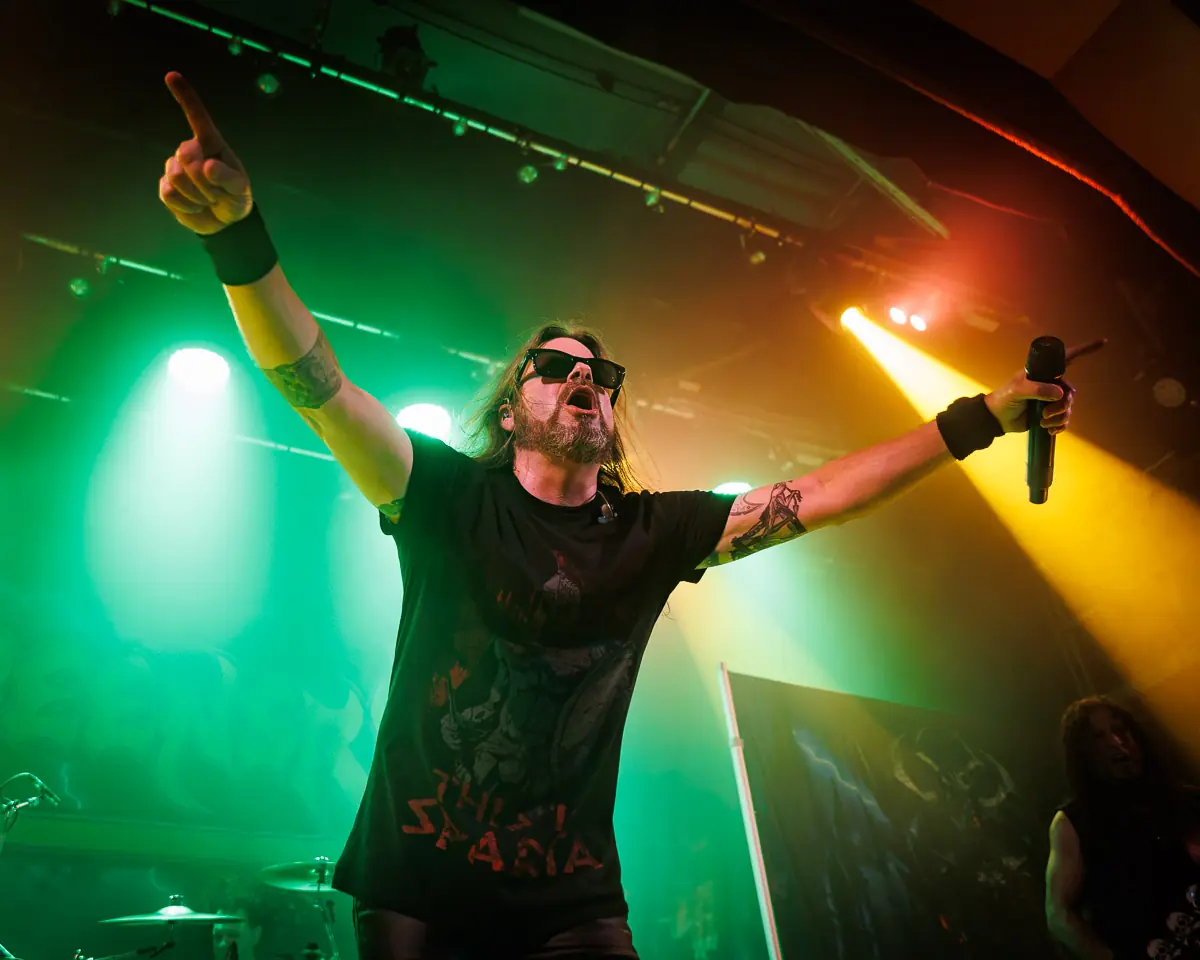
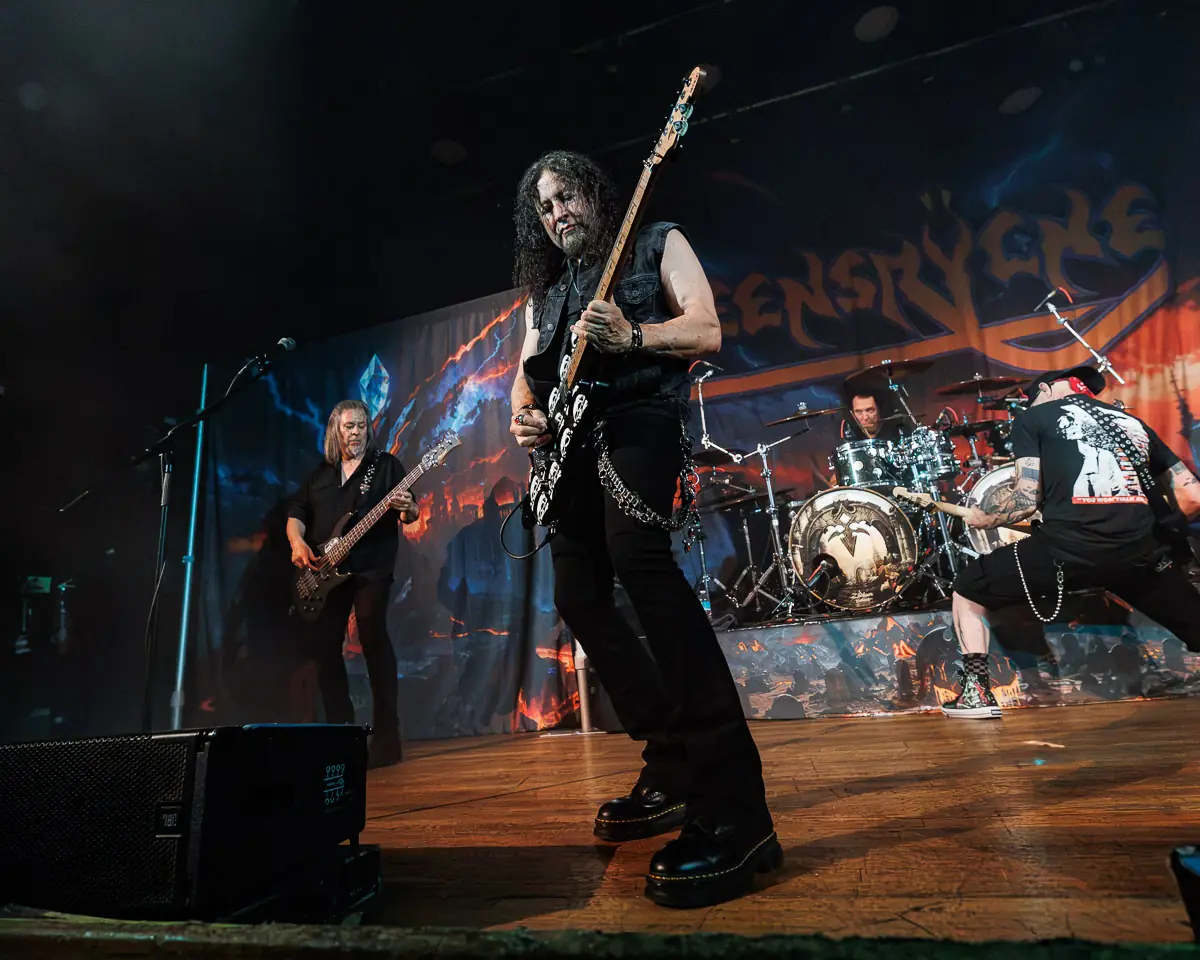
    Queensrÿche - Islington Assembly Hall, London – 23 June 2026. Photo: Manuela Langotsch/MetalTalk
    QueensrĂżche – Islington Assembly Hall, London – 23 June 2026. Photo: Manuela Langotsch/MetalTalk

    The Mob Rules plays as the band hits the stage, the track a nod to the band’s name before they settled on QueensrĂżche in 1982.

    The band immediately launched into Queen Of The Reich, where suddenly, the years disappeared, and the mixed audience of lifelong devotees and younger newfound adepts responded as if it were 1983 all over again.

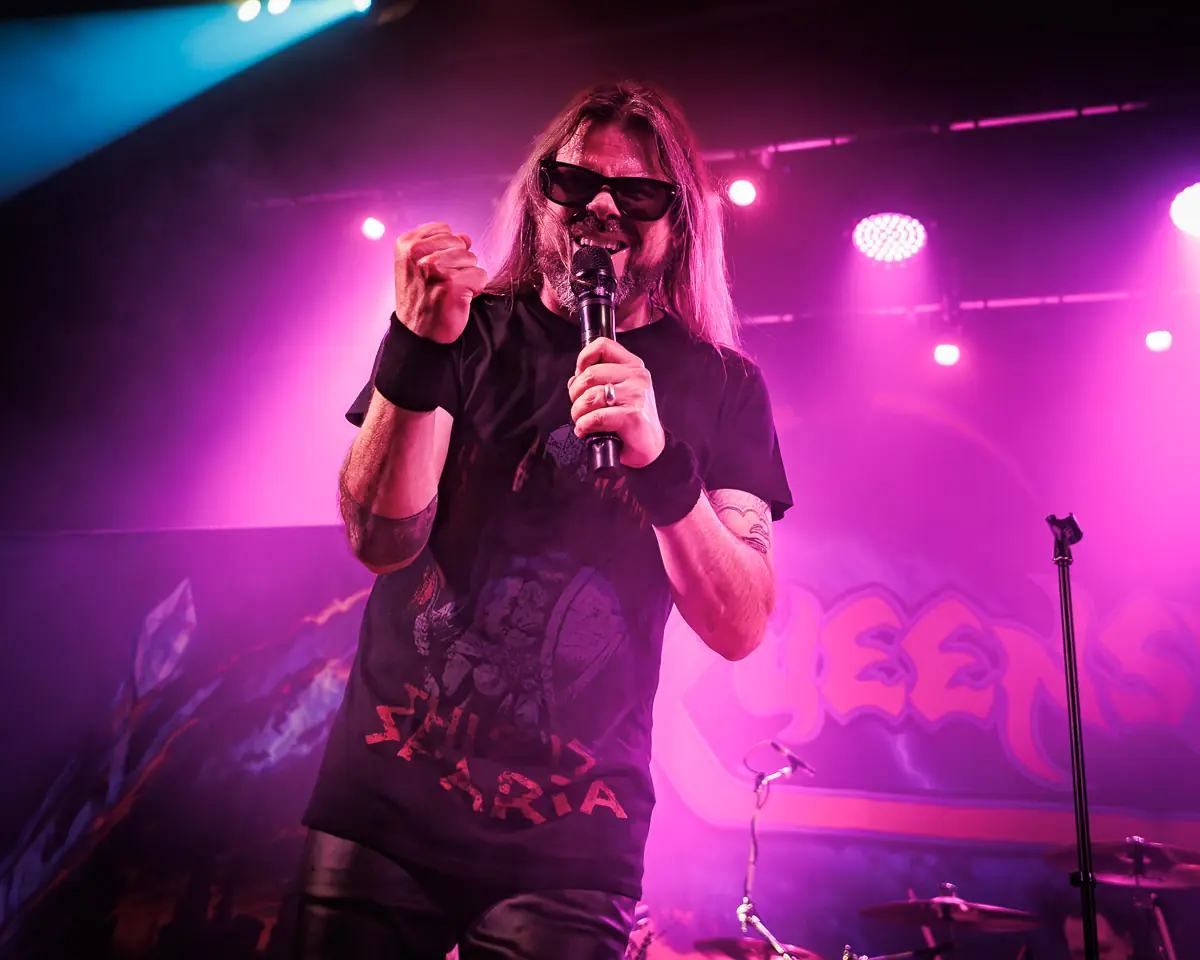
    Todd La Torre attacked the soaring vocal lines with total command. Backed by Michael Wilton’s meticulous guitar work and a rhythm section firing on all cylinders, the performance was both thunderous and exhilarating.

    Queensrÿche - Islington Assembly Hall, London – 23 June 2026. Photo: Manuela Langotsch/MetalTalk
    QueensrĂżche – Islington Assembly Hall, London – 23 June 2026. Photo: Manuela Langotsch/MetalTalk

    Operation: Mindcrime and Walk In The Shadows landed with surgical precision, while Speak showcased just how effectively QueensrĂżche continue to blend melody, muscle and intelligence.

    Naturally, I Don’t Believe In Love drew one of the loudest singalongs of the evening. One of their most accessible yet sophisticated numbers, it was notably known to most.

    The middle portion of the set saw legacy material blended with newer offerings. Best I Can and Warning carried the crowd back to the band’s formative years, while Neue Regel and Behind The Walls reaffirmed that QueensrĂżche remain very much relevant in the more contemporary landscape.

    Queensrÿche - Islington Assembly Hall, London – 23 June 2026. Photo: Manuela Langotsch/MetalTalk
    QueensrĂżche – Islington Assembly Hall, London – 23 June 2026. Photo: Manuela Langotsch/MetalTalk

    Then it was time for the endless sea of lights to brighten the hall along to the notes of Take Hold Of The Flame. The song remains one of the greatest power-ballad-Metal-anthems ever written, and the crowd embraced it with great emotion.

    As the evening approached its climax, Empire delivered with exact precision. The immense groove shook the venue’s historic walls, proving that Progressive Metal can indeed hit with the force of a wrecking ball.

    But it is the closing Eyes Of A Stranger that ultimately sealed the deal, crowning the moment as nothing short of cathartic.

    Queensrÿche - Islington Assembly Hall, London – 23 June 2026. Photo: Manuela Langotsch/MetalTalk
    QueensrĂżche – Islington Assembly Hall, London – 23 June 2026. Photo: Manuela Langotsch/MetalTalk

    At a time when many legacy acts seem content to trade solely on nostalgia, QueensrĂżche remain a living, breathing force. Their performance at Islington Assembly Hall was not just a reminder of what made them great. It was evidence that they are still capable of delivering.

    Despite the years and the gruelling touring schedules, Todd La Torre’s vocals remain in remarkable shape, while the band have imparted a true masterclass in execution.

    In a genre often obsessed with overly processed production, they also lead as masters of dynamics.

    Queensrÿche - Islington Assembly Hall, London – 23 June 2026. Photo: Manuela Langotsch/MetalTalk
    QueensrĂżche – Islington Assembly Hall, London – 23 June 2026. Photo: Manuela Langotsch/MetalTalk

    Their performance at Islington Assembly Hall was a powerful reminder that QueensrĂżche maintain their rightful place in the realm of Progressive Metal royalty.

    For one sweltering night in North London, the empire stood strong, the stranger found his eyes, and the band have proven once again that intelligence, precision and pure Heavy Metal fire remain a formidable combination.

    Queensrÿche - Islington Assembly Hall, London – 23 June 2026. Photo: Manuela Langotsch/MetalTalk
    QueensrĂżche – Islington Assembly Hall, London – 23 June 2026. Photo: Manuela Langotsch/MetalTalk
    The post QueensrĂżche / A Night of Epic Metal Majesty in Islington Assembly Hall first appeared on MetalTalk – Heavy Metal News, Reviews and Interviews.
  • 4 Non Blondes In London: From Past To Future, After Three Decades

    4 Non Blondes - O2 Shepherd's Bush Empire - 24 June 2026. Photo: Manuela Langotsch/MetalTalk

    As tonight’s headliners 4 Non Blondes are getting close to hitting the O2 Shepherd’s Bush Empire stage, the crowd has thickened a little bit. It is a shame that it is not as full as one would expect, but we are in the middle of an unprecedented heatwave, as well as a football World Cup.

    4 Non Blondes

    O2 Shepherd’s Bush Empire – 24 June 2026

    Words: Bogdan Bele

    Photography: Manuela Langotsch

    Having not played London in three decades does build expectation, but also reduces some of the interest.

    Well, 4 Non Blondes had a good excuse for it. Not only did they not play on these (usually rainy) shores. They stopped existing as a band altogether. But that is not what is important right now. They are back and, if tonight’s setlist is any indication, they will be here for a while.

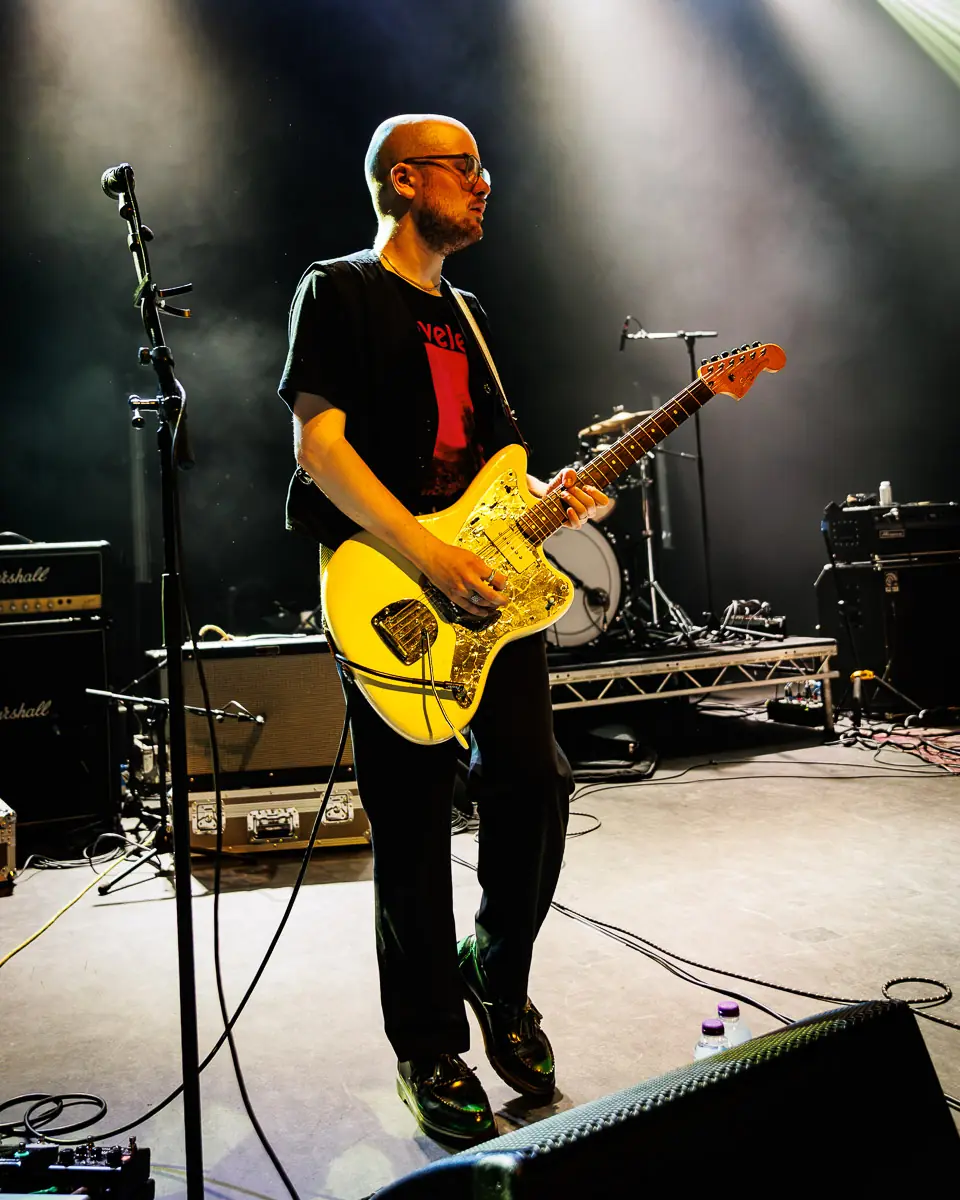
    4 Non Blondes - O2 Shepherd's Bush Empire - 24 June 2026. Photo: Manuela Langotsch/MetalTalk
    4 Non Blondes – O2 Shepherd’s Bush Empire – 24 June 2026. Photo: Manuela Langotsch/MetalTalk

    The crowd is a combination of people who have obviously seen them the first time around, some with their kids in tow, as well as new fans. 

    Personally, I am here because Bigger, Better, Faster, More!, their only album to date, is in that category of albums that I liked a lot in my teenage years, and that I came back to from time to time. And one that I never ended up finding annoying, immature, or in the “How could I have ever listened to that?!” category.

    I pretty much found it a very good record, and do so to this day.

    4 Non Blondes - O2 Shepherd's Bush Empire - 24 June 2026. Photo: Manuela Langotsch/MetalTalk
    4 Non Blondes – O2 Shepherd’s Bush Empire – 24 June 2026. Photo: Manuela Langotsch/MetalTalk

    Truth be told, 4 Non Blondes, with their massive hit What’s Up?, were the most ’90s, MTV thing you could ever imagine. Yes, Spaceman was also pretty popular back then, but it was always THAT SONG that people associate them with. 

    And then they disappeared, with singer Linda Perry making a great career as a songwriter and producer. Look it up, you will be surprised at the number of pop hits she wrote and produced. Enough to mention Christina Aguilera’s Beautiful. Not Metal, but you know that one. 

    4 Non Blondes - O2 Shepherd's Bush Empire - 24 June 2026. Photo: Manuela Langotsch/MetalTalk
    4 Non Blondes – O2 Shepherd’s Bush Empire – 24 June 2026. Photo: Manuela Langotsch/MetalTalk

    As for 4 Non Blondes, they returned, for one gig, in 2014. And then silence again, until the proper one, kicked off last year, when they started playing shows. This time it seems like the real thing, with new music promised. 

    A kid’s voice, presumably Linda’s (later to make an appearance on stage), announces them, and they simply come on. Like a total blast from the past, they start with Train, from that only record. They sound great, and Linda Perry, of course, wearing a hat, seems to be in fine voice.

    What happens afterwards is what is most interesting, though. Instead of playing those presumably well-known to the crowd tracks from the album, they do the opposite. They play a show almost exclusively made up of new tracks.

    4 Non Blondes - O2 Shepherd's Bush Empire - 24 June 2026. Photo: Manuela Langotsch/MetalTalk
    4 Non Blondes – O2 Shepherd’s Bush Empire – 24 June 2026. Photo: Manuela Langotsch/MetalTalk

    To me, that shows confidence, first of all. Then, it is a sign of another thing. That this is a band with a future, not one stuck in its past. If they reunited, they have done it to evolve, not to remain in the exact same place.

    At one point, the frontwoman does say that there is another reason for this. The songs played need to make sense to the person she is today. And some of the old ones do not. 

    There are some very interesting moments. Let You Down is nice and heartfelt. The song, written for Courtney Love, who “Wasn’t capable at the time” (Perry), also sounds very good.

    4 Non Blondes - O2 Shepherd's Bush Empire - 24 June 2026. Photo: Manuela Langotsch/MetalTalk
    4 Non Blondes – O2 Shepherd’s Bush Empire – 24 June 2026. Photo: Manuela Langotsch/MetalTalk

    The same lineup from when the band broke up is present on stage. Perry, on voice and guitar, plus Christa Hillhouse on bass and backing vocals, Roger Rocha on guitar, and Dawn Richardson on drums. They are joined by Nick Maybury on guitar, introduced as a frequent collaborator by the singer.

    But the new, or not recorded, songs make for a very good evening of music. Push & Shove, present somewhat on social media, is catchy and with a nice punk feel, and there is even some old material, never recorded, that gets played.

    4 Non Blondes - O2 Shepherd's Bush Empire - 24 June 2026. Photo: Manuela Langotsch/MetalTalk
    4 Non Blondes – O2 Shepherd’s Bush Empire – 24 June 2026. Photo: Manuela Langotsch/MetalTalk

    There is another beautiful moment as Spaceman gets played, for the first time on this tour. The reaction of the crowd, despite the large amount of new material, is very good. They probably feel that it is a band that feels renewed and really loves being on that stage.

    They finish the regular set, but do return for a glorious What’s Up, sung by the whole venue, including even Linda conducting some audience chanting. It ends with Hollow, as well as the hope that 4 Non Blondes might be back to stay for a while.

    4 Non Blondes - O2 Shepherd's Bush Empire - 24 June 2026. Photo: Manuela Langotsch/MetalTalk
    4 Non Blondes – O2 Shepherd’s Bush Empire – 24 June 2026. Photo: Manuela Langotsch/MetalTalk

    Lucia & The Best Boys

    Tonight’s openers play to maybe half the room. The Scottish band obviously have stage experience, so what we get tonight is a coherent set, with very good vocals and stage presence from the titular Lucia. 

    Lucia & The Best Boys - O2 Shepherd's Bush Empire - 24 June 2026. Photo: Manuela Langotsch/MetalTalk
    Lucia & The Best Boys – O2 Shepherd’s Bush Empire – 24 June 2026. Photo: Manuela Langotsch/MetalTalk

    Their indie rock sound gets a pretty good reaction from the ones already present. The songs, and especially the voice, have this ethereal dimension to them that is perfect to close one’s eyes and dream to, especially as you come into a nicely cooled concert hall from the still very hot evening.

    Lucia & The Best Boys - O2 Shepherd's Bush Empire - 24 June 2026. Photo: Manuela Langotsch/MetalTalk
    Lucia & The Best Boys – O2 Shepherd’s Bush Empire – 24 June 2026. Photo: Manuela Langotsch/MetalTalk
    Lucia & The Best Boys - O2 Shepherd's Bush Empire - 24 June 2026. Photo: Manuela Langotsch/MetalTalk
    Lucia & The Best Boys – O2 Shepherd’s Bush Empire – 24 June 2026. Photo: Manuela Langotsch/MetalTalk
    The post 4 Non Blondes In London: From Past To Future, After Three Decades first appeared on MetalTalk – Heavy Metal News, Reviews and Interviews.
  • W:O:A festival line-up at Landgasthof Wacken – The 9th Stage

    HEAVEN SHALL BURN will perform a special club show at LGH on Thursday with limited capacity; Access only through a ticket raffle The 9th stage of Wacken Open Air – Landgasthof Wacken – once again offers a full week of top-tier acts and entertainment in true metal fashion. A special highlight will take place on festival Thursday, when Heaven […]

    Source

  • On the ‘Lux Tour’, RosalĂ­a Shape Shifts Through Dance

    On the “Lux” tour, the pop star mingles dance genres, starting the show on pointe. As with her dip into opera, her technique might not be perfect, but the intention is good.
  • “I formed this band, for God’s sake! And I helped Roger a hell of a lot because he wasn’t a musician when we started”: The lost Richard Wright interview

    This article featured in the very first issue of Prog. It originated from a Classic Rock Pink Floyd cover story, when Is There Anybody Out There? The Wall Live 1980–81 had been released. Wright was not initially interviewed, and then only a tiny part of a conversation featured in a subsequent issue of the magazine. Prog ran the entire interview in 2009.

    Back in 1999 I spoke to Roger Waters, David Gilmour and Nick Mason for a Classic Rock magazine cover story on The Wall. We were one of two UK publications granted rare access to a band notorious for its dislike of courting the press. Pre-Live 8, the frictions which had split the band, with Waters going solo and unsuccessfully suing Gilmour and Mason for continuing under the Pink Floyd banner, were still all too evident, with recriminations still being bandied about (the delightfully placid Mason aside).

    We tried to speak to Richard Wright too, but were told the now late-keyboard player was “somewhere in France”. Given that Wright was famously sacked by Waters during the making of the album, yet still toured with the band on the resultant shows as a hired hand, his views seemed integral. Others, it appears, thought not.

    Within days of publication I received a phone call from Wright’s office. “Rick wants to talk to you,” I was told and promptly summoned to his Kensington Mews flat. Initially angry, Wright vented on issues in which he felt he’d been misrepresented and set out his take on the situation. It made for fascinating listening and highlighted what a dysfunctional unit Pink Floyd could be, despite the fact they’d made some of the most ground-breakingly astounding music the rock world has ever heard.

    Since then, of course, the foursome of Waters, Gilmour, Mason and Wright finally buried the hatchet and appeared in Hyde Park for 2005’s Live 8, and the sentiments that flowed back in 1999 might no longer represent how band members feel today. Wright’s sad death from cancer in September 2008 has put paid to any faint hopes the quartet would reunite once more.

    In the end, space dictated we only run a small news story from the interview. Now you can read all of Wright’s fascinating words


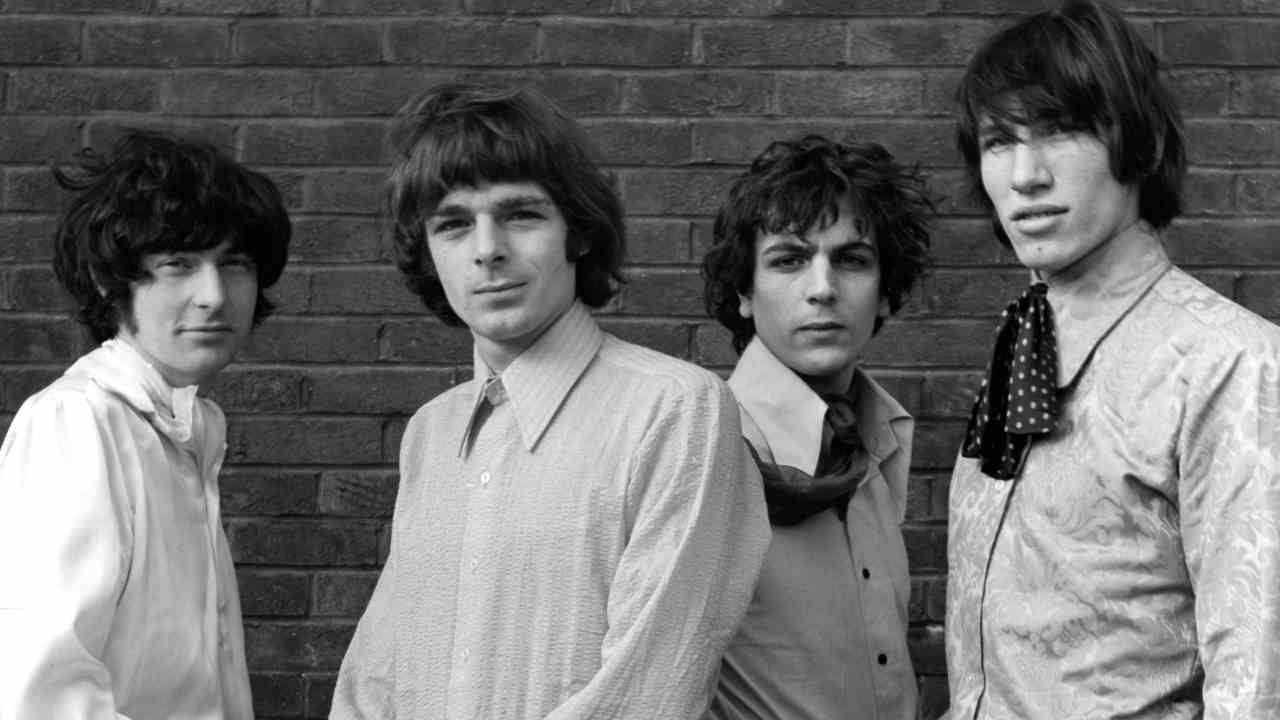
    Pink Floyd posing for a portrait in 1966

    (Image credit: Michael Ochs Archives/Getty Images)

    You say you want to talk to us to put forward your side of the story. What in particular were you unhappy with?

    Various issues come up. Namely saying that I sat in the studio not really doing anything, but because I wanted to get producer’s points. In the beginning – how it worked right up until Animals – an album was co-produced by the band. But when Bob Ezrin was brought in for The Wall, I did have reservations about bringing in an outside producer. Not because of a financial thing of losing production points, because I felt that the band was losing one of its strengths, which was that Pink Floyd would fight each other sometimes – not physically, but all hands together, as a group. I think our best work came that way. It was a difficult issue, because by this time I wasn’t getting along with Roger, and with The Wall, Roger had come in with two completed pieces of work. It’s very difficult when you look back, and I think the decision to have an outside producer was the right one, but at the time I felt pretty sure that the Floyd was losing how it used to work. But that was in the beginning. Once I got to know Bob, I thought it was very good that we had him there. If he hadn’t been there, The Wall wouldn’t have been made, as there was much friction going on with the band. All credit to Roger, he came in with a very rough demo, but I do remember sitting there in Britannia Row with David and Bob and Roger and wondering how we could make it better. Now how much input I or Dave put in to improve Roger’s original concept, I don’t know, but the band was there. There was friction between Roger and I. And there had been friction between us during Animals.

    When did the friction that would result in your sacking start, do you think?

    There was this friction even during The Dark Side Of The Moon, where we the three of us – Dave, Roger and me – were writers. A lot of the concept came from Roger. But we had discussions, arguments, over who should get the share of the credits for songwriting. There was friction with Wish You Were Here. But sometimes it was very good and helped make good records. There has always been friction between me and Roger, right from the beginning. Personality-wise, we just didn’t get on. I can remember the friction when we were still students at Regent Street Polytechnic before the band turned professional. There was this thing between us. But it was a healthy thing. We would not choose to be friends, even at this time, Roger and I. But I could work with him because I could recognise the qualities in the band.

    But it was essentially the friction between you and Roger that caused the problems?

    I have to say Roger, to his credit, would come up with ‘The Big Idea’. That was his role in the band – sometimes very extreme ideas. And Dave and I provided the music to his ideas. That was how the band worked. Some of his ideas – he wanted sound effects blasting out to cover the music, and Dave and I would refuse. He annoyed me, and I annoyed him, just being the way I am. I’m a more reticent person and so I wouldn’t voice my opinions as strongly as he did. And sometimes that can be interpreted as not having an opinion. But when it came to The Wall, it was no longer a band anyway. But I feel I formed this band for God’s sake! And I helped Roger a hell of a lot because he wasn’t a musician when we started. And so did Dave. As Dave said, he feels it was wrong for me to be thrown out, and the way it should have been sorted out was to sit down and talk it out. From Animals on, maybe even earlier, Roger felt he was the band and that all of us were useful to his idea. It wasn’t like that, but he got that feeling. But I can understand why he got that feeling, because he was the one that pushed us all. Dave and I were more laid-back, sometimes maybe lazy… His was a very important role but it only works with Dave and me working with him. And you can use the success of his solo albums as proof that there was a chemistry between the four. By the time of Animals I had not written anything.
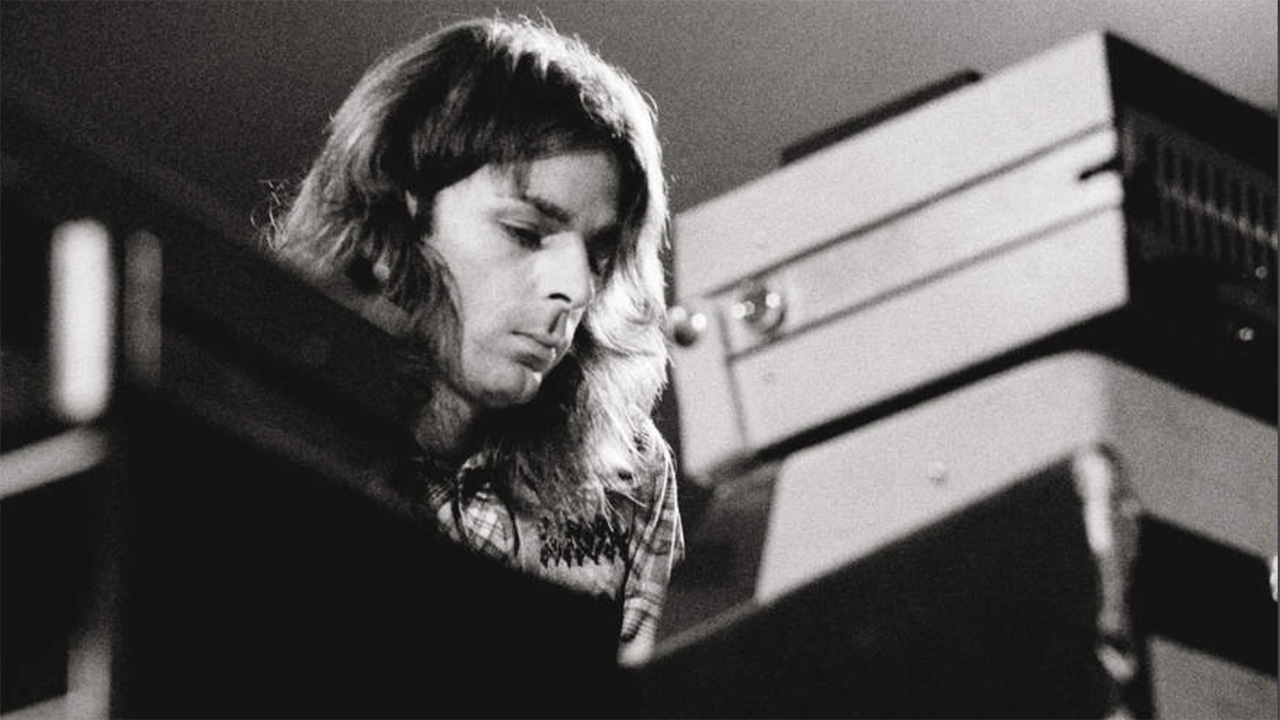
    Richard Wright

    (Image credit: Getty Images)

    Why was that?

    That’s purely a personal thing but I hadn’t come up with anything and I had very little to offer. Dave had little to offer. But I think my keyboard playing is very good. When you get to The Wall and Roger came up with the idea for another album, and at this point I still hadn’t written anything. It always used to be a joke that you saved your best stuff for your solo album and I know that isn’t the case with me!

    How do you view your solo albums these days? Roger was rather scathing in the interview [Waters refers to “his awful solo albums” in the original article].

    This is Roger. After 18 years maybe he’s changed. Clearly in interviews this anger towards the band carries on after he left, and this belief of how important he was to the band and no one else was is still there. It amazes me that he still has this and that he can’t look back and see that some of his best work was when we were together. Same old Roger. Why did he say that? I think my first solo album [1978’s Wet Dream] considering the circumstances I was in wasn’t great, it was OK. The Zee one (1984’s Identity, recorded with Dee Harris from Fashion, pictured left) was a disaster and he has every right to say so. That was a period in my life when I was lost. But my last one [1996’s Broken China] I am extremely proud of. It wasn’t a commercial success,
    but neither was his. He’s saying his last solo album [at the time, 1992’s Amused To Death] was the most brilliant thing on the planet – and that history will show it was a great, great piece of work. This idea that his solo work is great and everybody else’s is terrible is something beyond all that. He needs to say that, I don’t know for what reason. I wasn’t upset by what he said. I expected it. That’s the Roger I know. I thought some of Amused To Death was very, very good and in other parts I don’t like this kind of stuff. And if he’d been working with the Floyd, that was the kind of stuff that wouldn’t have made it onto the album.

    When I look back, I think my solo album was about depression and my personal experience of someone else having depression. At the time of The Wall I think I was depressed. For what reasons, possibly divorce, a terrible relationship with my first wife, and I think now I wasn’t offering everything I had because I wasn’t feeling very good within myself. I didn’t know I was in that state, but I’m pretty sure that the others interpreted it as he doesn’t care, he’s not interested – particularly Roger. He made it extremely difficult for me to work. And you can ask Bob Ezrin, I think he had planned to get rid of me for personal reasons rather than musical, so tried to make it as hard as possible. Funnily enough, talking to [Pink Floyd engineer] James Guthrie, who’s very reliable, he said, “Your playing is great”. So what’s going on here?

    Somewhere it’s mentioned that I lived in the studio, while they had their families. But actually I was living in the studio and missing my family, my children desperately, because they had to go to school. Whereas theirs were young enough to be with them. I stayed in the studio, and they’d say “Why do you go in to work at night?”. And it was because there were no engineers there, the whole album had been mapped out, and I could go in and do a piano part – and it was very hard if Roger or Bob were there.

    But this idea that I was sitting around, wasting my time, is not really fair. But on other hand, I was slightly depressed, maybe really depressed. Since I’ve been talking to a therapist later in my life, I realised I probably was and I didn’t contribute as much as I should.

    Everything seems to have come to a head when you all went on holiday, mid-recording, in August 1979 [Waters claims Wright’s reaction to being called back to the studio a week early was “Tell Roger to fuck off”].

    We all agreed to have a holiday. Roger had already gone to LA, Dave may have gone there as well, I can’t remember. And then a week before I agreed, it was decided to come together again. And up until this point I had no knowledge this was going on. Now reading this, it was obvious he was planning all this way before I thought he was. Anyway, I had a plan from the manager to come back now and start recording. And my reaction was, “No, he’s been sent to do this, he’s testing me. We’ve all agreed and I had specific time with my children, and there was no indication to me that we were that much behind schedule. Will you come now? No, I’m coming on the agreed date”. But I didn’t tell Roger to fuck off. I wouldn’t say that. And that was the last I heard of it, until I arrived in LA and [manager] Steve O’Rourke said to me, “Roger wants you out of the band”.
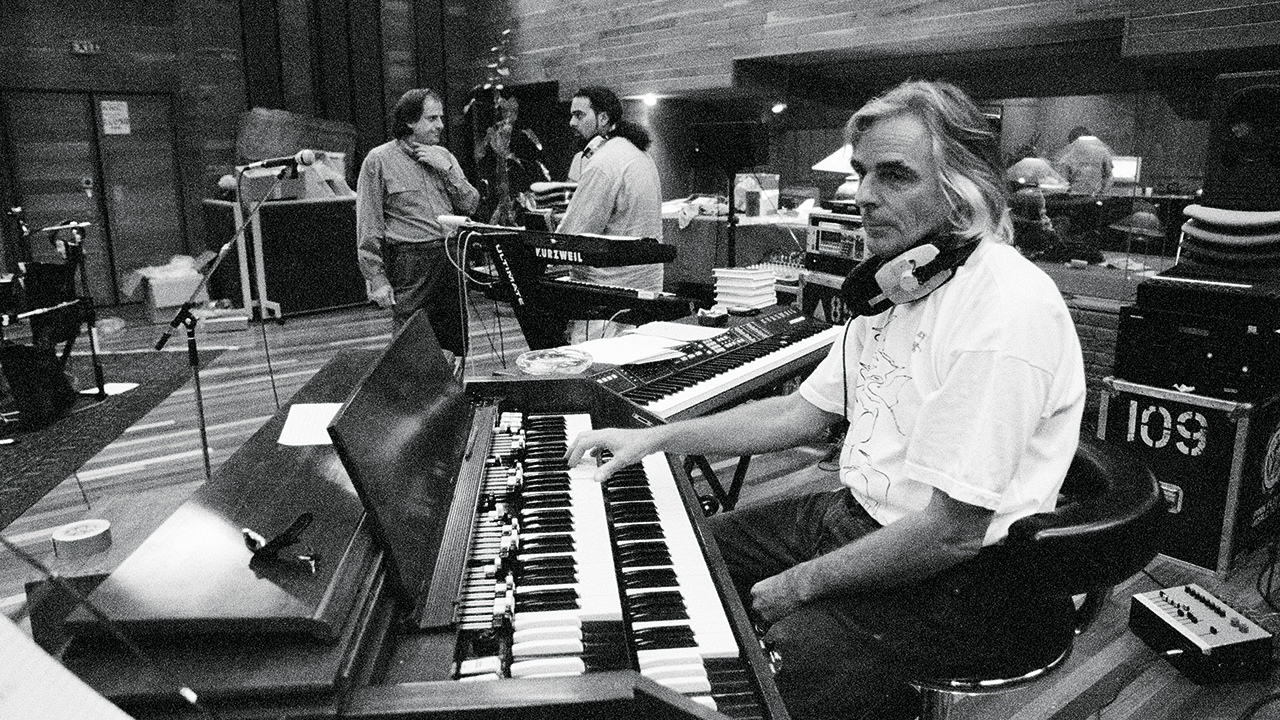
    Pink Floyd

    (Image credit: Jeremy Young and Harry Borden)

    You’ve since seen each other again though, of course?

    Another thing I read in a magazine was that I went to see Roger play live and I came backstage and I’d “had a couple” – which I hadn’t. I felt very awkward, but Jon Carin was a keyboard player for us and Roger said, “You must come”. I didn’t want to. And then in this article, he said I was very friendly to his face but out front I was slagging him off. And this made me very angry. How did he know? Who told him? It’s not true. I was sitting in the front, finding it quite difficult listening to him perform Pink Floyd songs, because I wanted to be up there. When they were playing Comfortably Numb and Wish You Were Here it just wasn’t as good as when the four of us were performing and certainly not as good as the three of us, because Dave’s vocals and guitar playing are so definite.

    But when he got to his solo work I could relax. I was quite impressed. I was also quite impressed with him as a performer, because it’s not easy. He had a very small light show. He couldn’t hide behind the lights, like you can in a Pink Floyd show. But he was upfront on stage and I thought his performance was good for his solo stuff, and also his singing. I thought, “My God, he’s really singing well” and I know that Roger had a hell of a time tuning vocals. And I subsequently heard – and he can say whether it’s true or not – that actually his vocals were taped. But at the time I thought, ‘These vocals are really in tune and wonderful’. Then I subsequently heard, actually they’re taped and he’s miming a lot of it. One person sitting next to me recognised me and said, “Great, you’re here, are you getting up on stage?” I said, “I don’t think so”. He said, “What do you think of the show?” And I told him that I found it hard to listen to the Pink Floyd stuff but I’m quite impressed with his performance. That’s all I said. That is not slagging him off. I think Roger just made it up.

    And I think, “Why do you have to say these things, Roger?” It was difficult for both of us, backstage. I hadn’t seen him for 18, 19 years. I didn’t want to go, but Jon persuaded me, and my wife persuaded me – she didn’t know what happened – and I thought, Why not, We’re grown men now. So I went backstage, shook his hand and said, “How are you?” And we both felt awkward. And that was it. There was no great meaningful conversation. I’m at the point where all this bullshit should stop. I think it’s kind of juvenile now to keep on fighting.

    The very fact the pair of you met up suggests some thawing of the relationship?

    He’s a very good talker with a very bright mind. I asked Jon Carin, “How is it to work with Roger?” He said, “He’s sweet and kind and very nice to the band”. I believe Eric Clapton playing with him [Clapton featured on Water’s 1984 The Pros And Cons Of Hitch Hiking] must have been a bad time in Eric’s life to go out with Roger Waters. But the fact that half the crowd had come to see Eric Clapton – and Eric would do a solo and the crowd would applaud it, and Roger going backstage, “What the fuck are you doing Eric, this is my show”. That Roger I know about. The sweet, kind Roger that Jon told me about I don’t know. He has a lot of bitterness and anger. I had a lot of bitterness and anger about how I was treated. It was simply this: either leave or I won’t record The Wall. I was in a no-win situation. If he carried out his bluff, financially we were all terrified. Dave and Nick wouldn’t support me. And to this day, I think “What if I’d called his bluff, what would have happened?”. After that I thought and thought. My conclusion was I didn’t like the way the band was going, and the way he was operating, this band wasn’t going to last much longer anyway. But my attitude was “I’m leaving, but I want to finish the recording and do the live shows”. I couldn’t just walk out the door. I know Dave and Nick felt bad about it – but Dave said he would never have asked me to leave.

    How on earth did you cope on The Wall tour, as a member of the band, but not a member of the band?

    I shut off the whole idea that I was leaving the band. I actually fooled myself that I’d play as well as I could and maybe he’ll admit he was wrong. So I put everything into it. The pictures look like we’re all together. I was in limbo. “I’m going to try and enjoy this show”, that was my feeling. Roger was saying somewhere that we had separate caravans and changing rooms – and we lost it because we were all in our separate places. He wanted it that way. Dave and Nick and I didn’t want it that way. He’d travel in his own car to the gig, different hotels from anyone else. He created the isolation. I can’t say what happened on The Wall movie or The Final Cut.

    What do you think of The Final Cut?

    I don’t particularly like it. I look on it as a solo album and I think he does too.

    What do you make of the allegations that Dave suggested if you were out, why not get rid of Nick Mason too?

    I think the feeling is that what Roger really wanted was for him to become the leader with Dave Gilmour as his sidekick playing the guitar. They used other drummers on The Wall – so Roger might have thought he could use session players. I can’t say… I don’t know what Roger was planning. They used to be mates, Nick and Roger…
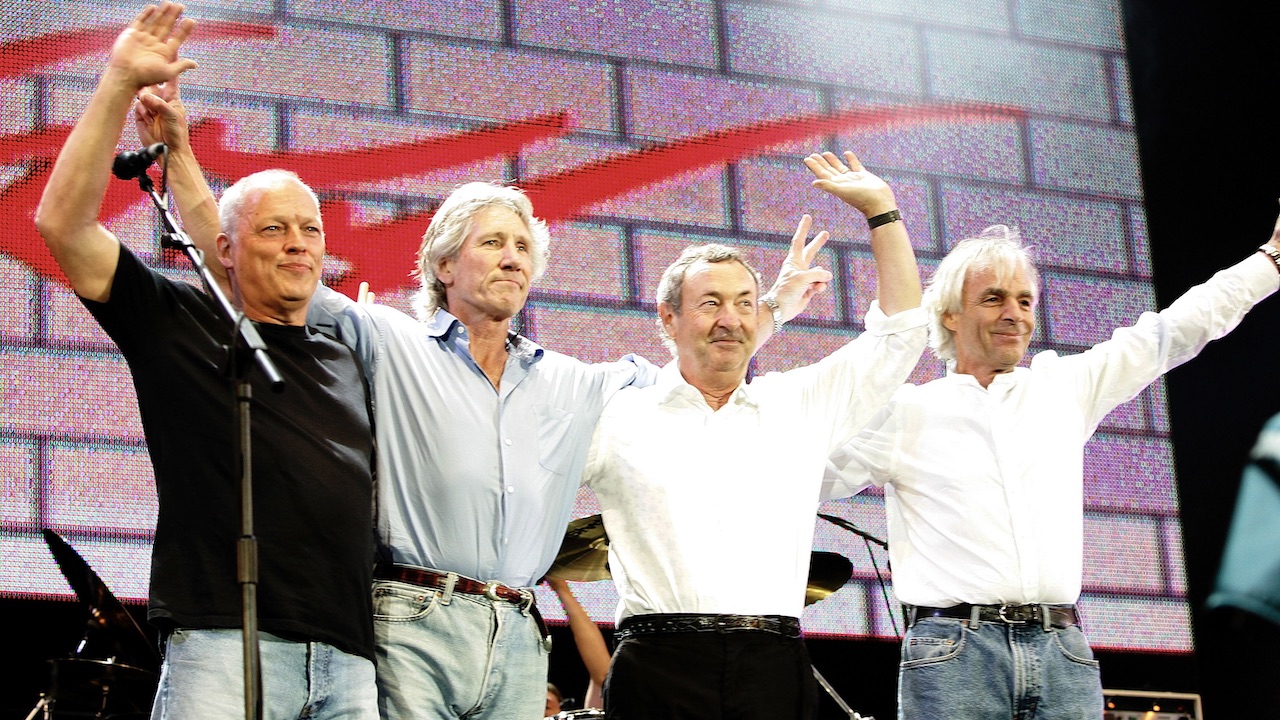
    Pink Floyd, 2005

    (Image credit: MJ Kim/Getty Images)

    How did the process of you rejoining Pink Floyd for the Momentary Lapse Of Reason tour work out?

    I’d heard Roger had left the band but that Dave and Nick were making a new Pink Floyd record, and I was in Greece. It says in your feature that my second wife went along to Dave. This is quite possible but I went to see Dave and said I would be very interested in getting involved again. I don’t know if my wife went to Dave. I don’t know if Dave and Nick were having a fight with Roger because I came into the middle or end of the recording of A Momentary Lapse Of Reason, but I think it’s interesting – we hadn’t seen each other in a long time. I remember having a meal with them and Steve in a restaurant in Hampstead and I think they wanted to see how I was. I passed the test and I was invited to play on the album and do the tour. That tour for me was probably one of the most enjoyable tours that we’d ever done. I still had this anger about what had happened with Roger and that it would never work again if he was in the band. Everybody has these egos. Dave has said Nick and Rick couldn’t play on that tour. He was pretty bad on the tour. He suggested that he was leading us through and helping us. It wasn’t like that. He came and played on my solo album on one track – and he couldn’t play properly. No criticism of Dave but it was because he hadn’t been on the road. By the time we got through the rehearsals we were playing near to our capabilities. After five or six shows we improved. But we weren’t that bad.

    Typically Roger was very critical of A Momentary Lapse Of Reason.

    Roger has criticisms of that album which I think are fair – because Dave did bring in a lot of people to help him make the album. It’s not a band album at all.

    So where you a full band member when it came to recording The Division Bell?

    Full member is partly true. Not in terms of contract. Dave and Nick didn’t want to give away what they’d gained. And it came very close to a point where I wasn’t going to do The Division Bell because I didn’t feel that what we agreed was fair. And interestingly Dave said you have this right to be a member of the band, but when it comes to the nitty gritty wouldn’t give it back, which I think was kind of selfish. Me rejoining the band when they were still fighting Roger helped them, because Roger’s criticism was that it wasn’t Pink Floyd anymore, but by me being there gave them three members again – and two of them were writers.

    Musically, I’m a full member again. Contractually, no. Now, if anything happens again, it’s full member or nothing – that’s my attitude. I hope something does happen and everyone else does. I think Dave’s problem is he worked damn hard on Momentary Lapse
 and he thinks he felt he took the whole thing on his shoulders and he did. When it came to The Division Bell, he felt he was taking the whole thing on his shoulders and, again, he was, but he didn’t want to delegate, he didn’t want contributions from me. I think he thought, if there was the next Floyd album he’d have a hell of a lot of work to do. But it doesn’t have to be like that. It could be written the way we used to. But I have been lazy and haven’t done enough because I had big changes in my life, although I have quite a bit of material stashed away. We’ve both been lazy. Dave’s reticent about the future but I really do hope we do something again.

    How do you feel now about the fact that you were the only member of Floyd to make money from touring The Wall?

    I took no pride in the fact that I made money and they didn’t. There are certain purists who don’t think that Pink Floyd is the real band since Syd left, and if you listen to the first two albums and what Syd contributed to it and what we played, sure, after that Pink Floyd changed very very much so. Now, most people’s feeling is that what Pink Floyd is, is what we did after Syd left. My feeling is that as long as I’m on the keyboards and Dave is playing his guitar


    I wish we could have all been great buddies and carried on. Roger’s real problem is he thinks his solo albums are the real Pink Floyd, but no, Roger, they’re not. But I don’t know what goes on inside his head.
  • BĂŒhne 9 – Das WOA mit Heaven Shall Burn!

    FĂŒr die 9. BĂŒhne wurde auch in diesem Jahr ein Line-up fĂŒr euch zusammengezimmert, dass Euch auf die Reise durch alle Breitengrade des Metal, und auf die Höhenmeter der internationalen Speerspitze des Rock schickt.

    Heaven Shall Burn werden am Donnerstag eine einzigartige Special Clubshow spielen – Unter der Fahne Pay with your Blood brodelt der Landgasthof. Da der Platz Ă€ußerst begrenzt ist, verlosen wir unter allen Ticketinhabern GĂ€stelistenplĂ€tze auf unserer Website. Hier geht es lang fĂŒr mehr Infos!

    Das brandneue Gespann JĂ€st (mit Mitgliedern von Grave Digger, Orden Ogan und Freedom Call) liefert Euch einen fetten 80s AOR-Reboot und mit The Limit bricht eine echte Urgewalt ĂŒber uns herein. Die Doom-Punk-Supergroup um Pentagram-Ikone Bobby Liebling, New Yorker Punk Legende Sonny Vincent und Slime Trommelmaschine Alex Schwers liefert eine dreckige, hochexplosive Geschichtsstunde in Sachen roher Riff-Power.

    International wird es mit dem chilenischen Ausnahme-PhĂ€nomen Mawiza. Sie verbinden tiefgrĂŒndige Botschaften ĂŒber den Erhalt der Natur mit ritueller, brachialer Live-Energie und singen komplett in der indigenen Sprache des Mapuche-Volkes. Direkt aus Peking reisen zudem die zweifachen Wacken-Veteranen Die From Sorrow an, um uns zu zeigen, warum sie das W:O:A Metal Battle gewonnen haben und als eine der Speerspitzen der chinesischen Melodic-Death-Metal-Szene gelten.

    Wir runden das massive Brett mit einer unaufhaltsamen Schweizer Fraktion und minimalistischen SoundwĂ€nden ab: Das Modern-Rock-Duo 2silent glĂ€nzt mit epischen Hymnen, wĂ€hrend Cevret die  Metalcore-Dampfwalze hinterherjagen. Wer die pure, ungezĂ€hmte Underground-Abreibung sucht, bekommt von den Lausanner Death-Hardcorern Dry and Shattered sowie dem ZĂŒrcher Abrisskommando XOXO ordentlich die GehörgĂ€nge durchgespĂŒlt. Fuzz, Groove Metal und eine massive Portion Punkrock? HierfĂŒr braucht The Hebridean Sheep nicht mal Gitarren. Das Schlacht-Schaf zimmert Euch nur mir Schlagzeug, Bass und fiesem Fuzz eine hypnotische Soundwand in unsere Lieblingskneipe.

    Damit aber noch lange nicht genug, denn auch abseits der klassischen Konzerte brennt die Luft! Beim Metal Karaoke Massacre werdet ihr selbst zur Rampensau auf unserer BĂŒhne.

    Wer dann noch den Samstag nutzen möchte, um an seiner musikalischen Bildung zu arbeiten, dem sei die Jazz Sabbath Special Breakfast Show ans Herz gelegt. Handelt es sich hier wirklich um das sagenumwobene Trio, dessen Liedgut von niemand Geringerem als dem Prince Of Darkness stibitzt wurde – oder haben hier eventuell Mitglieder von Black Sabbath selbst die Finger drin? Ihr erfahrt es am Samstag!

    Den Adleraugen und Mathe-Genies unter Euch fĂ€llt auf: Eventuell könnte am Samstag noch ein Platz auf dem Line Up gefĂŒllt werden. Es bleibt also spannend, denn manche munkeln, es ist ein dunkler Zirkus, der hier in unserem beschaulichen Dorf Halt macht.

    Mehr dazu in KĂŒrze. Danke fĂŒrÂŽs Lesen. Punkt.

    Der Beitrag BĂŒhne 9 – Das WOA mit Heaven Shall Burn! erschien zuerst auf Live, laut, legendĂ€r!.

  • “I get into arguments with fans all the time about this. Everybody’s like, ‘Oh, it’s just a leftover Stone Sour song.’ No, I wrote that for Slipknot!” How Slipknot made the greatest metal ballad of the 21st century

    If you were to time-warp back to 2001 and tell people that Slipknot will create one of the most vulnerable and evocative ballads in metal, they’d laugh in your face. The Nine rocketed to prominence around the new millennium by being the angriest band of the nu metal takeover: their music was extreme, their live shows anarchic and their appearance deliberately shit-your-pants terrifying. However, continued relevance requires musical evolution – and that’s precisely what the Des Moines renegades underwent as the noughties resumed.

    After putting the metal world on notice with their furious debut then doubling down on Iowa (still the angriest album to top the UK charts), Slipknot grew beyond unfettered rage. Members took breaks from the 18-armed wrecking machine in less destructive side-projects and/or got clean from substances. When they regrouped to make 2004’s Vol. 3, they craved acoustic guitars, bigger singalongs and a more colourful emotional palette. That pursuit then reached its apex four years later, with the creation of the band’s softest and most emotionally exposed song: Snuff.

    Snuff was controversial at first. When released as the 11th song of Slipknot’s fourth album All Hope Is Gone, reviewers were apprehensive, while fans were either confused or incensed. Many likened its melodic singing and clean guitar tones to Corey Taylor’s hard rock second job Stone Sour. Others, even worse, lambasted the ballad as a sellout move, mocking what were once metal’s rowdiest iconoclasts for lamenting a breakup with lyrics like “It took the death of hope to let you go”.

    However, Snuff has since been reappraised as one of Slipknot’s greatest achievements. Its release as a single in 2009, with a cinematic music video directed by percussionist Shawn “Clown” Crahan, broadened the band’s appeal and saw it resonate with anyone who’s felt emotions as universal as heartbreak or self-loathing. In 2023, The Nine were forced to add the ballad to their setlist – such was the intensity of fans demanding to hear it live.

    In much the same way Snuff was unusual for Slipknot musically, its songwriting was different to how The Nine normally operated. Late bassist Paul Gray and drummer Joey Jordison were the outfit’s principal composers, especially during the volatile sessions for Vol. 3, but the roots of this song were solely with Corey.

    “I get into arguments with fans all the time about this: everybody’s like, ‘Oh, it’s just a leftover Stone Sour song,’” the singer recalled during a 2021 fan Q&A. “No, I wrote that for Slipknot. I didn’t expect them to use it, to be honest, but I wrote it specifically for Slipknot, because it was regarding one of the heaviest times of my life.”

    Snuff directly addresses Corey’s emotions at the end of his first marriage, which lasted from 2004 to 2007. “It was one of the heaviest disappointments, one of the heaviest heartbreaks, I’d ever felt,” he said of the split. “It took years to get through, even after moving on and being in different relationships. That haunted me for a long time. It’s one of those things where you knew you weren’t supposed to be together, but there was something there that felt so good. When it’s ripped away from you, you just feel like there’s a hole in your chest.”

    The lyrics unpick the complexity of that: ending a relationship where there’s disappointment and hurt yet, also, still affection. “If you love me, let me go,” Corey declares at the start of the second verse, later adding juxtapositions like “You couldn’t hate enough to love” and “Angels lie to keep control”.

    Although Corey never expected Slipknot to go for the song, Joey and Paul were hugely impressed by it. Joey secretly recorded a drum track to accompany the frontman’s demo and, when he presented the new package to Corey, the singer burst into tears. Meanwhile, the bassist was an ardent supporter of the tender track to the rest of the band.

    “If Paul hadn’t championed that song, I don’t think we would have recorded it,” Corey told Kerrang! in 2018. “But he loved it and saw the potential with it and really wanted us to do it.”

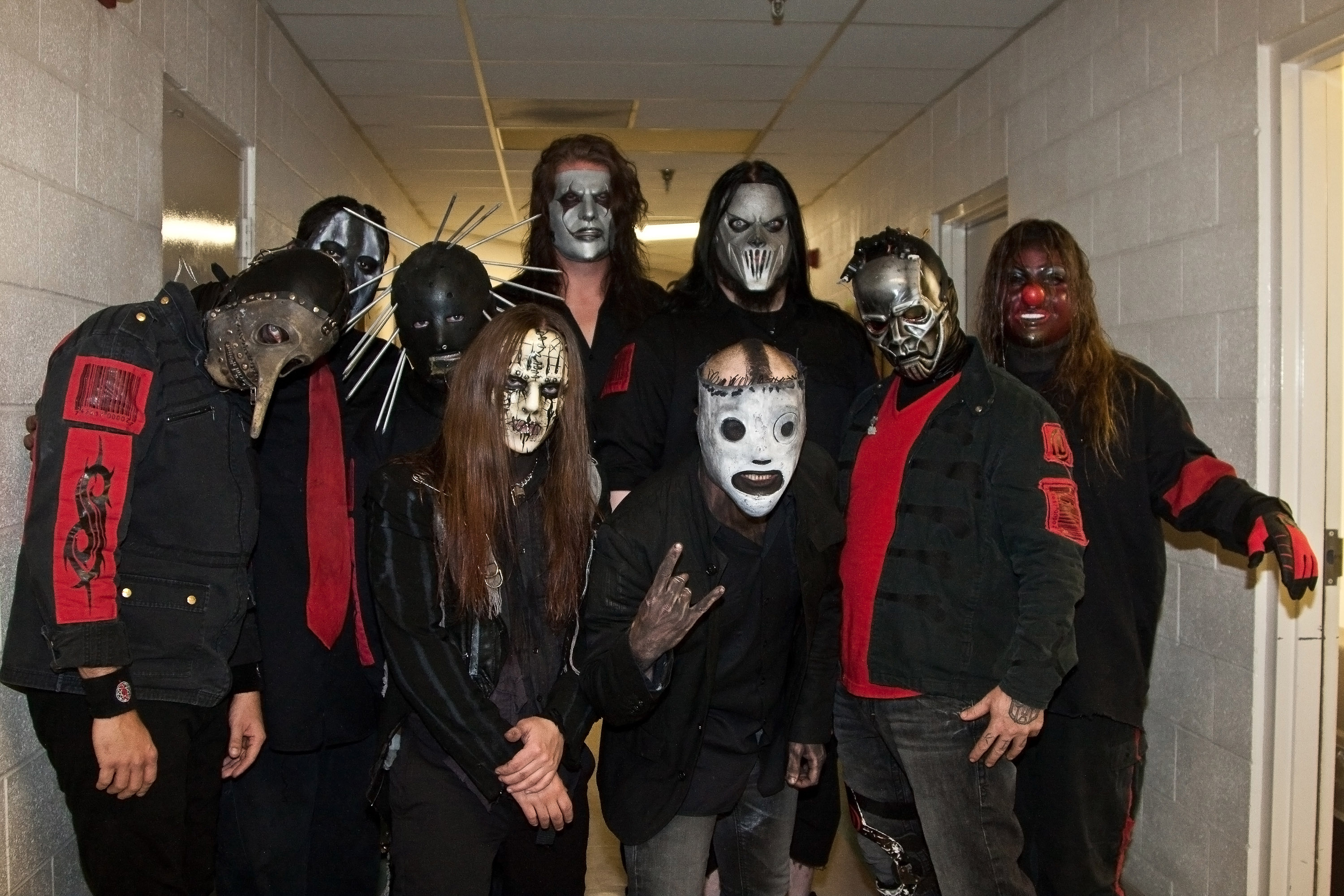
    Slipknot in 2009

    Slipknot in 2009. L–R: Chris Fehn (percussion), Paul Gray (bass), Craig Jones (keys/samples), Joey Jordison (drums), Jim Roots (guitars), Corey Taylor (vocals), Mick Thomson (guitars), Sid Wilson (DJ), Shawn ‘Clown’ Crahan (percussion). (Image credit: Anna Webber/WireImage)

    Despite the initial shaky response to Snuff when it was first heard on All Hope Is Gone, its re-examination started as soon as its single release. The song made it to number six on the US Hot Rock & Alternative Songs chart, a career-best that the band didn’t outdo until 2019’s Unsainted, and number two on the US Mainstream Rock chart. It’s nowadays the second-most-streamed All Hope Is Gone song (behind Psychosocial), while the video currently boasts 163 million YouTube views, which is more than such beloveds as Wait And Bleed and Left Behind.

    Beyond cold, hard numbers, Snuff also gained newfound sentimental power following the death of Paul in May 2010, aged 38. The late bassist’s diehard support for the song saw Corey play it to him as a tribute during his solo shows. In this new context, the heartbroken lyrics were reapplied from a breakup to an untimely passing, and videos of Corey getting emotional while singing them went viral in the 2010s, reasserting its emotional impact.

    “When Paul passed, the song suddenly became less about the dark side of love and it became about triggering memories of him,” Corey told the BBC Radio 1 Rock Show in 2017. “He loved that song, so it really reminds me of him, especially when I play it live. It’s strange there are a lot of times where I can’t even remember the level of potency that maybe the original emotion had when I recorded it – it just means something different now.”

    Today, Snuff remains both a potent tribute and one of metal’s most adored ballads. No, the Slipknot of 2001 could not, and would not, have written something this sensitive and exposing. But that only makes the song a testament to the fact that – beyond playing guitar or having a nice voice – one of the key skills of excellent musicians is personal growth.