


IOCASTE


LIAR


KANINE


FILTH
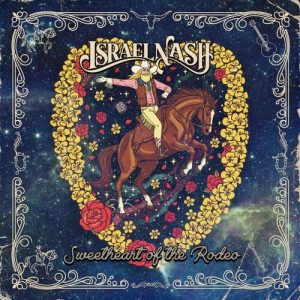
Some listeners assume that a relatively recent trend of tribute records to entire albums leads to fragmentation of their original concept due to different musicians’ involvement in such homages, and it indeed ruins the flow – which can’t be said … Continue reading
The post Israel Nash Reframes “Sweetheart Of The Rodeo” appeared first on DMME.net.
If the 1970s was prog’s heyday, then the 80s was when it reinvented itself. At the start of the decade, the genre’s big hitters may have been a little bruised by the upheavals of the previous few years – but for the most part they were still standing.
Pink Floyd, Yes and Jethro Tull all released albums, while Genesis became bigger than ever – albeit by streamlining their sound to fit prevailing pop trends. At the other end of the scale, the neo-prog movement produced a new generation of bands, most notably Marillion, Pallas, I.Q., Pendragon and, a few years later, It Bites.
That’s not to say the 80s was an easy time for prog bands or their fans – 25 minute epics were considered passé. In truth prog’s peak had passed – at least for the time being. But in 2016 we listed the most essential albums that kept the flame alive.
The final of the four albums in Rush’s second cycle, this is one of the Canadian trio’s three strongest albums – irrespective of the decade. The menacing introduction to the Mark Twain-inspired Tom Sawyer is merely a prelude to the equally wonderful Red Barchetta and the stunning instrumental YYZ.
Moving Pictures sees the trio pulling off the tricky balance between virtuoso musicianship and superb musical material and thought-provoking lyrics. Limelight’s take on fame remains ever-pertinent more than 30 years later.
Subsequent Rush albums in the 80s would get bogged down in synths, but Moving Pictures is the sound of the band at its peak.
A marketing man’s dream, Asia were a premier league prog supergroup: Yes guitarist Steve Howe and keyboardist Geoff Downes, ELP drummer Carl Palmer and King Crimson/UK/Uriah Heep bassist/vocalist John Wetton.
This, the quartet’s debut, spent nine weeks at the top of the US album chart. Hugely commercial, but with strong prog undertones and impeccable musicianship – plus the prog stamp of approval of a Roger Dean logo and cover – the likes of Heat Of The Moment and Only Time Will Tell earned Asia a huge audience.
The eleventh-hour involvement of vocalist Jon Anderson meant that this extraordinary album appeared under the Yes name. With bassist Chris Squire and drummer Alan White on board, plus the return of keyboardist Tony Kaye, the band may have looked like Yes, but 90125 represented an astonishing sonic transformation.
The mastermind behind its compelling songs and unique sound was South African guitarist Trevor Rabin, abetted by some-time Yes vocalist Trevor Horn. The almost metallic riff of lead track Owner Of A Lonely Heart may have shocked old fans, but it also ensured Yes’ survival.
With Roger Hodgson departed for a solo career, keyboardist/vocalist Rick Davies assumed control of Supertramp’s musical direction. And with Brother Where You Bound that meant for a unique creation.
Cannonball and Still In Love have Davies’ piano to the fore, with plenty of horns thrown in for good measure, while No In Between is darkly atmospheric.
And just edging Better Days, the highlight is the thunderous 16-minute title track, featuring Thin Lizzy’s Scott Gorham and Pink Floyd’s David Gilmour on guitars. An atypical Supertramp album, but also one of their strongest.
Standard-bearers for the so-called neo-prog movement, Marillion had already enjoyed some success before the release of this, their third album. But with the timeless Kayleigh and epic ballad Lavender making serious inroads into the singles charts, Fish and co suddenly became household names.
Prog just wasn’t expected to be this catchy, but Kayleigh was instantly memorable, and Steve Rothery’s signature guitar sound throughout satisfied the purists. A bona fide concept album, Misplaced Childhood is one continuous piece of music. And at 41 minutes it doesn’t outstay its welcome either.
The cynics may have carped that, in Carl Palmer’s absence, Keith Emerson and Greg Lake brought in Cozy Powell only to maintain the ‘ELP’ continuity. But it’s the former Whitesnake drummer’s power that propels this superb album.
The Score and The Miracle are marvellous mini-epics. Elsewhere there are shorter tracks such as the jazzy Step Aside, the ballad Lay Down Your Arms and the memorable Touch And Go, plus Mars, The Bringer Of War, from Holst’s The Planets. This stands proudly alongside the best of the Palmer ELP albums
Defying Roger Waters – who’d tried to shut the band down in the wake of 1983’s acrimonious The Final Cut – Messrs Gilmour, Mason and Wright reunited in 1987 for A Momentary Lapse Of Reason.
Derided at the time by Waters, it’s effectively a Gilmour solo album. And while it’s not a patch on the Floyd masterworks of the 70s, it merits inclusion here.
The ironically titled Signs Of Life is an instrumental prelude for Learning To Fly which showcases Gilmour’s guitar, while the pulsating The Dogs Of War is considerably darker, and the uplifting On The Turning Away simply sublime.
A prog rock band with strong pop sensibilities to boot, It Bites were an unlikely looking and sounding proposition.
This second album manages to mix hugely commercial tracks like Midnight and Kiss Like Judas with epics like Old Man And The Angel and the astonishing 15-minute title track without seeming contrived.
While Francis Dunnery’s voice is an acquired taste, his guitar playing and musical vision held enormous promise which as yet remains unfulfilled following the band’s implosion a couple of years later.
Yes in all but name for legal reasons. After that band’s Big Generator failed to match the success of 90125, vocalist Jon Anderson regrouped with former colleagues Steve Howe, Bill Bruford and Rick Wakeman for this one-off project.
More quintessentially prog than 80s Yes, ABWH stretch out with several mini epics – Themes, Brother Of Mine, the borderline twee Quartet and potent Order Of The Universe among them.
Elsewhere The Meeting and Let’s Pretend are reminiscent of Anderson’s work with Vangelis.
Formed by Lodgic bassist – and future Yes man – Billy Sherwood, World Trade’s debut is one of prog’s great lost albums.
Clearly influenced by early-80s Yes, World Trade fashioned a sound that was a hybrid of AOR and prog. A throwaway opening instrumental aside, this record is 10 near-flawless tracks.
Highlights include Life-Time, driven by Sherwood’s bass riff, the uplifting Revolution Song and caustic Fight To Win. Sherwood’s current membership of Yes aside, World Trade are a footnote in the prog annals – but this is essential listening.
Free began as a serious-minded bunch, each member steeped in the spirit of the British Blues Explosion. Most of their 1969 debut Tons Of Sobs and the eponymous follow-up consisted of meaningful blues tracts, and their concerts ticked along to a medium tempo. The story goes that after a particularly lacklustre college gig in Durham, Free headed for the dressing room to the audible indifference of the crowd.
“The applause had died before I had even left the drum riser,” recalled drummer Simon Kirke. “It was obvious that we needed a rocker to close our shows.” A tune that always got the room shaking was their take on The Hunter, a raunchy, upbeat blues recorded by Albert King.
“We couldn’t drop it because it was too popular,” remembered Paul Rodgers. “We knew we had to write a song with all those same qualities and a singalong chorus.”
That night in Durham, Fraser consoled his bandmates, reassuring them things would be okay by riffing on a consolatory line, ‘All right now, it’s all right now’. It stuck, and their biggest song was pieced together from there. Fraser wrote the timeless riff on piano, with Paul Kossoff then arranging it for guitar. If there were similarities with the Rolling Stones’ Honky Tonk Women, Fraser claimed he was actually trying to channel the era’s chord-meister, Pete Townshend.
If All Right Now showed Free’s more frivolous side, it was driven home by their unparalleled musical pedigree. Kirke’s cowbell-studded beat is rock solid, Fraser adds flamboyant, high-up-the-neck fills to his low-end bass groove, and Kossoff – besides that crunching riff – plays his heart out through the song’s soaring guitar solo, cut short for the single edit by Island’s Chris Blackwell, who could smell a hit.
Meanwhile, Rodgers takes the of-its-time ‘boy-pulls-girl’ lyric and pours soul all over it. The lyric, the frontman revealed to Free biographer Steven Rosen, was inspired by an unplanned encounter with actress Marsha Hunt (then in a relationship with Mick Jagger) on a London street.
“I used to live near Oxford Street and Hair was playing right there on the corner,” said Rodgers. “And I remember seeing this girl and she may have triggered the idea for that, because there she stood in the street, and she seemed to be smiling from her head to her feet. She obviously had a presence, do you know what I mean? Because there were a lot of people around and she just stood there and I thought, ‘Wow – look at her’.”
First charting in June 1970, All Right Now peaked at No.2 on the UK singles chart and at No.4 in the US. Its parent album Fire And Water also landed at No.2 in the UK, its momentum maintained by Free’s turn at the Isle Of Wight Festival that year, where Free headlined for a crowd estimated to be between 600,000 and 700,000.
In reaching that commercial high-water mark, one of the all-time great British rock bands gave us an enduring anthem. With 380 million Spotify hits and counting, it’s still played on radio daily worldwide, still lovingly murdered by countless pub bands every weekend, still imitated by the legions of groups Free inspired.
“I never bought a yacht on the Riviera off it, but it’s been very handy,” Rodgers told Classic Rock. “A couple of TV ads butchered it like the Wrigley’s Spearmint gum thing, where they just used my voice. Island Records did better than we did. The song broke us in America, but we couldn’t capitalise because we broke up and became an enigma there.”
Indeed, the success of All Right Now was a factor in that breakup, robbing Free of the musical freedom their name implied. “All Right Now really was an albatross,” Kirke told Classic Rock. “What’s that old Chinese saying: be careful what you wish for? And we got it. Suddenly, instead of playing a different town every night, we were playing a different country.”
“The pressure was on to come up with a follow-up to All Right Now, and we just couldn’t,” he continued. “That’s when Andy and Paul thought, well, we’ve reached the end of our musical journey together, let’s split up. I’ll never forget Koss’s reaction. He slumped like he’d been hit in the stomach.”
Plus Bilmuri, Alexisonfire, Chad Gray, P.O.D., SPEED and many more.
The post Limp Bizkit, Spiritbox, Polaris, Ministry, Chad Gray, Etc. Booked For 2026 ‘Good Things’ Festival appeared first on Theprp.com.