Category: news

  • “A master at bringing the guitar to life and giving it a voice.” Fifty years on, Robin Trower’s Bridge Of Sighs is still an all-time blues rock classic

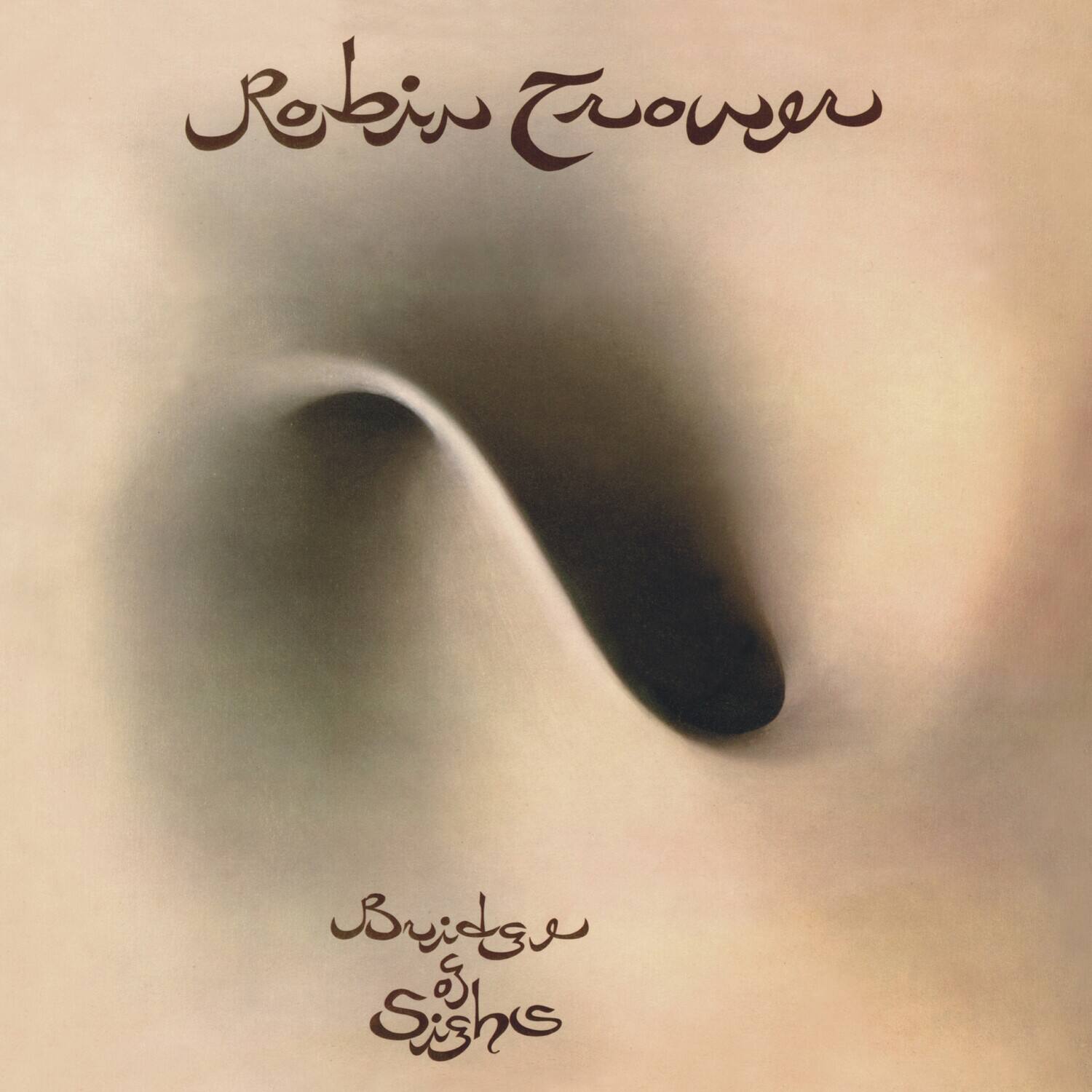
    Robin Trower – Bridge Of Sighs

    Bridge Of Sighs cover art

    (Image credit: Chrysalis/Capitol)

    Day Of The Eagle
    Bridge Of Sighs
    In This Place
    Fool And Me
    Too Rolling Stoned
    About To Begin
    Lady Love
    Little Bit Of Sympathy

    Who would have thought that Robin Trower, the “backroom” guitarist with the stately keyboards-led Procol Harum, would become one of the great blues rock guitarists?

    It was the second of his power trio’s superb trilogy of back-to-back albums in the mid-70s that sealed his reputation. Beginning with the stuttering riff of Day Of The Eagle, the album combines urgency with gravitas. ‘A cold wind blows and gods look down in anger on this poor child,’ sings bassist James Dewar as the title track unfolds with a vast, slow momentum, like a planet drifting through the void.

    It’s a beautifully balanced, dynamic record filled with quality songs, masterful playing from Trower (Bridge Of Sighs, Too Rolling Stoned) with his overdriven, reverb-drenched, swirling psychedelic sound and Hendrix inflections, plus some outstanding performances (About To Begin, In This Place) from the peerless Dewar.

    Bridge Of Sighs peaked at No.7 in the US and remains one of the pillars of Trower’s repertoire to this day.

    Lightning bolt page divider

    Every week, Album of the Week Club listens to and discusses the album in question, votes on how good it is, and publishes our findings, with the aim of giving people reliable reviews and the wider rock community the chance to contribute.

    Join the group now.

    Other albums released in April 1974

    • Ragged Old Flag – Johnny Cash
    • Second Helping – Lynyrd Skynyrd
    • Big Fun – Miles Davis
    • Carolina County Ball – Elf
    • Standing on the Verge of Getting It On – Funkadelic
    • Okie – J.J. Cale
    • Exotic Birds and Fruit – Procol Harum
    • Hamburger Concerto – Focus
    • Houston (I’m Comin’ to See You) – Glen Campbell
    • Positive Vibrations – Ten Years After
    • Road Food – The Guess Who
    • Secret Treaties – Blue Öyster Cult
    • Unconditionally Guaranteed – Captain Beefheart & the Magic Band
    • Sweet Fanny Adams – Sweet

    What they said…

    “At his best, Trower’s gauzy sheets of oozing, wistful sound and subtle use of wah-wah combine with Dewar’s whisky-soaked soul-drenched vocals to take a song like the wistful ballad “In This Place” into orbit. “Too Rolling Stoned,” another highlight and one of the most covered tracks from this album, adds throbbing, subtle funk to the mix, changing tempos midway to a slow, forceful amble on top of which Trower lays his quicksilver guitar.”(AllMusic)

    “The song ideas are strong, and Dewar’s vocals are impressively sturdy, but ultimately it is Trower’s virtuosic touch, the nuanced tone of his Strat and the intrinsic skill of the ‘bends and wobbles’ that Robert Fripp so admired on which the success of Bridge Of Sighs rests.” (Uncut)

    “Throughout you can almost play ‘name that Jimi’ (try the last third of Too Rolling Stoned, where you can namecheck maybe four passages you’ve heard somewhere before), but with the raw bluesy voice of bassist James Dewar and Trower’s writing the album manages to find its own voice. On the slower About To Begin the guitarist leans more towards Peter Green and a whiff of Carlos Santana’s purity of tone.” (Elsewhere)

    What you said…

    Adam Ranger: Such a good choice! As teenagers, my friend and I listened to Trower a lot. We could not understand why he was not talked about in the same terms as Hendrix, Page, etc. Very underrated outside of certain circles.

    The Hendrix style is unmistakable at times, especially on Day Of The Eagle and Little Bit Of Sympathy. The power trio format may help that impression.

    That said, he is no Hendrix tribute act. He has a wonderful style of his own. I love the way he often avoids obvious guitar licks and builds atmosphere instead (a good example is the title track). But when he lets himself go, it’s a joy to listen to.

    Special mention to James Dewar’s bass and vocals. He has a wonderful voice for this style, low but melodic. Maybe comparisons with Cream are as valid as the Hendrix ones? The cover art always put me in mind of stirred cream…. A brilliant blues rock album that scores highly for me.

    Philip Qvist: In the mid 2000s, as established South African radio stations started to shun rock music, record companies started to issue CD compilations of rock music from assorted artists, with a collection of songs from the usual suspects such as Deep Purple, Rainbow, Boston and Kansas. And believe it or not, it was on one of those compilations that I was first introduced to Robin Trower, via a live version of Too Rolling Stoned.

    I had never heard of this guitarist and songwriter until then, and it’s only after that moment that I started to listen to a couple of his songs, even if they never made it onto my playlist of essential songs.

    So listening to Bridge of Sighs this week is my first real introduction to Robin Trower the solo artist, and I thoroughly enjoyed it. Too Rolling Stoned, Bridge Of Sighs and Day Of The Eagle are my picks, but in truth there aren’t any duds on this record.

    Special mentions must go to singer and bass player James Dewar for his soulful singing, and drummer Reg Isidore for maintaining the pace. An 8/10 from me; I’m just glad that I finally got to listen to Bridge Of Sighs (named after a racehorse, I believe, and not the structure in Venice).

    Jackie Craig: I bought this when it was first released. Re: the title track, when that riff comes in for the first time it still has the same mesmerising effect on me all these years later; probably more so now that I’m so much older. Day Of The Eagle is a great opener, and in fact the entire album is an absolute feast. 10/10.

    John Davidson: Great album. Bridge Of Sighs is a fantastic track, but Too Rolling Stoned is the one I listen to most often.

    I recall Trower being criticised for aping Jimi Hendrix, but while I can hear a little of his inspiration on some tracks, it’s not overdone. The vocals are another highlight, and the bass and drumming complete the set. It’s perhaps not groundbreaking, but it’s very accomplished and a thoroughly enjoyable album.

    Mark Herrington: My first introduction to Robin Trower was hearing the meaty Victims of the Fury on the radio in 1980, and buying the single. Intrigued, I bought the album, probably his hardest-rocking LP. From there, I was hooked on his bluesy psychedelic style.

    Then I picked up a second-hand vinyl copy of Caravan to Midnight for £1, a much more languid, dreamy offering. Gradually, I worked backwards through his albums, until probably his best work, Bridge of Sighs (1974).

    Trower excels in his expressive, psychedelic, and soulful bluesy guitar, dovetailing naturally with James Dewar’s deep, emotive vocals. I gravitate to his slower, more expressive tracks such as Bridge Of Sighs and In This Place, where every note seems to linger and carry meaning. But I also love the muscular virtuosity on tracks like Too Rolling Stoned.

    He is a master at bringing the guitar to life and giving it a voice, underlined by his live performances, where he seems to mouth every note he plays. Overall, probably Trower’s finest work.

    Mike Canoe: A classic blues-rock album. The title track is still the most amazing and astounding thing here, but the rest of the album is enjoyable too. Much as when we reviewed Twice Removed from Yesterday in the club’s second year, I am struck by how bassist and singer James Dewar is the band’s not-so-secret weapon. While Robin Trower is deservedly the name above the title, Dewar’s gruff but melodious voice complements Trower’s playing perfectly. He doesn’t overemote or ape other blues singers; he just sings. The overall restraint of the musicianship is impressive, and the songs are songs first and not just showcases for guitar wankery.

    Come for the title track, stay for In This Place, Too Rolling Stoned, The Fool and Me, and Lady Love.

    Greg Schwepe: If you’re looking for another album to add to your “1970’s Rock Guitar Album Time Capsule” (there is such a thing, right?) before you bury it, look no further than Robin Trower’s Bridge of Sighs to throw in there with a few other good ones. How often have you heard an album called “dated?” Well, this one is. Sounds just like 1974, and meant to be that way!

    This has all the hallmarks of a classic 70’s guitar-fest album; the tasteful guitar tones of Robin Trower, the soulful vocals (and bass) of James Dewar, and the grooving drums of Reg Isidore. Ah yes, the Power Trio. It’s been proven many times, you only need three guys to make an awesome racket.

    The clarion call of Day Of The Eagle leads off the one-two punch of Sighs. The galloping and repeating riff gets your attention. And then, right at about three minutes in, the tempo slows to a halt, but your attention does not. Trower’s bluesy soloing finishes out the song. They are not the first band to change tempos and time signatures for effect, but they do it with authority.

    The title track is next, and Trower’s trilling hammer-on note that fades in changes to a sparse three-four note repeating groove that is spacey, atmospheric, pulsing, and undulating, all at the same time. The layered repeating guitar sections at the end with the blowing wind sound effects make for a trippy end to the song.

    I had read in liner notes how some thought Trower was a bit of a “Hendrix Clone.” Yes, he played a Strat through a Marshall, and used many of the same effects (Univibe, Wah-Wah, Leslie) as Jimi, but he had his own style. I think I also read that Trower said that if you’re going to be accused of copying someone, Hendrix wasn’t a bad person to be compared to.

    Too Rolling Stoned is another riff-filled monster where Trower’s wah-wah pedal and Univibe get quite the workout. Once again we have a ton of riffs that then hit the brakes at about the 2:45 mark. Dewar’s vocals and the bluesy riffs finish out the rest of the song. Extended guitar solo anyone? Yes indeed. Along with a thumping drumbeat to keep you engaged.

    I did a deep dive on Robin Trower’s catalogue several years ago after hearing Bridge of Sighs on the radio after not having heard it in years. While I had certainly heard of Trower before, his music was not a regular staple on the radio where I lived. “Oh yeah, I have got to check him out.” A compilation CD led to purchasing most of his catalogue. Which then turned into another “Wow, what have I been missing?” moment. 9 out of 10 on this one for me. Come for the title track, stay for the rest.

    Final score: 8.91 (59 votes cast, total score 526)

    Join the Album Of The Week Club on Facebook to join in. The history of rock, one album at a time.
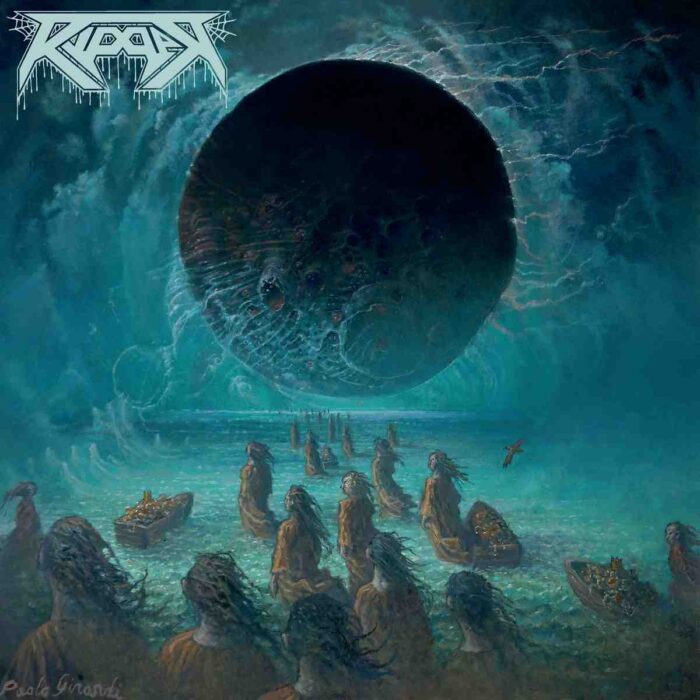
  • Ripper – Towards Rebirth (2026)

    From that interstitial and liminal period between speed metal and death metal, bands like Possessed and Merciless emerged long ago, but the tradition carries on with high-speed contrast and vertigo from Ripper.

    Frenzied riffing fits in mostly circular songs with layers and lots of breaks between transitional riffs that do not so much temporize as offer precipices between inertia and radical change, giving the sense of an unfolding topography where the expected becomes the alien and the oppositional subsumes the norm.

    Speed metal fanatics will find too much tremolo picking, and death metal fanatics too much bounce, but in the end, this album delivers straightforward metal anticipation and inversion of the normal, delivering a surreal world of conflict and usurpation.

  • DICE, MID DRIFT, MIDDLE PALMS: Altar Bar, Hobart, 09/08/2026

    Words by Annette Geneva Photos by Pete Mellows Special thank you to Destroy All Lines DICE rolled into Hobart on their Altitude Tour only days after their second album, I Thought The Altitude Would Make It Worth The View, debuted at #1 on the ARIA Australian Albums Chart. Not bad for a band that, not all that long ago, was building a following […]
  • Top 10 Joe Jackson Songs

    Joe Jackson Songs

    Joe Jackson burst onto the music scene in 1979 with a massive hit single entitled “Is She Really Going Out With Him?” The song was released on Joe Jackson’s debut album entitled Look Sharp. In 1979, new wave music dominated the airwaves, and the sound of Joe Jackson’s album reflected the musical culture of the moment. “Is She Really Going Out With Him?” was not the only great song on the record. The rest of Joe Jackson’s debut album, Look Sharp, was fabulous. Great songs like “Sunday Papers,” “One More Time,” and the title track “Look Sharp” helped Joe Jackson

    The post Top 10 Joe Jackson Songs appeared first on ClassicRockHistory.com.

  • How Pete Townshend turned youthful disgust into The Who’s biggest hit. “I didn’t like being confronted with money and the class system and power”

    Like all Pete Townshend’s best songs, The Who‘s My Generation was a thrilling collision of body and brain. The title had highbrow roots, the guitarist inspired by the Generations collection by socialist playwright David Mercer. But the song’s visceral clatter was fuelled by Townshend’s disgust at his well-heeled neighbours in London. Despite the iconic ‘hope I die before I get old’ line, the songwriter later noted, it was wealth and class, more than age, that he despised.

    “The line actually came from a time when I was living in a really wealthy district of London, just by accident,” Townshend said in 1983. “I didn’t really understand quite where I was living at the time. And I was treated very strangely on the street, in an imperious way by a lot of people, and it was that that I didn’t like. I didn’t like being confronted with money and the class system and power. I didn’t like being in a corner shop in Belgravia and some woman in a fur coat pushing me out of the way because she was richer.

    “I didn’t know how to deal with that. I could’ve, I suppose, insisted on my rights and not written the song. But I was a fucked-up little kid, and so I wrote the song.”

    Townshend worked on My Generation during The Who’s Scandinavian summer tour of 1965, but on his return, the original demo proved a torpid thing, “very much inspired by Mose Allison’s Young Man Blues, my vocal casual and confident”.

    Management saw the song differently, and pushed for a heavier riff and – after Townshend played them John Lee Hooker’s Stuttering Blues – the vocal tic that went down in history. Roger Daltrey had genuinely stammered as a child, but he was told to emphasise this. “[Manager] Kit Lambert came up and said ‘Stutter the words – it makes it sound like you’re pilled’.”

    No doubt, it appealed to the mischief of all concerned that Daltrey was able to let a stammered ‘f’ hang in the air, the listener braced for ‘fuck’ (before the singer resolved the lyric with the less inflammatory ‘fade away’).

    Both as a single – and on the Marquee stage, where the song had its first live airing on November 2 – My Generation let all four members shine. There was Daltrey’s rabblerousing vocal. Townshend’s slashed chords. John Entwistle’s rubber-band bass solo (“John was becoming the outstanding bass revolutionary of the day,” noted Townshend, “and I wanted to provide him with a vehicle for his incredible playing”). Keith Moon’s clatterous outro, chasing around the kit in a squall of feedback. Together, they made the heaviest sound in the pop charts of 1965. It also became the band’s biggest UK hit – reaching number two in the chart – and denting the Top 100 in the US.

    If Townshend felt any guilt at sticking it to the establishment, then shortly before the song’s release, he was reminded why he wrote it in the first place, as his 936 Packard V12 hearse was impounded on the orders of the Queen Mother. “She had to pass it every day and complained that it reminded her of her late husband’s funeral. So I resentfully dedicated My Generation to the Queen Mother…”

    The song would influence a generation of up-and-coming rockers, including Alice Cooper, whose all-star Hollywood Vampires – named after the infamous drinking club whose members included Cooper and Keith Moon – play My Generation to this day.

    “I think My Generation was maybe the first anthem,” Cooper told Classic Rock. “That was the birth of the power chord, right there. And then you saw The Who performing it, and you saw [Pete Townshend] smashing into his amps, and you started going, ‘Is there any end to this British Invasion? I mean, who else is going to come up?’”

    From Townshend’s power chords to Daltrey’s iconic stutter, via Entwhistle’s string-breaking solo and Moon’s wild, clattering finale, My Generation is one of those rare songs that’s a solo tour-de-force for every band member, yet somehow comes together to be even greater than the sum of its virtuostic individual parts.

    “Being a mod, I always thought My Generation was a fucking great song, an unbelievable song,” said Kenny Jones, Moon’s replacement in The Who. “Once a mod, always a mod, y’know? Moony was all over the place. That bit at the end where he goes crazy on the drums? I know – I’ve done it. There are fills that you have to play because the song dictates it.”

  • Mopar Stars – Official Researchers Of The NJ Devil


    I put tremendous value in the Niek seal of approval, so it didn’t take me long after reading his review of Mopar Stars’ new album Official Researchers Of The NJ Devil before I was sitting down and spending some quality time with the album. Was I impressed? The mere existence of this review answers that question. It’s kind of cool how an overseas review of a band that’s only 100 miles away from me can lead me to a record I’ll play over and over. God bless the internet. 

    Following two EPs, Official Researchers Of The NJ Devil is this Philly-based foursome’s proper debut album. It’s a blessing that high-quality indie pop like this is thriving at the moment, and it’s imperative that we don’t take that for granted. You know in five years, we’re gonna be like, “Something special was brewing in the mid-2020s!” Very reminiscent of all those ’90s indie bands who loved ’70s power pop with some Replacements worship sandwiched in between, Mopar Stars manage to sound very much like a contemporary indie rock band even as their music is rooted in classic guitar pop. The specific influences are not at all super-obvious, and perhaps that’s because they’re numerous and quite varied. Without getting too complicated or ambitious in his approach (only one track is longer than three minutes), Nao Demand is showing himself to be a masterful and gifted songwriter. Far from a mere collection of songs, this is a true album. You put it on, and you want to listen all the way to end. On one level, this is a power pop record, and the hooks cannot be denied. But the overall vibe is laidback (some might say slacker-ish) and reflective. It’s the sort of album you ought to listen to while you’re sitting alone in a comfortable space and nursing a beverage. This is an album that will make you think about life. These tunes aren’t trying to beat you over the head. Even in the two minute-ish range, they take their time introducing themselves. Sometimes power pop gets classified as empty calories for the ears, but these songs are by no means lacking in substance. 

    How do you make an album that’s tried-and-true indie pop that still doesn’t sound like ten thousand albums you’ve heard before? Ultimately it comes down to the craftsmanship and charm of the songs. You hear songs like “Drinkallnite,” “Only Bar In Town,” and “Lifetime of Pain” a couple of times, and it feels like you’ve known them forever. Mopar Stars have delivered a splendid debut album that is absolutely worthy of the rave reviews it’s garnering. The City of Brotherly Love is ruling power pop right now!

  • “This song is not a rebel song.” The story behind U2’s emotional, controversial, and often misunderstood, protest anthem Sunday Bloody Sunday

    In a famous scene in series one of Steve Coogan’s brilliant TV comedy I’m Alan Partridge, the broadcaster has a business meeting with two Irish television executives (played by Father Ted writers Arthur Mathews and Graham Linehan), and attempts to ingratiate himself with the pair by talking up his affection for Irish rock band U2.

    “Sunday Bloody Sunday, what a great song,” Partridge enthuses. “It really encapsulates the frustration of a Sunday, doesn’t it? You wake up in the morning, you’ve got to read all the Sunday papers, the kids are running round, you’ve got to mow the lawn, wash the car, and you think, [exasperated] Sunday, bloody Sunday!”

    “I really hate to do this to you, Alan,” replies Linehan’s character Aidan Walsh, “but it’s actually a song about…”

    “Bloody Sunday is actually about a massacre in Derry in 1972,” Mathews’ character Paul Tool chips in.

    “A massacre?” says Partridge, grimacing. “Ugh. I’m not playing that again.”

    The joke within the joke here, which Steve Coogan understood as the son of Irish parents, is that U2 themselves were forever stressing the point that their 1983 single, taken their third studio album War, was not about the events of January 30, 1972, when British soldiers from the Parachute Regiment shot 26 unarmed civilians during a protest march in Derry, in the North of Ireland, killing 13 innocent Catholic men, with a fourteenth man dying four months later from his injuries.

    When the Dublin quartet first played the song in Belfast, at the Maysfield Leisure Centre on December 20, 1982, frontman Bono explicitly told the mixed-religion audience that the song was “not a rebel song” – traditionally a folk song glorifying the Irish Republican cause, condemning the British presence in Ireland – but rather “a song of hope and a song of disgust”.

    “It was very emotional,” drummer Larry Mullen recalled in a 1983 interview with Rolling Stone magazine. “It’s a very special song, because it’s the first time that we ever really made a statement.”

    In addition to being inspired by the band’s own despair at the continued political and sectarian violence in the North of Ireland during what was euphemistically known as ‘The Troubles’, the song’s lyrics were partially inspired by an argument that their manager Paul McGuinness, himself the son of a a British military serviceman, had in a New York bar with patrons who were pledging support for the paramilitary Irish Republican Army (IRA).

    “I don’t care who’s who – Catholics, Protestants, whatever,” Larry Mullen stated in 1983. “You know people are dying every single day through bitterness and hate, and we’re saying, Why? What’s the point?

    “And you can move that into places like El Salvador and other similar situations – people dying. Let’s forget the politics, let’s stop shooting each other and sit around the table and talk about it… There are a lot of bands taking sides saying politics is crap, etc. Well, so what! The real battle is people dying, that’s the real battle.”

    To avoid being too literal about the conflict in the North Of Ireland – and very possibly to lower their own chances of being targeted by paramilitary forces on either side – U2 opted to delete the song’s original opening lyric, which ran ‘Don’t talk to me about the rights of the IRA, UDA [Ulster Defence Association]‘, replacing it with the line “I can’t believe the news today“, a reference to the fact that seemingly every single day broadcasters in Ireland would share further news of unrest and violence in the Six Counties. Elsewhere, in keeping with U2’s shared Christian beliefs, the song is peppered with Biblical references, both an underscoring of their commitment to their faith, and a calling out of the hypocrisy of those involved in the conflict claiming to have God on their side, culminating in the lyric “The real battle just began, To claim the victory Jesus won.”

    In truth, there’s a naivety to the song’s lyrics: young men in their early 20s who had spent fewer than 20 days in the North of Ireland in their entire lives were never going to have the deepest understanding of the conflict. Years later, Bono would confess that “it was a song whose eloquence lay in its harmonic power rather than its verbal strength.” And ahead of the release of War, in his review for NME, Belfast-born music journalist Gavin Martin wrote, “lyrically and musically it reminds me of a slightly superior Stiff Little Fingers, hardly what the world needs right now.”

    But when the band utilised live performance footage from their triumphant U2 Live at Red Rocks: Under a Blood Red Sky concert film to promote the single, the image of the singer waving a white flag while calling for an end to conflict – demanding the crowd join him in singing “No more!” – was undeniably powerful.

    “It was only going to America made us think about Ireland,” Bono told NME in 1984. “You just don’t think about it until you have people throwing money onstage during Bobby Sands and the whole hunger strike thing. I thought that guy must be so brave, but why? Why be so brave? Why die? There’s something not right about this.

    “I would like to see a united Ireland, I belive it is an island,” he continued. “People then say, ‘Do you believe in a cause enough to die for it?’ I believe in a cause enough to live for it. These people believe in taking others’ lives away. I just can’t agree with this whole, ‘If you don’t agree with me I’ll put a gun to your head’ vibe. Having had a Protestant father and a Catholic mother I know how grey it is. There are no sides.”