The announcement came after a New York Times investigation about the restrictive contracts of the group NewJeans, signed when its members were 14 to 17.
Just weeks after their groundbreaking return with ‘Unshattered’, Halflives have dropped the latest single in their new era, ‘Rebels’. After the super heavy ‘Unshattered’, Rebels sees Halflives returning to their roots with a hook-filled track with a massive chorus.
Halflives
Of the track, lead vocalist Linda Battilani says, “While my last single, Unshattered, came from a deeply personal place of fighting internal battles, ‘Rebels’ was born from a completely different kind of creative spark. This track was meticulously engineered from the ground up with a singular, laser-focused vision: to capture a massive and unapologetically epic energy. We sat down with the deliberate goal of crafting a blockbuster anthem, designing every beat and progression to deliver maximum sonic impact.”
She adds: “The result is a pure, high-octane battle cry about resilience and standing up for what is right. When writing the lyrics, I envisioned the high-stakes, adrenaline-fueled worlds of The Hunger Games, Divergent, and Arcane. It’s a track about going against the flow and breaking the mold.”
Featuring US band ‘All Good Things’, ‘Rebels’ is out now. You can listen to it here. Halflives are going on tour with The Enemy Inside in early 2027.
Wolves In The Throne Room has always had a penchant for experimentation, including dedicating releases to visions that may not fit a normal “mainline” entry with the likes of 2014’s Celestite or even the synth-laden romp of 2023’s Crypt of Ancestral Knowledge EP. The band’s core focus on nature and atmospherics remains as potent as ever on Estuary, but with two interesting guiding filters: 1.) I can’t say this for sure, but it seems like the band members binged way more 90s black metal during the writing process, and 2.) they’ve woven industrial elements into the piece to fit a concept album telling tales of a struggling humanity that exists 1,000 years in the future in a post-civilization world.
Release date: October 23, 2026. Relapse Records.
The 90s influence since is apparent from the jump, particularly when comparing Estuary to Primordial Arcana. Album number eight marks the second time the Weaver brothers have owned the production. On their first go around, the duo landed on a very crisp and clear sound, but this time around they seem to have remembered the dirt and rain clouds that have always influenced their writing. Estuary boasts a bit more mud like the brothers had spent time listening to early Darkthrone and a bunch of one-man basement demos. The sound doesn’t regress nearly that far, but it harkens to their earlier days, providing the album a bit more bite. Not only does the sound bite, but much of the riffing comes off a bit meaner than average for this band. The title track starts with a classic rain cloud burst of tremolos that has been Wolves In The Throne Room’s bread and butter for two decades, but it’s a bit of a feint as a vicious Satyricon riff comes cutting through shortly after. The song oscillates between these two modes for much of its runtime but doesn’t shy away from slowing the song down and peppering it with low Aaron Turner-style vocals to make it feel big and ominous.
The classic touches don’t stop there, of course. “The Orca Cliffs” is a classic Wolves In The Throne Room masterclass that’s peppered with subtle synth notes that sound like a distant siren’s call you can barely make out, beckoning you to come discover whether the potion she offers is health or poison. At times the synths pivot to cheesier keys, calling back to the salad days of Dimmu Borgir or Emperor on tracks like “Knights of Tiamat.” They can also create a real sense of drama, including sounding almost like the music from 28 Days Later on “Ghosts Among the Obelisks.” That song also boasts some oddball singing, while “Foretold in Reflections” utilizes spoken word that sounds like someone trying to do an evil impression of Tom G. Warrior. Then, of course, the album closes with “Wretched Spirits” exhibiting such a ravenous Transylvanian Hunger that its vicious opener spits out a classic evil black metal laugh.
The industrial influence is where the results are a bit more mixed. When woven in more subtly on songs like “Knights of Tiamat,” the mechanical elements are wonderful. Throughout the track, there are odd sound effects and lower synth notes blended into the overall soundscape that help the track feel more ominous. In many ways, it sounds like these guys were playing a bunch of Goldeneye and figured out a way to get the “Facility” soundtrack to blend into their core sound; it works wonderfully. Similarly, “Foretold In Reflections” hints at Samael’s approach to industrial black metal during certain segments. Where the industrial influence largely doesn’t work is when it’s left alone on an island. The worst culprit is outros. “The Orca Cliffs” winds down to a quiet finish, pauses and then pivots to a 50-second purely industrial outro and it sticks out like a sore thumb. Perhaps the narrative supports the decision, but in terms of album flow, it’s very awkward. Similarly, “Foretold in Reflections” has a minute-long outro featuring space noises and super-cheesy Cradle of Filth keys, while the track opens with an industrial pulse. There is a narrative purpose for the mechanical components, but they are so at odds with the natural sounds the band is known for that they come across like a nail that gets hammered all the way down to become a logical component of the overall experience.
Despite the sentiment coming across in the paragraph above, Estuary is still an excellent album. Wolves In The Throne Room lets it rip, sits in pondering atmospheres and continues to try new things as they always have. The majority of those experiments are successful, with a few awkward blemishes that cause a stumble but not a fall.
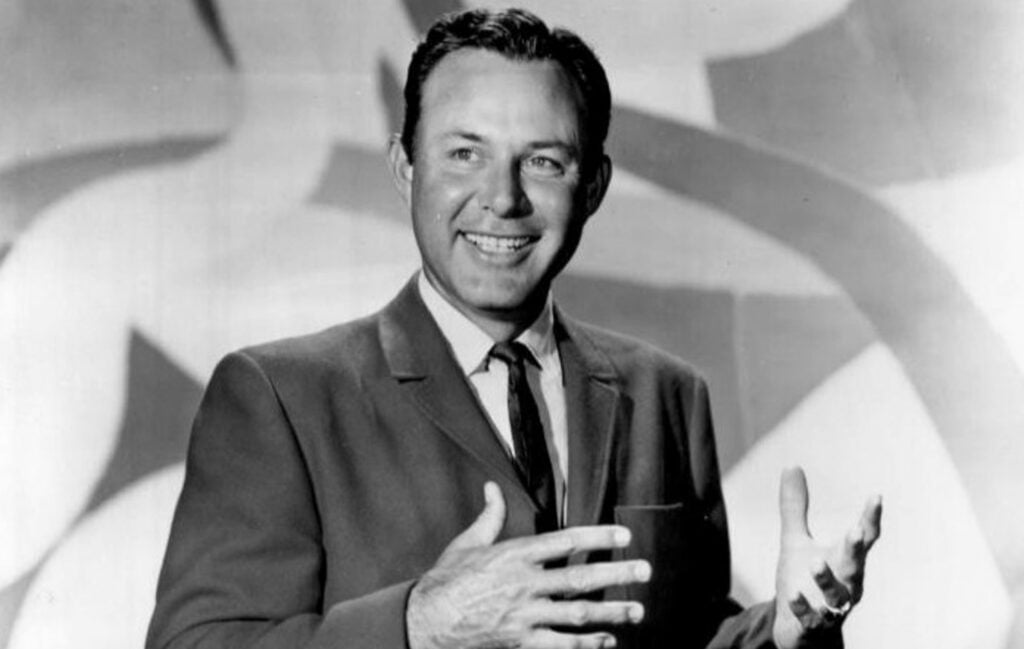
Jim Reeves was one of the most influential singers in the history of country music, and his recordings helped introduce the Nashville Sound to listeners around the world. Born James Travis Reeves in Galloway, Texas, on August 20, 1923, he began his career performing in the country-and-western tradition before developing the gentle, intimate vocal style that became his trademark. His warm baritone, precise phrasing, and understated emotional delivery set him apart from the harder honky-tonk performances common during his early years. Reeves first attracted national attention in the early 1950s, especially through his Abbott Records releases and the breakthrough hit
Everybody’s performing for somebody, even when the audience has gone home. We rehearse conversations in the bathroom mirror, manufacture personalities for people we barely tolerate, and spend an astonishing percentage of our lives pretending to possess convictions we abandoned sometime around breakfast. The great modern preoccupation with authenticity has turned being yourself into another full-time occupation, complete with costumes, carefully prepared statements, and the nagging suspicion that somebody else has been handed a better script. Even our private misery seems to require an appropriate public presentation. One wonders whether Shakespeare, confronted with the current state of human affairs, might have simply shut down the Globe to get pissed somewhere.
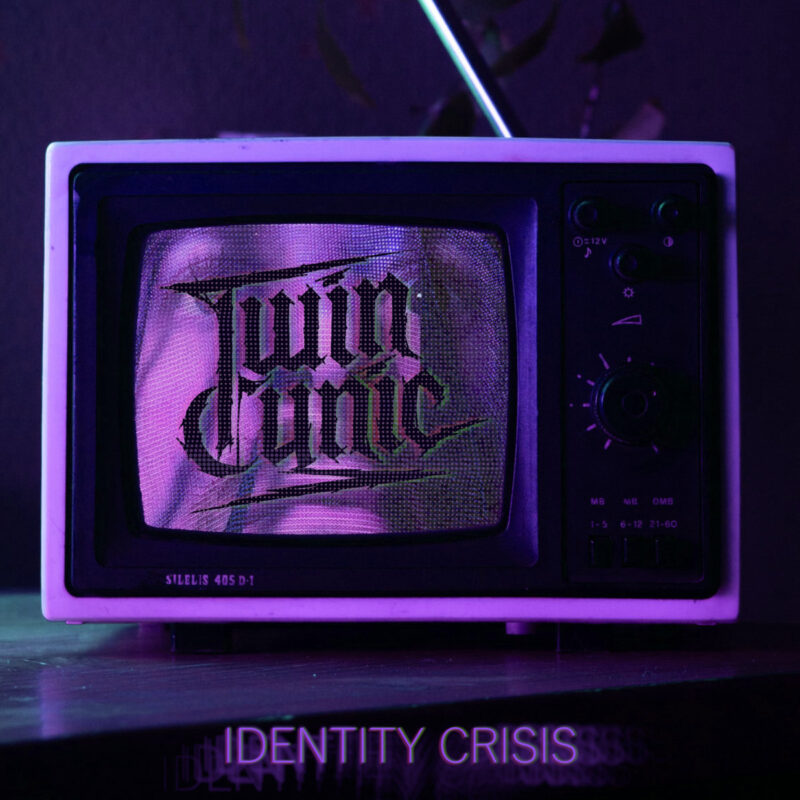
On Identity Crisis, the debut album from Twin Cynic, the solo project of musician TJ Higgs, this exhausting theatre of existence becomes the setting for eleven examinations of identity, alienation, desire, mortality, and the desperate need to belong somewhere. Higgs, whose musical background includes years performing in metal bands, has turned his attention toward synth-driven post-punk, darkwave, and alternative rock. The resulting album suggests Depeche Mode meeting Japan somewhere in the vicinity of Interpol, with considerable guitar muscle and a taste for philosophical trouble. His previous experience with heavier music remains apparent in the force of his riffs, although the emotional concerns here require a more varied vocabulary.
The buoyant synth rhythm opening Star Fairy seems to carry some of adolescence’s careless confidence, with an alternative-rock riff falling into step and little guitar flourishes skipping ahead of the beat. Cooler electronics gather underneath as Higgs begins to sing with a sweetness that makes the recollections of cigarettes, Bowie songs, amusement parks, and afternoons beside the sea feel close enough to touch. The affection in his delivery gives each detail its own small importance; these are the things two people did together before either understood how finite their time might be. As the lyrics turn toward his friend’s death and the questions left unanswered, that easy forward motion becomes especially affecting. The rhythm still has somewhere to go, carrying memories of somebody who no longer does. Imagining his friend dancing among the stars, Higgs allows the song’s warmth to accommodate the loss without pretending to resolve it.
Warbling electronics, a bubbling beat, and deep, rhythmic bass introduce Cinema, while dream-pop guitar flourishes lend the opening a polished romantic sheen. Higgs sounds more assertive here, giving the lovers’ rehearsed exchanges an edge of accusation. Beneath all that attractive presentation, intimacy has become another opportunity to manipulate the casting. The guitars gain weight around the chorus, pressing against the tidy electronic arrangement as the lyrics move through forced smiles, scripted romance, and the humiliations of playing a part somebody else has written. A vocal sigh and a guitar solo briefly interrupt the proceedings before verse and chorus return, pulling the couple back into their familiar scenes. Even the song’s structure seems to appreciate how readily people repeat a disastrous performance when they remain convinced that the next take will be better. Everybody wants the lead; accepting responsibility for the script proves considerably less popular.
The first chimes and uneasy synth exhalations of Sin By Silence suggest trouble behind a carefully maintained facade. A low, sensual grunt precedes the entrance of a dark synth-pop beat, its mechanical precision recalling the early electronic arrangements of Depeche Mode’s A Broken Frame. Clipped keyboard figures and giallo-like synthesizer patterns keep a sense of threat circulating beneath the tune. Higgs moves between a heated croon and a more measured, Mode-like delivery, giving the song an outward composure suited to its examination of concealed abuse. False smiles and polite gestures become practical tools for avoiding an inconvenient truth; everyone can carry on looking respectable provided nobody asks what that respectability costs. The arrangement’s controlled movements make the implication particularly ugly. Cruelty can flourish in a room full of apparently reasonable people, especially when they have agreed that acknowledging it would spoil the atmosphere.
A deep spoken introduction opens Stardust, followed by low-lit synthesizer tones, shuffling percussion, bell-like accents, and a bassline with enough physical presence to keep the contemplation of extinction firmly attached to the body. Staccato electronics bring another suggestion of giallo unease, while Higgs lends his singing an ornate, almost baroque romance. Around him, Cocteau Twins-like guitar flourishes give the song a sense of distance and suspension, interrupted by heavier passages that alternate sustained notes with tightly chugging builds. Those changes in weight suit lyrics considering the eventual dissolution of bodies, galaxies, and everything between them: matter briefly gathers, acquires a name, and eventually disperses. His affectionate resignation makes that prospect strangely companionable. There is room for tenderness even in the thought of returning to elementary particles, although the guitars retain an appropriately forceful attachment to being alive. Oblivion can wait until the arrangement has finished making its case.
Breaking glass and overlapping human voices usher in People Are People, with the familiar drum pattern soon organizing the commotion. Higgs gives the Depeche Mode song a heavier centre of gravity, putting guitars in charge of the main melody while brass-like synthesizers remain audible beneath their weight. The combination lends the cover an artful gothic-rock character, and his delivery follows its own course: the verses sit closer to Dave Gahan’s phrasing, while the chorus takes on a more angular, art-rock cadence. These choices give the plea for basic human tolerance a bruised, exhausted quality. More than forty years after the original, the question at its centre still requires an answer, and Higgs sounds painfully aware of how many opportunities the species has had to provide one. Each return of the chorus carries the frustration of explaining the obvious to people who have made a career of avoiding it.
Rippling synthesizers and a sharp guitar attack open the doors to At The Masquerade, where Higgs croons over a steady electronic beat and thick bass. Each returning guitar figure seems to send another elaborate disguise tumbling across the ballroom. Skeletons promenade, smiles fracture, and the guests’ aristocratic airs begin to look like expensive methods of managing panic. Shakespeare’s theatre of human behaviour supplies an apt reference for this gathering, with everybody performing status while quietly dreading exposure. A break leaves the voice surrounded by bright, bubbling electronics, briefly lifting the guitars away from the spectacle before the chorus brings their attack back. That moment of relative exposure suits a song so preoccupied with what happens when the presentation fails. Beneath the decorations and social climbing sits a thoroughly democratic appointment with death, which has presumably neglected to observe the dress code.
A deeper, rippling synth melody, phased electronics, and dream-pop guitars give Cherry And Almond an inviting first taste. Higgs settles into a seductive croon above a low, funky bass shuffle, making temptation sound like an entirely reasonable way to spend the evening. As harmonies lift the chorus, the guitars grow heavier, bringing physical force to an attraction whose consequences are already becoming difficult to ignore. The lyrics’ sweetness and intoxication find a persuasive musical accomplice in that polished surface, with betrayal waiting beneath it. Around two-thirds of the way through, his delivery gathers into a fast, rhyming passage with a beat-poetry cadence, as though desire has talked itself past every available objection. An expressive guitar solo follows, giving the accumulated appetite another outlet. Knowing that an encounter is likely to end badly has rarely stopped anybody from ordering a second drink, and this song has already found the bottle.
With Terpsichore, a strummed post-punk guitar figure gives way to a stronger, immediately memorable riff, its momentum reinforced by cold synthesizers and busy, hissing drums. Named for the Greek muse of dance, the song follows an apprehensive arrival at a nightclub, where the crowd initially resembles a gathering of vampires and joining in requires a small act of nerve. Higgs sings with a heated intimacy as the guitar occasionally withdraws into little echoes of its central phrase, leaving room for his voice before the full riff rejoins the crooning chorus. The arrangement makes the surrender to movement feel cumulative: each return loosens another inhibition. Later, looping guitar tones and mounting drum tension intensify the sensation of a body outrunning its owner’s embarrassment. By the time ordinary consciousness threatens to reassert itself, dancing has supplied a convincing argument for spending a little less time supervising every gesture.
A steady rhythm section and an insistent guitar melody set Howling At The Moon in motion, with cold synthesizers underneath. When Higgs begins to sing, the guitar shifts into a clipped, ska-like offbeat before the arrangement changes direction again, letting bubbling electronic colours move beneath his croon. The successive shifts suit lovers whose freedom depends on circumstances changing around them. Selene’s moon grants a temporary interval of acceptance, while Apollo’s daylight promises the return of the judgments keeping them apart. Higgs gives their stolen hours a sense of movement and pleasure, including exuberant vocal whoops that release some of the tension accumulated in the verses. A catchy guitar solo later extends that exhilaration. Throughout, the persistent rhythm lends urgency to the pleasure: the night is passing, and every minute enjoyed together belongs to a freedom the morning will attempt to revoke.
The low, dream-pop guitar treatment introducing North Star provides a soft foundation for a heavier melody that climbs and falls above it. As Higgs begins to croon, that more forceful guitar recedes, leaving the treated chords and cold, bell-like synthesizer figures to support a song about finding direction through the memory of somebody absent. The arrangement gives that presence a convincing shape: guidance can be felt even when its source remains beyond reach. His voice rises with the chorus, extending the reassurance into an invitation to venture beyond familiar ground. Bowie returns to the album’s celestial vocabulary, linking music, affection, and the private ways people continue conversations that physical separation has interrupted. The earlier guitar weight gives those gentler passages a useful sense of support. Continuing requires courage, and Higgs allows the remembered voice of a loved one to supply a little of it.
Bell-like synth figures recalling A Broken Frame meet the sleek keyboard atmosphere of Duran Duran’s The Chauffeur on Beautiful Nonsense. Soft electronic sighs move underneath Higgs’s relaxed synth-pop phrasing, while the heavier guitars settle into a gentle background rumble. The arrangement has space to breathe, making an apt setting for lyrics about language finding its way onto the page, ideas taking shape through experiment, and inspiration returning after creative exhaustion. After so many examinations of performance and disguise, the pleasure of making something offers Higgs a place where uncertainty can be put to use. A romantic guitar solo rises late in the song, giving the closing stretch an expressive release without crowding its reflective pace. The album leaves him with words still to arrange and possibilities still to pursue, a modestly hopeful state of affairs for somebody who has spent eleven songs considering the difficulties of being a person.
Listen to Identity Crisis below and order the album here.
Across these eleven tracks, Twin Cynic’sIdentity Crisis develops a consistent fascination with the gap between personal experience and public presentation. Higgs moves from individual grief to collective responsibility, from the absurdity of romantic performance to the magnificent indifference of the cosmos, examining how people construct identities to survive their relationships with others. The combination of synthesizers, forceful guitars, and emotionally direct songwriting gives these concerns an accessible musical framework, informed by the dramatic sensibilities of classic darkwave and post-punk.
The album has a persuasive willingness to admit that the search for identity can be a thoroughly ridiculous enterprise. We want to be recognized, adored, understood, and occasionally left completely alone, preferably without having to explain the contradictions. We invent versions of ourselves for lovers, strangers, employers, and friends, then wonder why the resulting collection of personalities feels increasingly difficult to reconcile.
Identity Crisis ultimately finds its consolation in the relationships, memories, and creative impulses that survive our attempts to define ourselves. The costumes may change, the audience may disappear, and the performers will eventually leave the stage. In the meantime, somebody has to write the songs, somebody has to dance, and somebody ought to have the decency to tell us when our masks have started slipping.
Catch Twin Cynic on 28 November at The Old England in Bristol, supporting PitFeeders.
Foo Fighters have announced some huge shows set to take place across Europe in 2027 as part of their ongoing world Take Cover tour. Dave Grohl et al will kick off a 15-date trek in Icelandic capital Reykjavik before hitting up stadiums and festivals in Helsinki, Copenhagen, Dusseldorf, Werchter, Bren, Florence, Zagreb, Sofia, Athens, London (where the Foos will be playing two dates at Wembley), Darlington, Edinburgh and Dublin.
The rock megaweights will also be bringing some big names with them as support, including The Hives, St. Vincent, Garbage, Iggy Pop, Queens of the Stone Age, Slowdive, Violet Grohl, The Vaselines, Yard Act, Nothing But Thieves, Reclus.É’, Florence Road, Fat Dog and more.
See the full list of dates and venues below. Latest Foos album, Your Favourite Toy, released earlier this year, is out now.
Foo Fighters Take Cover European tour dates 2027
Jun 09: Reykjavik Nýja-Laugardalshöll, Iceland * Jun 12: Helsinki Olympic Stadium, Finland * Jun 15: Copenhagen Valbyparken, Denmark * Jun 17: Dusseldorf Merkur Spiel-Arena, Denmark * Jun 19: Werchter Werchter Parklife, Belgium *** Jun 22: Bern Stadion Wankdorf, Switzerland @ Jun 25: Florence OPEL Firenze Rocks, Italy # Jun 27: Zagreb INmusic Festival, Croatia ## Jun 30: Sofia Vasil Levski Stadium, Bulgaria $ Jul 02: Athens Ejekt Festival, Greece @@ Sep 09: London Wembley Stadium, UK % Sep 11: London Wembley Stadium, UK ^ Sep 14: Darlington The Darlington Arena, UK & Sep 16: Edinburgh Scottish Gas Murrayfield Stadium, UK + Sep 18: Dublin Croke Park, Ireland **
* The Hives support @ Nothing But Thieves support # Queens of the Stone Age and Fat Dog support $ Slowdive and Reclus.É support % Garbage and Reclus.É support ^ St. Vincent and Florence Road support & St. Vincent and Yard Act support + Garbage and The Vaselines support ** Garbage and Florence Road support *** Iggy Pop, The Hives, Violet Grohl, Florence Road and Alice Mae support @@ Architects and Frenzee support ## Slowdive and Florence Road support
Phoenix hard rock outfit Sweet Mess returns with their poignant, heavy new single,“Say my Name.” Recorded at SoundVision Recording Studio and produced by Michael Beck (frontman of Escape the Hive and former vocalist for Jake E. Lee’s Red Dragon Cartel), the track tackles the haunting philosophical concept of the “second death”—the idea that a person’s final death occurs only when their name is spoken or remembered for the very last time.
Built on thick guitar work from Fer Lopez and a thunderous rhythm section driven by bassist Rob Watson and drummer/songwriter Michael Hayes, the single features a commanding, emotionally charged vocal performance from frontwoman Sylvie. Blending modern hard-rock punch with classic rock arrangements (you can hear some blues influences too), “Say my Name” is a stadium-scale anthem that transforms the fear of oblivion into an urgent, unforgettable rallying cry for human legacy. It’s very well written and performed, enjoyable from start to finish and with a fantastic solo section.
Give it a go by clicking on the Spotify player below and follow the band if you like what you hear.