(Andy Synn highlights his history with Hardcore, along with three recently-released gems) I’ve mentioned it in passing before, I’m sure, but I don’t think I’ve ever really gone into how important Hardcore was as part of my formative years as a music fan (and still is to this day). Like most of us, I’d imagine, […]
Industrial extreme metal band Aborym unveil first details surrounding their forthcoming studio album Metachaos, now officially completed and mixed. For this new chapter, the band assembled a formidable cast of guest musicians. Read more…
The Essence of The Universe Bring All Your Lovers Review
The song opens with an atmospheric introduction, set to a heartbeat-like groove. Reverberating guitars enhance this depth, welcoming the listener into the experience. The vocal entry feels prophetic, infusing an air of mystery and intensity. The singer’s voice possesses a unique duality that draws one’s attention immediately.
As the first verse unfolds, there is an almost hypnotic quality to the music. This enchanting vibe remains until the chorus, where the intensity ramps up dramatically. The music expands with the addition of pads, enriching the overall sound. Harmonies form as background vocals join, sculpting a sound reminiscent of psychedelic influences.
After the explosive chorus, the song returns to the first verse. In the second verse, the dual vocals ascend an octave, creating a serene yet dizzying effect. This artistic choice presents a kaleidoscopic layer to the song, increasing its emotional pull. The experience is multifaceted, immersing the listener in a rich tapestry of feelings and imagery.
Bring All Your Lovers – Sound and Atmosphere
The atmosphere strikes a balance between tension and harmony, engaging the listener’s senses. This piece feels alive with energy as it radiates a cosmic quality that is truly transformative.
The lyrics unfold like a mantra, evoking imagery that clashes with the realities of media spectacle, violence, and spirituality. The juxtaposition of themes resonates on multiple levels. These rich lyrical experiences add to the dreamy journey that the song offers.
Listening to this track feels almost ritualistic, encouraging participation and sing-alongs. Its infectious nature compels you to join in, transcending ordinary music experiences. Fans of the genre will find themselves lost in the immersive quality of the vocals and instrumentation.
Bring All Your Lovers – Performance and Production
Musically, the song resonates with fans of various influences. It invites comparisons to bands like Depeche Mode and Noir Désir, drawing imaginative connections.
The production quality is impressive, showcasing a fantastic vision that enhances each moment. Every element serves a purpose, tying together the compelling journey offered throughout the song. The meticulous attention to detail in the sound is evident, showcasing the band’s commitment to their art.
This single is an experience that captivates listeners. As it transports you through its sound, you find yourself reflecting on deeper themes. It is a radiant reflection of life’s complexities, beckoning with each compelling note.
This remarkable work can be characterized as a dreamlike trip, offering something for everyone. As you listen, you feel connected and uplifted, making it a must-experience track for all music lovers.
Laji George delivers another intense song with his beautiful voice, reminiscent of the 90s. There are clear influences from artists like Vedder and Cornell, creating a peculiar nostalgia and intensity. The track has a steady rhythm, characterized by a consistent ballad quality. The guitar strumming is rich, complemented by strings that open up a spacious audio experience. The chorus progression is outstanding, showcasing harmonies that hover just above the musical surface. This creates the paradox that is central to the song’s message. The bridge also offers a suspended moment, leading listeners into a limbic space that feels almost psychedelic. It transports them to a metaphysical dimension, enhancing the overall experience.
The lyrics explore a strange and painful paradox. They highlight the journey of rebirth through destruction. This sentiment resonates deeply with anyone who has faced their lowest points. Sometimes, one must reach rock bottom to truly recognize that life continues. This realization can feel brutal, yet it is also essential. It is within this collapse that new beginnings take shape and breathe life anew.
Originally, Laji envisioned the track for a project named Pseutopia. It was intended to carry a much broader sonic vision, drawing inspiration from the powerful, driving rhythmic style of renowned drummer Dave Abbruzzese. However, as the song evolved, the emotional core revealed itself as too intimate to be masked by a full band arrangement. The themes of the song felt deeply personal, almost confessional.
Day I Died – Sound and Atmosphere
Laji George’s artistry shines through in “Day I Died.” He masterfully balances sound and emotion, rendering a dynamic and relatable piece. The personal nature of the song speaks volumes, establishing a connection with listeners. This creates an atmosphere where the audience can reflect on their own experiences through the lens of Laji’s journey.
His ability to generate nostalgia while infusing modern elements is impressive. The rhythmic patterns take listeners on a journey, inviting introspection.
The imagery presented in the song fosters a sense of surreal exploration. There is a dreamlike quality that invites listeners to lose themselves in the narrative. Each strum of the guitar and swell of the strings amplifies the emotional journey portrayed. The bridge serves as a pivotal moment, providing a natural pause that further emphasizes the theme of rebirth through hardship.
Day I Died – Performance and Production
This single stands as a beautiful representation of transformation. It illustrates how one can emerge renewed after experiencing turmoil. Laji George embodies this essence through his voice and lyrical depth. The track becomes a space for reflection, where listeners can examine their own struggles and triumphs.
Laji George has created a piece that resonates on multiple levels. “Day I Died” is not merely an echo of the past; it is a beacon for those navigating their own challenges. This single showcases Laji’s ability to transform personal struggles into universal themes, inviting everyone to join him on this journey of rebirth. It is a fantastic offering that will surely leave an impact on his audience.
The latest Marillion title for the Deluxe Edition treatment is the somewhat overlooked eleventh full length studio album, marillion.com – sometime stylised as mari11ion.com. Released in 1999 and coming just fourteen months after Radiation with many of the songs included here being unused ideas from that previous record.
Following the band’s departure from EMI after Afraid of Sunlight in 1995, Marillion found a home at Castle Communications for their late-Nineties trio of albums: This Strange Engine, Radiation and marillion.com, all released in consecutive years between 1997 and 1999.
The release of 1998’s Radiation came with talk of the band moving away from their perceived Prog roots and heading more into a modern rock arena; if memory serves me correctly, the name Radiohead was dropped several times leading up to Radiation’s release. To be honest, I think album ten fails to live up to that potential and, in my opinion, is the weakest of the Castle Communications trio.
Before the millennium, the internet was an oddity, a new thing that was just opening up to the wider world and Marillion were one of the first bands to fully embrace the potential of this brave new digital world. Hence the album’s title – and there was also a companion Racket Records Web CD titled marillion.co.uk sent to fan club as a Christmas gift.
Radiation’s Cathedral Wall can be heard in the opening A Legacy, which takes its disparate influences from as far afield as The Beatles, The Beech Boys as well as funk, jazz and film noir. It, like most of marillion.com’s early tunes play against their Prog reputation, bringing complete tracks in within an acceptable timescale. Go! pulses with Pete’s bass, giving the whole thing an ethereal lightness, also present in Enlightened.
Punctuating those tunes are .com’s more upbeat numbers: Deserve considers the consequences of action, while Ben Castle provides a driving saxophone, Rich has H do-dah-doing over the opening bars, leaving time for some quirky choices and interesting rhythms; Tumble Down the Years is as wistful as Marillion get, addressing what Life throws at you when you dare to make plans. According to Jon Collins’ book, Marillion/Separated Out: The Complete History 1979 – 2002 (Helter Skelter Publishing, London 2003), the band were going for something of a Crowded House vibe on this one (page 172). The most unusual song here is Built-In Bastard Radar, a Seventies inspired hard rocker, which even features a mellotron, but lack the legs or longevity of most of the band’s work.
Marillion.com closes with two longer songs: the epic Interior Lulu, a multi-faceted dream that one day – and you must remember this was 1999 – the internet would connect us all, regardless of distance. The protagonist, isolated, is introduced lying on her bed, with the possibility of endless connectivity a mere button-push away. This is Marillion doing what Marillion do best: taking an idea and running with it, cycling through all manner of phases and sounds to tell a story in fifteen blissful minutes.
Album closer is the ten-minute, Massive Attack-inspired, House, utilising dub, trip-hop, blues and jazz, and coloured by the messy disintegration of H’s marriage, it’s simultaneously classic Marillion and a fresh, new venture.
Originally produced by the band themselves with help from Porcupine Tree’s Steven Wilson, these new stereo & 5.1 mixes come from long-time associate, Michael Hunter, giving everything a crisp sharpness.
Discs two and three of this package is the band’s show at London’s Shepherd’s Bush Empire in November 1999 – which just so happened to be a couple of days after the show at the Manchester Academy, of which I have great memories.
Split across discs two and three, the show opens with the slow pulse of Go! Pete’s bass throbs, Steve R adding flourishes from the fretboard as Steve H comes in with the vocal. Radiation’s Under the Sun brings its message of impending environmental collapse in the jauntiest manner possible and it’s back to newbie Rich.
A large chunk of disc two is given over to newer material, with only bone fide H-era classic, The Uninvited Guest being rapturously received, Mark Kelly’s unmissable intro garnering cheers, the obligatory Brave suite of Mad/ The Opium Den takes London on a decent into despair in the most melodic manner, and the ever-present Afraid of Sunlight – which is still my personal favourite Marillion song – weaves mesmeric tapestries from the opening keys. This disc ends mid-set after another newbie, the upbeat submission to fate that is Deserve.
Disc three finds the set going deeper into Marillion’s past, beginning with the delicate strings of Easter from Seasons End and its comment on the Troubles; far less cutting than Marillion’s last consideration of Northern Ireland, Forgotten Sons, but no less poignant. The mood shifts for The Answering Machine, allowing a direct comparison of where the direction of travel has taken Marillion over the past ten years.
The Big Beat version of This Strange Engine’s ambient Memory of Water could be some of the most aggressive music Marillion has created, with the band jamming out against a huge low end; the big sweeping intro to Afraid of Sunlight’s conclusion, King, surrenders to introspective strings and H’s confessional vocal, before Mark’s massive keyboard enters to remind us we are mere ephemera in the face of the system.
A second suite from the conceptual Brave comes in the form of the title track’s ominous sustained opening chord, the dour seven minutes shouldn’t work in the live environment unless used as part of an entire album performance yet, somehow, it always does. The album’s coda, The Great Escape, is here delivered with passion and empathy for the protagonist as she looks for the sweet release of oblivion, bringing the main part of the show to a close.
The Radiation tour hadn’t seen Marillion delve further back into their own history than Brave, but tonight, not only have we been treated to a couple from the Hogarth debut in 1989, but the encore is comprised entirely of Fish-era: mega-hit Kayleigh arrives to great cheers and a clap-a-long to accompany that guitar-line. The cascading keys of Lavender follow, proving London is in good voice tonight, and Slainte Mhath shows H is more than capable of performing Fish-era material and making it his own.
As with all Marillion’s deluxe packages the Blu-Ray is an absolute treasure trove of goodies, including two different mixes of the album, one a 96.24 Stereo LPCM version and another a DTS HD Master Audio 5.1. There’s a whole plethora of demos, early and alternate versions of every track on the record, including versions of Deserve, Go! Rich, Enlightened, Tumble Down the Years, Interior Lulu and House from the Radiation sessions; various early or jamming versions of A Legacy, Deserve and Built in Bastard Radar; and a couple of remixed versions of A Legacy and …Bastard Radar from Steven Wilson and Trevor Vallis.
There’s even a couple of unused tunes Think Happy and Dreaming of Summer that, as far as I am aware, have not seen the light of day to this point. Elsewhere you’ll find the in-concert video from
the Oxford Zodiac, filmed in July 1999 and previously available as the Shot in the Dark DVD, it is included here in full, with additional, never-before-seen, material, including a couple of Beatles covers.
The documentaries on these things are always entertaining and informative into how the creative process led to the finished product, and here, we get Thank God for The Internet, an hour-and-a-half-plus delving into the writing, recording and touring of the album.
Marillion.com is unlikely to be classed up there with the likes of Misplaced Childhood, Clutching at Straws or Brave, and for the devotees of the Fish-era is possibly represents a further step away from the band they adore. Yet, for all that, the eleventh record is an honest album, one that isn’t trying to be anything other than a collection of good, sometimes even great, songs; and a bridge from the twentieth century to the brave new world of the twenty-first, when Marillion would embrace technology and mobilise the fan base with their first crowd-funded project, 2001’s Anoraknophobia. Thank God for the internet, indeed.
The song opens with a gritty, sharp guitar riff that signals an intense rock experience. This infectious riff becomes even more engaging when accompanied by a rhythmic drumming pattern, making it impossible to resist moving along with the beat. The track channels influences reminiscent of The Rolling Stones and the classic rock era, creating a nostalgic aura.
The overall flow is remarkably cool. The vocalist delivers an instinctive performance that feels deeply connected to the music. This is truly a rock anthem for those who know the craft well. The song is driven by guitars and performed by genuine musicians using real instruments, a rarity in today’s music landscape where artificial intelligence often takes the stage.
There is a palpable sense of chemistry among the band members, suggesting they have spent considerable time in rehearsals refining their sound. The solo beginning at 3:35 is particularly noteworthy, as it elicits excitement with its piercing cries. It showcases the musicians’ technical skill and their ability to stir emotions through their instruments.
Fire – Sound and Atmosphere
Lyrically, the song delves into themes of alcohol and internal struggles, employing deliberately hazy and evocative imagery. This adds depth to the listening experience while allowing listeners to interpret the emotional landscape for themselves. The vividness of the lyrics further enhances the raw energy of the performance, making each moment engaging.
In terms of production, the track maintains an authentic feel, showcasing the band’s commitment to creating genuine music. This authenticity is crucial in a time when many opt for digital enhancements over organic sounds. The effort the band has put into this song is apparent, reflecting their dedication to the craft.
Fire – Performance and Production
Each component of the song works in harmony, contributing to a cool experience that leaves listeners wanting more. The interplay between the various instruments is masterful, providing a rich, layered texture that makes every listen feel fresh. There’s an energy here that is both infectious and invigorating.
Overall, this single is a solid recommendation for anyone looking for high-quality rock music. It captures the essence of what makes rock great while pushing boundaries, ensuring it remains relevant. Ermyte has not only delivered a track that will stick with listeners but has also showcased their talents in a way that is respectful of rock’s heritage and exciting for its future.
“Fire” by Ermyte is a fantastic addition to the rock music scene. It effectively combines engaging instrumentation with relatable themes. I highly recommend giving it a listen.
In a music landscape defined by safe formulas and corporate stability, one of the underground’s most recognizable screaming voices has just executed the ultimate real-world transformation.If you threw down in a local mosh pit or bought a concert ticket during the massive mainstream metalcore boom of the early 2000s, you intimately know Alex Varkatzas as the ferocious, heavily tattooed founding frontman who steered Atreyu to platinum-selling heights on classic albums like The Curse and A Death-Grip on Beauty.
But over the weekend, the legendary vocalist officially traded the sweaty confines of the tour bus for the high-stakes sirens of emergency service. Taking to his public channels, Varkatzas blown away his global fanbase by announcing his formal graduation from the intense MVC Fire Academy 54—launching an official, full-time career as a professional firefighter.
Listen To Today’s Metal Breakdown Daily News Update Below:
THE ACADEMY MATRIX: THE 16-WEEK GRIND
The Routine: 4:00 AM Wakeup Calls
Physical Training (PT): 5:30 AM Daily Baseline
The Shift Structure: 14-Hour Daily Operations (6:00 PM Dismissal)
The Duration: 16 Weeks Consistently (Mon–Fri)
The Curriculum: Structural Drills, Tactical Training, Hazmat, and Academic Studies
Dismantling Stagnation: Inside the Frontman’s New Life Mission
The decision to transition from heavy music royalty to a first responder didn’t happen overnight. Since parting ways with Atreyu in a high-profile 2020 split, Varkatzas has kept his creative muscles fully flexed by fronting his blistering new metalcore outfit Dead Icarus alongside members of Enterprise Earth.
However, behind the scenes, Varkatzas was quietly prepping for a much larger, more physical calling. In a statement the 44-year-old metal pioneer detailed the sheer physical exhaustion and family sacrifice required to secure his badge: “Graduation today. Grateful for my friends and family coming,” Varkatzas shared alongside photos from the ceremony. “I couldn’t have done this without their love and support. We have been working hard since pre-academy in Jan. Up @ 4am, PT @ 5:30am usually not home til around 6pm everyday, mon-fri for 16 weeks. Countless hours of studying, training and drills has led up to today and to be honest this is just the start.”
LIVE & LOUD: Stream the World’s Hardest Radio Station 24/7 Below:
“Losing Is Not Failing”: A Message of Aggressive Motivation
Known throughout his musical tenure for writing highly visceral, deeply personal lyrics regarding resilience and mental warfare, Varkatzas used his graduation spotlight to deliver an intense message of hope to fans currently struggling to navigate their own career blocks or life directions.
Rejecting the standard internet culture of quick gratification, the vocalist laid down an uncompromised philosophy on the value of hard work and mental toughness: “Don’t ever give up on yourself,” Varkatzas asserted passionately. “Losing is not the same thing as failing and winning doesn’t teach half the lessons that losing does. Be a student of life. Keep putting one foot in front of the other and when you falter, get up and just keep going. The only way to truly fail is to quit. I wish you all peace and power.”
Did the lead singer of Atreyu become a firefighter?
Yes. Alex Varkatzas, the founding lead vocalist and lyricist of Atreyu, officially graduated from the MVC Fire Academy on June 13, 2026, and has entered the professional firefighting workforce.
Is Alex Varkatzas still making metal music?
Absolutely. While he works full-time as a first responder, Alex continues to front his heavy alternative metal faction Dead Icarus, who recently dropped their acclaimed studio tracking via MNRK Heavy.
Why did Alex Varkatzas leave Atreyu?
Varkatzas legally and creatively parted ways with Atreyu in September 2020 after more than twenty years at the helm, citing a mutual structural divorce and a desire to pursue distinct creative paths.
Within a contemporary music industry that frequently traps aging rock performers in endless, soul-crushing nostalgia touring loops, Alex Varkatzas’ transition stands as an extraordinary example of personal sustainability. The modern alternative music economy heavily penalizes veteran creators, forcing them to remain dependent on falling streaming revenue metrics and grueling road parameters well into their 40s and 50s.
By applying the elite work ethic, high-capacity discipline, and physical endurance required to front an international touring band directly to the municipal emergency services infrastructure, Varkatzas has successfully decoupled his personal livelihood from corporate entertainment dependency. This move not only establishes long-term economic stability but dramatically enhances his E-E-A-T score as a community authority figure, ensuring that when he does release new art through Dead Icarus, it carries an authentic, real-world grit that cannot be manufactured by artificial marketing teams.
Now that Alex Varkatzas has officially completed his evolution from steering mosh pits to running directly into burning structures, the floor belongs to the Loaded Radio collective. Does seeing an original metalcore pioneer accomplish a massive life pivot inspire you to make your own moves, or are you currently blasting The Curse on your drive to work this morning? Drop your congratulatory words, favorite Atreyu memories, and thoughts in the comments section below!
A True Heroic Shift: One of the original vocal architects of the 2000s metalcore explosion, Alex Varkatzas, has officially graduated from the fire academy to begin a full-time career as a firefighter.
The Brutal Grind: The former Atreyu and current Dead Icarus frontman revealed he has been enduring a grueling, 16-week physical and mental regimen, waking up at 4:00 AM daily since January.
Words of Power: Varkatzas marked the major life milestone with a deeply emotional, highly motivational message to his fans, emphasizing that “the only way to truly fail is to quit.” * Music Baseline Maintained: Despite running into burning buildings for a living, Varkatzas remains fully committed to his ferocious new metal outfit Dead Icarus, who have been tearing up the active release charts.
Never miss an inspirational scene update, an unscripted artist interview translation, or breaking international festival briefs. Download the free Loaded Radio App for [iOS App Store] and [Google Play Store] today to command our live 24/7 high-decibel digital stream and catch our Daily Podcast on demand.
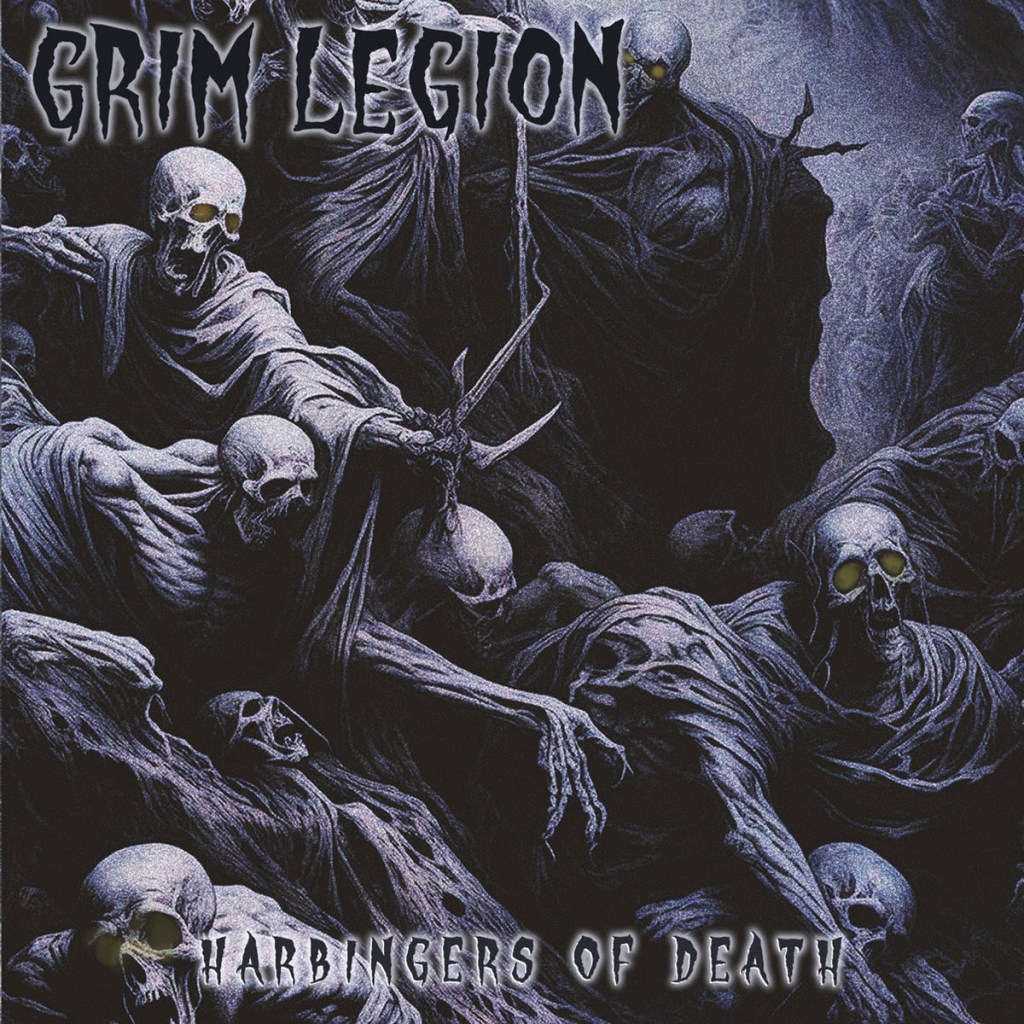
Horror Pain Gore Death Productions are set to release the new album from New Jersey’s old school Death Metal veterans GrimLegion. Harbingers Of Death is up now for pre-order and will be released July 10th on CD and Digital formats along with merch. Grim Legion features members of Evoken and Condition Critical.
Following up on the acclaimed 2014 album Unholy Resurrection, New Jersey’s GrimLegion (formed back in 1988) return from the grave once again to unleash more vicious old school Death Metal insanity. Harbingers Of Death showcases 10 punishing tracks of sheer brutality and crushing torment for real ones only! The current Grim Legion lineup consists of John Paradiso (Evoken), Randy Cavanaugh (Evoken), Ryan Donato (Condition Critical), Markus Misery (Fatal Array) and Devlin Bane (Godzero, Nucleus, Fatal Array).
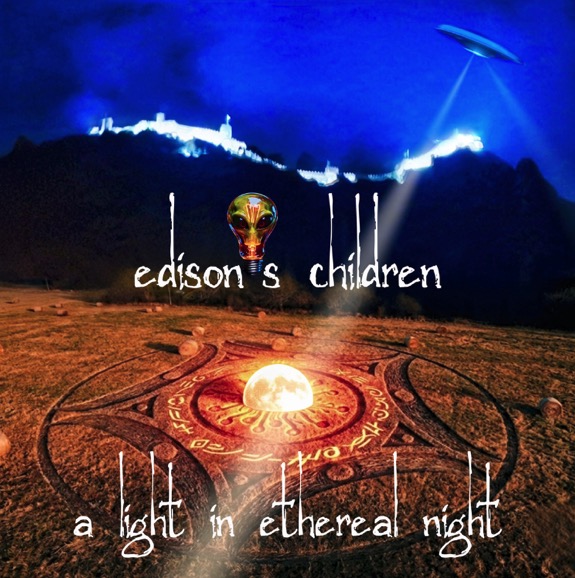
Edison’s Children, the collaboration between Hollywood SFX technician Eric Blackwood,
Rick Armstrong (son of the first man, Neil Armstrong) and Pete Trewavas (bassist from prog legends Marillion & Transatlantic) return with their fifth album, A Light In Ethereal Night, to be released on September 4th, 2026.
The album is the second instalment in a trilogy which began in 2011 with In The Last Waking Moments. That record told the story of a man distraught after experiencing something he could neither explain nor prove, left suspended between two incendiary possibilities: was his “alien abduction” real, or was he descending into madness? The 15-minute Epic “The Awakening” ended without resolution.
A Light In Ethereal Night picks up the story exactly where it left off.
Our protagonist returns to his farm to find an apparent extra-terrestrial crop circle of extraordinary geometric complexity. However, with every breeze… this crop circle disforms only to reappear… It’s symbols shifting every fifteen minutes with new, even more extraordinarily detailed patterns embedded in the wheat. Within hours. military convoys, news helicopters, and scientists have descended on the smallholding. What was once one man’s personal torment has become a very public reckoning; First Contact is being played out across the world’s media, from the most-watched parcel of land on earth since Roswell. And… the symbols … keep changing. Do “they” come in peace? Have they come to guide humanity forward, or is something far more sinister awaiting? The Truth is Out There… Disclosure of the 5th kind is hidden in the wheat.
Rick Armstrong says, “We want the listener to feel what it would actually be like, not wonder from a distance. We want them to experience the mix of awe and dread… the electric atmosphere you’d feel rising up out of the ether!”
Pete Trewavas follows up, “The moment the world descends on that farm, the story stops being about one man and becomes about all of us. The intimacy of the story explodes into something enormous. As a musician, that kind of intense dynamic shift is everything.”
Edison’s Children have woven voices of prominent UFO, UAP & OVNI investigators directly into the album’s soundtrack, not as a novelty but as testimony. Giorgio Tsoukalos, David Childress, Jason Martell, and William Henry from the ground-breaking and much-loved History Channel show Ancient Aliens contribute to the album. It gives the narrative genuine weight and places A Light In Ethereal Night in a category of its own.
Eric Blackwood says, “We wrote the first album when this subject still made people uncomfortable. Much has changed. Governmental documents are being declassified in a monumental movement dubbed “Disclosure”; astrophysicists are now concentrating on anomalous areas of “high strangeness”; and a significant number of people are demanding that our governments become more forthcoming and transparent. This album feels more relevant today than ever. The world has caught up with the story we were already telling.”
The wheat is still moving. The patterns are still shifting.
A Light In Ethereal Night releases on September 4th on Random Disturbance Records and will be available on CD, 180g vinyl (remastered for enhanced bass by Rush/Porcupine Tree’s Andy Van Dette) & streaming services.
Track List
Side 1 – The 31
From Out Of The Ether
The Day After
Pathogen
Side 2 Interlaced
Threnody Parts I-II of X
Edison’s Children are:
Eric Blackwood – Lead vocals, lead synth guitar
Rick Armstrong – Rhythm guitar, keyboards
Pete Trewavas – Lead bass guitar, Backing vocals
Guest Appearances:
Henry Rogers – Drums
Dan Hogarth-Guest – Drums (The Day After)
Robin Boult – Guitar (The Day After)
Produced by Edison’s Children
Mixed by Steve Hardy / Mastered by Andy Van Dette (Engine Room)
Music and lyrics by Pete Trewavas, Eric Blackwood, Rick Armstrong
Artwork by Wendy Darling Blackwood
The rhythm of “Everything” is urgent and slightly mysterious. It begins solo, gradually incorporating vocals and darker pads. This combination creates a night-like atmosphere. At thirty-five seconds, true to the band’s style, there is a sudden shift. The guitar becomes sharper and more rhythmic, with police sirens echoing in the background. The song then returns to the verse, emptying out again. No other band plays with dynamics like this.
The music builds up in energy once more. However, it soon empties out again, leading to a highly atmospheric moment. A light guitar plays distant notes, allowing the vocals to take some pauses, creating a magical ambiance. This moment builds tension before leading to another surge of energy. Once again, the song empties briefly before exploding into a grand finale.
“Everything” does not adhere to conventional song structures. It is a roller coaster of emotions. The dynamic ebb and flow leave the listener breathless. It feels nocturnal and intense, radiating refinement and an alternative vibe. Each transition is executed with precision.
Everything – Sound and Atmosphere
The initial urgency hooks you in, and the haunting pads sustain a sense of intrigue. They intertwine with the vocal introduction, which enhances the immersive experience.
The abrupt change at thirty-five seconds is exhilarating. The guitar takes center stage, with its acidic tones injecting vitality into the arrangement
The song momentarily holds back, allowing for reflections on the preceding energetic outburst. This technique creates a delicate balance between intensity and serenity.
Everything – Performance and Production
“Everything” is a sophisticated and alternative creation. It deviates from typical construction, showcasing a bold artistic vision. Each moment is conceived to allow for a journey of emotions. It engages the heart and mind, creating an experience worth reliving. This single stands as a shining example of the band’s unique approach to music.
The Lunar Keys truly excel in their artistic endeavors. They mark their territory in musical landscapes often unexplored. With “Everything,” they reaffirm their place as pioneers in alternative music circles.

 If you love this music:


 LIVE & LOUD: Stream the World’s Hardest Radio Station 24/7 Below: