Ah, the four words that we all long to hear: Tom Morello solo album. The former Rage Against The Machine axe-wrecker remains the one Rage ex-member who’s always busy and visible. Earlier this year, he organized an all-star Minneapolis benefit and joined the E Street Band for Bruce Springsteen’s Land Of Hope & Dreams Tour. This fall, he’ll headline his own one-off festival Power To The People outside DC. Somewhere in there, he’ll also release a new LP called Everyone Gets Everything They Want.
How To Cast A Shadow Full-Length Out Now On Metal Blade Records!
Photo by Jeremy Saffer
Watch/stream NORTH SEA ECHOES’ “I’ll Leave A Light On” HERE
NORTH SEA ECHOES – featuring progressive metal pioneers singer Ray Alder and guitarist Jim Matheos of Fates Warning – today deliver their video for “I’ll Leave A Light On.” The track appears on the band’s latest studio album, How To Cast A Shadow, out now on Metal Blade Records!
Comments Alder, “‘I’ll Leave a Light On’ is much heavier than anything on [2024’s] Really Good Terrible Things, the first NORTH SEA ECHOES album. It has a darker melancholic feel that fits well on this record. I loosely based the lyrics on a character from my favorite sci-fi series. I won’t say which, but they do use the quote ‘out there in the black.’“
Watch NORTH SEA ECHOES‘ “I’ll Leave A Light On” video HERE.
Watch NORTH SEA ECHOES‘ previously released video for “Enjoy The View” HERE.
On NORTH SEA ECHOES‘ Really Good Terrible Things full-length, Alder and Matheos garnered rave reviews for songs that possessed, “liberating sonic space and emotional vulnerability… from somnambulant electro-fog to gritty, overdriven disquiet, to the quietly devastating (Blabbermouth).” With How To Cast A Shadow, the band’s identity is further expanded upon and explored.
“This record is a bit heavier,” asserts Matheos, “with several more songs featuring real drums, played by Dennis Leeflang. It wasn’t necessarily intentional or planned, just the way things shaped up and how they emerged this time.”
The duo’s shared and separate histories help to forge a fresh creative opus. Alder has been the vocalist and main co-writer for prog metal heroes Fates Warning for 37 years, recording ten albums between 1988 (No Exit) and 2020 (Long Day Good Night). Rounding out his discography are seven albums with Redemption, two solo records, and the band A-Z, which debuted in 2022.
Revered guitarist and producer Matheos is a cofounder of Fates Warning, the lineup debuting with 1984′s Night On Bröcken on Metal Blade. In addition to thirteen albums with Fates Warning, Matheos launched several solo albums, four LPs alongside former Dream Theater keyboardist Kevin Moore under the name OSI, and Kings Of Mercia, which launched in 2022.
From the radio-ready rock of “All That Comes After” and the intimate, escalating “A Time Of Innocence And Purpose” to the powerful, timeless ballad “Villains Or Saints,” How To Cast A Shadow cohesively crosses genres and challenges aural preconceptions.
If Really Good Terrible Things kickstarted NORTH SEA ECHOES‘s career with “hovering subtleties, introspective thoughtful reflections” and lyrics with “wisdom and authenticity,” How To Cast A Shadow ups the promise of its predecessor. Provocative words of hope, sorrow and consciousness are paired with Matheos’ equally emotive, varied and deeply moving guitar work.
How To Cast A Shadow is out now on CD and digital formats. Preview/purchase the record at: metalblade.com/northseaechoes
How to Cast a Shadow Track Listing:
01. A Time of Innocence and Purpose
02. Enjoy the View
03. Good Enough
04. I’ll Leave a Light On
05. All Fall Away
06. Revenge
07. Villains or Saints
08. What Is and What Was
09. All That Comes After
10. How to Cast a Shadow
“Evoking the feeling of Geoff Tate returning to his prime and Queensrÿche reconnecting with their greatest strengths, How To Cast A Shadow is nothing short of a catchy, anthemic, and captivating masterpiece that explores the full spectrum of timeless progressive rock… a sheer delight.” – Metal Hammer
“Atmospheric, melancholic, ambient… this is the way NORTH SEA ECHOES navigates through while composing their music. Their sound takes one to a gloomy voyage that deals with the feeling of yearning and nostalgia. Yet, the music is so captivating that you keep playing it on and on.” – New Noise Magazine
“In the wide variety of progressive bands that are out there, this album capitalizes on the simplicity and honesty of music in one of its most organic forms: pure, raw emotion… How To Cast A Shadow is proof that you don’t need overly complex songs for you to feel the music. There’s a shade of melancholy that permeates the album and provides glue that holds the songs together. When it comes to feeling music, the question of ‘how’ doesn’t factor as much as ‘why.’ Explore the ‘why.’” – The Prog Report
“Disappointment or even maintaining the status quo isn’t an option for NORTH SEA ECHOES’ second release. Sign me up for their third album now.” – The Metal Pit
“…the sound of self-rediscovery, where a partnership in its fifth decade is creating a new avenue for its analysis of the human experience.” – Sonic Perspectives
The Gothic Garden: Darkness, Nature, and Romantic Decay
A stone angel leans sideways beneath a canopy of tangled ivy. Rainwater gathers in cracked fountains. Roses bloom beside weathered statues whose faces have almost disappeared beneath moss and time. Unlike traditional gardens designed to demonstrate order and control, Gothic gardens invite visitors into landscapes where nature slowly reclaims what humanity once built.
For more than two centuries, these unusual spaces have fascinated artists, writers, and dreamers. They appear in Gothic novels, Romantic paintings, horror films, and historic estates throughout Europe. Their appeal lies in a striking contradiction. Gothic gardens feel beautiful precisely because they reveal decay. Rather than hiding the passage of time, they place it at the center of the experience.
This fascination reaches beyond aesthetics. Gothic gardens remind us that nothing remains unchanged. Statues crumble. Buildings collapse. Flowers bloom and fade. Yet within this cycle of growth and decline, many people discover a strange form of beauty.
The Gothic garden became one of Romanticism’s most powerful symbols because it transformed mortality into something visible, poetic, and profoundly human.
Gothic gardens transform decay into beauty, creating landscapes where memory and nature coexist.
When Ruins Became Beautiful
The Gothic garden emerged during the eighteenth century as a reaction against rigid ideas of perfection. Earlier European gardens often emphasized symmetry, order, and human control. The famous gardens of Versailles, for example, were carefully designed to demonstrate mastery over nature. Every path, hedge, and fountain reinforced a sense of structure.
Romantic artists and writers began questioning this ideal. Instead of celebrating perfect geometry, they became fascinated by landscapes that appeared wild, unpredictable, and shaped by time. Ruins played a particularly important role in this new aesthetic.
Abandoned abbeys, broken towers, and weathered monuments inspired powerful emotional responses. They reminded visitors that every civilization eventually fades. At the same time, these structures possessed a beauty that pristine buildings often lacked. Cracks, ivy, and erosion transformed architecture into something more mysterious.
Horace Walpole understood this appeal better than most. His famous estate, Strawberry Hill, combined Gothic architecture with landscaped grounds designed to evoke wonder and curiosity. Rather than presenting history as something finished and distant, Walpole transformed it into an immersive experience.
Visitors wandered through spaces that felt suspended between past and present. The result was neither entirely natural nor completely artificial. It was a carefully crafted atmosphere of romantic decay.
The Sublime Beauty of Decay
The popularity of Gothic gardens was closely connected to the Romantic concept of the sublime. Philosopher Edmund Burke argued that certain experiences inspire both pleasure and unease at the same time. Storms, mountains, darkness, and ruins all possess this quality because they remind us of forces larger than ourselves.
A crumbling monastery covered in vines can feel beautiful, but it also carries a deeper emotional weight. The structure stands as evidence that time eventually overcomes every human achievement. Visitors experience admiration and melancholy simultaneously.
This emotional complexity separates Gothic gardens from ordinary decorative spaces. They are not designed simply to impress. They are designed to provoke reflection.
Walking through a Gothic garden means confronting visible reminders of impermanence. Yet rather than creating despair, these landscapes often inspire appreciation. The decay itself becomes part of the beauty.
Nature as a Gothic Storyteller
One of the most distinctive qualities of the Gothic garden is its treatment of nature. In classical design, plants are trimmed, arranged, and controlled. Gothic landscapes follow a different philosophy. Overgrown vegetation becomes part of the narrative.
Twisting roots crack stone pathways. Ivy climbs abandoned walls. Trees spread their branches over forgotten monuments. Nature acts less like decoration and more like a character within the landscape.
This idea appears repeatedly in Gothic literature. Writers often use the natural world to reveal emotional truths that characters struggle to express directly. Storms reflect turmoil. Dark forests symbolize uncertainty. Ruined gardens suggest memories that refuse to disappear.
The landscape becomes a storyteller in its own right.
Few authors understood this relationship better than Edgar Allan Poe. In many of his works, physical settings mirror psychological states. Buildings decay alongside their inhabitants. Environments absorb emotional tension until they seem almost alive.
This connection between place and emotion helps explain why Gothic gardens remain so compelling. They transform abstract ideas such as memory, loss, and mortality into visible experiences.
Poe and the Garden of Decay
Few writers understood the emotional power of landscape more profoundly than Edgar Allan Poe. Although his stories rarely focus on gardens in a conventional sense, the environments surrounding his characters often function as psychological extensions of their inner lives. Buildings, lakes, trees, and neglected grounds become active participants in the narrative rather than passive scenery.
The most famous example appears in The Fall of the House of Usher. Before readers encounter Roderick Usher, they encounter the landscape itself. The narrator approaches an estate surrounded by decaying vegetation, stagnant water, and an atmosphere of profound unease.
“I looked upon the scene before me—upon the mere house, and the simple landscape features of the domain… with an utter depression of soul.”
Notice how Poe establishes emotional tone through place. The landscape is not frightening because of any visible threat. Instead, the environment creates a feeling of psychological deterioration. The grounds surrounding the house seem infected by the same decay affecting the Usher family.
This relationship between nature and emotion became a defining characteristic of Gothic aesthetics. A neglected garden, a dying tree, or an abandoned pathway could communicate emotional truths more effectively than direct description.
In Poe’s world, decay is never merely physical. It reflects states of mind.
When Landscapes Remember
One reason Gothic gardens feel so powerful is that they seem to preserve memory. Visitors often experience the sensation that previous lives still linger among the ruins. Time appears layered rather than linear.
Poe repeatedly explored this idea. Houses retain emotional histories. Rooms seem haunted by past events. The environment absorbs human experience until it becomes inseparable from it.
A Gothic garden creates a similar effect. Broken statues, weathered gravestones, and forgotten pathways suggest stories that remain partially hidden. Visitors instinctively begin imagining what came before.
The landscape becomes an archive of emotions, losses, and memories that refuse to disappear completely.
Frankenstein and Nature’s Indifference
Mary Shelley’s Frankenstein presents a different relationship between nature and Gothic emotion. While Poe’s landscapes often mirror psychological states, Shelley frequently uses natural settings to emphasize humanity’s smallness within a much larger world.
Throughout the novel, Victor Frankenstein repeatedly retreats into dramatic landscapes after moments of grief or crisis. Mountains, glaciers, forests, and remote valleys provide temporary relief from his guilt. Yet nature never fully absolves him of responsibility.
One passage captures this emotional tension particularly well:
“These sublime and magnificent scenes afforded me the greatest consolation that I was capable of receiving.”
The word “sublime” is crucial. Romantic writers used it to describe experiences that inspire awe while simultaneously reminding individuals of their vulnerability. A Gothic garden often creates a similar response. Beauty exists alongside reminders of mortality and impermanence.
Shelley’s landscapes differ from carefully maintained parks because they refuse complete human control. Storms arrive unexpectedly. Ice reshapes entire regions. Nature operates according to forces far older and more powerful than human ambition.
Gothic gardens borrow part of this philosophy. Overgrown vegetation and ruined structures remind visitors that time eventually reclaims everything.
Nathaniel Hawthorne’s Poisoned Garden
If Poe gave Gothic landscapes psychological depth and Shelley emphasized the sublime, Nathaniel Hawthorne demonstrated how gardens could become symbols of temptation, obsession, and hidden danger.
His short story Rappaccini’s Daughter revolves around a mysterious garden cultivated by a scientist whose experiments have transformed its plants into deadly creations. The garden appears beautiful, yet every flower conceals potential harm.
The story’s protagonist, Giovanni, becomes fascinated by both the garden and Beatrice, the scientist’s daughter. As his attraction grows, he discovers that beauty and danger have become inseparable.
“There was an awful charm in this idea.”
That phrase captures one of the central emotions of Gothic aesthetics. Certain things attract us precisely because they contain elements of risk, mystery, or uncertainty. The emotional response is both pleasurable and unsettling.
Hawthorne’s garden functions as more than a setting. It becomes a living symbol of forbidden knowledge and unintended consequences. Every plant contributes to the story’s psychological atmosphere.
The same principle appears throughout Gothic garden design. Visitors are meant to experience curiosity alongside unease. Hidden pathways invite exploration while simultaneously suggesting that something unknown may lie ahead.
Gardens as Mirrors of the Mind
The examples provided by Poe, Shelley, and Hawthorne reveal a common pattern. Gothic landscapes are rarely passive backgrounds. They externalize emotional realities that characters struggle to express directly.
A ruined garden may represent grief. An overgrown pathway may symbolize forgotten memories. Poisonous flowers can embody dangerous desires. The physical environment becomes a visual language for psychological experience.
This connection explains why Gothic gardens continue appearing in literature, cinema, and visual art. They allow creators to transform abstract emotions into tangible spaces that audiences can imagine, explore, and remember.
The garden becomes a reflection of the mind itself—beautiful, mysterious, and shaped by forces that are not always visible.
Why Overgrown Places Feel Haunted
The emotional impact of a Gothic garden cannot be explained by architecture or landscape design alone. Something deeper occurs when people encounter abandoned pathways, ivy-covered statues, or forgotten ruins. These places often feel haunted even when no ghost stories are attached to them.
Part of this response comes from the way overgrowth alters our perception of time. Modern environments are constantly maintained. Grass is trimmed. Buildings are repaired. Signs of aging are removed whenever possible. A neglected garden reveals a different reality. It shows what happens when time is allowed to leave visible traces.
Visitors suddenly become aware of absence. Someone once planted these flowers. Someone once walked these paths. Someone once cared for this place. The physical evidence remains, but the people are gone.
This combination of presence and absence creates a distinctly Gothic emotion. The landscape feels alive with memory, yet those memories remain inaccessible.
Carl Jung and the Forgotten Garden
Swiss psychiatrist Carl Jung believed that certain symbols appear repeatedly because they express fundamental aspects of human experience. Gardens occupy a special place within this symbolic language. They often represent the inner self, personal growth, and the relationship between conscious and unconscious forces.
A cultivated garden suggests order and awareness. An overgrown garden suggests neglected memories, hidden emotions, or unexplored aspects of identity. This symbolism appears across cultures because people instinctively understand the connection between landscapes and psychological states.
The Gothic garden becomes especially powerful because it exists between these conditions. It is neither completely wild nor entirely controlled. Human intention remains visible, yet nature has begun rewriting the design.
Many Gothic stories explore a similar tension. Characters attempt to suppress fears, grief, guilt, or desire. Eventually those emotions return, often in unexpected forms. Overgrown gardens visualize this process. What has been neglected continues growing beneath the surface.
Why Gothic Gardens Still Fascinate Us
The popularity of Gothic gardens has survived because the emotions they evoke remain relevant. Modern life often emphasizes speed, productivity, and constant change. Gothic landscapes encourage the opposite response. They invite reflection.
Walking through a ruined garden forces attention toward slower processes. Moss spreads across stone. Trees outlive generations. Seasons transform the landscape repeatedly. The environment becomes a reminder that human life exists within a much larger cycle.
This perspective can feel surprisingly comforting. Rather than denying mortality, Gothic gardens acknowledge it openly. Decay becomes part of beauty rather than its opposite.
Many contemporary photographers, filmmakers, and artists continue exploring abandoned estates, forgotten cemeteries, and overgrown ruins for precisely this reason. These locations possess emotional depth that perfectly preserved environments often lack.
Imperfection creates atmosphere. Age creates character. Decay creates meaning.
The Modern Gothic Landscape
Today’s Gothic gardens are not limited to historic estates. The aesthetic appears in private gardens, public parks, photography, fashion editorials, and even digital art. Moonlit roses, weathered statues, wrought-iron gates, black flowers, and climbing ivy continue appearing throughout Gothic culture.
The appeal extends beyond visual beauty. These elements communicate a particular philosophy. They suggest that mystery still exists within an increasingly rational world. They remind us that nature remains unpredictable. Most importantly, they acknowledge that every beautiful thing carries traces of impermanence.
That message resonates as strongly today as it did during the Romantic era.
Where Beauty and Mortality Meet
The Gothic garden became one of Romanticism’s most enduring creations because it transformed a difficult truth into something beautiful. Time changes everything. Buildings crumble. Flowers fade. Human lives eventually pass into memory.
Many artistic traditions attempt to resist this reality. Gothic gardens take a different approach. They place impermanence at the center of the experience. Visitors encounter visible evidence of change everywhere they look.
Yet these landscapes rarely inspire despair. Instead, they reveal how beauty and mortality can coexist. Ivy softens stone. Wildflowers emerge among ruins. Nature transforms loss into renewal.
From the decaying grounds of Poe’s House of Usher to the poisoned beauty of Hawthorne’s garden and the sublime landscapes of Mary Shelley, Gothic creators have repeatedly returned to the same insight.
Decay does not erase beauty.
Sometimes it creates it.
Wear the Darkness
If Gothic literature, Romantic ruins, dark aesthetics, and Edgar Allan Poe inspire you, explore the Edgar Allan Poets store. Discover apparel and artwork created for lovers of mystery, imagination, and the beauty hidden within the shadows.
Join the Noir Newsletter
Receive Gothic literature, dark history, noir psychology, Romantic art, and Edgar Allan Poe analysis directly in your inbox.
Enter the Gothic Atmosphere
Continue your journey through moonlit ruins, Romantic melancholy, and Gothic imagination with the official Edgar Allan Poets playlist.
Frequently Asked Questions
What is a Gothic garden?
A Gothic garden is a landscape designed or perceived through themes of mystery, ruins, overgrowth, melancholy, and Romantic beauty. These spaces often emphasize atmosphere rather than symmetry and perfection.
Why are ruins important in Gothic gardens?
Ruins symbolize the passage of time and remind visitors that all human creations are temporary. Their beauty comes from the visible interaction between history and nature.
How did Edgar Allan Poe influence Gothic landscapes?
Poe frequently used decaying environments as reflections of psychological states. The grounds surrounding the House of Usher remain one of the most influential examples of landscape mirroring emotion.
Why do overgrown gardens feel haunting?
They create a sense of presence and absence at the same time. Human activity remains visible, yet the people who shaped the landscape have disappeared.
Why are Gothic gardens still popular today?
They offer beauty, reflection, mystery, and a reminder of humanity’s connection to nature, memory, and the passage of time.
Irish-Italian industrial metal project Epta7 has just released their debut album "Here Come The Freaks". The band formed in 2012 in Dublin, Ireland, and released an EP titled "Eptasystem" in 2014 before going on hiatus until their 2026 release.
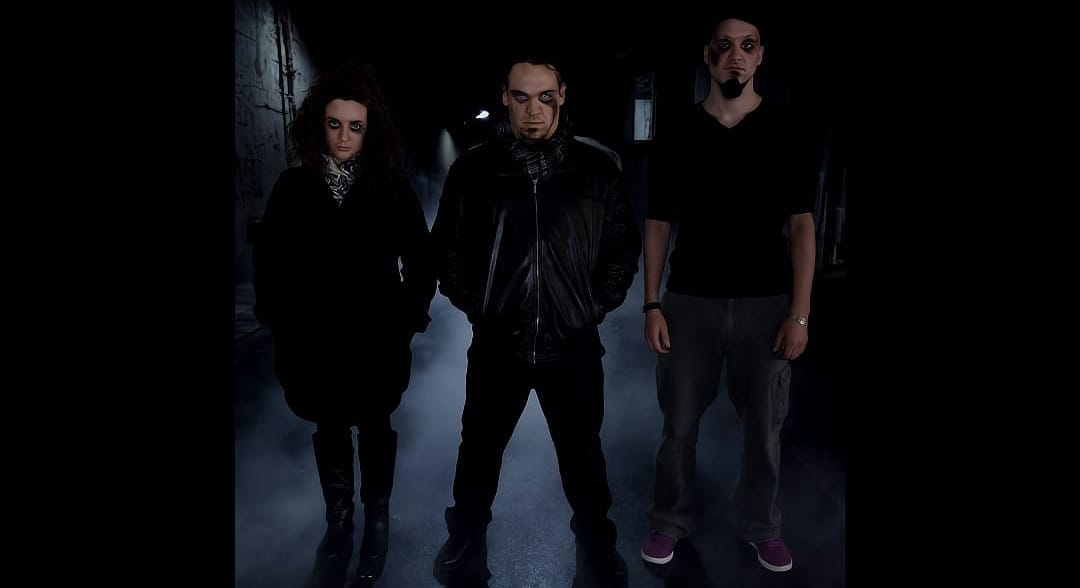
The band is made up of members Industrial Fog (Vocals, Guitar), Miss Grey (Bass, Backing Vocals), and Gianz Vukodlak (Drums, Samples, Backing Vocals). Epta7 blends industrial influences with post-punk, dark electronic elements, and a cinematic horror atmosphere. The band draws from themes of cosmic horror, isolation, and decay, while musical influences vary from NIN, Ministry, Rammstein, and more.
The band states on the release:
"Rather than writing isolated songs, we're building a world. Every release reveals another fragment of the mystery, and every video opens another door into the EPTA7 universe."
The band's two single releases "The Walls Breathe" and "Fallen Gabriel," are two of the standout tracks. The former begins with dramatic guitar chugging and eerie singing vocals as booming synths and percussive drums fill in the background. Soon the song introduces growling vocals and female singing to contrast the male melodic vocals as the song continues a dark, electro-industrial sound.
Where "The Walls Breathe" was a slow, industrial sound, "Fallen Gabriel" immediately picks up the pace, taking on a more traditional punk, or even death metal, tempo as galloping riffage, slamming drums, and fast-paced screams create an explosive, energetic sound. Rather than taking a dramatic, atmospheric sound, Epta7 opts for an in-your-face, crushingly heavy sound with "Fallen Gabriel".
Beyond the music, the band builds a whole lore universe with evolving storytelling through the music, as each release continues an interconnected story. The music is designed to be an entire audiovisual experience with instruments, lyricism, and storytelling merging together to create a powerful horror-inspired universe.
You can stream Epta7's music on all streaming platforms, find the band on social media, and watch their official lyric videos on YouTube below!
Halestorm frontwoman Lzzy Hale delivered an inspiring speech on July 10 during the opening of the Rock & Roll Hall Of Fame‘s new exhibit, Women In Metal: You Will Know My Name.
The exhibit highlights influential women who have helped shape metal, recognizing artists who have challenged expectations and left a lasting mark on the genre through their music and careers.
According to the Rock & Roll Hall Of Fame, the artists featured in Women In Metal represent women who refused to conform to traditional expectations. Through powerful lyrics, commanding stage presence and uncompromising attitudes, they have played a major role in bringing metal to wider audiences while inspiring future generations to embrace their own identity and creativity.
During the opening event for Women In Metal: You Will Know My Name, Lzzy Hale and fellow Halestorm guitarist Joe Hottinger performed an acoustic set. Lzzy Hale also paid tribute to the artists who influenced her career and encouraged girls and women to “make noise, start the band” and never give up.
The exhibit includes memorabilia representing women from across the metal spectrum, featuring artists such as Lita Ford, Lzzy Hale (Halestorm), Alissa White-Gluz (Arch Enemy, Dragonforce), Taylor Momsen (The Pretty Reckless), Courtney LaPlante (Spiritbox) and many others. The collection was curated by Rock & Roll Hall Of Fame assistant curator Haley Cronin.
Speaking about the exhibition, Haley Cronin said: “Women have been pivotal influencers and changemakers in the metal genre since its inception,” adding, “We are excited to tell the stories of those women who stand firmly and courageously at the forefront of innovation and acceptance, and through their raw power pave the way for all girls who just want to rock.”
The Rock & Roll Hall Of Fame describes rock and roll as a genre born from the meeting of rhythm & blues, country and gospel, driven by a spirit of inclusion and constant evolution. Through exhibits, digital content, live performances, educational programs and its annual induction ceremony, the museum documents the artists, songs and moments that have shaped music history. The institution also states that it is committed to maintaining an inclusive, welcoming environment that encourages creativity, innovation and respect for all people.
After weeks of hacking through uncharted wilderness, you break through the brush and into a large clearing. Ruins of long-abandoned homes and shops line the main drag. You walk down what was once a bustling Main Street, which eventually leads to a large and overgrown village green. In the center stands a modest and surprisingly intact…church? Sepulcher? Town hall? You’re unsure, but at least you know you didn’t pay for a wild goose chase. A suspiciously knowledgeable drunk in a nameless bar told you about a building in a long-forgotten town in what would—in a different universe—become Warsaw, Poland. Built by the trio Torpor, the halls beneath this temple promise mystery, danger, ancient power, and above all, treasure. So, intrepid adventurer, do you have what it takes to brave this Đungeon Đescent?
As you cross the threshold and make your “Entrance,” the atmosphere is transient and expeditious, the lilting melody worthy of adventure. It’s not long before you find the hidden staircase and descend, “Trespassing the Sanctuary” proper. Initial impressions of Mike Magister IV’s lo-fi tremolos and Bloodhammer’s blast beats would indicate a largely blackened structure, but Torpor is not so one-note. Franciszek Archont’s clear and clean pipes echo along the walls and reveal Đungeon Đescent to truly be trad/heavy metal by way of Bathory. Even as you square off with an “Armoured Skeleton,” you can’t help but appreciate how the punky tilt of its percussive attacks matches flawlessly with its searing axe work. Wandering through these underground halls, the seamless mix of early black metal’s intensity and grit with sword and sorcery atmosphere makes this a unique yet familiar Đungeon Đescent.
On, the dungeon descends. Like a bard or a storyteller in a tavern, Archont narrates your journey, evoking Blind Guardian’s iconic Hansi Kürsch. He shies from naught, even as the “Đungeon Đwellers” squeal their alarm on ancient, echoing strings and begin to hunt you down, the first trespasser they’ve known in ages. Harried further into the tunnels, you eventually lose your pursuers, marked by the slick bass solo rumbling and bouncing further into the distance. In the chase, though, you’ve lost your way! Wandering aimlessly, your hopes rise as you enter a chamber whose blast beats and acoustic flourishes recall the “…Sanctuary” above. Alas, the exit this is not! A monstrous creature stands at the far end of the chamber, manning a terrifying, nigh mythical machine: the “Polybolos.”1 Steel-tipped bolts fly toward you with a triumphant, glorious rhythm, echoing the machine’s name as they miss and clang on the wall behind you.
After all the dangers you’ve faced on this Đungeon Đescent, the “Polybolos” was the breaking point, and you’ve never wanted to “Return to the Surface” more. The walls listen maliciously as your panic skyrockets with Bloodhammer’s methodically increasing tempo. In this mad dash for safety, a moment of clarity stops you dead in your tracks. You will never leave this place. You will die here. With this realization, Magister IV’s acoustic musings transform into a frantic and gritty solo, his strings’ screams matching your own. As you tire and accept this death sentence, you decide it will be far better to pass away in a daydream than to remain rooted in this hell of Torpor’s creation. And so, you drift off. Lo-fi scalar riffs and medieval strings color the scenes of your memories. One “Scythian Chase” among many, you lead hordes of horse like thunderous double bass down the planes to torture and scalp your enemies for the queen. Here at the end, as you remember with advantage what feats you did that day, a thrumming bassline and nostalgically raw solo gently shepherd you into the great silence.
Not every D&D session ends happily, but as your DM rips up your character sheet, you realize Torpor’s Đungeon Đescent was a hell of a ride. It’s fairly short, clocking in at 32 minutes, but that half hour is filled to the brim with athletic and acrobatic songcraft. The mix, which is spacious and gritty, only amplifies the impressive performances across the board—especially Archont, whose vocals are undeniably the star of the show. A unique reconstruction of known touchpoints, Torpor’s debut is accessible, nostalgic, and instantly enjoyable. Your character may not have found the treasure, but in checking out Đungeon Đescent in the first place, you sure did.
🔥 Who Will Rise as This Week’s Champion on the MDR Battle Of The Bands? 🔥 And who will dominate next month as Band of the Month on Metal Devastation Radio?
Last month’s winners, ANOTHER DEMON , crushed the competition with a staggering 78,786,044 VOTES , claiming the title of Band of the Month on Metal Devastation Radio! You can check them out HERE !
This is the weekly championship edition of the Band Of The Month – Battle Of The Bands that we host every month on MDR!
How does it work? Every Monday, we launch a new poll featuring bands that submit music each week on metaldevastationradio.com. Voting runs until Friday at 9PM EST .
Each Friday night , at the start of The Zach Moonshine Show , I’ll be spinning the Top Six weekly winners , and announcing the #1 band of the week live on air — getting thousands of listens on Mixcloud !
At the end of the month , all weekly votes are added up, and the band with the highest total votes becomes our Band of the Month !
Winning Band of the Month gets:
A featured post on our Facebook page, reaching thousands of fans
A front-page spotlight on metaldevastationradio.com , which pulls in hundreds of thousands of views every month
A free PR email blast from Metal Devastation PR, hitting 40,000+ contacts including labels, zines, stations, and more
Airplay every hour during general rotation
Tons of social media shares and exposure across our network
If you want the world to know who your band is, this is the easiest way to make it happen!
💥 Want in on the next battle? Comment below with your band name and we’ll add you to next week’s poll — or email me at zach@metaldevastationradio.com with “Battle Submission” in the subject line.
Bands can compete as many times as they want , and if you enter multiple weeks in the same month, your votes combine toward the Band of the Month title!
👇 Click on the bands below to vote as many times as you like, or add your own! Poll closes Friday, July 24th at 9PM EST!
Who Will Rise as This Week’s Champion on the MDR Battle Of The Bands? 07/28/26 – 07/31/26
WOR$T GIRL IN AMERICA, Slayyyter’s awesomely fried level-up LP, is Stereogum’s favorite album of 2026 thus far, and it has brought Slayyyter an unprecedented level of hype. Slayyyter’s just started off an extremely sold-out headlining tour, and she’s also got some big festival gigs and a few other things coming up. (I am jealous of everyone who gets to see Slayyyter and Die Spitz open for Turnstile in Lawrence, Kansas in October.) At those headlining shows, Slayyyer is performing new songs.
Dez Fafara has revealed that he’s been quietly living with a brain tumor for nearly two years. The DevilDriver and Coal Chamber frontman shared the diagnosis on the Garza Podcast, hosted by Suicide Silence guitarist Chris Garza, confirming the tumor is non-cancerous — but that surgeons can’t safely remove it yet, because operating on it right now could cost him his speech. The strangest part of the story: it’s been shrinking on its own, and his doctors don’t entirely know why.
STREAM THE METAL BREAKDOWN DAILY NOW:
A brain tumor, a blackout that may have saved his life, and the best-reviewed DevilDriver record in 15 years — all happening at the same time. Scott Penfold breaks down Dez Fafara’s health revelation and what it means for the August tour on today’s Metal Breakdown Daily. Download the free Loaded Radio App on Apple iOS and Google Play and take the show with you.
Two Years Of Saying Nothing
Here’s what makes this land the way it does: Dez has been carrying this since roughly late 2024, and most of us had no idea.
Speaking with Chris Garza, the 60-year-old frontman explained that doctors found a tumor in his head somewhere between one and two years ago. He goes back for scans every six months. And the reason they haven’t operated isn’t cost, insurance, or scheduling — it’s that the tumor is sitting somewhere genuinely dangerous. In his words, it actually has to grow a little before it’s safe to go in, because removing it now could leave him without his speech, among other things.
Sit with that for a second. A vocalist. Being told the safest thing to do is wait for the thing in his head to get bigger.
The one piece of unambiguously good news, and it’s a big one: it’s benign. Dez said he got emotional when they told him, and that once benign was confirmed, his mindset flipped almost immediately into fight mode — okay, we can beat this. That’s about as Dez Fafara a reaction as it gets.
LIVE & LOUD: Stream the World’s Hardest Radio Station 24/7
The Blackout That Found It
The origin story here is the part that’ll stick with you.
Back in 2024, Dez had a blackout at home and was left with vertigo severe enough that Coal Chamber had to pull the plug on their entire “Fiend For The Fans” tour while he prioritized his health. At the time, the story read like a rough break for a band with momentum. Fans were disappointed. Dez asked for patience. Everyone moved on.
Turns out that cancellation was the luckiest thing that ever happened to him.
It was the treatment for the vertigo that led doctors to the tumor in the first place. Dez put it plainly: if he’d never had the vertigo, he might not have found out about the tumor until it was too late. Doctors also told him the vertigo itself won’t return — his body won’t allow it to happen twice.
One health crisis uncovering a much bigger one, early enough to matter. Metal fans are a superstitious bunch by nature, and honestly? Hard to blame anyone for reading something into that.
The Shrinking, And What We Should Say About It
Now the part that requires a little care.
The tumor has been getting smaller on its own, which genuinely surprised his physicians. Dez attributes that to prayer and intermittent fasting, and he’s adamant that he’s going to make it disappear entirely — through diet, fasting and positive thinking — before anyone gets a chance to operate. His next scan is early next year, and as far as he’s concerned, it’s going away. Period.
We’re going to report that the way Metal Hammer did, because it matters. The Brain Tumour Charity states there’s no medical evidence that any specific diet can treat a brain tumor — though a balanced diet does help you keep your strength up, lower infection risk and recover better from treatment. So take the fasting talk as one man’s mindset and faith, not as a treatment plan.
But here’s the thing nobody can argue with: the tumor is shrinking, he’s under real medical supervision with scans every six months, and he’s approaching a terrifying situation with the kind of ferocity that’s defined his entire career. Whatever’s driving it — we’re just glad it’s happening.
And He Never Stopped Working
The kicker to all of this? He’s been doing his best work in years while carrying it.
DevilDriver released their eleventh album, Strike And Kill, on July 10 via Napalm Records — a record that brought founding bassist Jon Miller back into the fold and swung hard back toward the band’s California groove roots. Metal Hammer gave it an 8 out of 10 and called it the best thing to carry the DevilDriver name in more than 15 years. When Dez announced it back in April, he said his headspace hadn’t changed, that he hadn’t gone soft in his view of the world or in his music.
We now know exactly what he was carrying when he said it.
Sixty years old. Tumor in his head. Career-best reviews. Getting back on the road anyway.
Strength to Dez, his family and everyone around him. Go buy the record, and if that tour comes near you — go be loud for him.
TL;DR
Dez Fafara revealed on the Garza Podcast that doctors found a brain tumor almost two years ago.
The tumor is non-cancerous, but surgeons can’t safely remove it yet — operating now could cost him his speech, so it has to grow first. He has scans every six months.
The tumor has been shrinking on its own, surprising his doctors; Dez credits prayer and intermittent fasting, though the Brain Tumour Charity notes there’s no medical evidence any diet treats brain tumors.
It was discovered through treatment for the vertigo that followed a 2024 blackout — the same health crisis that forced Coal Chamber to cancel their “Fiend For The Fans” tour.
DevilDriver released their 11th album Strike And Kill on July 10 via Napalm Records to career-best reviews, with a North American headlining tour starting in August.
FAQ
Does Dez Fafara have cancer?
No. Fafara has stated that the brain tumor doctors found is non-cancerous, or benign.
According to Fafara, the tumor is located in a position that makes surgery too dangerous right now — operating could result in the loss of his speech and other complications. Doctors have told him it needs to grow before removal can be attempted safely, and he undergoes scans every six months.
How was the tumor discovered?
Fafara suffered a blackout at home in 2024 that left him with severe vertigo, forcing Coal Chamber to cancel a tour. It was during treatment for the vertigo that doctors discovered the tumor. Fafara has said that without the vertigo, he might not have found out until much later.
Is Dez Fafara still touring?
Yes. DevilDriver’s North American headlining tour begins in August 2026, following the July 10 release of the band’s eleventh studio album, Strike And Kill, via Napalm Records.
Can fasting or diet shrink a brain tumor?
Fafara has credited prayer and intermittent fasting for his tumor shrinking. However, The Brain Tumour Charity states there is no medical evidence that any specific diet can treat a brain tumor, though a balanced diet can help maintain strength, lower infection risk and support recovery from treatment. Anyone facing a diagnosis should follow the guidance of their own medical team.
Send Dez some strength, metal family — drop a message for him in the comments, and if you’ve got a favorite DevilDriver or Coal Chamber record, name it while you’re there. Follow Loaded Radio for daily rock and metal news.


 After weeks of hacking through uncharted wilderness, you break through the brush and into a large clearing. Ruins of long-abandoned homes and shops line the main drag. You walk down what was once a bustling Main Street, which eventually leads to a large and overgrown village green. In the center stands a modest and surprisingly intact…church? Sepulcher? Town hall? You’re unsure, but at least you know you didn’t pay for a wild goose chase. A suspiciously knowledgeable drunk in a nameless bar told you about a building in a long-forgotten town in what would—in a different universe—become Warsaw, Poland. Built by the trio Torpor, the halls beneath this temple promise mystery, danger, ancient power, and above all, treasure. So, intrepid adventurer, do you have what it takes to brave this Đungeon Đescent?


 STREAM THE METAL BREAKDOWN DAILY NOW:
 LIVE & LOUD: Stream the World’s Hardest Radio Station 24/7
