Vikings and their warrior ethos are a central archetype for metal of all stripes. Hyper-violent warriors from the frozen wastes who descend on coastal towns with great violence and furious anger; what could be more metal than that? Perpetually riding at the front of that particular longship, Amon Amarth have made their share of filthy lucre crafting paeans to the mystical warriors of olde. Since 1994, they’ve spun many yarns of Viking bravery, mythos, and generalized berserker mayhem in ways that have captivated legions of metallers. 2022s The Great Heathen Army was arguably their least interesting outing over a long career, leaving fans hoping for a mighty rebound on The Allfather Awakens. The release of their cowboy-ified video for “Eight Legs of Thunder” didn’t bode well for things to come, but all things unfold as the Allfather directs. What awaits fans of ancient battles and cultures? Will it be Wild West gunplay or the comfortable and familiar haunts of Thor and Loki? Place yer bets!
The Allfather Awakens opens bigly with “Gjallarhorn,” which is considerably more punchy, spry, and memorable than most of the stuff on The Great Heathen Army. You know where it’s going as soon as it starts with the epic chanting and stirring guitar lines, and off to battle you go before you can finish your morning mead. It’s everything Amon Amarth do well, from the aggressive and heroic guitar lines to Johan Hegg’s rough death bellows, and a mighty chorus that makes you want to sack the nearest Dollar General. It’s like something off Twilight of the Thunder God, and it’s 100% fan service. It doesn’t hurt that the music sometimes reminds me of Brainstorm either. Follow-up “Eight Legs of Thunder” works better in the context of the album if you forget the cheeseball video of the band in a Yellowstone-esque cowboy setting. It’s not their best song, but it’s not bad, and the chorus is entertainingly Amarth-y. From there you get a surprisingly good run of classic and near-classic Amon Amarth chestnuts. The chorus of “We Rule the Waves” made me chuckle at first because it’s so fucking on the nose to chant “We are Viking,” but damn if I wasn’t walking around singing it for a week-plus, much to my annoyance.
The single “Upphaf” didn’t win me over when it dropped, as restrained folk-based music isn’t why I come to the Amon Amarth party, but it works well enough as a change-up after several songs loaded with Norse bravado. As The Allfather Awakens unfurls, Amon Amarth trots out the full bag of tricks and tropes they’ve used to make themselves as big as they are. Not a lot here is “new” per se aside from the stripped-down folk of “Upphaf,” but the overall quality of the writing is elevated from last time, thankfully. “Raven God” covers the need for a big, stadium-rocking, ale horn-swinging drinking anthem, as you can’t hear the chorus without wanting a hefty beer to hoist in tribute. The title track is the Viking deadlift day soundtrack to inspire great gains, and closer “Ascending Like an Eagle” almost qualifies as good enough to be included on With Oden on Our Side. There are no tracks that will move to the very front of your Amarth playlist, but none feel overly recycled or forced, and the album ebbs and flows well while providing a consistently urgent, forceful experience. At 46 minutes with most tracks running under the 5-minute mark, Allfather motors along, and no song feels tedious or overlong.
The Amon Amarth formula relies on quality riffs and warrior-approved harmonies, and this time Olavi Mikkonen and Johan Söderberg deliver the goods. There’s plenty of the slightly blackened Viking-core riffs we’ve come to know and love, and the harmonies are righteous and rabble-rousing. The guitar lines and accents provide a big percentage of the thrills here and push the material to the next level. Johan Hegg is reliably stout and powerful as ever, roaring his heart out about axes, oxen, and Wotan. He’s been one of my favorite melodeath croakers since their debut, and he’s aged like fine wine. The Allfather Awakens finds the whole band in good shape, but it’s the much improved songwriting that stands out the most. While the writing on The Great Heathen Army often felt tired and forced, things feel a lot more like the early days here, and there’s less of a sense of the band spinning their tires in the mud.
I approached The Allfather Awakens with trepidation and concern that the Amon Amarth journey may be nearing the jumping-off point. Thankfully, the album title proved prescient, and the Allfather awoke to bring this band of warriors back with renewed bloodlust and rage. They may never achieve the heights of albums like With Oden on Our Side, but if they keep cranking out stuff of this ilk, they will always have Steel on their side. A good album to blast when it’s a good day to die.
(written by Islander) Obviously, we host a lot of premieres here — we’ve done so almost every weekday for many years. The point, of course, is to introduce people to new music they haven’t heard before that we’re inspired to support. But our tradition of premieres holds the same benefit for us — it introduces […]
Scottish post-rock warriors Mogwai have had a hell of a run over the past 30 years or so. Early next year, they’ll release a career-spanning collection under the title Happy Tears. It’s funny to think that Mogwai are the kind of band to put out a greatest-hits album, but it also makes its own kind of sense. That compilation will also include a new track called “Underground.” It’s a collaboration with Iggy Pop, someone who started twisting loud rock ‘n’ roll into strange new shapes decades before Mogwai got started.
Tony Cicoria: The Man Who Was Struck by Lightning and Heard Music
Some stories seem to belong more to Gothic fiction than to documented history. A bolt of lightning strikes an ordinary man. He briefly dies, experiences an out-of-body sensation, survives against overwhelming odds, and weeks later awakens with an irresistible desire to compose music despite having shown almost no interest in it throughout his life.
Yet this is not the plot of a supernatural novel. It is the extraordinary story of Dr. Tony Cicoria, an orthopedic surgeon whose encounter with lightning became one of the most intriguing cases ever discussed in neuroscience. His experience fascinated neurologist Oliver Sacks, who devoted an entire chapter of Musicophilia to understanding what happened inside Cicoria’s brain after the accident.
Whether interpreted through science, psychology, or something more mysterious, Cicoria’s transformation continues raising profound questions about creativity, consciousness, and the hidden potential of the human mind.
A Lightning Strike That Changed Everything
On a stormy afternoon in 1994, forty-two-year-old Tony Cicoria attended a family gathering near Albany, New York. Stepping away from the pavilion, he used a public telephone to call his mother. As he finished the conversation and moved away from the phone, lightning struck the telephone line.
The electrical discharge hit Cicoria with enormous force. He later recalled seeing an intense bluish-white light and experiencing the strange sensation of observing his own body lying on the ground from above. His heart stopped, and for a brief period he was clinically dead before an intensive-care nurse, who happened to be waiting to use the telephone, performed CPR and revived him.
He suffered burns where the current entered and exited his body, but his recovery initially appeared surprisingly uneventful. Medical examinations, including neurological testing, found no obvious signs of permanent brain injury. Within weeks, he returned to work as an orthopedic surgeon, believing the most dramatic chapter of his life had already passed.
In reality, the most extraordinary consequences had not yet begun.
When Silence Became Music
Several weeks after the lightning strike, Cicoria noticed something deeply unusual. He developed an overwhelming desire to listen to classical piano music.
This fascination seemed to arrive without warning. As a child he had taken piano lessons for only a short time before abandoning them completely. Throughout adulthood he showed little interest in classical music, preferring other genres and never imagining that music would become central to his life.
The craving quickly intensified. Listening was no longer enough. He felt compelled to buy a piano and teach himself to play, often spending every available hour practicing. More remarkably still, original melodies began appearing in his mind with such persistence that he felt driven to write them down before they disappeared. He later described the experience as if music had suddenly begun flowing through him from an unknown source.
Friends and family witnessed a transformation that seemed impossible to explain. The respected surgeon had become equally obsessed with becoming a pianist and composer.
Oliver Sacks and the Mystery of Sudden Musicophilia
Tony Cicoria’s story eventually attracted the attention of renowned neurologist Oliver Sacks, whose career was devoted to exploring the strange and often beautiful ways the human brain responds to injury and disease.
Sacks included Cicoria’s experience in Musicophilia: Tales of Music and the Brain, describing it as one of the most unusual examples of what he called sudden musicophilia—the abrupt emergence of an intense passion for music following a neurological event.
The medical puzzle lay in the apparent contradiction between the clinical findings and Cicoria’s experience. Standard neurological examinations revealed no obvious abnormalities capable of explaining such a dramatic change in personality and creativity. Yet the transformation was undeniable. A man who had shown almost no interest in piano now devoted much of his life to composing and performing original works.
Rather than claiming to have solved the mystery, Sacks presented Cicoria’s case as evidence of how much remains unknown about the relationship between the brain, creativity, and consciousness. Sometimes the most fascinating medical stories are not those that provide answers, but those that expose the limits of current scientific understanding.
“Music, once it came to him, took possession of him.”
Can Lightning Unlock Hidden Creativity?
Tony Cicoria’s experience belongs to a small group of neurological cases that continue challenging scientists. Although lightning injuries are relatively rare, they more commonly leave survivors with memory problems, chronic pain, concentration difficulties, or emotional changes. An overwhelming desire to compose music is almost unheard of.
Some neurologists have suggested that the electrical discharge may have altered neural pathways involved in auditory perception, creativity, or emotional processing. Others have proposed that the near-death experience itself fundamentally changed Cicoria’s outlook, allowing dormant interests to emerge with unusual intensity.
Neither explanation fully accounts for what happened. Developing an appreciation for music is one thing. Suddenly feeling compelled to compose original piano works without extensive musical training is something altogether different.
Cases like Cicoria’s remind researchers that the human brain remains one of science’s greatest mysteries. Creativity is not confined to a single region of the brain but emerges from extraordinarily complex networks that we are only beginning to understand.
Near-Death Experiences and Extraordinary Perception
One of the most discussed aspects of Cicoria’s story is his description of leaving his body immediately after the lightning strike.
He recalled rising above the ground, seeing his own body lying motionless, and becoming aware of the people rushing toward him. Experiences of this kind have been reported by many survivors of cardiac arrest and other life-threatening events, although researchers continue debating how they should be interpreted.
Some neuroscientists argue that such experiences arise from profound changes in brain activity during periods of extreme physiological stress. Others suggest they may reveal aspects of consciousness that remain poorly understood. At present, there is no universally accepted explanation.
For Cicoria himself, the experience carried less importance than what followed. The lightning strike did not simply leave him with an extraordinary memory. It permanently altered the direction of his life.
The Music That Would Not Stop
As the months passed, Cicoria’s fascination with music continued growing. He practiced piano with remarkable dedication while composing pieces that he felt almost compelled to write.
Among his best-known compositions is Lightning Sonata, a work directly inspired by the event that transformed his life. The title reflects not only the physical force that struck him but also the unexpected artistic awakening that followed.
Unlike many hobbyists who discover music later in life, Cicoria described his creative process as unusually vivid. Melodies seemed to arrive fully formed, demanding immediate attention. He often feared they would disappear unless he rushed to the piano or quickly wrote them down.
To outside observers, the transformation appeared almost unbelievable. The disciplined orthopedic surgeon continued practicing medicine while simultaneously developing into a serious pianist and composer, pursuing two careers that had previously seemed entirely unrelated.
Acquired Savant Syndrome or Something Else?
Tony Cicoria’s story is frequently mentioned alongside another rare neurological phenomenon known as acquired savant syndrome. In these unusual cases, individuals develop remarkable artistic, mathematical, or musical abilities after suffering brain injuries or neurological trauma.
Although acquired savant syndrome has been documented in only a small number of people, it raises fascinating questions about whether extraordinary abilities may already exist within the brain, waiting for unusual circumstances to reveal them.
Cicoria himself has never claimed to possess supernatural powers. His story is remarkable precisely because he presents it with the calm perspective of a physician. He acknowledges the mystery while remaining careful not to draw conclusions unsupported by evidence.
That balanced approach has made his experience particularly compelling. Rather than becoming a tale of paranormal certainty, it remains an invitation to explore the extraordinary complexity of the human mind.
Science, Mystery, and the Gothic Imagination
Stories like Tony Cicoria’s occupy a fascinating space between scientific inquiry and Gothic imagination. Unlike fictional tales where lightning grants supernatural powers or resurrects the dead, Cicoria’s experience is fully documented. Yet the transformation that followed remains difficult to explain with complete certainty.
Gothic literature has long explored moments when ordinary life is suddenly interrupted by an event that permanently alters a person’s identity. Mary Shelley’s Frankenstein imagined electricity as the force capable of creating life. Edgar Allan Poe examined the hidden chambers of the human mind, suggesting that extraordinary experiences often reveal aspects of ourselves we never knew existed.
Cicoria’s story echoes those literary traditions without requiring anything supernatural. The lightning strike became a catalyst for profound personal change, forcing both scientists and readers to ask whether creativity is something we acquire or something that already exists within us, waiting for the right moment to emerge.
That uncertainty is precisely what makes the story so compelling. It reminds us that reality can sometimes feel as mysterious as fiction.
A Life Forever Divided by Lightning
Tony Cicoria’s story ultimately resists simple explanation. Neurologists continue debating how a lightning strike could coincide with such a profound artistic awakening, while psychologists point to the transformative power of surviving a near-death experience. Neither perspective fully captures the remarkable change that followed one ordinary afternoon in 1994.
What remains beyond dispute is that Cicoria’s life divided into two distinct chapters. Before the lightning strike, he was an accomplished orthopedic surgeon whose interest in music was minimal. Afterward, he became equally devoted to the piano, spending years composing works that seemed to arrive almost unbidden in his imagination.
His experience reminds us that the human brain remains one of science’s greatest mysteries. We understand far more about neurons than we do about creativity, inspiration, or the sudden transformations that occasionally redefine an entire life. Cases like Cicoria’s encourage humility, reminding us that the boundaries of human potential may be far wider than current science can fully explain.
Whether viewed as an extraordinary neurological event, a profound psychological awakening, or simply one of the most remarkable true stories ever documented, Tony Cicoria’s journey continues inviting us to ask one unsettling question: how much of ourselves remains undiscovered until an unexpected moment changes everything?
Explore the Darker Side of the Human Mind
If true stories like Tony Cicoria’s fascinate you, explore the Edgar Allan Poets store. Our designs celebrate Gothic literature, psychological mysteries, Edgar Allan Poe, and the beauty of the unknown.
Join the Noir Newsletter
Receive essays exploring Gothic psychology, neuroscience, mysterious historical events, Edgar Allan Poe, and the remarkable stories that blur the line between science and the unknown.
Frequently Asked Questions
Who is Tony Cicoria?
Tony Cicoria is an American orthopedic surgeon who survived a lightning strike in 1994 and later developed an extraordinary passion for classical piano and music composition, attracting international attention from neuroscientists.
Did Tony Cicoria really begin composing music after being struck by lightning?
Yes. Following his recovery, Cicoria experienced an intense desire to learn piano and compose original music despite having shown little previous interest in classical composition.
Why did Oliver Sacks write about Tony Cicoria?
Oliver Sacks featured Cicoria’s case in Musicophilia because it represents one of the most unusual documented examples of a dramatic change in musical creativity following a neurological event.
What is acquired savant syndrome?
Acquired savant syndrome is a rare condition in which individuals develop exceptional artistic, musical, or mathematical abilities after brain injury or neurological trauma. Cicoria’s case is often discussed alongside this phenomenon, although it remains unique.
Has science explained Tony Cicoria’s transformation?
No. Researchers have proposed several neurological and psychological explanations, but no single theory fully accounts for the profound musical transformation that followed his lightning strike.
Star Trek hero William Shatner’s upcoming metal album is far from his first musical venture. In 2013 he’d never listened to prog before he started work on Ponder The Mystery (which he revisited a decade later). Inspired by Billy Sherwood (before his full-time return to Yes) the pair created an album dripping with heavyweight guest talent. It led to the actor’s discovery of a connection between progressive music and science fiction, and a record that moved him to tears.
“Every year Tom Hanks has a Shakespeare reading to raise funds for schools,” says William Shatner, demonstrating his ability to spin a great celebrity yarn. “He gets all his friends together – of which I’d like to consider myself one – and we do a reading of one of Shakespeare’s plays. The latest one is The Two Gentlemen Of Verona. Paul McCartney is going to sing some songs, and I’m going to do Lucy In The Sky With Diamonds with him.”
That $1,500-per-seat event took place at a sold-out Broad Stage Theater in Santa Monica. Hanks, Macca and Shatner were joined by Val Kilmer and Seinfeld’s Jason Alexander, among others, to raise money for various good causes.
With its tempo changes, Mellotron intro and marshmallow skies, Lucy is a pretty proggy piece of work. Shatner’s remarkable take on it was the highlight of The Transformed Man, his debut album – released in 1968 as the original Star Trek series was entering its third and final season. “My understanding is Paul found my interpretation ‘interesting!’” the actor laughs. “That’s the word he used!”
William Shatner does. From time to time. Speak in. Staccato bursts. Also, he has a knowing, almost English sense of irony about himself. He’s well aware that many people might find him – or at least his musical endeavours – faintly absurd. And yet he’s friendly, articulate and, with his 83rd birthday coming up, still in possession of more marbles than many Hollywood stars begin with.
“He’s just an amazing, down-to-earth guy and an amazing artist,” says former Yes guitarist Billy Sherwood. “He’s capable of going to the Bahamas and retiring, but he wants to continue with his art, and I respect that.”
Sherwood has collaborated with Shatner on his fourth musical enterprise, Ponder The Mystery. They were introduced by Brian Perera, founder of Sherwood’s regular label Cleopatra, which also released Shatner’s daffy 2011 covers album Seeking Major Tom.
“Brian suggested I meet Billy,” says the actor, “and they asked what I’d do. I said, ‘Well, I could take a period of time: there’s a guy on a beach who’s in despair an hour before sunset. The sun sets, and through the beauty of what he sees, he regains his joy of life.’
”They said, ‘Uh, okay!’ They didn’t really know what I was talking about – and in a way, neither did I. I began to write new lyrics about twilight, sunset and the sounds of the night, and before we knew it we had 15 songs.”
I conceived the idea that progressive rock is to music what science fiction is to literature
William Shatner
“I thought it was an incredible artistic expression for a man in his position,” says Sherwood. “I said, ‘Let’s go at this like a serious progressive rock record. Let’s try to make an interesting piece of art here, not worry about what people are expecting and just do what we want to do.’
“He was into that and ran with it. I waited for him to give me lyrics; I got the vibe, harmonically speaking, and bounced off of those.” He cites and example: “He wrote So Am I about his dog dying, and equating it to himself and mortality. It was melancholy, so I wrote music with almost a church-like atmosphere.”
Though perhaps not for everybody, the concept works well for those who to go with it. Shatner’s spoken-word existential enquiries are set to Sherwood’s highly effective symph-prog rock arrangements, on songs such as Where It’s Gone… I Don’t Know, I’m Alright, Where Does Time Go? and I Think. Musically and vocally, Sherwood – “a bloody genius,” according to Shatner – does the heavy lifting. His layered harmonies and rock tones are an astringent counterpoint to the Star Trek hero’s distinctive, what’s-it-all- about recitative.
I knew there’d be people who would get it, and others who were waiting to hear Lucy In The Sky With Diamonds
Billy Sherwood
Musically, jazz is Shatner’s first love; and he admits that, before hooking up with Sherwood, he’d never been a big progressive rock fan. “But when I came up with this idea, I went back and listened to all these great bands like Pink Floyd, to get the cohesiveness of the concept. I tell ya, I’m getting myself into deep water here! I seem to have lurched into this area by osmosis.
“I conceived the idea that progressive rock is to music what science fiction is to literature. There is in science fiction a desire to further the imagination, to take what exists and go further to explore the boundaries, the horizons. In progressive rock you push the music to the edge and discover new ways of doing things.
“Maybe this album is a new way of doing things – I don’t know, but in my experience this is new. It tantalises you with new ideas of how music and the spoken word – the music of language itself – can combine.”
The oddest, most avant-garde tune on the album must be Rhythm Of The Night. Hawkwind’s Nik Turner adds sax to an evocative, glossy slab of AOR- inflected prog that’s intriguing and fun, with Shatner’s love of wordplay at the fore. “I had the idea for the line, ‘The cricket is the ticket to the rhythm of the night / The cadence of the hawk is obligato to the dusk.’ Billy took the rhythm of my words and put them to music.”
Sherwood adds: “I wanted that in an odd meter – to have the rhythms move around. So I played the drums crazy on that one. It’s a cool tune. My main challenge was to make sure when I played something, he was digging it. He was really accepting of the compositions; it became very natural. Many of the projects I do, we start getting in a flow and they become easier over time.”
I’m used to music in its traditional form; this was more like prog rock theater. I’m singing, doing my thing, and Bill’s reading and doing his
When Al Di Meola heard Shatner was doing a new album, he called him up directly and asked to be a part of it. The actor had never heard of the jazz fusion guitarist – but Sherwood leapt on the chance to get him involved. Rick Wakeman has been a Sherwood ‘friend and ally’ for years so he’s added some nimble parts. The album is notable for featuring some of the last recorded work by the late keyboard great George Duke, whose overdubs were sent to Sherwood’s studio just days before he died.
The theme of mortality is a major aspect of the work. Shatner’s strong second album, 2004’s Has Been – produced by Ben Folds – contained some intense moments such as the hauntingly sparse What Have You Done, inspired by the tragic 1999 death of his third wife, Nerine Kidd-Shatner. “That’s what I tuned into,” says Sherwood.
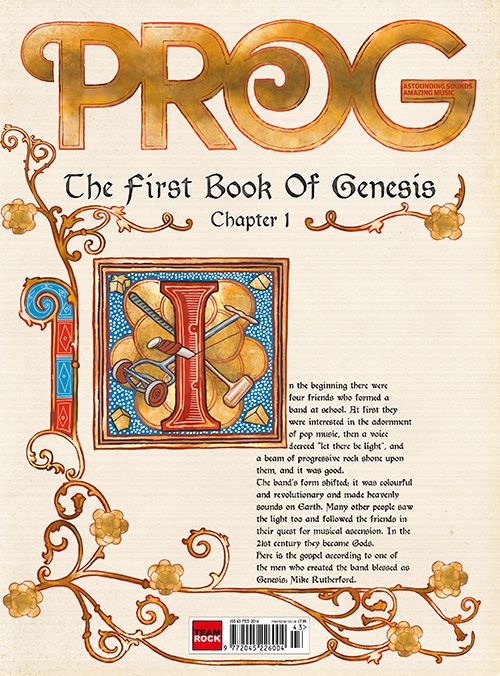
This article first appeared in Prog 43 (Image credit: Future)
“It was very heavy; it was real. I knew there’d be people who would get Ponder The Mystery, and others who were waiting to hear Lucy In The Sky With Diamonds – there’s nothing we could do about that, so I decided to roll the dice to get people thinking rather than waiting for the joke. I’m very very proud of what we’ve come up with.”
They launched the album with three small club dates in LA, where Shatner was backed by Sherwood and his regular band Circa, featuring Tony Kaye. “I’ve never done a show like that,” says Sherwood. “I’m used to music in its traditional form; this was more like prog rock theater. I’m singing, doing my thing, and Bill’s reading and doing his, and the mixture created a unique experience.
“One night he told a story about how musicians, if something’s wrong, give each other a look – he’d realised the battery pack for his in-ear monitors wasn’t even on. I said to him afterwards, ‘Dude, you’re supposed to tell me these things so I can come over and fix it!’ In rehearsal we musicians might be getting a little tense; he’d be just sitting there, smiling through it all. I’d tell him, ‘You need to screw something up so I can yell at you a little bit!’ It was all so funny, and so surreal.”
If Sherwood’s main priority was to keep his captain happy, he certainly achieved that. “I’ve never had a more creative, enjoyable and spectacular time with anyone in any place,” says Shatner of his co-writer. “There are such unbelievable players on the album.
“I’d worried there’d be a sameness to the songs – but they’ve lent their uniqueness to them. There are songs on here that move me to tears no matter how often I hear them. It’s been wonderful.”
“The Carrion Choir”, the latest new single from Hatebreed‘s forthcoming studio album Fatal Paradox, is out now and available for streaming via YouTube below. Read more…
Grammy-nominated Connecticut hardcore and metal veterans Hatebreed have shared a visualizer for “The Carrion Choir,” the fourth single from their upcoming album, Fatal Paradox. The record lands Nov. 6 via BLKIIBLK, the heavy metal imprint of Frontiers Label Group.
The band describes the album as a full-tilt assault of breakdowns, d-beats and dogpiles. Thrash comes through on “Kill Count Increase” and “Total Invincible,” while “The Carrion Choir” and “Truth Is a Lion” deliver the straight hardcore hit. Rage ties everything together.
Longtime collaborator Chris “Zeuss” Harris (Rob Zombie, Accept, Shadows Fall) produced the record. The previous single, “Kill Count Increase,” is a crossover blast of accelerating tempos, heavy riffs and frontman Jamey Jasta‘s venomous bark.
“Kill Count Increase” opens the album, and Jasta says it sums up the band’s first record in six years. “It’s the lead track on Fatal Paradox and a perfect way of summing up our first album in six years from the start,” Jasta said. “It’s straightforward, in-your-face Hatebreed. Fast. Hard. It gets down to business and comes up for air two-and-a-half minutes later. The room and everyone in it gets wrecked and comes back wanting more.”
Jasta was also upbeat about the new label home. “BLKIIBLK put together a dream team to get behind the new Hatebreed record and we couldn’t be happier — new label, new horizons, crushing new songs,” Jasta previously said. “We are beyond grateful and can’t wait to unleash these tracks on the world!”
Drummer Matt Byrne says the band’s momentum is climbing. “2026 is the year of Hatebreed. This juggernaut as we know it is picking up the pace rapidly and is taking no prisoners.
“As if 2025 wasn’t enough of a truly busy and successful year, this summer sees multiple European festivals/headline tours for the band, two separate U.S. legs of the “Summer Slaughter” tour, and a powerhouse of a new record dropping this fall on an awesome new label BLKIIBLK!!! We can’t wait to see everyone on the road!”
Jasta also praised the producer. “One of my favorite things about making this record was working with our brother-in-arms Zeuss once again,” Jasta continued. “His connection with Matt, Wayne, Frank, Carl and me goes far beyond the producer’s chair. I’ve known him since the Pushbutton Warfare and Jasta 14 days. He’s been like a sixth member of this band for years.
“When you’re chasing something timeless, memorable, and meaningful, having that level of trust and understanding makes all the difference. We would high five, scream, pace, and celebrate every time we elevated the song or hit on something killer. From “I Will Be Heard” to “Destroy Everything,” “Looking Down the Barrel” to now, “Decisions Become Destinies”! We got another one, Zeussky!”
Frontiers global head of A&R and BLKIIBLK label head Mike Gitter said the label was thrilled with the signing. “BLKIIBLK Records is proud to announce the signing of Hatebreed,” Gitter said. “Not only are they a name carved into the heavy music landscape, but they are as vital and relevant a force as ever. Perhaps even more so.
“We are excited to work with Jamey, who continues to bring new energy to everything he touches. Jasta and Hatebreed aren’t merely about perseverance — they’re about bringing the sound of the extreme to a new level. We’re honored to be working together.”
Hatebreed is headlining the second 2026 leg of “The Summer Slaughter Tour,” which kicked off Aug. 20 in Albuquerque, N.M. Terror, Incantation, Gates to Hell, Torture and Creeping Death are providing support.
The first leg of the 2026 run started July 2 in Reading, Pa., and wrapped July 24 in Buffalo, N.Y. Devourment, Incantation (for the last five dates only), Snuffed on Sight, Balmora and Face Yourself supported.
Fairly often these days, I see a fresh round of social-media discourse on whether or not R.E.M. have been forgotten, whether new generations don’t appreciate what the college-rock godfathers brought to the game. Basically, people constantly talk about whether R.E.M. get talked about enough, which would certainly suggest that they do get talked about. R.E.M. haven’t been a band for 15 years now, but they’re in no danger of fading away anytime soon. There’s always an R.E.M. anniversary to celebrate. Just yesterday, Michael Shannon and Jason Narducy announced their latest R.E.M. tribute-act tour, this time saluting the 40th anniversary of Document. Today, R.E.M. themselves unveil plans for a 25th-anniversary edition of Reveal.
In spring 2027, A Perfect Circle will embark on a 32-date headlining tour in North America. Puscifer (April 13 to 25) and The Cult (April 27 to June 13) will serves as support on this trek. Coinciding with this tour announcement, the band also present a new single titled “To Whom It May Concern”. Read more…
U.K. thrash veterans Xentrix have released a video for “Nil by Mouth,” a song that spent time gathering dust before it earned its place on the band’s upcoming album, Allied With the Enemy. The record arrives Oct. 30 via Listenable Records.
The music behind “Nil by Mouth” was first demoed during the Seven Words sessions, then got buried under newer ideas and vanished. Xentrix stumbled across it again while writing the new album, rebuilt the lyrics and vocals from scratch, and watched it turn into one of the quicker favorites of the batch.
The lyrics deal with what the band calls “involuntary communication shutdown,” a mental pileup where thoughts race and tangle so badly that saying anything becomes impossible. Musically, it pairs classic thrash riffing and fast double-time snare work with big, chunky beatdown choruses, all wrapped in a tight modern production.
Allied With the Enemy was previously described in a press release as a ten-track record and the band’s most uncompromising statement so far. It follows 2022’s well-received Seven Words and pushes the sound darker, harder and sharper.
Sessions ran from late 2025 into 2026 at Backstage Studios in England, with Andy Sneap producing once again. U.K. artist Dan Goldsworthy created the cover art, and Listenable Records will handle the worldwide release.
The band says the album is melodic and atmospheric when it wants to be, and crushing when it wants to be. It claims to bring the metal back into thrash. Lyrical themes include disinformation, blind popularity, social and personal collapse, and self-bias. The pitch is thrash with purpose, weight and brains.
Xentrix is Jay Walsh (vocals, guitar), Kristian Havard (guitar), Chris Shires (bass) and Dennis Gasser (drums). Walsh, formerly of Bull-Riff Stampede, joined in July 2017 after the band parted ways with guitarist and vocalist Chris Astley.
The band first got noticed in the late 1980s, when a demo earned a five-K review in Kerrang! and caught the attention of Roadrunner Records. That led to the debut album, Shattered Existence. The band’s cover of “Ghostbusters” remains a fan favorite, as does the second album, For Whose Advantage?, which many regard as a thrash classic.
Xentrix had a short but successful run, sharing stages with Slayer, Testament, Sepultura, Annihilator, Sabbat, Tankard and Skyclad before calling it quits in 1996, fed up with the U.K. metal scene. Roadrunner Records issued four albums in that time: Shattered Existence (1989), For Whose Advantage? (1990), Dilute to Taste (1991) and Kin(1992).
The original lineup reunited for two shows in the band’s home country in 2006. Xentrix, with Astley on guitar and vocals, played its first gig in almost seven years in April 2013 at the Moses Gate in Bolton, England.
Allied With the Enemy is available to pre-order here.
 Vikings and their warrior ethos are a central archetype for metal of all stripes. Hyper-violent warriors from the frozen wastes who descend on coastal towns with great violence and furious anger; what could be more metal than that? Perpetually riding at the front of that particular longship, Amon Amarth have made their share of filthy lucre crafting paeans to the mystical warriors of olde. Since 1994, they’ve spun many yarns of Viking bravery, mythos, and generalized berserker mayhem in ways that have captivated legions of metallers. 2022s The Great Heathen Army was arguably their least interesting outing over a long career, leaving fans hoping for a mighty rebound on The Allfather Awakens. The release of their cowboy-ified video for “Eight Legs of Thunder” didn’t bode well for things to come, but all things unfold as the Allfather directs. What awaits fans of ancient battles and cultures? Will it be Wild West gunplay or the comfortable and familiar haunts of Thor and Loki? Place yer bets!