Category: news

  • Rita Ora Always Has This Crystal With Her

    She’s currently performing live, recording in the studio and starring in the newest installment of “The Descendants,” but the necklace never leaves her.
  • The Devotion of Willow Smith

    The daughter of a Hollywood power couple, she has gone above and beyond to prove herself. Virtuosity and spiritual aspirations fill her latest, “The Thread.”
  • EDDFEST / Tony Moore, Blaze Bayley, Stray and Maiden United Shine at Knebworth House

    Blaze Bayley - EDDFEST 2026. Photo: John McMurtrie

    The gates at Knebworth House opened at midday on Friday, 10 July 2026, welcoming EDDFEST campers ahead of the main event on Saturday. Gig-goers wandering around the world-famous venue were greeted by a veritable smorgasbord of wondrous delights, a cornucopia of delicacies from “the house of Iron Maiden.”

    The carefully curated exhibition, celebrating the Metal titan’s 50th anniversary, included the Infinite Dreams Museum Experience, which was a walk-through exhibition of stage props and relics. Everything from Baphomet, the devil figure used on The Number Of The Beast tour, to personal mementoes dating back to the Paul Di’Anno era was displayed there, in all its glory. You can read more about the Iron Maiden Fan Experience here.

    EDDFEST - 10/11 July 2026. Photo: Rhys Tagg/MetalTalk
    EDDFEST – 10/11 July 2026. Photo: Rhys Tagg/MetalTalk

    There was also Unfair Funfair featuring Eddie-themed rides and carnival games. An EDDFEST expanded Eddie’s Dive Bar was also in situ, and of course, there was the Maidenville stage. There was something for everybody to enjoy, but ultimately it was the music that everybody was there for.

    Featuring six scorching bands, all with links to Iron Maiden, the Maidenville stage was lit up like a burning inferno, infused with some of the hottest talent around.

    Tony Moore

    The EDDFEST musical proceedings got underway at 3 pm with Tony Moore performing songs from his critically acclaimed Awake setlist. Moore was recruited by Steve Harris in 1977 as their keyboard player, playing one gig at the Bridge House pub in Canning Town on 4 July 1977, before parting ways with them. 

    Despite a rather truncated 40-minute set-list (Awake is usually a one-hour 45 Minute set), Moore set the stage alight with six stunning tracks, drawing the crowd toward the stage like a pied piper. The highlight of his set, Crazy In The Shed, shows just what a truly accomplished artist he is.

    Tony Moore told MetalTalk in a 2024 interview how he was discussing the Awake project with Steve Harris. “I’m obsessed with it,” Moore said. “I feel like I’m going crazy in the shed. He [Harris] said to me, ‘That should be the title of your next song, Tony’.” The song will be released as a single on 4 September 2026, and more details can be found here.

    Gypsy’s Kiss

    Gypsy’s Kiss links to Iron Maiden are well known. Both Dave Smith, the band’s vocalist and guitarist, and Steve Harris formed Influence in late 1973. The band was later renamed Gypsy’s Kiss and lasted around 18 months before dissolving.

    Gypsy's Kiss - EDDFEST 2026. Photo: Julie 'Arry Broadhurst
    Gypsy’s Kiss – EDDFEST 2026. Photo: Julie ‘Arry Broadhurst

    Another 40-minute set saw Messrs Smith, Morley, Marr, Hunter, Gatcum and Emms ripping up the stage with some juicy NWOBHM cuts. You have to applaud these boys. If they played Knees Up Mother Brown, they would still make it sound electrifying.

    Again, with each song belted out, the crowd grew and grew around the Maidenville stage.

    Airforce

    At 5.20, the bomb-bay doors opened, as Airforce flew over the stage to drop a 40-minute payload of high-octane Metal. Airforce’s links to Maiden are again well documented, with drummer Doug Sampson playing on the Soundhouse Tapes and Chop Pitman being one of Steve Harris’s closest friends.

    It was quite strange to watch the band from a backstage position as you could literally see the audience grow and grow with each song played. Lino’s voice, always immaculate, launched into Fight, the band’s first track of their eight numbers.

    With Tony Hatton’s energetic bass playing, Sampson’s drumming, which seems to be more accurate than an atomic clock, and the laconic fretwork (but big sound) from Pitman, it is just sublime.

    Songs such as Heroes and Son Of The Damned and, of course, Band Of Brothers sound so good on a big open-air stage. The group really do deserve to be playing these massive venues.

    The final track, Finest Hour, which was a huge crowd-pleaser, led into Maiden United.

    Maiden United

    Led by Dennis Stratton (oh come on, Dennis needs no introduction!), the ridiculously talented axe-man led the way with a sumptuous acoustic set of Iron Maiden classics. These were not just like-for-like copies. The tracks were completely reworked, featuring Damian Wilson on vocals.

    With a stunning version of Strange World kicking off the set, three of the tracks came from Iron Maiden’s eponymous first album, which Stratton played on.

    However, the highlight was Wasted Years, which featured a keyboard-driven main riff and some wonderful rhythm guitar work. Stratton, who was moved to tears at the San Siro last month after a stadium full of fans paid tribute to him, was clearly enjoying himself up on the Maidenville stage, along with the rest of the lads.

    As for the audience? They were loving it.

    Stray

    Stray strayed onto the EDDFEST stage next, and the awesomeness continued. These guys are proggy, they are rocky, and they are bloody good fun. Led by the irrepressible Del Bromham, Karl Randall and the rest of the lads have this almost chilled Metal feel about their music.

    Stray were highly influential in helping form Steve Harris’s relationship with music. Maiden even covered Stray’s 1970 track All In Your Mind, and brought them as support on several European dates on the Dance Of Death tour.

    Houdini kicked off their set, and you would not want to escape from the band’s musical craftsmanship. Jericho was followed by Harry Farr, tickling the audience’s earlobes. The ever-burgeoning crowd were highly appreciative, but Stray’s crowning glory came when they played All In Your Mind. This version of the song has a slower, more melodic feel to it than the Maiden cover version.

    Stray - EDDFEST 2026. Photo: John Kinghorn
    Stray – EDDFEST 2026. Photo: John Kinghorn

    As the sun descended over the stage, Bromham’s crisp guitar work and Karl Randall’s drums welcomed “magic hour”, that point between dusk and night. Bromham then went on to embrace the theatrical, hanging his guitar from the scaffold, like a 17th-century ne’er-do-well.

    Despite the axe just dangling there, Bromham still managed to make it ooze sweet sweet music. The rest of the band are absolutely awesome, and this was a great venue for Stray to showcase their abundance of musical wares.

    Blaze Bayley

    The clock strikes 8.50 pm, and enter Birmingham’s finest, the one, the only Mr Blaze Bayley. The erstwhile Maiden singer was supported by Absolva as his backing band, and what a set they performed. With eight of nine tracks coming from the House of Iron Maiden, Bayley’s brooding baritone voice kicked off proceedings with the X Factor’s Lord Of The Flies.

    With the Appleton brothers, Martin McNee and Tom Atkinson working their magic, Bayley thrilled a packed Maidenville. Two more tracks followed before monastic chants heralded Sign Of The Cross. This song is classic Bayley. It suits his vocal range beautifully, and you can tell Blaze was in his element.

    The only non-Maiden track, Born As A Stranger, followed, before we heard the cries of “FREEDOM!”. The song that the film Braveheart cried out for, fired up. Nobody sings this better than Blaze. Although he did not write the track, this really is his song. 

    Bayley then addressed the EDDFEST audience, saying, “I’m so lucky to have such loyal support and be a part of the Iron Maiden family. It’s incredible. The two albums that we did, it’s a long time ago and they were a little bit controversial at the time because they were so different to what had gone before.

    “But in retrospect, people look back at those albums, and they view them in a different way. I think the love of that music has grown throughout the fan base. So, that’s a really, really nice feeling.”

    Another film-based song followed with Man On The Edge. With the crowd totally invested in Bayley’s performance, he finished with Futureal and The Angel And The Gambler. 

    Blaze Bayley’s voice is a model of consistency. It does not waver, it does not drop out of tune, it bellows and breathes life into every story the singer tells. It also has to be said, he is one of the nicest guys on the circuit.

    The evening was then rounded off with Hair Metal Glamageddon, a hard rock tribute extravaganza.

    Iron Maiden - EDDFEST - 11 July 2026. Photo: Manuela Langotsch/MetalTalk
    Iron Maiden – EDDFEST – 11 July 2026. Photo: Manuela Langotsch/MetalTalk

    Interestingly, throughout the proceedings, Steve Harris took the time to go and watch each artist play from the side of the stage. He seemed to be in his element, enjoying every note, every performance. One young lad even got the thrill of his life after asking the stage manager if he could get his Iron Maiden album signed by Dennis Stratton.

    Dennis graciously obliged. However, what the lad did not expect was for Steve Harris to also sign the album. The young lad promptly burst into tears. 

    So day one was over, and there were a lot of happy campers, all set up, primed and ready to rock the main event, the following day. You can read MetalTalk’s extensive EDDFEST coverage here.

    The post EDDFEST / Tony Moore, Blaze Bayley, Stray and Maiden United Shine at Knebworth House first appeared on MetalTalk – Heavy Metal News, Reviews and Interviews.
  • “We could have been bigger had we had an amazing manager. We’re our own worst enemies”: How Roxy Music got it together despite themselves

    Roxy Music’s impact was swift and powerful when their self-titled debut album arrived in 1972, following the success of first single Virginia Plain (which wasn’t originally on the LP). In 2018 members of the band looked back on the pros and cons of their arrival.

    Bryan [Ferry] has been doing it for bloody years,” says Phil Manzanera of the long-awaited, super deluxe edition of Roxy Music’s 1972 debut album, which includes a 5.1 mix of the record by Steven Wilson. “We’ve been going bonkers: ‘Oh, for goodness’ sake. Get it out!’ But Bryan’s done a brilliant job: the sleevenotes, the [fashion designer] Antony Price sketches. We’ve been talking about it for eight years. But that’s Roxy for you: the career strategy is non-existent.”

    The Roxy guitarist might be right when he says, “We could have been bigger had we had an amazing manager. We’re our own worst enemies.” Certainly they could have been more successful in America, had they been prepared to put in the necessary “graft” (Manzanera’s word) and do the requisite hefty long tours.

    Still, they didn’t do badly. They dominated Britain’s glam-era pop scene in the first half of the 70s, despite having next to nothing in common with Slade, Sweet et al and not being a pop group, or even a rock group. Indeed, they shared as much ground with the prog fraternity: Ferry had auditioned to be lead singer of King Crimson following the departure of Greg Lake, Roxy were looked after by EG, the management team behind Crimson and ELP, their original guitarist was Davy O’List of The Nice and that 1972 debut album happened to be produced by King Crimson lyricist Pete Sinfield. The fact that the music comprised as many multi-part mini-suites as it did actual neat songs increased its prog quotient.

    Manzanera had been in a prog/jazz fusion outfit called Quiet Sun with Bill MacCormick (later of Robert Wyatt’s Matching Mole) when he chanced upon an advert in Melody Maker seeking “the perfect guitarist for avant rock group.” “That’s how they saw themselves: an avant-garde rock group, not glam like their peers,” says Manzanera, who still has the Melody Maker clipping. He recalls the ad’s series of demands, and his confident ability to meet them. “‘Original’? Yeah. ‘Creative’? Tick. ‘Adaptable’? Yep. ‘Melodic’? Yup. ‘Fast’? Yes. ‘Slow’? Yup. ‘Elegant’? Yep. ‘Witty’? Yes. ‘Scary’? Oh yeah, I can do scary. ‘Stable’? Yes. ‘Tricky’? Yes, I could be very tricky.”

    The ad for the drummer was similar (“Wanted: Wonder drummer for avant rock team”). Paul Thompson was intrigued by the word “avant.” “I’d never seen it used in a rock band setting before – it was more commonly used in jazz,” he says, his accent none- more-Geordie (like Ferry, he’s from the north-east). “I was hoping they’d sound a bit like King Crimson, but really, I didn’t have a clue what the music would be like.”


    Thompson has been credited with tethering the rest of the band and giving them a solid base. “That’s what people have said, but I don’t like to blow me own trumpet,” he says modestly. “But Eno has said Roxy would have been an ordinary student art rock band if I hadn’t joined.” A fan of John Bonham, Ringo Starr and Family, Thompson detected “elements of prog” in tracks such as The Bob (Medley) but adapted well to the assorted “stops and changes.”

    Manzanera had been used to playing “ridiculous prog rock stuff in funny time signatures like 7/15” with Quiet Sun when, in late 1971, he turned up for the Roxy audition with his “unfashionable” Gibson ES-325 at the tiny workingman’s cottage in Battersea that Ferry shared with Andy Mackay when the louche crooner and the handsome saxophonist were both still schoolteachers.

    There, too, that day were Thompson, experimental sonic FX man Brian Eno, and the band’s original bassist Graham Simpson. Five years their junior, the 21-year-old Manzanera was amazed at “how grown-up these guys seemed: they had jobs, cars, bank accounts…” He was equally impressed by their less- is-more approach. “They said, ‘Let’s have a jam,’ and it was just two chords. It was such a relief not having to play ‘tricky-dicky’ stuff.”

    Mantric drones with Eno’s VCS3 synth treatments on top, the racket couldn’t help reminding Manzanera of The Velvet Underground. “If there was a little [speech] bubble above my head it would have said, ‘You’re in the nearest equivalent of The Velvet Underground.’ Those Velvets albums were so important to me.”

    Unlike so many of his guitarist peers, Manzanera – who was brought up in Cuba, Venezuela and Colombia – wasn’t steeped in the blues, gravitating instead towards free jazz guitarist Sonny Sharrock and, inevitably, Jimi Hendrix. “Seeing Hendrix on Top Of The Pops and live at the Albert Hall changed everything,” he recalls. “It was jaw-dropping.”

    Roxy Music suited Manzanera and his own experimental tendencies. “I thought there was one song [from the debut] that smacked a little of prog and that was The Bob (Medley), which was almost like Genesis without the funny time signatures,” he says. “It had lots of different parts: the heavy bit, the quiet bit… Whereas others like Re-Make/Re-Model were anarchic, with all these weird bits of Eno on.”

    Meanwhile, for Ladytron, Ferry asked Eno to approximate a lunar landscape. If There Is Something went from jaunty country hoedown to the sax-smeared heart of darkness. Chance Meeting was like a miniature David Lean movie, only with a backdrop of tortured muzak. 2HB was a queasy listening torch ballad. Bitters End was like Noël Coward doing a doo wop duet with The Ink Spots. Would You Believe? reimagined Showaddywaddy on Saturn.

    On the first album, Roxy Music were purveying postmodernism and retro- futurism years before those terms became pop currency. “I could see this was rock,” Manzanera notes, “but it was avant-garde. The music was often simple but based on ideas to do with systems music. There was improvisation, which was good for me because I’d been brought up listening to freeform jazz. The idea of having sections: there was an affinity there in a bizarre way. There were different sound textures and colours, combined with a rock beat.”

    Was it important that Roxy weren’t all virtuosos? “Crucial,” he says. He paints a picture of a band who were like punks five years ahead of schedule. “I didn’t want to be a technique player. It was more about atmospheres and moods than learning scales or playing fast. We were inspired amateurs. You didn’t need to have studied at Berklee for years. You just needed one or two chords, enthusiasm and a good idea.”

    Roxy Music was created in a matter of weeks in a quaint, old basement studio – Command – on London’s Piccadilly. It was largely recorded live, with the four players performing together in the studio, Ferry laying down guide vocals and Eno adding effects and live- treating the guitar and sax in a series of oblique strategies.

    Thompson recalls the sessions being “quite chaotic”, but it was a controlled kind of anarchy. “It was fantastic,” he says, “especially Eno’s left field approach and the strength of Bryan’s material.” For Thompson, Roxy was always “Bryan’s baby. ”Manzanera jokes that “you should never have a band with two Brians,” but he essentially agrees. “We created a musical context for Bryan Ferry’s unusual character voice, and for his lyrics, to fit in,” he sums up. “We created a musical world that, combined with the imagery, people could look into and see some depth. We created this Roxy World.”

    By “we,” Manzanera means Antony Price and the cast of, well, several, who together comprised Roxy’s extended operation. If George Martin was the fifth Beatle, Price, PR consultant-cum- Minister-of-Information Simon Puxley and the rest were the sixth, seventh and so on of Roxy Music.

    “We were totally art directed by Antony Price,” says the guitarist, recalling the iconic six individual images of the band smothered in leopard skin and alien allure that appeared on the inner sleeve.

    “I remember still living with my mum and getting on the bus in Clapham, going to the photo shoot, wondering, ‘What am I going to wear?’ I got my mum to sew some diamanté glittery stuff onto a white shirt. I got to the photo shoot and Antony took one look at me and said, ‘No, no, no – put this on.’ He gave me a black leather jacket and some sunglasses – job done.”

    Thompson was still working on a building site even as Roxy were recording their debut album and doing John Peel sessions. “I remember turning up at the BBC in Shepherd’s Bush covered in brick dust and my hair all matted,” the drummer laughs. He might have baulked at some of fashion maven Price’s wilder excesses, but he could see the point of a glamorous image.

    “It was very strange,” Thompson says of the chance release, within two weeks of each other, of Roxy Music and David Bowie’s Ziggy Stardust album. “It was a zeitgeist thing. Music needed a change from denims and baseball boots. We wanted to bring a bit of glamour back, rather than look like everybody else.”

    Hardly surprisingly, Roxy’s ostentatious stage wear wound up the neanderthal types then at large in the UK and US. Manzanera has vivid memories of being attacked onstage here and in the States. “I remember supporting Rory Gallagher in Liverpool. Now, I loved Taste and the check shirts and everything, but his audience were not going to have this bunch of so-called ‘faggots’ playing weird music, so we got water-bombed. We got water-bombed all over the world. In Bakersfield in California, supporting Santana, people shouted, ‘Get off!’” He laughs at Roxy’s brittle determination beneath the outré garb. “We said, ‘No, we won’t.’”

    Roxy also antagonised the authentic music brigade, who didn’t like the way they seemed to appear, as though from nowhere, in the charts: the debut album at No 10 and non-album debut single, Virginia Plain, at No 4.

    “People were disparaging,” Manzanera says. “‘Oh, they haven’t paid their dues or slogged around.’” Nevertheless, the prevailing view was that Roxy, along with Bowie – who they supported twice in 1972, in front of 50 people at the Greyhound in Fulham and at the more capacious Rainbow – were a Good Thing, together offering the sense that the 60s were over and the 70s started here.

    “People were looking for something more colourful, particularly in that little period between 1969 and 1971 when most of the great 60s artists were either dead or close to death because of heroin and the drugs were keeping everybody down,” Manzanera elaborates. “Then Bowie and us appear and we’re all colourful and theatrical and showbizzy, and people go, ‘Phew!’ Suddenly, people were free to be flamboyant or gay.

    “I remember watching Jimi Hendrix on Top Of The Pops and thinking, ‘What the fuck is that?’ I can imagine somebody doing the same with our first appearance. There’s all these people in the audience in jumpers and flares, and suddenly we come on as though from the Planet Zog! You can imagine their parents going, ‘What the bally hell?’”

    Manzanera is proud of Roxy’s debut, while Thompson is especially fond of Virginia Plain and its irresistible demonic electronic supersonic mo-mo-momentum, to coin a phrase (“When the keyboards and drums come in, it’s like, ‘Woof!’ Being hit by a tidal wave”). Truth be told, the drummer hasn’t heard the album since the day it came out. But, 46 years on, he can still appreciate its impact.

    “It was pretty groundbreaking,” he says. “Something new. A different approach to music. I think the second album [For Your Pleasure, 1973] was better – we had more input – but that first album was a breakthrough, and very influential: I’ve heard everyone from the Sex Pistols to Duran Duran citing it as an inspiration.”

    Roxy’s stylised glamour was catnip to the new romantics, its sense of provocation a beacon to the punks. According to Thompson, who takes immense pride in this, that debut album annoyed as many as it appeased.

    “A lot of musicians didn’t like it cos it was kind of rough,” he says of the often angular, staccato, abrasive sonics. “I won’t say who.” Because it was led more by ideas than it was technical prowess? “Probably,” Thompson laughs. “Well, that and the fact that we were a bunch of poofs all dressed up.”
  • INERTIA Kicks Off Their Australian Tour ‘Emerald Whisper’ Tomorrow In Sydney

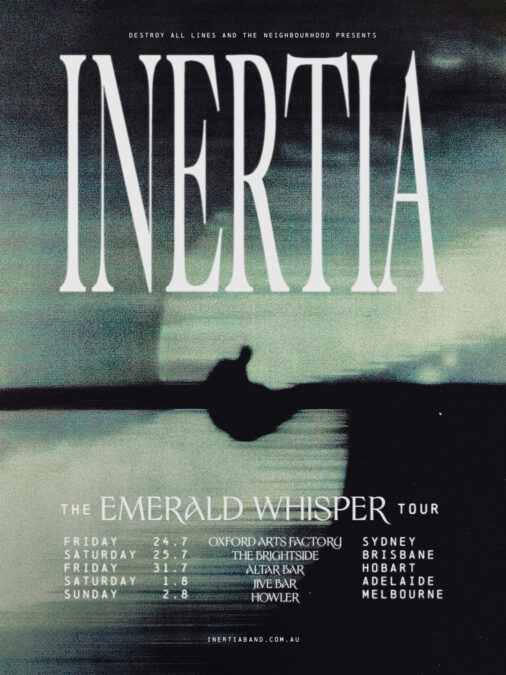
    Tickets via Destroy All Lines After the success of their new single Emerald Whisper, Sydney band INERTIA are celebrating by taking to the road on their headline tour of Australia. It’s no secret that Inertia have been on an exciting trajectory over the last few years, with every milestone only further cementing their rightful place […]
  • Listening Now : Schkeuditzer Kreuz – Keep Dancing – Fresh Graves Mix

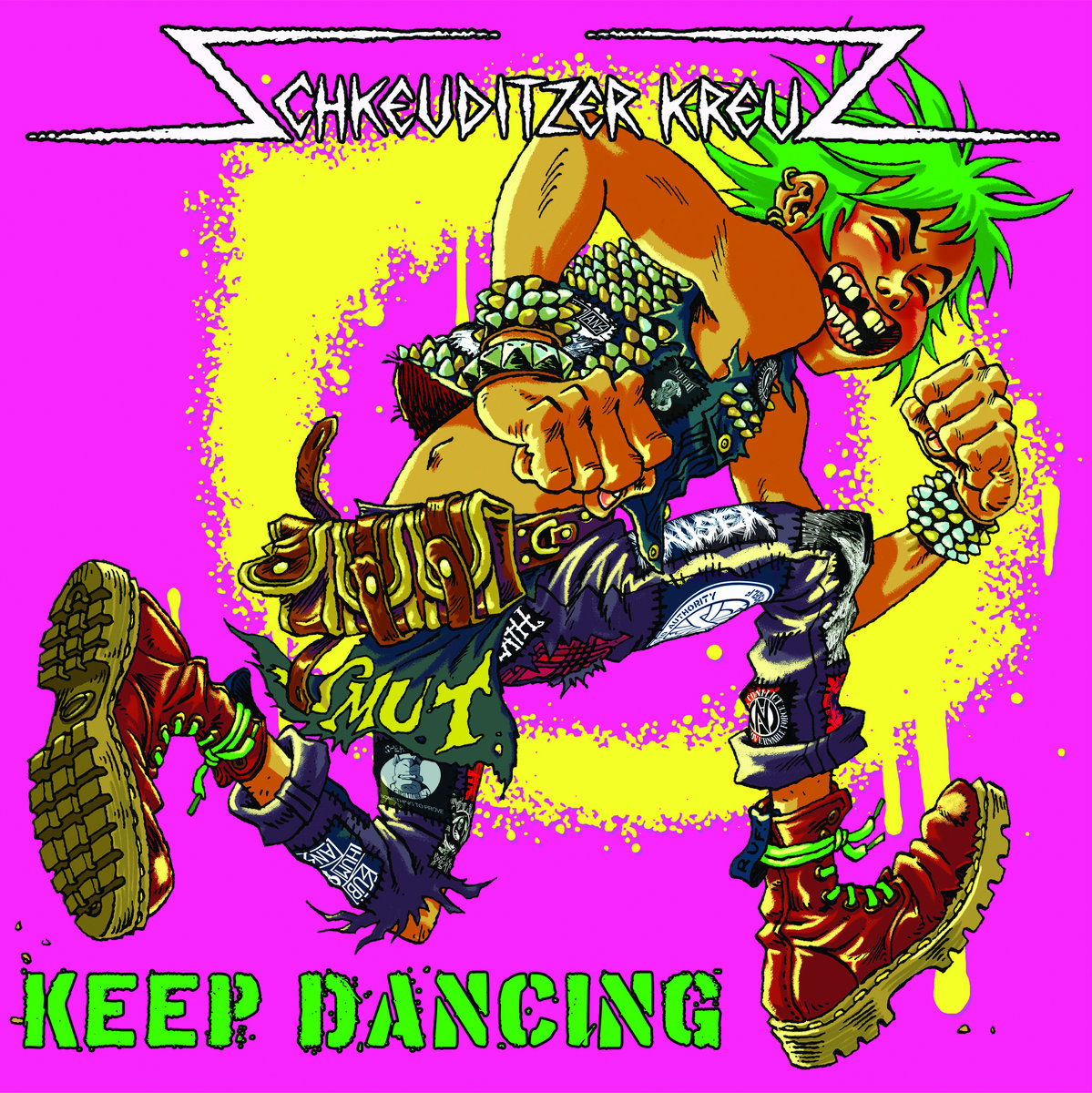
    Schkeuditzer Kreuz push industrial music into exhilarating new territory with Keep Dancing – Fresh Graves Mix, a ferocious collision of industrial techno, synth crust, hardcore punk, and gabber energy. Distorted electronics, punishing beats, abrasive guitars, and confrontational vocals merge into a relentless sonic assault that somehow remains irresistibly danceable. Beneath its uncompromising intensity lies a powerful message of resilience and collective resistance, transforming the dancefloor into a space for defiance rather than escape. Fierce, uncompromising, and thrillingly original, Keep Dancing – Fresh Graves Mix is underground electronic music at its most visceral and vital.

    Connect:

    Instagram


  • Bleach Dreamer – Girl’s Night

    There’s something about the way some artists and bands write, compose, and produce their music that immediately resonates
  • Vernon Taylor, Rockabilly Artist Who Recorded for Sun Records, Dies at 88

    Vernon Taylor, the Maryland singer and guitarist whose early career carried him from Washington-area television to the studios of Sun Records, died July 12 after a long illness involving dementia. He was 88.Taylor performed under a stage name and was born Vernon Walton Alderton on November 9, 1937, in Layhill, Maryland.
    According to his published family obituary, he spent much of his working life in the printing industry after his first recordings failed to produce sustained commercial success. His death closes the story of a musician who never became a national star but remained closely connected to rockabilly’s formative period.

    From Maryland Dance Halls to Television

    Sun Records’ artist biography traces Taylor’s musical beginnings to a farming family in Maryland, far from the Memphis studios most closely associated with early rock ’n’ roll. Drawn to country music as a child, he learned guitar and formed the Nighthawks while still in high school. The group played fire halls, private functions and other venues around the Washington, D.C., region.

    The Nighthawks received an early break after performing between sets for Curley Smith, a musician who later joined the rock band Boston. Taylor and his group subsequently earned a place on a Saturday-night television programme broadcast from Washington, an engagement that continued for more than three years.

    Taylor also appeared on American Bandstand and regional television programmes across the eastern United States. That exposure led to a contract with Dot Records, where he released “Losing Game” backed with “I’ve Got the Blues” in 1957. A second Dot single, “Why Must You Leave Me” and “Satisfaction Guaranteed,” followed in 1958. Neither record reached a substantial national audience.

    A Brief but Enduring Sun Records Chapter

    Taylor signed with Sun Records in 1958, entering the orbit of the Memphis label that had helped establish Elvis Presley, Carl Perkins, Johnny Cash and Jerry Lee Lewis. His sessions were produced by Jack Clement and Sun founder Sam Phillips, two central figures in the development of the label’s country, blues and rock ’n’ roll sound.

    His first Sun release paired “Breeze” with “Today Is a Blue Day” in 1958. The label followed it in 1959 with “Sweet and Easy to Love” and Taylor’s interpretation of “Mystery Train,” a blues-derived song deeply embedded in Sun’s musical identity. The label’s official page for the 1959 Sun single preserves the release as part of its historical catalogue.

    Neither single became a commercial hit, and Taylor’s involvement in the recording industry gradually diminished during the 1960s. Chart performance, however, explains only part of his place in rockabilly history. The genre was sustained by a broad circuit of local television programmes, dance halls, independent labels and inexpensive 45-rpm records, rather than solely by the small group of performers who became international stars.

    Taylor’s career illustrates that wider musical ecosystem. A regional performer reached two nationally recognised labels, worked with leading Memphis producers and left recordings that collectors and revival audiences continued to seek decades after their original release. His historical value lies less in commercial impact than in the way his career documents the opportunities available to young country and rock ’n’ roll musicians during the late 1950s.

    A Second Career and Musical Return

    After withdrawing from full-time music, Taylor established a career in printing while continuing to perform intermittently. He remained connected to music even as his professional life shifted away from recording and touring.

    His public musical return began in 1989, when he appeared at a benefit concert for influential rockabilly singer Charlie Feathers. The performance reopened a career many listeners had assumed was over, leading to appearances in the United Kingdom and overseas reissues of his Dot and Sun recordings through Germany’s Eagle Records.

    Run Wild Records released Daddy’s Rockin’, a 12-song collection of newly recorded material, in 1999. Discographical records also list the album Now and Then in 2000, along with later singles that extended his catalogue beyond the recordings issued during his first career.

    Why Vernon Taylor’s Recordings Still Matter

    Taylor’s legacy rests on endurance rather than celebrity. His early singles preserve a period when rockabilly remained a fluid mixture of country rhythm, blues vocabulary and teenage rock ’n’ roll energy. His later return also reflected the international revival that gave overlooked American performers a second audience, particularly in Britain and continental Europe.

    Taylor is survived by his wife of more than 57 years, Brenda J. Alderton; his sons Timothy and Thomas; his daughter Jennifer Bolin; five grandchildren; and four great-grandchildren. His son James Alan Alderton died before him.

    Some coverage has reported that Taylor died one day after a brother named Luther. That detail appears in the initial report on Taylor’s death, but it is not verified by the published family obituary, which names different siblings among those who predeceased him. The claim therefore remains unconfirmed.

  • Premiere: FRANKENBOK ‘Casualty’

    Hot on the heels of their latest album, The Ariba War Honkle, which debuted on the ARIA Australian Artist Chart at #5, Frankenbok return with Casualty, a hard-hitting single that transforms raw heaviness into a powerful metaphor for emotional exploitation. Originally sparked by guitar and vocal ideas from Aaron Butler after he attended a First […]

  • A beginner’s guide to progressive rock in five essential albums

    As the drug-fuelled experimentation of psychedelia waned after the Summer of Love, bands either went heavy, like Led Zeppelin, Deep Purple or Black Sabbath, or retained a spirit of musical adventure, marrying seemingly ill-matched sounds originally heard on Sgt. Pepper, Pet Sounds and Frank Zappa‘s Freak Out! and adding some symphonic or classical flourishes. Add a tidy amount of musical prodigiousness, and progressive rock was born.

    Of course it wasn’t called that back in the day, and whilst the early movers and shakers may not have sounded anything like each other, the one thing that linked the likes of Yes, Genesis, King Crimson, Jethro Tull, ELP and Pink Floyd was a fearlessness in the recording studio that matched the grandiosity of their musical ideas.

    These days prog’s influence is felt far and wide, although, 50 years on from its arrival, arguments still rage on what exactly constitutes progressive rock – alongside metal, prog probably has more gatekeepers and crashing line-up bores than any other genre.

    Despite the onset of punk rock in the late 70s, prog has continued to flourish. It had something of a rebirth in the 80s, spearheaded by Marillion, and the arrival of the prog metal sub-genre in the late 90s again boosted the genre’s fortunes.

    Today prog can be heard in the crushing heaviness of Meshuggah through to the artful leanings of Radiohead, and a myriad of bands delighting fans with their refusal to conform or work within perceived boundaries. Here are a selection of classic early albums alongside some examples of how the genre later moved forward. Which should offer fans a chance to indulge in their second favourite pastime, after listening to the music: telling anyone who’ll listen, “that’s not prog!”.

    Enjoy.

    Alt

    King Crimson – In The Court Of The Crimson King (1969)

    While it’s not the first progressive rock album, King Crimson’s incendiary debut album is without a doubt the one that put the genre on the map. It began a decades-long search by founding member Robert Fripp for his own musical nirvana, introduced the world to Greg Lake, later to form prog’s first ‘supergroup’ with Keith Emerson and Carl Palmer, while Ian McDonald would later resurface in AOR giants Foreigner!

    21st Century Schizoid Man is proto prog metal, something the band would explore later in the decade, while the title track and Moonchild are longform progressive rock in excelsis, and the delightful Epitaph remains a highlight of the band’s recent live sets. Whisper it, but most Crimson fans probably wish the band still sounded just like this.

    Yes – Close To The Edge (1972)

    If Crimson were eclectic and ELP bombastic, Yes operated with the finesse of a chess grandmaster. As prodigiously talented as their prog peers like ELP, Yes were on a massive creative roll in the early 1970s, releasing both The Yes Album and Fragile in 1971, both albums building on the promise shown by their first two albums, 1969’s self-titled debut and 1970’s Time And A Word.

    The arrival of guitarist Steve Howe for The Yes Album and former Strawb Rick Wakeman on keyboards for Fragile upped the band’s game, which all came together with no small amount of majesty with 1972’s Close To The Edge, which is frequently voted not just the best Yes album of all time but the greatest prog album too.

    Inspired by Herman Hesse’s Siddhartha, the side-long title track is both powerful and beautiful, while the other two tracks, the folkier And You And I and Siberian Khatru (not even Jon Anderson knows what a Khatru actually is!) maintain the class. Drummer Bill Bruford left the band following Close To The Edge, and some maintain Yes were never quite the same again.

    Genesis – Selling England By The Pound (1973)

    If any band captured the essence of Englishness, long-deemed an integral part of progressive rock’s DNA, it was former Charterhouse schoolboys Genesis. By the time of their fourth album their line-up with drummer Phil Collin and guitarist Steve Hackett had settled, thanks to a successful first US tour.

    While preceding albums Nursery Cryme (1971) and Foxtrot are hardly slouches, Selling England… remains probably the finest offering from the Peter Gabriel era, offering up bona fide Genesis classics such as Dancing With The Moonlit Knight, The Cinema Show and Steve Hackett’s guitar showcase Firth Of Fifth, all offering visions of a decaying Olde England falling prey to Americanisation. And in I Know What I Like (In Your Wardrobe)// the band had their first UK hit single. Like Close To The Edge, it’s often hailed as one of the greatest prog albums ever.

    Marillion – Script For A Jester’s Tear (1983)

    Following the wind of change punk brought with it at the tail end of the 70s, many hipsters in the music press decided progressive rock was done, a bloated corpse buried in the ground. Five young men gathered in Aylesbury (in the prog heartland of middle England) had other ideas.

    Inspired by the likes of Genesis, Camel and Van der Graaf generator, and fronted by a giant Scotsman who wore face paint and sounded like the bastard son of Peter Gabriel and Peter Hammill, Marillion were at the forefront of a new prog revival that captured the imagination of The UK and Europe throughout the 80s, and laid the groundwork for what a lot of modern-day progressive rock is about.

    The newer breed brought with them a social awareness sometimes missing from the originators of the genre, as well as more modern musical influences. Marillion would go on to have a Number One album with their third release Misplaced Childhood, but their debut remains a remarkable feat. An unashamed prog band, getting a deal with a major label and reaching No. 7 in the charts. In 1983. No, you were not dreaming.

    The enfant terrible of modern prog, Wilson is either feted for reviving the genre and taking it to greater commercial heights over the last two decades, or reviled for that same commercial success and more recent musical experimentation. But in terms of modern progressive rock, no one has been more pioneering either solo or with Porcupine Tree, whose own In Absentia and Fear of A Blank Planet vied with this solo option for the final spot here.

    2013’s Raven… is an album of dark ghost stories that saw Wilson co-producing with 70’s prog legend Alan Parsons and backed by some of modern prog’s finest musicians. It’s got the lot – giant epics such as the opening Luminol and The Watchmaker, gentle frail melody in Drive Home and in the heartbreaking title track, one of the finest and most emotive pieces of music Wilson has ever created. Regardless of your feelings on his more recent music, you simply cannot deny Wilson’s huge impact on prog.