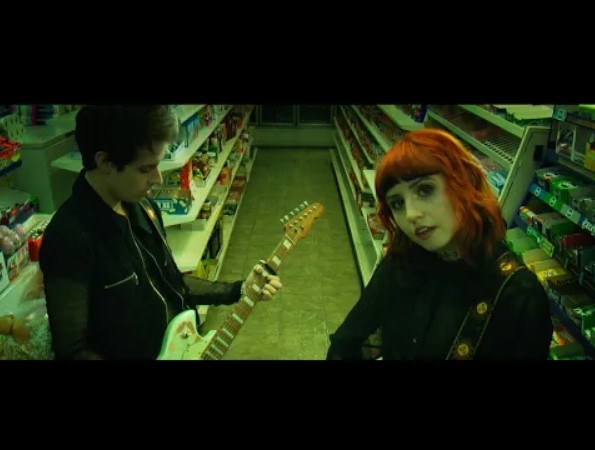
Reisender’s King of the Jam is an energetic and well-executed indie rock anthem that combines punk-infused momentum with thoughtful songwriting. Featuring Alexi Belchere of Nocean Beach, the track balances driving guitars, memorable hooks, and an underlying sense of reflection. Its narrative of perseverance and unfinished ambition gives the song emotional weight, while the upbeat arrangement maintains a strong sense of immediacy and excitement. The collaboration feels natural, with both artists contributing to a dynamic and engaging performance. Blending elements of indie rock, alternative rock, and skate-punk, King of the Jam delivers a spirited listening experience that is both accessible and emotionally resonant.
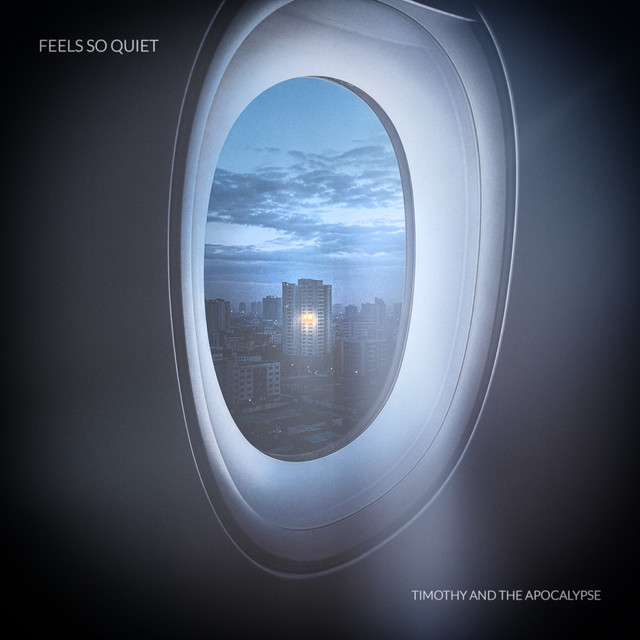
Timothy and the Apocalypse delivers an engaging blend of melodic techno, electronica, and indie dance on Feels So Quiet. Despite its title, the track radiates energy through driving rhythms, uplifting melodies, and a polished production that balances atmosphere with momentum. The vocals integrate naturally into the arrangement, adding an emotional dimension without overshadowing the instrumental elements. Rich synth textures and dynamic progression keep the listener invested throughout, while the song’s optimistic tone gives it broad appeal. Feels So Quiet demonstrates Timothy Poulton’s ability to craft electronic music that is both accessible and thoughtfully produced, combining dancefloor sensibilities with melodic sophistication.
sundayclub’s Blue Wave is a thoughtfully crafted indie shoegaze track that balances nostalgia with emotional immediacy. Built around shimmering guitars, hazy textures, and expressive vocals, the song captures the feeling of reflecting on the present while already longing for it to become a memory. The production is rich yet restrained, allowing the melody and lyrical themes of uncertainty, growth, and self-reflection to resonate naturally. Its warm atmosphere and careful attention to detail create an engaging listening experience that feels both personal and relatable. Blue Wave further establishes sundayclub as a promising voice within contemporary dream-pop and indie music.
Infinite light and a false paradise The flame of hope is always somewhere close
Fragments of you carry loneliness A faded future and nostalgia
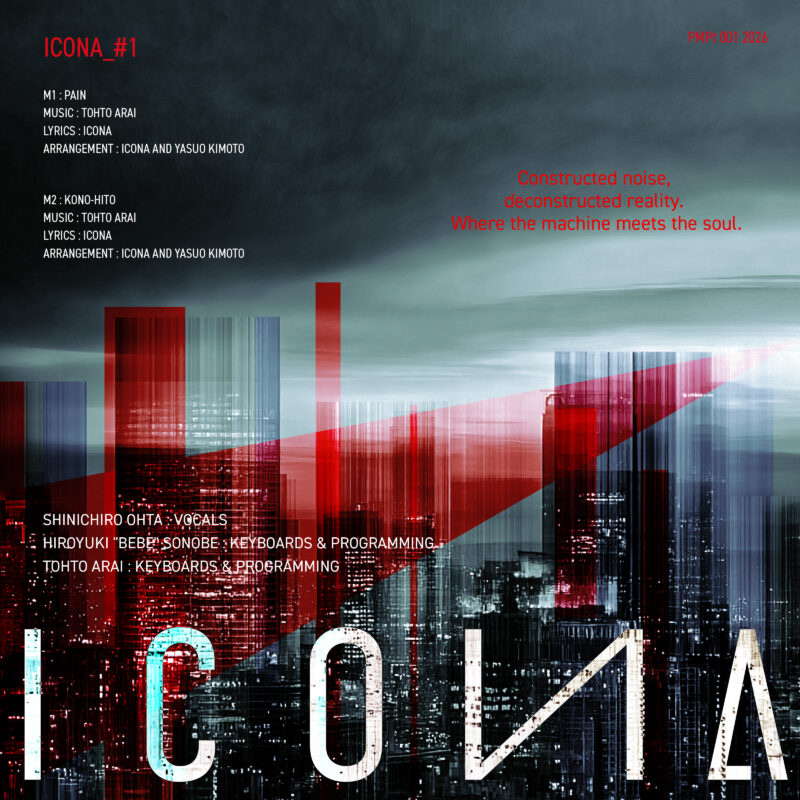
ICONA’s new single, Pain, sounds as if somebody locked a DX7, a cathedral PA, and a bruised pop heart in the same chrome room and made them settle their debts before dawn. The track rides high drama without preening for it; every synth line seems measured with a caliper, then shoved through a human throat. Tohto Arai, with three decades of Japanese arena production under his belt, knows how to make machines behave, but the pleasure comes when they start acting nervous anyway.
Pain circles distance, memory, false paradise, and the strange cruelty of time. The English refrain, “Light in the darkness,” lands with the bluntness of a warning sign glimpsed while speeding. Around it, the Japanese lyrics move through lost dreams, fragile hope, recurring hurt, and the pieces of a person left behind. The song treats romance as a malfunctioning time machine: one minute the absent figure is being pulled close, the next they are sealed away behind glass.
The Ryuichi Sakamoto and Yellow Magic Orchestra (YMO) DNA is present, sure, in the clean angles, the bright electronic discipline, the elegant sense of space. Yet ICONA folds that lineage into a New Romantic ache, replacing museum reverence with old gear as emotional weaponry. Hiroyuki Sonobe’s keyboards do the set dressing and the bloodletting, laying down glossy corridors where the track can stalk its own reflection. Shinichiro Ohta’s vocal and guitar work bring forth the song’s body heat: melodic, wounded, theatrical, without slipping into any costume jewelry.
What keeps ICONA clear of retro pastiche is Arai’s appetite for scale, and his instinct for making polish feel emotionally charged rather than distant. The drums land with arena-sized precision, the synths rise in clean chrome layers, and every element seems placed with the confidence of someone who knows exactly how wide the frame should be. Yet the song still carries an intimate ache: the feeling of staring at a screen at 3 a.m. while an old melody turns into an accusation of regret, or walking alone beneath the signage of Shibuya or Shinjuku after the trains stop running, surrounded by brightness that somehow makes memory feel sharper. The production’s immaculate finish becomes part of that feeling: sleek, luminous, and controlled, but never cold. Everything gleams, everything moves with purpose, and still the hurt comes through, softened by melody but never erased.
Listen to Pain below:
ICONA make high-fidelity pop with a nerve center, using period sounds as charged material rather than display-case bait. Pain is cinematic in the grand Japanese electronic-pop tradition, with an Asian pop curve in its melodies and a taste for drama big enough to put a rip in the wallpaper. It knows the past can seduce you, then turn the key.
Human beings are not, as they like to suppose, naturally decent creatures temporarily misled by bad systems. The systems are bad because the creatures are bad, or at least frightened, vain, obedient, and easily drugged by slogans. Give a man a flag, an enemy, and permission, and he will discover in himself a talent for cruelty he would otherwise have called impossible. Yet the odd fact remains that kindness persists as contraband. That’s the central focus of Decomposition by Choke Chain.
Decomposition comes out of the speakers with the charm of a basement interrogation, every drum hit landing like bad news delivered by someone who has stopped blinking: five slabs of body music dragged through punk wiring, hard-drive rot, and the kind of private collapse that makes sleep feel like an accusation.
Mark Trueman works fast, ugly, and close to the nerve, shoving 90s dark electro discipline into hardcore punk’s scraped-throat panic until the machine starts to sound sick of its own orders. The beats have a squared-off club utility, yet the production keeps tearing at the edges, letting distortion chew through the mix like rats inside a wall. The reference points are obvious enough to anyone with old Leæther Strip, Placebo Effect, :wumpscut:, Mentallo & The Fixer, Skinny Puppy, Youth Code, yelworC, Front Line Assembly, or The Klinik in their bloodstream, but Trueman is no museum docent polishing black rubber relics for the faithful.
“The EP was mostly written during a time where I was very close to giving up,” says Trueman. “Everything felt completely hopeless, and still does to some degree. I really tried to put all of that feeling into these songs. I also tried to confront some of my personal trauma on this record, which is something I’ve pretty explicitly tried not to do through my music in the past.”
Decomposition paces, grinds, spits, and stares, building a locked room where dread becomes rhythm, and trauma gets translated into metal-on-bone percussion. The vocals come through like a man arguing with the part of himself that keeps picking up the knife, while the synths smear acid across the walls without turning the record into mere genre cosplay. Plenty of current industrial acts chase severity as an outfit, but Choke Chain makes severity feel lived-in, cracked, and inconveniently alive.
The accompanying video, shot and edited by Videowaste in Chicago, IL, understands that this music needs no clean visual explanation. It feels like a hijacked broadcast from an underground TV station at 3:17 a.m., confrontational, glitchy, staticky, weird, and hostile to any viewer who expects a neat little performance clip. The image breaks down, bodies blur, faces turn into bad signals, and the whole frame seems to rot while the track keeps hammering forward. It has the sickly immediacy of public-access horror, VHS decay, and surveillance footage left too long in a damp room. Instead of prettifying CHOKE CHAIN’s violence, Videowaste lets the picture malfunction in sympathy with it, so the screen becomes another instrument: busted, blinking, and accusing.
Watch the video for Decomposition below:
By the end, Decomposition has earned its title through attrition. The EP does not offer catharsis in any polite therapeutic sense; it gives you impact, repetition, abrasion, and a bleak little proof that survival can sound hideous while still being survival. Negative Gain is sending this out on CD, vinyl LP, and digital formats July 10, and anyone expecting relief should bring their own oxygen.
Listen to Decomposition below and pre-order the album, out 10 July on Negative Gain Productions, here.
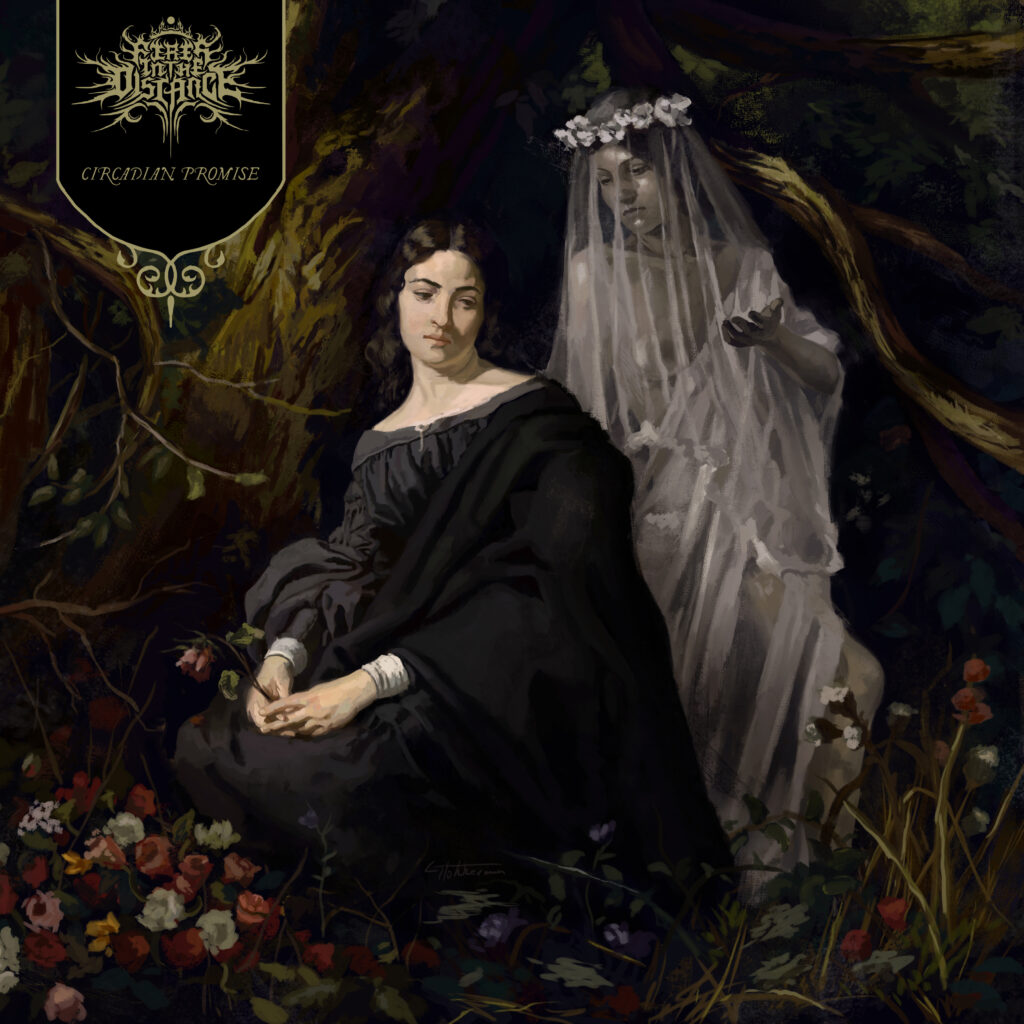
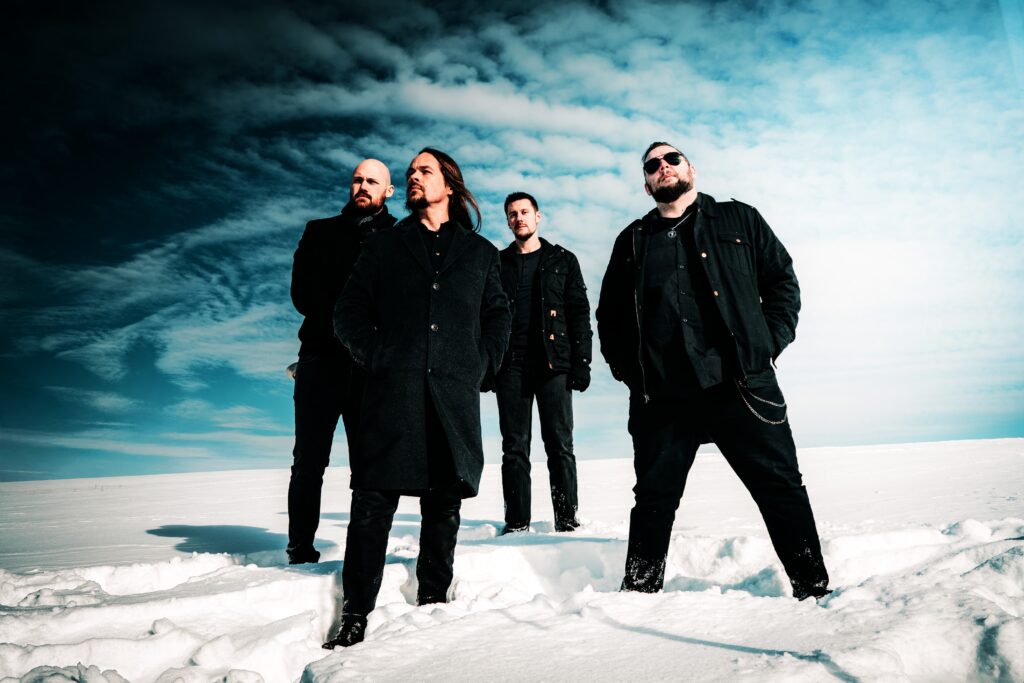
There is a category of album that announces itself not through force but through gravity – records that don’t demand your attention so much as quietly make it impossible to look away. Circadian Promise, the third full-length from Connecticut’s Fires in the Distance, belongs to that category. It is not the album their most devoted fans were expecting. It is something more difficult and, ultimately, more worthwhile than that.
Fires in the Distance arrived with a clear identity: melodic death metal filtered through the doom-laden melancholy and cinematic orchestration of the Scandinavian tradition, but assembled by American hands and anchored in an emotional vocabulary that felt distinctly their own. Echoes From Deep November (2020) introduced the project – originally a solo endeavor by guitarist and primary composer Yegor Savonin – as a serious proposition. Air Not Meant For Us (2023) confirmed it, the synth-driven arrangements and existential lyricism earning the band a genuine following and a spot among the more compelling modern melodeath acts working in this tradition. The question entering Circadian Promise, then, was not whether Fires in the Distance could deliver – but whether they would deliver the same thing again.
They don’t. That choice is the album’s central argument.
The orchestral scaffolding that defined Air Not Meant For Us is still present on Circadian Promise, but it has been repositioned. Strings and synths no longer occupy the foreground; they recede into the architecture, providing tonal weight rather than melodic statement. What fills the space they leave is more expressive lead guitarwork, denser doom influence, and an overall compositional patience that rewards attention. Savonin has spoken in interviews about the album’s core preoccupation – “spiritual death and losing your soul while still living,” and the process of accepting what cannot be changed. That thematic framework maps directly onto the sonic shift: Circadian Promise is a record about stripping away, about learning to live inside what remains. The production choices, made alongside returning producer Dave Kaminsky – who tracked bass and drums together, live, at Power Station New England and his own Studio Wormwood in North Carolina – reinforce this. Orchestration credits go to Randy Slaugh (TesseracT, Devin Townsend), and his work here is notably restrained, lending warmth rather than grandeur. The result has an organic pulse that most modern melodeath records, with their clinically compressed mixes, simply don’t possess.
Opener “Of Radiance and Levitation” is the fullest encapsulation of everything this record is attempting. It builds from shimmering guitar ambience and distant orchestral breath into a melodic payoff that feels genuinely earned – not manufactured. Savonin has attributed the song’s emotional arc to the disorientation of returning from a long tour with Dark Tranquillity and Amorphis, that brief window of normalcy that briefly interrupts depression before the weight reasserts itself. New vocalist Brendan Hayter’s performance in the track’s final third is the record’s most complete vocal moment – serrated growl giving way to fragile, textured clean singing without ever tipping into melodrama. The transition is seamless because it is compositionally motivated, not decorative.
“To You, Author of My Fade” is the album’s most aggressive statement – sharpest riffs, most urgent drumwork, a tension running through its nine minutes that keeps the track feeling kinetic even as it shifts terrain. The outro, in particular, is a sequence that the band’s most attentive listeners will return to: open, searching, unresolved in a way that fits the track’s inward subject matter, the recognition of oneself as one’s greatest obstacle. “Lightless Days of a Songless Bird” is where the compositional ambition lands most clearly – an elegant lead-line dancing above a stripped-down chord progression that gradually accumulates harmonic layers and spills into a cathartic solo. There is a moment around the five-minute mark, where two guitar lines intersect briefly and then diverge, that is worth the price of admission on its own.
The guest appearance of Johan Reinholdz – of Andromeda and, more relevantly, Dark Tranquillity – on “By This Time Tomorrow” carries weight beyond the credit line. The 2024 tour with DT and Amorphis was a legitimizing moment for this band, and Reinholdz’s appearance here functions as a kind of peer endorsement, a Scandinavian melodeath imprimatur granted to a Connecticut group that has clearly done the reading. The track itself is the album’s most concise, and that tighter structure does the album a service – pacing reset after several sprawling compositions, its plainspoken grief and the quiet presence of piano offering something the surrounding tracks don’t.
“Once the Silence Takes Your Place” and closer “Agonal Dreaming” complete the record’s arc with controlled devastation. The former is the album’s emotional center, built around a restrained opening that expands without announcing itself, the clean vocal passages carrying a vulnerability that lands without affectation. The latter doesn’t end in triumph or collapse into despair – it arrives at something closer to peaceful resolution, flurries of guitar and swelling orchestration suggesting acceptance rather than surrender. For an album thematically organized around mortality salience and hard-won calm, it is the correct ending.
There are legitimate tensions worth naming. Fans who came to Fires in the Distance on the strength of Air Not Meant For Us‘s synth-driven sound may find Circadian Promise more austere than they were hoping for. The riffing is genuinely more compact and less melodically distinctive than the band’s previous work – Savonin is composing for structural effect rather than the kind of guitar-line that lodges in the memory independently. And the question of Hayter’s ceiling as a vocalist remains open: his technique is impeccable, his integration of cleans and harsh vocals into the compositional logic of each track genuinely skilled, but one reviewer’s observation that he could benefit from “a little ugly” in his performance is not entirely wrong. There’s a controlled quality to his delivery that occasionally keeps the most emotionally exposed moments at arm’s length.
These are real trade-offs. They are also the price of genuine evolution. Circadian Promise is a more mature, more compositionally sophisticated record than anything Fires in the Distance have made – and the loss of some of Air‘s immediate surface pleasures is what made that growth possible.
Circadian Promise doesn’t ask for your surrender. It asks for your time. Given both, it earns them.
“What Fires in the Distance trade in surface immediacy, they more than recover in depth — and depth is what Circadian Promise was always after.”
Yegor Savonin – guitar/lyrics/songwriting
Brendan Hayter – vocals/guitar/additional lyrics
Craig Breitsprecher – bass/backing vocals
Jordan Rippe – drums
For Fans Of: Amorphis, Katatonia, Insomnium, Swallow the Sun, The Man-Eating Tree, Dark Tranquillity, Dawn of Solace
Mouth Ulcers’ newly launched video for Space treats performance as a kind of psychic exposure, placing the London quartet inside a hall of doubled bodies, spectral color, and restless motion. Directed by the band and shot and edited by vocalist-guitarist Zak Watson, the clip builds its charge through superimposition: faces slide over instruments, silhouettes cross into one another, and the group appears caught between rehearsal-room immediacy and some less stable interior zone.
The song, the latest preview of their debut EP Silent Pictures, out July 10 via LAB Records, moves with cold-blooded elegance. Jamie-Lee Culver’s bassline carries the melody with severe grace, while David Zbirka’s drums keep the track alert and unsentimental. Around them, Watson and Josephine Rose send out clean, needling guitar figures that cut between post-punk austerity and shoegaze blur. Complementing Zak’s hushed delivery, Rose gives the track its sharpest chill, calling to mind PJ Harvey and Jae Matthews of Boy Harsher: low-lit, unhurried, and faintly dangerous, her voice stretches across the song with the poise of someone letting each word cool before it lands.
The references are plain enough: Joy Division’s emotional severity, The Cure’s romantic chill, Bauhaus’s angular attack – but Space is most persuasive when Mouth Ulcers bends those inheritances toward their own strange temperature. Their goth revivalism has elegance without stiffness, drama without excess. And it looks good when set in motion.
For a band formed only in 2025, Mouth Ulcers already seem unusually sure of their visual grammar. The DIY video’s psychedelic layering never feels ornamental; it gives shape to the song’s fixation on memory as pressure, presence, and loss. Bodies repeat because the past repeats. Images overlap because old selves rarely depart in single file. The result is a performance video with the private logic of a dream, though its pleasures remain concrete: ringing guitars, a cavernous baritone, a rhythm section with poise, and a camera that knows when to let distortion do the talking.
Regarding the song’s underlying themes, Mouth Ulcers explains: “Space explores how nostalgia can feel like both a physical presence and a permanent loss. Something that’s a common theme across the whole EP, seeing how the past is a part of you, but you have to leave it behind to survive.”
Watch below:
If their latest track is any indication, Mouth Ulcers are a band rapidly gaining momentum and moving with intention. Space is out now—listen below and pre-order the Silent Pictures EP here.
Mouth Ulcer’s upcoming tour, stretching from July into January, will take the band through Leeds, London, Liverpool, Eindhoven, Manchester, Venlo, Amsterdam, Porto, and Bognor Regis, including festival dates and a London appearance with The Mission.
Live Dates
3 July, Leeds, UK, The Warehouse
29 July, London, UK, Paper Dress Vintage
15 August, Liverpool, UK, District
29 August, Eindhoven, NL, Hit The City
7 October, Manchester, UK, Beyond The Music
30 October, Venlo, NL, Grenswerk
31 October, Amsterdam, NL, London Calling Festival
6 November, London, UK, Kentish Town Forum w/ The Mission
29 November, Porto, PT, Post Punk Strikes Back Festival
8–11 January, Bognor Regis, UK, Rockaway Beach Festival
There are singers, there are performers, and then there is Beth Hart, a force of nature who occupies a category entirely her own. Returning to Oxford’s New Theatre on 4 June, the Californian blues-rock powerhouse delivered a performance that was equal parts concert, confessional, and emotional exorcism. For two hours, Hart transformed the historic theatre into a space where vulnerability, humour, and raw musical power coexisted in perfect harmony.
The evening began with an impressive support set from Wille and the Bandits, appearing as an acoustic duo. Their stripped-back performance showcased exceptional musicianship, particularly the expressive pedal steel guitar work that earned enthusiastic applause from the steadily filling theatre. It proved an inspired choice of support act, setting an intimate tone before the arrival of the headline act.
When Hart finally emerged, she did not simply walk onto the stage. Instead, she entered through the audience while singing ‘You Still Got Me,’ immediately dissolving the invisible barrier that often separates artist and crowd. It was a gesture that perfectly encapsulated her approach to live performance. Hart has never been interested in maintaining distance; her shows thrive on connection, and from the opening moments it was clear that Oxford was prepared to meet her on that emotional wavelength.
Touring behind her latest album, You Still Got Me, Hart wisely balanced newer material with fan favourites. Songs such as ‘Wanna Be Big Bad Johnny Cash’ injected a welcome dose of swagger and humour into the set, while “Never Underestimate a Gal” and ‘Woman Down’ demonstrated why she remains one of the most compelling voices in contemporary blues-rock. Her vocals continue to be astonishing: capable of moving from a near-whisper to a soul-shaking roar within a single phrase, all delivered with complete conviction.
That authenticity was particularly striking during the quieter moments of the evening. Whenever Hart stripped things back, the atmosphere in the theatre changed completely. Conversations stopped, phones disappeared, and the audience hung on every note. You could feel the collective focus in the room. Few artists can command attention through sheer volume; even fewer can command it through silence.
The excellence of Hart’s band deserves equal recognition. The musicians on stage understood exactly what the songs required, providing sympathetic accompaniment during the quieter moments and unleashing real power when the music demanded it. The guitarist delivered a series of tasteful solos that enhanced rather than overshadowed the songs, while the rhythm section provided a solid, unshakeable foundation throughout. Together, they gave Hart the freedom to explore every emotional corner of the material.
Hart’s ability to move seamlessly between laughter and heartbreak remains one of her greatest strengths. Later in the set, the darker themes of ‘Boogyman’ revealed another side of her songwriting, deeply personal yet universally relatable.
As the evening moved towards its conclusion, Hart closed her main set with the topical “Don’t Call the Police,” a song whose themes of compassion and understanding resonated strongly with the audience. The atmosphere throughout the theatre was one of shared experience rather than passive observation. This is perhaps Hart’s greatest gift: she creates concerts that feel less like performances and more like communal acts of emotional release.
Hart’s encore produced one of the evening’s most affecting moments came with her interpretation of Etta James’ classic “I’d Rather Go Blind.” It’s a song that has been covered countless times, but Hart approached it with a level of emotional commitment that made it feel entirely her own. The theatre fell quiet as she worked her way through the lyrics, drawing the audience into every line. It was a reminder that, at her best, Hart doesn’t simply perform songs—she inhabits them.
The New Theatre Oxford has hosted countless acclaimed artists over the years, but few leave such a lasting impression. Hart’s performance was not flawless in the technical sense—indeed, perfection would almost feel out of place in her world. Instead, it was something far more valuable: authentic, passionate and utterly human.
In an era increasingly dominated by polished spectacle and digital enhancement, Beth Hart remains refreshingly real. Oxford witnessed an artist giving every ounce of herself to the music, and the result was a concert that will linger long in the memory of those fortunate enough to be there. Quite simply, this was live music at its most powerful.