Swedish folk metal ensemble FEJD have officially signed with Black Lodge Records and are set to release their fifth studio album Nifelheim, ready to hit the streets on August 21st, 2026.
Read more…
Category: news
-
“I heard Lars Ulrich jumped out of a helicopter as it was landing and disappeared”: What happened the night Metallica’s drummer went missing – and Slipknot and Slayer saved the day
Unexpectedly down an original member, Metallica headlined Download festival 2004 backed up by Joey Jordison and Dave Lombardo -
Ruyned – Post New Track
Romanian thrashers Ruyned have shared a new song “Profanum Sacrificium”, the newest preview tune from their upcoming Osmone Productions album Profanum Sacrificium, due out June 26.
Read more… -
Our Favorite Black Metal Albums of the 2020s (So Far)
When someone says they like black metal, do they mean just Norwegian second-wave, and by that, are they talking about Gorgoroth or Kvist? Does the dude with the undercut only listen to White Ward? Has he ever heard of Nagött? What does it imply if you only like Darkthrone post-2004? A consensus on what is and isn’t black metal exists, though pinning it down to a set of descriptors is a slippery ordeal, greasy fingers and stained shirts ensuing.
For instance, Neill Jameson recently ranked his favorite 100 black metal albums of all time, and they reflect his love for unpolished and skeletal black metal. To the Teeth’s equally fresh list included more albums from 2015 onwards than the 1990s. Both lists are phenomenal and highly recommended. Compare them and you’ll find two largely different ideals of black metal. That was the case when we polled our favorite black metal albums from this decade and ranked them against one another. The results were, if nothing else, diverse.
The upside of this is that, in its current form and through its disparate webs, black metal both upholds its past (to a religious degree) and ever so slowly marches forward. Our favorite black metal albums from the 2020s reveal our genre and location preferences, often shaped more by aesthetics and sound than identity with any particular place. Read our heraldry for the works that preserve black metal’s template and may codify its future.
–Colin Dempsey
…
…
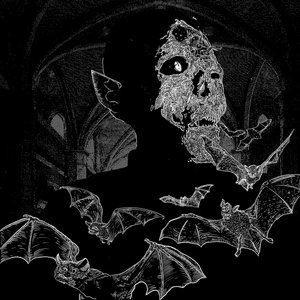
Arnaut Pavle – Transylvanian Glare
(Amor Fati Productions)Transylvanian Hunger remains black metal’s tabula rasa upon which lesser acts etch their names, oftentimes without applying enough pressure to leave a mark on the tablet itself. Brad Sanders correctly states it as arguably the most influential vampyric black metal album, so Arnaut Pavle are in some ways breaking the mould by emulating a lesser-known Darkthrone record, A Blaze in the Northern Sky. Transylvanian Glare retools the soul-searching Darkthrone conducted in 1991 into a 2020’s-ready package; tighter songs, punchier riffs, and more punk influence, all in service of a more immediate dose of darkness. If Transylvanian Hunger worship is an act of aesthetic devotion, Transylvanian Glare reaffirms the staying power of black metal’s fundamentals.
–Colin Dempsey
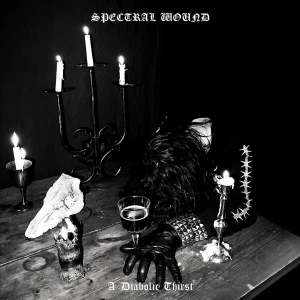
Spectral Wound – A Diabolic Thirst
Profound Lore RecordsWith each release, Québécois quintet Spectral Wound seems to improve upon their craft, and 2021’s A Diabolic Thirst is a well-polished offering that can be thought of as their breakout record, as well as their first release through Profound Lore Records. Consider it a black metal miscellany, combining Nordic-inspired tremolo picking, frenetic blastbeats, and pervasive black ‘n roll melodies. Therein lies the key appeal of A Diabolic Thirst: the merging of influences across the Nordic and USBM scenes. It’s rare to be reminded of bands like Alghazanth and Uada all in one passage. A notable standout is Jonah Campbell’s vocals, which have come to form compared to previous releases. There’s some notable rage-twinged emotion on each track, and it’s clear there’s more confidence and risks he took in this performance, a sentiment felt through all of A Diabolic Thirst.
–KAOS_agent
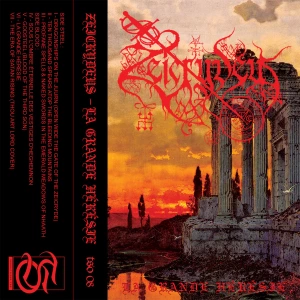
Zeicrydeus – La grande hérésie
Productions TSOEyebrows were raised when Phil Tougas (of Chthe’ilist, First Fragment, Worm, Funebrarum, and others) announced that his latest project was going to be a galloping Hellenic black metal adventure. The only thing more surprising–and exciting–was that Tougas would be augmenting the pyrotechnic guitarwork for which he had become famous with “melodic, shredding bass solos”. Not simply content with letting the instrument languish as mere accompaniment, Tougas’ bass is right there on the frontlines alongside its six-stringed brethren, punching through the mix like a mace-wielding juggernaut. This adds extra heft to La grande hérésie’s most dazzling moments, emphasizing the melodies that flow from the album’s savage, chimaeric heart.
–Alex Chan
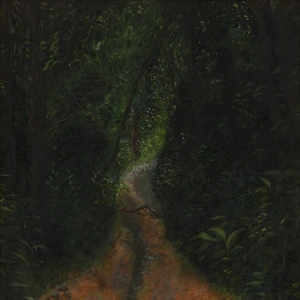
Kaatayra – Toda História pela Frente
Flowing DownwardOn Toda História pela Frente, Kaatayra clearly draws from the tradition of Cascadian black metal. The lengthy songs, folk influence, and lyrical focus on nature and spirituality are all here in spades. Where it breaks away from that sound, however, is in the song structures themselves. Rather than leaning on extended riffs and tremolo-picked chords for long sections, Toda História pela Frente features explosive moments of melody and heavy riffing intertwined with beautiful acoustic passages inspired by Brazilian musical traditions. Motifs shift gradually, becoming something new almost without the listener even noticing. In other moments, they violently change, pulling you out of a reverie and forcing you to take notice. Sorrow, joy, and frustration all bubble up throughout the runtime, creating a powerful and poetic elegy for a vanishing world.
–Kevin Zecchel
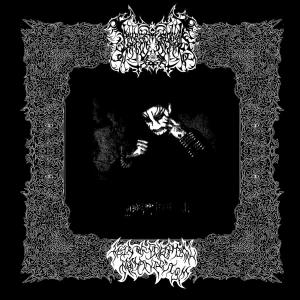
Lamp of Murmuur – Heir of Ecliptical Romanticism
Death Kvlt ProductionsContemporary cadre Lamp of Murmuur have been mainstays of year-end lists since they dropped their debut LP, Heir of Ecliptical Romanticism, in 2020. As if to flaunt how firmly rooted in black metal’s second wave it is, the ambitious 10+ minute opener “Of Infernal Passion and Aberrations” builds on tremendous tremolo-picked riffs and lo-fi production for a bleak and cold atmosphere. “Bathing In Cascades of Caustic Hypnotism” continues the long-form black metal with waves of warfare. Now four albums deep and far removed from Heir of Ecliptical Romanticism’s devotion to necrotic black metal, fans’ love affair with Lamp of Murmuur hasn’t waned.
–Tom Campagna
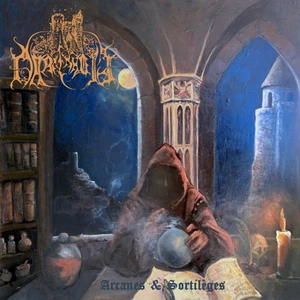
Darkenhold – Arcanes & Sortileges
Les Acteurs de l’Ombre ProductionsFrench medieval meloblack maestros Darkenhold unleashed Arcanes & Sortileges back in 2020, and the record still feels just as fresh and exciting today. Darkenhold take cues from the stylings of Windir, Emperor, and early Dimmu Borgir, bringing the whole concoction back to the coolest castle in France, going back in time about 600 years, and blending it all into Arcanes & Sortileges. The French black metal scene may not be the most “squeaky clean” group out there, but Darkenhold come across as a bunch of dudes who are just here to have a good time, play evil wizard riffs, and party like it’s 1399. Through varying tempos, a slew of earworm riffs, snarling vocals, and spellbinding atmosphere all adorned with guitar solos whose quality lands somewhere between Ihsahn’s and Yngwie Malmsteen’s best rippers, Darkenhold’s Arcanes & Sortileges is a tome from which all who aspire to pursue medieval black metal should study.
–Eric Wing
Kostnatění – Úpal
WillowtipWithin the first minute of hearing Úpal, I audibly exclaimed, “What the hell am I listening to?” You would think a combination of raspy Czech vocals, obscure Ottoman influences, atonal harmonies, and just straight-up fun riffing from this… Minneapolis-based band would make for a challenging listen. Somehow, it comes together for an enthralling and fascinating experience. Úpal attracts the ears in a way where you don’t understand what to expect as each song is unfolding. It certainly defies convention; there are plenty of bands that infuse their own cultural musical influences into metal in a straightforward manner, but Kostnatění has drawn from a variety of sources to achieve a sort of black metal syncretism. The decade isn’t over yet, but this is one of the definitive avant-garde black metal releases thus far.
–KAOS_agent
Oranssi Pazuzu – Mestarin Kynsi
Nuclear Blast RecordsTwo key features that black metal relies heavily on are coldness and inhumanity. Normally, these manifest as a form of nature obsession, primitive and primordial. However, on Mestarin Kynsi, Oranssi Pazuzu takes those ideas in a different direction: a surreal, psychedelic world full of inscrutable, nightmarish machinery. It could almost function as a soundtrack to the classic silent German expressionist film Metropolis.
Mestarin Kynsi whirls around you, guitars providing a buzzing wall of psychosis while dissonant leads, courtesy of both guitar and synthesizer, pierce the haze. For example, the album’s centerpiece, “Uusi teknokratia”, is a stunning surrealist mosaic and “Kuulen ääniä maan alta” teleports you to an abandoned vessel drifting in deep space. The band’s vision for black metal has always been psychedelic–many of the members have played in other prog and psychedelic rock groups–and Mestarin Kynsi feels like their crowning achievement.
–Kevin Zecchel
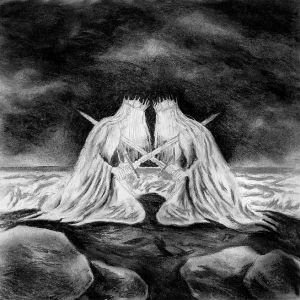
Havukruunu – Uinuos syömein sota
Naturmacht ProductionsEarnest usage of the word “epic” has died down since the 2010’s, as was probably for the best. However, few other adjectives capture the grandiosity of Havukruunu’s 2021 album Uinuos syömein sota. The a capella opening, in which vocalist Stefan engages his bandmates in a gruff yet passionate call-and-response, remains one of the most memorable moments in the band’s discography. Then, the album explodes into a raucous, sword-rattling charge through snow-covered battlefields, ancient ruins, and misty forests. There are moments of placid beauty, such as the clean guitars and birdcalls that grace the bridge of “Kunnes varjot saa” as well as the triumphant flurries of notes throughout “Kuin öinen meri” that arrive like hoofbeats of much-needed reinforcements in the thick of battle. It might be uncool to call this album “epic,” but we’ll do it anyway. The Allfather hates a quitter.
–Alex Chan
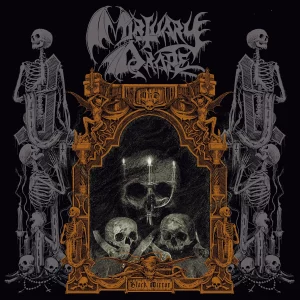
Mortuary Drape – Black Mirror
Peaceville RecordsThe Italian masters of black metal, whose style is rooted in heavy metal and bass lines that would make Iron Maiden’s Steve Harris blush, have been around for a long time. Black Mirror is their sixth album and only their second in the last 20 years, but it’s a real doozy. There’s just no other band that sounds like them. Black metal’s dark elements are prominent in the slowed sections of songs like “Restless Death,” which then transitions into Mortuary Drape’s signature upfront wobbly bass on “The Secret Lost.” Those looking for ominous and evil rudimentary black metal will not find it here, but The Drape are a superb cross-section of structure and songwriting. This isn’t black metal recorded in your bedroom.
–Tom Campagna
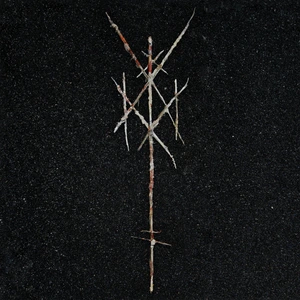
Wiegedood — There’s Always Blood at the End of the Road
Century MediaAfter the carefully-planned release of the De doden hebben het goed trilogy last decade, Belgium-based Wiegedood had high expectations to match, and managed to do so with 2022’s There’s Always Blood at the End of the Road. What has always impressed me about the Church of Ra triumvirate’s output is the balance and power of everyone’s instrumentation. Make no mistake, this is a modern black metal album. The crystal-clear production squares the focus on technical acuity. Wim Sreppoc’s drumming is best described as “staccato blastbeats,” with each hit driving and interweaving with Levy Seynaeve and Gilles Demolder’s almost drone-ish guitars in a hypnotic and complementary way. Indeed, There’s Always Blood at the End of the Road is a bit self-contained when it comes to riff variety, but that actually adds to its full narrative, as the progression of each song gradually illustrates a descent into madness.
–KAOS_agent
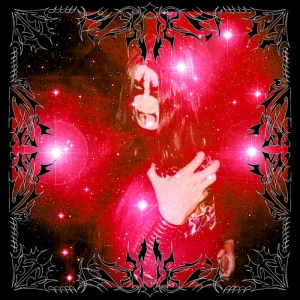
If you miss the symphonic black metal’s golden era, Silent Millenia will satisfy every craving you could possibly have. The project masterfully weaves ice-cold synthesizers with frigid black metal on their second album, piercing through you like a cosmic dagger straight to the heart. Cosmic and wretched, Celestial Twilight: Beyond the Scarlet Veil was conjured from the ether and forged in the stars. Fans of Limbonic Art or Obtained Enslavement need look no farther, your newest obsession is here.
–Caylen Darling
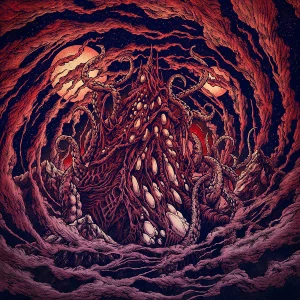
Blut aus Nord – Disharmonium – Undreamable Abysses
Debemur Morti ProductionsIs it still worth debating whether or not Blut aus Nord are black metal? If they are, then “atmospheric black metal” is about as accurate as you’re gonna get. And the atmosphere of the French band’s fourteenth album, Disharmonium – Undreamable Abysses, is somewhere around “perpetual sense of surrealist dread.” (Yeah, I s’pose that applies to a large chunk of their catalog.) As such, Undreamable Abysses is 46 minutes of deeply unsettling music. There’s a vantablack darkness swirling around it that ensures you’re never sure where you are, within the album or in reality. Indeed, not even drummer W.D. Feld allows you to get more than a momentary foothold anywhere. And the truly sinister part is that it’s all somehow hypnotically inviting. You feel violently seasick throughout, but you don’t want the ride to stop, either. That’s a helluva (black) magic trick.
–Steve Lampiris
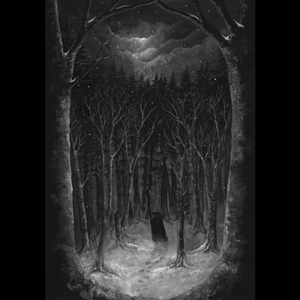
Paysage d’Hiver – Im wald
Kunsthall ProduktionenWintherr retconned all his previous albums as “demos” in the lead-up to Im wald to denote his 2020 work as the culmination of two decades of labor. The gamble paid off as Im wald feels like an endpoint for black metal, if not a certain strain of it, due to its maximalist expression of what the subgenre encapsulates: loneliness, inertia, and meditation. By defying good taste (the fucking thing is two hours long and most of the tracks run longer than 10 minutes, in addition to the repetitive fuzz and noise that constitutes Wintherr’s idea of black metal), it forces one to shift their mindset and accept the daunting excursion. As such, Im wald is necessarily impenetrable without juvenile pretense.
–Colin Dempsey
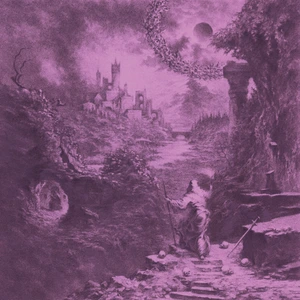
Devil Master – Ecstasies of Never Ending Night
Relapse RecordsEcstasies of Never Ending Night crashes like lightning, crafting a maelstrom of black magic and cadaverous camp. There’s something to be said for the way Devil Master captures the energy of a weeknight hole-in-the-wall bar gig on their second album. It exudes frantic rock ‘n roll energy, condensed to a blackened punk miasma, sounding like leather and grave dirt. Chaotic cemetery symphonies that burn the embers of an October flame; listen to them, the Children of the Night. What music they make!
–Caylen Darling
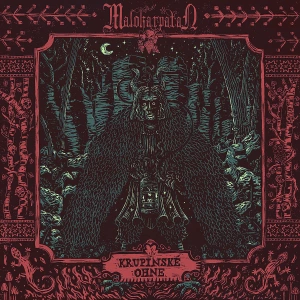
Malokarpatan – Krupinské ohne
Invictus ProductionsIt’s hard to be an active black metal fan and be oblivious of Malokarpatan at this point. They’ve delivered album after album of incredible ancient black metal that draws equally from old heavy metal (how many bands are there out there playing black metal with Judas Priest solos?) as from the pre-Norwegian black metal scene, and Krupinské ohne is a high point in an excellent run of releases. The songs are long and epic, yet the record distinguishes itself from Malokarpatan’s other works with Viking-era Bathory influence and a full conceptual storyline that gives it a sense of stately seriousness. Malokarpatan treats black metal as an artistic canvas rather than a dogmatic genre, one that is almost entirely based in pre-1990 influences, making Krupinské ohne an incredibly important album.
–Brandon Corsair
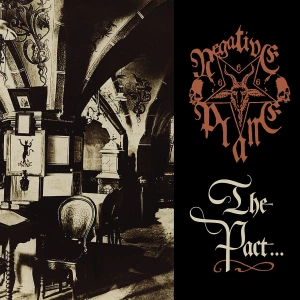
Negative Plane – The Pact…
Invictus ProductionsNegative Plane is, for my money, the single greatest American black metal band ever. As more time passed after their monumental sophomore album Stained Glass Revelations (2011), I began to doubt we’d ever get more from them, let alone that it could possibly capture the heights of their old material. Fortunately, after a more than 10-year gap, we got The Pact…, which is as gloriously ambitious as it is disgustingly killer. This album is not just black metal, but art music in a way that you need to hear to believe. A huge influx of heavy metal influence and chiller, more expansive songwriting differentiate it from their previous albums, and the end result stands out not only from the rest of the perfect Negative Plane discography but also from later bands who take influence from them. Black metal doesn’t get much better than this.
–Brandon Corsair
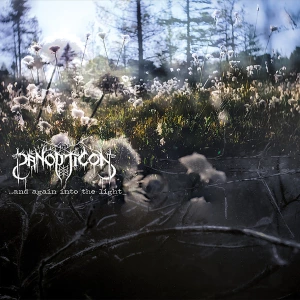
Panopticon – …And Again into the Light
Bindrune RecordingsThe first entry in Austin Lunn’s “Laurentian Trilogy,” 2021’s …And Again into the Light is a monolith of emotional and vulnerable atmospheric black metal with production quality as gargantuan and enveloping as Lake Superior. Despite the lyrics remaining unpublished, Austin has said the album chronicles his “recognition of a need to change, grow and to atone for failures.” Musically, this is the Panopticon you know and love, but features the first contributions from master violinist (and absolute sweetheart) Charlie Anderson, whose addition was and continues to be an incredibly rewarding move. Austin and Charlie’s respective compositional styles complement each other perfectly. …And Again into the Light is a masterpiece in Austin’s phenomenal catalog, and a portion of the album’s sales are being put towards mental health assistance. Don’t let the fire burn out.
–Eric Wing
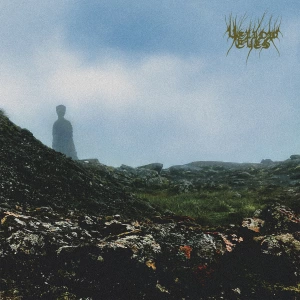
Yellow Eyes – Confusion Gate
Gilead MediaWith Yellow Eyes, every release feels absolutely critical, not just as a successor to what came before but as a stepping stone towards the works that follow. The ritualistic psychedelia of 2023’s Master’s Murmur was divisive to say the least, but Confusion Gate recontextualized that album and its predecessors in a way that paradoxically made the entire discography richer in hindsight. You can hear the continuity on tracks like “Suspension Moon,” whose astral guitar canons recall the bell-like arpeggios of Immersion Trench Reveries, or on the appropriately titled “I Fear the Master’s Murmur,” which confronts the original 2023 track’s icy folk-horror by dragging it out of the shadow realm and into the light. Confusion Gate emerged as the quintessential Yellow Eyes album: a perfect starting point from which to work backwards, the culmination of an entire career thus far, and yet another summit on the band’s upward journey through the mists.
–Alex Chan
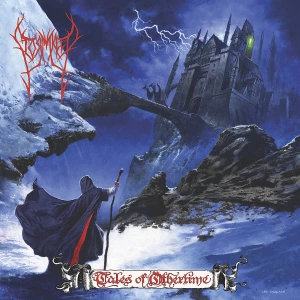
Stormkeep – Tales of Othertime
Van RecordsTales of Othertime is what a metal album should be. It rends the splendour, scope, and power of heavy metal into a black metal framework out of honor for the latter genre. Which is to say, this is a sermon rather than a subversion. Stormkeep are selective with their black metal influences, pulling heavily from the melodic Swedish strain that better spins epic yarns than it does isolate a grim visage. But also, Blind Guardian and Nevermore existed at the same time as melodic 90s black metal, as was dungeon synth, so Stormkeep draw them all into their kitschy amalgamation. What is kvlt and trve now holds plastic pitchforks on album covers, gives interviews to every media promotion under the sun, and opens art exhibits–the ship has sailed. However, its magic remains, to be revered by those who came after it and see its historical context alongside other seminal works. Tales of Othertime reintegrates black metal with 90s metal as a whole, when the old guard suffered an identity crisis and overzealotry ruled critical spaces, and glowingly reflects the genre’s age.
–Colin Dempsey
-
Tornado Lobster Killer Release New Single And Lyric Video “Rhya”
After the sarcastic urgency of “Pay To Play,” Tornado Lobster Killer return to explore a more intimate and vulnerable side -
Premiere: Albert Castiglia – “I’m Afraid To Fall Asleep”
Albert Castiglia has never been an artist afraid to confront life’s realities head-on, and that honesty is front and center on his new single, “I’m Afraid To Fall Asleep.” Blues Rock Review is exclusively premiering the track ahead of the release of Castiglia’s upcoming album Grits & Glory, arriving July 31 via Gulf Coast Records.
The song finds Castiglia digging into themes of mortality and vulnerability while delivering the soulful, emotionally charged performance that has become one of his trademarks.
“‘I’m Afraid To Fall Asleep’ is a Graham Wood Drout composition. It’s a great song about facing mortality. I always loved the tune but it wasn’t until my appendix burst a few years ago and I spent two months trying to recover that the song took on a personal meaning. I knew then that it was going to be on my next solo album,” said Castiglia.
The single serves as a powerful preview of Grits & Glory, Castiglia’s latest studio effort and one of the most ambitious projects of his career. Recorded at the legendary Abbey Road Studios in London, the album represents a unique intersection of American blues tradition and the British influences that helped shape Castiglia’s musical identity.
A multiple Blues Music Award winner and Billboard No. 1 artist, Castiglia traveled across the Atlantic to record the album alongside his touring band featuring Cliff Moore on bass and Ray Hangen on drums. The sessions were produced by longtime collaborator Dave Gross, resulting in a record that balances reflection, grit, and raw emotion.
The album also marks a full-circle moment for Castiglia, whose lifelong admiration for British blues and rock icons such as Jeff Beck, John Mayall, Eric Clapton, and Jimmy Page helped inspire the decision to record at Abbey Road. The result is an album that embraces both sides of the Atlantic blues tradition while remaining unmistakably Albert Castiglia.
Listen to the exclusive premiere of “I’m Afraid To Fall Asleep” below.
Grits & Glory will be released July 31 via Gulf Coast Records.
TRACK LISTING
- In My America
- I’m Afraid To Fall Asleep
- Uncertainty
- Michigan Avenue
- Sack The Juggler
- Slumlord Billionaire
- The Milk Is Still Good
- Don’t Burn Down The Bridge
- When The Coin Came Callin’
- Afro Blue
- Yer Blues
Photo: Blackham Images
The post Premiere: Albert Castiglia – “I’m Afraid To Fall Asleep” appeared first on Blues Rock Review.
-
Converge Release Second Album Of 2026: “Hum of Hurt”
Released on Deathwish / Epitaph, Converge‘s new album Hum of Hurt follows Love Is Not Enough as the band’s second full-length release of -
Glimmer Share New Single “Someday Sunshine”
NY-based band Glimmer released their debut LP, Get Weak, last October, and today they share their first new music since its -
40 Years Ago: Bob Dylan Brings True Confessions Tour to America
He was backed at the time by none other than Tom Petty and the Heartbreakers. Continue reading…