Let’s cut through the noise. Entering the expansive universe of heavy metal can be an intimidating venture, but this comprehensive Loaded Radio guide serves as the ultimate beginner’s road map. Featuring foundational cornerstones from the “Big 4” alongside essential global pioneers, these 13 definitive thrash metal albums represent the core pillars of aggressive music every fan needs to hear.
Let’s cut through the historical filler. Entering the expansive universe of heavy metal can be an intimidating venture. With over forty years of denim, leather, and blast beats to parse through, knowing exactly where to drop the needle first is a daunting task. You know the household names like Metallica and Slayer, but the sheer volume of their respective discographies leaves many newcomers staring blankly at streaming menus.
Thrash metal isn’t merely a subgenre of music; it is an instantaneous physical reaction. It is the sonic manifestation of a runaway freight train—an uncompromising marriage of the sophisticated guitar wizardry found in the New Wave of British Heavy Metal (NWOBHM) and the raw, anti-establishment hostility of hardcore punk.
This isn’t an arbitrary collection of heavy records. This is the definitive roadmap curated by veteran metalheads. These 13 masterpieces represent the foundational pillars of aggressive music. Welcome to your new bible.
TL;DR: The Ultimate Thrash Metal Cheat Sheet
- The Blueprint: Thrash metal is defined by high-octane speed, palm-muted technical riffing, and raw punk aggression.
- The Foundation: This curated checklist completely strips away filler to deliver the definitive structural cornerstones of the genre.
- The Heavy Hitters: Features the ultimate architectural works of “The Big 4” (Metallica, Megadeth, Slayer, Anthrax) alongside global pioneers like Exodus, Testament, and Kreator.
- Your Mission: Grab a high-quality pair of headphones, brace your neck, and dive straight into the foundational source code of extreme music.
Also Recommended – Thrash Metal’s 13 Greatest Bands Ranked — The #1 Pick Still Sparks Debate

13. Overkill – The Years of Decay (1989)

New Jersey’s Overkill has long stood as the definitive emblem of blue-collar heavy metal consistency. Produced by the legendary Terry Date—the studio wizard who would later go on to engineer Pantera’s pioneering groove metal blueprint—this record stands as a breathtaking clinic in controlled sonic violence. Vocalist Bobby “Blitz” Ellsworth delivers an air-raid siren performance, while the furious down-picking on tracks like “Elimination” serves as weaponized East Coast thrash.
The record excels because it balances razor-sharp speed with massive, cavernous groove sequences. Guitarist Bobby Gustafson solos with absolute mathematical precision throughout the title track, laying down complex chord voicings that set a completely new standard for the New York and New Jersey underground circuits.
- Why it’s essential: It proves beyond a shadow of a doubt that the tri-state area was every bit as technically precise and menacing as the widely praised San Francisco Bay Area scene.
12. Death Angel – The Ultra-Violence (1987)

The backstory of this record sounds completely impossible: drummer Andy Galeon was a mere 14 years old when the band tracked this entire long-player. The Ultra-Violence remains a blistering monument to youth-driven energy fused with staggering instrumental virtuosity. The sprawling, intricate title track contains a higher concentration of memorable riffs than most contemporary bands manage to concoct over an entire career.
What makes Death Angel stand out on this debut is their inherent sense of dynamic timing. The instrumental structures seamlessly shift from breakneck thrash tempos into highly structured, progressive arrangements that catch the listener completely off guard, highlighting a maturity far beyond their teenage years.
- Why it’s essential: It showcases that from its very inception, thrash metal was never just an unhinged race for speed; it required an impossibly tight, complex grasp of advanced musical composition.
11. Dark Angel – Darkness Descends (1986)

This is the absolute deep end of the swimming pool. Dark Angel’s Darkness Descends swaps out traditional rock-and-roll bravado for pure, unadulterated terror. Driven to dizzying speeds by iconic drummer Gene Hoglan—widely revered across the industry as “The Atomic Clock”—the guitar work here forms a suffocating, dense wall of sound topped by demonic vocal deliveries.
The sheer velocity of the tracking sessions pushing through “Merciless Death” laid down the blueprint for underground extremity. The rhythm sections do not breathe; they crash forward with a relentlessness that completely redefined the limits of human endurance in a studio setting.
- Why it’s essential: This record functions as the critical historical bridge directly connecting the speed of thrash metal to the emerging architecture of early death metal.
10. Sepultura – Beneath the Remains (1989)

Emerging from the underground metal scene of Brazil, Sepultura didn’t just join the global thrash community; they completely rewrote its genetic code. Beneath the Remains was their international breakthrough, synthesizing the pitch-black ferocity of European extreme metal with the technical precision of American speed metal, all while injecting a primal, localized fury. Max Cavalera’s barking vocal approach is completely venomous, transforming “Inner Self” into an eternal anthem.
Working alongside high-profile producer Scott Burns at Morrisound Recording, the band captured an incredibly crisp, lethal guitar tone. The interplay between Andreas Kisser’s searing lead work and Cavalera’s rigid rhythm chunk created a terrifyingly dense audio wall.
Why it’s essential: It stands as definitive proof that thrash metal was a boundary-free global phenomenon, laying the heavy groundwork for the groove-laden sounds that dominated the 1990s.
9. Testament – The Legacy (1987)

While the “Big 4” occupied the mainstream spotlight, Testament spearheaded the highly competitive second wave with an arsenal that rivaled the top tier. Their debut effort, The Legacy, introduces the towering, roar-to-shriek vocal range of Chuck Billy alongside the god-tier guitar duo of Alex Skolnick and Eric Peterson. Masterpieces like “Over the Wall” and “Burnt Offerings” are loaded with neoclassical solos and face-melting arrangements.
Skolnick, a direct student of guitar virtuoso Joe Satriani, brought an elegant, jazz-infused lead sensibility to the table. His solos weren’t just fast; they were beautifully constructed musical movements that elevated the tracks into high art.
Why it’s essential: This is the absolute peak of Bay Area sonic luxury—unbelievably heavy, immensely melodic, and endlessly complex without ever losing its hooks.
8. Exodus – Bonded by Blood (1985)

Here is the objective historical truth: Exodus invented the signature Bay Area thrash metal sound. Metallica simply beat them to the record store shelves. Bonded by Blood is the raw, unpolished source code of the entire movement. Fueled by the chaotic, street-level energy of late frontman Paul Baloff, tracks like “A Lesson in Violence” deliver exactly what the title promises.
Gary Holt’s frantic riff writing on this record established the absolute gold standard for down-picked accuracy. The album captures the pure, violent essence of the early San Francisco club scene, vibrating with an unhinged energy that can never be replicated in a modern studio.
- Why it’s essential: To understand the authentic, middle-finger-in-the-air attitude that ignited the thrash revolution, you must start directly with this raw blueprint.
7. Kreator – Pleasure to Kill (1986)

The “Teutonic” thrash metal movement born in Germany was significantly darker, faster, and more inherently violent than its North American counterpart. Kreator sat unchallenged on that bloody throne, and Pleasure to Kill remains a terrifying landmark of pure, unbridled rage. Mille Petrozza’s frantic, razor-sharp shrieks turn this 38-minute assault into a masterclass of controlled chaos.
The record thrives on a chaotic, almost out-of-control performance standard. The drums clip, the guitars hum with raw distortion, and the sheer hostility of tracks like the title cut completely detached themselves from the slick rock radio polish of the era.
- Why it’s essential: This album is the dark side of the thrash coin, directly laying the foundations of raw sonic extremity that birthed the black metal subgenre.
6. Anthrax – Among the Living (1987)

New York’s Anthrax brought two vital components to the “Big 4” dynamic that their peers sorely lacked: a gritty New York hardcore punk attitude and a comic-book-fueled sense of fun. Among the Living is their definitive opus, packed to the brim with high-energy pit anthems like “Caught in a Mosh” and “Indians.” Scott Ian’s legendary, percussive rhythm guitar crunch pairs beautifully with the classic, soaring heavy metal clean vocals of Joey Belladonna.
The underlying magic of this record is its rhythmic swing. Unlike their West Coast contemporaries who focused on rigid down-strokes, Anthrax incorporated a heavy, bouncing hardcore punk stomp that practically forced live crowds into massive circular mosh pits.
- Why it’s essential: It proves that thrash metal could be infectious, hook-heavy, and fun while remaining completely devastating in a live arena.
5. Megadeth – Peace Sells… but Who’s Buying? (1986)

Following his highly publicized dismissal from Metallica, a fiercely motivated Dave Mustaine formed Megadeth with the singular mission of out-playing, out-pacing, and out-riffing his former bandmates. Peace Sells… but Who’s Buying? is the exact moment he proved it was possible. From the iconic, instantly recognizable bass line of the title track to the mind-bending time signatures of “Wake Up Dead,” this record is a cynical, politically charged masterpiece.
Mustaine’s complex jazz-influenced chord progressions combined with Chris Poland’s fluid, fusion-esque lead guitar solos created a cerebral audio environment. It proved that extreme metal could challenge the intellect just as much as the ears.
- Why it’s essential: This is the birth of “thinking man’s thrash,” utilizing complex musical phrasing and biting social commentary to elevate the genre’s intelligence.
4. Slayer – Reign in Blood (1986)

This is much more than a collection of songs; it is a permanent historical event. Clocking in at a lean, breathtaking 29 minutes, Reign in Blood stands unchallenged as the most extreme, unrelenting, and influential thrash metal album ever pressed to vinyl. From the bone-chilling opening scream of “Angel of Death” to the iconic, rain-drenched final notes of “Raining Blood,” Jeff Hanneman and Kerry King create a flawless atmosphere of pure audio horror.
Produced by hip-hop icon Rick Rubin, the album stripped away all large room reverbs, leaving a dry, punchy, and shockingly upfront audio landscape. The guitars sound like buzzsaws hitting bone, giving the tracks a terrifyingly intimate proximity.
- Why it’s essential: It is the undisputed high-water mark for musical extremity, stripping the genre down to its most vicious, unfiltered, and terrifying core essence.
3. Megadeth – Rust in Peace (1990)

If Peace Sells was a dangerous warning shot, Rust in Peace was flawless military execution. This record represents the absolute zenith of technical instrumental proficiency in the heavy metal world. By bringing guitar virtuoso Marty Friedman into the lineup alongside Mustaine, Megadeth crafted a progressive metal masterpiece. Tracks like “Holy Wars… The Punishment Due” and “Hangar 18” feature guitar tracking that borders on the impossible, capped off by the legendary solo work on “Tornado of Souls.”
The rhythm coordination between bassist David Ellefson and drummer Nick Menza provided an incredibly complex, shifting bedrock that allowed the dual lead players to trade frantic solos with jaw-dropping ease.
Why it’s essential: It is the undisputed pinnacle of technical thrash metal, showing exactly how far the boundaries of the genre could expand when executed by actual musical virtuosos.
2. Metallica – Kill ‘Em All (1983)

This is the big bang of the entire movement. Kill ‘Em All captures the primal, high-velocity scream of young American metal. It is the raw sound of four kids in a garage taking the classic riffs of Motörhead and Diamond Head, infusing them with punk rock adrenaline, and playing them at a speed the world didn’t think was humanly possible. Staples like “Whiplash,” “Seek & Destroy,” and “Hit the Lights” are the foundational texts of the genre.
The album burns with an undeniable urgency. James Hetfield’s young, unpolished bark pairs naturally with the lightning-fast, frantic lead work of a young Kirk Hammett, preserving a moment of pure, uncorrupted musical revolution.
- Why it’s essential: To understand where a revolution is heading, you must understand exactly where it started. This is pure, unpolished heavy metal history.
1. Metallica – Master of Puppets (1986)

There can be only one champion. Master of Puppets isn’t simply the greatest thrash metal album ever recorded; it is universally recognized as one of the greatest heavy metal records of all time, period. This is the exact historical intersection where raw underground energy transformed into timeless high art.
Metallica took the blistering speed of their early days and seamlessly fused it with sophisticated songwriting, breathtaking dynamic arrangements, and profound lyrical depth. From the explosive opening salvo of “Battery” and the sweeping, complex title track to the anti-war ferocity of “Disposable Heroes” and the beautiful, tragic instrumental journey of “Orion”—featuring the late, great bassist Cliff Burton—every single moment is an absolute masterclass.
The sonic production achieved by Flemming Rasmussen at Sweet Silence Studios gave the record an architectural permanence. The heavy rhythm guitars are perfectly tracked, the bass lines are deeply expressive, and the compositions remain completely flawless forty years later.
- Why it’s number one: It possesses every single defining trait of the genre executed at a flawless level: speed, unmatched aggression, elite technicality, haunting melody, and deep intelligence. It is the gold standard.
Check This Out – Beyond the Big Four: 13 Unsung Thrash Metal Bands Who Actually Forged the Genre
Frequently Asked Thrash Questions (FAQ Block)
Q: What exactly defines thrash metal compared to other subgenres?
A: Thrash is primarily defined by fast, palm-muted, down-picked guitar riffs, blistering alternate-picked solos, and aggressive double-bass drumming. It takes the melody and technicality of traditional heavy metal and injects the raw, stripped-down speed of hardcore punk. Unlike death metal or black metal, it generally favors shouted, aggressive, or clean vocals over deep guttural growls.
Q: Is the thrash metal scene still active today?
A: Absolutely. While the classic surviving legacy acts continue to sell out global stadiums, a massive “New Wave of Thrash” features modern powerhouses carrying the torch, including Municipal Waste, Havok, Enforced, and the enduring legacy of Power Trip.
Q: What exactly is the “Big 4” and why are they grouped together?
A: The “Big 4” consists of Metallica, Megadeth, Slayer, and Anthrax. While originally popularized as a commercial marketing term due to these specific four bands achieving massive mainstream success and heavy MTV rotation during the late 1980s, they remain undeniably the most influential structural architects of the genre’s mainstream breakthrough.
Q: I have listened to all 13 of these albums. Where do I go next?
A: Welcome to the community! Once you have digested these essentials, look into the historic German Teutonic trio of Sodom (Agent Orange) and Destruction (Eternal Devastation), or explore underground American treasures like Forbidden (Forbidden Evil) and Nuclear Assault (Survive).
STAY LOUD!
Never miss a single beat in the global rock or heavy metal world. You can catch comprehensive historical guides just like this, along with daily artist interviews and non-stop music curation by subscribing to the Loaded Radio Podcast across all major streaming services, including Apple Podcasts and Spotify.
Want to bring the ultimate heavy metal experience along on your daily commute? Download the official Loaded Radio App right now for iOS and Android to gain instant access to our high-quality 24/7 live commercial-free radio broadcast, breaking news feeds, and exclusive on-demand audio content directly from your mobile device.
Which of these 13 albums was your personal gateway into heavy music, and do you think Overkill belongs in the conversation for an expanded Big 5? Let us know your thoughts, your concert stories, and your personal rankings in the comments section below!
The post Welcome to the Pit: The 13 Essential Thrash Metal Albums Every Beginner NEEDS to Hear appeared first on Loaded Radio.

 If you love this music:
 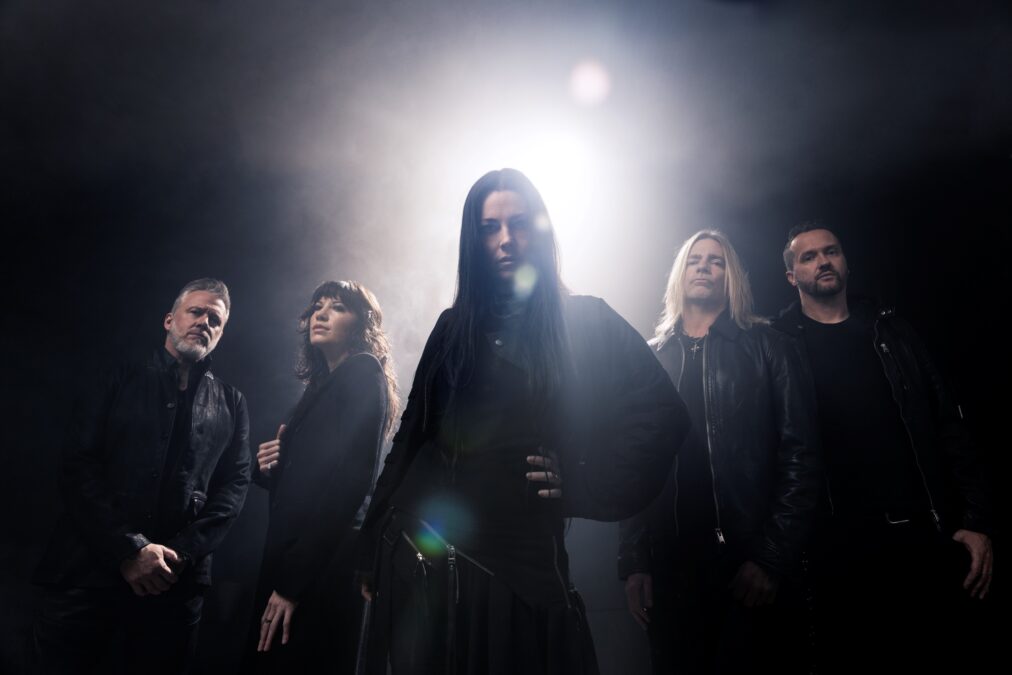 Evanescence releases their 6th studio album, Sanctuary. The 12-track record was produced by Zakk Cervini (Bad Omens, YUNGBLD, Bring Me The Horizon, Spiritbox), Jordan Fish (Bring Me The Horizon, Poppy, House of Protection, Architects), and Nick Raskulinecz (Deftones, Korn, Foo Fighters, Rush). The album is available as a Digital Album, Standard CD, Deluxe CD and […]