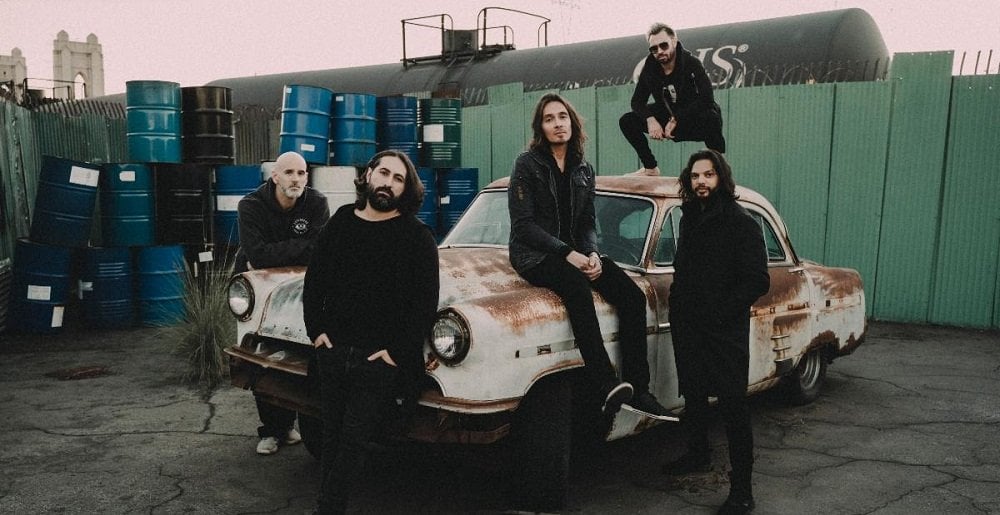
International AOR supergroup Transatlantic Radio released today their new single and official video, “City Of Angels”, the second one taken from the upcoming debut album MidnightTransmission, out on February 20, 2026, via Frontiers Music Srl.
Basist Victor Brodén stated: “City Of Angels” was the last song written for the album. It is a tribute to all the great songs, throughout history, about going west to try to make your dreams come true and live your best life. In our case, it is also a tribute to the diverse city of Los Angeles, but it could be wherever the city of your dreams is. The song delivers the quintessential Transatlantic Radio sound, a huge chorus, big sweeping melodies and lots of attitude. This is a song to roll down your windows and sing at the top of your lunges on the way to a party or on a long road trip!”
Brodén continued: “The completion of this album is a love letter to the music that shaped my life, musically and otherwise. The guys in this band took what was a casual idea and turned it into something beyond my wildest dreams. Mattias Osbäck is truly one of the greatest rock voices of this generation with a rough edge that brings our big, sweeping melodies to life and gives them attitude”.
“RJ Ronquillo, on lead guitar, is a legend in his own right and a role model for guitarists around the world as well as one of the world’s most watched six-string heroes with his YouTube channel”, he continued. “His work on this album makes me grin ear to ear. Chris Reeve on drums is one of the most sought-after touring drummers in the world right now, and a bass player’s dream come true. Him agreeing to join this project is still mind boggling to me. Fred Kron on keyboards, my partner in production for this project, is nothing short of a wizard. There would be no Transatlantic Radio without his invaluable input, otherworldly mixes, and his ability to sprinkle magic dust on all of these songs. This is the band I could never have imagined being in growing up, and this is the record I always dreamed of making”.
An inspired celebration of classic AOR with a fresh, modern pulse, Midnight Transmission marks the official album debut of Transatlantic Radio. Midnight Transmission is a love letter to the 80’s giants of the genre – Foreigner, Toto, Danger Danger, Starship – but it’s no nostalgia act. Each track balances polish with punch, fusing massive choruses, slick arrangements, and emotionally charged performances with crisp, contemporary production.
Conceived during the isolation of the 2020 lockdown, the project was born out of a desire to bring timeless melodic rock back into the spotlight – with a lineup as global as their sound. Fronted by powerhouse Swedish vocalist Mattias Osbäck and featuring American guitarist R.J. Ronquillo (known for his work with Ricky Martin, Santana, Stevie Wonder, and Stone Sour), the band blends European sensibility with American fire.
The lush keyboards of Fred Kron – who had his work featured in Anchorman 2 and High School Musical 2, and longtime member of the Jimmy Kimmel Live! band – add cinematic depth and vintage flair. Behind the kit is Chris Reeve, drummer for Filter and Avril Lavigne, whose dynamic style gives the album its drive and precision. At the center of it all is Brodén himself, anchoring the songs with groove, vision, and a deep understanding of the genre’s melodic soul.
Following a string of well-received singles and video releases, Transatlantic Radio made their live debut at the Malmö Melodic Festival 2024, where their sound and presence confirmed that this is more than just a studio project – it’s a band with heart, muscle, and chemistry.
UK alt-hardcore quintet Higher Power have released a video for their track “Count The Miles”, ahead of their highly anticipated sold-out show, at Leeds Brudenell Social Club on Friday 16th January.
The band’s third studio album, There’s Love In This World If You Want It, was surprise released digitally in summer 2025 via Nuclear Blast Records.
Frontman Jimmy Wizard commented on the video: “This video was Alex’s concept but one of our favourite things growing up was seeing videos that give you a look behind the curtain! We don’t live and tour like this anymore but I’m grateful for the experiences we had together and it’s cool to have something of a highlight reel of our lives over those years so enjoy!”
Inner peace. That’s the aim for us all, isn’t it? Well, the truth is that it is always there waiting for you. You just need to work away a little bit to find it, digging deep and questioning yourself to get closer and closer to achieving that ultimate sense of personal zen. It may not always feel like the search is paying off, but there is always potential for that love, compassion and understanding of who you are to seep through. The journey may be challenging, but you’ll be glad that you took part in it in the end.
For Higher Power, that journey has seen them do things that, when they emerged onto the Yorkshire hardcore circuit in 2015, were never even on their radar. From their innocently frantic beginnings of emulating and celebrating legendary bands like Leeway and Merauder for a new generation, even playing their first two shows in the basement of the house owned by The Flex and at an early iteration of Outbreak Fest respectively, the ten years that have followed have seen them ride every ebb and flow that the music industry has to offer.
From touring with everyone from Alexisonfire and Neck Deep to Knocked Loose and Angel Du$t to signing to Roadrunner Records for their sophomore full-length 27 Miles Underwater, they have achieved the sort of things that, up until recently, would never have been on the horizon of possibility for a hardcore band of their ilk. Yet, within experiencing the industry mechanics usually reserved for the highest echelons of rock royalty, they also realised they were drifting away from the things that made them want to do all of this in the first place.
The result of putting what feels right for them first is There’s Love In This World If You Want It, a record that encapsulates the Higher Power spirit in a way that only those whose hearts are truly entrenched in the band can produce. Peeling away layers of assumption and ideology placed upon them by others and focusing once more on the genre-splicing experimentation that inspired them to create together in the first place, they have produced nine songs that showcase exactly what they are made of in a screaming rainbow of colour.
Finland’s forward-thinking metal trailblazers Lost Society announce their brand-new album Hell Is A State Of Mind, set for release on March 6th, 2026 via Nuclear Blast Records. Four years after the critically acclaimed If the Sky Came Down, the band returns with their most fearless and defining statement yet—modern metal without equals and without apologies.
For vocalist–guitarist Samy Elbanna, guitarist Arttu Lesonen, bassist Mirko Lehtinen, and drummer Tapani Fagerström, Hell Is A State Of Mind marks a bold step into the metallic territory they were always meant to claim: unrestrained, unmistakable, and unapologetically their own.
Reuniting with trusted collaborator Joonas Parkkonen (producer, co-writer, mixing engineer), the album took a decisive turn when the track “Blood Diamond” reshaped the creative direction—evolving from a simple melody into cinematic, string-driven grandeur.
The album’s first official single, “Blood Diamond”, follows last spring’s “early first taste,” “Dead People Scare Me (But the Living Make Me Sick)”, and arrives alongside a raw, high-energy video capturing Lost Society’s untamed stage presence. From the very first notes, Hell Is A State Of Mind makes one thing clear: this is Lost Society at their most confident, confrontational, and uncompromising.
Frontman Samy Elbanna comments: ”I’m beyond excited to finally be able to announce our upcoming album and the new single off of it! Lost Society sounds HEAVY in the year 2026 – and you are all about to experience it first hand! I loved every moment of writing this album and especially preparing the story that i’m singing to you all – soon it will all be yours. Pre-order the album and blast out ”Blood Diamond” LOUD until your neighbours can’t take it anymore!”
You can now pre-order Hell Is A State Of Mindhere.
On January 16th, Save Ferris tore through a set that reminded everyone why this third-wave ska punk outfit from Southern California still packs a punch three decades after bursting onto the scene.
With a crowd of all ages, the vibe was equal parts nostalgia and fresh excitement as Monique Powell and her band ripped into favorites and deep cuts with relentless energy. Save Ferris is very popular. The sportos, the motorheads, geeks, sluts, bloods, wastoids, dweebies, dickheads. They all adore them. They think they are a righteous band.
From the moment the horn section kicked off with “Turn it Up”, the room filled with skanking feet, clapping hands, and grins all around. Pardon my French, but the horn section was so tight that if you stuck a lump of coal up their collective asses, in two weeks you’d have a diamond. Powell’s vocals were powerful and precise, weaving effortlessly between ska rhythms and rock and roll punch. Though the band has evolved since their heyday in the 1990s, that signature blend of horns, guitar work, and melodies was on full display. Standouts of the night included costume changes and songs that had fans singing along word for word. Classic hits brought an unmistakable flash of ‘90s alternative radio vibes to the club. Powell connected with the audience with both humor and genuine warmth, sharing stories and hyping up the crowd between songs. It was clear that every member onstage was feeding off the same energy. Save Ferris still brings a joy to the stage, delivering a ska sound that refuses to sit still. Of course the crowd went ballistic during the final song of the evening “C’mon Eileen”. A big thank you to the friends who kept calling the other friends and talked them into going to the show..I can hear the conversation in my head..He’ll keep calling me. He’ll keep calling me until I go. He’ll make me feel guilty. This is uh… This is ridiculous, ok I’ll go, I’ll go, I’ll go, I’ll go, I’ll go. What – I’LL GO. Shit. As the evening ended and as I was walking out they’re was a group of fans still near the stage. I walked up to them and said, You’re still here? It’s over! Go home. Go.
Actually, I think they were in the right frame of mind as life moves pretty fast. If you don’t stop and look around once in a while, you could miss it. If you get an opportunity to see Save Ferris, don’t miss it.
SETLIST
Turn it Up – Anything – World is New – Little Differences – Everything I Want To Be – Sorry My Friend – I’m Not Crying For You – The Only Way To Be – What You See Is What You Get – Li it’s a half brother things have good moves – Ohh Oh Rudi – Goodbye – Superspy – Lights Out – Artificial Life – 2 Drunk 2 Fxck – I Know –
Animecore describes a sonic and aesthetic identity shaped by modern anime themes, marked by emotional intensity, bold genre shifts, and powerful fan attachment.
Music tied to anime has grown into a global cultural force, driven largely by streaming platforms and short-form video culture, with Gen Z at the center of its momentum.
Spotify reported a 395 percent increase in global anme music streams between 2021 and 2024, while 70 percent of anime music consumption comes from listeners under 29.
Songs connected to anime no longer function only as opening themes. Tracks operate as emotional anchors, personal symbols, and shared cultural signals that travel across languages and borders.
The Role of Anime Openings and Endings
Anime openings and endings serve as emotional gateways. Music paired with animation prepares viewers for narrative tone while building attachment to characters.
Openings often compress the emotional promise of an entire series into ninety seconds, shaping expectations before dialogue even begins.
Apolline describes this process as setting tone through carefully chosen images supported by a catchy musical background.
Long-running series demonstrate how powerful this connection can become.
“We Are!” associated with One Piece continues to resonate decades after its debut, functioning as a generational anthem. Endings shift energy in another direction.
Slower or reflective tracks help audiences decompress after intense episodes, offering space for emotional processing.
Visual and Auditory Synergy
Anime credits rely on close coordination between sound and image.
Fast-tempo J-Pop or J-Rock tracks pair with symbolic visuals that tease themes, character arcs, and emotional stakes.
Apolline notes that anime credits prioritize visual storytelling through energetic action sequences matched with upbeat musical rhythms.
Every cut, color choice, and musical accent works together to prepare viewers emotionally for what lies ahead or what has just passed.
Anisongs and the Gen Z Phenomenon
Anime music now operates as a cultural connector for younger audiences.
Streaming platforms and social media transformed anisongs into shared emotional language across global communities.
Neon notes, global fandom: anisongs as the emotion Gen Z shares online
Emotional Resonance and Fandom
Anime songs often become personal identity markers. “Gurenge” gained viral traction as listeners connected with a protagonist defined by perseverance.
LiSA explained that writing involved placing herself inside the mindset of characters who continue forward despite hardship. Live performances intensify this connection.
Fans shout choruses together, remix tracks online, and create anime music videos that extend emotional bonds far outside the screen.
For many, diving deeper into the language behind their favorite lyrics is a natural next step, prompting interest in an Japanese lesson online to better connect with anime culture.
Streaming Boom and Cultural Integration
Popularity among Gen Z rivals mainstream pop icons. A Crunchyroll and NRG study compares anisongs to artists like Beyoncé.
Viral momentum thrives on platforms driven by short-form emotion and repetition.
Measurable engagement reflects this surge:
Over 7.2 million anime music playlists created by fans
Widespread circulation across TikTok, YouTube, and Spotify
Renewed popularity of older songs resurfacing decades later
An Anime & Chill founder described anime music as the heartbeat of each work.
Musical Characteristics of Anime Themes
Musical identity within anime relies on heightened emotion and constant motion.
Songs connected to animated stories are written to move quickly between moods, matching shifting character psychology and narrative stakes.
Structure, harmony, and genre choices work together to keep listeners emotionally engaged even outside a visual context.
Genre Foundations: J-Pop and J-Rock
J-Pop and J-Rock provide the primary musical framework for many anime themes.
J-Pop favors melodic immediacy and emotional openness, often centered on love, friendship, resilience, or daily life struggles.
J-Rock introduces sharper edges through heavier instrumentation, rhythmic intensity, and dramatic dynamic swings. Both styles reject static songwriting in favor of momentum.
Songwriting techniques common in anime music differ noticeably from Western pop conventions. Emotional peaks are pushed higher through harmonic movement, while abrupt changes prevent predictability.
Apolline points to distant modulations that surprise the ear and amplify emotional payoff.
Key musical traits appear repeatedly across successful themes:
Frequent key changes that reset emotional intensity mid-song
Sudden shifts in tempo or instrumentation that mirror narrative tension
Chorus sections designed for communal singing and emotional release
Structure and Experimentation
Creative freedom defines anime songwriting.
Tracks rarely stay within a single stylistic frame. Musical identity often shifts as characters grow or conflict escalates. Rock opera drama appears in Ado’s “Kura Kura” for Spy x Family.
Jazz-inflected grooves and electronic polish shape YOASOBI’s “Idol.” Emotional power ballad writing drives LiSA’s “Gurenge.”
Song structures reflect storytelling logic rather than radio convention. Verses, bridges, and climaxes change shape as emotional stakes rise.
One track may move across three or four stylistic directions, allowing tension and release to mirror plot progression.
Experimentation keeps anime music dramatic, unpredictable, and emotionally direct.
Sound Design and Production in Anime
Sound inside anime operates as narrative support rather than background decoration.
Every sonic choice influences how characters are perceived and how scenes are felt.
Production teams treat sound as part of the storytelling structure.
Core Components of Sound
Anime sound relies on three closely connected elements that shape immersion and emotional clarity.
Voice acting defines character presence. Tone, pacing, and emotional consistency determine credibility. Veteran seiyuu often continue voicing teenage characters across long-running series to preserve continuity.
Karice explains that a voice that feels wrong can disrupt viewer immersion immediately.
Background music functions as emotional architecture. Producers and directors design detailed music menus that map emotional needs across episodes.
Sound! Euphonium used specific musical ideas to convey the shining presence of its characters.
Composers sometimes read original manga or scripts to align music with narrative intent.
Sound effects create physical space and atmosphere.
Everyday noises mixed with imaginative textures ground fantasy in sensory detail. Karice described how the Gauna sound emerged by rubbing an eraser against a damp plastic bottle.
Many effects are produced by a single sound editor, supported by assistants recording environments like cafes, trains, or kitchens.
Effective sound design often disappears into the experience, yet absence would feel immediately disorienting.
Dubbing and Final Mix
Final mixing unifies dialogue, background music, and sound effects into a coherent emotional signal.
Sound mixers control volume balance and contrast to guide attention. Karice stresses restraint, noting that overcrowding a track weakens clarity.
Careful balance directs emotional focus without overwhelming the viewer.
The Composers Behind the Magic
Certain composers shaped anime music into a globally recognized force. Yoko Kanno brought experimental jazz and genre-fluid compositions to Cowboy Bebop.
Hiroyuki Sawano built massive orchestral and rock hybrids for Attack on Titan and Gundam Unicorn.
Joe Hisaishi crafted orchestral scores that define emotional memory in films like Totoro and Spirited Away.
Kensuke Ushio focuses on hyper-detailed realism, recording ambient sounds in real spaces such as church halls for The Colours Within. Jonathan Clements of the BBC praised Ushio’s attention to detail and realism.
Anime Music in the Real World
Stage performances confirm the cultural weight of anime music. Artists such as Ado, YOASOBI, and Radwimps sell out arenas worldwide.
Ado’s London O2 Arena performance featured audiences shouting every chorus in unison.
Good Day Noir Family,
A crisp guitar riff cuts through the silence. Soon after, the driving rhythm locks in and pushes everything forward with purpose.
Gold Guns Girls is MASHA.’s Single Out Now
The pace feels urgent, and it invites movement rather than reflection. Because of that momentum, the track never drifts or hesitates.
Then MASHA.’s voice enters, and it becomes the anchor of the song. Her tone stands out right away, carrying a distinct character, confident and expressive. While the verse unfolds, she shapes the melody with precision and restraint. Moreover, the vocal delivery never overreaches. It lets the structure do the heavy lifting.
One of the most effective choices appears in the transition to the chorus. The metric shift, where the phrasing tightens and almost halves, increases tension and energy. The chorus hits harder and feels sharper. Additionally, that rhythmic change makes the hook more insistent without becoming repetitive. It keeps the listener engaged and alert.
There is also a strong sense of atmosphere running through the track. Subtle ’80s references surface, yet they blend naturally with modern alternative elements. The nocturnal mood adds depth, giving the impression of city lights and late-night motion.
The drums deserve special mention. They drive the song like an unstoppable train, steady and relentless. However, they never overpower the mix. They reinforce the forward pull and keep the energy high. As the track moves toward its final section, the guitar solo emerges with long, sustained notes and melodic turns. Soon after, those lines merge with the vocal phrasing, creating a satisfying sense of unity.
Gold Guns Girls carries a hypnotic quality that makes you want to dance, let go, and stay in that rhythm a little longer. MASHA. delivers a track that feels focused, energetic, and confidently shaped.
Gold Guns Girls is MASHA.’s Single Out Now!
Hypnotic!
Gold Guns Girls is MASHA.’s Single Out Now
MASHA. is a Baltimore artist based in Los Angeles, creating alternative music rooted in intensity, restraint, and emotional honesty. Formerly known as Masha Alexis, MASHA. marks a creative shift toward work that is more raw, unfiltered, and direct. Her music explores desire, power, and dissatisfaction without offering easy resolution, favoring presence over polish. MASHA. has performed at SXSW and Folk Alliance, and was recognized in the 2025 USA Songwriting Competition. Her work speaks to listeners drawn to tension, depth, and feeling without apology.
Good Day Noir Family,
A sharp guitar riff opens Give It Back and places the listener somewhere vast and sun-scorched.
Give It Back is The Reclaimer’s Single Out Now
The image is clear: open land, dust in the air, and that unmistakable American renegade country attitude that feels earned rather than staged.
Right away, the track establishes its identity, and it does so with confidence rather than excess.
What truly elevates the song is the production. It sounds modern and precise without losing its raw edge. Advanced technology is clearly used, yet it never overwhelms the organic elements. Instead, it enhances them, allowing every instrument to breathe. The mix feels balanced and intentional, which helps the emotional core land with clarity.
The Reclaimer delivers a warm, intense vocal performance that moves naturally between rock and blues. His tone carries weight, but it also shows flexibility. Moreover, the phrasing feels unforced, giving the lyrics room to resonate. While many tracks aim for grit by pushing too hard, this one achieves depth through control.
Lyrically, the song carries a message that encourages giving back and supporting others who have faced similar struggles. Because of that, the track avoids empty slogans and instead leans into shared experience. The sentiment feels sincere, and it strengthens the bond between artist and listener. At the same time, the message never interrupts the flow of the music.
Midway through, the structure opens up. Notably, the guitar solo around the 2:45 mark becomes a defining moment. Here, the guitar practically shouts, adding tension and release in equal measure. The solo feels expressive rather than technical, and it reinforces the song’s emotional direction without stealing focus.
Give It Back carries strong North American vibes that invite motion and freedom. It makes you want to get in a car, drive without a destination, and let long Canadian roads stretch endlessly ahead. In short, The Reclaimer delivers a track that feels grounded, honest, and purposeful, while still leaving space for imagination.
Give It Back is The Reclaimer’s Single Out Now!
Grounded!
The Reclaimer walks the line between country grit and spiritual rebirth. A storyteller shaped by fire and redemption, his music blends southern soul, rock edge, and unfiltered emotion, written from the ashes of a life rebuilt. Each song reflects healing, inner transformation, and the belief that even in the darkest night, there is light worth pursuing.
Friendships are more than just a source of companionship; they are a wellspring of inspiration. Revisiting old friendships, whether through casual catch-ups or organized gatherings, can awaken dormant ideas and fuel creative expression in surprising ways. For many, reconnecting with long-lost friends offers a unique lens through which to view their own experiences, providing both personal and artistic growth.
The Power of Shared Memories
One of the most potent aspects of reconnecting with old friends is the shared history. Memories of school projects, late-night conversations, and youthful adventures can spark ideas that were previously tucked away. Artists, writers, and musicians often draw on the past, using familiar faces and experiences as catalysts for creativity. When old friends come back into one’s life, they can help unlock these memories, serving as a mirror that reflects forgotten moments and emotions. This can inspire everything from nostalgic stories to evocative visual art.
Fresh Perspectives from Familiar Faces
Returning to old friendships also provides a fresh perspective on one’s personal journey. People grow and change over time, and reconnecting allows for the exchange of new ideas and insights. Conversations with friends who have experienced life differently can introduce alternative viewpoints, challenge assumptions, and encourage experimentation. For creatives, these interactions can be particularly valuable. A single remark or shared story from a friend may ignite an idea for a new project or reshape an existing work in ways that might not have been possible alone.
Collaborative Creativity
Old friends often bring a sense of ease and comfort that makes collaboration effortless. There is an innate understanding of each other’s rhythms, strengths, and quirks, which can be highly conducive to creative endeavors. Writers may co-author, musicians may jam, or visual artists may exchange feedback in a way that feels natural and unforced. These collaborations can lead to innovative results, as the synergy between old friends often sparks ideas that neither would have generated alone.
Revisiting Nostalgia as Inspiration
Nostalgia can be a powerful motivator for creativity. Looking back at shared experiences, from school projects to weekend adventures, can inspire work that resonates emotionally with both the creator and their audience. This type of reflective creativity often brings authenticity to artistic expression, allowing for work that feels genuine and relatable. Whether it’s a short story inspired by a childhood memory or a painting influenced by youthful adventures, reconnecting with old friends provides fertile ground for imaginative output.
Making It Happen
For those eager to reignite these old connections, planning a reunion can be an excellent first step. A structured gathering allows friends to reconnect in a meaningful way, share stories, and explore collaborative opportunities. Tools and guides on how to plan a reunion can help organize these gatherings, ensuring that rekindled friendships have the right environment to flourish.
Summing Up
Revisiting old friendships is more than a sentimental endeavor. It’s a doorway to inspiration, collaboration, and renewed creativity. By reflecting on shared histories, gaining fresh perspectives, and engaging in collaborative experiences, individuals can channel the energy of past relationships into meaningful artistic expression. In a world where creative blocks are inevitable, reconnecting with old friends may be the spark that reignites imagination and fuels new creative journeys.
Good Day Noir Family,
Listening to Jessi Robertson and her single “Shadow War: Singularity” for the first time feels like walking into a carefully lit, nocturnal scene where atmosphere and emotion move in lockstep.
Shadow War: Singularity is Jessi Robertson’s Single Out Now
The opening moments arrive quietly yet with intention. A dark, noir mood settles in almost instantly, and the sensation recalls a London street wrapped in thick fog under flickering streetlights.
At the same time, the track never feels distant or detached.
The production makes its presence known. The vocals sit boldly at the front, almost as if this were a live performance unfolding a few feet away. Because of that choice, the song feels alive and immediate. Moreover, Robertson’s delivery carries a confidence that draws attention without forcing it. Her voice holds a subtle 1980s character, and yet it sounds current and controlled rather than retro for nostalgia’s sake.
As the track develops, the balance between atmosphere and intensity becomes its strongest feature. The arrangement remains sleek and focused, while the vocal performance adds depth and tension. Meanwhile, the song leans into a slightly theatrical edge, which works in its favor. Rather than overpowering the listener, that dramatic tone enhances the narrative quality of the music.
Additionally, “Shadow War: Singularity” would fit naturally as the backdrop to a cinematic scene. One can imagine it underscoring a film, where inner conflict matters as much as the external world. Still, the track never relies on visuals to succeed. Instead, it paints images through sound choices and vocal expression alone.
While the mood feels nostalgic at times, it avoids feeling dated. Instead, the song carries refinement and intention, which helps it linger in the mind after it ends. Furthermore, Robertson’s emotional control allows the track to breathe, giving space to restraint and release.
“Shadow War: Singularity” succeeds because it understands the power of mood without sacrificing presence. It invites reflection, yet it also commands attention. For listeners drawn to dark, cinematic pop with emotional clarity, this single offers a striking and memorable experience.
Shadow War: Singularity is Jessi Robertson’s Single Out Now!
Nocturne!
Jessi Robertson is a singer-songwriter and multi-instrumentalist whose music blends cinematic atmospheres with introspective storytelling. Drawing from mythology, literature, and emotional psychology, her songs explore identity, empathy, and inner conflict through vivid, symbolic imagery. Known for her collaborative approach, Robertson continually reshapes her work to reveal new emotional perspectives.
With the release of the final single from their upcoming covers collection Not Like Everybody Else, punk veterans The Damned offer a fresh take on The Lovin’ Spoonful’s “Summer In The City”. Driven by sharp guitars and an urgent vocal delivery, the band pushes the song toward a darker, more street-level feel, emphasizing the tension and intensity of urban life through their own unmistakable style.
The album was recorded over five intense days at Revolver Studio in Los Angeles and captures The Damned reconnecting with the raw spirit that first defined them. The lineup features DaveVanian on vocals, Captain Sensible on guitar, Rat Scabies on drums, Paul Gray on bass, and longtime collaborator Monty Oxymoron on keyboards. Not Like Everybody Else is especially significant as it marks the first time in four decades that Rat Scabies has returned to the studio with the band. Each track was handpicked as a personal tribute to the group’s late guitarist BrianJames and the artists who influenced him. James passed away last year.
The tracklist opens with R. Dean Taylor’s “There’s A Ghost In My House” and moves through well-known selections such as Pink Floyd’s “See Emily Play” and The Animals’ “When I Was Young”. The album concludes with a poignant closer, The Rolling Stones’ “The Last Time”, featuring BrianJames himself. That performance was recorded during the final shows he played with The Damned, including their last appearance at the O2 Academy in Birmingham, and was carefully remixed for this release.
To mark the album’s arrival, The Damned will perform a series of one-off covers shows, including Albert Hall in Manchester on January 28, 2026, Bataclan in Paris on February 1, 2026, and Essigfabrik in Cologne on February 3, 2026. These performances will spotlight songs from Not Like Everybody Else alongside well-known covers that have appeared throughout the band’s career, serving as a tribute to Brian James and the group’s shared history.
Released in conjunction with The Damned’s 50th anniversary, Not Like Everybody Else stands as both a tribute and a reminder of the band’s lasting influence. The group will also perform songs from the album exclusively live on BBC Radio 6.
Reaching the 50-year mark also means five decades since punk’s initial explosion in 1976. The Damned played a key role in that movement, releasing the first U.K. punk single in “New Rose” and the first punk album with Damned, Damned, Damned. Brian James wrote the debut single and served as the primary songwriter on the album before leaving the band following their second release, Music For Pleasure, in 1977.
Over the years, The Damned have continued to build a devoted following through their reputation as a powerful live act. Their darker lyrical themes and Dave Vanian’s distinctive baritone vocals also helped place them at the forefront of the goth-rock movement.
In addition to the album-related shows, The Damned have announced a major 50th-anniversary concert at OVO Arena Wembley on Saturday, April 11, 2026. The event will celebrate five decades since the band first emerged as pioneers of British punk and will include special guests The Loveless featuring Marc Almond, Peter Hook And The Light, and The Courettes.