Finnish metal band Soulgrind has released “Dark Water Wide,” the third single from their upcoming tenth studio album. The track delivers a heavy, melodic sound that blends Nordic atmosphere with dark minor chords and driving rhythms, continuing the group’s exploration of tension and melancholy.
Founded in 1992 by guitarist Lord Heikkinen, the band has spent decades crafting a distinct identity within the Finnish metal scene. Their sound merges elements of gothic, thrash, and black metal, while their lyrical themes frequently delve into the darker aspects of Finnish history to explore concepts of war, passion, and the human psyche.
“Dark Water Wide” follows the earlier release of the singles “Jylhä Metsämies” and “Tears of the Earth.” All three tracks serve as previews for the band’s milestone tenth full-length album, Ad Pulchram Mortem, which is scheduled for release on August 14, 2026, via Inverse Records.
Atlanta-based atmospheric heavy band DEAD REGISTER has released Fiber (10th Anniversary Deluxe Remaster) via AVR. The newly restored edition celebrates a decade since the band first captured the defining sound of their early career. Recorded in 2016 with minimal overdubs, the album captures the group operating on instinct, delivering a heavy, immersive listening experience rooted in the lower registers.
Formed in 2013, DEAD REGISTER has carved out a distinct identity by completely abandoning guitars in favor of bass instruments, synthesizers, piano, and live drums. Centered around the commanding baritone vocals of M. Chvasta alongside Avril Che, the band’s sound draws from post-metal, gothic rock, and industrial textures to create immersive, tension-filled environments. Over the past decade, the group has translated this bleak romanticism into visceral live performances across the United States and Canada.
The remastered edition of Fiber maintains the suffocating atmosphere of the original recordings while sharpening the album’s emotional architecture. In addition to the original tracklist, the anniversary release concludes with a live bonus recording of “Reverse,” captured directly from the soundboard during the band’s original 2016 Fiber release performance.
Oklahoma-based alternative metal band Nova Riot has released a new single and music video for “The Altar.” The track features guest vocal contributions from Matt and Brooke of The Bunny The Bear. The accompanying music video, directed by Paris Pipkin, was filmed inside a decommissioned church and utilizes a dark, horror-inspired aesthetic to match the track’s heavy, atmospheric production.
Operating out of Durant, Oklahoma, the trio describes their specific sound as “bubblegum metal,” blending heavy hard rock instrumentation with accessible, melodic hooks. The group functions as a highly visual entity, prioritizing the connection between their polished studio recordings and their striking, self-produced cinematic videos.
“The Altar” serves as the first preview of the band’s upcoming debut full-length album, Blood, Lies & Lullabies. The seven-track record is scheduled for release later this summer on August 21, 2026, via Eclipse Records.
UK-based dark electronic duo Palindrones have unveiled their reinterpretation of “Adore Me,” originally by Hurtsfall, alongside a new visualiser released in celebration of World Goth Day. The track is available as a free download via Hurtsfall’s Bandcamp page.
Formed by Karen and Jamie, Palindrones continue to expand their sonic universe through new collaborations within the gothic and darkwave scene. On this occasion, the duo reimagine “Adore Me,” bringing their signature atmospheric, dark, and texture-rich electronic approach to the original composition.
The band has shared the official visualiser for the remix via their social media channels, describing it as a gift to fans for World Goth Day, and confirming that the track can be downloaded for free from Hurtsfall’s Bandcamp profile.
The release also coincides with the announcement of a joint show featuring Palindrones, Hurtsfall, and Hexial, scheduled for 12 June in Nottingham, further strengthening ties between emerging acts in the UK dark music scene.
In addition, Palindrones will appear on the lineup for Spain Goth Day III, taking place on 22 May next year, marking their anticipated debut within the Spanish gothic circuit. Their inclusion offers Spanish audiences the opportunity to experience the duo’s intensely atmospheric and emotionally charged live performance.
The song opens with a beautiful arpeggio alongside blending chords. Almost immediately, the track intensifies with the addition of drums and a full band arrangement. From the very start, you realize this auditory journey will be powerful. The composition shows signs of refinement, reminiscent of bands like Staind and Alice in Chains. However, the overall sound is a bit more mellow and contemporary. The use of ambient sounds and pads creates an atmosphere that feels both ethereal and intense.
This piece can be classified as alternative rock, wrapping its listener in a thin mist. It offers an experience that transports you to a parallel world, almost like a mirage. There are moments where the guitar sounds towards the end exhibit influences from Soundgarden. Additionally, the chord progressions sometimes come across as unexpected and intriguing.
The lyrics of this song are noteworthy and relatable. “Talisman” disguises emotional exhaustion under bright melodies and understated irony. It skillfully navigates themes of devotion and denial, detailing the strange habit of clinging to something long after reason suggests moving on. There is a depth in the exploration of these themes, giving the song a reflective quality.
Talisman – Sound and Atmosphere
The arrangement progresses from gentle beginnings to a more anthemic feel. Each instrument plays a vital role in shaping the track’s dynamic shifts. The drumming delivers energy and precision, driving the momentum forward. As the chorus hits, the full band harmonizes in a way that feels both familiar and new.
Sotto James’s voice carries the weight of the lyrics. The vocal delivery is imbued with sincerity, effectively conveying the emotional struggles the song presents. It’s easy to become invested in the lyrical journey, as they resonate on multiple levels. The bridge serves as a moment of relief, where the instrumentation pulls back, allowing the vocals to shine brighter.
Talisman – Performance and Production
Towards the conclusion, the guitar work stands out. It flirts with the unexpected, introducing slight complexities that keep listeners engaged. The subtle influences from Soundgarden make the composition feel layered and inviting. It’s not simply a reiteration of known forms; it redefines them through a contemporary lens.
Listeners will find the blend of sincerity and irony particularly refreshing. The song can evoke a range of feelings, prompting personal reflection. Musical choices such as the ethereal pads contribute significantly to the overall vibe. The melodic lines carry a duality, suggesting brightness while hinting at underlying struggles.
“Talisman” stands as a significant musical offering that merges various rock influences. Sotto James exhibits an impressive ability to delve into complex emotional themes while keeping the music approachable. It is a track that demands attention and warrants multiple listens, revealing nuances with each play.
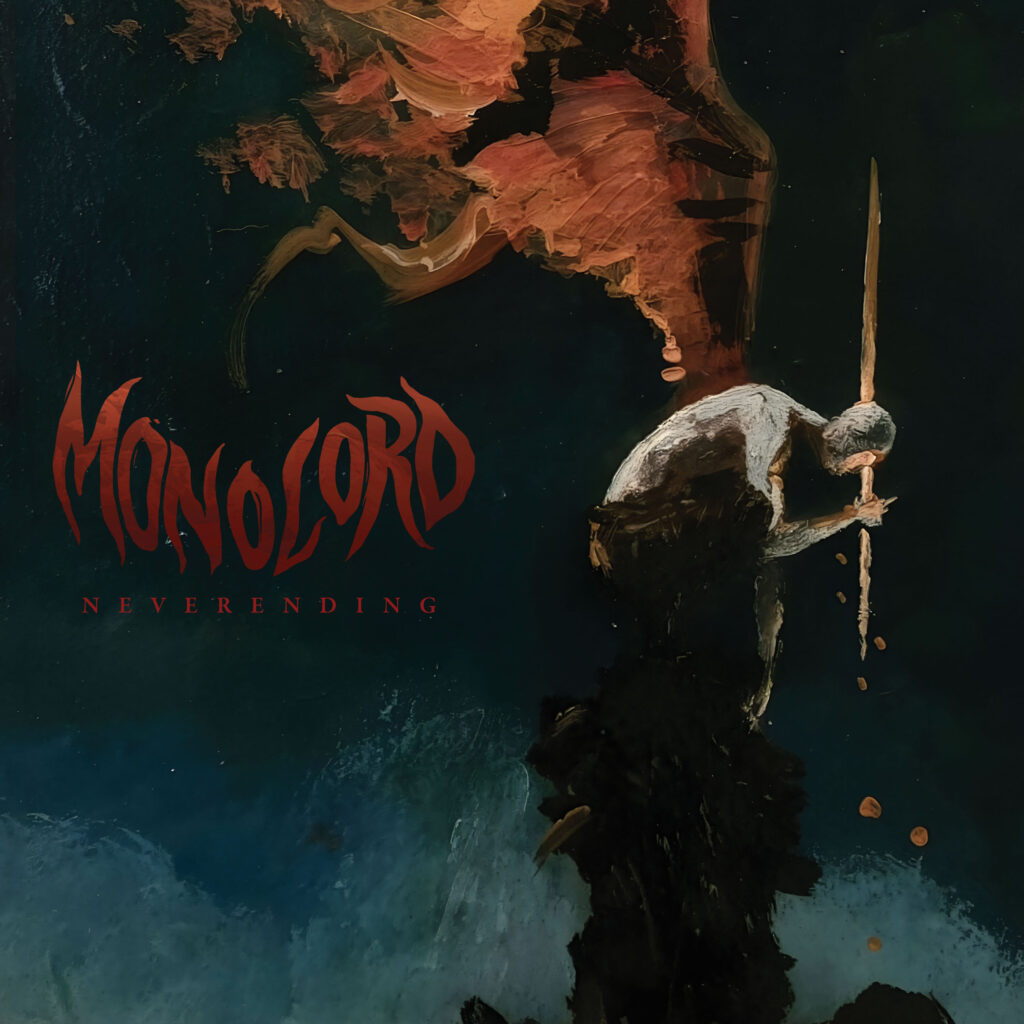
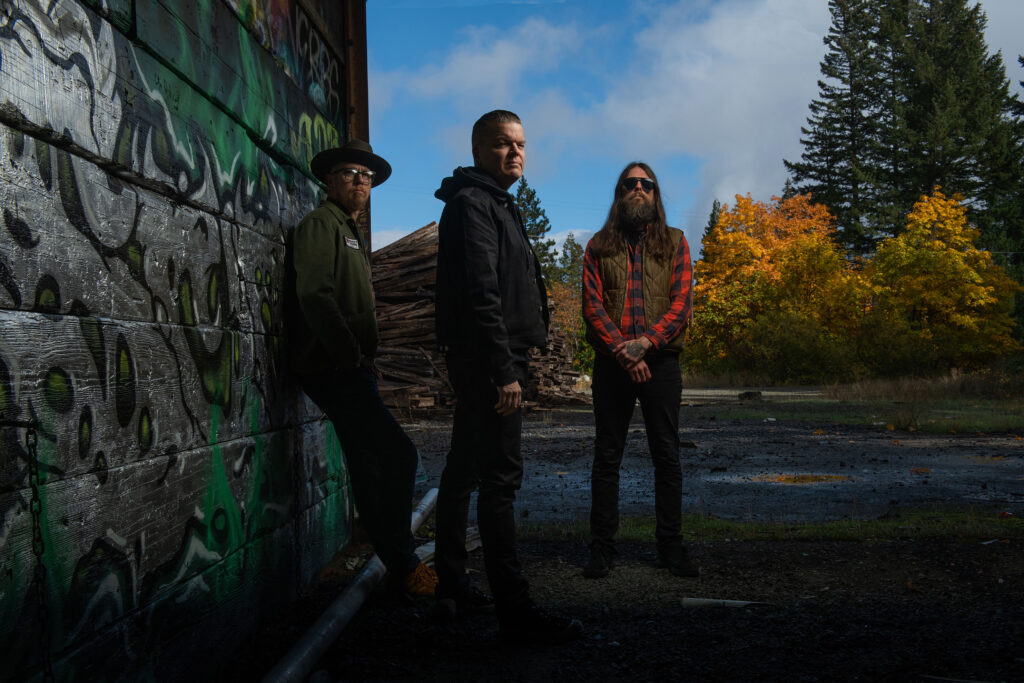
There is a particular trap waiting for any doom band that achieves institutional status: the slow calcification of a sound into a brand. Monolord have spent thirteen years building one of stoner/doom’s most recognizable identities — fuzz-drenched, unhurried, hypnotic — and Neverending, their sixth full-length, represents the most deliberate attempt yet to resist that gravitational pull toward self-imitation.
The Gothenburg trio has earned its standing. Empress Rising (2014) announced them as a serious force in the genre; Rust (2017) deepened the vocabulary; No Comfort (2019) pushed the atmospheric density to its logical ceiling. By the time Your Time to Shine arrived in 2021, Monolord had achieved something rare — a sound so fully formed it required no external validation. Neverending doesn’t dismantle that foundation. It asks, quietly but pointedly, whether the foundation is a platform or a cage.
Much of that interrogation runs through the decision to record with Sylvia Massy — an engineer and producer whose credits span Tool’s Undertow, System of a Down’s debut, and Johnny Cash’s late-career American sessions. That is not a résumé that points toward conventional metal production, which is precisely why the choice is interesting. Massy reportedly asked Jäger to send her everything — not just the songs written for this record, but a decade’s worth of stray riffs and half-finished ideas — and curated from there. The effect on the album is audible: Neverending breathes differently than its predecessors. The low-end mass is intact, but Massy has introduced negative space as an active compositional element. What surrounds the riffs now carries weight equal to the riffs themselves. Mastering by Brad Boatright at Audiosiege preserves that balance without sterilizing it.
The tonal shift is announced immediately. Jäger has cited “Hotel California” and “No Quarter” as spiritual touchstones for opener “Iodine” — not as sonic templates, but as examples of a particular kind of wide-frame patience. You can hear what he means. The track withholds its full commitment longer than Monolord typically allow themselves, building a cinematic tension before the riff finally arrives and settles its full mass down onto the listener. It is a studied piece of structural restraint from a band that has historically trusted volume to do that work.
Lead single “You Bastard” operates differently — propulsive, groove-driven, closer in energy to the hard-edged end of their catalog than to any funeral pacing. But the lyrical content complicates its momentum deliberately. Jäger writes the song from two simultaneous vantages on suicide: the person who leaves, and the person left behind carrying the resulting wreckage. The tension between that subject matter and the track’s forward motion is not accidental. Neverending is, across its eight songs, a more nakedly personal record than anything Monolord have released — Jäger has spoken openly about recent life upheavals informing the writing, and the shift from the band’s usual religious and existential abstraction toward something rawer and more relational is felt across the album’s middle stretch.
“Inside a Collider,” at just over eight minutes, is where that emotional register hits its densest point. The eight-minute “Oozing Wound” returns to something closer to the doom architecture that built Monolord‘s name — a repetitive, down-tuned riff pulling itself forward through sheer dogged persistence, the rhythm section peeling away at measured intervals to expose the underlying structure before the guitars reassert themselves. It is the album’s most familiar-feeling track, and that familiarity reads as a deliberate anchor rather than a failure of imagination.
The closing title track earns its position as the record’s centerpiece. “It’s Neverending” brings in Jörgen Sandström — Entombed alumnus, a vocalist whose death-metal register carries genuine Scandinavian extremity behind it — to handle vocal duties in place of Jäger. The contrast is stark and purposeful: Sandström’s voice against Monolord‘s slow-grinding doom produces a texture that is genuinely unsettling rather than merely aggressive, the kind of ugliness that feels earned rather than deployed for effect. “The hymns you sung, can’t be defended / Thin veils you spun, it’s neverending.” The album ends without resolution, which turns out to be exactly the right choice.
At eight tracks and under forty-five minutes, Neverending is the most concise argument Monolord have made for themselves. The band that once measured ambition in running time and fuzz density is now measuring it in precision — in what gets cut, what gets kept, and what gets handed to silence.
Thirteen years in, Monolord still understand the thing most doom bands never figure out: the riff isn’t the point — the mood it leaves behind is.
CREDITS
Thomas V Jäger – Guitars, vocals and keys
Esben Willems – Drums and percussion
Mika Häkki – Bass and piano
Vocals on “It’s Neverending” by Jörgen Sandström
Written by Thomas V Jäger
Arranged and performed by Monolord
Recorded by Sylvia Massy, assisted by Noah Taylor
Produced and mixed by Sylvia Massy
Mastered by Brad Boatright at Audiosiege
TOUR DATES
June 11 San Diego, CA Casbah
June 12 Santa Cruz, CA The Catalyst
June 13 San Francisco, CA Great American Music Hall

 If you love this music: