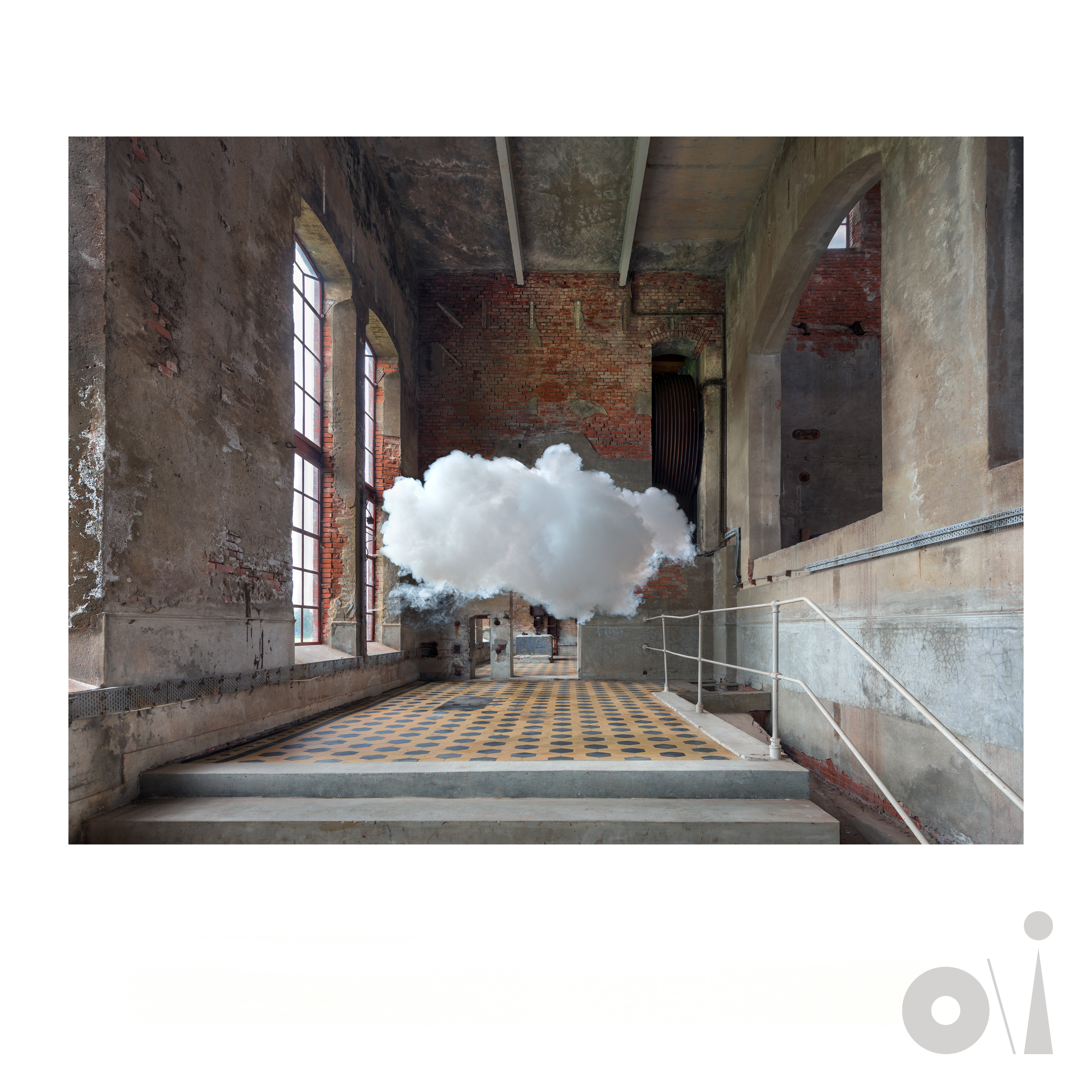
We’ve reached that time in the lunar cycle where Peter Gabriel shares his latest single. This time it’s the slow-building, jazzy I Belong To The Sky, which comes with artwork from Dutch visual artist Berndnaut Smilde.
As he did with 2023’s i/o album, Gabriel is releasing a new track every full moon. I Belong To The Sky is the seventh track he’s released ahead of his upcoming album, o\i, which is due out later this year.
“It’s another song which has taken a while to grow,” says Gabriel of the new single. “It was a candidate, in some form, for the i/o record, but didn’t get finished off, but it was always one of my favourites.
“The starting point of the song was the timpani tom-tom pattern which was inspired by an old film called Jazz On A Summer’s Day and also a wonderful drummer called Chico Hamilton. I think he was the pioneer of the use of timpani sticks on the toms and I always loved that sound; calm and hypnotic. It set a really strong mood for me and the song grew up around it.
“I’m a strong believer that reality is more malleable than we imagine and that if you really make strong pictures of something happening, you really affect the chances of it materialising. Visualising… how dreams leave their nest, is the main topic of the song.
“One of the things that the technological revolution is doing is accelerating the time for thoughts to become material things. The time it takes to transform an idea into something material is being radically cut. In the song, the verses have a more dreamlike ‘on your back and look up at the sky‘ feeling and then in the chorus it’s about the execution, the materialising.
“For many years now I let the ends run on every song because what often happens, which I found so frustrating, is you get to the end of a song and the band have just really locked in the groove, relaxed and it then all of a sudden, it stops… and the best feeling for a musician is when you’re in the pocket, in the groove, and it’s all happening around you. Consequently, I now let these endings loose and wonderful things happen.
One of the things I love about this track is that these amazing musicians let themselves loose and really take off – with Manu (Katché) driving. It’s just great.”
Speaking of Smilde’s Nimbus de Toekomst 1, 2019, which has been used for the single artwork and you can see below, Gabriel says, “I loved this image of the sky,” adds Gabriel. “The cloud brought inside – that mixture of outside and interior worlds. I think that’s what the song is all about. This mix between the interior and the exterior and the transition between them. So, I was very happy that we were allowed to use this image.”
Further details on the release plans for o\i through Real World will follow.
Heavy music has splintered into two non-overlapping cultures. A growing underground and a decaying mainstream.
Every few months, there seems to be an article about the collapse of concert tours due to rising costs of, well, basically fucking everything. A recent article by writer Bob Rose called Empty Seats, Rising Costs and Burnout: Why So Many Tours Are Suddenly Falling Apart had this passage near the top:
“In recent months, an unusually wide range of artists — from legacy superstars to younger streaming-era acts — have either postponed, downsized or outright canceled major tours, exposing growing instability inside an industry that once viewed touring as the safest revenue stream in music. What began quietly after the pandemic has now become impossible to ignore. Entire runs are disappearing. Amphitheater dates are shrinking into theaters. Arena tours are quietly being rerouted or abandoned altogether.“
Stop. Bob Rose exposed himself in the first sentence. He belongs, at least loosely, to the tribe of rock journalists who are mired in their own dad-rock gatekeeping. Sorry, but the phrase “unusually wide range of artists” with the example cited “from legacy superstars to younger streaming-era acts” doesn’t exactly scream the word wide.
It screams–ironically– the death rattle of some of the bands/tours that Rose implies are the only ones thriving in this economic and musical landscape.
Spoiler alert: That will all be dead soon. And, not to be morbid, but literally.
And, when it does, the myopic mainstream will write article upon article eulogising the lost culture of rock ‘n’ roll. As these false tears spill all over the world from people who stopped listening to new music soon after getting their high school diploma, rock ‘n’ roll concerts and festivals will still be happening all over the world.
Here is the deeper lament. The Bob Roses of the world do not want the world to change. They do not want to find new music. They do not want to know that the world moved on without them. They do not want to be in Alvin Toffler’s 1970 book Future Shock.
The illiterate of the 21st century will not be those who cannot read and write, but those who cannot learn, unlearn, and relearn.
Alvin Toffler
The impolite term for Dad Rock is really Musical Illiteracy. Those who have been self-incarcerated in this rock prison simply cannot accept that rock ‘n’ roll moved on and grew without them–subversively and quickly.
They simply cannot learn anything new about the current status of it. They are unconscious laggards, swimming around in a stagnant pool of decaying rock music–celebrating like their high school prom is still happening.
Uh, fuck no.
What he and other people my age are unwilling to learn is that they are missing a whole, global scene of underground heavy music that, while not being completely immune from the current economic strife hitting the whole planet, is still having music festivals without any noticeable downturn in attendance.
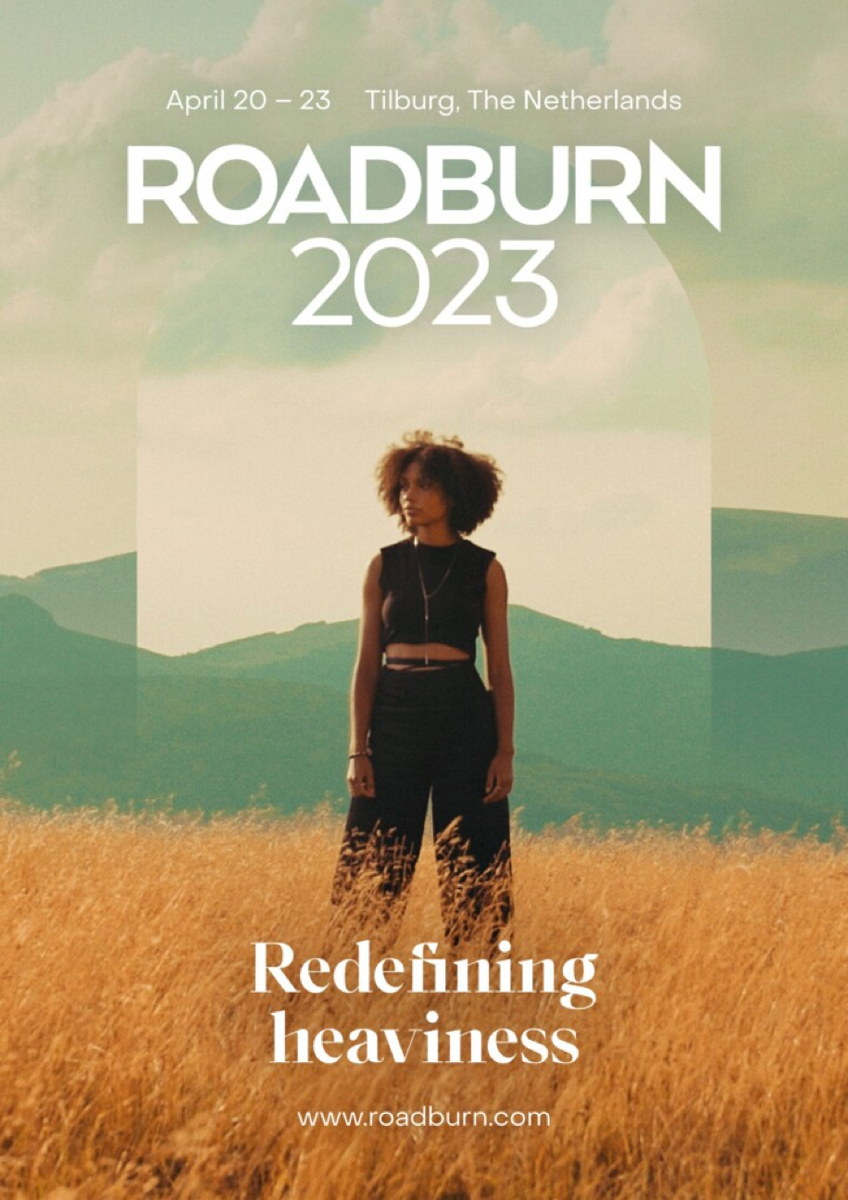
Roadburn 2025 – Redefining Heaviness
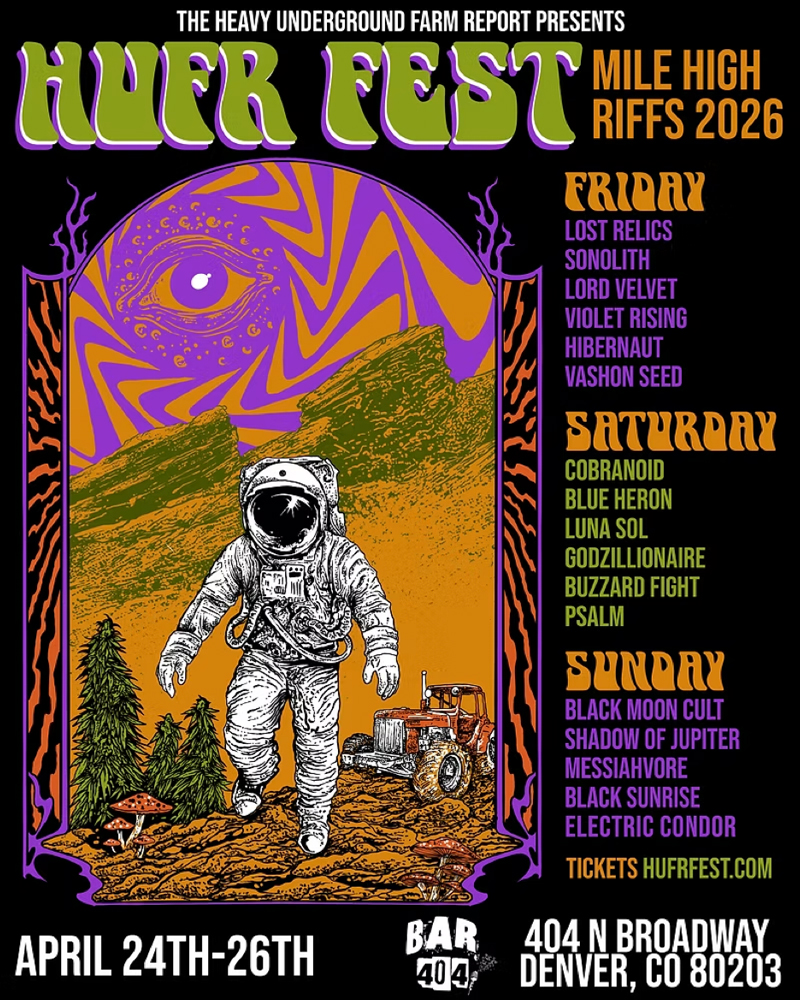
Two heavy music festivals, on opposite sides of the world, concluded this past April. Roadburn, now in its 27th year and Heavy Underground Farm Report Fest in its first.
While Tilburg and Denver are more than 7800 km apart, their physical distance is dwarfed by their philosophical closeness. While one is international and held all over the downtown core of Tilburg, the other one was generally local with some healthy out-of-state support from bands like Blue Heron, Violet Rising, and Shadow Of Jupiter.
The motto for Roadburn for the last few years has been something they do better than any festival on the planet–constantly redefining heaviness.
And, the birth of a new micro-festival in Denver by S. Patrick Brooks had a great mix of bands that emphasised the new heaviness of this decade.
HUFR FEST – Mile High Riffs 2026
There is a lot of irony here to unpack.
The birth of heavy music redefined rock ‘n’ roll. Bands like Black Sabbath, Led Zeppelin, Cream, Blue Cheer, MC5, etc, were the early pioneers of their unique brand of heavy. However, unlike today, they quickly rose out of their underground status to mainstream acceptance.
Much like in English Football, if you are good enough, you could get promoted to a bigger platform (higher division), having more exposure and prominence.
That is no longer possible in heavy music. They have not only been abandoned by the whole music/streaming industry, but they have also been abandoned, for the most part, by the big bands that made it.
Those heavy bands that are successfully touring right now are not exactly bringing out the best of this underground. Iron Maiden and Metallica might be giants in Metal, but the days of them being on top of the heavy music scene are long gone. They got too busy making money.
Just look at the Back To The Beginning lineup last summer. All the bands that played were rich rock stars. Not one band who symbolises the sound and attitude of Black Sabbath from the underground were present.
Cough. None. Were invited.
What is the mainstream of heavy left with 2026? Metallica at The Sphere and Monster of Rock Cruises hosted by Eddie Trunk.
Those My Generation lyrics did not age very well. “Hope I die before I get old”.
For me, the lyrics would be “Hope I die before I go sip drinks out of neon mugs on a ship with a Slaughter reunion.”
Enough of the depressing stuff about the death rattle of dad rock/Metal. What about the underground festivals that keep the youthful spirit and curiosity of rock ‘n’ roll alive?
Here is a list of what I think are the premier heavy music festivals in the world. They all have killer, evolving music, a deep sense of community, perfect size, and often a setting related to nature/water.
They are meticulously crafted to maintain intimacy with a chill, no ego vibe among bands and fans. The fact that bands mingle constantly with fans before and after the show–after all, they are fans as well–should not be lost here.
Those monster-sized festivals that have multiple headliners of millionaire bands are all glitz, no grit. The only way you get backstage to have the same vanilla experience as dozens of others is if you cough up generally hundreds of dollars to artists who do not need the money.
But they need the stroking of ego. Kill ‘Em All? Pfff. Fuck ‘Em All
Sorry. Not going to ever catch me at a festival where acts whose bank accounts are inversely proportional to musical relevance in 2026. In these economic times, it is not where your money should be going.
You should be going, if possible, to any of these festivals of heavy happiness!
Dunajam, Sardinia (est. 2009)
Anyone who has been anyone in the stoner/doom scene the last 15 years has played this multi-day festival in Sardinia. The exact location, bands playing, and how to get invited to this small gathering is a well-guarded secret. I finally got invited to the 2026 event, but have postponed my attendance until 2027.
The vibe and community–c’mon, it’s on the beach in Sardinia–is only rivalled by Roadburn.
Sonic Blast, Portugal (est. 2011)
Another great festival that takes advantage of the scenic coastline of Portugal to bring thousands every year for a consistently amazing lineup of the best of the old and new from the scene. If you have an Aftermovie, you are doing something right.
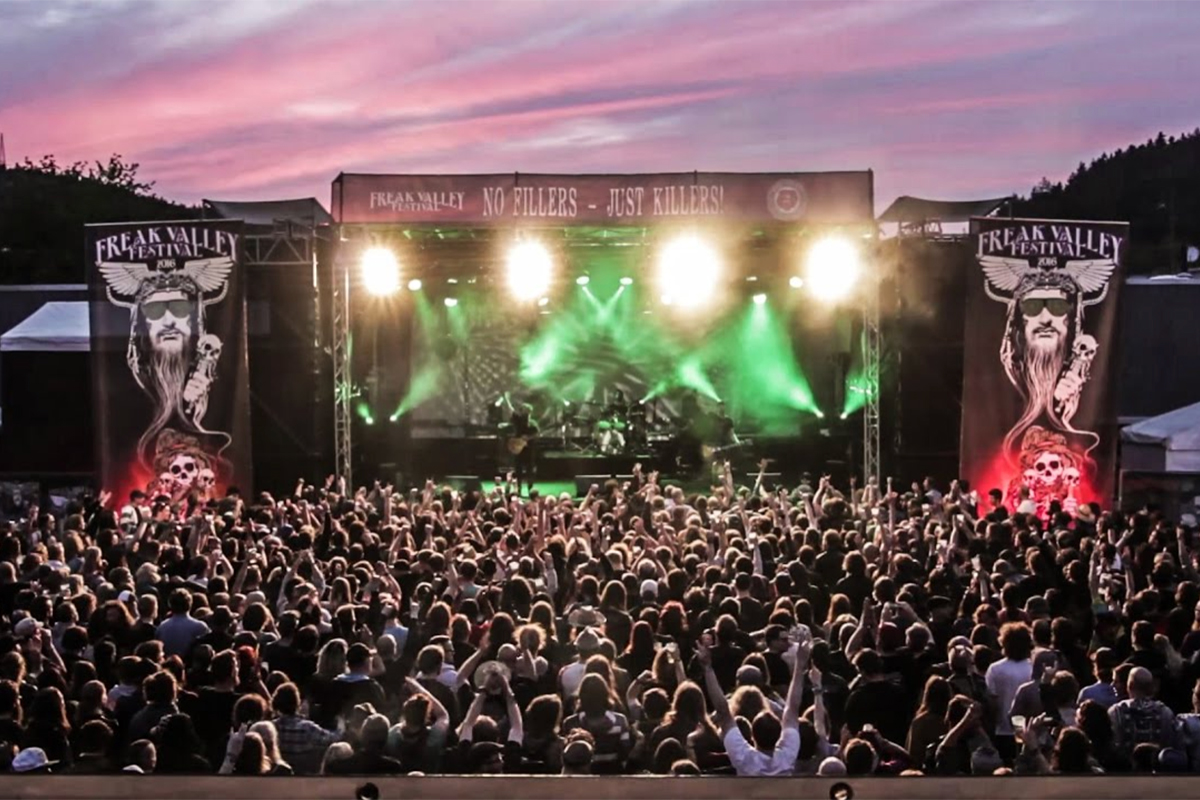
Freak Valley, Germany (est 2012)
Literally in the middle of nowhere, but every year, thousands make the trek to see some of the best stoner psychedelia bands on the planet. Some of the greatest sets by bands like King Buffalo and 1000mods have taken place here.
Their motto of No Fillers-Just Killers is now part of the stage branding. Also, they have a booth near the entrance for people to report any discrimination or feelings of being unsafe at the festival.
Bear Stone Festival, Croatia (est 2021)
Even if you mute the music in the link below, you would want to come to the festival. Dogs, young children, turquoise water, great food, and a pop-up community of happy campers.
Up In Smoke, Switzerland (est. 2013)
This mini two-day festival in Prattein, just outside of Basel, has been running strong for over 10 years now. It maximises its one indoor stage and one outdoor stage to consistently draw a balanced lineup of big-name international artists and those that are more local to its geographic location.
Keep It Low, Germany (est. 2013)
There is no coincidence that this festival started the same year as Up In Smoke, as they are festivals all under the umbrella of the booking agency Sound of Liberation. Great name. The one-off album by Che (Brant Bjork), Sounds Of Liberation, is one of my favourite albums of all time. The company specialises in stoner/doom/psych.
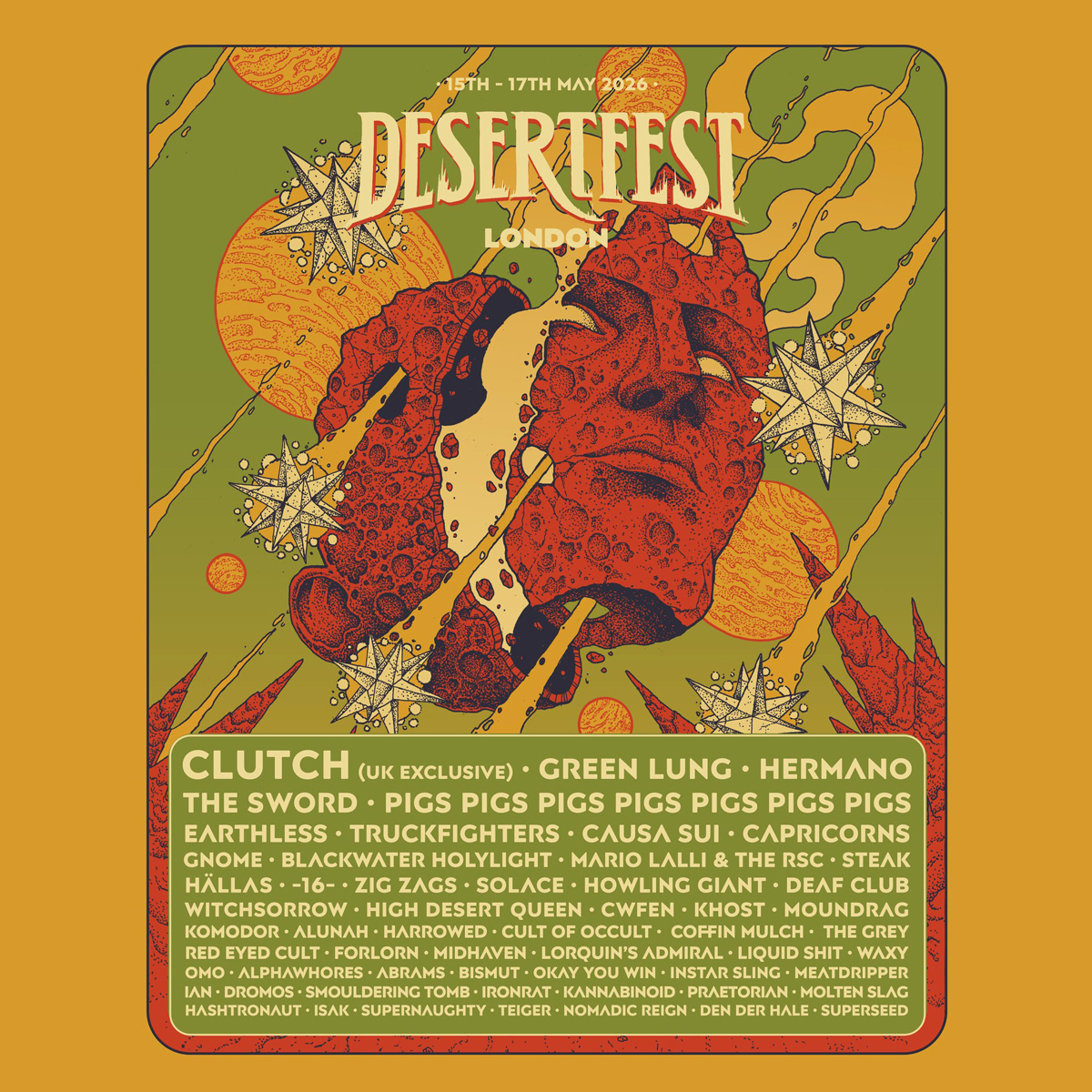
Desertfest, Europe (London, Berlin, Antwerp, and Oslo)
Nothing screams the title of this article more than the now “franchised” Desertfest. Europe, as you can tell by now, is already jam-packed with festivals.
But the ground zero for the growing demand for this subculture all started around 2009 with UK guitarist Reece Tee. He was promoting shows of bands in this scene, and one year later, was helped by the band Steak, which, not surprisingly, plays right within the core sound of the scene–fuzzy, gritty, bluesy rock and fuckin’ roll.
Through his company Desertscene, the first Desertfest was launched in London in 2012. A natural partnership with Sonic Liberation took place, and similar festivals in Berlin and Antwerp were launched by 2014. Oslo joined the party in 2024.
There are already over 100 years of festival history in the stoner/desert/doom scene. To say that the scene is growing was perhaps an understatement.
There was an adverb missing. It has been growing feverishly. And yet, somehow, none of this is known to supposedly the torch bearers of all that is heavy. People like Eddie Trunk.
And, no. I will never be able to write enough articles to keep throwing that man underneath the journalistic bus for his constipated knowledge of heavy music.
While over here in North America, we are not nearly as rich with the number of long-established underground festivals, we do have a few that draw artists and fans from Europe. Here is the absolute cream of the crop!
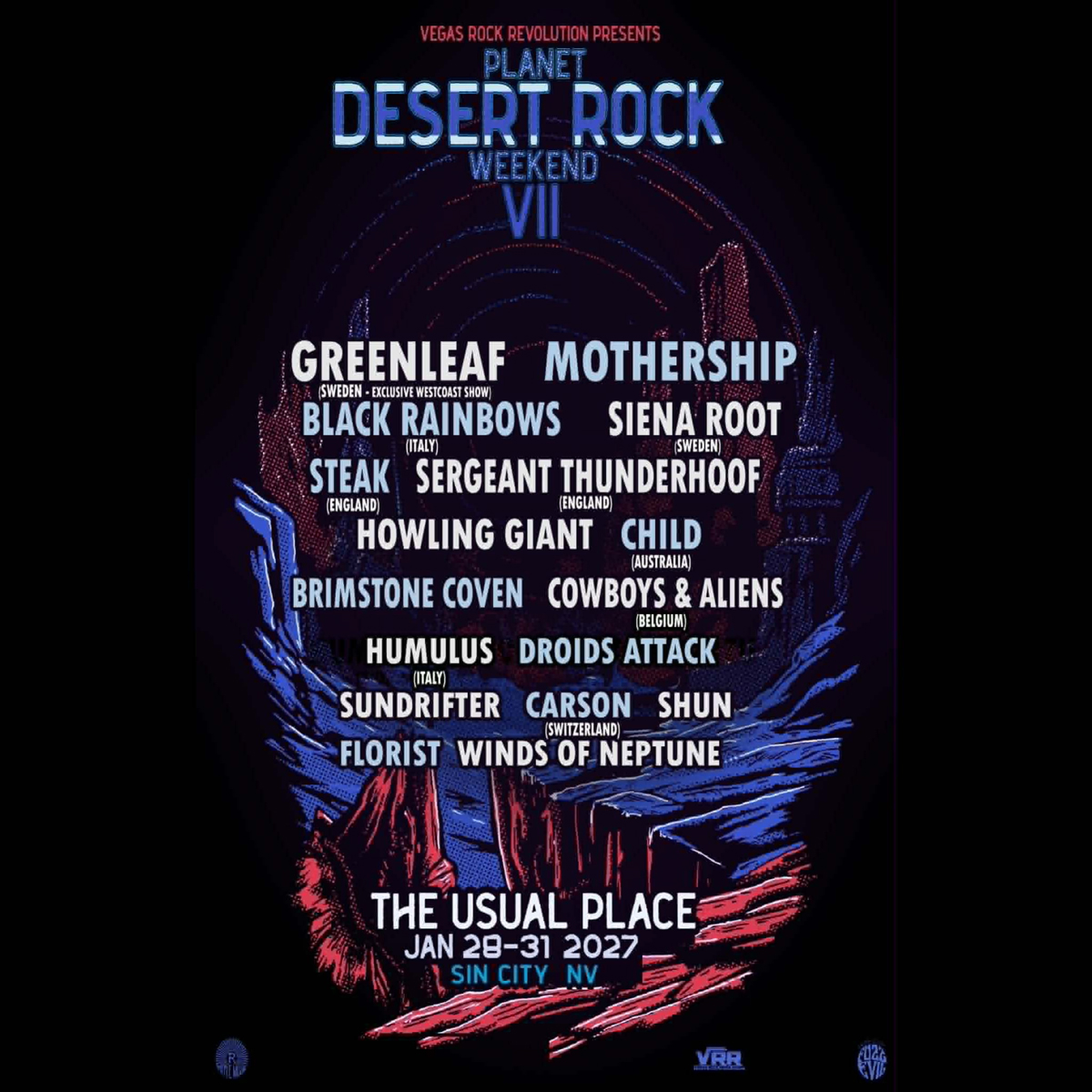
Planet Desert Rock Weekend, Las Vegas (est. 2018)
In terms of a festival that is limited to only one indoor venue, this is as good as they come. And, that is primarily due to the booking alchemy of founder/curator of PDRW, John Gist. The 2027 lineup is once again a great balance of International bands as well as those located here in North America.
People should crawl on broken glass from where they live to Las Vegas, just to see Italy’s Black Rainbows, without a doubt one of the greatest bands of this century.
Planet Desert Rock Weekend, Las Vegas
RippleFest, Austin, Texas (est. 2021)
Founded by Ryan Garney, lead singer of the high-octane and ridiculously well-travelled band High Desert Queen, this festival is regarded as one of the premier underground heavy festivals in the world–and rightly so!
The four-day festival is bookended by performances at the indoor venue Sagebrush, which hosts the pre- and post-party festivities. The main festival is held over 2 days at the super cool The Far Out Lounge, which has two outdoor stages–with zero overlap of band performances.
I was there in 2024, and I still haven’t recovered from the awesomeness of the bands, fans, and overall love-in of the underground community!
The 2026 edition looks like it’s going to be a cracker!
Mojave Experience, Joshua Tree (est. 2026)
It only made sense that one day everything in terms of festivals would go back to the roots where it all began in this scene–the desert. And what better person to be behind it than Patrick Brink of the band Volume–a band that was part of the first wave of fuzzed-out and buzzed-out stoner bands from the early part of this century.
And, I could be wrong, but it’s the only stage set up I know where the band is surrounded by fans on all four sides, heightening the intimacy and overall fan and band experience. Look for this festival to grow considerably in the coming years, with many making the pilgrimage to the raw elements of the desert to connect, dare I say, spiritually to where it all began.
Emissions From The Monolith, Youngstown, Ohio (est. 2000)
On a personal note, I saved this one for last. On May 27, 2004–having turned 40 on that day–I drove by myself to see bands I had never seen and people I had only known online through the now defunct stonerrock.com community.
Those four days changed my life. Forever.
So, the tenth edition is later this year. Yes, the math isn’t “mathing”. That’s because there was a long hiatus from 2010 to 2026, and the founder/curator of Emissions, Greg Barrett, to the utter joy of so many people, resurrected the festival for 2026.
I will be there, covering the whole event for Metal Talk.
Rock ‘n’ roll is alive and well. Support your local, underground bands. Buy their music and merch, and go to their shows. Help keep the history of this scene alive for a sustainable future of great music and great festivals.
In 1976, Rainbow released their album Long Live Rock ‘n’ Roll.
It did, and maybe where it always belonged–to the eternally disenfranchised living forever in the underground.
Majak has found a new label home. Cruz Del Sur Music has announced the official signing of the German blackened-heavy metal occultists and promise to unleash their most ambitious chapter yet in 2027. Read more…
From Dance On A Volcano to Los Endos, Prog dissects each track on Genesis’ A Trick Of The Tail and rediscovers what made their first album without Peter Gabriel such an essential listen on release in 1976.
‘You’d better start doing it right,’ sings Phil Collins in opening track Dance On A Volcano. The seventh Genesis studio album, A Trick Of The Tail came with a whole bundle of pressure. With Peter Gabriel departed – but not “to go senile in the sticks,” he told the press – Genesis had questions and doubters to answer. Collins assumed they’d go on as a four-piece instrumental band.
“But my idea went out the window pretty much that first day,” he told this writer. “Tony and Mike said, ‘Don’t be ridiculous! We need a singer, because we’re songwriters.’”
Fortunately, although it took them a minute or two to realise it, they had an excellent singer within their ranks. “He had a lovely voice,” said Tony Banks. “He’d obviously done plenty on previous albums. But we weren’t sure he’d want to do it – he was the drummer, after all. And at the time, he didn’t seem to have the gravitas. But he sounded great.”
After many fruitless auditions with Collins teaching the applicants the vocals, it became clear who was the man for the job. “I do remember saying, ‘OK, I will give it a go,’” he recalled, “‘but don’t expect me to put on the costumes.’ Which is funny, as I was the one that had come from an acting background! It wasn’t a conscious decision to not do what Peter did; I just didn’t feel I could pull it off. So I became the ‘guy next door’. That’s what I did: I just stood there and sang.”
“In some ways that helped us,” Mike Rutherford remembered. “You couldn’t carry on Peter’s mystique – I mean, it’s not in Phil’s nature. With his character, lightening things between the longer, darker songs, it helped the balance of the shows.”
It also helped that the album was a completely inspired winner. A Trick Of The Tail is an exquisitely gauged blend of yearning melodies, heavy but not too heavy thumpers, affecting sad ballads and hypnotic soundbeds. The quartet had found all the right answers.
“We were lucky in a way,” recalled Banks. “Despite what people think of it now, The Lamb Lies Down On Broadway – quite a difficult double album – sold less than Selling England By The Pound. We were in debt! So we were able now to come out with something more direct. It was a good place to be.”
An album built by strength but revealing frequent tenderness, A Trick Of The Tail is a very good place to be indeed. It’s a dreamlike world in which to immerse yourself, from the opening rumbles and flourishes.
Dance On A Volcano
“It’s a very arresting beginning to an album,” Banks said. “It gets you in there.” It certainly does, all but erupting. The atmosphere and tone of much of the record is established by the determined drama of this colossus, which also makes a cameo reappearance at the album’s finale. There’s no shortage of unpredictable rhythm, channelling Collins’ beloved Weather Report.
He was still razor sharp at the day job, and longtime fans were reassured the new Genesis chapter wasn’t about to take easy options. Yet for all the twisty interplay, the song surges ever forward, its motivations and momentum rich with excitement.
This was the first album to credit individual songwriters rather than the band as a whole, so it’s telling that this opener was a Rutherford-Banks- Collins-Hackett composition: everyone involved, pulling together, keen to not merely steady the ship but to get it going at a rate of knots.
“We’d started writing, and from the first day things just happened,” said Rutherford. “And after two or three weeks we thought, ‘This feels strong, feels good.’ It gave us the confidence to carry on.”
The listener was confident now, too: this Genesis was both accessible and aesthetically intriguing.
Entangled
And nowhere more so than on this, possibly Steve Hackett’s finest contribution to the band. Banks added the chorus, but it “was based on this really beautiful piece Steve had written,” he said. (His synth solo is simultaneously eerie and charming, and seems to change shape second by second.)
Seeing Hackett’s lyrics for the first time – ‘over the rooftops and houses’ – Collins perceived something of a Mary Poppins vibe about them. But its weird science (Freudian slumbers, hypnosis, sinister urges to sleep) also shares some DNA with Here Comes The Supernatural Anaesthetist from The Lamb. It’s a gorgeous reverie, the band resisting temptation to oversell its innate mood, and Collins’ prowess with soft, alluring numbers – as a singer he rarely does too much or too little, always serving the song – gets an early showcase.
Guy Garvey has said Entangled was a big influence on Elbow’s own 2001 breakthrough, Newborn, and that it’s the one Genesis track everybody in his band agrees on. (He’s eulogised it, and Ripples, on his BBC Radio 6 Music radio show.)
Hackett mused: “I’d gone off to do a solo album, Voyage Of The Acolyte, and it’s difficult then to go back and just write the odd bit or odd song. But on A Trick I’d come up with Entangled and got the ball rolling there. It was a happy camp for most of that period. There are some classics on that album.” Its gorgeous, hazy, stoned coda is a pinnacle.
Squonk
In a way it was Squonk that meant Collins had, as they say, passed the audition. The potential Gabriel replacements struggled with it – even the frontrunner – albeit the band were playing it in too high a key. Collins chuckled that it never occurred to them to give the singers a better chance by adapting, and that his bandmate didn’t offer him that courtesy either. “I had to make do.”
Inspired by the thumping drum sound on Led Zeppelin’s Kashmir (“My John Bonham moment,” said Collins), its lyrics were based on a mythical creature as illustrated in the snappily titled 1910 American fantasy- folklore book, Fearsome Creatures Of The Lumberwoods, With A Few Desert And Mountain Beasts; the squonk was apparently easy to hunt because it wept constantly.
The song is a powerful slab of mythology in its own right – even if it does end up, poignantly, as ‘just a pool of tears.’
Mad Man Moon
The relatively unsung masterpiece of the album, Banks’ composition leans into the multipart ‘suite’ format the band were elsewhere moving on from, and its Mellotron magic coaxes forth a mournful majesty. Banks has suggested the reason it gets less attention than some tracks is because they never played it live.
“It’s more, dare I say, a feminine track,” he told Prog. “I was very pleased when I wrote it, especially the verses. The noodling in the middle is quite fun, but if you listen carefully, it’s beyond my playing ability!” That’s a high bar, then.
With its ‘snowflake in June’ and ‘horse not made of sand,’ this is one mysterious aria. When asked about the line describing ‘a muddy pitch in Newcastle’ Banks said with a smile, “I’ve had a few phrases that you shouldn’t use: ‘Into the breadbin’ in All In A Mouse’s Night. ‘Double glazing’ in Domino. You either like those lines sticking out or you don’t. We’ve always been a divisive band, and I’ve always been happy with that.”
Robbery, Assault and Battery
“Coming from our underdog position,” reflected Collins, “when nobody expected much, A Trick was a bright light. Yes, our fans wanted the band to survive – and they preferred that we’d made it work within ourselves.”
This, though, is arguably the weakest link, as it comes across as Collins trying to “do” Gabriel essaying a Cockney-geezer accent. His childhood role as the Artful Dodger at drama school qualified him somewhat, but it’s awkward.
Penned chiefly by Banks, it’s squarely in the tradition of The Battle Of Epping Forest or Get ’Em Out By Friday, but although it has some charm and humour – and was swiftly dropped into their live set – it never quite breaks free of its chains. And between the romantic lushness of the classics either side of it, it’s almost a mood-killer.
Ripples…
Created via Rutherford’s 12-string guitars and some mid-section Rachmaninov-inspired piano from Banks, Ripples… was one of the first songs written with Collins’ voice in mind. Instantly a crowd favourite, with lovely looped guitars from Hackett, its gentle verses and showstopping lighters-in-the-air chorus exhibit the perfect balance of shrewd songcraft and ‘Genesis epic’ DNA. It gave them the confidence to write more ballads.
And if it’s lyrically vaguely in the same zone as The Lamia, with a flavour of fearing age and mortality, they were to nail their courage to the mast and pen actual love songs imminently. “It’s a strong chorus,” said Banks, with customary understatement.
“There’s still an aspect of the musical odyssey there,” pondered Hackett.
A Trick of the Tail
Banks composed the title track, some years earlier, circa Foxtrot. He’d been reading William Golding’s book The Inheritors (his 1955 follow-up to Lord Of The Flies) and began jamming around the rhythm of The Beatles’ Getting Better. He wanted “something lighter and more quirky.”
Revisiting a world of elves, sprites and aliens, and with a now-visible hint of the cautionary tale of exploiting outsiders in The Man Who Fell To Earth (the Nicolas Roeg film starring David Bowie that came out a month later), it’s a song that could only be Genesis – jaunty, catchy, but with an almost shy pride in its accidental grandeur and undeniable pathos.
It flopped as the showcase single, with Collins citing the video, where effects “shrank” him to a miniature man hopping about on the instruments, as the most cringeworthy of his entire career.
Los Endos
A marriage of overture and an end-of-night rock-out (it became an enduring and glorious live finale), Los Endos was a band composition initiated by Collins summoning his Brand X jazz-funk tastes, offering flashes of Santana and Weather Report.
It has since been revealed that its opening began life as part of It’s Yourself, a track cut from the album for length and which emerged later. Reprises of Dance On A Volcano and Squonk are interjected, there are false endings to die for, and over the fade Collins subtly sings, ‘There’s an angel standing in the sun.’ That quote from Supper’s Ready can be read as a final fond farewell and acknowledgement to Gabriel’s role in creating Genesis.
But, now there were four. And as A Trick Of The Tail got a great response from the press, quickly went gold (doubling any previous album’s sales) and paid off most of their debts, it heralded the band’s new beginning.
“I do feel the strain,” Collins once told this writer, “when it’s said so many times that, ‘It all fucked up when he started singing’ – because, really, we all changed. It was a metamorphosis. And I think we got better at knowing when to stop; to say, ‘OK, this song sounds great just like this.’”
Accessible but never predictable, warm but still weird, and beautiful without being bland, the album proved Genesis could thrive after their reshuffle. For all the Gabriel-era genius, they did sound great just like this. They were doing it right.
Swedish metal band ELEINE released their new single and visualizer, ‘We March’, and revealed the title of their upcoming fifth studio album: ‘The Water Taste of Blood‘. “With every new single release, news about the upcoming album will be revealed,” the band promises. Following the release of ‘Empire Of Lies‘ earlier this year, “We March” […]
Should it be five stars? Maybe. A definite 4.5, but when you go to five there’s no where else to go, and the next single might be even better. Anyway that’s my dilemma. What’s more pressing is telling you how … Continue reading →
SkyDog: The Shoals Experience, a new music-driven destination event, debuts August 28th-30th, 2026, in Florence, Ala., one of America’s most storied recording communities. The premiere of SkyDog Shoals brings highly curated live music, food, film, and storytelling to the Renaissance Shoals Resort and Convention Center. More information and ticket bundles are available here. Additional artists, […]