Category: news

  • How Joy Division Built Noir Atmosphere in Sound

    How Joy Division Built Noir Atmosphere in Sound

    Few bands transformed emotional darkness into atmosphere as completely as Joy Division. Their music did not simply sound melancholic. It felt psychologically haunted, emotionally isolated, urban, nocturnal, and existentially fragile.

    Long before “darkwave” and “post-punk Gothic aesthetics” became recognizable cultural movements, Joy Division had already constructed a sonic language built from alienation, repetition, emotional collapse, cold modern architecture, and psychological tension.

    Black-and-white noir collage inspired by Joy Division featuring shadowed musicians, rainy streets, urban isolation, and post-punk darkness.

    A cinematic noir tribute to Joy Division exploring post-punk minimalism, emotional isolation, and the psychological atmosphere that shaped their sound.

    Their music functions almost like cinematic noir translated into sound. Basslines move like footsteps through empty streets. Guitars shimmer like distant neon reflections. Drums pulse mechanically with emotional restraint while Ian Curtis sings like a man trapped inside psychological collapse.

    Understanding Joy Division therefore means understanding how noir atmosphere evolved beyond literature and cinema into modern musical psychology.


    Industrial England and Emotional Isolation

    Joy Division emerged from late-1970s Manchester, a city marked by industrial decline, unemployment, urban decay, political frustration, and emotional disconnection.

    This environment profoundly shaped the band’s emotional and sonic atmosphere.

    Unlike many punk bands focused primarily on aggression and rebellion, Joy Division approached darkness differently. Their music feels colder, more introspective, psychologically exhausted, and emotionally internalized.

    Factories, concrete architecture, empty streets, dim clubs, rain-soaked urban landscapes, and emotional alienation became embedded within the emotional texture of their sound itself.

    The city does not simply exist as background in Joy Division’s music. It becomes psychological environment.

    This relationship between urban space and emotional fragmentation strongly connects Joy Division to noir cinema where cities frequently function as oppressive emotional landscapes rather than neutral settings.


    Ian Curtis and the Noir Antihero

    Ian Curtis remains one of music’s most psychologically haunting figures because he embodied many characteristics traditionally associated with noir protagonists.

    His lyrics frequently explore emotional paralysis, alienation, guilt, unstable identity, fractured communication, depression, fear of intimacy, and existential exhaustion.

    Songs such as Disorder, Isolation, Heart and Soul, and Atmosphere feel less like traditional rock songs and more like internal monologues drifting through emotional darkness.

    Curtis rarely performs emotional catharsis directly. Instead, his voice often sounds restrained, detached, exhausted, or psychologically distant even while expressing intense emotional suffering.

    That emotional restraint becomes central to Joy Division’s noir atmosphere because suppressed emotion creates more tension than overt expression.

    Classic noir protagonists often suppress emotional vulnerability beneath controlled exterior behavior while slowly collapsing internally. Curtis channels a remarkably similar psychological tension through performance itself.


    The Architecture of Sound

    Joy Division’s atmosphere depends heavily upon spatial construction inside the music itself.

    Producer Martin Hannett played a major role in shaping this sonic architecture. Rather than pursuing aggressive punk rawness, Hannett emphasized distance, echo, silence, texture, and emotional emptiness.

    The result feels intensely cinematic and psychologically spacious.

    Drums often sound isolated inside enormous empty space. Guitars appear fragmented and spectral rather than dominant. Basslines become melodic emotional anchors carrying much of the psychological movement beneath the songs.

    Silence itself becomes part of the composition.

    This use of sonic emptiness resembles noir cinematography where shadows, darkness, and negative space frequently communicate emotional tension more effectively than explicit action.

    Joy Division understood that atmosphere often emerges through absence as much as presence.


    Minimalism and Psychological Dread

    One reason Joy Division still feels emotionally modern is their remarkable use of repetition and minimalism.

    Many songs rely upon hypnotic rhythmic structures, repetitive bass motifs, restrained percussion, and slowly evolving emotional textures.

    This repetition creates psychological tension because the music feels trapped within emotional loops unable to fully resolve themselves.

    In songs such as She’s Lost Control, repetition mirrors emotional obsession and psychological instability directly. The mechanical rhythm feels simultaneously human and emotionally disconnected.

    Modern psychological horror frequently uses similar techniques through repetitive sound design, ambient tension, and unresolved emotional pacing.

    Joy Division translated those same principles into post-punk music years earlier.


    The Influence of Gothic Literature and Existentialism

    Although Joy Division rarely functioned as overtly “Gothic” in the Victorian sense, their emotional atmosphere strongly connects to Gothic literary traditions.

    Like Edgar Allan Poe, Kafka, Dostoevsky, and existential writers before them, Joy Division explored emotional isolation, fragmented identity, mortality, instability, and psychological alienation.

    Ian Curtis’s lyrics frequently blur the boundary between internal emotion and external reality, creating emotional landscapes where perception itself feels unstable.

    The song Atmosphere demonstrates this perfectly:

    “Walk in silence.”

    The line feels simple linguistically, yet emotionally enormous. Silence becomes emotional condition, existential state, and psychological environment simultaneously.

    This emotional ambiguity strongly resembles Gothic psychological literature where atmosphere often communicates more than explicit narrative explanation.


    Why Joy Division Still Feels Cinematic

    Joy Division’s music remains deeply cinematic because it constructs mood visually and psychologically rather than relying solely upon melody or lyrical narrative.

    Listening to the band frequently evokes imagery automatically: empty train stations, rain-covered streets, flickering lights, smoke-filled rooms, decaying industrial buildings, nighttime apartments, and emotionally isolated figures wandering through urban darkness.

    This visual quality explains why Joy Division continues influencing noir photography, Gothic aesthetics, independent cinema, dark fashion, post-punk culture, and psychological horror soundtracks decades later.

    Their music does not merely accompany emotional darkness.

    It creates immersive psychological space where emotional fragility, existential dread, and urban loneliness become almost physically tangible.


    Joy Division and the Legacy of Noir Atmosphere

    Much of modern dark alternative music descends directly from emotional mechanisms Joy Division helped refine.

    Darkwave, Gothic rock, post-punk revival, noir ambient music, cinematic electronic music, and countless melancholic alternative artists continue borrowing from the band’s use of emotional restraint, repetition, atmospheric tension, and psychological minimalism.

    Yet Joy Division remains uniquely powerful because their darkness never feels artificial or performative.

    The emotional weight inside the music feels painfully authentic.

    Long before “noir atmosphere” became aesthetic branding, Joy Division had already transformed alienation, psychological fragility, and existential darkness into one of modern music’s most emotionally immersive soundscapes.


    Wear the Darkness

    Explore Edgar Allan Poe apparel, Gothic aesthetics, noir-inspired fashion, and psychological darkness inside the official Edgar Allan Poets Noir Store.

    Graphic showcasing Edgar Allan Poe gothic t-shirts and noir apparel from the official store


    Join the Noir Newsletter

    Receive Gothic literature, noir psychology, cinematic darkness, and atmospheric storytelling directly inside your inbox.


    Enter the Noir Atmosphere

    Explore Gothic music, cinematic tension, psychological darkness, and immersive noir atmosphere through the official Edgar Allan Poets playlist.


    Frequently Asked Questions

    Why is Joy Division associated with noir atmosphere?

    Joy Division created emotionally dark, cinematic music built from urban isolation, psychological tension, existential dread, minimalism, and atmospheric sound design strongly resembling noir aesthetics.

    What made Joy Division’s sound unique?

    Their music combined post-punk minimalism, hypnotic repetition, emotional restraint, spatial production techniques, and psychologically introspective lyrics into a deeply immersive atmosphere.

    How did Ian Curtis influence Gothic and darkwave music?

    Ian Curtis helped shape modern Gothic and dark alternative music through emotionally vulnerable lyrics, existential themes, psychologically fragmented storytelling, and haunting vocal delivery.

    Why does Joy Division still feel modern?

    Themes involving alienation, depression, emotional isolation, urban anxiety, and psychological instability remain deeply relevant, allowing Joy Division’s atmosphere to continue resonating across generations.


    The post How Joy Division Built Noir Atmosphere in Sound appeared first on Edgar Allan Poets – Noir Rock Band.

  • Five For Friday: June 26, 2026

    Greetings, Decibel readers!

    It’s a week for reflection, experimentation and exploring, as today’s new releases show a wealth of creative minds taking their sounds in all different directions. Although black metal and death metal are now long-established styles of extremity, there’s still room for maneuver for bands willing to be bold while still retaining what makes those styles compelling and exciting (and without simply “breaking new ground“).

    Check it out.

    —

    Astriferous – Atavistic Unraveling

    The Costa Rica-based outfit’s followup to 2023’s nightmarish Pulsations from the Black Orb sees them further hone and perfect their atmospheric take on terrifying death metal. Astriferous plays their music like an orchestra from hell, filling the gallery with towering guitars, devastating rhythms, and ground-quaking vocals. There’s touches of dissonant vibes present on this album, but the band is so good at keeping the music in a certain groove that the sound avoids some of the pitfalls of similar bands. Pay attention for some moments that recall Forulas-era Morbid Angel and Close to a World Below-era Immolation that peek out from behind the curtain.

    Stream: Apple Music

    —

    Deathspiral Of Inherited Suffering, Elysian Blaze, Panegyrist, and Maerund – Sunthema

    An absolutely stacked split of four amazing bands. Although I’m most familiar with Panegyrist and can readily vouch for them, there’s a lot to discover in the death metal of Deathspiral of Inherited Suffering; the melodic atmosphere of Elysian Blaze; and the epic, death-rock-tinged chaos of Maerund.

    —

    Mortiis – Ghosts of Europa

    The long-storied artist returns with a reflective and moody album that has one foot in 80s post-punk, and another in 90s electronica. Think of it as Pure Moods for goth kids. But don’t get me wrong, there’s still moments that recall the ancient days of Mortiss’ dungeon-synth past, like “Transcending Morpheus,” and moments where things pick up like the dance-able “Tundra, Heart of Hell.”

    Stream: Apple Music

    —

    THÆTAS – The Irredeemable Age

    I really like what these guys are doing. Although THÆTAS definitely makes brutal death metal and delivers all the goods in that way, they’re bold enough to experiment with eerie soundscapes and unexpected flourishes that set them apart from the endless hordes of palm-muted gurglers. Think of Dying Fetus and Misery Index in collaboration with Immolation and Demilich.

    Stream: Apple Music

    —

    Vafurlogi – Gneisti af eldi Guðs 

    Melodic, entrancing black metal from Iceland. Definitely essential listening for anyone looking for a though-provoking take on the sound, one that strongly recalls Memoria Vetusta-style Blut Aus Nord and perhaps bits of Windir and latter-day Enslaved.

    Stream: Apple Music

    The post Five For Friday: June 26, 2026 appeared first on Decibel Magazine.

  • Ice Nine Kills Pay Tribute To Dead By Daylight With Vicious New Track ‘Play Dead’

    Ice Nine Kills have continued their streak of perfect collaborations, this time teaming up with iconic horror game Dead By Daylight.

    As well as crafting a song about the games’ universe, the band are also playable characters in the game. That means you can be Spencer, but you can also be the Silence killer. Does it get much cooler than that?

    And when it comes to the song, it is classic INK splatter. Guttural metalcore boosts, soaring melodies and plenty of intricate easter eggs to be found within.

    And if that wasn’t enough, the band have also welcomed a few more famous faces into their ever-expanding cinematic universe, mainly Tony Hawk. Devin Sawa and Krsy Fox, the former two very much a part of horror history.

    Spencer had this to say about everything wonderful that they have created here:

    Ice Nine Kills has always lived somewhere between menace and mischief. ‘Play Dead,’ our take on Dead by Daylight, is a collision of hooks, horror, and total chaos. As lifelong horror fans, we find it surreal and an absolute honour to have Ice Nine Kills’ music officially tied to Terrifier, Scream, Ready or Not, and now, the iconic survival horror game Dead by Daylight.

    “Collaborating with Dead by Daylight gave us the chance to step into a world that feels deeply aligned with our creative instincts. The game has an incredible legacy, and that chaotic, eerie, immersive energy is something we respect and admire. We wanted the song to feel like a real extension of that universe, not just inspired by it, but genuinely part of it.

    “We worked closely with longtime composer Michel F. April to ensure every detail, from the atmosphere to the intensity, felt true to the game, and we spent time on set with Dead by Daylight creatives Mathieu Cote and Eric Pope, as well as player experts like SpookyLoopz.

    “The video also features iconic genre star Devon Sawa. He’s one of my favorite actors, from Idle Hands and Final Destination to literally playing “Stan” in the Eminem video. And we’ve got Krsy Fox, one of the new modern horror scream queens, who not only had a showstopping performance in Terrifier 3, but is a kickass indie horror film producer, too.

    “Having Tony Hawk appear with us felt essential because he isn’t just the Michael Jordan of skateboarding. He’s synonymous with the marriage of music, gaming, and subculture. We bonded over the same offbeat pop-culture touchstones, from punk rock to the irreverent ’80s comedies like The Naked Gun that shaped my brain just as much as horror did.

    “And of course, Dingbar Tarbani slithered in to make things even stranger.”

    Get stuck in.

    The track follows on from the band’s last two collaborations, sitting on either side of their sound.

    There is ‘Twisting The Knife’, which was crafted for Scream 7:

    And ‘Hell Or High Slaughter’, delivered by alter-egos Grave Diggler, and playing a part in Ready or Not 2:

    The post Ice Nine Kills Pay Tribute To Dead By Daylight With Vicious New Track ‘Play Dead’ appeared first on Rock Sound.

  • Five Finger Death Punch Marks 20 Years With New Album, ‘Legacy’

    Five Finger Death Punch celebrates 20 years with its new album “Legacy,” featuring “Eye of the Storm,” “De Oppresso Liber,” and a summer U.S. tour.

    The post Five Finger Death Punch Marks 20 Years With New Album, ‘Legacy’ appeared first on Audio Ink Radio.

  • Boy Harsher – “Jeans”

    Jae Matthews and Augustus Muller, aka Boy Harsher, are back with a new single, “Jeans,” and it makes me want to go to the mall and do a makeover montage like in nearly every ’80s film. It’s a hairsprayed new wave track that reflects on giving up glam and rock ’n’ roll for small-town freedom.

    The post Boy Harsher – “Jeans” appeared first on Stereogum.

  • Headline Act – Teiger

    With their highly anticipated second album slowly being unveiled and a brand-new single landing today, we caught up with London-based alternative rock trio Teiger to talk about their diverse backgrounds, varied musical influences, East German drum gear, and… fire alarms! Simple things first – where are you guys from? Jon is the only original (ish) … Continue reading Headline Act – Teiger
  • Future Announces New Album The Real Me: Hear “Radio”

    Earlier this week, elder rap hedonist made his first appearance in our Number Ones column. It won’t be his last. Future has been making an impact on popular music for a very, very long time. His first #1 hit was also his 125th chart hit on the Hot 100. He’s a defining generational star. A couple of years ago, he helped ignite the Drake/Kendrick Lamar beef when Kendrick launched his opening volley on the Future/Metro Boomin collab “Like That.” A few months ago, old collaborators Future and Drake reunited on Drake’s #2 hit “Ran To Atlanta.” Future simply continues to float above the fray, and now he’s got a new album on the way.

    The post Future Announces New Album <em>The Real Me</em>: Hear “Radio” appeared first on Stereogum.

  • Mortiis – Ghosts of Europa Review

    Mortiis has cut a swath through Norway’s music scene since 1992, beginning as the inaugural bassist for black metal pioneers Emperor. When Håvard “Mortiis” Ellefsen realized the blackened arts weren’t for him, he swapped his bass guitar for a keyboard and embarked on a journey that, six years and six full-length albums later, left him a progenitor and “Godfather” of dungeon synth. Over the following vicennial, Mortiis explored other musical outlets, from darkened synth-pop to industrial rock and murky ambient before returning to his dungeon synth roots with 2020’s Spirit of Rebellion. After revisiting the genre he helped found, Mortiis releases his 11th full-length album, Ghosts of Europa—in part shaped by a subsequently abandoned collaboration with Stephan Groth (Apoptygma Berzerk)—to pay homage to old German electronica, especially Tangerine Dream and Klaus Schulze. Mortiis took those early recordings and embarked on a six-year journey to transform them into Ghosts of Europa. Will Ghosts serve as the harbinger of Mortiis’s greatness, or be cursed to haunt the darkened shadows of Norwegian mediocrity?

    Ghosts of Europa is sexy, spacy, and cinematic—a synth-forward record that draws from each of Mortiis’s electronic eras—moving from dungeon scenes to movie screens. Those familiar with Tangerine Dream’s ’80s “soundtrack” era,1 will feel that theatrical presence, in addition to early Enigma, Pink Floyd, and Dead Can Dance, in the windswept, dystopian synthscapes and expansive, Gregorian chant-inspired, Middle Eastern-influenced female wails of Ghosts’ more ambient moments (“Return to the Old Fields,” “Transcending Morpheus,” “Tribes of Dystopia”). When Ghosts of Europa shifts to straightforward, beat-driven electronics (“Ghosts of Europa,” 2 “Violent Silence”) it taps a Depeche Mode and Kraftwerk vein. Still, other Mortiis Era II specters haunt Ghosts’ halls on tracks like “Tundra, Heart of Hell,” an electro-rocker that channels She Wants Revenge and The Cult, just as “Farewell Romero” has a distinct Marilyn Manson feel to its slow, painful burn. Mortiis has reached the peak of his musical prowess, wielding a conductor’s control over his collaborators and delivering one of his most emotive albums.

    Heaving with atmosphere, Ghosts of Europa punctuates its vast, sweeping sonicscapes with rich vocal textures and introspective lyrics. From the repetitive refrain “When we all fall down” that dominates the opening title track to the chorus on “The Faith That Fades Away” requesting “Leave me with my sins, leave me with my thoughts,” and on through “Farewell Romero”‘s painful admission “I found a way to kill some of the pain, like a warm and cleansing summer rain,” Ghosts’ lyrics serve as an apology to the relationships Mortiis admittedly damaged along the way.3 And to further execute his no-boundaries vision, Mortiis focused on vocal arrangements in a way he hasn’t on previous efforts, partnering with a cast ranging from Sarah Jezebel Deva (Cradle of Filth) and Illiana Tsakirake (Septicflesh) to Christopher Rakkestad (Elvarhøi, Bolverk) and Skinny Puppy’s Matthew Setzer,4 who join him and, along with a vocoder and some autotune modulation, cement completely the otherworldly experience Ghosts of Europa provides.


    Effortlessly flowing and expertly paced, Ghosts of Europa is permeated with a laid-back melancholy, allowing Mortiis to undulate easily between extended ambient moments and more traditional synth-pop. This ebb and flow effectively renders Ghosts of Europa’s fifty-plus-minute runtime into something that feels much shorter. As with any great film, Ghosts of Europa begs to be heard in its linear totality, rather than having any of its constituent parts relegated to a cannibalized playlist, despite some of its more traditional moments being ripe for such compartmentalization. Mortiis has provided an experience akin to getting lost in any of his early, Era I dungeon albums, if that sparks you, but with dialogue and an impactfully matured, image-conjuring vivacity. I repeatedly found myself easily lost in the Neverending Story-like feel of Mortiis’s conjuration, enamored with every moment. My one critique is reserved for the album’s editing, which could easily be attributed to the product of the promo, but rests with the abrupt and awkward resolution of some of the tracks (“The Faith That Fades Away,” “Tundra, Heart of Hell,” and “Farewell, Romero”). Not nearly enough to ruin the experience, but worth mentioning.

    I have never felt FOMO for missing out on Mortiis’s back catalog. I’m not particularly fond of dungeon synth as a genre, and took minuscule note of Mortiis’s shift into more traditional territory nearly 26 years ago. I was very drawn, however, to the stark cover art of Ghosts of Europa and the soul-syncing feel of the album’s title track. The door I walked through after listening to the whole thing converted me. Ghosts of Europa has earned my highest rating this year to date, and I can only recommend that you all give it a chance as well.


    Rating: 4.0/5.0
    DR: 7 | Format Reviewed: 320 kbps mp3
    Label: Prophecy Productions
    Websites: Bandcamp | Facebook | Webstore
    Releases Worldwide: June 26th, 2026

    The post Mortiis – Ghosts of Europa Review appeared first on Angry Metal Guy.

  • I PREVAIL Shares Latest Single “Paradise” Featuring AMIRA ELFEKY

    Platinum-certified metalcore outfit I Prevail has returned with a new single, “Paradise”, featuring Los Angeles-based nu-metal and alternative rock artist Amira Elfeky.

    The collaboration pairs I Prevail‘s modern metalcore sound with Elfeky‘s dark, atmospheric style, resulting in a track that expands the band’s evolving approach while staying rooted in heavy music.

    Speaking about how the collaboration developed, I Prevail said: “We’ve been fans of Amira for a while. She has such a distinct sound and style. The opportunity to write together came up super organically and we instantly connected on this crazy concept for a song. We all saw the vision for it almost right away. That’s a rare and beautiful thing when it happens. We still don’t think we know exactly what we made. We never had to stop to think about it. We just made it.”

    The official video for “Paradise” was directed by Orie McGinness, whose previous work includes videos for Bad Omensand Poppy. The clip is available now alongside the single.

    The post I PREVAIL Shares Latest Single “Paradise” Featuring AMIRA ELFEKY appeared first on Sonic Perspectives.

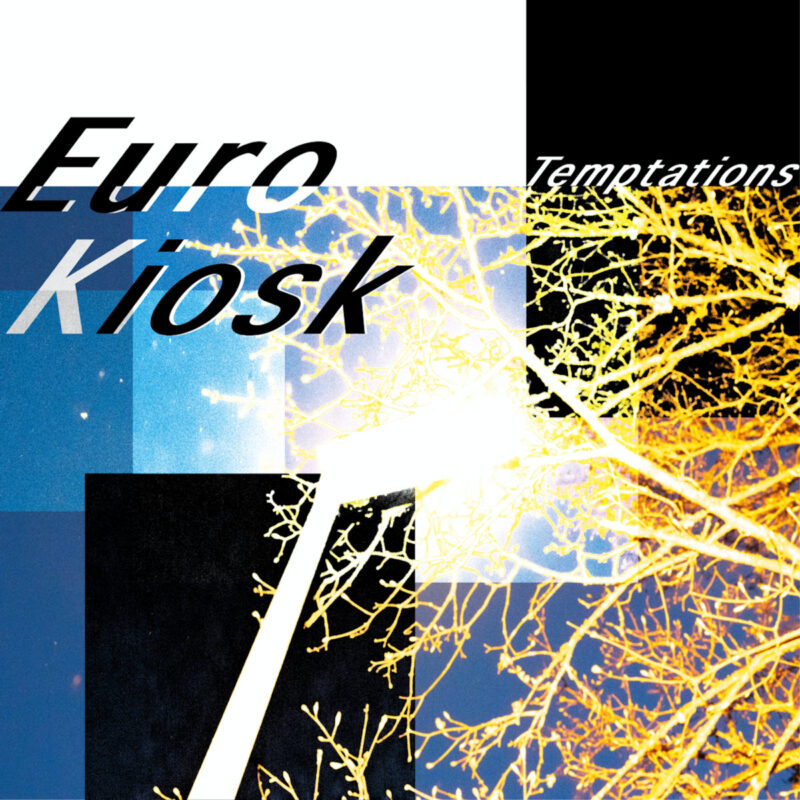
  • Swiss Wave Project Euro Kiosk Opens for Business With Debut “Temptations”

    Euro Kiosk comes out of Aarau sounding as if Switzerland finally got sick of being treated as a pretty postcard and decided to answer back with bass, groove, and a sly little grin. The project fits into the Swiss wave and post-punk scene, yet with its debut EP’s title track, Temptations, it exudes a relaxed, effortless vibe—like a laid-back 90s attitude, knowing the club is open, and the Kirchwasser is flowing.

    The rhythm section locks into Motorik patience, the steady forward shove of a train you cannot quite afford to miss. Over it, the bass runs in hot pursuit, clipped and wiry, while the guitars bring in the jangly UK aftertaste without turning into a museum of record-collector references. Joy Division hangs in the architecture, Grauzone in the steel, Kleenex in the nerve endings, and Le Tigre or Sneaks in the dry, funky snap of the attitude. Beaks hover nearby too, with post-punk pulled through a colder, more contemporary room.

    Euro Kiosk sidesteps the usual gray-coat solemnity by actually letting the body into the room. The groove slouches, stretches, and smirks, carrying a devil-may-care looseness that feels faintly stoned but never sloppy. The funk element never begs for attention. It leans against the wall, insolent and spare, moving the hips while the song stares out at a continent broken into payment plans, border controls, military budgets, ad feeds, and panic sold back to the people as lifestyle.

    That name starts to bite harder the longer the music plays. A kiosk sells the small consumable comforts of a collapsing age: coffee, tobacco, magazines, lottery tickets, chewing gum, and some bright wrapper to hold while the institutions rot. Euro Kiosk turns that little commercial booth into a psychic checkpoint, a place where anxiety and consumerism meet under fluorescent light and call themselves civilization.

    Temptations carries a little shoegaze haze at the edges, enough darkwave frost in the air, and a post-punk frame built for motion. It slides into the groove without making a speech about it.

    Listen to the single below, and order the EP here

    Follow Euro Kiosk: 

    The post Swiss Wave Project Euro Kiosk Opens for Business With Debut “Temptations” appeared first on Post-Punk.com.