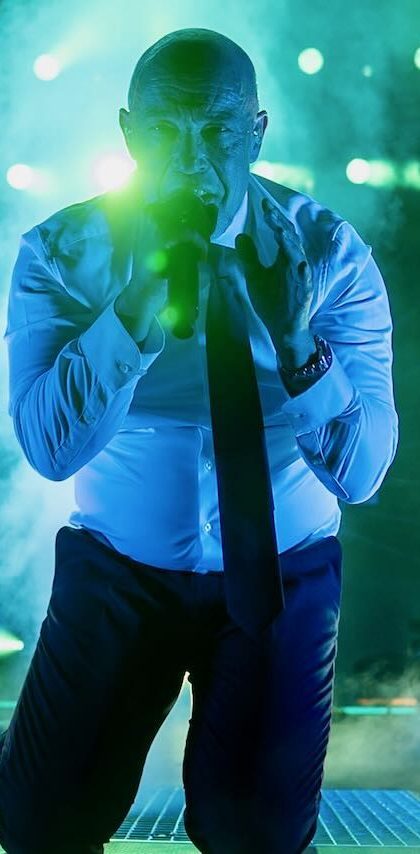
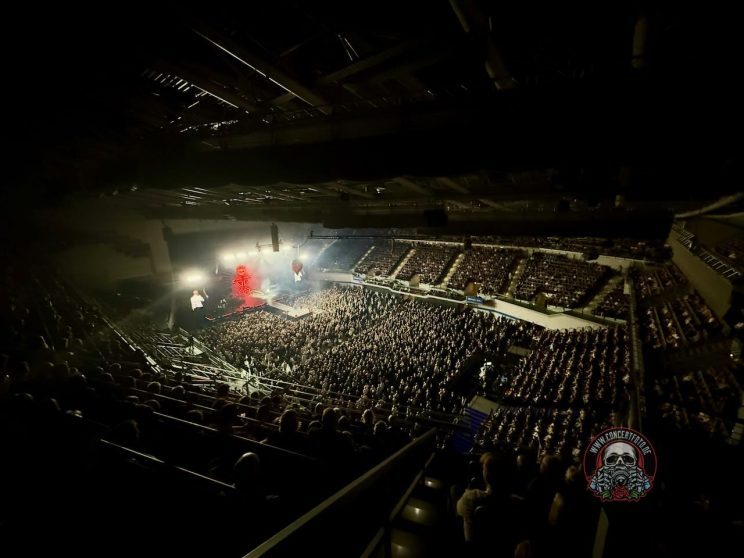
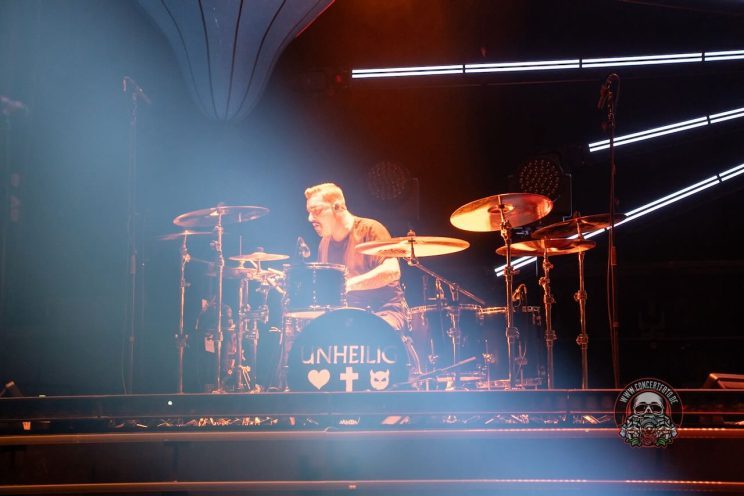
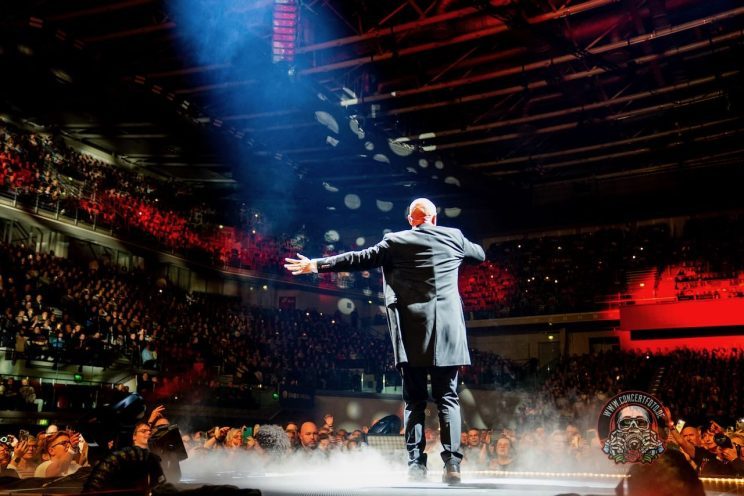
Am Samstag, dem 14. November 2026, starteten Unheilig ihre „Liebe Glaube Monster“-Arena-Tour in der ausverkauften ÖVB-Arena in Bremen. Rund zwei Stunden lang stand der Graf mit seiner Band auf der Bühne. Großartige Stimmung, ein hervorragender Sound und ein Publikum, das bei zahlreichen Songs lautstark mitsang, machten den Tourauftakt zu einem gelungenen Konzertabend.
Erst einmal ankommen: Verkehrschaos rund um die ÖVB-Arena
Bevor es musikalisch losgehen konnte, stand allerdings eine ausgesprochen nervige Anreise auf dem Programm. Für die letzten rund 800 Meter bis zum Parkplatz benötigten wir tatsächlich eine volle Stunde. Und das um 17:30 Uhr.
Das Verkehrsmanagement rund um die Bremer Bürgerweide war an diesem Abend aus unserer Sicht schlichtweg schlecht. Bei einer ausverkauften Großveranstaltung sollte die Zufahrt zu den Parkplätzen besser funktionieren. Hier besteht deutlicher Verbesserungsbedarf. Und auch die Ableitung auf einen viel zu kleinen Kruzzeitpakplatz, der am Ende satte 20 EUR gekostet hat, ist mehr als unverschämt. Aber auch eine Anreise mt den „Öffis“ machte keinen Sinn. Da für uns nur der Metronom in Frage kommt und der fährt, wie ein Autoblinker (geht – geht nicht), haben wir uns das bei den Ausfallprognosen für das Wochenende gleich gespart. Den Spaß hatten wir schon 2025 an gleicher Stelle bei Maiden. Konzertbeginn 20:30 Uhr – letzter Zug 21:55 Uhr, da die Folgezüge einmal mehr ersatzlos gestrichen wurden. Aber kommen wir zum schönen Teil des Abends.
Unheilig: Zwei Stunden Musik und eine volle Arena
Musikalisch gab es dagegen wirklich nichts zu beanstanden. Der Graf eröffnete mit Unheilig an diesem Abend die große Arena-Tour zum aktuellen Album „Liebe Glaube Monster“, das im März 2026 erschienen ist.
Als Special Guest war Alexander Eder mit dabei, bevor Unheilig die Bühne übernahmen. Den Künstler haben wir – wie offensichtlich viele Besucher – wegen des oben schon angesprochenen „Verkehrsmanagement“ nicht sehen können.
Die rund zweistündige Show bot eine Mischung aus neuen Songs und bekannten Titeln der Bandgeschichte. Darunter „Wunderschön“, „Monster“, „Freiheit“, „Schutzengel“ und natürlich „Geboren um zu leben“, bei dem die Halle – wie sollte es anders sein . – förmlich bebte. Die ausverkaufte ÖVB-Arena zeigte sich ausgesprochen textsicher
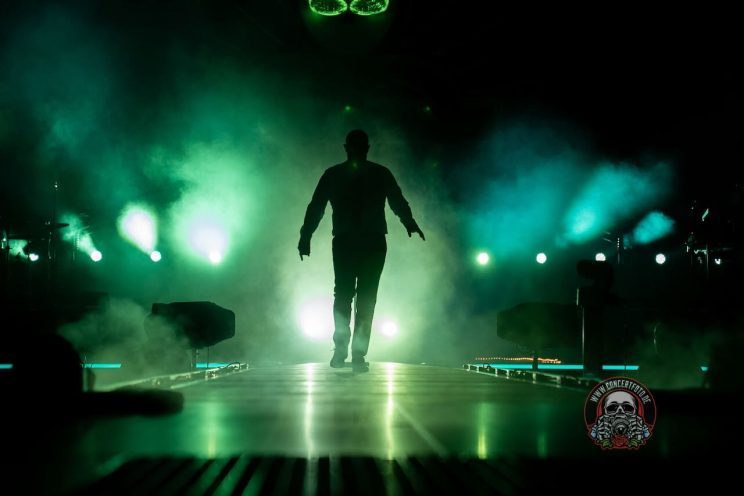
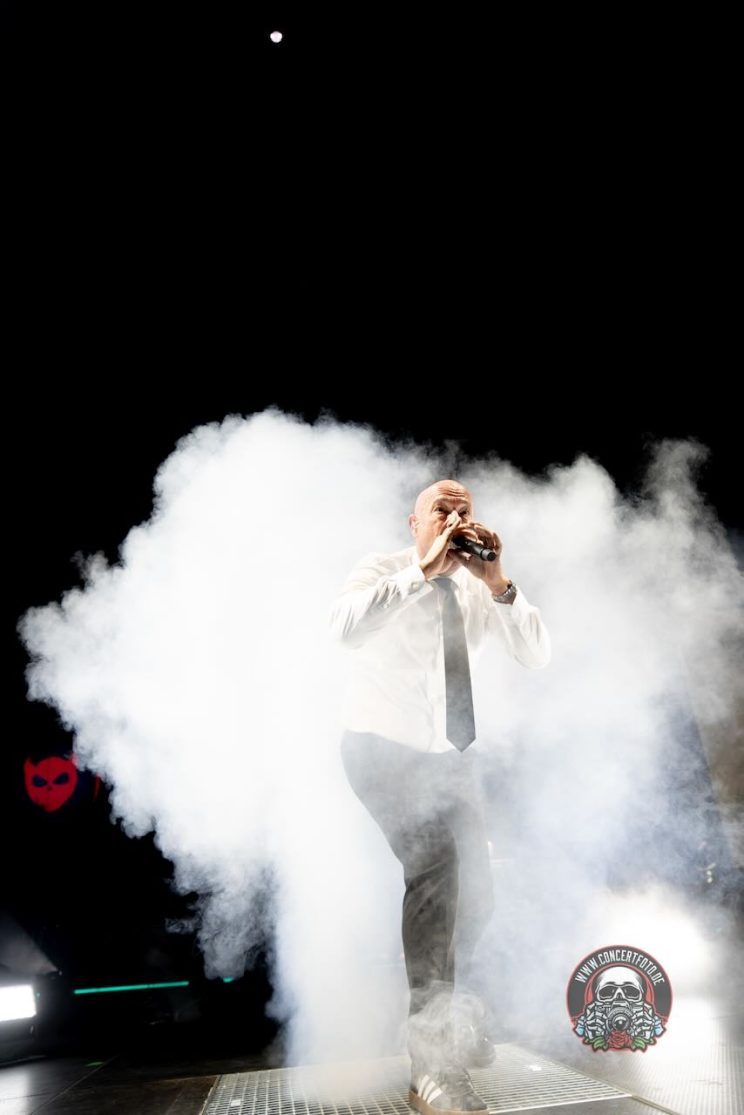
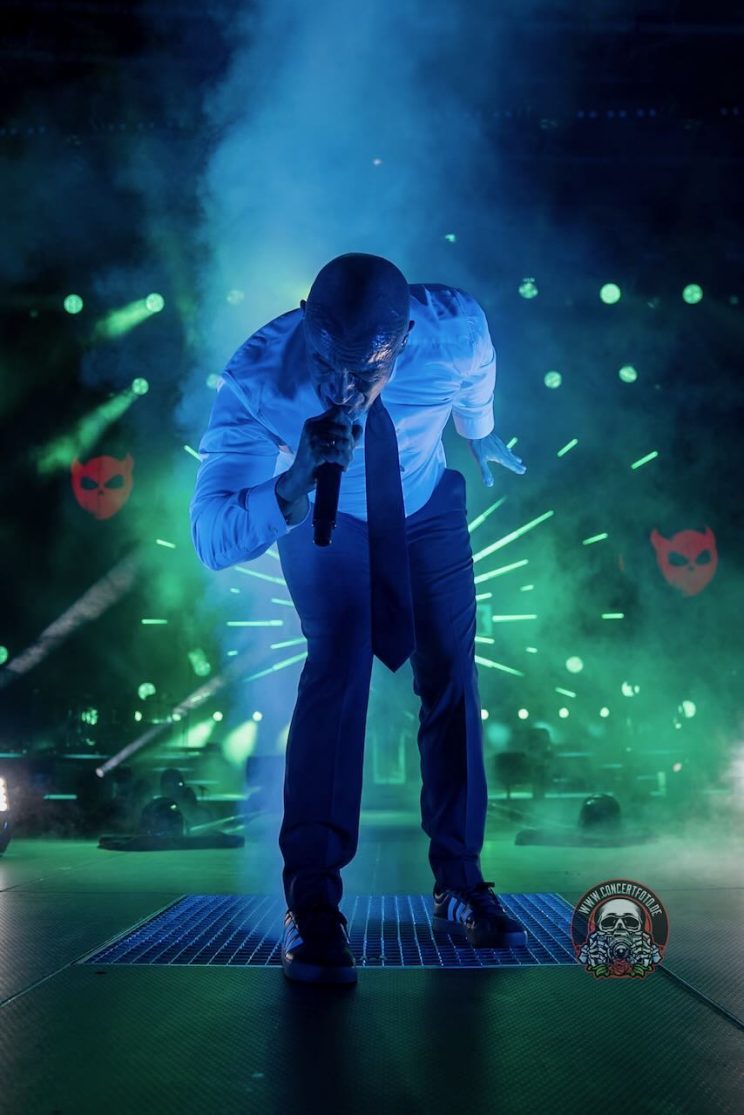
Der Sound war in der gesamten Halle hervorragend. Dazu kam eine aufwendige Bühnenproduktion mit zahlreichen Licht- und Videoeffekten, Nebel und einer großen, mehrfach bespielten Bühne.
Der Graf stand dabei im Mittelpunkt. Mal im weißen Hemd mit schwarzer Krawatte, mal im dunklen Anzug, bewegte er sich über die Bühne und den langen Steg bis unmittelbar vor das Publikum.
Die Mischung aus neuen Titeln und bekannten Unheilig-Songs funktionierte an diesem Abend. Besonders die großen Hits sorgten für reichlich Publikumsbeteiligung.
Die Setlist von Unheilig in Bremen am 14. November 2026
Die Auswahl der Tracks (Achtung! Nicht sicher, ob ich tatsächlich alle dokumentiert habe):
Revolution (Intro)
Liebe Glaube Monster
Wunderschön
Monster
So wie du warst
Brot und Spiele
Zwischen den Welten
Ich würd’ dich gern besuchen
Sonnenallee
Böse Geister
Freiheit
Schutzengel
KI – 01001011 01001001
Maschine
Geboren um zu leben
Wind der Veränderung
Zeit zu gehen
Das Konzert für zu Hause: Mini-CD mit NFC-Chip für 25 Euro
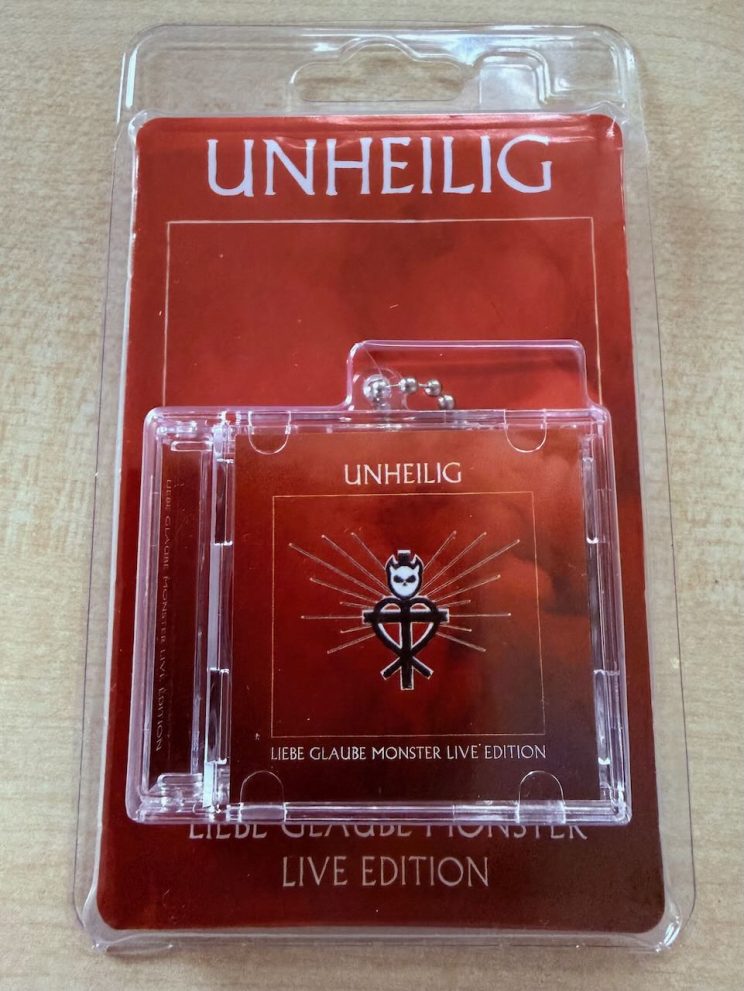
Eine interessante Besonderheit gab es beim Merchandise. Für 25 Euro wurde eine kleine CD mit integriertem NFC-Chip angeboten.
Wer sein NFC-fähiges Smartphone an die Mini-CD hält, gelangt auf eine entsprechende Internetseite. Dort lässt sich das Album anhören. Außerdem steht das aufgezeichnete Konzert rund zweieinhalb Tage nach der Veranstaltung als Stream in hoher Qualität zur Verfügung.
Damit können sich Besucher den Bremer Konzertabend noch einmal zu Hause ansehen.
Unheilig kommen erneut nach Bremen
Wer den Tourauftakt verpasst hat, erhält bereits am 8. Januar 2027 eine weitere Gelegenheit. Dann stehen Unheilig erneut in der ÖVB-Arena auf der Bühne. Auch ein Konzert in der Hamburger Barclays Arena am 29. Januar 2027 gehört zur laufenden Tour.
Unser Fazit: Ein gelungener Tourauftakt mit sehr gutem Sound, einer aufwendigen Bühnenshow und einem Publikum, das die Rückkehr von Unheilig lautstark begleitete. Lediglich die chaotische Parkplatzanfahrt trübte den Abend vor Konzertbeginn.
Dirty Tricks is the brainchild of Adam Luksetich, who formed the band in Chicago in 2020. Since then, the singer has relocated to Los Angeles, and inspired by the sound of the Sunset Strip in the ’80s, Dirty Tricks are now ready to unleash their debut album. With just eight tracks, the album title Not… Continue Reading →
When Dolly Parton died in August at the age of 80, after a brief battle with cancer, it marked the end of a phenomenal six-decade ride through popular culture.
In the months since, thousands of words and column inches have been devoted to celebrating her legacy, and we thought it would be more fitting to honour Dolly and her contribution to all genres of music by examining her songwriting.
“Without a doubt, songwriting is my greatest source of joy,” she told this writer in 2014. She went even further, saying that if she was forced to choose just one thing she could do in show business, it would be writing songs. “To me, it’s like putting something in the world today that wasn’t there yesterday that will still be there tomorrow. That’s my favourite thing I do.”
That was saying a lot, considering all the roles Dolly successfully played over her career – country singer, author, actress, entrepreneur, producer, philanthropist, icon. But nothing revealed her character as clearly as her songs. Here, we’ve chosen 10 of the best to illuminate her rags-to-riches, holler-to-Hollywood story.
And if I might add to the worldwide chorus of admiration that’s been growing since she left us, the three interviews I did with Dolly over the years felt unlike any of the artist interviews I’ve ever done. The conversations were funny and candid, deep and real. She had an inner light and the gift of making you feel seen and important. I think that’s why her passing has felt so personal to so many.
In Nashville, where I live, she was royalty, a North Star for all singers and songwriters. Days after she passed, the city came together, in a rare bipartisan vote, to rename our airport Dolly Parton International. For one who gave so many the wings to dream, I think she would’ve loved that.
Coat Of Many Colours (1971)
At the turn of the 20th century, country music was born in the hills and hollers of the American South, out of a mix of blues, gospel and folk. Dolly’s songs almost always have those three elements: the cry of the heart, the sense of morality and the storytelling.
This one, her personal favourite from a vast catalogue of over 3,000 songs, unfolds like a foundational text. It’s a true story from her childhood about a coat her mother made for her from colourful rags (with a nod to a Biblical tale about Joseph). After being mocked by her classmates for wearing it, Dolly realises that the “love in every stitch” of the coat makes her richer than all the money in the world.
“Telling a story is my favourite style of writing,” she told me. “I can write a big, long story song like this much easier than I can the more commercial, typical songs.” She performed it at every show, and later expanded it into a children’s book and a TV movie.
My Tennessee Mountain Home (1973)
Dolly was born in a one-room cabin in Locust Ridge, Tennessee. This bucolic ode with its ‘glowing fireflies’ and ‘honeysuckle vines’ is more than just a letter home: it’s an identity card. The ripple of her voice carries us back to the people who shaped her.
“My main influences as singers and as writers were in my family,” she said. “My grandfather was a minister, but he wrote the most beautiful songs. All my uncles wrote, my mother wrote, both of my grandmas wrote. I got to hear all these songs handed down.”
When she arrived in Nashville in 1964, the day after graduating high school, she was already fully formed and confident: “I came here as my own writer and to be my own singer.”
In a city that often bends artists, especially female ones, to fit into current trends, Dolly stayed true to her mountain roots, slowly building up an empire. “I’m proud of my humble beginnings,” she said, “and the fact that dreams can come true for simple, ordinary people.”
Down From Dover (1970)
Dolly’s songwriting antennae were tuned into everything, from the sound of a bird singing to her mother snapping green beans in the kitchen. The smallest thing could inspire her. One day in 1969, she looked out of the window of her tour bus. “This cloud went across the sun and swept a shadow across this field I was looking out at,” she said. “It wasn’t clover, but it rhymed with Dover, and we were in Dover. I sang to myself, ‘Time is running out for me, and I wish that he would hurry down from Dover.’”
From there, she spun a tragic tale of a teenage pregnancy that ends with a stillborn baby, and the girl being spurned by her lover and family. If you don’t know this period of Dolly’s work – what she called her “sadass songs” – you’re missing out on how deep and dark she could get. It wouldn’t be a stretch to say songs like this, Daddy Come And Get Me and The Bridge reflected the plights and mistreatment of women in America at the time. “Those songs may go against my image, but they don’t go against who I am,” she said.
Jolene (1974)
On her first day in Nashville, Dolly met Carl Dean outside a laundromat. They started dating and married two years later. They’d been together for almost 59 years when Dean died in 2025. “My husband’s one of those people who gets sweet crushes,” Dolly told me. “He had his girl at the bank that he liked – a redhead. I’d always know when he’d go to the bank, and I’d kid him: ‘I know we ain’t got that much money. What are you doing hanging out at the bank?’”
For the song, Dolly imagined the teller as a homewrecker. But what to call her? When she was touring with Porter Wagoner, they used to sit on stage after their shows and sign autographs. One night, they met a pretty redheaded girl named Jolene. Dolly told her she was going to write a song with her name. “I thought maybe through the years I might hear from her, but I never did,” she said. “On stage I used to say, ‘Here’s a story about this little redhead girl that was trying to steal my husband. Years went by, and now I wish to hell she had!’”
Jolene has been covered by over 300 artists, including The White Stripes and Beyoncé.
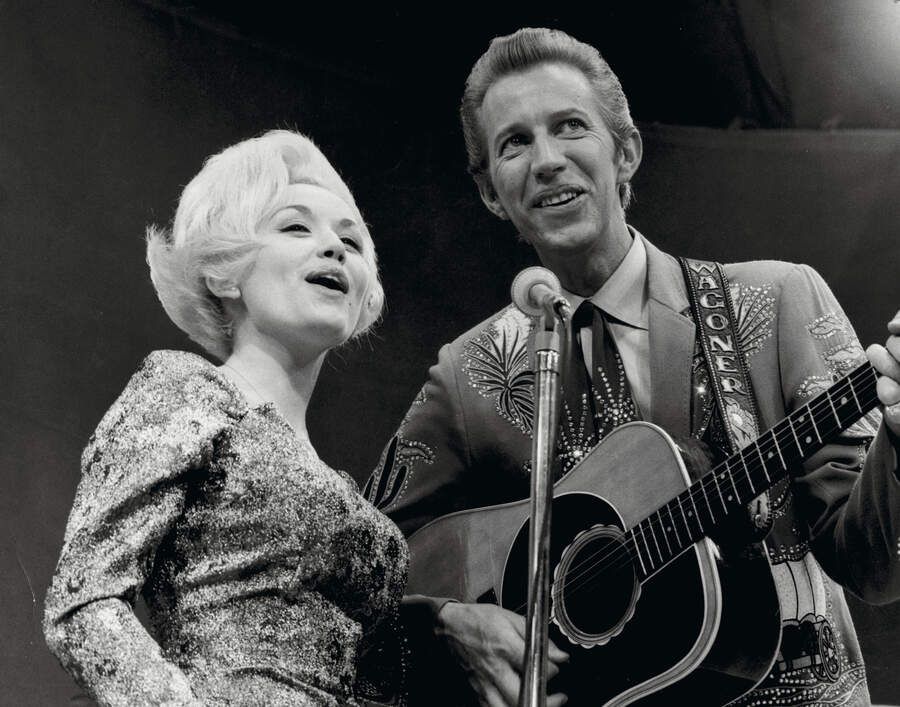
Dolly Parton onstage with Porter Wagoner (Image credit: Michael Ochs Archives/Getty Images)
I Will Always Love You (1974)
Dolly’s first big break came in 1967, courtesy of Porter Wagoner. The quiffed Opry star made her his duet partner, with a string of hits over the next seven years. But Parton said they were like “oil and water, bashing heads constantly”. And she had bigger things in mind. “I had a vision of where I wanted to go,” she said. Wagoner threatened to sue if she left. “He wouldn’t listen to nothing because he was so angry and spiteful,” she said. “So I thought, ‘The only way I’m going to be able to express it is to write it.’ Everybody can understand a song.”
A back-to-back No 1 with Jolene, the towering ballad launched Dolly as a solo artist. The year after, Elvis Presley wanted to cover it. His manager, Colonel Tom Parker, demanded half Dolly’s publishing for the privilege. “I said, ‘No way in hell. I don’t give my publishing to nobody.’ I had just started my own publishing company, and I wrote this song by myself. It was so special to me. I told them, ‘If Elvis loves the song and the song is that good then he’ll record it anyway. And if he don’t, well just say I’m flattered with the thought.’”
Dolly was only 27 and all of her friends in the business were pressuring her, saying she was crazy to turn down the King. She stood firm, which she said turned out to be the “smartest decision of her career” because that song, thanks to Whitney Houston’s cover in The Bodyguard, “earned me more than all my other songs combined”.
Here You Come Again (1977)
The only song here she didn’t write (it’s by Brill Building legends Barry Mann and Cynthia Weil), but important as it marked the moment when she expanded beyond Nashville. Discussing this crossover, Dolly put it in the context of career longevity. “Who can ever predict who’s going to last? In my case, I’ve been around a long time because I’ve never let my business slip. And I’ve never lost motivation or desire to try new things. You’ve got to stay in the mainstream, know what’s going on. If you’ve got a gift, you’re gonna always have that gift. So just find new ways to place and market it.”
The Grammy-nominated song was a No.3 pop hit (and No.1 country), and opened the doors for forays into everything from musical theatre to rock.
Bygones (2024)
In 2022, when she was named as an inductee to the Rock And Roll Hall of Fame, Dolly demurred, saying she was “flattered” but “didn’t feel that she had earned that right”. Most country artists might’ve left it at that. Instead, she made a full-on rock album to prove her mettle – and metal.
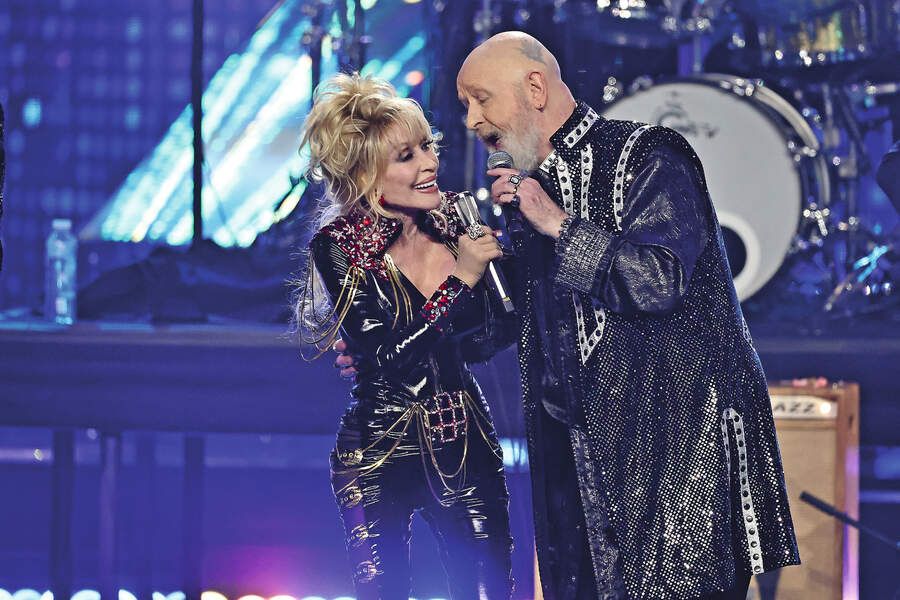
On Rockstar’s mix of classics and originals, she duets with Stevie Nicks, Steve Perry, Joan Jett and, on this standout track, Rob Halford (with Nikki Sixx and John 5). You can imagine this in an acoustic setting, but it comes to fist-pumping life with churning guitars, a driving beat and two unlikely voices in tandem.
Halford told NME, “As soon as I heard the demo, I was all in. She knew what she was doing to offer that piece of music, because it’s not just Rob, it’s Rob from Priest. This is Priest with Dolly Parton.”
Dolly Parton and Rob Halford at the 37th Annual Rock & Roll Hall of Fame Induction Ceremony at Microsoft Theater on November 05, 2022 in Los Angeles, California (Image credit: Amy Sussman/WireImage)
9 To 5 (1980)
Dolly was constantly looking for new challenges. So when the offer came to star in a movie about secretaries taking revenge on their sexist boss, she said yes, as long as she could write the theme song. On set, she was a keen observer, watching and translating the action and dialogue into verse and chorus. Without her guitar handy, she started humming and tapping her long acrylic fingernails on a desk.
“They sounded like a typewriter,” Dolly said. “I’d play my little fingers, then back at the hotel at night, write down the words and get my guitar.”
Beneath the tune’s good cheer, the lyric was an angry complaint, expressing frustrations about inequities and injustices in the workplace. It still resonates today. Though Dolly was asked many times over the years if she considered herself a feminist, she always said no. Her aim was higher than political movements. It was about making the world a better place through practical, everyday kindness and understanding.
Nevertheless, this monster hit became a feminist anthem, and in 1983, the National Association Of Working Women renamed the organisation 9to5.
Travelin’ Thru (2005)
It was written for the movie Transamerica, about a trans woman’s road trip with her long-lost son. You could count on one hand the country artists who would’ve accepted this assignment. But Dolly had both a relative and a long-time chauffeur who were transgender. As a champion of equal rights (and a gay icon), her activism and attitude was laced through her work without her ever waving a banner or getting preachy about it.
“I completely relate to anybody who’s not allowed to be themselves and to be all they feel they can be,” Dolly wrote in Songteller. “I know gay people who are not accepted and have to live in the shadows.”
The song was nominated for an Academy Award. When she lost to Three 6 Mafia’s It’s Hard Out Here For A Pimp, she said, “They’re Tennessee guys from Memphis, so that was fine, and it’s hard out here for a country singer, too.”
Wildflowers (1987)
‘When a flower grows wild it can always survive, wildflowers don’t care where they grow…’ Is there a more poetic metaphor for Dolly’s life and career than this? A sweet song of non-conformity that sounds like it could’ve been plucked from the Appalachian Mountains a century ago, Dolly wrote it for Trio, the supergroup album she made with Linda Ronstadt and Emmylou Harris.
“It talks about leaving home, going out into the world to seek my fortune,” she said. But behind the wanderlust, there’s still the ache and longing to stay connected to where she came from. Exquisite and beautiful.
Smells Like Rain “Crystals in the Catacombs” Review
The first thing I heard in “Crystals in the Catacombs” was a choir that seemed to be singing somewhere beyond the room. The voices are clear enough to catch your attention, yet they feel distant, as though they’ve traveled through several chambers before reaching you. There’s something ancient about that opening. It made me lean in, expecting the voices to come closer. They fade from the piece altogether, leaving the violin and cello to carry me further inside.
I love how close the strings feel after that distant introduction. You can hear the grain of the bow as it catches a violin string, a small detail that gives the music a physical presence. The cello brings a darker warmth to the arrangement. There’s a tenderness in those bowed phrases that I found especially moving against the unease of the opening. The more closely I listened to the strings, the more I noticed what was happening beneath them.
The Unsteady Pulse of “Crystals in the Catacombs”
The interplay between the bass and drums was my favorite discovery on a second listen. Just as I thought I had found my footing, an accent landed a fraction earlier than I expected. The bass plays around those offbeats with a freedom that gives the rhythm section a character of its own. I’d settle into a long phrase from the strings and feel the drums nudge me out of it. There’s something almost mischievous about those moments, especially in a piece with such a solemn opening.
That’s where the avant-garde side of Smells Like Rain comes through for me. A bowed note can make you want to close your eyes and stay with it, while a rhythmic anticipation brings you sharply back into the performance. Those surprises make the track more hypnotic. I kept listening for where the next beat would fall and catching myself enjoying the little jolt when I got it wrong. There’s a great deal of imagination in the way those parts fit together, and the audible texture of the playing keeps the whole thing feeling human.
The image I kept coming back to was Mexico’s Cave of Crystals. I imagined stepping into a dark chamber and seeing a little light catch the edge of an enormous crystal. The violin has that glint, especially when the bow’s texture comes through, while the cello gives the space a sense of depth. The opening voices left a trace of unease that I could still feel long after they disappeared. For the length of the piece, whatever was around me seemed to recede. I wanted to stay in that strange underground light a little longer.
I liked “In The Field” from the opening bars. The drums have an urgency that makes you expect the whole arrangement to pick up speed. The guitar and bass settle into long, sustained tones, and the keys give those sounds room to spread. There’s something quietly daring about letting those two impulses coexist. The drummer keeps pressing forward while the melody seems to have all the time in the world.
The guitar melody is wonderfully economical. A few notes, given enough time to ring, tell you almost everything about the mood of the piece. I heard shades of Pink Floyd in the way certain chords hang in the air. It’s a feeling I get from the harmony itself, from the way a change of chord can make a simple guitar phrase suddenly feel more wistful. The keyboard helps those shifts register, filling out the space around the guitar without crowding it. The bass gives the chords enough weight to hold their ground against the restless drumming.
The Restless Rhythm of “In The Field”
What kept drawing me back was the relationship between the drums and the bass. With a beat this busy, I kept expecting the bass to follow the drummer’s accents. It spends much of the piece holding long notes, giving the guitar something solid to lean on. I found myself listening to the drums in the gaps between guitar phrases, then getting pulled back into the harmony as soon as the chords shifted. That movement of attention is a big part of what makes the track so absorbing.
There’s an almost avant-garde instinct in that arrangement. The drums are allowed to sound restless even when the harmony feels serene. Keeping that tension alive takes a good ear for how much each instrument can do. A busier guitar part might have taken the focus away from those chord changes. Here, the sparseness of the melody makes the subtleties underneath easier to hear. What impressed me about Omer B’s writing is how much he gets out of the distance between one guitar note and the next.
The title stayed with me as I listened. I pictured an open field seen from just above the grass, with the ground passing quickly below and the horizon barely moving. The drums give that image its speed, while the guitar and keys lend it a sense of height. For a few minutes, I forgot what I was doing before I pressed play and let that ethereal melody carry me over the field. That’s the feeling I wanted to return to when I played it again.
Mick J. Clark – It’s Getting Near Christmas Review
The bells on Mick J. Clark’s “It’s Getting Near Christmas” had me in a festive mood before I’d even settled into the song. They ring out brightly over a chord progression that lifts your spirits. A little further in, I caught a trace of nostalgia beneath all that sparkle. It reminded me of the way a Christmas song can bring back the feeling of being in a room you haven’t been in for years.
A Restless Bass Beneath the Bells
The bass was my favorite detail on a second listen. It moves quickly under the bells and the higher instruments, giving the song a bounce that feels as festive as anything happening above it. Follow the bass for a few bars, and you hear how much motion the arrangement has. From a distance, the mix feels soft and almost dreamlike. Up close, there’s a lively rhythm carrying it along.
I like how much room the production leaves for those upper registers to ring. The shimmer made me picture snow drifting past a streetlight on Christmas Eve. The song has warmth, too, like sitting by the fireplace and hearing rain against the windows. That feeling comes through in Clark’s singing. He sounds genuinely pleased that Christmas is coming, and I found myself buying into his excitement.
The Nostalgia That Comes With Christmas
Some of the chord changes carry a wistfulness that caught me by surprise. It comes and goes quickly, the way a memory can surface in the middle of a good evening. A moment later, the music is buoyant again. That small turn feels true to the holiday for me. You can look forward to the people you’ll see this year and find yourself thinking about how Christmas used to feel, all in the space of a few seconds.
If Mariah Carey’s “All I Want for Christmas Is You” has already put in a full shift on your speakers, give Mick J. Clark the next four minutes or so. “It’s Getting Near Christmas” earns its place on the playlist with the little things I wanted to hear again. There’s the way the bass keeps scampering beneath the bells, the warmth in Clark’s voice, and that brief ache in the chords that made the song feel like someone’s Christmas.
The first thing I heard in Vølve’s “Forgotten One” was a choir that seemed to have been singing long before I arrived. The voices have an almost angelic quality, with a solemnity that makes the opening feel like part of an old ritual. There’s something prophetic already in the name Vølve, and the music makes good on that impression. When her lead vocal comes in, the whole space changes. I had the image of the northern lights moving across a dark sky, slow enough that you could watch for minutes without thinking about the time.
What drew me to her voice was how close it felt after such a spacious introduction. There’s an air of mystery in her delivery, even at its most tender. I found myself leaning in to hear where she would take the melody. The electronic groove gives her something steady to sing against, and the keyboards open up the space around her. I especially liked the way I could follow the pulse even when my attention drifted toward the sounds in the background. The rhythm keeps the song moving while the vocal seems free to take its time.
One of my favorite details is a series of bright notes that sound like a xylophone. They made me think of drops falling into a still lake. Each note is brief, but you can almost picture the ripple spreading after it lands. Those little strikes stand out against the longer keyboard tones. It’s the kind of production choice that rewards a second listen. Once I noticed them, I kept listening for how much space Vølve had left around each hit.
The Child We Learn to Leave Behind
“Forgotten One” is about the child we carry with us and gradually lose touch with. Life asks us to be strong, and there are good reasons to put up a few defenses along the way. The trouble comes when those defenses start to reach into the parts of our lives where we used to feel free to imagine things. I thought about how easily we dismiss an idea as impractical before we’ve even had the pleasure of dreaming it through. That quiet, everyday loss is what I hear in the song, and it gives the tenderness in Vølve’s voice real weight.
There’s a generosity to the way Vølve handles that idea. The choir has the gravity of a ritual, but the small sounds gave me the strongest feeling of wonder. For a few minutes, I was listening closely enough to care about a single bright note and where it disappeared. It felt like getting a little of that childhood attention back, when a sound or a light in the sky could hold you there for as long as it lasted.
With the release of their long-awaited seventh studio album Eremition just days away, Melbourne melodic metal veterans Vanishing Point have unveiled the album’s title track as the final preview before its arrival on Friday, November 20. Across the previously released singles Bring Me The Night, Sirens and The Faceless, Vanishing Point have revealed different sides […]





 If you love this music:


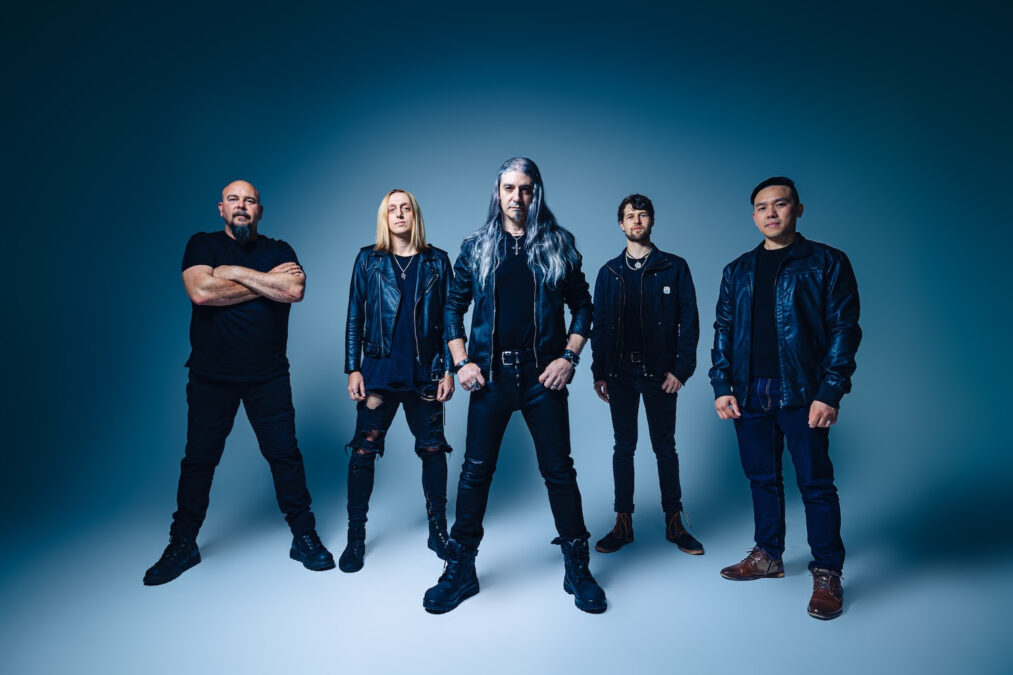 With the release of their long-awaited seventh studio album Eremition just days away, Melbourne melodic metal veterans Vanishing Point have unveiled the album’s title track as the final preview before its arrival on Friday, November 20. Across the previously released singles Bring Me The Night, Sirens and The Faceless, Vanishing Point have revealed different sides […]