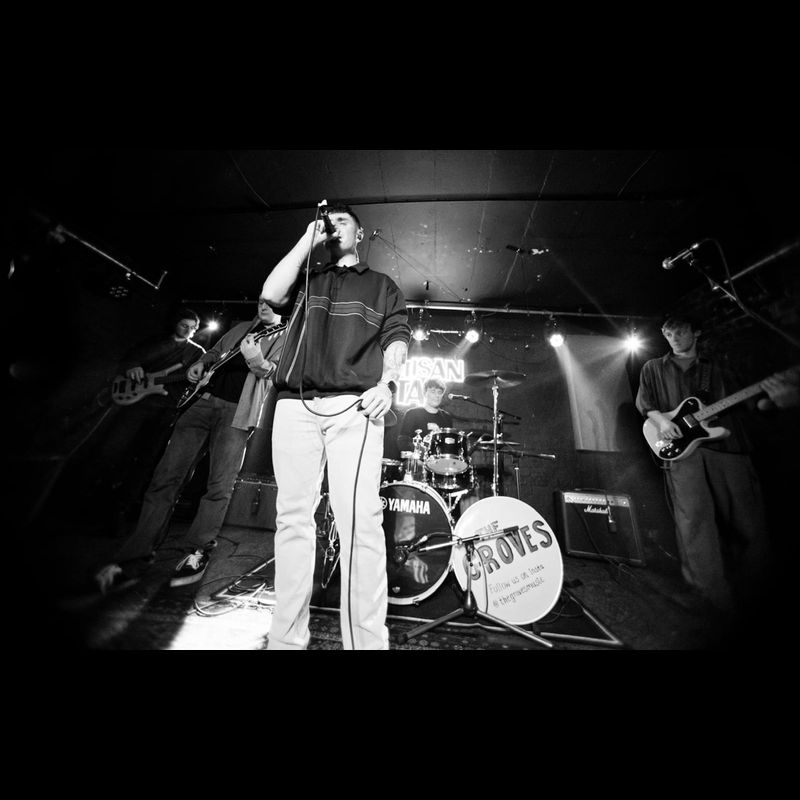
Category: news

  • Judiciary – “Death Knell”

    In a few short weeks, Texan metallic hardcore heavyweights Judiciary will return with their new EP Stalagmite Angels. We’ve already posted the extremely fucking sick lead single “Wall Of Skulls,” and now they’ve got a new banger called “Death Knell.” It’s an all-out thrasher with some gigantic riffs and a percussive breakdown that puts me in that old Sepultura mood. You probably don’t want to be around me when I’m in that old Sepultura mood. Wes Ellis directed the video which is full of sweaty mosh footage, guns, and beer. Check it out below.

    The post Judiciary – “Death Knell” appeared first on Stereogum.

  • MORR return after 11-year studio silence with Kości zostały rzucone

    Polish metal band MORR have returned with Kości zostały rzucone, their first studio album in 11 years. Independently released on July 1, the eight-track record introduces a stronger thrash metal direction while retaining the melodic character of the band’s earlier material. The album’s title can be translated as The Die Is Cast, reflecting lyrics concerned […]

    Source

  • THE LIGHT SUPERIOR announce debut album Dayspring and share title track

    Texas metalcore band THE LIGHT SUPERIOR have announced their debut full-length album, Dayspring, which will be released on October 2 through Rottweiler Records. The announcement is accompanied by the album’s title track, featuring guest lead guitar from producer and PHINEHAS co-founder Glenn Gizzi. ‘Dayspring’ combines forceful metalcore riffs and breakdowns with melodic passages, providing the […]

    Source

  • AZGAAL unveil ‘The Bewitched Souls’ lyric video from Divine Hitman

    French one-man black metal project AZGAAL have released a lyric video for ‘The Bewitched Souls’, the second single taken from the forthcoming album Divine Hitman. The 10-track record will arrive on August 28 through Fetzner Death Records. Running for more than six minutes, ‘The Bewitched Souls’ offers another glimpse into the occult world developed across […]

    Source

  • RAZORFLOWER Announces Debut Self-Titled Album Out September 18, 2026 – @thebeast

    FOR IMMEDIATE RELEASE
    RAZORFLOWER Announces Debut Self-Titled Album Out September 18, 2026
    UK-based blackgaze and experimental black metal project Razorflower will release its debut self-titled album on September 18, 2026.
    Created by Benedikt Willnecker, formerly of Ära Krâ , Razorflower pushes beyond the traditional boundaries of black metal, combining blistering intensity with elements of folk, ambient music, orchestral composition, and electronic sound design inspired by techno and modern experimental music.
    For fans of Deafheaven , Oathbreaker , and Mogwai , the album presents an immersive and emotionally charged listening experience that unfolds as one continuous composition rather than a collection of disconnected songs.
    Flowing seamlessly between aggressive black metal passages and expansive atmospheric sections, Razorflower embraces contrast and movement, creating a cinematic journey through sound, emotion, and tension.
    Lyrically, the album draws inspiration from early 20th-century poetry and the emotional and political instability that preceded both World Wars. These themes are explored through a contemporary lens, reflecting cycles of fear, alienation, social unrest, and emotional detachment in modern society. At its core, the album also represents a desire for distance and resistance against the overwhelming pressures of modern life.
    The release features contributions from several guest musicians, including drummer Filip Gäddnäs, harsh vocals from Thomas Blanc of Astral Lore , and clean vocals from Diego García Araujo. Additional elements include Spanish vocal melodies and lyrics by García Araujo, as well as western-style guitar work performed by Johan Emanuel Jørgensen in the album’s final section.
    The album was mixed and mastered by Johan Emanuel Jørgensen, known for his work with Sunken , helping shape the record’s dynamic blend of atmosphere, aggression, and sonic depth.
    Production Credits

    Vocals performed and recorded by Thomas Blanc (harsh vocals) and Diego García Araujo (clean vocals)
    Drums performed, recorded, and edited by Filip Gäddnäs
    Mixed and mastered by Johan Emanuel Jørgensen
    Vocal melody and lyrics in the Spanish section by Diego García Araujo
    Western guitar in the final section performed by Johan Emanuel Jørgensen
    Razorflower will be released worldwide on September 18, 2026.
    For press inquiries, interviews, and review requests, contact zach@metaldevastationradio.com

    Connect: 
    https://razorflower.bandcamp.com/
    Contact: razorflower.band@gmail.com
  • Video Premiere: Shrineburner – ‘Bodies Dragged to Sunlight’

    Chicago’s Shrineburner have been around for a few years now, plying their trade on the live stage more than the studio since forming a few years ago. After honing their chops and releasing a trio of singles, Shrineburner have dialed things in for their debut album, Hymns of Despair, their first release with bassist CJ Johnson and drummer Edward Hamel.

    Like new single “Bodies Dragged to Sunlight,” Hymns of Despair is musically very heavy but it doesn’t skew into the bleak territory many doom and sludge bands find themselves occupying. Instead, “Bodies Dragged Into Sunlight” is performed with gusto and melody. It makes for an interesting juxtaposition, especially with the violent music video that accompanies the new song.

    “This track is brutal, raw and heavy as nails,” says frontman Peter Norman. “Leaving traditional song structure behind, the idea was a song that just kept getting heavier with each part that hits you like a ton of bricks.”

    Regarding the video, he adds:

    “We had a blast making this video. All DIY over the course of a day and a half and everyone did such an amazing job. Our friend Liam Jennings filmed it and wrote it with me. When I was thinking about who would play the lead, Clinton from mr.phylzzz and Gatta Morta was a no-brainer. The basic idea was a chilling narrative centered around his character with zero budget and limited time, and we’re extremely grateful to all of our friends for putting in work and giving awesome performances.”

    Peep the video for yourself below. If you want more Shrineburner, you can grab Hymns of Despair on September 11 via the band.

    The post Video Premiere: Shrineburner – ‘Bodies Dragged to Sunlight’ appeared first on Decibel Magazine.

  • Headline Act: Lost Velvet

    Today in our Headline Act feature, we catch up with Reading-based alternative rock duo Lost Velvet ahead of their upcoming debut album Dark Cells. Combining elements of shoegaze, grunge, dark dream pop, and industrial textures with dual vocal harmonies, the group explore introspection, identity, and memory across their atmospheric music. Simple things first – where … Continue reading Headline Act: Lost Velvet
  • Poe and Borges: Labyrinths, Dreams, and Infinite Stories

    Poe and Borges: Labyrinths, Dreams, and Infinite Stories

    Some stories end when the final page is turned.

    Others continue unfolding long after the reader closes the book.

    The works of Edgar Allan Poe and Jorge Luis Borges belong firmly to the second category. Their stories refuse to remain contained within ordinary narrative boundaries. Instead, they linger in the mind, generating questions that seem to multiply with every reading.

    At first glance, the two writers appear separated by language, geography, and literary tradition. Poe emerged from nineteenth-century America, helping define Gothic fiction and modern detective stories. Borges wrote in twentieth-century Argentina, becoming one of the architects of postmodern literature and philosophical fiction.

    Yet a powerful connection links them.

    Both transformed storytelling into a labyrinth.

    For Poe, the labyrinth existed primarily inside the human mind. His narrators wander through obsessions, fears, guilt, and unstable perceptions until reality itself becomes difficult to trust. Borges inherited this fascination with uncertainty and expanded it dramatically. His labyrinths are no longer confined to individual consciousness. They become infinite systems of books, dreams, mirrors, and alternate realities.

    The result is one of the most fascinating literary conversations in modern history.

    Poe created stories that trap readers inside consciousness. Borges created stories that trap readers inside infinity.

    Poe and Borges labyrinths dreams infinite stories literary analysis

    Poe and Borges: Labyrinths, Dreams, and Infinite Stories


    The Invention of the Psychological Labyrinth

    When people think of labyrinths, they often imagine winding corridors, hidden passages, and ancient mazes.

    Poe imagined something more disturbing.

    He turned the human mind into a labyrinth.

    Many of his most famous stories place readers inside the consciousness of narrators whose perceptions cannot be trusted. The tension does not come from navigating a physical maze. It comes from trying to determine what is real inside a mind that may be deceiving itself.

    This technique appears throughout Poe’s fiction, but nowhere more clearly than in The Tell-Tale Heart.

    The narrator insists repeatedly that he is sane. Every sentence attempts to prove his rationality. Yet the very intensity of his argument gradually reveals the opposite. Readers become trapped within a psychological maze where certainty grows increasingly impossible.

    “Why will you say that I am mad?”

    The question is simple.

    Its implications are not.

    The narrator’s obsession with proving his sanity creates the story’s central labyrinth. Every attempt to establish control produces greater evidence of instability. The deeper readers move into his reasoning, the less reliable that reasoning becomes.

    Poe understood a truth that modern psychology would later explore extensively. Human beings are often poor judges of their own minds. Fear, guilt, obsession, and desire distort perception in ways that remain invisible to the people experiencing them.

    His stories transform that reality into narrative structure.


    The House as a Mind

    Poe’s most sophisticated labyrinth may not be a character at all.

    It may be the House of Usher.

    In The Fall of the House of Usher, the decaying mansion functions as an external representation of psychological collapse. The building and its inhabitants appear connected through a mysterious bond, each reflecting the deterioration of the other.

    The famous fissure running down the structure is more than an architectural detail.

    It is a visible crack in reality itself.

    As readers move through the story, the distinction between physical space and mental space begins to disappear. Corridors, chambers, hidden vaults, and sealed rooms mirror the increasingly fragmented consciousness of Roderick Usher.

    The house becomes a map of the mind.

    Like all great labyrinths, it offers no clear exit.

    By the story’s conclusion, architecture and psychology have merged completely. When the House of Usher collapses, a mental world collapses with it.


    Dreams, Illusions, and Unstable Reality

    Poe’s fascination with labyrinths inevitably led him toward another recurring theme.

    Dreams.

    Dreams fascinated Poe because they destabilize the boundaries that normally separate reality from imagination. They create experiences that feel absolutely convincing while they occur, only to dissolve under scrutiny.

    This uncertainty reaches one of its purest expressions in A Dream Within a Dream.

    “All that we see or seem
    Is but a dream within a dream.”

    The poem asks a deceptively simple question.

    How can we be certain that reality is real?

    The question would become central to Borges decades later, but Poe was already exploring it through poetry and fiction. His work repeatedly suggests that perception is fragile, memory is unreliable, and certainty may be impossible.

    This philosophical uncertainty transforms his stories into something larger than Gothic horror. Beneath the ravens, crypts, and haunted houses lies a deeper concern: the fear that reality itself may be unstable.

    That idea would eventually find its most ambitious expression in the work of Jorge Luis Borges.


    Borges and the Infinite Labyrinth

    If Poe transformed the mind into a labyrinth, Borges transformed reality itself.

    The difference is subtle at first.

    Poe’s characters become trapped inside obsessions, fears, and unstable perceptions. Readers question whether a narrator is sane or whether a particular event truly occurred. The uncertainty remains psychological.

    Borges expands the problem dramatically.

    His stories ask whether reality itself may be a maze with no center and no final answer. Instead of guiding readers through a troubled consciousness, he places them inside systems so vast that ordinary logic begins to collapse.

    The labyrinth is no longer a metaphor.

    It becomes the structure of existence.

    No story illustrates this idea more clearly than The Garden of Forking Paths.


    The Story That Contains Every Story

    At the center of The Garden of Forking Paths lies one of the most astonishing concepts in literature.

    A labyrinth that is not built from walls or corridors, but from time itself.

    The story revolves around Ts’ui Pên, a scholar who devoted his life to creating an enormous novel and an equally enormous labyrinth. For generations, both projects appeared to be failures. The novel seemed chaotic and contradictory. The labyrinth could not be found.

    Then Borges reveals the secret.

    The novel is the labyrinth.

    Every possible outcome exists simultaneously. Every choice creates new branches of reality. Contradictory events occur because all possibilities are unfolding at once.

    Today, readers often compare the idea to parallel universes or multiverse theories. Borges arrived at the concept through literature rather than physics.

    What matters is not scientific accuracy but philosophical consequence.

    If every possible path exists, then certainty becomes impossible. Every decision generates countless alternatives. Every story contains other stories hidden within it.

    The reader becomes lost inside infinity.

    Unlike Poe’s labyrinths, which often narrow toward madness or revelation, Borges’s labyrinth expands endlessly. The farther one travels, the larger the maze becomes.


    The Dreamer Who Is Also a Dream

    Borges pushed this uncertainty even further in The Circular Ruins.

    The story begins with a mysterious man arriving at an ancient ruin. His goal appears simple. Through intense concentration and dreaming, he intends to create another human being.

    Night after night, he dreams.

    Slowly, painstakingly, he constructs a person within his imagination. Eventually, the dreamed figure becomes real and enters the world, unaware of his unusual origin.

    Then Borges delivers one of the most famous reversals in modern fiction.

    The dreamer discovers that he too is the product of another dream.

    The revelation transforms the entire story.

    The question is no longer whether dreams can create reality. The question becomes whether reality was ever separate from dreaming in the first place.

    This idea echoes concerns already present in Poe’s work.

    When Poe asks whether life is merely “a dream within a dream,” he leaves the question unresolved. Borges constructs an entire narrative designed to explore the consequences of that possibility.

    Both writers understand that uncertainty is often more powerful than certainty.

    Answers end a story.

    Questions allow it to continue.


    Mirrors, Doubles, and Infinite Reflections

    Another connection between Poe and Borges emerges through their fascination with doubles.

    Poe repeatedly explored divided identities. William Wilson confronts a mysterious double who seems determined to prevent his moral corruption. In stories such as The Fall of the House of Usher, characters appear reflected in one another through strange psychological correspondences.

    Borges takes the concept beyond psychology.

    His doubles often emerge through mirrors, alternate realities, and recursive structures. Identity becomes unstable because every version of the self may generate another version.

    A mirror reflects a face.

    A Borges mirror reflects infinity.

    This obsession appears throughout his work because mirrors function like miniature labyrinths. They create the illusion of endless space while simultaneously questioning the uniqueness of what they reflect.

    For both writers, the double represents a fundamental uncertainty.

    How well do we truly know ourselves?

    Poe answers with psychological horror.

    Borges answers with metaphysical wonder.


    From Consciousness to Infinity

    The relationship between Poe and Borges becomes clearer when their labyrinths are viewed side by side.

    Poe begins with the individual mind.

    His stories explore guilt, obsession, memory, fear, and unstable perception. The maze exists inside consciousness. Readers become trapped within the limitations of a narrator who may not understand himself.

    Borges begins where Poe leaves off.

    If consciousness cannot be trusted, what about reality? If perception is uncertain, what happens when entire worlds become uncertain?

    The result is a remarkable literary evolution.

    Poe transforms psychology into narrative architecture. Borges transforms narrative architecture into a model of the universe.

    Both writers create labyrinths.

    One leads inward.

    The other leads everywhere.


    Why Borges Saw Poe as a Literary Ancestor

    Jorge Luis Borges never hid his admiration for Edgar Allan Poe.

    He translated Poe’s work into Spanish, wrote essays discussing his influence, and frequently identified him as one of the foundational figures of modern literature. Borges was especially fascinated by Poe’s role in creating detective fiction through C. Auguste Dupin, a character he considered essential to the development of the genre.

    Yet Borges’s connection to Poe extended far beyond detective stories.

    What attracted him most was Poe’s willingness to build narratives around intellectual uncertainty. Poe understood that a story becomes more powerful when readers are forced to question what they believe they know.

    This principle appears throughout both writers’ work.

    In The Tell-Tale Heart, readers cannot fully trust the narrator. In The Circular Ruins, readers cannot fully trust reality itself. The scale changes, but the mechanism remains remarkably similar.

    Both writers transform uncertainty into narrative architecture.

    The reader does not merely witness confusion.

    The reader experiences it.


    The Birth of the Modern Literary Puzzle

    One reason Poe and Borges continue to feel contemporary is that modern storytelling increasingly resembles the structures they pioneered.

    Traditional narratives often move toward resolution. Questions are answered. Mysteries are solved. Loose ends are tied together. Readers leave with a sense of completion.

    Poe and Borges frequently move in the opposite direction.

    Their stories create questions that remain active long after the final sentence. The ending does not close the labyrinth. It reveals that the labyrinth extends beyond the boundaries of the text.

    Consider the final moments of The Circular Ruins.

    The revelation that the dreamer is also being dreamed does not explain reality. It destabilizes it. Every answer immediately generates another question. If one dreamer exists, might there be another above him? And another beyond that?

    Poe often achieves a similar effect through psychology.

    When the narrator of The Tell-Tale Heart hears the beating heart beneath the floorboards, readers never receive definitive proof of what actually occurred. The uncertainty survives the story itself.

    This is why both writers reward rereading.

    Their works behave less like narratives and more like puzzles that continually rearrange themselves.


    Why Their Stories Still Feel Modern

    Most nineteenth-century fiction feels rooted in its historical moment.

    Poe often does not.

    Likewise, many twentieth-century writers remain closely tied to the intellectual movements that shaped them. Borges frequently escapes those boundaries as well.

    The reason lies in the questions they ask.

    How reliable is perception?

    Can we trust memory?

    What if reality is not what it appears to be?

    These concerns have become increasingly relevant in an age shaped by virtual realities, artificial intelligence, manipulated images, and competing versions of truth. Readers may encounter these technologies for the first time, but the underlying uncertainty feels familiar because Poe and Borges explored it long ago.

    Neither writer predicted the modern world.

    They anticipated its anxieties.

    That distinction explains their lasting influence. Their stories continue speaking to readers because the fears they examine are not technological. They are human.


    The Labyrinth Remains Open

    The most remarkable achievement of Poe and Borges is not that they created memorable stories.

    Many writers accomplish that.

    Their achievement is that they changed how readers think about stories themselves.

    Poe demonstrated that a narrative could function like a psychological maze, leading readers through obsessions, fears, and unreliable perceptions. Borges expanded that idea until the maze encompassed books, dreams, time, and reality itself.

    Together they transformed fiction into a space where certainty becomes impossible and interpretation becomes part of the experience.

    That transformation continues influencing literature because it reflects a fundamental truth about human existence. We rarely possess complete knowledge. We navigate reality through fragments, assumptions, memories, and stories.

    The labyrinth, in other words, is not merely a literary device.

    It is a model of how human beings experience the world.

    That is why readers continue returning to Poe and Borges.

    Their greatest stories do not offer escape from uncertainty.

    They teach us how to inhabit it.


    Why Borges Saw Poe as a Literary Ancestor

    Jorge Luis Borges never hid his admiration for Edgar Allan Poe.

    He translated Poe’s work into Spanish, wrote essays discussing his influence, and frequently identified him as one of the foundational figures of modern literature. Borges was especially fascinated by Poe’s role in creating detective fiction through C. Auguste Dupin, a character he considered essential to the development of the genre.

    Yet Borges’s connection to Poe extended far beyond detective stories.

    What attracted him most was Poe’s willingness to build narratives around intellectual uncertainty. Poe understood that a story becomes more powerful when readers are forced to question what they believe they know.

    This principle appears throughout both writers’ work.

    In The Tell-Tale Heart, readers cannot fully trust the narrator. In The Circular Ruins, readers cannot fully trust reality itself. The scale changes, but the mechanism remains remarkably similar.

    Both writers transform uncertainty into narrative architecture.

    The reader does not merely witness confusion.

    The reader experiences it.


    The Birth of the Modern Literary Puzzle

    One reason Poe and Borges continue to feel contemporary is that modern storytelling increasingly resembles the structures they pioneered.

    Traditional narratives often move toward resolution. Questions are answered. Mysteries are solved. Loose ends are tied together. Readers leave with a sense of completion.

    Poe and Borges frequently move in the opposite direction.

    Their stories create questions that remain active long after the final sentence. The ending does not close the labyrinth. It reveals that the labyrinth extends beyond the boundaries of the text.

    Consider the final moments of The Circular Ruins.

    The revelation that the dreamer is also being dreamed does not explain reality. It destabilizes it. Every answer immediately generates another question. If one dreamer exists, might there be another above him? And another beyond that?

    Poe often achieves a similar effect through psychology.

    When the narrator of The Tell-Tale Heart hears the beating heart beneath the floorboards, readers never receive definitive proof of what actually occurred. The uncertainty survives the story itself.

    This is why both writers reward rereading.

    Their works behave less like narratives and more like puzzles that continually rearrange themselves.


    Why Their Stories Still Feel Modern

    Most nineteenth-century fiction feels rooted in its historical moment.

    Poe often does not.

    Likewise, many twentieth-century writers remain closely tied to the intellectual movements that shaped them. Borges frequently escapes those boundaries as well.

    The reason lies in the questions they ask.

    How reliable is perception?

    Can we trust memory?

    What if reality is not what it appears to be?

    These concerns have become increasingly relevant in an age shaped by manipulated images, virtual environments, artificial intelligence, and competing versions of truth. Readers may encounter these technologies for the first time, but the underlying uncertainty feels familiar because Poe and Borges explored it long ago.

    Neither writer predicted the modern world.

    They anticipated its anxieties.

    That distinction explains their lasting influence. Their stories continue speaking to readers because the fears they examine are not technological. They are human.


    The Labyrinth Remains Open

    The most remarkable achievement of Poe and Borges is not that they created memorable stories.

    Many writers accomplish that.

    Their achievement is that they changed how readers think about stories themselves.

    Poe demonstrated that a narrative could function like a psychological maze, leading readers through obsessions, fears, and unreliable perceptions. Borges expanded that idea until the maze encompassed books, dreams, time, and reality itself.

    Together they transformed fiction into a space where certainty becomes impossible and interpretation becomes part of the experience.

    That transformation continues influencing literature because it reflects a fundamental truth about human existence. We rarely possess complete knowledge. We navigate reality through fragments, assumptions, memories, and stories.

    The labyrinth, in other words, is not merely a literary device.

    It is a model of how human beings experience the world.

    That is why readers continue returning to Poe and Borges.

    Their greatest stories do not offer escape from uncertainty.

    They teach us how to inhabit it.


    Wear the Darkness

    If Poe and Borges: Labyrinths, Dreams, and Infinite Stories speaks to your darker imagination, explore the Edgar Allan Poets store. Our Gothic-inspired apparel and artwork celebrate Poe, noir culture, haunted literature, and the strange beauty that keeps returning through art.

    Edgar Allan Poe Gothic apparel and noir-inspired fashion from the Edgar Allan Poets store


    Join the Noir Newsletter

    Receive more essays like Poe and Borges: Labyrinths, Dreams, and Infinite Stories, with Gothic literature, noir psychology, dark history, Victorian culture, music, and strange artistic connections delivered directly to your inbox.


    Enter the Noir Atmosphere

    Continue the atmosphere behind Poe and Borges: Labyrinths, Dreams, and Infinite Stories through the official Edgar Allan Poets playlist, where Gothic rock, noir emotion, and cinematic storytelling meet in sound.


    Frequently Asked Questions

    How did Edgar Allan Poe influence Jorge Luis Borges?

    Borges admired Poe’s ability to create stories built around uncertainty, intellectual puzzles, and unreliable perceptions. He translated Poe’s work and frequently cited him as a foundational influence on modern literature and detective fiction.

    What is the main difference between Poe and Borges?

    Poe’s labyrinths are primarily psychological. His stories explore guilt, obsession, memory, and unstable perception. Borges expands the labyrinth into reality itself through infinite libraries, branching timelines, mirrors, and dreams.

    Why is The Garden of Forking Paths important?

    The story presents one of literature’s most influential concepts: a labyrinth of time where every possible outcome exists simultaneously. It helped establish many ideas later associated with parallel realities and nonlinear storytelling.

    How does The Circular Ruins connect to Poe’s work?

    Both writers question the nature of reality. Poe explores the uncertainty of perception in works such as A Dream Within a Dream, while Borges imagines realities built entirely from dreams, pushing the same question to a philosophical extreme.

    Why do Poe and Borges still feel modern?

    Their stories examine timeless questions about identity, memory, perception, and reality. Modern readers continue to connect with these themes because uncertainty remains a defining part of the human experience.


    The post Poe and Borges: Labyrinths, Dreams, and Infinite Stories appeared first on Edgar Allan Poets – Noir Rock Band.