I’ll be honest: when I first heard that Voivod had recorded a live album with the Quebec Symphony Orchestra, my expectations weren’t particularly high.
Not because of Voivod. More because these kinds of projects usually end up feeling unnecessary. Too often, the orchestra is reduced to expensive background decoration while the band carries on as normal.
Symphonique turned out to be a pleasant surprise.
What struck me almost immediately was that the orchestra actually sounds involved. The arrangements don’t feel like an afterthought, and there were several moments where I found myself paying more attention to the strings and brass than to the guitars. That’s not something I expected going in.
The other thing that became obvious fairly quickly is how naturally Voivod‘s music lends itself to this sort of treatment. Thinking about it now, maybe it shouldn’t be surprising. Their songs have always had an odd sense of space and movement to them. Even on the older records, there was often something cinematic lurking beneath all the noise and dissonance. Symphonique simply brings more of that to the surface.
The setlist helps. Rather than relying entirely on obvious crowd-pleasers, the band pulls material from different eras of its career, and some choices benefit from the orchestral setting more than others. A few songs suddenly sound much larger than I remembered them. Others take on a slightly different character altogether.
One thing I kept coming back to was Snake’s voice. Before hearing this, I honestly wondered whether all the orchestral stuff would end up swallowing it. It never really does. If anything, I noticed the vocals more than usual on a few tracks. Maybe it’s because the arrangements leave more space than I expected. Whatever the reason, it works.
The live aspect comes through, too. That’s another thing I wasn’t entirely convinced about beforehand. A lot of modern live releases sound so cleaned up that you stop thinking of them as live albums after ten minutes. Here I never completely lost that feeling that there was an actual room full of people listening to this happen.
A couple of songs left me less convinced. Not because they’re bad, but because I occasionally missed some of the roughness from the studio versions. Voivod have always had this slightly scrappy, unpredictable quality, and every now and then the orchestra smooths over some of those edges.
Then again, a few minutes later another arrangement would come along and I’d forget about that complaint.
By the end of the album I wasn’t really thinking about whether the orchestra was a good idea anymore. I was mostly thinking about the songs themselves, which is probably a good sign. The novelty wears off pretty quickly. What’s left is a bunch of Voivod material viewed from a different angle.
Some experiments spend their entire runtime trying to justify their existence. This one stopped feeling like an experiment somewhere around the middle of the set.
REVIEW BY ALI WILLIAMS Opening night is where a tour discovers whether months of planning have produced a finely tuned live show or merely several adults standing beneath expensive lights, hoping everybody remembers the same arrangements. The Superjesus chose Brisbane’s The Triffid to open their national Jet Age 25th Anniversary Tour, performing the album in […]
ANGELS ON THE BATTLEFIELD has unleashed an epic and cinematic reimagining of ALICE COOPER‘s iconic track “Poison“. This release sees the symphonic progressive metal ensemble join forces with Los Angeles based symphonic/melodic metal band, ANTHEA.
The alluring gothic mood of “Poison” is enhanced through ANGELS ON THE BATTLEFIELD’s immersive musical arrangement. Intensity arises from the ferocious heaviness of the metal instrumentation while orchestral and synth layers sculpt an enveloping atmosphere. Haunting harmonies and technical prowess on display from ANTHEA’s vocalists Diego Valadez, Juna Pina, Astrid Anaya, and Mel Del Real elevate the track with a touch of the ethereal.
ANGELS ON THE BATTLEFIELD honor the character and impact of the original song while infusing the arrangement their own distinctive compositional qualities. Produced by ANGELS ON THE BATTLEFIELD, “Poison” was recorded at Counter Communications with engineering, mixing and mastering by Chris Wirsig. The track’s cover art was created by JD McGibney.
About ANGELS ON THE BATTLEFIELD:
Based out of Los Angeles, CA, ANGELSON THE BATTLEFIELD began as a side project for guitarist JD McGibney (ex-VOODOO KUNGFU) before augmenting to a full line-up in 2021. Alongside McGibney, the instrumental symphonic progressive metal band is now comprised of Jason Klein on bass (ex-BUTCHER BABIES), Eddie Trager on drums (ex-NEKROGOBLIKON) and Chris Wirsig on keyboards (award winning TV and film composer).
The ethos of the band is to empower listeners through music, to assist individuals who are fighting on their own battlefields and to help them find courage. ANGELS ON THE BATTLEFIELD strive to improve awareness of and discourse around mental illness through the power of heavy metal.
The band made their live debut at the 2022 “This Is My Brave” mental health fundraiser, wherethe band helped to raise around $30,000 to donate to local Los Angeles mental health charities.
2024 saw ANGELS ON THE BATTLEFIELD open for Taiwanese folk metal artist NiNi at her debut USA headline show in November of 2024. In the following year, the quartet embarked on their debut headline West Coast tour across October/November of 2025.
In 2025, ANGELS ON THE BATTLEFIELD’s 2024 single release “Modern Prometheus” was long listed in the 2025 GRAMMY Awards in three categories: Best Metal Performance, Best Instrumental Composition and Best Arrangement – Instrumental or A Capella. Additionally, “Modern Prometheus” was nominated in the Hollywood Independent Music Awards in 2025.
Following the band’s haunting interpretation of “Phantom of the Opera” featuring guitarist Eli Santana (IGNITE, ex-HUNTRESS, ex-HOLY GRAIL), ANGELS ON THE BATTLEFIELD deliver untamable power in the new single “Poison” featuring ANTHEA.
I first listened closely to Jared James Nichols‘s music back in 2018. He was the special guest on the L.A. Guns tour, which brought them to Leiden in The Netherlands. Back then, it was already impressive what the singer/guitarist brought to the stage, and the audience’s enthusiastic reaction spoke volumes. Eight years later, Nichols is… Continue Reading →
Denny Blair Waiting On The World To Change (No More Waiting) Review
The message of this song becomes clear immediately. The spoken voice that introduces it urges us to open our eyes. This artist aims to use music to convey important messages. Following this spoken intro, the song transitions into its core. It is a rock ballad that invites contemplation. This track serves as a protest anthem, capturing the frustration and determination of a generation weary of waiting for change. It draws inspiration from the unrest surrounding personal freedoms and government accountability in recent years.
The song has an element of nostalgia, yet it also carries hope for the future. It reflects a moment when one starts to see that change is possible. The chorus is particularly striking. The vocals soar high, demonstrating a range that occasionally reminded me of Neil Young. The emotional depth of the performance is palpable. At around the two-minute-forty-second mark, there is a memorable guitar solo. This solo is passionate and heartfelt, enhancing the overall emotional impact of the track.
Denny Blair’s “Waiting On The World To Change (No More Waiting)” resonates deeply. It is a song that reaches inside, encouraging listeners to awaken to change. The craftsmanship of this track showcases Blair as a significant songwriter. His ability to communicate complex emotions through music is evident. The chorus captures universal experiences of hope and frustration, making it relatable for many.
Waiting On The World To Change (No More Waiting) – Sound and Atmosphere
The production complements the message, blending rock elements seamlessly with the vocal delivery. There’s a cool energy in the song that invites listeners to sing along. It empowers, urging individuals to take a stand against injustices.
The arrangement supports the theme effectively. The instrumentation builds gradually, adding layers of intensity as the song progresses. The transition from the spoken intro to the rock-driven body is remarkable. Denny’s vocal delivery is raw and authentic, drawing listeners into his world. The combination of lyrical content and musical elements speaks to the universal desire for change. It is an embodiment of collective frustration and hope.
Waiting On The World To Change (No More Waiting) – Performance and Production
The guitar solo at the two-minute mark adds a rich layer to the track. It serves as an emotional release, allowing listeners to digest the preceding lyrics. This moment highlights Denny’s artistry, proving he is not just a singer but a storyteller. The passion behind the performance is evident, showcasing his dedication to the craft. Musically, the song encourages listeners to engage, offering a healthy dose of optimism.
“Waiting On The World To Change (No More Waiting)” is a call to action, a reminder of the power of music to inspire. Denny Blair’s artistry shines through, making this track a must-listen for anyone who seeks empowerment in music. It resonates with those who have felt unheard and ready to awaken. The song encourages active participation in societal discourse.
Manufracture Music Transmutation feat. Enzo Review
The atmospheric sound of this artist envelops you like fog in a Carpenter film. It features intriguing 80s vibes that resonate deeply. What I appreciate about this music is its intense and dystopian atmosphere. Industrial elements evoke thoughts of wandering the streets of Berlin at night. It captures the essence of those nights when you want to let go without thinking about tomorrow.
The vocals sometimes have robotic effects, which make them particularly fascinating. This composition carries influences from the likes of Brian Eno and Depeche Mode. However, it goes beyond those comparisons, as it invents a new genre called Analog Core Industrial. This unique sound transports you to a world reminiscent of a film like Blade Runner.
The mechanical atmospheres that this music creates present an experience unlike any other. It combines darkness and intensity in a way that I recommend to everyone. This song would serve as the perfect soundtrack for a film such as Mad Max.
Transmutation feat. Enzo – Sound and Atmosphere
The production blends electronic instrumentals with raw industrial sounds. Listeners can easily get lost in the compelling allure of this track. The driving rhythms urge you to move, adding to its exhilarating intensity. Each beat builds anticipation, inviting the audience to fully engage with the music. The narrative quality of the sound creates vivid imagery. Industrial noise and melodic dissonance guide you through a vivid sonic landscape.
The song is a journey and a destination. You find yourself transported through places that feel both familiar and alien. It invites exploration and introspection, drawing you deeper with every listen. The artistry displayed here is commendable, reimagining industrial music for a new generation.
There’s a perfect balance of chaos and harmony. The instrumentation seems to dialogue with the emotions embedded in the vocals. The song’s structure is well thought out, leading organically into each section.
Yet, it never feels predictable. You are compelled to stay tuned for what comes next. Each transition creates a narrative flow, almost like scenes in a movie. The sound design succeeds in fostering an immersive experience that captivates the imagination. It builds tension expertly, not rushing the listener but rather inviting them to dive deeper.
Transmutation feat. Enzo – Performance and Production
This song excels at evoking feelings and memories through its sonic palette. The blending of analog and industrial sounds is executed masterfully. Finally, the track finishes with a lingering resonance that prompts contemplation. You are left with a feeling that echoes long after the music stops. It encourages you to think about your own experiences in the context of its themes.
This track perfectly captures the essence of a journey through unfamiliar territory. It provides a new lens through which to appreciate industrial music. Manufracture Music has carved a niche that is not easily categorized or replicated. The creativity and innovation displayed here signal a bold step forward. There is a bright future for this genre as it continues to evolve.
Every aspect of the track is imbued with thought and intention. This single definitely leaves a significant impression.
Voivod has never been a band that does things the conventional way, so it’s no surprise that their latest release, Symphonique, pairs four decades of dystopian prog-thrash with a full symphony orchestra. The live album captures the third of three orchestral shows the band performed, recorded last summer with the Quebec Symphony Orchestra in Quebec City. Drummer Michel “Away” Langevin spoke to Rodrigo Altaf about how the project came together, what’s next for the band, and why playing with an orchestra is beautiful, nerve-wracking, and everything in between.
The song selection for Symphonique was deliberate. Away says the band gravitated toward tracks with a more progressive rock approach, ones built around multiple movements rather than straightforward thrash. “We sort of stayed away from the really trashy stuff,” he said, “although we kept from the first album, ‘Nuclear War,’ because we thought it could sound like a very scary military march with an orchestra.” They also chose to include Syd Barrett‘s “Astronomy Domine,” which Away says “turned out very good.” The overarching framework was cinematic. “We figured the order of the songs to make it sound like a soundtrack for a movie or something like that.”
Photo by Stéphane Bourgeois
Arranging those songs for orchestra fell largely to Hugo Bégin, working in close collaboration with guitarist Daniel “Chewy” Mongrain, who teaches jazz at the college level and brought substantial chart knowledge to the sessions.
“He was the one giving cues to the arranger,” Away explained. “Ideas like, let’s say, the band could stop there, the orchestra could keep going, and then Snake could sing alone with the orchestra.” For his own part, Away fed the arranger a very specific sonic vision: “I really wanted it to sound like a dystopian movie, mainly influenced by the early cyberpunk movies like Mad Max,Blade Runner, Terminator. And I also mentioned Planet of the Apes, because they had some avant-garde music mixed with the soundtrack. As soon as I heard the orchestrator’s first demos, I immediately felt like I was in a sci-fi movie.”
Many of Voivod‘s songs were already drawing from modern composers like Shostakovich, Bartók, and Penderecki long before the orchestra showed up, which helped make the pairing feel earned rather than grafted on. “It might seem like a strange match for many people,” Away acknowledged, “but it was more organic and natural than people would think.”
Photo by Stéphane Bourgeois
The process took about two years from song selection to stage, and playing the material live with a full orchestra brought its own unique pressure. “As a drummer, it was especially stressful,” Away said, “because if I miss one beat or one bar, the whole orchestra gets lost.” He also had to stay locked in visually with conductor Dina Gilbert, who developed cues with the band throughout the process. “There are many breaks where we have to look at each other, and then we start again.” By the third concert, the Quebec City show that ended up being recorded, the nerves had settled enough for Away to actually enjoy it.
The orchestral setup also meant Voivod had to think differently about who was holding the reins at any given moment. Songs like “Forgotten in Space” and “Cosmic Drama” open with the orchestra alone before the band enters, and the arrangements throughout are built to give both sides real sonic space. “We couldn’t go crazy with rearranging every single part,” Away said, “but we really wanted the songs to be different than the originals, while keeping the strange vibe of Voivod‘s music.”
One dimension of the show that remains locked in the vault for now is the visual component. Away put significant work into the stage visuals, supplying original artwork that was animated by multiple artists in a range of styles, from traditional 2D to 3D CGI, with some AI animation in the mix. “The only problem is it made for a very fantastic experience for the public, but to film it and release it on Blu-ray or DVD was really out of our range financially.” A video release could still happen: Voivod has a symphonic show planned for January in Saguenay, the northern Quebec city where the band formed in 1983, this time with the local orchestra. “Maybe we can film this one,” Away said, hopefully.
The artwork for Symphonique is Away‘s own, depicting Voivod‘s recurring alien protagonist, the Kögel, recast in the image of the Phantom of the Opera. “It’s like a Kögel turning into the Kögel of the opera,” he said. Chewy pushed for warm, luminous colors over the cold palette Away had initially explored, a choice that reflects the visual spectacle of the shows themselves. “I got the vinyl copies a couple of weeks ago, and it looks really amazing.”
Beyond Symphonique, Away laid out a formidable list of active projects. A new studio album is in progress, recorded in stretches of three songs at a time around the band’s touring schedule at Radical Studio, where they’ve been working for over a decade. Three songs are already tracked, with more planned for the fall. The album is a concept record with the Kögel returning as a central figure, and Away says the symphonic experience has bled directly into the writing. “It might sound a bit like a dystopian movie soundtrack, hopefully.” He put the release window for late next year.
Also in the pipeline: a video game called Nuclear Warrior, built around late-1980s and early-1990s arcade aesthetics with Chewy adapting Voivod music into 8-bit format; a long-awaited documentary called We Are Connected, which has finally cleared its music rights; and a reissue campaign covering the band’s self-titled album and both Catharsis and Infini from the Jason Newsted years. Further down the road, Away is still hoping to release material from the Eric Forrest era, including a concept album that was demoed in the late 1990s and professional multi-camera footage from the Dynamo festival circa 1995-1996. “That’s a dream of mine,” he said.
On the lyrical side, Away noted that Snake‘s writing has shifted away from distant science fiction scenarios toward present-day subject matter, though the line between the two keeps blurring. “The science fiction is here, and it has caught up with the Voivod concept for sure.”
Voivod heads to Europe for a run of shows in June, July, and August, with a return to the United States in October and a potential Canadian run in September under consideration. The set list for the touring cycle has been significantly refreshed, Away said, with songs the band hasn’t played live in decades making the cut. For a band with a back catalogue too large to pull even one song from every album, that counts as a serious event.


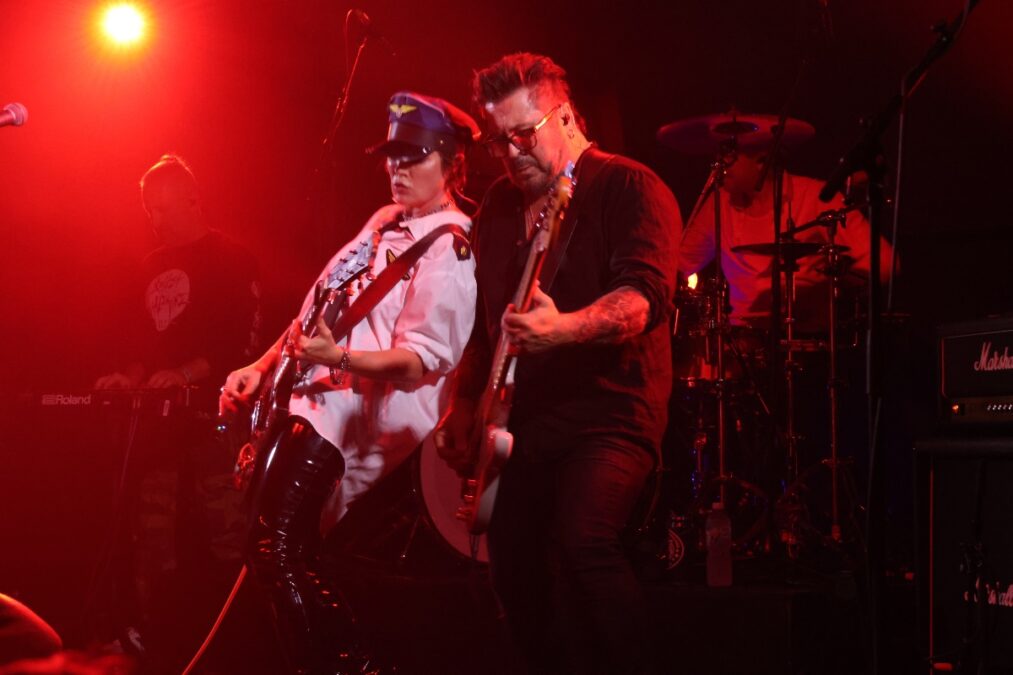 REVIEW BY ALI WILLIAMS Opening night is where a tour discovers whether months of planning have produced a finely tuned live show or merely several adults standing beneath expensive lights, hoping everybody remembers the same arrangements. The Superjesus chose Brisbane’s The Triffid to open their national Jet Age 25th Anniversary Tour, performing the album in […]


 If you love this music:


