Chris Clark 2026 Taking the bull by the horns but not forgetting to pay the bills and count the cost, new master of Americana removes his Zorro mask. Since most of the outlaws have passed to the greater pastures in … Continue reading →
The London-via-Belfast electronic duo Bicep released their most recent album Isles back in 2021, then spent a few years releasing music as part of their CHROMA series. Today, they share three new tracks that work together as a tribute to club culture. The songs are all warm and dreamy. “Viper” is a collaboration with fellow producer Clark, two of the three have guest vocals — SOARR on “Air” and Saskia on “Viper.” In a press release, the duo says:
Following the announcement of their tenth studio album and first self-titled release earlier this week, the new chapter of DragonForce continues with 22 dates that have just been revealed as part of the band’s headline Europe Tour 2027. Kicking off April 9th in Paris, the month-long run will bring the world’s fastest band across the… Continue Reading →
Neal Morse & The Resonance continue the journey with ‘River of Light’
Launch new single ‘Walk On Water’
Following the acclaimed success of their 2024 debut No Hill For A Climber, Neal Morse & The Resonance return with their highly anticipated second studio album, River of Light, a powerful and deeply personal progressive rock journey, set for release 27th November 2026 (InsideOutMusic)..
To mark the announcement, the band are launching the video for the first single ‘Walk On Water’, and you can watch it now here: https://youtu.be/2l04dJ8aCds
When Neal Morse first announced Neal Morse & The Resonance in 2024, fans and critics were surprised to see the celebrated prog rock visionary collaborating with a group of exceptionally talented yet relatively unknown musicians. The resulting album, No Hill For A Climber, was met with overwhelming praise, showcasing a fresh creative chemistry that resonated strongly with audiences worldwide.
Now, just two years later, the band continues that journey with River of Light, an album that expands upon the musical and spiritual foundations established by its predecessor.
Reflecting on the project, Morse explains:
“Following the success of No Hill For A Climber and some really great live shows in the summer of 2025, we knew that we wanted to make more music together. We started kicking around ideas in October 2025 and ended up spending much more time on this record. At one point it looked like it might become a double album because we had so many ideas. Eventually, we trimmed it down to a single album, and I think it works great.”
At its core, River of Light is a concept album centered on a spiritual journey, a theme familiar to Morse’s longtime fans. This time, however, the inspiration comes from the often-overlooked biblical figure Terah, the father of Abraham.
“Terah signifies someone who begins a journey with God but gets tired and allows sadness and resignation to keep them from going all the way,” says Morse. “However, his son completes the journey.”
Musically, River of Light represents a true collaborative effort. While Morse remains the band’s creative anchor, the album highlights the significant contributions of guitarist Andre Madatian and vocalist Jonny Bisaha, whose influences bring a fresh energy and perspective to the material.
“On this album, you can really hear what these guys have brought to the table,” Morse says. “Partly because of their ages, they’re influenced by bands like Rush and 90s rock, which I think is really cool. We had so many ideas that simply fitting everything together and creating the right flow became a challenge in itself.”
River of Light will be available as a Limited 2CD Digipak (featuring a second disc of instrumentals), Standard CD Jewelcase & Digital Album. Pre-order now here: https://nealmorse.lnk.to/RiverofLight-Album
Last month, Danish producer Trentemøller announced his new self-titled album with the lead single “Terrified,” featuring Mew’s Jonas Bjerre. Today, we get another glimpse at the forthcoming album via the single “Swerve,” which features Hong Kong-born, Vienna-based singer Sakura.
British blues-rock artist Joanne Shaw Taylor returns today with “You And Me (Rachel’s Song),” the latest single from her forthcoming studio album The Trouble With Love, due Friday October 23rd via Journeyman Records. Released alongside an official lyric video, the song is a deeply personal tribute to Joanne’s best friend Rachel and the kind of friendship that endures through distance, change, and the passing of time.
“A song for my best friend Rachel,” Joanne shares.
Built around a warm, gently propulsive groove and an inviting melodic hook, “You And Me (Rachel’s Song)” finds Joanne looking back on the ordinary moments that only reveal their importance with time. “It’s the big moments that always feel small / Until you look back / Then they’re the ones you wish you could stall,” she sings, capturing the way friendships are often defined by memories that seemed insignificant while they were happening.
That sense of history runs throughout the song as Joanne imagines returning to a familiar rooftop, raising a glass, and revisiting “the ghosts of who we were back then.” Rather than dwelling in nostalgia, the song looks forward with the same affection it gives the past, anchored by the reassuring refrain, “You and me, we’ll always be okay / I’m sure we’ll find a way.” The closing invitation to “meet me at the Met in five years” gives the song an intimate final promise: wherever life goes next, some relationships remain a constant.
“You And Me (Rachel’s Song)” offers another dimension of The Trouble With Love, Joanne’s highly anticipated new studio album produced by longtime collaborator Kevin Shirley. Across the record, Joanne dives headfirst into the beautiful chaos of the human heart, exploring love in its many forms through a blend of blues, rock, soul, Americana, and pop. While much of the album examines romance, heartbreak, longing, and difficult relationships, “You And Me” widens that lens to celebrate the quieter, steadier love found in lasting friendship.
The new single follows a steady run of releases that have revealed the album’s emotional breadth. “The Trouble With Love,” featuring Joe Bonamassa, captured the intoxicating push and pull of romance, while “What Good Is My Love?” featuring Orianthi confronted the pain of love that isn’t returned. “Hell Or High Water” delivered a defiant message of resilience, while “This Is Who I Am” explored acceptance and self-worth. “Tired Of Being Right” examined the difficult clarity that comes with leaving a relationship behind, and “The Girl That You Loved Before” looked back on love through memory, identity, and the ways people change over time.
Together, those songs reveal an album that approaches love from every angle: the kind that excites us, hurts us, changes us, steadies us, and stays with us. Produced by Shirley, The Trouble With Love continues the artistic evolution that has defined Joanne’s recent work, pairing some of her most personal songwriting with the expressive guitar playing and unmistakable voice that have made her one of contemporary blues-rock’s most acclaimed artists.
The release comes as Joanne prepares for the October 23rd arrival of The Trouble With Love and another extensive run of live dates. Following a busy summer of U.S. touring, Joanne will launch her Fall 2026 headline tour on October 28th in Albuquerque, with dates across the Southwest, Mountain West, Pacific Northwest, and California. Select shows will feature Bywater Call, followed by a run with Robert Jon & The Wreck. Known for her commanding stage presence, fiery guitar work, and emotionally immersive performances, Joanne continues to blend new material with fan favorites from across her acclaimed catalogue.
For more info and to purchase tickets, visit this location.
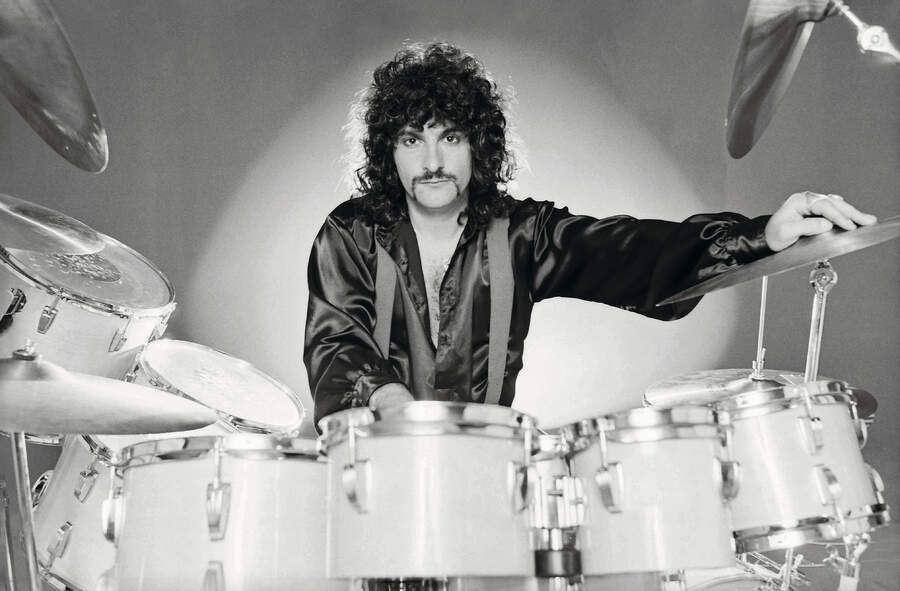
Carmine Appice was there at the beginning of hard rock. “I saw the whole thing grow,” says the man whose granite-heavy drumming in proto-metal pioneers Vanilla Fudge helped define the sound of an entire genre, influencing everyone from John Bonham down. “Now all the drummers from back then are gone, but I’m still here.”
The once jet-black hair may be an elegant, swept-back silver-grey, and the heroic bullhorn moustache he once sported is a little more dapper these days, but the 79-year-old New Yorker is as garrulous as ever. He’s talking to Classic Rock in the Big Apple, where he’s playing a show later with the current incarnation of Vanilla Fudge.
He juggles that band with the resurrected version of his 70s blues-rock trio Cactus, whose new album, Temple Of The Blues II, features an all-star cast of musicians including Dee Snider, Ted Nugent, Pat Travers, Ron ‘Bumblefoot’ Thal and many others. “You gotta keep busy,” Appice says, not unreasonably.
Vanilla Fudge and Cactus are just two of the names on a resumé that includes 70s supergroup BBA (alongside Jeff Beck and Tim Bogert), Rod Stewart’s band (Appice co-wrote Rod’s monster disco-rock hit Do Ya Think I’m Sexy?), Ozzy Osbourne (briefly), 80s hard rockers King Kobra and Blue Murder, and a head-spinning list of collaborations.
There’s just one thing to clear up: how to pronounce his surname. “It’s ‘A-piece’,” he says. “I was Carmine ‘A-piece’ for years, everything was good. Then my brother Vinny [ex-Black Sabbath/Dio drummer] came out, and he was Vinny ‘A-pice-y’. So I’ve spent the last forty years explaining it to people. Thanks, Vinny.”
What was the scene like in New York when you were starting out in the sixties?
I played a lot of clubs. I played opposite Jimi Hendrix when he was Jimmy James. He’d say: “I wanna make it.” Me, I didn’t really want to make it. I just wanted to make a living. My drum teacher made a good living. He had a house, he had a drum room, he had a Cadillac. That was a good life in those days in Brooklyn.
How good was Hendrix back then?
He was great. When I saw pictures of this new guy Jimi Hendrix, with the big hair, playing with his teeth, I said: “That’s Jimmy James. Finally, he’s got his wish.”
How did you come to be in Vanilla Fudge?
I was playing in a club one time and these two guys walk in. It was [Vanilla Fudge keyboard player/vocalist] Mark Stein and [bassist] Tim Bogert. They said: “We’re doing this new kind of music and we’re looking for a drummer who can sing, who’s got a right foot, who’s technically good.” They said: “We got this guy who’ll pay us a hundred dollars a week just to record and make it.” I said: “I dunno. I’m making two-fifty to three hundred a weekend.” But I went to hear them and they were great. So I started working with them, and that was a life-changing decision.
Where did you get the idea to play drums so hard and loud?
No PAs. That simple. I beat the hell out of the drums so I could be heard. The bass drum was so small, so I figured if I got a bigger bass drum it would be louder, and it was. So I made everything bigger, which was much louder. But you really had to hit them hard to get the sound out. When I met Bonzo [John Bonham], he was on a little Ringo Starr kit. When he saw my drum set he went fuckin’ crazy. He said: “I want a set like that.” I called up [drum company] Ludwig and said: “There’s this new band, Led Zeppelin, with a great drummer, John Bonham, and he wants a kit just like mine.”
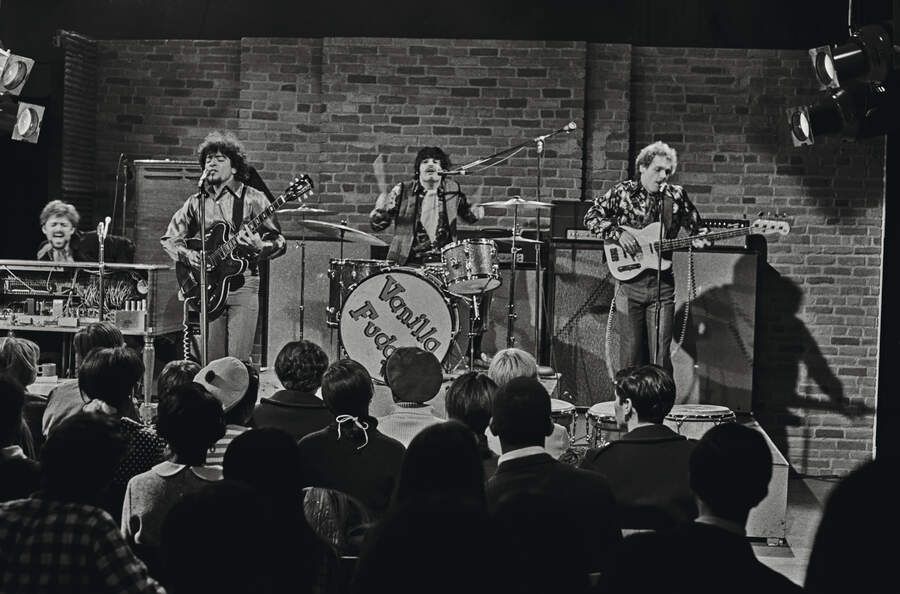
Vanilla Fudge at The Bitter End nightclub in NYC, November 1967: (l-r) Mark Stein, Vince Martell, Carmine Appice, Tim Bogert (Image credit: Don Paulsen/Michael Ochs Archives/Getty Images)
Which other bands were Vanilla Fudge hanging out with back then?
There was The Vagrants, which was Leslie West’s band. Billy Joel was in The Hassles. But our manager owned a club. He was a Mafia kind of guy, so we were hanging out with mob-types.
Can you remember any of the mob guys?
Yeah, Henry Hill was one of them, the guy from the Goodfellas movie. He used to come to my house: “Hey, Carmine, I got this stuff, it just fell off a truck.” Fur coats, little colour TVs, jewellery. I bought two Revox machines [tape recorders] off him. On the market they were seven hundred dollars. I bought two of them for two hundred bucks.
Led Zeppelin’s first ever US gig was opening for Vanilla Fudge in Denver, Colorado. What did you make of them?
We knew Jimmy Page from The Yardbirds, and we had the same attorney. They sent us an acetate of the first album and we listened to it and went: “Whoah…” I heard Bonzo on Good Times, Bad Times and went: “This guy’s really good.” So we were ready for them. We became great friends. I do remember walking down the street and telling Robert Plant he should move around more.
What was John Bonham really like?
I liked John. He was a nice guy until he started drinking. The drinking made him an animal. I saw him drag a guy out of a room we were recording in. The guy was putting down Simon Kirke of Bad Company, and Bonzo said to me: “Tell your friend to be quiet or I’m gonna pull him out by his hair.” The guy just kept going, so Bonzo came over and grabbed him by the hair and dragged him out of the room and slammed the door.
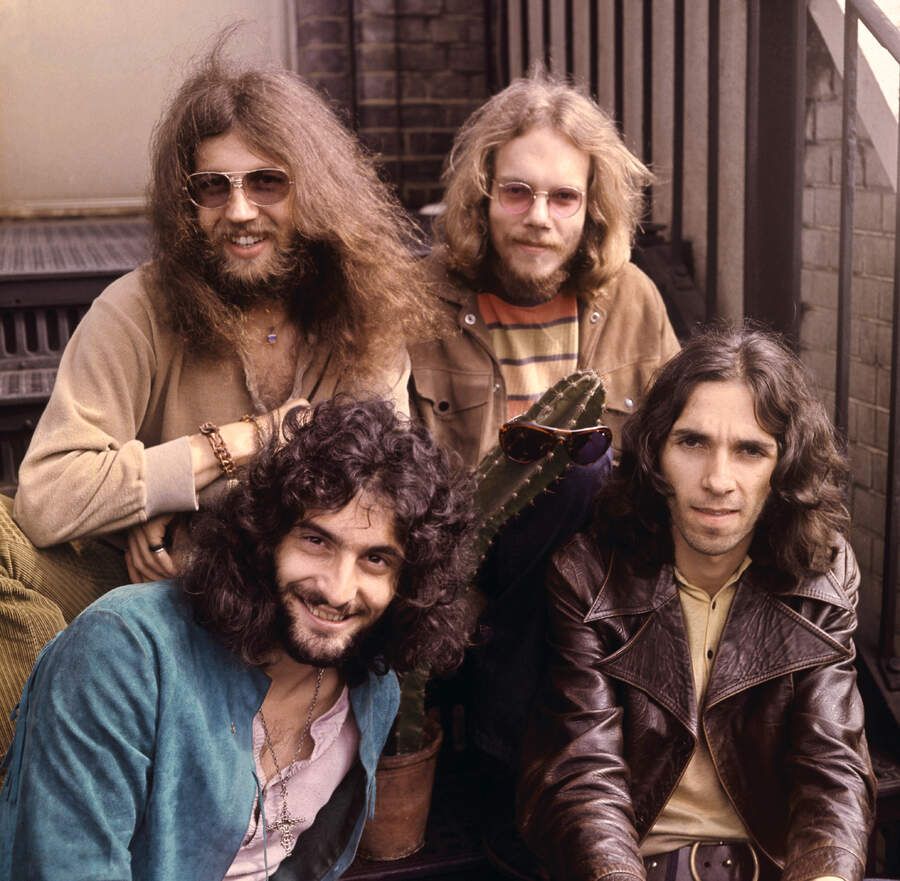
Cactus in 1970: (clockwise from top left) Rusty Day, Tim Bogert, Jim McCarty, Carmine Appice (Image credit: TPLP/Getty Images)
Is there any truth in the rumour that you were in line to replace him in Led Zeppelin when he died?
I heard that rumour. But I never got a call. Matter of fact I was with Rod [Stewart] at the time. He said: “Are you joining Led Zeppelin?” I said: “That’s what the rumours are, I haven’t heard nothing.” He said: “There’s rumours I’m going to retire. Keep the rumours going, we’ll sell more tickets that way.”
Vanilla Fudge have never got the proper credit for being one of the first heavy rock bands. True?
Without a doubt. We influenced so many bands. We’ve never got in the Rock And Roll Hall Of Fame. Come on! I thought it was about influence. But now it’s just about bullshit. They should change their name to the Music Hall Of Fame, cos it’s not rock’n’roll any more.
Why did Vanilla Fudge split, in 1970?
We’d had some disagreements, the usual stuff. Then we did a gig with Ten Years After, the Jeff Beck Group and the Edwin Hawkins Singers. Zeppelin went up and jammed with Beck – Bonzo played the drums, and he ended up taking off all his clothes. My mother and father were there. They said: “Why would he do that?”
Anyway, that night, Bonzo said: “Jeff Beck wants to play with you and Tim.” Cactus was originally gonna be Jeff Beck, Tim Bogert, Carmine Appice and Rod Stewart, but Rod Stewart decided he didn’t want to work with Jeff any more.
Jeff was coming over to meet our managers and lawyers and put a deal together, and he got in a car wreck. It took him eighteen months to recover. We said: “We broke up Vanilla Fudge to do this; now we gotta wait eighteen months. Let’s just find some other guys.” We got [guitarist] Jim McCarty, who was a motherfucker of a player, and he brought in [singer] Rusty Day.
How was Cactus different from Vanilla Fudge?
Vanilla Fudge was like a symphonic rock band, real serious dynamics. Cactus was a party, groove, druggy band. Rusty Day was a fuckin’ druggy, crazy motherfucker. He carried knives, he carried guns, he dealt drugs, he did cocaine all the time. But his vocals and his lyrics and his songs were fantastic: Restrictions, Token Chokin’…
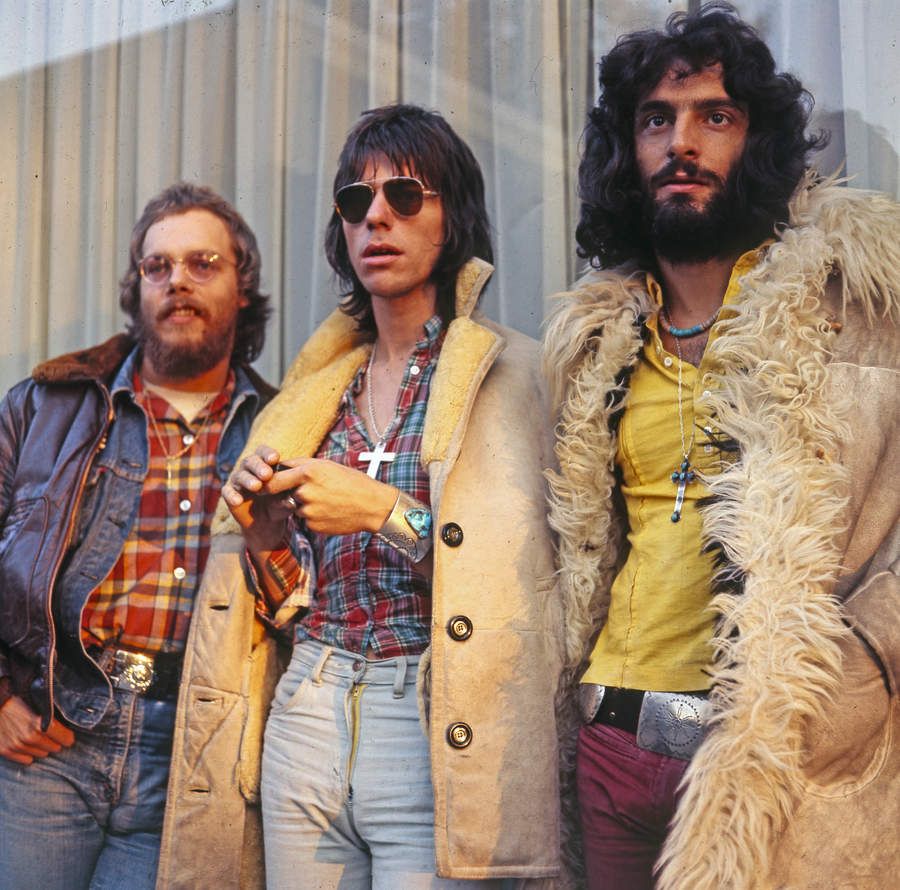
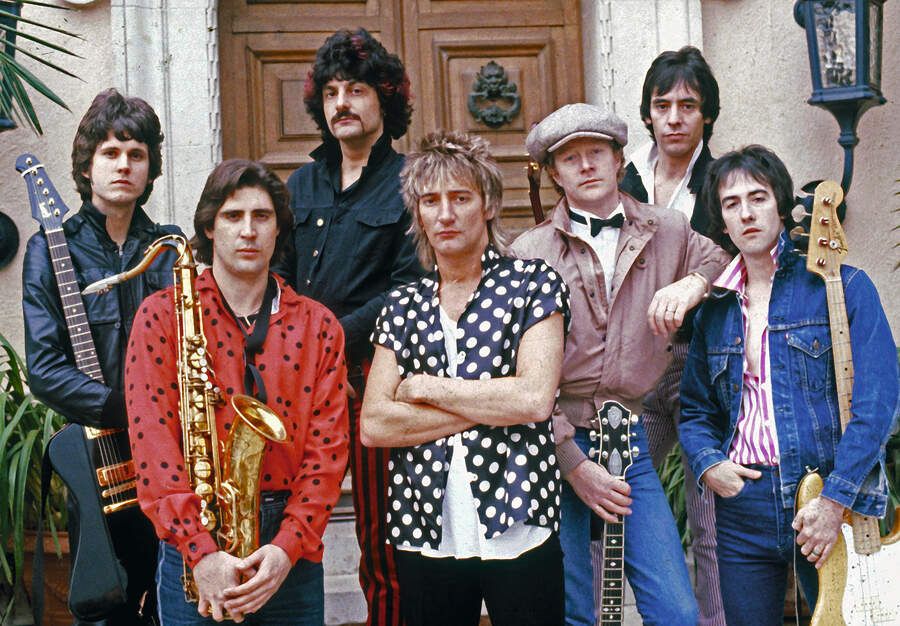
BBA in ‘73: (l-r) Tim Bogert, Jeff Beck, Carmine Appice (Image credit: Pictorial Press Ltd / Alamy Stock Photo)
You eventually ended up playing with Jeff Beck in BBA. What was he like to work with?
About 1972 we got a call: “Jeff still wants to work with you and Tim.” So we gave Cactus to [keyboard player] Duane Hitchings, and me and Tim went with Jeff Beck. Most of the time it was fun, and he was an amazing guitar player, but there were some weird things. I remember BBA were on tour one time, everything’s going great, selling out everywhere, then one day we wake up and the tour manager goes: “Jeff’s gone home. He had a fight with his girlfriend.” That left a bad taste in our mouth. But we carried on.
How come BBA made only one studio album?
We tried to do a second album, but Jeff didn’t like it. I listened to some of the songs, I wouldn’t have liked it either. We continued to do gigs, but it ended when we played the Rainbow in London. We were playing like motherfuckers. But the second show, Tim was sick. Jeff said something derogatory to him, and Tim punched him in the face. That was the end of it. But if I’d never played with Jeff I would have never ended up with Rod Stewart. Playing with Rod kicked my career way up.
How much fun was it being in Rod’s band?
That was the best. I’d become really good friends with Rod when Cactus went on the road with the Faces. That’s when they were crazy – they had a bar on stage. After Cactus, I had a band called KGB with [guitarist] Mike Bloomfield, which didn’t happen. And I was asked to join Rainbow, but I couldn’t do it cos they were signed to someone else.
Then I hear that Rod’s looking for a drummer. I get a message from Rod via his tour manager, saying: “Tell Carmine to come up to the house, see if he likes the band.” Rod wasn’t there, but I knew those guys, [guitarist] Jim Cregan, [bassist] Phil Chen. Rod came back a couple of days later and says: “You got the job if you want it. Just one thing: how do you say your fuckin’ name? You’re like five different people.”
What do you remember about writing Do Ya Think I’m Sexy?, which was a big hit for Rod?
Rod would say: “I want a song like Miss You by the Stones.” I wrote it on a keyboard with a drum machine, I went to my buddy Duane Hitchings’ house, I played him the chords, we put a groove together, he wrote a bridge. So when we presented it to Rod it sounded like a finished song. He said: “Great, let’s do it.”
We did it a few different ways – great big drums, big guitars, it sounded freakin’ great. Then [producer] Tom Dowd came in and put so much other junk on it – orchestra, percussion, Linda Lewis singing the high line. We were like: “Is that gonna work?” Then it went to Number One in fifteen countries. I guess he knew what he was doing. The song made millions of dollars, I got a good lifestyle, even though I had to give half of Sexy to my freakin’ ex-wife that didn’t deserve anything.
Rod Stewart and band in ‘85: (l-r) Danny Johnson, Jim Zavala, Carmine Appice, Rod Stewart, Jim Cregan, Robin Le Measurer, Jay Davis (Image credit: Eddie Sanderson/Getty Images)
What was Rod like back then?
He was the best rock singer and performer. His voice, his look… and he was a badass onstage. He’d get the whole audience singing. I’ve never seen anyone do that. He’d run up on the stage and jump up on the piano. I mean, come on!
And then he fired you in 1982. Why?
I don’t know, and neither does he. When I did my autobiography, he said in the intro: “I fired Carmine. Fuck knows why.” There you go. Too much drinking, too much drugging, somebody didn’t like the fact that I was the second-most popular person in the band. I don’t remember how we made up. I went to one of his weddings. By eighty-three or eighty-four we were friends again.
You joined Ozzy Osbourne’s band for the Bark At The Moon tour. Did you get on with Ozzy?
Yeah, I did. She [Sharon Osbourne] fired me. I was pissed off. I really wanted to stay in there and do what I do, which is give him a great drum sound, help write songs. After she fired me, she said my name was too big for that band; I needed to start my own band.
So that’s what I did [with King Kobra]. I bought a motorhome, a truck and a van to tour in. Funny enough, we were painting the motorhome white in this rehearsal place where Ozzy was rehearsing for drummers. Ozzy came up and said: “I know you and my missus have a problem, but I know we can be friends.” I’m up on this little scaffold, taping up the windows so they wouldn’t get sprayed on. He gets up there, and we’re both taping up these windows. He was a nice guy.
You’re still recording and playing today. What keeps you doing it?
It’s boring just sitting around doing nothing. I like doing stuff. I like creating music. I just got asked to do the drums for Captain Kirk’s spoken-word album, William Shatner. I’m gonna do Crazy Train. I know how to do that cos I played with Ozzy for nine months.
Carmine Appice in 1978 (Image credit: Neil Zlozower/Atlas Icons)
Rank these rock drummers in order of greatness: John Bonham, Keith Moon, Ginger Baker, Carmine Appice.
Oh god, that’s hard. We’re all so different. Bonzo was great cos the band was great – they kept him up there. If he was in another band, I don’t know if he’d have stayed up there. Ginger Baker was there at the beginning of rock with that double bass drum. Keith Moon was just so unusual. I took what I did and made it really powerful. And I’d add Dino Danelli from The Rascals. He started everything in rock drumming – the playing, the showmanship, the twirling. He was a monster player and never got credit.
If you were starting out now, what advice would you give the younger version of yourself?
Get a regular job. I really don’t know what it takes to make it today. I’m really lucky, I’m still here, I’m still doing it in my eightieth year. I got muscle pains, some of my speed has gone, but I still do it.
The new album from Cactus, Temple Of Blues II, is out now via Cleopatra.
Following the acclaimed success of their 2024 debut No Hill For A Climber, Neal Morse & The Resonance return with their highly anticipated second studio album, River of Light, a powerful and deeply personal progressive rock journey, set for release on November 27th, 2026. To mark the announcement, the band are launching the video for the first single “Walk On Water”.
When Neal Morse first announced Neal Morse & The Resonance in 2024, fans and critics were surprised to see the celebrated prog rock visionary collaborating with a group of exceptionally talented yet relatively unknown musicians. The resulting album, No Hill For A Climber, was met with overwhelming praise, showcasing a fresh creative chemistry that resonated strongly with audiences worldwide.
Now, just two years later, the band continues that journey with River of Light, an album that expands upon the musical and spiritual foundations established by its predecessor.
Reflecting on the project, Morse explains: “Following the success of No Hill For A Climber and some really great live shows in the summer of 2025, we knew that we wanted to make more music together. We started kicking around ideas in October 2025 and ended up spending much more time on this record. At one point it looked like it might become a double album because we had so many ideas. Eventually, we trimmed it down to a single album, and I think it works great.”
At its core, River of Light is a concept album centered on a spiritual journey, a theme familiar to Morse’s longtime fans. This time, however, the inspiration comes from the often-overlooked biblical figure Terah, the father of Abraham.
“Terah signifies someone who begins a journey with God but gets tired and allows sadness and resignation to keep them from going all the way,” says Morse. “However, his son completes the journey.”
Musically, River of Light represents a true collaborative effort. While Morse remains the band’s creative anchor, the album highlights the significant contributions of guitarist Andre Madatian and vocalist Jonny Bisaha, whose influences bring a fresh energy and perspective to the material.
“On this album, you can really hear what these guys have brought to the table,” Morse says. “Partly because of their ages, they’re influenced by bands like Rush and 90s rock, which I think is really cool. We had so many ideas that simply fitting everything together and creating the right flow became a challenge in itself.”
River of Light will be available as a Limited 2CD Digipak (featuring a second disc of instrumentals), Standard CD Jewelcase & Digital Album, and is available to pre-order now here.