“Demonic Depression” has reached No. 1 on the Billboard Mainstream Rock Chart, giving Volbeat their 13th chart-topper and extending their own record for the most No. 1s on that chart by any act originating outside of North America. The Danish band is now tied sixth overall alongside Van Halen, Godsmack, Disturbed, Linkin Park, and Papa Roach.
“Demonic Depression” is the third No. 1 from Volbeat‘s ninth album, God Of Angels Trust (June 2025), following “By A Monster’s Hand” and “Time Will Heal.” The band first set the non-North American record in March 2020 with “Die To Live” (featuring Neil Fallon of Clutch), which was their eighth No. 1 at the time.
“The Hangman’s Body Count” (Outlaw Gentlemen & Shady Ladies)
“Lola Montez” (Outlaw Gentlemen & Shady Ladies)
“The Devil’s Bleeding Crown” (Seal The Deal & Let’s Boogie)
“Black Rose (feat. Danko Jones)” (Seal The Deal & Let’s Boogie)
“Last Day Under The Sun” (Rewind, Replay, Rebound)
“Die To Live (feat. Neil Fallon)” (Rewind, Replay, Rebound)
“Wait A Minute My Girl” (Servant of the Mind)
“Shotgun Blues” (Servant of the Mind)
“By A Monster’s Hand” (God Of Angels Trust)
“Time Will Heal” (God Of Angels Trust)
Volbeat have accumulated more than 145 gold and platinum certifications worldwide and hold a Grammy nomination for “Best Metal Performance” for “Room 24” (featuring King Diamond). The band — Michael Poulsen (vocals/guitar), Jon Larsen (drums), Kaspar Boye Larsen (bass), and Flemming C Lund (lead guitar) — will soon kick off the fourth leg of the “Greatest Of All Tours Worldwide” across Europe.
Juniper Drive’s Pick U Up is a warm, easygoing indie pop gem that leans into nostalgia without feeling stuck in it. Built on breezy guitars, soft synths, and laid-back grooves, the track captures the charm of everyday moments—small gestures, quiet drives, and unspoken connection. The chorus lands effortlessly, offering a hook that feels both immediate and comforting. There’s a bedroom-pop intimacy throughout, but it’s polished just enough to shine. Fans of Clairo-style mellow pop will feel right at home.
A simple, feel-good track that doesn’t try too hard—and doesn’t need to.
Kerry King is releasing a deluxe edition of his debut solo album From Hell I Rise on June 19 via Reigning Phoenix Music, expanded with five previously unheard demo tracks featuring his own scratch lead vocals, new cover artwork by James Bousema, and additional photos.
In an August 2024 interview with The SDR Show, King described the demos as the first time those recordings had ever left the studio. Asked what his singing sounds like, he said: “I just sound like an angry white punk kid… I think it sounds kind of adolescent[-like].”
He added that most takes were first attempts: “Because I know how it goes — unless I stumble on enunciation or something. So, yeah, I knew how it went. I just put it on there so we had something existing. I knew I didn’t wanna sing because I can’t sing and play that much. The easy parts, yeah, but not like Zakk [Wylde, Black Label Society] or James [Hetfield, Metallica] does. They’re crazy vocalists that play crazy riffs underneath what they’re singing. I don’t know how they do it.”
On whether the demos might ever become a standalone release, King said: “Um, I’m not against it. If you ask me, like, what if Glenn Tipton sang all the Priest songs? Would you wanna hear it? I’m, like, that’s a weird scenario, ’cause it’s fucking Rob Halford. But I’d be curious. It’s intriguing.” He added: “We’ll see. And I’ll sing the next one, too. So it’s not like it’s going away.”
The earbook edition is limited to 666 copies worldwide, exclusive to Reigning Phoenix Music, and includes two LPs, a live CD, and a live Blu-ray of the band’s debut show at Reggies in Chicago. Pre-order it here.
Kerry King‘s band features Mark Osegueda (vocals; Death Angel), Phil Demmel (guitar; Machine Head, Vio-lence), Kyle Sanders (bass; Hellyeah), and Paul Bostaph (drums; Slayer, Testament, Exodus). From Hell I Rise was originally released in May 2024, produced by Josh Wilbur at Henson Recording Studios in Los Angeles.
ALT HEADLINE: GENE SIMMONS: ACE FREHLEY Told Us ‘If I Do Another Tour, I’m Gonna Kill Myself’ — And We Still Didn’t Step In
ALT HEADLINE: GENE SIMMONS On ACE FREHLEY: ‘When He’s Straight — Lovable, Everything’s Great. When The Stuff Started To Take Hold, It Was Jekyll And Hyde’
Gene Simmons has given one of his most candid interviews yet about Ace Frehley — covering the guitarist’s substance abuse, his repeated exits from KISS, his undeniable influence on generations of guitar players, and the intervention that never happened. The KISS co-founder spoke at length on the Inside Of You With Michael Rosenbaum podcast.
Asked whether he had any meaningful conversations with Frehley before Ace died last October at 74, Simmons responded (transcribed by Blabbermouth): “It’s been up and down for 50 years with Ace. And the fans often would hate me for telling the truth. When the kids are at home and there’s mom and dad and all of a sudden dad gets thrown out of the house, the kids don’t understand — they love mom and dad — why mom kicked dad out of the house. And she tries to explain to them: ‘He was a drunk, he was a loser, he was late, didn’t show up on time, didn’t do what he was supposed to do, was barely around the kids, but he’s your father.’ And the fans are like kids. They don’t know.”
Simmons continued: “If you would’ve met Ace at the beginning [of KISS] — God bless him — you would’ve fallen in love with the idea, who he is and all that. And then [as Niccolò Machiavelli said], [when you] have power, [you must sometimes] abuse it. It affects all of us in different ways. Me too. But Ace turned to beverages and chemicals. Early on, he wouldn’t show up… I mean, he wouldn’t show up to do his guitar parts on even Destroyer early on. And the fans don’t like to hear this because he’s so talented and everybody, all the new guitar players, were influenced by him and all that. Yeah, but when you’re together in a band, you’re together more time than your family members or your wife or kids. So he’d be late and all this stuff. And Peter [Criss, original KISS drummer], we love him, and God bless, he’s still around, but really from the early days, as soon as the money and the fame came in, it was like the dark cloud came over. And they were both in and out of the band three separate times. And the fans just couldn’t understand it.”
Among the examples Simmons gave of Frehley‘s unreliability was a high-profile no-show at Eurovision: “We were doing the Eurovision contest, and we were the headliners. People in America don’t know what that is, but 600 million people at that time, now a billion people, tune in to the Eurovision where all the countries in the world basically send their representatives and it’s music based. It’s one of the few times such a large audience in the early days would tune in. Ace didn’t show up. We had to do it as a trio. It just went on and on and on… And had we not been as popular, we would’ve asked Ace to leave. But strangely, the first time Ace left, he turned to us, and it’s sad, and said — this is a quote; he said it to me two times, twice — ‘I’m leaving the band. I’m gonna have a solo career.’ And we tried to talk to him — I know I did — in front of the manager and everybody else: ‘Stay in the band. Have your solo career. Have your cake and eat it too. We don’t want anything from you. If you’re not happy, do other stuff, but don’t break up the band. That’s lunacy.’ And he just never made smart decisions. So, he said on the way out, ‘You just watch. I’m gonna sell 10 million copies of my solo record.’ That’s a quote. And we said, ‘No, don’t do that. Just stay in the band.’ And he said, more than once, ‘If I don’t leave the band and if I do another tour, I’m gonna kill myself.’ So whatever was going on, it breaks your heart.”
Despite the frustrations, Simmons was clear about Frehley‘s status as a guitarist’s guitarist: “You look at his body of work, and guitar players from Eddie Van Halen to — who’s the kid from METALLICA? God, I just forgot it — they point to Ace, or Tom Morello and everything, ‘I cut my teeth on guitar by listening to Ace.’ Of course. And he was so proud and so happy to hear from the White House — not from the president — that KISS had won the Kennedy Center awards thing [last year]. And he so much looked forward to [being honored last December]. As a kind of a street kid joins a band and goes to the highest level of American — I don’t know — awards. And he just didn’t make it.”
When host Michael Rosenbaum asked what Simmons would say to Frehley now if given the chance, the answer was unsparing: “I should have, and could have, but I should have, a long time [ago], when you see the disease starting to get ahold of him, I should have, decades ago, took, took him aside — it’s called an intervention — and forced him to understand he’s not just hurting himself by his lifestyle choices, but his family, his child and the fans. It was a stupid and shameful decision on all our parts — I know mine too — is, ‘No, you don’t wanna get the fans upset. Let’s make believe he’s in the band and everything’s okay at home.’ And it it’s tough. It’s really tough.”
Simmons acknowledged the criticism he’d likely face: “Right now the fans who are gonna listen to this are gonna [say], ‘Prick Gene, he never says anything [positive].’ … But the kids at home don’t understand [what it was like when Ace was loaded on drugs and alcohol]. They never met and spent time with Ace. When he’s straight — lovable, everything’s great. Early on, and when the stuff started to take hold, it was Jekyll and Hyde. You just can’t make smart decisions when you’re drunk or high.”
After Rosenbaum observed how much Gene clearly cared about Ace, Simmons recalled driving out to the desert to write songs with him even during their roughest periods: “Look, over the years, whether it was up or down, he’d call and ask for my favor: ‘Can you come up and write some songs with me?’ At the height of me telling him, ‘You’re a moron. You’re making horrible life decisions’ and stuff. But he calls: ‘I’m doing a new record. You wanna write some [songs with me]?’ ‘Sure.’ I got in my car, drove out to the desert where he was, and we wrote two new songs.”
Asked whether those sessions were enjoyable, Simmons said: “Sure. Because Ace was focused. He cared and was committed to him, which is understandable. We all love our stuff. But when it came to being around other guys… And when it came to guitar, nobody touched him. But when it came to songwriting, unfortunately, there were other guys — Paul [Stanley, KISS guitarist/vocalist] and myself — that wrote most of the stuff [in KISS].”
Last December, Simmons issued a public apology after drawing criticism for suggesting Ace‘s death was a product of his “bad decisions.” He wrote on social media: “On reflection, I was wrong for using the words I used. I humbly apologize. My hand to God I didn’t intended to hurt Ace or his legacy but upon rereading my words, I see how it hurt everyone. Again, I apologize. I’ve always loved Ace. Always.”
Frehley died of blunt-trauma injuries to his head due to a fall, the Morris County Medical Examiner confirmed. A CT scan revealed multiple contusions, skull fractures, hemorrhages, and a subdural hematoma. The report also noted he had suffered a stroke. A separate toxicology report has not yet been released.
Born Paul Daniel Frehley, the guitarist passed away peacefully surrounded by family in Morristown, New Jersey, nearly two weeks after a second fall at his home led to a brain bleed and a period on life support. His family made the decision to remove him from the ventilator.
Frehley co-founded KISS with Simmons, Stanley, and Criss in New York City in 1973. He appeared on the band’s first nine studio albums and returned for the 1998 reunion record Psycho Circus before departing again in 2002. He was inducted into the Rock And Roll Hall Of Fame alongside the original KISS lineup in 2014. Following his final exit, guitarist Tommy Thayer took over the Spaceman role.
Metallica have announced ReLoad (Remastered), due June 26 via their own Blackened Recordings label. The album was remastered by Reuben Cohen at Lurssen Mastering with Greg Fidelman overseeing.
A limited-edition deluxe box set is available for pre-order now. The package includes the remastered album on 180g double vinyl, a “The Memory Remains” 7″, and Live At Ministry Of Sound ’97 on 140g triple vinyl. Beyond the records, the box contains 15 CDs — ranging from the remastered album to never-before-released riff collections, demos, rough mixes, B-sides, and live material — plus 4 DVDs covering behind-the-scenes footage, in-studio content, live performances, on-air appearances, the band’s pop-up at the CoreStates Complex Parking Lot in Philadelphia, and Seoul visits. Memorabilia includes 13 Rorschach Test cards, an 11×17 Gimme Fuel poster, a sticker, a Pushead print, a 10-pack of guitar/bass picks, lyric sheets, three laminated tour passes, and a 128-page book with never-before-seen photos.
Pre-orders receive instant-grat versions of “The Memory Remains” including the remastered original, an instrumental mix, and a live Brisbane recording. The video for “The Memory Remains (Live in Philadelphia)” is out now.
Alongside the release, Metallica are launching the #GetTheReLoadOut fan cover competition — the follow-up to last year’s #GetTheLoadOut campaign. This round adds a second category: performance and visual artists are invited to participate alongside musicians. A different album track will be highlighted weekly, with two Grand Prize Winners each taking home a Metallica-autographed deluxe box set.
Originally released November 18, 1997, ReLoad debuted at No. 1 on the Billboard 200 — the third consecutive Metallica album to do so — spent nearly 80 weeks on the chart, and topped the charts in six countries. The 1995–1997 sessions at The Plant in Sausalito, California that produced both Load and ReLoad saw James Hetfield, Lars Ulrich, Kirk Hammett, and Jason Newsted deliberately expanding the band’s sonic terrain. Notable moments on ReLoad include hurdy-gurdy and violin on “Low Man’s Lyric” and a guest vocal from Marianne Faithfull on “The Memory Remains.”
The Load/ReLoad era has remained the most debated chapter in Metallica‘s catalog. Ulrich addressed the criticism directly in a 2013 interview with Revolver: “Load and ReLoad are great records that are creatively on par with every other record we’ve made. Obviously, they’re bluesier records, and at that time, we were listening to a lot of Led Zeppelin, Deep Purple and AC/DC, and we had a different kind of foundation than records before or after. And I understand that there are people who couldn’t quite figure out what was going on with the haircuts and the rest of it, and that’s fine. But musically, if you strip all that other stuff away, if you just listen to the 27 songs — Load and ReLoad were intended as one double record — it’s a great collection of songs that is on par with everything else that we’ve done creatively.”
Hetfield has been more conflicted. In a 2017 interview with Clash, he said: “As far as doing something that doesn’t feel right, I’m sure there’s been a few times that it’s happened — the Load and ReLoad era, for me, was one of those; the way that was looking, I wasn’t 100 percent on with it, but I would say that that was a compromise. I said, ‘I’m going with Lars‘s and Kirk‘s vision on this. You guys are extremely passionate about this, so I’ll jump on board, because if the four of us are into it, it’s going to be better.’ So I did my best with it, and it didn’t pan out as good as I was hoping, but, again, there’s no regrets, because at the time it felt like the right thing to do.”
In a 2016 conversation with TeamRock, Hetfield speculated on what late bassist Cliff Burton might have made of the band’s aesthetic shifts in the ’90s: “Well, I certainly would have thought there would have been some resistance, for sure. I think the ‘Black Album’ was a great album and I appreciate the fact that we did have the balls to do that… I would certainly think that the Load and ReLoad [era], I would have had an ally that was very against it all — the reinvention or the U2 version of Metallica.”
Europe has announced their twelfth studio album, Come This Madness, due September 25 via Silver Lining Music / Hell & Back Recordings. The lead single “One On One” is out now alongside a music video.
Joey Tempest spoke about the new track: “‘One On One’ is definitely one of my favorite tracks from the album. The power and feel is fresh, but some of the melodies bring me back to where it all began. Lyrically, it’s perhaps not filled with as much escapism as early EUROPE. These lyrics automatically ended up being more of a reflection of the times we live in today. Ever since ‘One On One’ was just a demo, we’ve stayed with it… never gave up on it, and elevated it to a place where it belongs: a high-flying, classic hard rock track.”
The video, directed by Patric Ullaeus, features actor Peter Stormare (Fargo, The Big Lebowski, Minority Report). On casting him, Tempest said, “We always knew Peter loved rock music, and when his name came up it just felt right. We wanted to approach this from a different angle — something more stripped back and unexpected.”
Come This Madness was recorded at RMV Studio in Stockholm — founded by Benny Andersson and Ludvig Andersson — and produced by Tom Dalgety (Ghost, Rammstein, Pixies, The Cult, Opeth). Mike Fraser (AC/DC, Van Halen, Metallica) handled the mix. Tobias Forge of Ghost and Mikael Åkerfeldt of Opeth both appear as guests. The album artwork was created by Storm Studios.
Tempest on working with Dalgety: “It was a true pleasure. He’s creative, musical, and incredibly intuitive — he really became a sixth member of the band during the writing and recording of this album. We even invited him to co-write on some of the songs.”
To support the album, Europe will launch “The Final Countdown 40th Anniversary Tour” on 09/30 in Glasgow. The band’s current lineup is Joey Tempest (vocals), John Norum (guitars), John Levén (bass), Mic Michaeli (keyboards), and Ian Haugland (drums). The trek promises to unite the legacy that defined them with the renewed energy, driving them forward today. For a full list of dates and ticket information, please visitthis location.
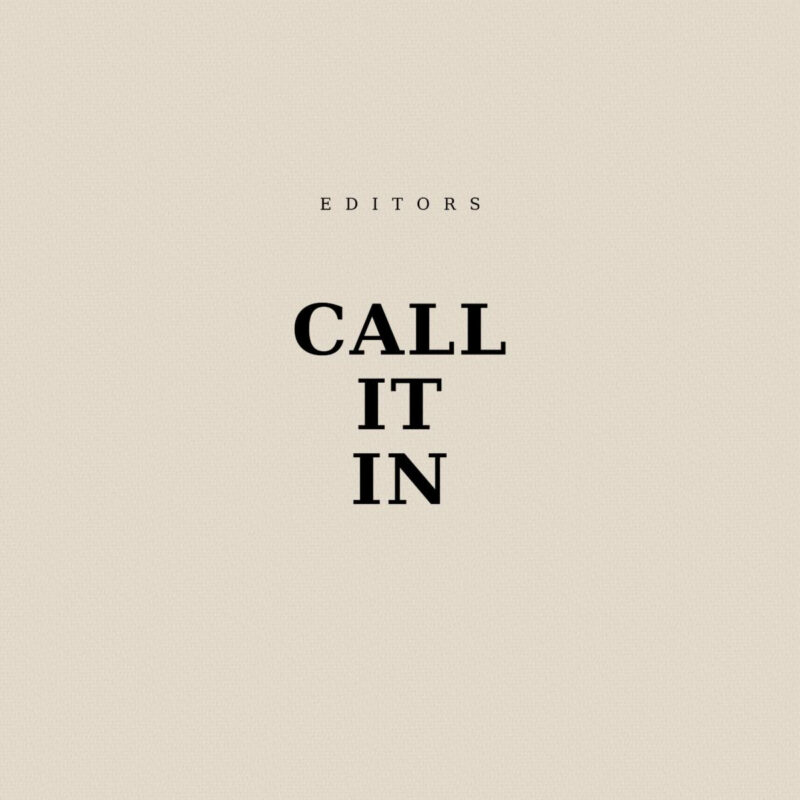
Editors return with their first new music in four years, following the electronic experimentation of 2022’s EBM, and with Call It In, they come back to a guitar-driven sound that carries the weight of a locked room at midnight: ritual dread, real-world need, and the charged intimacy of a band lowering the lights until every private fear begins speaking out loud. At the center of it all, Tom Smith sings as if faith, fear, and dependency have been poured into the same glass; and as the song gathers force, that bitter sacrament becomes a plea for comfort in the noise of modern life, where surrender and survival start to sound dangerously alike.
“We spent a lot of summer ‘25 holed up in rural Gloucestershire, working on songs with all of us in a room, in a more traditional band set up,” says Smith. “‘Call It In’ is one of the newest songs we worked on, it’s a song about asking for help, really, in the presence of an existential dread, finding solace and comfort in someone close, escaping the deafening noise of modern life.”
That dread sits right in the marrow. The lyrics circle power, abasement, devotion, imitation, fraudulence, and the strange spiritual tinnitus of being alive now, when every private panic arrives with a public address system. Smith sings like a man staring at someone who might save him or swallow him, and maybe salvation has always had teeth. The repeated pleas land with liturgical force, less chorus than compulsion, the kind of phrase you say until meaning burns off and only need remains.
Musically, Call It In has the muscle memory of a band that knows exactly how to build pressure without turning the room into rubble. Editors have spent two decades slipping between post-punk severity, synth-rock architecture, festival-sized gloom, and electronic menace; but after the body music experimentation of 2022’s EBM, this feels more exposed and guitar-driven, all tightened nerves and stripped-down rock intimacy: drums landing with human weight, guitars circling like bad weather outside the room, and bass giving the whole thing a low, insistent drag. It is not grandstanding; it is a performance tense enough to bruise and close enough to hear the floorboards creak.
Director Justin Lockey’s performance video fits the song’s blood temperature: moody, severe, alive with the charge of musicians playing shoulder to shoulder rather than posing at profundity.
Watch the video for Call It In below:
Since forming in Birmingham in 2002, Editors have become one of Britain’s great survivors, from The Back Room and its Mercury Prize nod through chart-topping turns withAn End Has A Start and In This Light And On This Evening. Call It In suggests the next chapter will not be polite housekeeping. It is a distress signal with a pulse, a prayer with bruised knuckles, and a welcome reminder that Editors still know how to make desperation sound enormous.
Long Long Road is the second collaboration between Ringo Starr and T Bone Burnett, following the former Beatle’s chart-topping country album Look Up, released in 2025. With Burnett playing, writing and co-producing, as well as others, like Billy Strings, Sheryl Crow and St, Vincent along for the ride, this twenty-second studio release from the drummer is a solid and sweet album.
One might do well to remember Starr releasing his first Americana album back in 1970 with Beaucoups of Blues. With Look Up and Long Long Road, he seems to be completing a trilogy mining the same roots. He drums and sings all the tunes, occasionally with some harmony help or even dueting as he does with Molly Tuttle on the banjo flicky mid-tempo opener “Returning Without Tears,” with his voice sounding as good as ever. Mining moments like “I Don’t See Me In Your Eyes Anymore,” to little rockers like “It’s Been Too Long,” there’s a nice mix as the usual subtle touch of master Burnett sets these little gems up perfectly.
“You And I (Wave Of Love),”one of three that Starr had a hand in co-writing, is wonderful ballad featuring Tuttle on the background vocal, with Paul Franklin’s well-placed peddle-steel making this song a sure single if there ever was one. There’s plenty of songs about the drummer’s favorite subject — love. Even though his lyrics don’t land with lots of complexity, they do work for the tunes, especially on the album’s most psychedelic track, “Choose Love” with St. Vincent harmonizing.
The title track has Sheryl Crow providing the main female harmonies while the singer contemplates the “long, long road.” Being a legend and working with great musicians under the command of a T Bone Burnett, you don’t have to walk a long long road to get to something special.
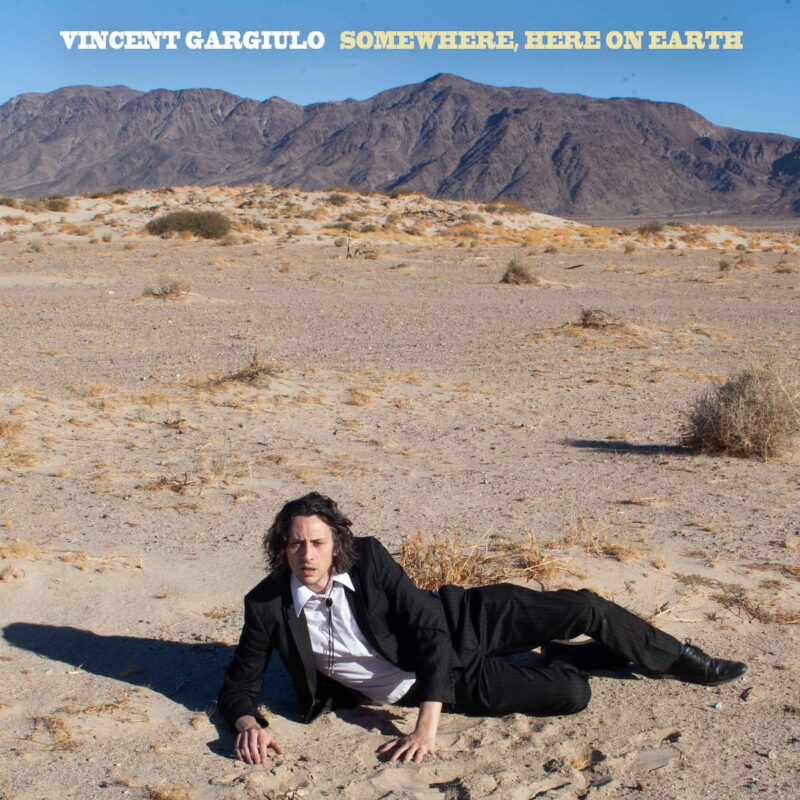
Vincent Gargiulo has spent enough time around cult detritus, accidental profundity, and the crooked pageant of American absurdity to know that people reveal themselves most clearly when they are cornered by banality. That instinct runs all through Somewhere, Here on Earth, a record that turns dead-end jobs, stale desire, grief, traffic, and self-disgust into a vignette of spiritual depletion. Gargiulo writes like a man in line at the 7-11, staring at the hot dog rollers, suddenly seized by the suspicion that this may in fact be the full moral architecture of the age.
Somewhere, Here on Earthsticks close to a heightened version of American reality. Its heart is flopping off a tattered sleeve: Americana gone a little threadbare, middle age staring back from the bathroom mirror. The songs feel dug up from the daily mess instead of posed under a spotlight. Their oddness is earned the old-fashioned way, by living long enough to realize that normal life is already preposterous, especially once disappointment has had a couple of decades to seep into the wallpaper. Gargiulo rambles through piano-pop, bent country, jittery new wave, and a woozy kind of lounge sadness, picking up traces of Harry Nilsson, Bowie, They Might Be Giants, Joe Jackson, Beck, Rufus Wainwright, and The Divine Comedy.
24 Hour Jack in the Box sets the tone beautifully. Its bright piano gives the song a bruised buoyancy, somewhere in the vicinity of Stephen Bluhm and Joe Jackson, while Gargiulo sings about working alone on Christmas Eve in Kettleman City and drifting back to a memory of floating in a lake. It is a song about alienated labour, bodily numbness, and the desperate wish to feel anything at all. Asleep in the Sun takes that plainspoken approach to grief and gives it a country lilt, with slide guitar and a gently ramshackle air that recalls Odelay-era Beck filtered through classic country heartache à la Loretta Lynn or Porter Wagoner. The song’s power comes from its domestic details: the house too empty, the absence registered in a patch of light, the possibility that memory may be inventing signs just to keep going. Gargiulo never gilds the sadness. He keeps it close to the floor, where most mourning actually dwells.
A Bad Idea or a Missed Opportunity brings in a more theatrical ache, with forlorn horns, piano, and a touch of psychedelic disorientation that suggests Ben Folds stumbling into a Bowie bender. It’s sung from the perspective of sitting on the bathroom floor with a five-year-old birthday card nearby, tallying damage, lust, and regret like a man trying to reconstruct his life from the contents of his pockets. Jazzed in the Hurkle Durkle, another song with a strong jazz piano streak, takes midlife fatigue and turns it into something oddly tender, even cozy. Health scares, historical overwhelm, and personal insignificance all get folded into the comfort of lying next to someone you love while the world remains a bad joke outside the sheets.
She’s Got No Time shifts into a twitchier new-wave mode, carrying some of They Might Be Giants’ anxious charm while chronicling romantic neglect with good humour. It is one of the album’s wryest songs and one of its saddest, because the joke is inseparable from the self-laceration. Gargiulo, who wrote this track as a teenager, understood even at that tender age that people often explain away rejection with stories that wound them more efficiently than the truth ever could. The accompanying video casts him as a down-on-his-luck Romeo trying to get a stock footage date for the dance.
The title track, Somewhere, Here on Earth, reaches instead for a kind of sunburnt release, and its Charlie Brown-despondent piano evokes Vince Guaraldi at his most wistful. he heads for hot springs, moonlight, and open air, looking for a way out of structure and expectation, though even here the peace feels provisional, borrowed for an afternoon.
Anhedonia feels like the album’s emotional bullseye, even if it arrives looking rumpled and under-rested. Piano, a chorus with a real weary trudge to it, and Gargiulo out there begging for seduction, approval, any proof at all that the circuitry has not gone cold. It is pitiful, hilarious, and a little too close to home, which is probably why it stings. Another Psychopath comes in with that grand, bruised Bowie-on-piano sweep and puts failed love on the witness stand, where self-reproach gets to play judge, jury, and bored stenographer. Really Really Good Right?, all slide guitar and sideways country charm, takes a scalpel to artistic insecurity then proceeds to needle the vanity and panic behind making art. It may be the nakedest song on the album. Do the Dread ends the whole thing knee-deep in traffic, shopping-cart despair, and low-grade end-times anxiety, still foolish enough to believe love might slam on the brakes before the car goes through the guardrail.
Vincent Gargiulo’s real gift is that he does not romanticize damage, nor does he sweep it under the rug. He writes about people who are bored, bereaved, needy, horny, ashamed, hopeful, and spiritually waterlogged, then gives them nimble melodies. Somewhere, Here on Earth is funny, sorrowful, strange, and embarrassingly alert to the small humiliations of being a person. It is a record about modern estrangement. Gargiulo keeps his eye on the petty details, the cheap settings, the moments when life looks most foolish, and that is exactly where he finds its bruised little truths.
Listen to Somewhere, Here On Earth below and order the album here.
A fiercely independent artist, Vincent Gargiulo’s creative output is impressive – and his subject matter universal. Beneath the silliness is an authenticity, and a deep affection for the unsung Everyman. Songs about shitty Tinder dates, sofas no one wants to see, local pizza joints, 80s theme songs. Likewise, a lot of his film work goes chasing the gloriously ridiculous: Chickens in the Shadows, The Dark Crusader, and the whole cracked film universe that gave the world the dynamic duo of Toasters N’ Moose and their sassy thrift store ode to the KFC five-piece meal deal, Taste the Biscuit.
Gargiulo spoke with Post-Punk.com about his creative process, influences, background and philosophy.
Your work often approaches serious subjects through an off-kilter, sometimes absurd lens. Which artists, filmmakers, or writers helped shape your way of seeing the world?
My very first loves were the Muppets, Pee Wee, and cartoons. That love of animation led me to Terry Gilliam’s work on Monty Python and that changed it all for me. That’s what I wanted to do with my life. I started writing sketch comedy and got inspired by others like Chris Guest, Jack Benny, SCTV, Spaulding Grey. Even Python Michael Palin’s travel documentaries inspired me to have a wonder for the world and started my travel lust. Then I went to film school and got into experimental and foreign films. All this shaped my film work.
Musically, my parents instilled some the classics of the 60s & 70s (Beatles, Zappa, Steely Dan, Genesis) mixed with my own discoveries of the then new songs of the 80s & 90s. My biggest musical inspiration is probably Brian Wilson of the Beach Boys. His work influenced everyone else I’m also influenced by, such as XTC, Joe Jackson, They Might Be Giants, Talking Heads, the list is infinite.
Your writing often finds tenderness in awkwardness, failure, and anticlimax. Humor runs quietly through the work, even in its bleakest moments. Do you think absurdity is a way of softening difficult truths, or sharpening them?
I think it can do both. That awkwardness and failure is part of being human and that ultimately is beautiful. How amazing we exist at all. We have to laugh at ourselves. Humor and kindness are essential to get by.
You seem drawn to small, specific moments of everyday life, and then slowly warp them into something just off-kilter. This album seems deeply attentive to the emotional weirdness of everyday American life: chain stores, highways, dead-end jobs, empty rooms, passing interactions. What draws you to those spaces?
I’m from Stockton, CA, grew up lower middle class. This does not usually produce visions of grandeur. I’ve always had a day job including now (and still probably lower middle class). I’m mostly interested in everyday people trying their best and pursuing whatever dream they have, possibly because I did/do that. Those quiet spaces and moments still have life, stories, dreams.
When you’re writing, what tends to inspire you most: music, movies, literature, overheard conversations, landscapes, memories, or something harder to name?
Inspiration comes from everywhere. Generally nowadays, whenever something comes to me (a phrase, a word, an idea, a skit), I write it down in my notes app. When it comes time to write a new work, I’ll scan the notes and pull together similar ideas, then build around it. A song or scene will form. It takes so long for me to produce something, that there is usually a large backlog of ideas to pull from. On the new album, the song She’s Got No Time was written when I was a teenager and I resurrected it for this. Not much was changed.
There’s a recurring tension in these songs between wanting to feel deeply and being almost embarrassed by that desire. To you, what is the emotional engine of the album?
It’s not 100% autobiographical but there are a lot of my thoughts, fears, anxieties, dreams, laid out on the table. It’s dark, it’s quiet, it’s the song’s protagonist’s trying to figure things out. I want to feel deeply but how?
Work like Chickens in the Shadows, The Dark Crusader and the Taste the Biscuit phenomenon connected with countless people because it felt impossible to pin down: funny, sincere, and strange all at once. It seems to have punctured the zeitgeist: these characters and songs you write about feel like real people, with real problems and real passions. In a culture that encourages polish, branding, and emotional simplification, what does it mean to you to make work that leaves room for contradiction, discomfort, and oddness?
Well my work would be more polished if there were bigger budgets. What I could afford in 2011 now has just become A E S E T H E T I C. The good thing about being independent is I can make whatever I want and tell the stories that seem interesting to me. But I am trying to move you. I love skirting the line between comedy and drama. The world is a weird place. Humans are weird and complex. Embrace that.
When you step back from the album, does it feel like a document of trying to understand something, or just a record of paying close attention to a world that already doesn’t make much sense?
After making The Dark Crusader, which is a very very silly comedy movie, I wanted to do the exact opposite. Make a fairly serious album. I always called it the sad jazz album, even though it’s branched off to other genres. I wrote it sequentially roughly between Sep 2024-May 2025. To me, the album is a document of that time. It was essentially my therapy and I was trying to write more poetically. No jokes! I’m happy with how it turned out. It’s a vibe. Sometimes we need to listen to the sad album to help us get by.
Watch The Dark Crusader below. You can also purchase his films here.
Will you reach for me as I plead in vain In the dead of night I will fall For pain
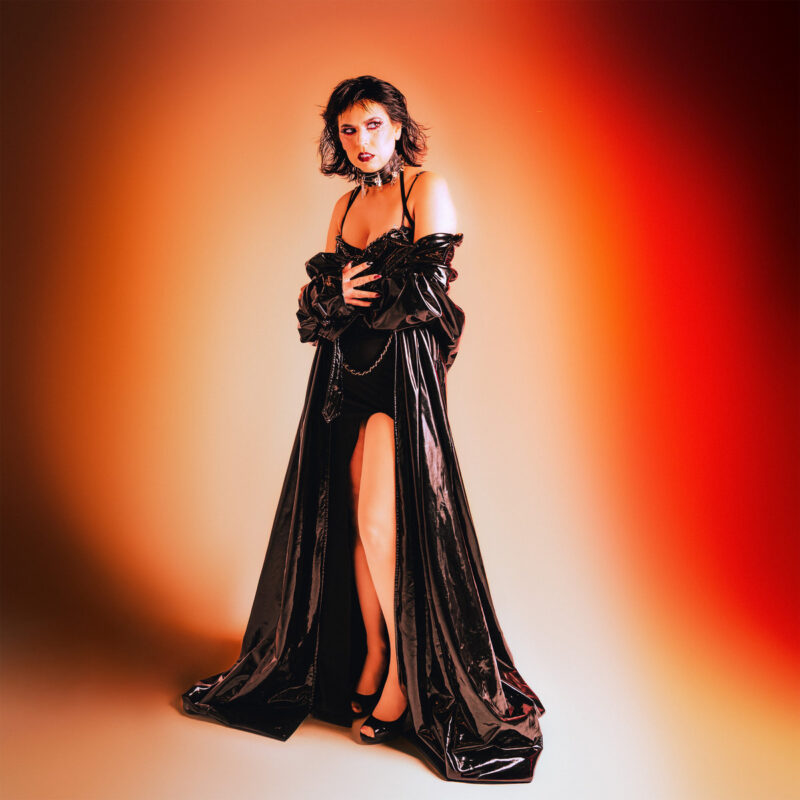
Tania Cassette steps out of the Glass Spells afterglow to tend her own fire with The Flame, a torch song lit by 80s pop glamour, dance-floor desire, and the dangerous faith of someone finally grabbing the wheel. The track carries a bright, Nutra-Sweet rush of handclap-ready hooks, glossy synths, and a chorus built for driving too fast past the city limits with your heart doing 90 in the passenger seat.
Produced with Myles and Kyle Mendes of NITE, The Flame respects the holy science of pop immediacy. The Bangles’ melodic lift is in its bloodstream, The Motels’ after-hours ache hangs around the edges, Cyndi Lauper’s theatrical nerve flashes through Tania’s vocal phrasing, and Berlin’s sleek synth drama glides beneath the beat like a black car on wet asphalt. Tania sings with poise and heat, letting the song’s yearning bloom without drowning it in melodrama.
The lyrics trace a consuming devotion curdled by abandonment, where desire, disgrace, and pain keep pulling the speaker back toward someone who has wounded them. Love becomes a cycle of ruin and return: a desperate nocturnal plea, a memory that won’t quiet, and a fire that keeps burning.
“The Flame is the song that saved me,” she admits. “It gave me the courage to trust myself and take control of my own destiny, and that’s terrifying and exhilarating all at once. It’s about devotion that consumes you, the kind of passion that breaks you down and rebuilds you at the same time. Everything you see in this video from the fire, the speed, the intensity… that’s exactly how it felt to finally step into who I really am.”
Directed by Sultan Mars and produced by Saint Almaty, the video throws that feeling onto the screen with a wink of vintage danger. Tania tears through the night in a sexy red convertible, the kind of car meant for a doomed romance, while the room-bound red phone scenes carries a lonely, theatrical ache. When she dances before the bonfire, the performance pulls us into a cathartic release. The classic twin-flame idea usually gets sold like mystical romance with better branding, but The Flame aims at something less woo-woo and syrupy: the difficult business of perfecting your own soul. For Tania Cassette, the blaze is no backdrop, it is her heart set aflame.
Watch the video for The Flame below:
Listen to The Flame below and order the single here.