Abstract sounds depict a complex narrative.
Starting from scratch is rarely an ideal disposition when an impressive legacy has already been paved, but it can be a magnet for opportunity. Such has been the state of affairs for progressive sludge/post-metal stalwarts The Ocean (aka The Ocean Collective) since the immediate aftermath of their previous and 2023 album Holocene.
The subsequent years have seen all of their previous lineup save for founder/guitarist Robin Staps and bassist Mattias Hagerstrand exit the fold, including and especially longtime front man Loic Rossetti. But being in the business for the better part of three decades tends to bring a level of resilience into the equation, and within roughly the span of about a year a newly minted seven-piece arrangement has been forged to continue the highly nuanced and expansive tradition that has preceded it. As such, this outfit’s 12th studio album Solaris marks a new beginning, in spite of being a de facto continuation of its immediate predecessor’s conceptual narrative.
Blending inspiration from the famed Andrei Tarkovsky novel of the same name and the journals of various historical explorers, it is an extensive sonic journey that navigates a comparably complex mixture of styles handled by a highly apt cast of musicians. Drummer Jordi Farre fits his kit work seamlessly into the dream-like atmosphere and fleeting fits of heavy, progressive metal segments, gelling with Mattias’ steady bass work at every point. Staps’ guitar work has been bolstered further by the inclusion of two new guitarists in Emmanuel Jessua and Marco Gennaro, expanding the arrangement to allow for dueling lead guitar lines at key points while also stacking on top of a towering wall of sound that can be easily replicated in a live setting.
Yet the most consequential change that has been accomplished without detriment is the entry of Italian lead vocalist Enrico “Nrehk” Tiberi and co-vocalist Lane Oshi; the former of whom effortlessly weaves between a clean baritone bellow and a raw hardcore shriek as the latter adorns the arrangement with a deeper sense of mystique.
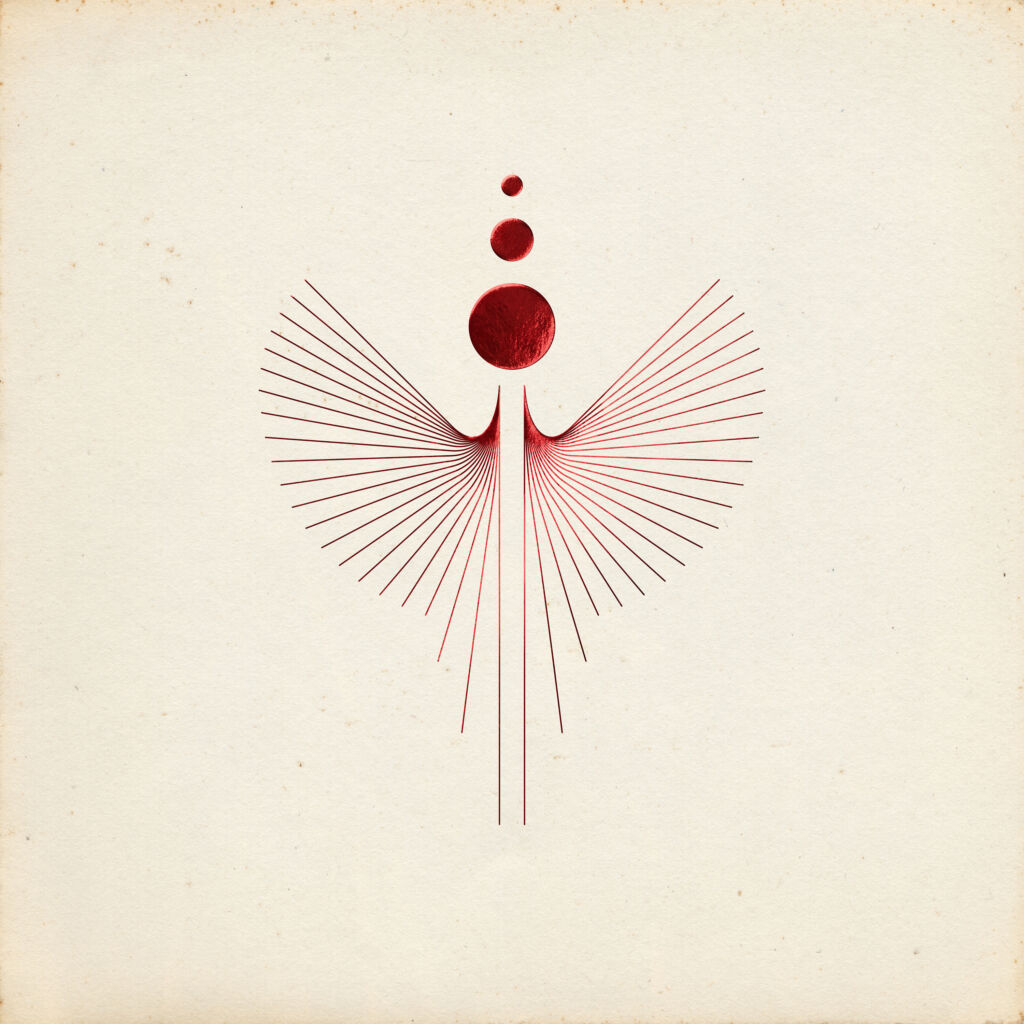
True to the 70s Sci-Fi aesthetic from which it flows, Solaris is the textbook embodiment of a slow burn set to music. Opening with an ethereal 2-minute overture with a set of coordinates as a title, the precedent that is set is one of the barest simplicity played at a subdued volume that gradually crescendos to an explosive progressive metal assault. Granted, it isn’t until about a minute into the second track “Departure Song” that the feeling of an extended prelude gives way to the first proper song, but once the trio of electric guitars land that first signature riff set, what felt like an ambient soundtrack immediately morphs into a cosmic fit of pure rage, tempered with a strong eye to technical musicianship.
This general sense of ambiguity between where one chapter ends and the next begins proves a continual theme as things progress and the songs continue to get longer, though at no point is coherence something that gets lost in the mix, even as the individual lengths of each entry reach and then break the 10 minute mark.
The entire middle of this colossal opus is essentially where exposition gives way to extremely deep contemplation with an elaborate sense of structure in tow. The de facto single track “Light Pollution” maintains the abstract sense of drifting through the interstellar depths while also throwing in some strong earworm melodies and a rather spellbinding set of chant-like wails out of Oshi interwoven between the seesawing torrent of serene and aggressive musical moments.
The trio of epic journeys from point A to B among the sea of celestial bodies that are the grueling 17-minute progressive slough “Simulacra” and its two slightly shorter sisters “Belligerence” and “Ultima Esperanza” present extremely challenging listening endeavors for even the more seasoned of progressive rock/metal consumers with a correspondingly massive pay off; Nrehk and Oshi exploring just about every permutation of smooth and rough vocalizations in the book as a similarly elaborate and evolving musical backdrop follows their lead and fills in the gaps in between.
In every respect, Solaris is as much an exercise in continuing a tradition of existing outside of conventional music as it is a sheer curiosity in itself. This is particularly underscored in the rather unique away that it concludes with the moderate length chapter “Milk Of My Dreams” and the outro track featuring another set of coordinates as the title, both of which essentially blur into a singular, near 10-minute long song that listens more like a meditative ambient epilogue with an electronic dance groove like a lost entry from The Matrix: Revolutions film thrown in for good measure.
It underscores an album produced by a band that has set their own rules and are not beyond occasionally bending or breaking them when things have even the slightest potential of becoming mundane. Yet when all is said and done, it remains reasonably accessible and holds up well even when compared against The Ocean’s magnum opuses Precambrian and Pelagial, though newcomers to this band should still prepare for a wild ride.
Release Date: September 25, 2026
Record Label: Pelagic Records
Genre: Progressive Metal
Musicians:
- Robin Staps / Guitar and Vocals
- Mattias Hägerstrand / Bass
- Jordi Farré / Drums and Percussion
- Enrico Tiberi / Vocals and Keys
- Lane Shi / Vocals
- Emmanuel Jessua / Guitar
- Marco Gennaro / Guitar
Solaris Tracklist:
- 52°30’11″N, 13°26’12″E
- Departure song
- Light Pollution
- Simulacra
- Belligerence
- Ultima Esperanza
- Milk of My Dreams
- 51°28’30″S, 73°6’11″W
Order the album here.
The post THE OCEAN – Solaris (Album Review) appeared first on Sonic Perspectives.