Category: news

  • 8 of the Best Female Death Metal Singers of All Time

    The best female death metal singers might be among the most underrated figures in the genre. While death metal as a whole can be niche, female vocalists have an even harder time getting decent exposure. Therefore, it is not surprising to see a lot of people not familiar with some of the best in the game and what they bring to the table.

    All the best female death metal singers also stand out because of their bands’ quality. They complement the extreme focus on the music with an intensity, a gusto, that makes this subgenre so appealing. Moreover, most of them have been releasing quality albums after quality albums for a while now. Furthermore, it is worth pointing out that this list is entirely subjective. If any singer is missing, please don’t take this personally. Let’s begin.

    1. Angela Gossow

    Gossow on stage.

    There is a strong argument to be made that Angela Gossow is the most famous individual among the best female death metal singers. She became Arch Enemy‘s vocalist back in 2000 and started with the band on their 2001 record, “Wages of Sin“, which is a modern classic. Born in Germany and having a background in marketing, Gossow had been trying her luck with several bands until making it with Arch Enemy, becoming a symbol of the band.

    Moreover, there are a lot of people who consider her time as the group’s singer as its peak. It is when Arch Enemy‘s brand of melodic death metal reached a considerable peak and her harsh and potent vocals were at the forefront. The fact that she then became the band’s manager only adds to the legacy she has provided for women in extreme metal.

    “People wouldn’t buy a record because I’m a woman,” Gossow said to Metal Bite back in 2002. “I mean, they still have to like the music and still have to think the music is good. If somebody gets interested in Arch Enemy because they see a cover or a story with me and wouldn’t have checked out the music before, nothing is bad about this. So, I guess women are still very seldom or kind of rare in the metal scene anyway, so I guess this attracts people.”

    2. Rae Amitay

    Amitay while playing drums.

    Rae Amitay might stand out among the best female death metal singers in the sense that she is also a great drummer. However, during her time in music, mainly with the band Immortal Bird, she is usually focusing on the mic. In that regard, her singing style takes some major influences from black metal, giving the band some of that subgenre as well.

    Moreover, Immortal Bird as a whole stands out because of the technical and complex playing style they have. If you are looking for a band that has an ambitious sound, this group is the one for you.

    “Is it cool to get behind the kit again live and kind of do that in this setting? Yeah, I missed it,” Amitay said to New Noise Magazine in 2024 about her playing drums again. “In Immortal Bird, I kind of passed the drumming reins over to Matt and his predecessor, Garry Naples, before that because the drumming got very, very, very athletic and technical. And I really love and admire that kind of playing, but I’m just not great at it. It’s not my strong suit.

    “Immortal Bird stopped being a drum thing for me, but I missed playing. And yeah, I hadn’t played live drums in a band since I was with Eight Bells. I’ve been a drum teacher for the last five-ish years, so my love for the instrument has only grown, and I’ve missed playing in a band. So Wretched Blessing was a perfect outlet because we are in complete control over what the drums and the vocals are.”

    She also has the project Wretched Blessing, which has a technical deathcore approach, if you are into that. While this band has also released a coupled of EPs, you can listen to Amitay‘s singing and drumming, which is always a joy.

    3. Mallika Sundaramurthy

    Sundaramurthy these days.

    Mallika Sundaramurthy is a busy lady. She is not only one of the best female death metal singers, but also a graphic artist in the video game industry. Moreover, she also runs with her husband the label Ultimate Massacre Productions. It is safe to say that she keeps herself busy while also screaming her head off with her bands.

    While she has played with several groups, she is mostly known for her time with the now-defunct Abnormality. This group combined death metal with technical, progressive influences, with her vocals on the more guttural side of things.

    “If people have their low expectations, that’s their problem, and if those low expectations are blown out of the water, well… then good,” she said to No Clean Singing in 2016 regarding the expectations people may have with Abnormality. “I’m not concerned with that. We are 100% focused on writing and performing the best extreme and technical brutal music that we can.

    She is now a part of the band Emasculator, which plays brutal death metal. While they have only released one EP, 2024’s “The Disfigured and the Divine“, they also deserve your attention.

    4. Rachel Aspe

    Aspe these days.

    Rachel Aspe is a fun case among the best female death metal singers. She went viral in 2012 because of her performance singing Sybreed‘s “Emma-0” in the French television show “Incroyable Talent”. Ever since, she has been singing for several bands in her home country, France, including experimental group Eths from 2013 to 2016.

    She is currently singing for the band Cage Fight, with her harsh, aggressive vocals standing out. It is safe to say that she is yet to lose a drop of intensity, which has been a constant throughout her career.

    “Yeah, I’m exhausted after a gig,” she said to Invisible Oranges regarding her live performances back in 2022. “I’m drained. And this is what I want. I really need this, this is really saving me. When I was in another band for five years, that was keeping everything for me. It was very difficult. But this is really the way I feel strong on stage. I feel like I just give everything and if I don’t have this, it’s just very bad.”

    5. Alissa White-Gluz

    White-Gluz on stage.

    Alissa White-Gluz had a huge challenge in 2013, which was replacing Angela Gossow as Arch Enemy‘s vocalist. However, while she had to win over the fans at the time, she has become not only one of the best female death metal singers, but also one of the biggest names in the genre in recent history. This has also included collaborations with the likes of Tarja Turunen, Angra, Kamelot, Helloween, and many more.

    Her singing style, harsh and aggressive, adapted to the material of Arch Enemy, but she is also capable of a more melodic approach. Add to that her stage performances and charisma and you have someone who has had a massive impact on modern death metal as a whole.

    “One thing I’ve mastered over the years, also because it’s part of my character already, is not being super-interested in the fame side of things,” White-Gluz said to Metal Hammer back in 2020. “I feel the same playing a huge festival as I did when I played my first show to three people in a bar in Montreal. I just wanted to sound good, look good and for these people to be our fans and go tell their friends so we have more fans next time.

    6. Madison Marshall

    Marshall on stage.

    Madison Marshall might be one of the most underrated names when it comes to the best female death metal singers. She has been going strong with the band Cloud Rat since 2009, playing a brand of the subgenre with strong grindcore influences.

    Furthermore, she has contributed to a wide variety of bands, such as Cabbage Heads, Immaculate Conception, The Gulags, and Wild Shape. But there is no denying that Cloud Rat has been her most notorious project thus far. If you want to give that band a chance, the debut, 2013’s “Moksha“, is a good starting point.

    7. Larissa Stupar

    Stupar is another notorious singer.

    Larissa Stupar became known across the extreme metal landscape thanks to her band, Venom Prison. The band focuses on playing a brand of thrash and death metal, with Stupar‘s harsh and powerful vocals being a great complement to their sound. Despite the group being currently on hold, this doesn’t mean they haven’t delivered great records since 2014, such as 2019’s “Samsara“.

    “To be honest, I never had a female role model, which I really think is a shame,” Stupar said in an interview with Metal Chondria. “When I was growing up, there wasn’t that many Metal bands that I knew had women in them. The only ones were Evanescence, and they didn’t really consider them an extreme metal band (laughs). So it was for me, it was men. And I never really felt that I was any different from them.”

    “For me, women and men have always been equal in my eyes. And it’s only when I started playing in bands that I realized that people don’t treat us the same, which is really a shame. And I think what we need to do, is to destroy the barriers in our heads, where we say that we’re different and that we can do things that others can, because it’s bulls… We can all do anything we want.”

    The combination of fast-paced riffs and Stupar‘s aggressive vocals is a major reason why she is one of the best female death metal singers. And she definitely deserves a lot more exposure than what she already gets. Moreover, she sometimes adds some melodic interludes here and there, making her range a lot more varied as a vocalist.

    8. Sharon Bascovsky

    Bascovsky these days.

    To talk about Sharon Bascovsky is to talk about Derkéta. Hailing from Pittsburgh, Pennsylvania, Sharon and her friends started the band back in the late 80s. Moreover, they were one of the first all-female death metal bands and had a difficult time getting exposure. Hence why they only released demos and singles during the late 80s and early 90s.

    “We weren’t expecting the band to get out globally,” Bascovsky said to No Clean Singing back in 2018. “We thought it was just going to be something to share with the friends who had already known us. Then we witnessed the power of tape trading and fanzines when we started getting around 10 letters a day from around the world. The reaction was positive for the most part.”

    “I remember there being somewhat of a shock as there weren’t many girls who listened to underground metal, let alone writing it. And a female doing death metal vocals was out of the ordinary. There were some letters that were nasty to us, calling us whores and acting like we were nothing but groupies. They didn’t want to give our demo the time of day because we were females, and we couldn’t understand why they were so angry about it. Thankfully there weren’t many of them and the majority accepted us into their boys club.”

    When it comes to Bascovsky, her singing style as one of the best female death metal singers is guttural and powerful. One only has to listen to the band’s debut, 2012’s “In Death We Meet“, to prove this. The album itself is doom death metal with a crunchy and organic production that may appeal to old school fans.

    One of the many unsung heroes when it comes to death metal as a whole. If you want some old school extreme metal to listen to, Derkéta is a very good choice.

    The post 8 of the Best Female Death Metal Singers of All Time appeared first on Metal Shout.
  • Smith & Kotzen – Black Light / White Noise Tour 2026

    Zwei Ausnahmemusiker. Zwei markante Stimmen. Eine Band, die ohne Kompromisse funktioniert. Smith & Kotzen gehen 2026 erneut auf Tour und bringen ihren kraftvollen Blues- und Hard-Rock nach Deutschland.

    Die Musiker hinter dem Projekt

    Adrian Smith ist seit 1980 prägendes Mitglied von Iron Maiden. Er schrieb Klassiker wie „Wasted Years“ und steht für melodisches Lead-Spiel mit Wiedererkennungswert. Neben Maiden veröffentlichte er Soloarbeiten und gründete in den 90ern das Projekt Psycho Motel und A.S.A.P.. Letztere veröffentlichten das Album „Silver & Gold“. Smith kombiniert technische Präzision mit Songdienlichkeit. Genau das hört man auch bei Smith & Kotzen.

    Richie Kotzen startete früh als Solo-Künstler. Er spielte bei Winery Dogs, Poison und nicht zuletzt auch Mr. Big. Sein Stil mischt Blues, Soul und Hard Rock. Kotzen singt mit rauer Intensität und spielt technisch auf höchstem Niveau. Er nutzt häufig offene Tunings und verzichtet bewusst auf Plektren.

    Die Veröffentlichungen von Smith & Kotzen

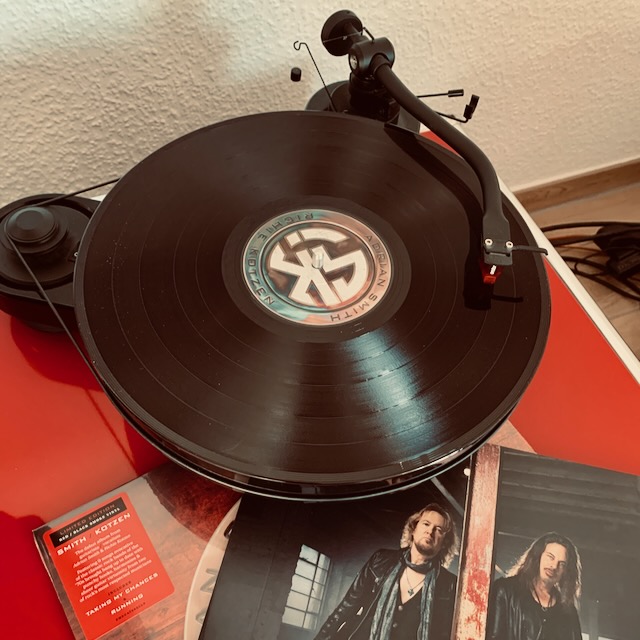
    Das selbstbetitelte Debüt Smith/Kotzen erschien 2021. Es brachte starke Tracks wie „Taking My Chances“ und „Running“ hervor. Die Mischung aus Classic Rock, Blues und moderner Produktion überzeugte sofort.

    Im gleichen Jahr folgte die EP Better Days. Sie enthielt neue Studiotracks sowie Live-Versionen und zeigte, wie organisch die Songs auf der Bühne funktionieren.

    2022 erschien die EP Better Days … And Nights mit zusätzlichen Live-Aufnahmen.

    Im April 2025 veröffentlichten Smith & Kotzen ihr zweites Studioalbum Black Light / White Noise. Das Album stieg hoch in die internationalen Rockcharts ein. Die Songs klingen härter, direkter und noch fokussierter. Singles wie „White Noise“ und „Black Light“ zeigen das Zusammenspiel der beiden Gitarristen auf den Punkt.

    Die aktuelle Tour 2026

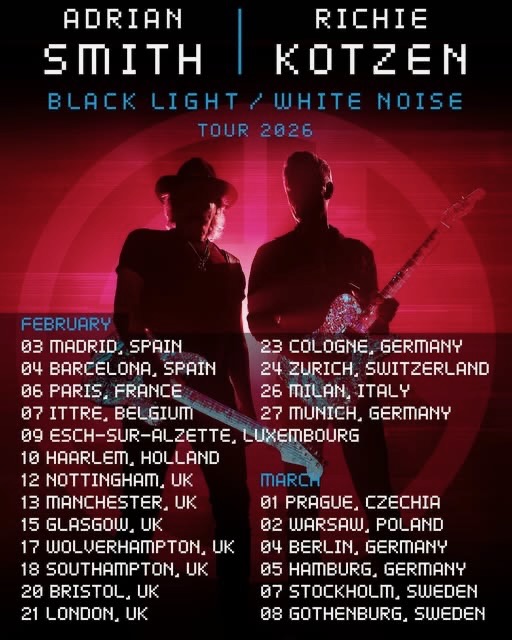
    Mit dem neuen Album im Gepäck geht das Duo Anfang 2026 auf große Europa-Tour. In Deutschland stehen folgende Termine an:

    • 23.02.2026 – Köln, Carlswerk Victoria
    • 27.02.2026 – München, Backstage Werk
    • 04.03.2026 – Berlin, Columbia Theater
    • 05.03.2026 – Hamburg, Grünspan

    Am 05. März 2026 spielen Smith & Kotzen im Gruenspan auf der Großen Freiheit. Die Location steht für direkte Club-Atmosphäre und druckvollen Livesound. Hier erlebst du jede Nuance der Gitarrenarbeit aus nächster Nähe. Hier berichteten wir zuletzt u. a. über die Dead Daisies, K.K´s Priest und Geoff Tate mit Operation Mindcrime. Eine – wie ich rein subjektiv finde – tolle Location für Konzerte der Art.

    Die Ticketpreise liegen je nach Kategorie zwischen etwa 62 Euro und 85 Euro. Stehplätze starten im regulären Vorverkauf im unteren 60-Euro-Bereich. Es gibt noch ein paar Restkarten!

    Was dich live erwartet

    Du bekommst keine klassische Band mit Show-Overkill. Hier stehen Song, Groove und Gitarrenarbeit im Mittelpunkt. Beide wechseln sich am Gesang ab. Die Setlist kombiniert Songs beider Studioalben mit ausgewählten Highlights.

    Wenn du auf ehrlichen, handgemachten Rock mit starken Hooks und zwei Weltklasse-Gitarristen stehst, gehört diese Tour in deinen Kalender.

    Danke für´s Lesen. Punkt!

    Der Beitrag Smith & Kotzen – Black Light / White Noise Tour 2026 erschien zuerst auf Rock-Music.net – Live, laut, legendär!.

  • JOEL HOEKSTRA Talks Upcoming JOEL HOEKSTRA’S 13 Album, “From The Fade”: “It’s Got A More Defined Metal Sound With Melody”

    Joel Hoekstra has never really had a problem being seen as a “guitar guy.” The point of Joel Hoekstra’s 13, though, is that it isn’t supposed to feel like a guitar clinic with a backing band. It’s his rock project, built like a band record, with a band-level cast, and the fourth album, From the Fade (out February 27, 2026 via Frontiers Music SRL), leans harder into that identity.

    The lineup helps explain the intent: Vinny Appice on drums, Tony Franklin on bass, Derek Sherinian on keys, and vocalist Girish Pradhan up front—players with enough identity that the record either has to feel like a band or it risks feeling like a collage.

    Pre-orders of From the Fade are available here.

    Right at the top of his chat with Robert Cavuoto, Hoekstra acknowledges that the naming can trip people up. He explains why he even bothered drawing a line between “Joel Hoekstra” and Joel Hoekstra’s 13 in the first place, because he’s done the other thing already: “I had instrumental albums out when I was younger, just under Joel Hoekstra, and those sounded like a guitar player’s albums, like you would expect.”

    Getting into Joel Hoekstra’s 13, he says, was about making “solo music” that didn’t behave like a solo record: “The intention was to create solo music, but have it be a rock, my rock recording project, essentially.”

    That distinction matters more on From the Fade because, by his own description, the album is a tighter listen than some of his earlier releases: more cohesive, more metal-leaning, yet still anchored by melody. He’s careful not to oversell it as a dramatic reinvention, because the heaviness wasn’t even fully intentional: “I think it’s a little bit heavier this time… I think it was just that I was… kind of playing more metal, and, like, so when I went to write, it just kind of came out a little heavier, and I think that the melody is still there. I still would define it as melodic hard rock, but there’s definitely more elements of metal at times on the record than there’s been in the past…”

    A lot of that sharper edge comes down to what he chose to write for vocalist Girish Pradhan this time around. On Crash of Life, the previous album and Pradhan’s first with the project, Hoekstra says he held back from one of Pradhan’s biggest weapons: the high, aggressive stuff: “I kind of wrote it to not go to his screaming place, the high stuff, and then with this record, I decided, I mean, this is what he does, he does it really well, so I decided to write a little bit more of that into this album, him doing his screaming and whatnot.”

    Even when he’s talking about “metal,” he keeps circling back to structure and intent, what he’s aiming for emotionally, and whose voice he’s writing toward. That’s where his reference points show up: a blend of classic hard-rock power and a specific kind of melodic phrasing. He also describes a kind of idealized blend he’s chased across projects, especially when he’s thinking about the chemistry of players like Vinny Appice, Tony Franklin, and Derek Sherinian.

    “I was always looking for, like, Dio meets Lou Gramm meets Paul Rodgers. The model for me has always been, like, thinking about Ronnie James Dio at times, like, that powerful, aggressive thing. At times… there’s a lot of, like, Dokken in my childhood. A lot of times, I’ll hear Don Dokken, that is in my DNA. Somebody pointed that out recently. I fail to mention George Lynch as an influence all the time.”

    The “more defined sound” angle shows up again when he starts comparing the arc of the earlier albums. He’s blunt about how those records moved around stylistically, and he frames From the Fade as a return to focus: “The first record was Dying to Live, and that was… stylistically, it was diverse… all the way from heavier tracks to kind of lighter tracks, and with Running Games, I went with a more focused sound. And then Crash of Life kind of drifted again… and then this one, I feel like… is, like, back to that more defined sound… but I’d say that it’s more metal.”

    And then there’s the part that makes all the “bandleader” talk feel very human: the guide vocals. Because Hoekstra writes the melodies and lyrics, he has to demo them, meaning he has to sing the whole album first, including the higher, more aggressive lines he’s writing specifically to showcase Girish Pradhan: “I give him a guide vocal for the whole record. I sing, I sing the whole record, which is just awful for me to have to do. Also I’m in a New York City apartment, so I always feel like other people can hear me… mortifying to go through the process. They’re only listening to this, their strange neighbor singing, screaming.”

    With the band all recording remotely, he emphasized that the goal was always to make the album feel like a unified band performance rather than a pieced-together project. His guitar solos on From the Fade are intentionally song-driven rather than indulgent, and in most cases, he does countless takes to get them perfect.

    The interview eventually widens out beyond From the Fade and into the bigger picture of Hoekstra’s recent life in rock: the closing chapter of Whitesnake, David Coverdale stepping back, and what “next” looks like when you’re always juggling multiple lanes. On Coverdale’s retirement, Hoekstra doesn’t dramatize it; he’s supportive, and he frames it as earned.

    “It wasn’t a surprise, not really a surprise for those of us in the band. I just wish him nothing but the best… great boss and great guy overall… wonderful, wonderful, wonderful person. And he’s certainly earned the right to do what he wants to do with the rest of his life.”

    As for touring, he’s honest: it’s “a little bit of a question mark.” But “question mark” doesn’t mean idle. He talks about finishing another run with Trans-Siberian Orchestra, doing one-offs with Broadway’s Rock Of Ages Band, keeping acoustic duo shows going with Brandon Gibbs, and staying productive in the studio: new Revolution Saints album, new Iconic, and other sessions he can’t get into yet.

    The clean takeaway is that From the Fade isn’t being presented as a side quest. It’s the kind of record you make when you’re still thinking like a songwriter and an arranger, not just a player: tightening the sound, writing to your singer’s strengths, and building an album piece by piece until it feels like five people in a room, even when they weren’t.

    The post JOEL HOEKSTRA Talks Upcoming JOEL HOEKSTRA’S 13 Album, “From The Fade”: “It’s Got A More Defined Metal Sound With Melody” appeared first on Sonic Perspectives.

  • Resonance is Spectrum in Silence’s Album Out Now

    Good Day Noir Family,
    Spectrum in Silence opens Resonance with “The Silence,” and instead of rushing into a chorus, the album invites you in with the crackle of a burning fire and a gently arpeggiated guitar line.

    Resonance is Spectrum in Silence’s Album Out Now

     That small detail already sets the mood, because it feels intimate and mysterious at the same time.

    Soon after, the voice enters in a delicate yet intense way, and together with the harmonic tones it begins to trigger dreamlike images in your mind. However, the track does not stay quiet for long. It slowly reveals a more rock-driven side.

    Then comes the title track, “Resonance,” which acts as the core statement of this project. Here, Spectrum in Silence blends modern atmospheres with slightly futuristic tones, and that mixture gives the song a strong identity. The distorted guitars, which recall the raw energy of tracks like “Zombie.”  The verse stays melodic, and the harmonic changes keep your ears engaged.

    “I Don’t Belong” shifts the album into a more electronic direction. The groove feels synthetic yet warm, while the keys bring in a Japanese-inspired flavor that evokes Blade Runner–style cityscapes. Because of that, the track feels reflective and a bit lonely, and it highlights the artist’s ability to write lyrics that speak to inner conflict. Moreover, the production choices here support that mood without overpowering it, so the emotion remains front and center.

    “Unbroken” then adds another layer to the album with the entrance of a female voice. Her presence changes the emotional gravity of the record, and it almost feels like a new chapter begins. The way her vocals interact with the main voice creates a hypnotic effect, similar to the sirens in the Odyssey drawing Ulysses toward the unknown. As the music swells and recedes, the song carries you into a space that feels magical and strangely familiar.

    Resonance feels like a carefully designed journey. Each track builds on the last, yet each also brings its own color to the palette. While the album uses modern textures and futuristic hints, it never loses its emotional core. Instead, it keeps pulling you deeper into its world, track after track. For anyone searching for music that blends atmosphere, rock energy, and introspective songwriting, Spectrum in Silence has created something that deserves close attention.

    Resonance is Spectrum in Silence’s Album Out Now!


    Ethereal!


    Spectrum in Silence is an alternative/art-rock project from Athens, Greece, blending ’90s and ’00s rock influences with ambient soundscapes, electronic textures, and progressive elements. Created by Konstantinos Kay in 2020, the project emerged as a means of releasing emotion from the confines of digital silence—transforming inner worlds into haunting, cinematic sound.
    In 2025, Spectrum in Silence released its first three singles, “I Don’t Belong,” “Wired Awake,” and “Unbroken,” paving the way for the debut album Resonance.


    Find Spectrum in Silence Here:

    Spotify
    Instagram


    Discover New Bands Click Here


    The post Resonance is Spectrum in Silence’s Album Out Now appeared first on Edgar Allan Poets – Noir Rock Band.

  • Cryptic Shift: UK Progressive Death Metal Outfit to Unleash “Overspace & Supertime” Full-Length on February 27th Through Metal Blade Records

    – January 13th, 2026 –

    New Video / Single Now Playing + Pre-Orders Available

    Watch/stream CRYPTIC SHIFT’s “Hexagonal Eyes (Diverity Trepaphymphaszym)” HERE

    UK progressive death metal outfit CRYPTIC SHIFT will release their Overspace & Supertime full-length on February 27th through Metal Blade Records.

    While not commonly known as an extraterrestrial hotspot, Leeds faced an encounter of another kind in 2015 when vocalist/guitarist Alexander Bradley and drummer Ryan Sheperson set out to accomplish a project embodying their joint passion for the art of science fiction and heavy metal music. With CRYPTIC SHIFT taking form as a crossover between the worlds of technical thrash/death metal and all things sci-fi, the two set out to spread their influence across the UK and soon ventured across the globe.

    Photo by Murry Deaves

    CRYPTIC SHIFT unveiled their debut full-length, Visitations From Enceladus, in 2020. The offering helped bring the band to the worldwide playing-field, receiving critical acclaim for its adventurous, progressive technical death thrash compositions, a twisted form of extreme metal simply referred to as the “Phenomenal Technological Astrodeath.”

    This year’s Overspace & Supertime continues the conceptual and musical themes of their debut and delivers a new standard of technical thrash/death metal showmanship, including returning influences of progressive writing, harmonized with their fantastical storytelling.

    The concept of Overspace & Supertime plays as an alternative reality to the happenings of Visitations From Enceladus, taking our character into new dimensions filled with both greater adventures and more bizarre encounters.” notes drummer Ryan Sheperson. “Whilst the concept themes of our sci-fi tale have grown, so have our efforts in synthesizing it with the ultimate Astrodeath soundscape. The record takes the listener on a deeper journey through the fusion of our influences, with some exciting twists and turns along the way.”

    Overspace & Supertime was produced by Jack Helliwell and mastered by Greg Chandler (Esoteric, My Dying Bride) and features the stunning artwork of Jesse Jacobi.

    I was inspired by an image from 40 Days In The Desert by the legendary Moebius,” elaborates Bradley. “The tall, sombre, cloaked figures were a fitting reference for the occurrence of our main character ‘The Recaller’ as she finally encounters ‘The Alien Sorceress.’ Jesse Jacobi is the one behind the phenomenal painting, and he was always the only one who’s style I could imagine it in. I did a lot of research into cloud formations for the lyrics and wanted them featured as the backdrop of the cover art with justice to their splendour. Furthermore, keen eyes will notice the composition rhymes with that of Visitations From Enceladus. Even though both characters are different entities, their paths are severely intertwined.

    Comments Bradley on “Hexagonal Eyes (Diverity Trepaphyphasyzm),” CRYPTIC SHIFT‘s returning single, “The track demonstrates a vicious proficiency never before seen in death and thrash metal: A relentless flow of smart compositional ideas seize your attention in a black hole grip, across our most extreme material yet. ‘Diverity Trepaphyphasyzm’ then describes the first stages of a warped temporal disease as our character returns to the moonbase location from our highly acclaimed debut album. Films like the Star Wars prequels inspire us just as much as our contemporaries in the genre; fans of sci-fi storytelling and ripping technical metal are guaranteed to have a blast with this record.

    Watch CRYPTIC SHIFT‘s video for “Hexagonal Eyes (Diverity Trepaphymphaszym)” (directed by Murry Deaves) HERE.

    Overspace & Supertime will be released on CD and digital formats as well as 2xLP in the following color variants:

    180g Black
    Cloudscape Orange Vinyl (Orange Red Marbled) – (Ltd. 600)
    Ancient Storm Swirl Vinyl (Violet Blue w/ Black, Blue & Red Smoke) – (Ltd. 250)
    Ice Cauldron Blue Vinyl (Blue/Purple Merged) – (Ltd. 250)

    Find pre-orders at: metalblade.com/crypticshift

    Overspace & Supertime Track Listing:
    1. Cryogenically Frozen
    2. Stratocumulus Evergaol
    3. Hyperspace Topography
    4. Hexagonal Eyes (Diverity Trepaphymphasyzm)
    5. Overspace & Supertime

    CRYPTIC SHIFT Live:
    2/28/2026 Boston Music Rooms – London, UK * Record Release Show
    5/21-24/2026 Maryland Deathfest – Baltimore, MD

    CRYPTIC SHIFT:
    Alexander Bradley – vocals, guitars
    Joss Farrington – guitars
    John Riley – bass
    Ryan Sheperson – drums

    https://www.facebook.com/crypticshift
    https://www.instagram.com/crypticshift.ufo

    Buy iTunes Artist Page Artist News

  • The Black Dahlia Murder Announces Spring Fling US Headlining Tour

    – January 13th, 2026 –

    Band Presales Wednesday + General On Sale This Friday!

    THE BLACK DAHLIA MURDER will return to stages this Spring on a US headlining tour. Spring Fling 2026 will commence on April 2nd in Indianapolis, Indiana and run through May 2nd in Milwaukee, Wisconsin. Support will be provided by The Acacia Strain, Disembodied Tyrant, and Corpse Pile.

    Comments vocalist Brian Eschbach. “This is set to be a massively heavy trek that will undoubtedly be recounted in the history textbooks for centuries to come. Don’t miss out!

    The “Blastfiend” artist presale begins January 14th at 10:00am ET where exclusive merch bundles will be available. Fans can RSVP at: soundrink.co/TBDM. General on sale date is Friday, January 16th at 10:00am ET. See all confirmed dates below.

    THE BLACK DAHLIA MURDER w/ The Acacia Strain, Disembodied Tyrant, Corpse Pile:
    4/02/2026 Vogue – Indianapolis, IN
    4/03/2026 The Intersection – Grand Rapids, MI
    4/04/2026 Bogart’s – Cincinnati, OH * no Disembodied Tyrant
    4/05/2026 Roxian Theatre – McKee Rocks, PA
    4/07/2026 Town Ballroom – Buffalo, NY
    4/08/2026 Archer – Allentown, PA
    4/10/2026 The Webster – Hartford, CT
    4/11/2026 The Strand – Providence, RI
    4/12/2026 Starland Ballroom – Sayreville, NJ
    4/14/2026 The Queen – Wilmington, DE
    4/15/2026 The NorVa – Norfolk, VA
    4/17/2026 Mercury Ballroom – Louisville, KY
    4/18/2026 Pop’s – Sauget, IL
    4/19/2026 Brooklyn Bowl – Nashville, TN
    4/21/2026 Tower Theatre – Oklahoma City, OK
    4/23/2026 Rialto Theatre – Tucson, AZ
    4/24/2026 House Of Blues – Anaheim, CA
    4/25/2026 House Of Blues – San Diego, CA
    4/26/2026 UC Theater – Berkeley, CA
    4/28/2026 Sunshine Theater – Albuquerque, NM
    4/29/2026 Black Sheep – Colorado Springs, CO
    5/01/2026 Capitol Theatre – Davenport IA
    5/02/2026 The Rave – Milwaukee, WI

    THE BLACK DAHLIA MURDER will be touring in support of their critically adored tenth studio album, Servitude, released in 2024 via Metal Blade Records.

    At a brisk thirty-three minutes, there’s no real fat, just a collection of raging riffs and solid gold grooves that never overstays its welcome…,” lauded Blabbermouth. “Whether wallowing in grim, doomy waters on ‘Mammoth’s Hand,’ or blasting away like some crazed, nihilistic army of intergalactic ghouls on ‘Transcosmic Blueprint’ and climactic hook avalanche ‘Utopia Black,’ this is an album that nobly delivers the goods, while screaming defiance at the stars. Everybody involved should be immensely proud.” Metal Injection accurately hailed a record of, “fucking killer death metal,” Distorted Sound crowned THE BLACK DAHLIA MURDER, “one of melodeath’s greatest, most consistent bands,” while Kerrang wrote, “…the release of Servitude faces down existential concerns with determination and defiance.” Added Last Rites, “Servitude doesn’t feel like a debut because it’s unpolished or full of missteps; it feels like a debut because it’s brimming with a fresh energy and feels like it’s only hinting at what could be in store.”

    Preview/purchase Servitude at: metalblade.com/tbdm

    https://www.tbdmofficial.com
    https://www.instagram.com/theblackdahliamurder_official
    https://www.facebook.com/theblackdahliamurderofficial
    https://x.com/bdmmetal
    https://www.youtube.com/user/blackdahliamurdertv
    https://www.tiktok.com/@tbdm_official

    Buy iTunes Artist Page Artist News

  • How Metal Music Inspires Resilience Through Adversity

    It’s no secret that life has felt a bit “heavy” lately. Between constant talk of inflation and the general uncertainty about the future, most people are just trying to keep their heads above water. You might think that in times like these, everyone would turn to soft, breezy pop music to escape. But the numbers tell a very different story.

    This year, while much of the music industry is struggling with slowing growth, heavy rock and metal have become absolute powerhouses. According to Live Nation, attendance at hard rock and metal shows was up 14% in 2025. These genres now make up 13% of all arena and stadium concerts, which is the highest they’ve ever been in the company’s history.

    So why are so many of us flocking to the loudest, most aggressive music on the planet right now?

    It’s because metal isn’t just noise. It’s a masterclass in resilience. It’s the music you put on when it feels like the world is pushing you into a corner. For many fans, listening to metal is a way to cope with life’s challenges and find strength. In a world that can feel heavy, metal gives people a place to turn their struggles into energy, emotion, and even empowerment.

    The Cathartic Power of Heavy Sound

    Metal’s signature distortion and thunderous drums offer an emotional release few genres can match. This intensity allows listeners to externalize internal turmoil, providing a safe outlet for grief and frustration. 

    Psychologists note that this catharsis is therapeutic, validating those dealing with chronic pain or trauma without forcing a “fake” sense of optimism. It meets you in the darkness, proving that life’s brutality can be survived.

    A perfect example of this energy arrived last year on August 21st, when Cincinnati’s own Yung Mosh dropped “Facetime.” This vicious, cathartic anthem is all about reclaiming power and serving enemies a long-overdue dose of vindication. 

    By blending heavy riffs and crushing trap beats with massive rock choruses, the track embodies a “kitchen sink” approach that is both fun and unapologetically intense. It’s a sonic mirror for anyone fighting back, demonstrating that music can turn raw struggle into a triumphant, catchy middle finger to adversity.

    Lyrics That Validate Struggle and Survival

    Metal lyrics offer an unflinching look at suffering, from mental health battles to medical trauma, providing a voice for those who feel silenced. Whether it’s Metallica facing inner demons or Architects confronting mortality, the message is clear. You aren’t weak for struggling, you’re strong for surviving.

    Quebec City’s Born Divided perfectly captures this endurance in their second album, Chronicle of the Shipwreck, released on October 24th, 2025. Formed from the ashes of Blinded by Faith, the band features seasoned musicians like Tommy Demers and Maxim Levesque. 

    The record balances razor-sharp riffs with cinematic orchestration. Lyrically, it navigates emotional collapse and existential turmoil, mirroring the fierce journey toward redemption. For those battling through a “shipwreck” of their own, this music serves as a powerful reminder that resilience is born from the wreckage.

    Community and Belonging in Metal Culture

    The metal community is famous for its inclusivity and fierce loyalty. Despite the music’s aggressive exterior, metal shows and fan circles often become safe spaces where outsiders find total acceptance. People who feel marginalized by mainstream society frequently discover that the metal community embraces their differences rather than rejecting them.

    This sense of belonging builds resilience by providing a solid support system, which is vital for mental health and the ability to cope with life’s hurdles. 

    Fans often share stories of how metal concerts gave them the courage to face another day. Many talk about how online metal communities provided support during crises, helping them feel less isolated while connecting with others who understand their pain.

    Confronting Health Challenges Through Metal’s Lens

    Many metal musicians openly share their health battles, from autoimmune diseases to serious injuries, helping to destigmatize medical struggles within the community. These stories show that strength and vulnerability can coexist, inspiring fans to face their own unique challenges with a warrior mindset. 

    Because metal celebrates the grit needed to survive, it has become a powerful backdrop for people navigating all kinds of systemic failures and physical trauma. This empowerment is vital for those fighting personal battles that the world often ignores, such as the survivors involved in the vaginal mesh lawsuit

    According to TorHoerman Law, vaginal mesh implants are used to treat pelvic organ prolapse (POP) and stress urinary incontinence (SUI). However, these implants have been linked to severe complications, including erosion, chronic pain, and infection.

    While these health struggles are varied, the resilience found in music gives victims the emotional fuel to demand better care. Much like a defiant anthem, this spirit empowers individuals to stop suffering in silence and find the strength to fight back.

    Overcoming Trauma Through Visceral Expression

    Some of metal’s most powerful expressions of resilience come from artists who transform personal trauma into art. Pioneering bands like L7 and Bikini Kill laid the groundwork in confronting abuse, bodily autonomy, and societal violence through aggressive music. 

    Bikini Kill’s Kathleen Hanna screamed about assault and oppression with raw fury that gave voice to countless survivors. Today, artists like Lingua Ignota take this legacy further, using visceral and often disturbing imagery to convey the reality of trauma and abuse. Her intensely personal work doesn’t sanitize suffering but instead forces confrontation with uncomfortable truths about violence and survival. 

    This unflinching honesty helps listeners who’ve experienced trauma feel validated and less alone. At the same time, the aggressive sonic landscapes provide a channel for rage and grief that society typically demands be suppressed.

    Building Inner Strength Through Musical Aggression

    Metal’s physical intensity, from vibrating bass to headbanging, connects listeners to their bodies in empowering ways. This is vital for those whose relationship with their physical self is complicated by trauma or illness. As social care worker Andy Kerrigan notes, metal was his first “healthy coping mechanism.”

    Facing depression, anxiety, and ADHD, Kerrigan found that metal provided a reprieve from internal chaos. He explains that while lovers and jobs come and go, metal remains a constant companion in an “unforgiving world.” The music teaches that aggression isn’t destructive; it is a source of strength. 

    This “musical armor” helps fans reclaim agency when they feel powerless, providing the courage to face medical procedures or advocate for themselves. By celebrating power even in darkness, metal transforms raw frustration into the grit needed to survive life’s most ruthless challenges.

    Frequently Asked Questions

    Can listening to metal music really improve mental health?

    Yes, for many people it can. Metal music offers emotional release, helps process intense feelings, and validates struggle without judgment. Personal experiences show it can reduce stress, support emotional regulation, and provide a sense of connection, especially for listeners dealing with anger, trauma, or anxiety.

    Why do people say metal music helps them cope with chronic pain or illness?

    People often say metal helps them cope with chronic pain or illness because it gives their suffering a voice. The intensity matches what they feel physically and emotionally, offering validation, distraction, and a sense of strength. It can make pain feel shared rather than isolating.

    Is the metal community really accepting of people with disabilities or health issues?

    Yes, the metal community is often described as highly accepting. It values authenticity, shared struggle, and mutual respect over appearances. Many fans and artists openly discuss health challenges, creating a space where people with disabilities or illnesses feel supported and included rather than judged.

    Metal’s power goes far beyond volume or aggression. It offers a space where pain, struggle, and resilience are openly acknowledged. Through sound, lyrics, and community, it helps people process hardship and reclaim strength. In a world that often feels overwhelming, metal reminds listeners they are not alone in the fight.

    The post How Metal Music Inspires Resilience Through Adversity appeared first on Sonic Perspectives.

  • How Fans Discover New Sounds Through Online Communities

    Music discovery looks very different today than it did two decades ago. Fans no longer rely only on radio charts or television countdowns. Instead, they find new sounds through online communities shaped by curiosity, shared interests, and constant interaction. Songs spread rapidly through social sharing, niche forums highlight underground artists, and streaming platforms recommend music that listeners never expected to enjoy.

    Across the globe, people connect through comments, playlists, Discord channels, and fan groups where recommendations circulate, and trends take shape in real time. These digital spaces enable fans to discover emerging artists, explore unfamiliar genres, connect across borders, and develop musical identities through community participation rather than passive consumption.

    What Makes Online Music Communities Powerful?

    Online music communities are powerful because they turn listening into a shared experience rather than a solitary one. Music has always been rooted in connection, and the internet has made it easier to find people who appreciate the same sounds, artists, or genres, regardless of location.

    Within these spaces, fans do more than press play. They discuss lyrics, exchange playlists, recommend overlooked tracks, and relive live music moments together. This sense of belonging adds emotional weight to discovery. Sharing a new artist feels personal, similar to passing along a favourite song to a close friend.

    Accessibility is another key factor behind their success. No industry background or technical knowledge is required to participate. Casual listeners and devoted fans contribute equally, which helps conversations stay diverse and welcoming.

    Online communities also support artist growth. Independent musicians can reach listeners directly, receive feedback, and build loyal audiences without the backing of major labels. Fans feel invested because they witness the journey firsthand.

    Ultimately, these communities work because they centre on human connection. Stories, emotions, and shared experiences remain at the core, even as technology continues to evolve.

    Online Forums, Discord Channels & Niche Groups

    Online forums, Discord channels, and niche music groups play a major role in uncovering new sounds. 

    Genre-specific spaces allow fans to gather around shared interests. On Reddit, dedicated subreddits function as small communities where users exchange recommendations and discuss new releases.

    Discord expands this interaction through real-time communication. Servers built around genres, local scenes, or fanbases enable users to chat, trade playlists, and listen together. Many groups create shared archives and curated lists that introduce newcomers to lesser-known tracks.

    Music fans can find new tracks in online gaming spaces, like live music events in Fortnite, indie games with unique tracks, and even in Canadian casino games. Although the interests differ, the sense of interaction and collective enthusiasm is very similar.

    These spaces feel welcoming due to clear rules and active moderation. Fans can explore unfamiliar music without fear of judgment, which helps niche artists reach broader audiences.

    Together, these communities transform music discovery into a collaborative experience rather than an individual search.

    Social Media as a Music Discovery Engine

    Social media has become one of the most influential tools for music discovery. Platforms such as TikTok allow users to pair short videos with music, while recommendation systems surface tracks based on viewing behaviour and engagement. This has made short-form content a powerful entry point for discovering emerging artists.

    Instagram and YouTube also play significant roles. Music reels, creative clips, and full-length videos spread quickly, often amplified by influencers who introduce songs that gain traction across multiple platforms.

    Beyond major platforms, Reddit threads and specialised online groups give fans space to explore music more deeply. These micro-communities foster discussion, sharing, and exploration of genres that often receive limited mainstream exposure.

    Together, social platforms and niche communities form an ecosystem where fans not only discover music but also actively influence which sounds gain momentum.

    Streaming Platforms & Algorithmic Discovery

    Streaming platforms have reshaped music discovery by using algorithmic tools to connect listeners with new content.

    Personalised playlists such as Discover Weekly and Release Radar analyse listening habits to recommend songs users are likely to enjoy but have not encountered yet. These recommendations improve over time as algorithms adapt to evolving preferences.

    Platforms also suggest artists through features like Fans Also Like. These recommendations are based on listening patterns from users with similar tastes, helping listeners branch into related genres and performers.

    In addition to personalised tools, charts and editorial playlists contribute to discovery. Many of these playlists are curated by music editors who highlight new releases and emerging trends, giving artists visibility while guiding listeners toward fresh content.

    Together, these systems function like a personalised guide, helping listeners navigate massive music libraries with greater ease and relevance.

    Artist–Fan Interaction & Word-of-Mouth

    Direct interaction between artists and fans has transformed the way music spreads online. Livestreams, live chats, and virtual meetups allow real-time engagement and reduce the distance between performers and listeners.

    Platforms such as Twitch, YouTube Live, and Instagram Live enable fans to ask questions, request songs, and engage in informal conversations. These interactions strengthen community bonds and increase engagement.

    As connections deepen, the recommendation cycle accelerates. Fans who feel personally connected to artists are more likely to share music, post about experiences, and invite others to listen. Personal recommendations often carry more trust than charts or advertisements.

    When artists share behind-the-scenes content, personal stories, or exclusive updates, loyal communities form naturally. These relationships turn listeners into advocates who actively support and promote the music they love.

    Community Drives Music Forward

    Online communities are not only changing how people find music. They are redefining what music represents. Fans share discoveries, create spaces of belonging, and elevate new artists together. This collective approach makes discovery more personal, engaging, and meaningful. Music continues to move forward because people experience it together.

    The post How Fans Discover New Sounds Through Online Communities appeared first on Sonic Perspectives.

  • Milky Way: A Cosmic Grace (3333) is NORÐIR’s Single Out Now

    Good Day Noir Family,
    NORÐIR have always treated music like a form of deep-space travel, and “Milky Way: A Cosmic Grace (3333)” confirms that vision with striking clarity.

    Milky Way: A Cosmic Grace (3333) is NORÐIR’s Single Out Now

    The voice feels so present it almost appears as a hologram in front of you, floating in the mix with a rare sense of dimension.

    At the same time, the arpeggiators glide through a futuristic field of tones; they never lose their emotional pull. Instead, they build a galaxy of shifting patterns that keep the track in constant motion.

    However, this is not just a showcase of studio wizardry. There is a strong alternative-rock core that holds everything together. The groove locks in early, and then it keeps pushing forward with a steady sense of purpose. Meanwhile, the guitars bring in a syncopated rhythm, which gives the chorus its ancestral and slightly ritualistic edge. The melody feels nostalgic and strangely timeless, as if it belongs to some era that has not happened yet. Still, the song remains very human at its heart, thanks to the vocal delivery that carries a subtle ache and quiet hope.

    Moreover, the way the track expands during the chorus feels like a burst of starlight. The arpeggiators grow wider, and the harmony opens up. Because of that balance, the song keeps its danceable pulse while also inviting you to drift into its cosmic atmosphere. In addition, the layering of synths and guitars creates a sense of depth that feels almost three-dimensional, which makes listening on headphones a real treat.

    The melody does not rush to reveal everything. It unfolds slowly, and that patience gives the track a meditative quality. At times, the song feels like a quiet conversation with the universe, and at other moments it turns into a glowing anthem that lifts you upward. The experience shifts between intimacy and grandeur in a way that keeps you engaged from start to finish.

    NORÐIR clearly know how to blend futuristic textures with an alternative-rock backbone. This single does not feel like a random release. It feels like a chapter in a much larger story that keeps evolving. For anyone who loves music that mixes modern production with cosmic imagination, “Milky Way: A Cosmic Grace (3333)” offers a journey worth taking.

    Milky Way: A Cosmic Grace (3333) is NORÐIR’s Single Out Now!


    Cosmic!


    NORÐIR stand for thrilling and passionate music: conceptual depth meets electrifying hooklines and epic guitar riffs. With a powerful sci-fi rock sound à la Muse and a steampunk sci-fi aesthetic, NORÐIR take their audience on a journey through space and time. NORÐIR stand for empowerment, are committed to humanity, promote a culture of remembrance, take a stand against division and inspire their audience to see life on this planet as an absolute miracle.


    Find NORÐIR Here:

    Spotify
    Instagram


    Discover New Bands Click Here


    The post Milky Way: A Cosmic Grace (3333) is NORÐIR’s Single Out Now appeared first on Edgar Allan Poets – Noir Rock Band.

  • NICK D’VIRGILIO – Rewiring Genesis: A Tribute To “The Lamb Lies Down On Broadway” (Album Review)

    There are albums that impact your life on such a level that it alters the course of your life. For drummer Nick D’Virgilio, Genesis’ classic double album The Lamb Lies Down On Broadway took his life to the next level when he joined the legendary Kevin Gilbert in a live performance of The Lamb at 1994’s Progfest in California. That show turned out to be a catalyst for his future career in myriad ways, often intertwined with Genesis itself: D’Virgilio actually played drums on Genesis’ final studio album back in 1997, and he just finished a 2025 tour with guitarist Steve Hackett whose setlist featured much of…The Lamb.

    In between those Genesis bookends, he’s been an integral member of Spock’s Beard and Big Big Train (both with their own Genesis influences), been touring drummer for Tears For Fears, Fates Warning, Mr. Big, and more, and played on countless albums by a wide range of artists, along with two solo albums and an EP of his own.

    Now, 30 years after that live performance with Gilbert, and as The Lamb receives a deluxe 50th Anniversary Edition, it seemed fitting for D’Virgilio to re-release his own celebration of The Lamb, which was originally recorded over 17 years ago.

    Titled Rewiring Genesis, this was a full-blown tribute album which originated from a bonkers idea to get some top Nashville musicians to re-arrange and record the enigmatic track “The Colony of Slippermen”. For some reason, D’Virgilio and his partner in crime, Mark Hornsby, thought that a bluegrass version of “Slippermen” would be a direction to explore. They were only partly successful: the resulting 8-minute track barely suggests a bluegrass vibe, but what did emerge was a fantastical blend of electric sitar, accordion, big band horns, and flutes that left the quirky song feeling refreshed, elevated, and even celebratory. It was enough to encourage the two to tackle the entire double-album. Just on a whim, eh?

    When the dust settled, D’Virgilio and Hornsby had accomplished a small miracle – recording a must-have version of The Lamb that any life-long Genesis fan would adore. Not simply a faithful rendering of the original, this is a playful re-wiring whose arrangements sometimes run in fanciful directions with literally all the bells and whistles included. Unfortunately, after succeeding in pulling off this huge endeavor, the album itself fell by the wayside after its release and ended up being unavailable for a long time, falling out of memory and being enveloped by a dark cloud like a fly on a windshield.

    Happily, the 50th Anniversary of The Lamb seemed a ripe time to bring Rewiring back to the public eye (or, ear), and several factors coalesced to make that a reality, including being released on BBT’s English Electric label.

    To get The Lamb rolling, John Hinchey accomplished the essential work of charting and arranging the songs, along with contributing trombone to the album. Hinchey charted a wise course regarding how close to stay to the original form and where to stray. As the title track’s trademark intro is played on the piano, for example, the listener might have nary a clue that they’re not listening to the Genesis version. Until the accordion, strings, and horns enter the picture. It almost swings. Add some jazz guitar for good measure. Of course, D’Virgilio himself is most prominent, being right up front with his emotive, smooth vocals, and also commanding the background with his drum kit, doing what he does best and getting to pay homage to his favorite drummer in the process.

    With almost two dozen songs spread over the course of 100 minutes, Rewiring is filled with delights, surprise turns, and occasional faithful recreations. Some of the most rewarding include: 

    • “Counting Out Time” goes in an all-out ragtime, big band joyous romp direction, highlighting D’Virgilio’s playful lead and countless backing vocals. This is perhaps where Rewiring shines strongest in originality. 
    • A brand new recording of Abbey Road’s orchestra was made for “In The Cage”, lending an epic depth to this classic as Tony Bank’s lead keyboard lines are replaced by a full string section. 
    • Also new to this 2025 version is a fresh Steve Hackett scathing guitar solo on “Fly On A Windshield”, elevating the entire piece and building the intensity until final release into D’Virgilio’s vocals on “Broadway Melody”. 
    • The gorgeous “Hairless Heart” gets a lounge piano approach to offset the jazz guitar sections, with a vibrant string section tying the two halves together. Brilliant and classy. 
    • The barbershop quartet vibe of “Grand Parade of Lifeless Packaging” is a hoot.
    • “Back In NYC” brings the edginess of Rael’s punk visage to new heights with orchestration and horn hits to punctuate his ferocity. 
    • “Riding The Scree” again makes supreme use of the horn section, a revelation in how the clarinet can reinvent Banks’ keyboard runs. The closing piece, “It,” also benefits from the energy the horn section brings. 

    Aside from those highlights, every song on here is lovingly tended to with innovation, bearing some new twist. The classics like “Carpet Crawlers” and “The Chamber of 32 Doors” are powerful as ever, boasting additional sheen and emotion. Even the second album retains the listener’s attention, from the lush yet hard-hitting “Lilywhite Lilith” to the emotive ballad of “In The Rapids”.

    Although the original may be etched upon our brain synapses, when revisiting the album in this new century, I dare say that I’ll often be reaching for this Rewired version. Kudos to D’Virgilio, Hornsby, Hinchey, and their gang of musicians (including Don Carr on guitars and Dave Martin on bass) who breathed fresh new life into this masterpiece.

    For even more Lamb Tribute fun, check out Dave Kerzner’s own take on “IT”, which also features D’Virgilio on drums and has Francis Dunnery at the mic along with Fernando Perdomo and many other special guests. With all of this activity last year, we can now say that 2025 went out like a Lamb – and that’s a good thing.

    Release Date: November 28th, 2025
    Record Label: English Electric Recordings
    Genre: Progressive Rock

    Musicians:

    • Nick D’Virgilio / Lead vocals, drums, percussion
    • Mark Hornsby / Engineering, mixing
    • John Hinchey / Arrangements, trombone
    • Don Carr / Guitars, sitar, banjo
    • Jeff Taylor / Piano, accordion, whistle, keyboards
    • Dave Martin / Bass
    • Doug Moffet, Sam Levine, Leigh Levine / Saxophone, clarinet, flute
    • Anthony Lamarchina / Cello
    • Prentis Hobbs / Trombone
    • Jeff Bailey, Steve Patrick / Trumpet
    • Kristin Wilkinson / Viola
    • David Angel, David Davidson, Pam Sixfin / Violins

    Order the album: Burning Shed | The BandWagon USA | Bandcamp

    The post NICK D’VIRGILIO – Rewiring Genesis: A Tribute To “The Lamb Lies Down On Broadway” (Album Review) appeared first on Sonic Perspectives.