Nottingham’s No Peeling play post-punk in the fun way, not the dour way. They released their self-titled debut EP last year, and in a few weeks they’ll be back with EP2. Lead single “Stationery” keeps up the band’s penchant for short bursts of neon cartoon energy. It sounds like it’s reflecting off a funhouse mirror…
“Mutilated Corpse In The Woods” is the newest single from American death metal legends SIX FEET UNDER. The track appears on their forthcoming new full-length, Next To Die, set for release on April 24th via Metal Blade Records.
Comments guitarist Jack Owen, “This song started when my wife and I were in an antique store and she found an amber quartz pendant that had lines through the whole thing. I asked her what it was and she said it’s a Rutilated Quartz. Well, that’s all I needed for a title and some lyrical ideas. The chorus came easy. The verses were from a true crime show where a woman described being attacked by an assailant who tied her to a tree and slit her throat. She couldn’t speak or scream. In real life she survived the attack, telling her story with a giant scar across her throat. In this song, unfortunately she did not survive… My killer buried her where she will never be found. I wrote the music from scratch around the lyrical ideas.”
Watch SIX FEET UNDER’s lyric video for “Mutilated Corpse In The Woods” HERE.
Watch the lyric video for “Unmistakable Smell Of Death” HERE.
Next To Die marks a new creative high for SIX FEET UNDER, its dozen songs marking the band’s fifteenth album since 1995’s Haunted. The record is essentially broken down into two different sides – Death and Groove – resulting in an aural masterwork that satisfies SIX FEET UNDER as artists, while also offering something for every fan.
To bring the songs to brutal life, vocalist Chris Barnes recorded his vocals at the legendary Criteria Recording Studios in Miami. “I’ve recorded 90% of my vocals for SIX FEET UNDER there with my longtime friend and engineer Chris Carroll,” says Barnes. “Criteria has a long and rich history of recording some of the most famous and important albums in the history of music. I feel very comfortable working there.”
Produced by Owens and Barnes and mixed and mastered by Mark Lewis of MRL Studios in Nashville, Tennessee, Next To Die follows 2024’s Killing For Revenge and is the third record that Barnes and Owen have created together since reuniting in 2017.
Barnes titled the record after the song “Next to Die,” as it “best represents what is contained within the ideas/storylines of the lyrics of each song. We don’t discuss lyrical themes, we each write what we’re feeling and find interesting.” The frontman urges close listening, saying, “that’s the great thing about music and art and reading. It takes you on an exploration into your own imagination, and that personal experience lets you discover what you think the meaning is. Having someone tell you what it means takes away that magic.”
SIX FEET UNDER was initially formed as a side project for Barnes during his final years with the band that he co-founded, Cannibal Corpse. It became the frontman’s sole focus in 1995, coinciding with the release of their debut, Haunted. The current lineup of Barnes, Owen, lead guitarist Ray Suhy, bassist Jeff Hughell, and drummer Marco Pitruzzella make for a devastating unit.
Next To Die features the cover art of Sandy Rezalmi and will be released on CD and digital formats as well as vinyl in the following color variants:
180g Black (US) Red w/ Black Smoke (US) Bone Brown Marbled (EU – Ltd. 500) Blue Grey Marbled (EU – Ltd. 300) Blood Splatter (EU – Ltd. 300) Bone White Green Splatter (EU – Ltd. 200)
SIX FEET UNDER will return to European stages this June with support from Embryonic Autopsy. In July, the band will kick off a North American headlining tour with support from Kataklysm and Wormhole. Tickets are on sale now. See all confirmed dates below.
SIX FEET UNDER w/ Embryonic Autopsy: 6/03/2026 Mystic Festival – Gdańsk, PL 6/04/2026 Franz – Berlin, DE 6/05/2026 Pitfest – Maastricht, NL 6/06/2026 Gebäude 9 – Cologne, DE 6/07/2026 The Garage – Saarbrücken, DE 6/10/2026 Colosseum – Košice, SK 6/12/2026 Nova Rock- Nickelsdorf, AT 6/13/2026 A38 – Budapest, HU 6/14/2026 Orto – Bar Ljubljana, SI 6/16/2026 Kaminwerk – Memmingen, DE 6/17/2026 Backstage Halle – Munich, DE 6/19/2026 Colo-Saal – Aschaffenburg, DE 6/20/2026 Graspop Festival – Dessel, BE 6/21/2026 Hellfest – Clisson, FR 6/23/2026 Logo – Hamburg, DE 6/24/2026 Copenhell – Copenhagen, DK 6/26/2026 Basinfire Festival – Spálené Poříčí, CZ 6/27/2026 Abyss Festival – Hauteville, CH
SIX FEET UNDER w/ Kataklysm, Wormhole: 7/08/2026 Sanctuary – Detroit, MI 7/09/2026 Lee’s Palace – Toronto, ON ^ 7/10/2026 Fairmount – Montreal, QC ^ 7/11/2026 Overflow – Ottawa, ON ^ 7/12/2026 Palladium Upstairs – Worcester, MA 7/13/2026 Space Ballroom – Hamden, CT 7/14/2026 Gramercy Theatre – New York, NY 7/15/2026 Broken Goblet – Bensalem, PA 7/16/2026 Chapel of Bones – Raleigh, NC 7/17/2026 Albatross – Jacksonville, FL 7/18/2026 Culture Room – Fort Lauderdale, FL 7/19/2026 Conduit – Orlando, FL 7/21/2026 Scout Bar – Houston, TX 7/22/2026 Come and Take It Live – Austin, TX 7/23/2026 Jake’s – Lubbock, TX 7/24/2026 Lauter Haus – Farmington, NM 7/25/2026 Nile – Phoenix, AZ 7/26/2026 1720 – Los Angeles, CA 7/27/2026 Strummer’s – Fresno, CA 7/28/2026 Cornerstone – Berkeley, CA 7/29/2026 Goldfield – Roseville, CA 7/30/2026 Shredder – Boise, ID * 7/31/2026 Hawthorne Theatre – Portland, OR 8/01/2026 El Corazon – Seattle, WA 8/02/2026 Rickshaw – Vancouver, BC ^ 8/04/2026 Arrowhead – Calgary, AB ^ 8/05/2026 Starlite Room – Edmonton, AB ^ 8/06/2026 Black Cat – Saskatoon, SK ^ 8/07/2026 Park Theatre – Winnipeg, MB ^ 8/08/2026 Skyway Theatre – Minneapolis, MN 8/09/2026 The Annex – Madison, WI 8/10/2026 Madison Theater – Covington, KY 8/11/2026 Reggies – Chicago, IL
Slipknot wear masks to remove individual identity, intensify their performance, and control how the band is perceived—while evolving those masks to match each era.
TL;DR
Slipknot use masks to shift focus away from individuals and onto the collective
Each mask reflects the mindset and tone of a specific era
The concept evolved into a defining part of their identity
The masks influence both performance and fan connection
Slipknot didn’t build their image around personalities.
They removed them.
That decision is the reason the masks exist—and why the band still stands apart decades later.
And it’s also where most explanations fall short.
It Started By Taking Identity Out Of The Equation
Early on, the goal was simple:
no faces
no spotlight on individuals
no distraction from the sound
The band wanted the music to hit without anything getting in the way.
That immediately separated them from everything happening in metal at the time.
And it set the foundation for everything that followed.
If you’ve gone through their early material front to back, the difference is obvious from the first record.
To remove individual identity and focus entirely on the band’s collective sound and energy.
Do all Slipknot members wear masks?
Yes. Each member has a distinct mask that evolves over time.
Why do Slipknot change their masks?
Each album represents a new phase, and the masks reflect those changes in tone and mindset.
What do Slipknot masks represent?
They represent identity control, performance intensity, and the evolution of the band across eras.
Slipknot Bio
Slipknot formed in Des Moines, Iowa, and became one of the most influential metal bands of their era. Known for their aggressive sound and masked identities, they built a global following while maintaining a distinct visual and musical approach.
Interview by Angela Croudace Dr. Mike Trubetskov isn’t just a metal producer—he’s a guide into one of the genre’s most misunderstood elements: synths. Based in Melbourne, he works with heavy bands to shape what he calls their “cinematic sound,” and a huge part of that comes from what sits beneath the obvious. For Mike, synths […]
Thirty years is a long time to be away. But for Triumph drummer and vocalist Gil Moore, the band’s 2025 comeback tour wasn’t the result of a grand design: it was a chain of unexpected events that eventually became impossible to ignore: “It was a series of steps,” Moore says. “You couldn’t make this stuff up.”
It started with the band’s documentary, which sparked renewed interest in Triumph‘s catalog. Their label followed with a tribute album produced by Mike Clink, pulling in contributors including Larry Gowan from Styx, Nancy Wilson from Heart, Slash, and Phil X. Then came the NHL playoffs, when “Lay It On The Line” became the unofficial soundtrack to Edmonton’s Stanley Cup run on Rogers Sportsnet. One thing led to another.
“Rodgers Sportsnet decided, well, we want you guys to play at the NHL finals. And I was kind of like, well, I always wanted to be a hockey player. So for me, it was like, OK, we’re going to the Stanley Cup playoffs.”
The band played the event without the original bassist, Mike Levine, with Phil Xon guitar and Todd Kerns on bass. Brent was brought in for a double-drum setup alongside Moore. What started as a one-off turned into something bigger when Live Nation came calling.
“It fell together like that,” Moore says. “There was no crazy plan. It was just how the ball bounced.”
The tour lineup — Moore and Rik Emmett, anchored by Phil X, Todd Kearns, and second drummer Brent — gives Triumph more firepower than they’ve ever had on the road. Moore is unapologetic about how seriously he’s approaching the physical and musical challenge of going back out: “I did not intend on going back on the road,” he admits. “So that was a challenge, but it’s been a fun challenge.”
He’s been working out, working with a drum coach, starting, by his own request, from absolute zero, and running vocal warm-ups on backing tracks during his commute. His vocal coach, a classical tenor who taught bel canto, is the person Moore credits with changing his relationship with singing entirely: “He said, ‘Gil, I don’t care how you sing. You can be like one of these rock idiots that yells, or you can be Pavarotti.’ And then he made me like singing.”
Moore describes the process of playing drums and singing simultaneously with characteristic bluntness: “It’s like being an electrician and a plumber at the same time. Sooner or later, you get your hand on the drain, and you touch the 240 volts.”
The expanded lineup also means more vocal firepower. Moore is effusive about Phil X‘s growth as a singer and equally enthusiastic about Todd Kearns: “Phil X, I cannot tell you how amazing his vocals have become. He gets better every single year. And Todd Kearns — anybody can watch him on YouTube and just see, man, this guy can just sing his butt off. We’re going to have more vocal horsepower than we ever had.”
The show itself is being built with the same theatrical ambition that Triumph became known for in their prime. Moore recruited lighting designer Paul Dexter, whose company is named Masterworks, and is incorporating new visual technology, though he’s careful to distinguish purposeful spectacle and what he calls “video noise.”
“A lot of the presentation, a lot of the video and stuff is kind of superfluous. It’s just kind of what I call video noise, a bunch of eye candy that’s not saying anything about the music, not tied to the music. Flash is cool if it links to and locks on to the music and the message in the lyrics. And if it doesn’t, then it’s just a bunch of flashing. Flotsam and jetsam, in my opinion.”
When asked about the possibility of new music, Moore doesn’t close the door. He points to how unpredictably the tour itself came together and suggests a song could surface just as naturally, from a lick on the bus, a melody in a hotel room: “I don’t rule anything out. I just let the future roll out in front of us.”
Off the road, Moore has spent decades running Metalworks, the Mississauga complex that houses recording studios, a sound and lighting company, and a music school. He’s troubled by the decline of music education in public schools and recently launched Sounds Unite Canada, a free mobile platform delivering music education and wellness resources across the country.
The origin of his own drumming career is, fittingly, a story about a teacher who didn’t want drummers in his class: “He said, ‘Drummers are idiots. So no one’s playing drums.’ And then he stopped, scowled, turned around, and said, ‘Is there anybody in here that actually knows how to play?’ My friend Gord put up his hand.”
Moore, stuck on the trumpet due to his braces, eventually pried his way into the practice room with a bleeding lip as proof of hardship. The teacher handed him 26 American rudiments, pointed him toward a soundproof room, and told him not to come out. Forty-five minutes a day, five days a week. That was the beginning.
The tour documentary is already in the works. Moore plans to film a second chapter of the Triumph story, one that answers the question the first left hanging: “The first documentary kind of ends with us going into the sunset, and there’s like a big question mark. OK, so what’s next? And there is no what’s next. So now we know what’s next.”
As for Rik Emmett, Moore is delighted. “I haven’t seen Rick Emmett this excited since he was 18 years old. He’s like a bear at the fair.”
Swedish melodic death metal pioneers At The Gates are today revealing a second single for their upcoming album album “The Ghost of a Future Dead”, out on April 24th, 2026 via Century Media Records. Listen to the song “The Dissonant Void” via your digital service provider of choice or check it out in a video directed by longtime At The […]
Geddy Lee and Alex Lifeson of Rush sat down with Brazilian TV show Fantástico to talk about the tour that, not too long ago, neither of them was sure would ever happen — and to explain one of the most-discussed decisions they made in putting it together: why the drummer behind the kit isn’t a rock household name.
The “Fifty Something” tour, Rush‘s first run of official shows under the band’s name in eleven years, will feature German drummer Anika Nilles — best known for her work in jazz, fusion, and prog circles, and for touring with Jeff Beck in 2022. The choice raised eyebrows in some corners of the fanbase, where names like Dream Theater‘s Mike Portnoy had been floated as the kind of technically elite, Neil Peart-adjacent pick that might make sense. Lee addressed it head-on.
“Well, there are a few reasons for that,” he said (via Blabbermouth). “First of all, I think Alex and I wanted to stay away from the obvious comparisons. When you are working with a drummer from this famous band or that famous band, it’s just too easy to make comments. You know what the internet’s like, you know what fans can be like — arguments. So I think what appealed to us about Anika, first of all, we were so thrilled to see how well she plays and her technical ability. And it never really occurred to us that she came from a different genre of music. So I think we wanted somebody fresh, someone who had a story, someone whose story would be welcomed by our fans. And I think Anika fits that bill completely.”
As for whether the decision to go outside the rock world was a conscious one, Lifeson explained that the question never really came up — because the tour itself almost didn’t happen. “We never really talked about that, because that was never really a concern or an issue,” he said. “As far as I was concerned personally, I went back and forth on the idea of going back on the road. I did other projects, and I kept pretty busy. And I just didn’t know if I wanted to go through the whole thing of touring and being on the road.
“But Geddy and I got together and we started playing some stuff, and invariably we started playing some Rush songs, and we really had fun and we realized how much we love playing. I mean, we’re very good friends — everybody knows that; we’ve been friends for a long time — but we were just having so much fun playing the songs, and after not having played them for a while, they were challenging to play. So that made it even more fun. And then we started talking about, what about the idea of maybe sharing this? And the more we talked about it, the more interesting that idea sounded and it kind of took on a life of its own. And now here we are with a full-fledged tour.”
Lee offered a characteristically dry footnote to explain why the drummer conversation didn’t start sooner: “Well, the short answer, which Alex didn’t really answer, the reason we never discussed what style of drummer we want was that we had no plans to come back on the road. And when suddenly the story that he just told happened, we said, ‘Okay, now we need a drummer. Do you know any?’”
The question of how Rush planned to handle the absence of Neil Peart — who died in January 2020 at 67 after a three-year battle with glioblastoma — was one the band approached with care. Lee outlined what they settled on.
“Well, we’ve been talking about certain songs that we feel really, really give us the vision of Neil,” he said. “And we’ll pick those songs and each set, of the two sets, so twice a night we will pick a song to play sort of for him, and we’ll present a visual tribute behind us to Neil, whether it be to his lyrics or just to his playing or whatever. Take a moment, play these songs with him in mind so the whole audience and we can remember him.”
What began as 22 dates sold out immediately. The 2026 leg — covering Canada, the US and Mexico — now totals 58 shows across 24 cities, with over half a million tickets already sold. In February, Rush announced the addition of South American and European dates for early 2027, marking the band’s first European shows since 2013 and first South American dates in 17 years. Across 24 shows in 13 European countries, each night will feature two full sets drawn from a catalogue of more than 40 songs.
Rush and Nilles made their first public appearance together at Canada’s Juno Awards in Hamilton, Ontario in late March, performing “Finding My Way” — the opening track from Rush‘s self-titled debut, the only album in their catalogue not to feature Peart. It was Lee and Lifeson‘s first performance under the Rush name since the close of the R40 tour in 2015, though both have appeared at other events in the years since, including tributes to Gordon Lightfoot and Taylor Hawkins of Foo Fighters.


 If you’ve gone through their early material front to back, the difference is obvious from the first record.


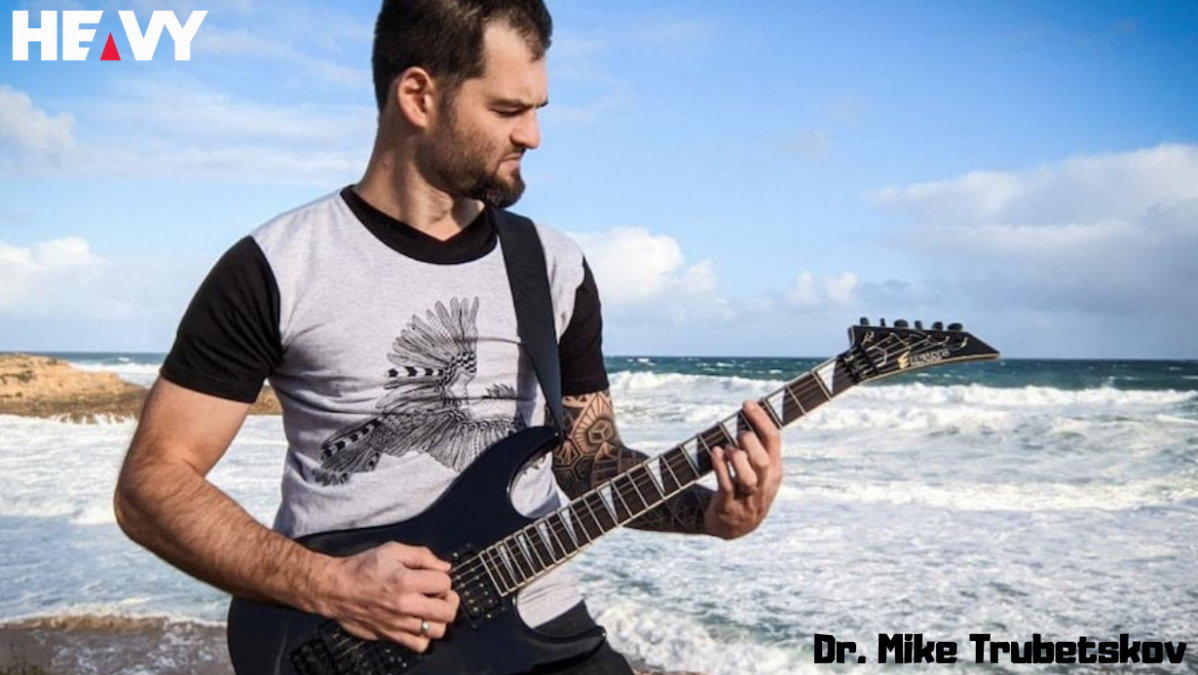 Interview by Angela Croudace Dr. Mike Trubetskov isn’t just a metal producer—he’s a guide into one of the genre’s most misunderstood elements: synths. Based in Melbourne, he works with heavy bands to shape what he calls their “cinematic sound,” and a huge part of that comes from what sits beneath the obvious. For Mike, synths […]

