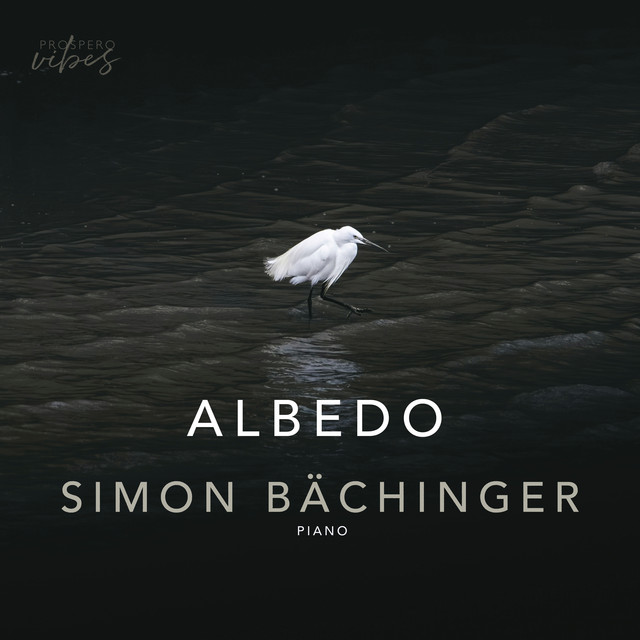
Albedo by Simon Bächinger unfolds with a quiet luminosity that feels almost weightless. The piano carries a delicate clarity, each note placed with intention, allowing space and silence to shape the emotional arc just as much as the melody itself. There is a subtle contrast between light and shadow, giving the piece a reflective depth without ever becoming heavy. It feels intimate and precise, like a moment of stillness captured in sound.
A beautifully restrained composition that resonates through its simplicity and leaves a soft, lasting impression.
Billie Eilish Pirate Baird O’Connell was born on December 18, 2001, and grew up in the Highland Park neighborhood with parents Maggie Baird and Patrick O’Connell, both of whom were musicians and working actors. She was homeschooled with her older brother, Finneas O’Connell, and that gave both siblings the time and freedom to focus seriously on creative work. Her mother taught them the basics of songwriting, and Eilish started early, playing ukulele at age 6, joining the Los Angeles Children’s Chorus at age 8, and writing her first real song at age 11. Dance was also a major part of
Austrian deathrashers Deathstorm premiere the new track “Mount Eerie” at heavily trafficked web-portal MetalBite.com. The track is the second to be revealed from the band’s highly anticipated fifth […]
This Complete List Of Black Sabbath Albums And Songs presents the full discography of Black Sabbath studio albums. Birmingham gave Black Sabbath its identity, its sound, and its original lineup. The band came together in 1968 with Tony Iommi on guitar, Bill Ward on drums, Geezer Butler on bass, and Ozzy Osbourne on vocals. Before settling on the name Black Sabbath in 1969, they worked under the names Polka Tulk Blues Band and Earth. Once the new name was in place, the group moved sharply toward darker material, building songs around occult imagery, horror-influenced lyrics, and heavily down-tuned guitar work.
Chris Poland has a full schedule these days — he says he runs a couple of hundred studios during the day — but the former Megadeth guitarist says he plans to make it out to at least one show on the band’s ongoing farewell tour.
“If it’s the final one, I should go see one,” Poland told George Dionne from KNAC.COM (via Blabbermouth). “I’ll have to make the time. But I will. I’ll make time for Dave.”
Whether the tour actually turns out to be Megadeth‘s last is another question. When the interviewer suggested it might end up being “the world’s longest final tour,” Poland wasn’t entirely dismissive of the idea, but he also offered a reason to think Mustaine might mean it this time: “I don’t know, though. I think Dave is ready. I think Dave‘s ready to go fishing.”
Poland played with Megadeth from 1984 to 1987, appearing on Killing Is My Business… And Business Is Good! and Peace Sells… But Who’s Buying? — two records that helped define thrash metal’s early character. His first live show with the band left a lasting impression, even if it wasn’t entirely comfortable at the time.
“I remember my first time on stage, where I freaked out, was at L’Amours in New York. And luckily, I pulled it off. But I was freaking out ’cause they were playing the song ‘Am I Evil?’ and the whole room was singing it, and it was packed to the gills and the ceiling was sweating. That’s my first experience with a thrash metal crowd. I was just blown away. But I got over it after a while.”
He’s measured about the band’s history, including his own exit from it: “We had good times. We had our moments, and we had our problems, but somehow we pulled it off. I think we all had guardian angels or something.”
The relationship between Poland and Mustaine has never been entirely clean. Poland returned as a featured soloist on Megadeth‘s 2004 album The System Has Failed, but the reunion came with complications. Around the same time, Mustaine included demos from Rust In Peace — featuring Poland‘s playing — on a reissue of that album without Poland‘s consent or payment. Poland says he made repeated attempts to sort it out before involving a lawyer.
“I tried to call Dave at least a dozen times, and I never heard back from him. Then I called Dave‘s manager a dozen times, and he wouldn’t get back to me. The last time I called him, I said, ‘Hey, man. If you don’t call me back, I’m going to call [my lawyer], and we’re going to have to get into it.’
“The manager calls me back and totally insults me, saying, ‘You played a couple of solos. So what?’ And I’m like, ‘What do you mean, “So what?”‘ He said, ‘Dave thought that you would do it for the fans.’ I said, ‘Is everybody else who played on that demo doing it for the fans? Are they getting paid?’ He said, ‘Chris, that’s not the point.’ I said, ‘Listen, man, we have to do something here. I’m not just going to walk away. I love the fans, but I’m just not going to do it. If everybody else is getting a performance royalty for this, I want one.’ I want everybody to know that it wasn’t a nuisance suit, it wasn’t anything like that. I made every attempt to work it out, and they just ignored me.”
Poland eventually settled for $9,500. Mustaine’s account of events has differed from Poland‘s over the years, though in a 2020 interview, he acknowledged Poland‘s playing in notably direct terms: “Chris Poland, as much as I don’t really like the guy, he was a great guitar player.” Mustaine also pushed back on the idea that Marty Friedman’s style developed independently: “When people say, ‘Hey, this sounds like Marty Friedman‘ — no, Marty Friedman sounded like this, because Chris played it first.”
The song “Liar,” from Megadeth‘s 1988 album So Far, So Good… So What?, has long been understood to be about Poland. He confirmed as much a few years ago, characterising his reaction to it with minimal drama: “It’s like the pot calling the kettle black, man. When you point your finger, there are three pointing back at you. I just rolled my eyes and was, like, ‘Really?’”
Sabrina Carpenter was born on May 11, 1999, and raised in East Greenville. Music came into her life early. She began studying voice at age six, and by around age ten, she was posting videos of herself singing Christina Aguilera and Adele songs. Her father built a recording studio for her at home, giving her a place to develop her voice and sharpen her instincts before the industry came calling. One of her first major public breaks arrived through The Next Miley Cyrus Project, an online singing contest in which she placed third in 2010. That exposure helped open the
Tokyo’s industrial metal scene has just caught a major tailwind as Godfrost has officially signed a worldwide, multi-album deal with the legendary Brutal Records. It’s a massive step for the project, which is the solo brainchild of Frost – a name you might recognise as a core member of the goth-metal outfit Gods of Decay, … Continue reading Japan’s Godfrost signs worldwide deal with Brutal Records
The best thrash metal bands are not a mystery, which is why the arguments never stop: everyone agrees on who built the genre in 1983–86 and nobody agrees on the order. This list ranks 25 of them. The top 13 came from the original Loaded Radio reader ranking, kept in that order; the twelve below them are the additions that a list of thrash bands can’t honestly leave out: the three German bands that made thrash nastier, the second Bay Area wave, the Canadians, the Swiss, and the bands that picked it up again after 2000. Slayer are first, and the reason is in the entry.
The rules: bands are judged on how much they changed the genre, how long they stayed relevant, how many bands followed their blueprint, and whether they still matter, which in 2026 is a live question for most of this list. Not nostalgia, not sales. Every band gets one official video. A discography table with formation year, essential album and 2026 status is at the bottom.
How We Ranked The Best Thrash Metal Bands
Four criteria, weighted roughly equally: impact on the genre (did thrash sound different after them), consistency (how many essential records, not just one), influence (how many bands you can trace to them), and current relevance (are they still releasing, touring, or shaping the scene in 2026). Commercial success is noted but doesn’t vote, which is how a band that sold more records than everyone else combined ends up second.
The top 13 is the original Loaded Radio ranking, left in its order. Positions 14–25 are editorial additions, chosen to cover the scenes the original list skipped: Germany, Canada, Switzerland, the late-’80s Bay Area and the post-2000 revival. If your band is missing, the comments are open, and the usual suspects are addressed at the end.
The Best Thrash Metal Bands, Ranked 25 To 1
25. Havok (Denver, 2004)
The best of the 2000s revival bands at the thing revival bands are supposed to do, which is sound like 1987 without sounding like a costume. Time Is Up (2011) and Unnatural Selection (2013) are Bay Area thrash with modern production and David Sanchez’s bark; Conformicide (2017) added politics and bass solos. Havok have been a touring constant for fifteen years and put out singles through 2025 and 2026 ahead of a new record. Bottom of the list because they refined the form rather than changed it, on the list because somebody has to carry it.
24. Power Trip (Dallas, 2008)
Nightmare Logic (2017) is the best thrash album of the 2010s, and it was made by a hardcore band. Power Trip came out of the Texas hardcore scene, played thrash riffs at hardcore shows, and ended up on tour with Anthrax, Lamb Of God and Cannibal Corpse because “Executioner’s Tax” is the kind of song that works in any room. Riley Gale died in August 2020, aged 34. The band returned in 2023 with Seth Gilmore on vocals, and in October 2026 released “Precinct 3” and “Scavenger,” the first new music since Gale, with a full album due in 2027. Higher if the next record lands.
23. Municipal Waste (Richmond, Virginia, 2001)
Crossover thrash as a party, which is how D.R.I. and Suicidal Tendencies did it before the genre got serious. Municipal Waste wrote two-minute songs about beer, zombies and skating, played them at hardcore speed, and became the band that got teenagers into thrash in the 2000s the way Anthrax did in the ’80s. Hazardous Mutation (2005) and The Art Of Partying (2007) are the records; Tony Foresta is the frontman every crossover band since has copied. Electrified Brain (2022) proved the joke still has teeth. Low on the list because the ceiling is the joke; on it because the floor is a riot.
22. Forbidden (San Francisco Bay Area, 1985)
The Bay Area’s second wave had technique the first wave didn’t, and Forbidden had the most. Forbidden Evil (1988) and Twisted Into Form (1990) are precise, melodic, fast thrash with Russ Anderson’s high-register vocals and a rhythm section that included Paul Bostaph, who went on to Slayer, Testament and Exodus. They never got the push Testament did, split in 1997, reunited in 2007 and have come and gone since. The reason they’re here: half the bands above them on this list have employed a Forbidden member.
21. Vio-lence (San Francisco Bay Area, 1985)
One perfect album. Eternal Nightmare (1988) is Bay Area thrash at its most unhinged: Sean Killian’s yelp, Phil Demmel and Robb Flynn’s riffs, songs that sound like a fight in a parking lot. Flynn left in 1991 to form Machine Head, Demmel followed him there a decade later, and Vio-lence became a band people talked about more than heard. The 2019 reunion and the Let The World Burn EP (2022) changed that. They’re here for the one record, and the one record is enough.
20. Sacred Reich (Phoenix, 1985)
Political thrash from the desert. Ignorance (1987) and the Surf Nicaragua EP (1988) said more about Reagan-era America in twenty minutes than most bands managed in a career, and The American Way (1990) is one of the genre’s most underrated full records. Phil Rind’s lyrics were the point, and they’ve aged better than most. The band stopped recording in 1996 and came back with Awakening in 2019, twenty-three years later, and it sounded like no time had passed. Low because the catalog is short; present because “Surf Nicaragua” is still the funniest serious thrash song ever written.
19. Annihilator (Ottawa, 1984)
Jeff Waters is the most technically gifted guitarist in thrash who never joined a Big Four band, and Alice In Hell (1989) is the proof: riffs that sound engineered, a title track that’s still a guitar-school assignment, and “Alison Hell,” which got MTV play when thrash didn’t. Never, Neverland (1990) is nearly as good. Annihilator have been Waters plus a rotating cast for thirty-five years, which caps the ranking, but the first two records put a Canadian band in the same conversation as the Bay Area, and that didn’t happen often.
18. Coroner (Zürich, 1983)
The thinking person’s thrash band, and the one most of the bands on this list would name first if you asked them. Coroner started as Celtic Frost roadies, then made four records between 1987 and 1993, R.I.P., Punishment For Decadence, No More Color and Mental Vortex, that pushed thrash toward jazz and classical harmony without slowing it down. Tommy Vetterli’s playing on Mental Vortex (1991) is a benchmark. They split in 1996, reunited in 2010 and have toured since without a new album, which is the only thing keeping them this low.
17. Voivod (Jonquière, Québec, 1982)
The weirdest band on the list and the one with the longest shadow outside thrash. Voivod began as a punk-metal hybrid on War And Pain (1984), then took thrash somewhere nobody else went on Killing Technology (1987), Dimension Hatröss (1988) and Nothingface (1989): sci-fi concept records with Piggy’s dissonant chords and Snake’s alien phrasing. Piggy died in 2005; Jason Newsted played bass with them from 2002 to 2008; the current lineup won a Juno and keeps making records, Synchro Anarchy (2022) among them. Prog metal, Gojira and half of modern extreme metal owe them. Ranked here because they left thrash behind; they were better for it.
16. Dark Angel (Downey, California, 1981)
The fastest and heaviest of the Los Angeles thrash bands, and the one with Gene Hoglan behind the kit. Darkness Descends (1986) came out the same year as Reign In Blood and in some rooms it hits harder; Time Does Not Heal (1991) famously carried a sticker promising 246 riffs, which is both a joke and accurate. They split in 1992 and spent thirty years as a reunion-tour band until Extinction Level Event, released September 5, 2025, the first Dark Angel album since 1991. It’s a real record, not a victory lap, and it moves them up this list.
15. Destruction (Weil am Rhein, Germany, 1982)
The second of the Teutonic three, and the most purely thrash of them. Infernal Overkill (1985) and Eternal Devastation (1986) are German thrash’s blueprint: Schmier’s shriek, Mike Sifringer’s riffs, a production that sounds like it was recorded in a bunker, and songs (“Mad Butcher,” “Curse The Gods”) that half of Scandinavia’s death metal scene learned from. Schmier was out from 1989 to 1999 and the band suffered for it; since his return they’ve been relentless, with Birth Of Malice (2025) the latest. Below Sodom and Kreator on influence, not on riffs.
14. Sodom (Gelsenkirchen, Germany, 1981)
Where black metal and thrash were the same thing for about three years. Sodom’s early EPs and Obsessed By Cruelty (1986) were so raw they ended up as a founding document for the Norwegian scene; then Persecution Mania (1987) and Agent Orange (1989) turned them into a real thrash band, with Tom Angelripper’s war lyrics and Frank Blackfire’s riffs on the latter making it the German thrash album. Angelripper has kept the band going through every lineup, and The Arsonist (June 2025) is their seventeenth. Highest of the Germans here because Agent Orange is the one most Americans own.
13. Flotsam And Jetsam (Phoenix, 1981)
Melodic sharpness, Eric A.K.’s range, and the most famous departure in thrash: Jason Newsted wrote most of Doomsday For The Deceiver (1986), the first album Kerrang! ever gave six out of five, and left for Metallica weeks after it came out. The band never recovered commercially and never stopped. No Place For Disgrace (1988) is nearly as good as the debut, and the run of albums since 2016 has been their strongest since the ’80s, with A.K. still singing the high parts. Thirteenth because consistency of identity is its own achievement when the man who wrote your best record is in the biggest band in the world.
12. Metal Church (San Francisco / Aberdeen, Washington, 1980)
Slower, darker and more controlled than Bay Area speed thrash, and closer to traditional heavy metal on the 1984 debut, which is why some lists leave them out and why this one doesn’t: “Metal Church” and “Beyond The Black” are thrash with a Priest spine. The Dark (1986) with David Wayne and Blessing In Disguise (1989) with Mike Howe are the peak; Howe’s return in 2015 gave the band a second life until his death in 2021. In 2026 Kurdt Vanderhoof rebuilt the band again, with Brian Allen on vocals, David Ellefson on bass and Ken Mary on drums, and Dead To Rights (April 2026) is the thirteenth album. Forty-six years and still filing.
11. Nuclear Assault (New York City, 1984)
Raw East Coast thrash with a punk backbone. Dan Lilker left Anthrax after the first album and built the band Anthrax might have been without the ambition: Game Over (1986) and Survive (1988) are short, fast, political and angry, with John Connelly’s strained yell and songs about nuclear war, pollution and hanging the guilty that a hardcore crowd could pit to. Handle With Care (1989) was the one that charted. They’ve reunited several times since 2001 without ever becoming a nostalgia act. Eleventh for being the East Coast’s answer to Exodus and never getting the credit.
10. Kreator (Essen, Germany, 1982)
Pleasure To Kill (1986) is the record where thrash tips into death metal, and Mille Petrozza’s delivery on it is the reason half the extreme metal vocalists of the 1990s sound the way they do. Kreator lost their way in the ’90s, like most of this list, and found it again with Violent Revolution (2001), the start of a twenty-five-year run of consistent records that includes Phantom Antichrist (2012), Hate Über Alles (2022) and Krushers Of The World, announced for 2026 with a European tour alongside Exodus and Carcass. The highest-ranked non-American band here, on influence and on durability.
9. Sepultura (Belo Horizonte, Brazil, 1984)
They changed thrash’s geography. Four kids from Belo Horizonte with bad equipment and worse English made Beneath The Remains (1989) and Arise (1991), two of the genre’s definitive records, then changed the genre’s future with Chaos A.D. (1993) and Roots (1996) and the tribal-groove sound that half of nu-metal borrowed. Max Cavalera left in 1996; Derrick Green has fronted the band since 1998, longer than Max did, and the Andreas Kisser-era records held up. Sepultura’s farewell tour wraps at the end of 2026 with a final show in São Paulo, after a last North American run with Exodus. Ninth, and the only band on this list that invented a second genre.
8. Death Angel (San Francisco Bay Area, 1982)
The Ultra-Violence (1987) was recorded when the band were teenagers; drummer Andy Galeon was 14. That it’s a Bay Area classic rather than a novelty is the point: the ten-minute instrumental title track and “Kill As One” are fully formed thrash, and Act III (1990) is one of the genre’s most musical records. A 1990 tour-bus crash nearly killed Galeon and ended the band for a decade. The 2001 reunion produced the best second act in thrash, with The Dream Calls For Blood (2013) and the Grammy-nominated Humanicide (2019). Mark Osegueda is one of the genre’s great frontmen and still looks like he’s enjoying it.
7. Overkill (Old Bridge, New Jersey, 1980)
The most consistent band in thrash, and the one with the best claim to never having made a bad record. Bobby “Blitz” Ellsworth and D.D. Verni have been the core since 1980; Feel The Fire (1985), Taking Over (1987), The Years Of Decay (1989) and Horrorscope (1991) are the East Coast’s answer to the Bay Area, meaner and more metallic, with Blitz’s shriek and Verni’s bass up front. Where most of this list collapsed in the ’90s, Overkill kept releasing albums every two years, and Ironbound (2010) started a late-career run that includes Scorched (2023). Seventh for longevity nobody else here matches.
6. Exodus (Richmond, California, 1979)
The band that built the Bay Area scene before anyone else had a record out. Exodus formed in 1979 with Kirk Hammett on guitar, lost him to Metallica in 1983, and made Bonded By Blood (1985) with Paul Baloff singing it like a street fight; it had been recorded a year earlier, and if it had come out when it was finished it would be on every “first thrash album” list.
Gary Holt has carried the band since, through Steve “Zetro” Souza’s three stints and a Slayer day job, and the 2020s have been strong: Persona Non Grata (2021) and Goliath (March 2026), the twelfth album. Sixth for being the Big Four’s fifth member, the way everyone outside the marketing already knew.
5. Testament (Berkeley, California, 1983)
The band that brought precision to thrash. The Legacy (1987), The New Order (1988) and Practice What You Preach (1989) are the most musical records of the Bay Area’s first wave, Alex Skolnick’s lead playing on them was a level above the competition, and Chuck Billy’s voice has outlasted everyone’s. The ’90s detour into death metal produced Low (1994) and The Gathering (1999), which hold up; the Skolnick reunion in 2005 produced The Formation Of Damnation (2008) and a run that’s still going, with Para Bellum released in October 2025. Fifth because every record since 2008 has been good, which nobody above them can say.
4. Anthrax (New York City, 1981)
The groove and the accessibility, and the East Coast’s seat at the Big Four table. Spreading The Disease (1985) and Among The Living (1987) are the records, Joey Belladonna’s clean voice over Scott Ian’s riffs made thrash something a radio could play, and “I’m The Man” and the Public Enemy collaboration opened the door between metal and hip-hop a decade before anyone walked through it. The John Bush era (Sound Of White Noise, 1993) was better than its reputation; Belladonna’s return produced Worship Music (2011). Cursum Perficio, released September 18, 2026, is the first Anthrax album in ten years. Fourth: the least extreme of the four and the most fun.
3. Megadeth (Los Angeles, 1983)
Technicality pushed furthest. Dave Mustaine was fired from Metallica in April 1983 and spent the next seven years proving a point: Peace Sells… But Who’s Buying? (1986) is the most political thrash record of the decade and Rust In Peace (September 24, 1990) is the genre’s benchmark for musicianship, with Marty Friedman and Nick Menza turning “Holy Wars” and “Hangar 18” into the standard every technical thrash band since has been measured against. Countdown To Extinction (1992) went double platinum.
The feud never fully ended, but the point was made. Megadeth released their self-titled final album on January 23, 2026 and are on a farewell tour Mustaine says could run three to five years. Third, and the gap to second is the gap between the best player and the biggest band.
2. Metallica (Los Angeles, 1981)
The band that took thrash to the world. Kill ‘Em All (1983) named the genre’s attitude, Ride The Lightning (1984) gave it dynamics and ballads, and Master Of Puppets (March 3, 1986) is the thrash album people who don’t like thrash own. Cliff Burton died six months after it came out; …And Justice For All (1988) was the response, and the Black Album (1991) was the moment the band left the genre it had defined and became the biggest metal band in history. Everything since is a different argument.
The M72 tour has run since 2023 and is booked into 2027. Second, not first, for the same reason they’re the only thrash band your parents know: they adjusted. The band above them didn’t.
1. Slayer (Huntington Park, California, 1981)
Slayer never adjusted for anyone. Reign In Blood (October 7, 1986) is twenty-nine minutes long, produced by Rick Rubin for Def Jam, and still the most extreme record a major label has released; “Angel Of Death” and “Raining Blood” were the ceiling for speed and violence in 1986 and nobody has raised it, they’ve only matched it. South Of Heaven (1988) slowed down and got darker; Seasons In The Abyss (1990) is the best of both.
Jeff Hanneman, who wrote most of it, died in 2013; Kerry King, Tom Araya, Dave Lombardo and Paul Bostaph between them are the reason the band never softened. Every Slayer album is ranked here.
The 2019 farewell lasted five years; Slayer returned in 2024 and are playing Reign In Blood 40th-anniversary shows in 2026, including two nights at the Kia Forum in Los Angeles on November 13 and 14. Dave Lombardo talked to The Loaded Radio Podcast about the record and about Hanneman. First, because the question “who is the heaviest band that ever got huge” has had one answer for forty years.
The Full Ranking
Slayer
Metallica
Megadeth
Anthrax
Testament
Exodus
Overkill
Death Angel
Sepultura
Kreator
Nuclear Assault
Metal Church
Flotsam And Jetsam
Sodom
Destruction
Dark Angel
Voivod
Coroner
Annihilator
Sacred Reich
Vio-lence
Forbidden
Municipal Waste
Power Trip
Havok
The Bands That Missed The Cut
Tankard, Heathen, Demolition Hammer, Whiplash, Toxic Holocaust, Warbringer, Evile, Onslaught, Xentrix, Artillery and Sabbat were all considered; the first three were the closest calls. Tankard are the fourth Teutonic band and have never stopped; Heathen’s Victims Of Deception (1991) is a Bay Area record as good as anything at 20–22; Demolition Hammer’s Epidemic Of Violence (1992) is the heaviest thrash album ever made and the band barely existed. The unsung bands have their own list. Pantera, Machine Head, Lamb Of God and Trivium were not considered: groove metal and metalcore are their own genres, and they’d take the first four spots on a list of those.
Thrash Metal Bands: Formed, Essential Album, And Where They Are In 2026
Twenty-one of the 25 were formed between 1979 and 1985; the four exceptions are the revival bands. Thirteen are American, six Californian; the rest are Germany (3), Canada (2), Brazil (1), Switzerland (1). As of October 2026, 20 of the 25 are active, two (Megadeth and Sepultura) are on farewell runs, and Slayer are back after a farewell that didn’t take.
If you’re starting from zero, the 13 essential thrash albums is the listening order. Tell us in the comments which band you’d move and where.
TL;DR
The best thrash metal bands, ranked: 1. Slayer, 2. Metallica, 3. Megadeth, 4. Anthrax, 5. Testament, 6. Exodus, 7. Overkill, 8. Death Angel, 9. Sepultura, 10. Kreator, 11. Nuclear Assault, 12. Metal Church, 13. Flotsam And Jetsam, 14. Sodom, 15. Destruction, 16. Dark Angel, 17. Voivod, 18. Coroner, 19. Annihilator, 20. Sacred Reich, 21. Vio-lence, 22. Forbidden, 23. Municipal Waste, 24. Power Trip, 25. Havok.
Slayer are first because they never softened: Reign In Blood (1986) is still the ceiling for extremity on a major label, and the band is back playing it in full in 2026.
Ranked on impact, consistency, influence and current relevance. Sales don’t vote, which is why Metallica are second.
2026 is a hinge year for the list: Megadeth and Sepultura on farewell runs, Slayer’s 40th-anniversary shows, new albums from Anthrax (first in ten years), Exodus, Metal Church and Dark Angel (first since 1991), and Power Trip’s first music since Riley Gale.
FAQ
Who is the best thrash metal band of all time?
Slayer, on this list, for never softening the sound: Reign In Blood (1986) set the ceiling for speed and extremity, and the band held it for four decades. Metallica are the biggest thrash band and the most influential on metal generally, and rank second; Megadeth are the most technically accomplished and rank third.
What are the Big Four of thrash metal?
Metallica, Slayer, Megadeth and Anthrax, the four American bands that defined thrash in 1983–86 and later toured together under the “Big 4” banner in 2010 and 2011. The term is partly marketing: Exodus, Testament and Overkill have equally strong claims on influence, and Exodus formed before any of the four.
Why isn’t Exodus in the Big Four?
Timing and sales. Exodus formed in 1979 and shaped the Bay Area scene before Metallica arrived, but Bonded By Blood sat unreleased for a year and came out in 1985, after the Big Four’s debuts, and the band never had a major-label breakthrough. The “Big 4” label came from the 2010 tour billing, not from a ranking of influence.
What is the best thrash metal album for beginners?
Master Of Puppets (Metallica, 1986) is the usual starting point because it has the dynamics, the melodies and the production. From there, Reign In Blood (Slayer, 1986) for extremity, Rust In Peace (Megadeth, 1990) for musicianship, Among The Living (Anthrax, 1987) for energy, and Bonded By Blood (Exodus, 1985) for the Bay Area sound.
Who are the best modern thrash metal bands?
Power Trip, Havok, Municipal Waste, Warbringer and Evile lead the post-2000 wave. Power Trip’s Nightmare Logic (2017) is the standout modern thrash album; the band returned in 2026 with its first new music since singer Riley Gale’s death in 2020. Of the original bands, Kreator, Overkill, Testament and Exodus have released strong new records in the 2020s.
Vanessa Carlton and John McCauley have been embroiled in an ongoing legal battle with noisy neighbors for a couple years now. The “A Thousand Miles” singer and Deer Tick member brought the conflict to the Rhode Island Supreme Court on Thursday (April 2) while hundreds of high schoolers observed.