Category: news

  • 10 Unforgettable Blues Rock Songs of the 1970s

    The 1970s were a golden era for blues rock. Building on the British blues explosion of the previous decade, musicians pushed the genre in new directions, combining the emotional intensity of traditional blues with heavier guitar tones, extended improvisation, and the growing influence of hard rock.

    The music wasn’t limited to one approach. Some bands relied on infectious riffs and straightforward arrangements, while others stretched songs into extended instrumental performances. The common thread was an appreciation for the blues and an understanding that great music requires more than technical ability.

    Here are ten unforgettable blues rock songs of the 1970s.

    Free – “All Right Now”

    Few songs capture the spirit of early 1970s blues rock quite like Free’s “All Right Now.” Released on the band’s third studio album, Fire and Water, the recording became an international breakthrough and helped establish Free as one of Britain’s most exciting young rock groups. More than half a century later, its opening guitar riff remains instantly recognizable.

    Guitarist Paul Kossoff was central to Free’s sound, and “All Right Now” demonstrates why he remains so highly regarded. Rather than filling every available space with guitar notes, Kossoff understood the importance of restraint. His playing is economical, allowing the song’s groove and Paul Rodgers’ vocals to carry much of the performance. When Kossoff does step forward, his distinctive vibrato and expressive phrasing make every note count.

    Rodgers was still remarkably young when Free began attracting international attention, yet his voice already possessed the authority and emotional depth of a seasoned blues singer. His performance on “All Right Now” is confident without sounding forced, moving effortlessly between the verses and the song’s explosive chorus. Andy Fraser’s bass playing and Simon Kirke’s drumming provide a rhythmic foundation that gives the recording its unmistakable swagger.

    Although Free would disband in 1973, “All Right Now” remains one of the defining achievements of the original British blues rock movement. It also serves as a reminder that some of the most memorable guitar performances are built around knowing when not to play.

    Freddie King – “Going Down”

    Freddie King was already an established blues musician when he recorded “Going Down” for his 1971 album Getting Ready…, but the song introduced another dimension to his extraordinary guitar playing. With its thunderous opening riff, aggressive rhythm, and King’s commanding vocals, the recording helped bridge the gap between traditional electric blues and the heavier blues rock sound emerging during the early 1970s.

    Written by Don Nix, “Going Down” had previously been recorded by other artists, but King’s interpretation became one of the song’s defining versions. His guitar playing is ferocious without sacrificing the expressive qualities that made him such an influential blues musician. Every bend, vibrato, and sharply articulated phrase sounds deliberate. King could play with tremendous speed when necessary, but his greatest strength was his ability to make a guitar sound like an extension of his voice.

    The recording also benefits from its production and supporting musicians. The rhythm section provides a muscular foundation, while the arrangement allows King’s guitar to dominate without overwhelming the song. Unlike some extended blues rock performances of the period, “Going Down” wastes very little time. The opening riff establishes the mood immediately, and the intensity rarely lets up.

    The Allman Brothers Band – “Statesboro Blues”

    The Allman Brothers Band helped transform blues rock during the early 1970s by combining traditional blues with jazz improvisation, country influences, and the musical traditions of the American South. Their version of Blind Willie McTell’s “Statesboro Blues,” released on the landmark live album At Fillmore East, remains one of the most electrifying examples of that approach.

    Duane Allman’s slide guitar introduction is among the most recognizable openings in blues rock history. His playing has a vocal quality, bending and sustaining notes in a way that makes the instrument sound almost human. Dickey Betts provides an equally important contribution, complementing Allman’s slide work with fluid guitar lines and a strong understanding of the song’s blues foundation. Behind them, Berry Oakley, Butch Trucks, and Jaimoe create a rhythmic foundation that allows the music to breathe while maintaining its forward momentum.

    Gregg Allman’s vocals bring another dimension to the performance. His weathered delivery sounds remarkably mature for someone in his early twenties, capturing the spirit of the original blues without attempting to imitate it. The recording also illustrates why the Allman Brothers Band became such a formidable live act. Their musicianship was impressive, but the real magic came from the way six musicians interacted with one another.

    “Statesboro Blues” is more than a memorable cover. It demonstrates how an older blues composition could become something entirely new in the hands of the right band. For anyone interested in understanding why Duane Allman remains one of the most revered guitarists in rock history, this is an essential starting point.

    Rory Gallagher – “Bad Penny”

    By the time Rory Gallagher released “Bad Penny” on his 1979 album, Top Priority, the Irish guitarist had spent nearly a decade establishing himself as one of the most respected musicians in blues rock. His relentless touring schedule, explosive live performances, and refusal to compromise his musical identity had earned him a devoted international following. “Bad Penny” captures Gallagher’s ability to combine the raw energy of hard rock with the expressive guitar playing that defined his career.

    The song opens with a memorable guitar riff that immediately establishes its driving rhythm. Gallagher’s gritty vocals are perfectly suited to the material, delivering the lyrics with a mixture of frustration and defiance. The recording has a heavier edge than much of his earlier work, reflecting the harder sound he pursued toward the end of the decade. However, his blues influences remain unmistakable, particularly in the phrasing and intensity of his guitar playing.

    Gallagher’s guitar solo is a highlight, combining fluid runs, aggressive bends, and his distinctive vibrato. What makes his playing so compelling is the sense of urgency behind every phrase. Even when demonstrating considerable technical ability, Gallagher never loses sight of the song itself. Bassist Gerry McAvoy and drummer Ted McKenna provide a powerful rhythmic foundation, giving the recording the momentum and energy that made Gallagher’s live performances so memorable.

    “Bad Penny” has become one of Gallagher’s most enduring recordings and a favorite among his fans. It represents a musician who spent the 1970s following his own path, building a remarkable body of work without chasing commercial trends. For listeners discovering Gallagher for the first time, the song offers an excellent introduction to his extraordinary guitar playing and uncompromising approach to blues rock.

    ZZ Top – “La Grange”

    Before ZZ Top became international superstars through MTV and their 1980s recordings, the Texas trio had already established themselves as masters of stripped-down blues rock. Their third studio album, Tres Hombres, released in 1973, helped introduce the band to a much larger audience. Its most recognizable recording, “La Grange,” remains a defining example of the band’s early sound.

    Built around Billy Gibbons’ unmistakable guitar riff, “La Grange” draws heavily from the rhythmic traditions of electric blues. Its connection to John Lee Hooker’s boogie style is immediately apparent, but ZZ Top transform those influences into something distinctly their own. Gibbons’ guitar tone is gritty and aggressive, while Dusty Hill’s bass and Frank Beard’s drums create a groove that never loses its momentum.

    Gibbons delivers one of the most recognizable guitar performances of the decade, demonstrating how a relatively simple blues-based riff can become unforgettable through tone, timing, and attitude.

    There is something almost hypnotic about the way “La Grange” develops. The opening establishes a relaxed groove before the band shifts into a heavier arrangement, giving Gibbons room to unleash a blistering guitar solo. Despite the song’s enormous popularity, it still sounds remarkably raw compared to the polished rock recordings that would dominate the following decade.

    Robin Trower – “Bridge of Sighs”

    Robin Trower’s departure from Procol Harum allowed him to pursue a heavier, guitar-centered sound that would establish him as one of the defining blues rock musicians of the 1970s. His second solo album, Bridge of Sighs, became a landmark recording, and its title track remains one of the most atmospheric guitar performances of the decade.

    “Bridge of Sighs” is built around a slow, hypnotic groove that creates an almost otherworldly atmosphere. Trower’s guitar tone is thick and expressive, with sustained notes that seem to hang in the air. His playing reflects the influence of Jimi Hendrix, particularly in his use of distortion, vibrato, and psychedelic textures, but Trower developed a recognizable voice of his own.

    Vocalist and bassist James Dewar deserves equal recognition for his contribution. His soulful delivery provides an emotional center to the recording, complementing Trower’s guitar without competing for attention. Drummer Reg Isidore completes the trio, supplying a restrained but powerful rhythmic foundation.

    What makes “Bridge of Sighs” so memorable is its atmosphere. The recording never feels rushed, allowing the listener to become absorbed in the music. Trower demonstrates that blues rock can be heavy without relying on speed, and emotionally intense without becoming excessive. Its unforgettable guitar tone and haunting arrangement have helped make it a favorite among generations of guitar players.

    Savoy Brown – “Hellbound Train”

    Savoy Brown were among the pioneering British blues rock bands of the late 1960s and early 1970s, helping introduce American blues traditions to a new generation of listeners. Led by guitarist Kim Simmonds, the group underwent numerous lineup changes throughout its career, but its commitment to blues-based music remained constant. “Hellbound Train,” the title track from the band’s 1972 album, stands among their most ambitious and memorable recordings.

    Clocking in at more than nine minutes, “Hellbound Train” takes listeners on a musical journey that gradually builds in intensity. The song begins with a restrained, almost hypnotic groove before developing into a powerful blues rock performance. Simmonds’ guitar playing is central to the arrangement, moving between understated blues phrases and increasingly aggressive passages as the music gathers momentum.

    The recording demonstrates how adventurous blues rock could become during the early 1970s. Savoy Brown never achieved the same mainstream recognition as some of their British contemporaries, but their influence on the genre was substantial. “Hellbound Train” remains a favorite among dedicated blues rock listeners and an outstanding example of the band’s ability to combine traditional blues influences with the heavier, more experimental sounds of the era.

    Foghat – “Slow Ride”

    Few recordings capture the pleasure of a heavy blues rock groove as effectively as Foghat’s “Slow Ride.” Released on the band’s 1975 album, Fool for the City, the song became their signature recording and one of the most enduring rock radio staples of the decade.

    Several members of Foghat had previously played with Savoy Brown, and that background is evident in the group’s approach. “Slow Ride” is built around a repetitive, blues-based guitar riff that gradually develops into a larger arrangement. Dave Peverett’s vocals bring a rough-edged confidence to the performance, while Rod Price’s guitar playing supplies much of its character. Price was particularly admired for his slide guitar work, and his contributions helped distinguish Foghat from other hard rock bands of the period.

    The song’s extended album version gives the musicians room to explore the groove, incorporating instrumental passages that emphasize the band’s chemistry. Bassist Nick Jameson and drummer Roger Earl maintain a steady rhythmic foundation, allowing the guitars to move between tightly structured riffs and more spontaneous playing.

    What makes “Slow Ride” unforgettable is its combination of simplicity and momentum. The central musical idea is immediately recognizable, but the performance continues developing long after the opening riff. It is the kind of recording that sounds particularly satisfying at high volume, capturing the energy of a band that understood how to translate traditional blues influences into arena-sized rock music.

    Derek and the Dominos – “Layla”

    Few songs in blues rock history carry the emotional weight of Derek and the Dominos’ “Layla.” Released on the band’s 1970 album, Layla and Other Assorted Love Songs, the recording brought together Eric Clapton and Duane Allman for one of the most celebrated guitar collaborations in rock history. What emerged was a song that combined the intensity of electric blues with the emotional turmoil of unrequited love.

    Clapton wrote “Layla” during his infatuation with Pattie Boyd, who was married to his friend George Harrison at the time. That personal anguish became the foundation for a performance filled with desperation and urgency. From its opening guitar riff, the recording demands attention. Clapton’s vocals convey a sense of emotional vulnerability, while the guitar work transforms those feelings into something explosive.

    Duane Allman’s contribution helped elevate the recording into something extraordinary. His slide guitar playing intertwines with Clapton’s guitar, creating a musical conversation between two artists whose approaches were different but remarkably complementary. Allman’s soaring slide lines give the song much of its distinctive character, while Clapton delivers some of the most impassioned playing of his career. The chemistry between them is especially remarkable considering that Allman joined the album sessions after recording had already begun.

    Then comes the unexpected second half. The song transitions from its frantic blues rock opening into an extended piano-led instrumental passage, built around a musical idea developed by drummer Jim Gordon. The arrangement gradually unfolds with layers of guitar, including Allman’s expressive slide work, creating a dramatic contrast with the intensity of the first section.

    “Layla” is one of those rare recordings where the musicianship, songwriting, and emotional circumstances behind the music come together perfectly. It also preserves a remarkable moment in blues rock history when two of the genre’s most influential guitarists joined forces. More than half a century later, that opening riff remains one of the most recognizable sounds in rock music.

    Gary Moore – “Parisienne Walkways”

    Gary Moore’s reputation as one of the great blues rock guitarists is often associated with his later solo career, particularly the success of Still Got the Blues in 1990. However, his musical roots and extraordinary guitar ability were already evident during the 1970s. “Parisienne Walkways,” released on his 1978 album Back on the Streets, provides an early demonstration of the emotional guitar style that would eventually become his trademark.

    His ability to hold a single note and make it feel more powerful than an entire flurry of guitar runs became one of his defining characteristics. That quality is already evident on “Parisienne Walkways,” where the guitar seems to carry as much emotional weight as the lyrics themselves.

    The recording also demonstrates the musical connection between Moore and Lynott, two Irish musicians whose careers intersected repeatedly. Their collaboration gives the song a sense of intimacy, with Lynott’s vocals and Moore’s guitar complementing one another beautifully. Although Moore would explore hard rock and other musical directions before returning more fully to the blues, this recording reveals how deeply blues expression informed his playing.

    “Parisienne Walkways” remains one of the most recognizable compositions of Moore’s career and a reminder that the foundations of his later success were established long before he became an international blues rock star.

    The post 10 Unforgettable Blues Rock Songs of the 1970s appeared first on Blues Rock Review.

  • Angine de Poitrine Win 2026 Polaris Music Prize

    Angine de Poitrine, the viral Quebec instrumental math-rockers, are on quite a run right now. The duo has existed since 2019, but they’ve become internet superstars during the 2026 calendar year. They’ve played Jools Holland and Fallon, and they’ve already inspired a tribute act across the planet. Just recently, Angine de Poitrine started playing big festivals, hitting Chicago’s Riot Fest and Richmond’s Iron Blossom last weekend. (I caught their set at Iron Blosson, and I might have more to say about it later.) On Tuesday night, Angine de Poitrine became the latest winners of Canada’s prestigious Polaris Music Prize.

    The post Angine de Poitrine Win 2026 Polaris Music Prize appeared first on Stereogum.

  • Yoo Doo Right Release New Single “Sofort, Si Fort” 

    Montréal experimental rock outfit, Yoo Doo Right, have today released the second single “Sofort, Si Fort” from their
  • Tour Preview: (hed)PE Still Broke Tour

    Tour Preview: (hed)PE Still Broke Tour

    Twenty-five years after the release of their breakthrough album Broke, Californian pioneers (hed)PE are heading back to the UK for a run of dates celebrating one of the defining records of their career. Originally released in 2000, Broke fused punk, metal, hip-hop, funk and reggae into a sound that refused to sit neatly in any one genre. Now, the band are bringing the Still Broke 25th Anniversary Tour to the UK and Ireland, with the album set to be played in its entirety.

    For anyone who lived through the alternative metal explosion of the late 1990s and early 2000s, Broke needs little introduction. The album delivered twelve tracks across almost 54 minutes, including fan favourites such as Killing Time, Waiting to Die, Feel Good, Bartender, Boom (How You Like That) and Swan Dive. It also featured guest appearances from Serj Tankian of System of a Down and Morgan Lander of Kittie on Feel Good.

    The appeal of this tour is that it isn’t simply a greatest-hits set with a couple of anniversary tracks thrown in. Broke will be performed from start to finish, giving fans the chance to hear the album as a complete piece while also revisiting the songs that helped establish (hed)PE’s reputation.

    The UK run began in Southampton on 22 September, followed by Bristol, Exeter, Liverpool and Manchester before crossing to Dublin and Belfast. The tour then returns to the UK for dates in Glasgow, Newcastle, Wolverhampton, Nottingham, Norwich, London, Milton Keynes and Brighton, with the final show taking place at Concorde 2 on 11 October. Along the way, the band will be joined by fellow alternative metal outfit Cold.

    With Broke reaching its quarter-century mark, the Still Broke 25th Anniversary Tour offers a rare opportunity to hear the album in full. For longtime fans, it is a chance to revisit a record that soundtracked a particular era of alternative metal, while for newer listeners it provides the perfect excuse to discover Broke in the way it was intended: loud, unpredictable and from beginning to end.

    For all the latest news, reviews, interviews across the heavy metal spectrum follow THE RAZORS’S EDGE on facebook, twitter and instagram.

    The post Tour Preview: (hed)PE Still Broke Tour appeared first on The Razor's Edge.

  • NYMB’s Entire Catalog Reissued On Vinyl

    nymb and Forge Again Records celebrate the re-issue of the unsung ‘90s indie band’s entire remastered catalogue, including
  • Angry Anderson Dead At 79: Rose Tattoo Frontman Dies

    angry-anderson-remembered

    Angry Anderson is dead at 79. The Rose Tattoo frontman died on Monday in Australia, surrounded by family, weeks after suffering a cardiac arrest during the band’s European farewell tour in August. That tour was called One Last Ride. Nine remaining European shows were scrapped, the Australian farewell dates planned for Melbourne, Sydney, Perth, Adelaide and Brisbane never happened, and Anderson went home for treatment instead.

    His family said he was ‘a devoted father, and much-loved member of his friends, bandmates and the wider music and entertainment community,’ and asked for privacy. He had fronted Rose Tattoo for fifty years.

    🎧 STREAM THE METAL BREAKDOWN DAILY NOW:

    Angry Anderson booked a farewell tour, named it One Last Ride, and didn’t make it to the end of it. On today’s Metal Breakdown Daily I’m going through what happened in Europe in August, why half the obituaries you’ll read today have his Rose Tattoo history wrong, and what fifty years at the front of that band actually bought him. Download the free Loaded Radio App on Apple iOS and Google Play and stream the show now.

    What Happened

    The first sign anything was wrong came on 30 August, when Rose Tattoo put out a short statement. Anderson had suffered a cardiac arrest and was in hospital in Europe receiving treatment. The band asked people to leave the family alone.

    ‘We would like to let everyone know that Angry suffered a cardiac arrest and is currently in hospital receiving treatment and the care he needs,’ the statement read. ‘At this time, we kindly ask that you please respect the privacy of Angry and his family as they focus on Angry, his treatment, and his recovery.’

    The European leg had nine dates left on it and was due to finish on 21 August in Busdorf, Germany. All of it went. So did the Australian farewell run that was supposed to close the band’s career in September.

    He was flown home. He died on Monday, aged 79. Reports of his death attribute it to cardiac arrest following the episode on tour.

    🤘 LIVE & LOUD: Stream the World’s Hardest Radio Station 24/7

    The Tour Was Called One Last Ride

    I’ve watched a lot of bands announce farewell tours they didn’t mean. Rose Tattoo meant this one. Anderson was pushing eighty when the dates went on sale, the band had been playing for five decades, and the name on the poster was not a marketing line.

    He got most of the way through it. Then his heart stopped in Germany, the last nine shows came off the board, and a farewell tour nobody expected to be literal became exactly that.

    There’s a version of this where that reads as tragedy. I don’t think it is. He announced the end, went out and played nearly all of it, and the tour did the job it was named for. Compare that to the long list of bands still out there with nobody left from the original lineup, trading on a name and a logo. Anderson took his band to the finish line himself.

    Slash And The Tributes

    Slash was first out of the gate, and he kept it short.

    ‘I’m going to miss my good friend, I can’t believe he’s gone,’ he wrote. ‘Condolences to his family, friends & band members.’

    That connection goes back forty years. Guns N’ Roses covered Rose Tattoo’s ‘Nice Boys’ on Live ?!*@ Like a Suicide in 1986, and for a huge number of North American listeners that cover is the only Rose Tattoo song they’ve ever heard. It’s the reason the band ever got played on rock radio over here at all. Slash has talked about that record for decades and has turned up on stage with the Tattoo more than once. The Guns N’ Roses orbit has always held Anderson in higher regard than the charts ever did.

    Tributes have come in from across Australian music and well outside it, which tells you something about a man most of the metal press only ever wrote about in relation to somebody else’s cover version.

    RoseTattoo_2019

    Fifty Years, And He Wasn’t There On Night One

    Here’s the part almost every obituary today is getting wrong, so let’s fix it.

    Anderson was not a founding member of Rose Tattoo. The band’s first lineup, in early 1976, was Tony Lake on vocals, Pete Wells on slide guitar, Leigh Johnston on rhythm guitar and Michael Vandersluys on drums. Anderson arrived in Sydney mid-year from Melbourne, where he’d fronted Buster Brown from 1973 until that band folded in 1975, and he replaced Lake. He brought Buster Brown’s drummer Dallas ‘Digger’ Royall with him.

    So he wasn’t there on night one. He was there for the next fifty years, which is the harder thing to do. Every other man who played on those first records is dead — Royall in 1991, Peter Wells and Ian Rilen both in 2006, Lobby Loyde in 2007, Mick Cocks in 2009, Neil Smith in 2013. Anderson kept the band alive through all of it.

    Eight studio albums between 1978 and 2020. The 1978 self-titled debut with ‘Bad Boy For Love’ on it, their first hit single. ‘Rock ‘n’ Roll Outlaw’. ‘We Can’t Be Beaten’. Slide guitar over street-level lyrics, delivered by a short, bald, tattooed man who sang like he was shouting over a bar fight and probably had. They were inducted into the ARIA Hall of Fame in 2006.

    They never got the American career the records deserved. Bands who did get one — AC/DC, and later Guns N’ Roses — kept pointing at them anyway. If you’ve read our ranking of the best cities in the world for heavy music, the Sydney pub circuit Rose Tattoo came out of is a big part of why Australia punches so far above its population.

    We Also Recommend – Bands With No Original Members: 23 Metal Bands Still Playing

    The Other Life

    Anderson had a second career that had nothing to do with volume.

    In 1987 he released ‘Suddenly’, a ballad, which went to No. 2 on the Australian Music Report and No. 3 in the UK. It got there because it was the song playing when Scott and Charlene got married on Neighbours, an episode ABC News reports was watched by more than 20 million people. The man who sang ‘Rock ‘n’ Roll Outlaw’ had a wedding ballad. He never seemed remotely embarrassed about it.

    He acted, too. He was in Mad Max Beyond Thunderdome alongside Tina Turner, which puts him in one of the strangest and best-scored film franchises heavy music has ever attached itself to — worth a look at our best metal movie soundtracks ranking for the company he was keeping. He fronted youth affairs segments on Australian daytime television. He sang ‘Bound for Glory’ at the 1991 AFL Grand Final.

    And he did decades of work that never made the metal press. He was made a Member of the Order of Australia in 1993 for service to the community as a youth advocate, and he worked with the Starlight Children’s Foundation, Canteen, Camp Quality and Make-A-Wish, plus years of prostate cancer awareness campaigning. In 2018 his son Liam was killed in a park in New South Wales. Anderson kept doing the advocacy work afterwards.

    Check Out – The 20 Best Metal Movie Soundtracks, Ranked

    Rose Tattoo After Anderson

    The band was already finishing. One Last Ride was the end of the road by design, and there is no indication anyone intends to carry the name forward.

    If anyone did, it would be a Rose Tattoo with nobody in it from any era of the band’s recording history, which is a different proposition entirely from the reunions and continuations we cover most weeks.

    This has been a brutal fourteen months. Ozzy died in July last year, seventeen days after he sat on a throne in Birmingham and finished the job, and his festival is only now coming back to America without him. Brent Hinds went a month after that, with no warning at all. Anderson sits between those two. He got to name his ending and play most of it, and then it stopped nine shows short.

    Go and play the 1978 debut. Loud. That’s the one.

    https://www.youtube.com/watch?v=dIhRZNHuWlo&list=RDdIhRZNHuWlo&start_radio=1&pp=ygUPcm9zZSB0YXR0b29iYW5koAcB

    TL;DR

    • Angry Anderson, frontman of Rose Tattoo, died on Monday 21 September 2026 in Australia. He was 79.
    • He suffered a cardiac arrest during the band’s European farewell tour in August and was hospitalised; he was flown home to Australia for treatment.
    • The tour was called One Last Ride. Nine remaining European dates and the planned Australian farewell shows in Melbourne, Sydney, Perth, Adelaide and Brisbane were all cancelled.
    • Anderson joined Rose Tattoo in mid-1976, replacing original vocalist Tony Lake. He was not a founding member, but he fronted the band for fifty years and eight studio albums.
    • Slash paid tribute, calling him ‘my good friend’. Guns N’ Roses covered Rose Tattoo’s ‘Nice Boys’ in 1986, which is how most North American fans found the band.

    FAQ

    How did Angry Anderson die?

    Anderson died on Monday 21 September 2026 in Australia, aged 79. Rose Tattoo announced on 30 August that he had suffered a cardiac arrest during the band’s European tour and was in hospital receiving treatment. He was later flown home to Australia, and reports of his death attribute it to cardiac arrest following that episode.

    How old was Angry Anderson when he died?

    He was 79. Gary Stephen Anderson was born in Melbourne on 5 August 1947 and died on 21 September 2026.

    Was Angry Anderson an original member of Rose Tattoo?

    No. Rose Tattoo’s first lineup in early 1976 was Tony Lake on vocals, Pete Wells, Leigh Johnston and Michael Vandersluys. Anderson joined mid-1976, replacing Lake, after his previous band Buster Brown broke up. He then fronted Rose Tattoo for fifty years, longer than any other member.

    What happened to Rose Tattoo’s farewell tour?

    The One Last Ride tour was cut short in August 2026 when Anderson suffered a cardiac arrest in Europe. Nine remaining European shows were cancelled, including the scheduled finale on 21 August in Busdorf, Germany, along with the Australian farewell dates planned for September in Melbourne, Sydney, Perth, Adelaide and Brisbane.

    What was Angry Anderson’s biggest hit?

    His biggest chart success was the 1987 solo ballad ‘Suddenly’, which reached No. 2 on the Australian Music Report and No. 3 on the UK Singles Chart after featuring in the Scott and Charlene wedding episode of Neighbours. With Rose Tattoo, his best-known songs are ‘Bad Boy For Love’, ‘Rock ‘n’ Roll Outlaw’, ‘We Can’t Be Beaten’ and ‘Nice Boys’, the last of which Guns N’ Roses covered in 1986.

    Fifty years at the front of one band, and he went out on a tour he named himself. What’s the Rose Tattoo song you’re putting on today? Tell us in the comments. Follow Loaded Radio for daily rock and metal news.

    The post Angry Anderson Dead At 79: Rose Tattoo Frontman Dies appeared first on Loaded Radio.

  • Jayler Share Cinematic The Getaway Video Ahead Of Deep Purple Tour

    Jayler - KKs Steel Mill, Wolverhampton – 30 August 2025. Photo: Sandis Luttropp/MetalTalk

    Jayler have released a cinematic video for The Getaway ahead of a 37-date European and UK arena tour as special guests to Deep Purple. Filmed at Cotswold Airport, the video places James Bartholomew, Tyler Arrowsmith, Ricky Hodgkiss and Ed Evans among runways, aircraft hangars and open skies. A 1965 Ford Mustang and a Yakovlev Yak-3 warbird feature in the film, which moves from sunrise to a golden-hour finale.

    “The Getaway isn’t about running away,” the band said. “It’s about heading towards something. It’s freedom, brotherhood and chasing whatever comes next. No destination. No explanation. Just The Getaway.”

    The video was produced by Ignite Productions, with Lisa Perry as creative director and executive producer and David Paveley as producer.

    The song appears on Jayler’s debut album, Voices Unheard, which was released by Silver Lining Music in May. The record reached No. 2 on the UK Independent Album Breakers Chart, No. 3 on the Official Rock & Metal Albums Chart and No. 5 on the Official Independent Albums Chart.

    The release follows a year in which Jayler opened for Guns N’ Roses at Monsters of Rock Brazil, toured Brazil with Lynyrd Skynyrd and played several UK shows with Sammy Hagar.

    The band’s tour with Deep Purple begins at Arena 8888 in Sofia on 29 September and concludes at London’s Royal Albert Hall on 25 November 2026. See here for tickets and further information.

    Jayler With Deep Purple – 2026 Dates

    • 29 September – Arena 8888, Sofia, Bulgaria
    • 1 October – BT Arena, Cluj-Napoca, Romania
    • 2 October – Papp László Sportaréna, Budapest, Hungary
    • 4 October – TIPOS Aréna, Bratislava, Slovakia
    • 5 October – Wiener Stadthalle, Vienna, Austria
    • 7 October – O2 Arena, Prague, Czech Republic
    • 8 October – Atlas Arena, Łódź, Poland
    • 10 October – Stark Arena, Belgrade, Serbia
    • 11 October – Boris Trajkovski Arena, Skopje, North Macedonia
    • 13 October – Telekom Center Athens, Marousi, Greece
    • 16 October – Hallenstadion, Zürich, Switzerland
    • 17 October – Unipol Forum, Milan, Italy
    • 19 October – Sant Jordi Club, Barcelona, Spain
    • 20 October – Movistar Arena, Madrid, Spain
    • 22 October – Adidas Arena, Paris, France
    • 23 October – Lotto Arena, Antwerp, Belgium
    • 25 October – Royal Arena, Copenhagen, Denmark
    • 26 October – Avicii Arena, Stockholm, Sweden
    • 28 October – Spektrum Arena, Oslo, Norway
    • 29 October – Scandinavium, Gothenburg, Sweden
    • 31 October – Qi Arena, Leipzig, Germany
    • 1 November – Sporthalle, Hamburg, Germany
    • 3 November – Westfalenhalle, Dortmund, Germany
    • 4 November – Uber Arena, Berlin, Germany
    • 6 November – Festhalle, Frankfurt, Germany
    • 7 November – Arena, Nuremberg, Germany
    • 9 November – Ziggo Dome, Amsterdam, Netherlands
    • 10 November – Zénith, Strasbourg, France
    • 12 November – Arkéa Arena, Bordeaux, France
    • 13 November – Zénith Nantes Métropole, Saint-Herblain, France
    • 15 November – LDLC Arena, Lyon, France
    • 18 November – Utilita Arena, Newcastle, UK
    • 19 November – OVO Hydro, Glasgow, UK
    • 21 November – bp pulse LIVE, Birmingham, UK
    • 22 November – AO Arena, Manchester, UK
    • 24 November – Eventim Apollo, London, UK
    • 25 November – Royal Albert Hall, London, UK

    Jayler

    • James Bartholomew – vocals, guitar
    • Tyler Arrowsmith – guitar
    • Ricky Hodgkiss – bass, keys
    • Ed Evans – drums
    The post Jayler Share Cinematic The Getaway Video Ahead Of Deep Purple Tour first appeared on MetalTalk – Heavy Metal News, Reviews and Interviews.
  • The Chandelier Swing Shares New Video

    St. Louis, Missouri-based punk band The Chandelier Swing first appeared in 2020 with an appetite for shaking off
  • Rose Tattoo Singer Angry Anderson Dead at 79

    During his 50-year career, Anderson crossed paths with Guns N' Roses and Mad Max. Continue reading…
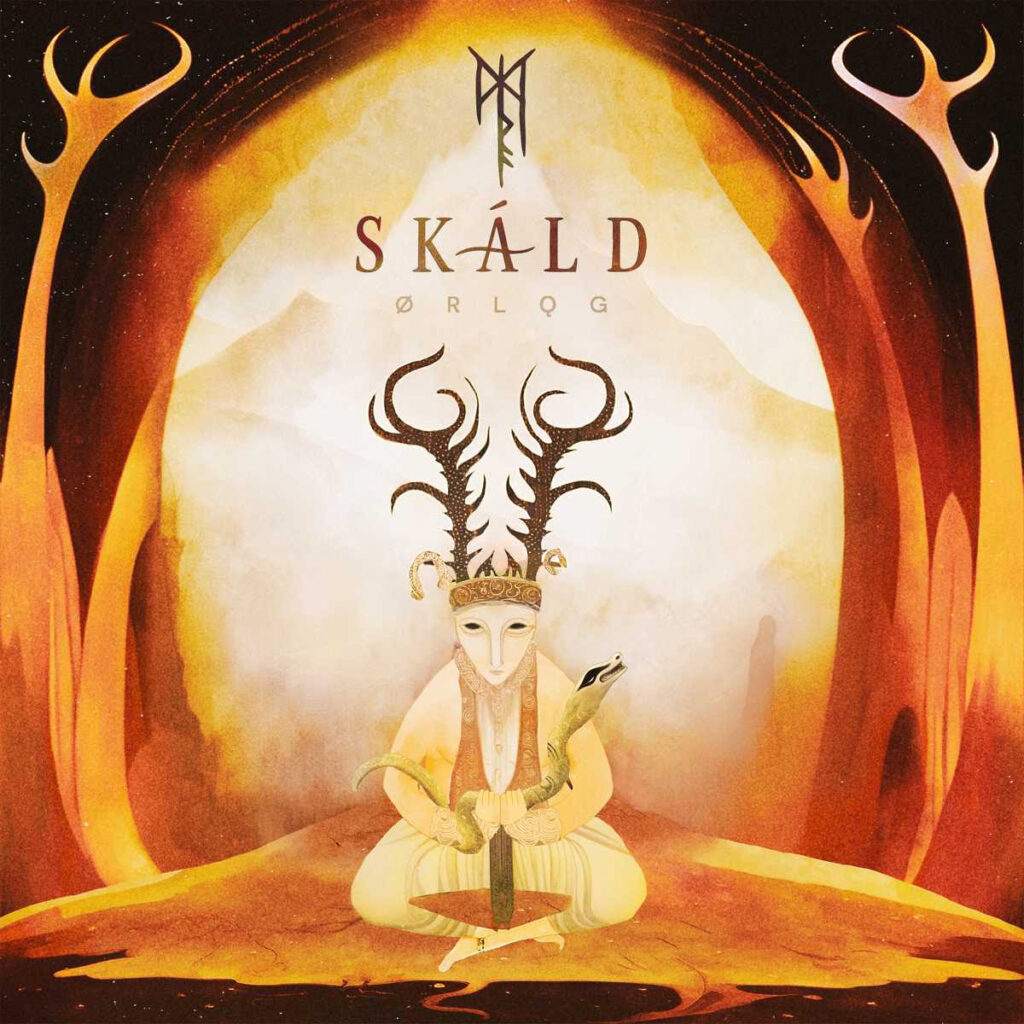
  • French folk band Skáld releases third single “Dǫkksalir” + lyric video

    French dark folk entity SKÁLD releases “Dǫkksalir”, unveiling gentle melodies that unfold almost like a lullaby—perfectly fitting the concept of the enchanting yet frightening sirens lurking in the dark. The song is taken from the band’s upcoming full-length album, Ørlǫg, which will be released this Friday, September 25, 2026. Ørlǫg marks SKÁLD’s first release via Napalm Records and awakens ancient spirits as the band extends an invitation into times long gone but not forgotten.
     
    Right in time to bring their new music to stages across Europe and the United Kingdom, SKÁLD are set for a major autumn UK/EU arena tour supporting The Hu, kicking off on September 29 in Glasgow.
     
    SKÁLD about “Dǫkksalir”:
    “‘Dokksalir’ draws us into the dark depths of the sea; in the distance, the sirens’ song calls to us, yet also terrifies us; mischievous spirits watch us and laugh at us; they already know we will be weak; the light no longer protects us; down below, eyes stare at you—perhaps it is you yourself watching yourself lose your way. Those siren voices are so beautiful.”

    Watch the lyric video for “Dǫkksalir” NOW!

    As the Norns weave our future, this album is a fascinating passageway into our pristine origins and the consequences of our choices. Ten new songs as stepping stones, Ørlǫg is an offering to listen, to dwell, to reflect—and to find something within yourself previously unknown. SKÁLD don’t just play music, they awaken ancient ways.
     
    A staple band in the neofolk genre, SKÁLD deliver a striking work of art with their latest album, deferentially using their sources to keep old spirits alive and form the enchanting world of Ørlǫg. The language might sound unfamiliar, but the music still touches the soul.
     
    SKÁLD about Ørlǫg:
    “Ørlǫg is the cosmic web that influences the world and every person. Part of our Ørlǫg is determined by our birth, our past actions, and our upbringing, but Ørlǫg is not set in stone; our daily choices are constantly shaping it. What we do now and what we have done in the past determines what will happen to us in the future; we cannot escape the consequences of our actions. This album makes us question our choices—both individual and collective—and the patterns we accept or reject. The Norns weave our destiny, but we can take control of certain things: travel, ride worlds, and grow. Each song on this album describes a situation, a place, a choice to be made. Let’s take hold of our Ørlǫg.”

    Get Your Copy Of Ørlǫg NOW!

    The atmospheric journey to claim direction starts within the dreamscapes of “Draumakona”, an expressive look at the female side of shamanic prophecy. The French band constructs their Nordic folk melodies to be particularly catchy, shifting powerfully between female lead singing and multilayered vocal arrangements to create an antiphony between individuum and community. Inspired by Skaldic poetry, SKÁLD use instruments fitting of the time: Ørlǫg is shaped by Nordic fiddles, different forms of harps and lyres, horns, kannels, and whistles, among others, as well as three lead vocalists to bring the arrangements to life. “Myrkviðr” picks up on the opening track’s persuasive energy, with male vocals taking the lead this time.

    Further spreading their message is “Ratatoskr”, intonated by clattering sounds and throat singing, channeled into hauntingly repetitive chants of the eponymous squirrel’s name. “Útgarðr” contrasts the different voices compellingly by the passages being sung simultaneously with alternating focus and a goosebump-inducing climax—instantly opposed by “Ek skald rida” which makes use of similar techniques, but is the most tranquil track on the album. “Himinbjǫrg” reaches far out to the edge of Asgard, where Heimdall guards the rainbow bridge, Bifröst. SKÁLD lend him an assertive voice, so the song serves as an emphatic yet reassuring guide through our sometimes-clouded destiny. “Heiemo og Nykkjen”, a rendition of a traditional medieval folk ballad from what is now Norway, takes a more provident approach to both instrumentation and vocal delivery, while “Veit barnit”calls upon the knowledge of children and uses a child’s voice alongside their usual harmonies to reflect that. The grim finale, “Eldr ok iss”, Old Norse for “fire and ice”, again calls on contrasts as well as referencing part of the creation myth in which the primordial being Ymir emerged from Muspelheim—the realm of fire—colliding with icy Nilfheim in the beginning of times. SKÁLD build an appropriate arc of suspense with a formidably sinister atmosphere.

    Ørlǫg tracklisting:

    1. Draumakona
    2. Myrkviðr
    3. Ratatoskr
    4. Dǫkksalir
    5. Útgarðr
    6. Ek skald rida
    7. Himinbjǫrg
    8. Heiemo og Nykkjen
    9. Veit barnit
    10. Eldr ok iss

    Ørlǫg will be available in the following formats:
    – 1LP Gatefold Whitelabel / Testpressing, incl. LP-Sized Booklet, Covercard (numbered), Certificate of Authenticity (numbered, dated) – Napalm ROW exclusive (strictly limited to 50 copies)
    – 1LP Gatefold Splattered Milk Black Orange, incl. LP-Sized Booklet – Napalm Records exclusive (strictly limited to 300 copies)
    – Bundle: 1LP Gatefold Translucent Yellow & Logo Shirt – Napalm Records exclusive
    – Bundle: Digipack & Shirt – Napalm Records exclusive
    – 1LP Gatefold Marbled Translucent Orange – Band Only Exclusive (strictly limited to 300 copies)
    – 1LP Gatefold Clear Indie USA (strictly limited to 200 copies)
    – 1LP Gatefold Translucent Yellow
    – 1LP Gatefold Gold – France Exclusive (strictly limited to 500 copies)
    – 1CD Digipack, incl. 6p Digipack
    – Digital Album

    SKÁLD Live 2026
     
    Warrior Chant Tour 
    As Special Guest for The Hu
    29.09.26 UK – Glasgow / O2 Academy
    01.10.26 UK – Bristol / Prospect Building
    02.10.26 UK – Bournemouth / O2 Academy
    03.10.26 UK – Newcastle / O2 City Hall
    05.10.26 UK – Belfast / The Telegraph Building
    06.10.26 IE – Dublin / 3Olympia Theatre
    08.10.26 UK – Birmingham / O2 Academy Birmingham
    09.10.26 UK – London / O2 Academy Brixton
    10.10.26 UK – Manchester / O2 Apollo
    11.10.26 UK – Norwich / UEA LCR
    14.10.26 BE – Brussels / Ancienne Belgique
    15.10.26 DE – Hamburg / Sporthalle
    17.10.26 DE – Munich / Tonhalle
    18.10.26 DE – Berlin / Columbiahalle
    19.10.26 PL – Warsaw / Stodola
    20.10.26 PL – Warsaw / Stodola
    22.10.26 DE – Cologne / Palladium
    23.10.26 NL – Utrecht / TivoliVredenburg
    24.10.26 NL – Tilburg / 013
    27.10.26 FR – Lyon / Le Radiant
    28.10.26 FR – Paris / L’Olympia
    30.10.26 CH – Zurich / X-TRA
    31.10.26 LU – Esch-sur-Alzette / Rockhal
    01.11.26 BE – Brussels / Ancienne Belgique
     
    SKÁLD are:
    Christophe Voisin Boisvinet – Percussion, Nordic Fiddles, Harp, Horn, Vocals, Programming
    Marti Ilmar Uibo – Percussion, Lyre, Kannel, Whistles, Jaw Harp, Vocals
    Steeve Petit – Percussion, Vocals
    Marie Potosniak – Fiddles, Vocals
    Guillaume Levy – Irish Bouzouki, Citole, Gudok
    Nathalie Lemoye-Voisin – Vocals
    Ravn – Moraharpa
    Michel Abraham – Vocals
    Eyline Uibo – Vocals

    The post French folk band Skáld releases third single “Dǫkksalir” + lyric video first appeared on FemMetal – Goddesses of Metal.