Category: news

  • Dreamcatcher is E.G. Phillips’ Single Out Now

    Good Day Noir Family,
    E.G. Phillips’ “Dreamcatcher” reveals its character through the first delicate vocal flourishes of Anyssa Govea.

    Dreamcatcher is E.G. Phillips’ Single Out Now

     Her phrasing signals refinement, guiding the listener into a nocturnal atmosphere brushed with subtle jazz and soul tones.

    The mood is intimate yet assured, and the song unfolds with patience rather than urgency.

    What stands out most is the attention to detail. Small instrumental gestures appear and disappear with intention. The piano threads gently around the vocal lines, at times echoing them, at times answering in soft conversation. Meanwhile, the bass rests confidently on the tonic notes, providing a steady foundation where every melodic nuance can land securely. That restraint allows the arrangement to breathe, and as a result, each element carries weight.

    The interplay between voice and instrumentation creates a sublime balance. Nothing feels rushed, and nothing feels overstated. The production favors nuance over spectacle, and that choice elevates the composition. Phillips demonstrates clear compositional maturity here. He shapes the harmonic progression carefully, ensuring that the emotional arc develops naturally rather than dramatically. The jazz inflections blend with soul textures, giving the track a timeless elegance.

    Listening to “Dreamcatcher” evokes the image of slowly sipping an aged whiskey. At first, you notice the warmth; then, with repeated sips, the deeper layers reveal themselves. Similarly, this song invites immersion rather than passive consumption. It asks for attention, and in return, it offers subtle rewards.

    Anyssa Govea’s performance carries softness and control. She never forces the emotion; instead, she lets it unfold gently. That choice reinforces the sincerity at the heart of the piece. The result is music that must be experienced before it can be fully understood.

    “Dreamcatcher” stands as a refined and introspective single, crafted with care and artistic intention. E.G. Phillips delivers a moment of pure, honest art that resonates quietly yet deeply.

    Dreamcatcher is E.G. Phillips’ Single Out Now!


    Sublime!


    Dreamcatcher is E.G. Phillips’ Single Out Now

    E.G. Phillips is a San Francisco-based songwriter known for his witty and poetic lyrics, intricate compositions, and penchant for blending folk traditions with jazz and classical sensibilities. With influences ranging from Bob Dylan to Duke Ellington, Phillips’ music offers a unique perspective on the human condition, wrapped in evocative storytelling and lush arrangements.

    Produced by Chris McGrew and Kevin Seal, and recorded at Wally’s HydeOut (Hyde Street Studios, Studio C) in San Francisco, “Dreamcatcher” features: Vocals: Nyssa (Anyssa Govea) Guitar: Christopher Fortier Keys: Kevin Sealm Bass: Liam Craddock Drums: Chris McGrew Mixed by Chris McGrew Mastered by Justin Weis (Trakworx)


    Find E.G. Phillips Here:

    Spotify
    Instagram


    Discover New Bands Click Here


    The post Dreamcatcher is E.G. Phillips’ Single Out Now appeared first on Edgar Allan Poets – Noir Rock Band.

  • Album Review: Diatribes – Degenerate

    Album Review: Diatribes – Degenerate

    Reviewed by Eric Clifford

    Look, I love OSDM. It’s a huge part of my musical DNA and while I do tend to prefer the blastier, gurglier sides of the genre those early efforts by Deicide, Incantation and a hundred others are formative to the way I think about and approach music. They’re a bedrock of sorts, a springboard from which I’ve dived into so much of the rest of the genre, and to date if I can’t think of anything else to put on whatever I’m listening to is likely to be one entry or another from that glorious, rancorous subsection of the genre. It’s such a colourful, varied outcropping with limitless crannies to spelunk within, that even if I vehemently disagree with the tiresome curmudgeons that assert that the genre never got better than it was in the 80’s/early 90’s, I can at least concede that those albums are worth the covetous attitude they seem to inspire. But you can’t just imitate the glory days and expect your own efforts to be as laudable. And, misfortunate as it may be, that looks to be in part what has beset Diatribes on “Degenerate”.

    This thing is old school to a fault, lashed fast to the thrash and death ways of yore with bullet-belted anaconda coils. You can hear it, so clearly it barely warrants remarking upon, screaming bloody gore in seven churches somewhere south of heaven. And there’s nothing wrong with that – if you do it well. But it’s that same back-to-basics approach combined with slapdash playing that comprehensively stimies Diatribe’s ambitions. Trotsky, in the imposing tome that is his “History of the Russian Revolution”, outlines the following about police spies reporting on Rasputin and his seemingly interminable state of inebriation: “Thus for months and years the melody was played on three keys: “Pretty drunk,” “Very drunk,” and “Completely drunk”. Similar things could be said of this album as I swear the playing becomes looser the longer the album goes on. What time signature is the section at 2.01 in “Last Enemy” meant to be in? Why is it played in the rhythm of a washing machine having a heart attack? Stick with the song for a moment – listen to the sheer amount of notes in the tremolo section from 3.06 onwards that sound as though they’re being played for the first time by a thirteen year old trying to dodge Zulu warriors attacking him with blow darts from the bushes. I’m not a stickler for atomic-clock precision in my metal albums, but this really does tip over the edge into feeling a bit amateurish at points, which would matter less if every riff was conceptually awesome, but when so many are so stock standard it becomes harder to overlook haphazard execution.

    Album Review: Diatribes - Degenerate

    “Swamp Spirits” is a bit of twangy good ‘ol boy slide blues, and I imagine it’s what hold music in Alabama sounds like. It’s awkward and incongruent, but even at their best, the songs here are sadly just “o.k” for the most part. “Hostility Within” commits no sins beyond forgiveness, but every second of it is predictable, using factory standard patterns that get the job done but seldom prove exciting or noteworthy. More livid cuts got a little head bop out of me, but truly great death metal has me headbanging hard enough to dislocate my spine. I need enough visits to a chiropractor to put his children through university once “Warmaster” or “Cause of Death” are done with me, but none of that suicidal urge to crush my invertebral discs to powder ever seemed to strike me when “Degenerate” instead was the soundtrack.

    Solos are random splats of (possibly improvised) 16th notes and wah-pedal assault, squealing like bats in a centrifuge. Have you ever heard what sonar actually sounds like? It’s a hateful squiggle of piercing high frequencies that feels like having a dental drill pushed into your eardrums, and the guitar solos Diatribes give us here feel something like a close cousin to it – not exactly the same, but you can tell that they’re related. Speaking of related – plenty of bands cite Slayer as an influence, but even so pilfering a riff from “Mandatory Suicide” on “Masquerade” is a bit on the cheeky side. And perhaps it’s just me, but listen to “Lost Soul”; in particular the bit at 0.24. Then listen to Danny Elfman’s theme for Tim Burton’s “Batman” back in 1989. Now, I have been huffing a lot of paint thinner lately, but…there’s a similarity there, right? But it’s not difficult to complain; being from Yorkshire, it’s a talent that’s practically encoded into my genes. Lets instead fish for saving graces. And there are some – The bass tone for instance. Bulky, apparent, complimentary to but not buried within the mix. If you – whoever you are and whyever you would care about my opinion – want an easy way to score points with me, for the love of god, make your bass a distinct entity within the production. Some tracks even have cool bits in! “Empire of Hate” plays with its rhythms, crunchy triplets above the dancing acid rain of a lead line above, before firing off into the distance with blastbeats. Things collapse a bit with a sloppier melodic passage at 1.48 in which you can hear the guitars desync repeatedly, but for a second there, there was a spark of something that might have worked out were it tightened and honed, made a more formidable implement simply for greater application of the whetstone.

    It’s frustrating, but the problem is twofold: A lot of these tracks are shackled down by performance missteps, but even if everything were polished to a mirror sheen, these songs would still be pretty average overall. Take “Brutal Sarcasm” for example; the solo sounds like a dolphin argument. Wedge Yngwie in there and of course the song is much improved for it – but you’d have to do a similar reinvention of every other bit of the song in order to pluck it from “o.k with a great solo” to “great all round”. Almost thirty six years ago now, Deicide released a debut that sounds in a lot of ways like an idealised version of what this album was trying to be – with the unpalatable speedbump that Diatribes can’t come close to writing anything as phenomenal as “Dead by Dawn” (to say nothing of the far superior “Legion” release two years later). It’s not all bad for certain, there are some decently animalistic riffs here and there (“The Witch” having a surfeit of appreciably hazardous clippings from classic thrash – 0.58 for one example among others), and the production is something I can wholly embrace. I also like that they haven’t detuned so far that they could use their E string for a g string. But I can’t escape the suspicion that hereafter I would only ever play this one as backing music. Listened to attentively, the songs only begin to stand out when they do something untoward – solos that sound like they were recorded in the middle of a train collision, slipshod attempts at dual guitar leads, offputting rural blues cuts that sound like they could’ve been ripped out of that “Deliverance” movie where a bunch of guys are menaced by rednecks. Maybe Diatribes and their take on an evergreen if defiantly retro sound will be what the doctor ordered for you, but in a crowded field of contemporary and nostalgic alternatives It feels like stretch to suggest Diatribes as worthy listening unless you are somehow starved of worthy death metal.

    For all the latest news, reviews, interviews across the heavy metal spectrum follow THE RAZORS’S EDGE on facebook, twitter and instagram.

    The post Album Review: Diatribes – Degenerate appeared first on The Razor's Edge.

  • AT THE GATES Details How Their Final Album With TOMAS LINDBERG Came Together

    At The Gates-07

    At The Gates touched on everything from recording the new record to some of their final experiences with the late and great Tompa.

    The post AT THE GATES Details How Their Final Album With TOMAS LINDBERG Came Together appeared first on Metal Injection.

  • The Best Pop Song of the 1990s Still Has Sparkle

    What’s the best pop song of the 1990s? It’s not an easy question to answer. The decade brought Britney Spears, Christina Aguilera and so many other great pop stars.

    The post The Best Pop Song of the 1990s Still Has Sparkle appeared first on Audio Ink Radio.

  • The Afghan Whigs – “House Of I”

    Though they’ve kept up their usual habit of doing cover songs, it’s been a while since we’ve heard new original music from the Afghan Whigs. That drought ends today, however, with “House Of I,” their first new music in four years. Vocalist Greg Dulli produced and mixed the track with Christopher Thorn, and it was…

    The post The Afghan Whigs – “House Of I” appeared first on Stereogum.

  • On Randy Rhoads’ Death Anniversary, Bob Daisley Shares Rare Lost Recording

    bob-daisley-randy-rhoads-ozzy

    What Did Bob Daisley Reveal About Randy Rhoads?

    Bob Daisley shared a rare 1979 audio snippet featuring Randy Rhoads from early writing sessions in Monmouth, saying the guitarist’s brilliance still came through even while he was “experimenting” and “feeling his way.” The post immediately stirred fresh calls for more of the unreleased archive to be made public.

    TL;DR

    • Bob Daisley posted a rare Randy Rhoads snippet from 1979 in tribute to the 44th anniversary of Rhoads’ death
    • Daisley said the clip comes from his “Holy Grail” tapes recorded in Monmouth near the England-Wales border
    • The audio captures Rhoads before the full Ozzy solo era had taken shape
    • Fans quickly began asking for more unreleased material to be released
    • The post revives long-running interest in what still remains unheard from that period

    Randy Rhoads material does not surface casually.

    That is why this post landed with weight the second fans saw it.

    Daisley did not tease a rumor or recycle a familiar photo. He shared a piece of audio and attached real context to it: late 1979, Monmouth, early ideas, unfinished energy, and a version of Randy Rhoads that most fans never get to hear.

    Legacy releases hit differently now because fans are no longer satisfied with polished anniversaries and recycled packaging. They want the process. They want the rough edges. They want the part of the story that was never fully opened up.

    Bob Daisley’s Post Put the Focus on Process, Not Nostalgia

    The Clip Was Framed as a Window Into Randy’s Development

    Daisley describes the recording as a snippet from his “Holy Grail” tapes and says Rhoads “really shines in this,” even though he was still trying out ideas and experimenting.

    This was not sold as a finished masterwork. It was presented as evidence of what Rhoads sounded like while building toward the next level.

    The Timing Made the Post Even More Powerful

    Daisley shared the clip while marking 44 years since Rhoads’ death on March 19, 1982. Rhoads was just 25 when he died in the plane crash that cut short one of the most important guitar careers metal has ever seen.

    Loaded Radio Recommends – Unreleased Randy Rhoads Tapes: Bob Daisley Reveals Why We Might Never Hear the Lost Riffs (Loaded Radio Exclusive)

    randy-rhoads

    Why a 1979 Recording Matters So Much

    It Captures Randy Before the Full Ozzy Breakthrough

    Rhoads is most widely known for his work on Blizzard of Ozz and Diary of a Madman, the two Ozzy Osbourne studio albums that made his playing part of heavy music history. Blizzard of Ozz arrived in 1980 in the UK and 1981 in the US, which places this 1979 snippet in the creative build-up before the world heard the finished impact.

    That Is the Version of Randy Fans Rarely Get

    Most archival rock releases lean on finished songs, alternate mixes, or cleaned-up live cuts.

    What makes this kind of material so much more compelling is that it exposes movement. You hear a player shaping ideas, not just executing them. For a guitarist whose reputation has become almost mythic, that kind of glimpse feels unusually personal.

    The Real Story Here Is the Unreleased Archive

    Fans Did Not Hear This as a One-Off

    The reaction under posts like this is usually immediate and predictable for a reason: once listeners know there is more in the vault, the snippet stops being the whole story.

    It becomes proof.

    Proof that material exists.
    Proof that it is listenable.
    Proof that there may be far more behind it.

    That Is Why the “Holy Grail” Label Sticks

    Calling these tapes the “Holy Grail” is dramatic, but it also makes sense. Rhoads only recorded a limited body of officially released work before his death, so anything substantial from that orbit carries outsized value. His legacy with Quiet Riot and Ozzy remains foundational, and that small catalog is exactly why unreleased material carries so much tension around it.

    This Is Bigger Than a Tribute Post

    It Reopens an Old Frustration

    Hard rock fans have been trained to expect endless repackaging while the truly revealing material stays locked away.

    That is the frustration underneath the excitement here.

    A short snippet is enough to energize the fan base, but it also reminds everyone that the deeper story still has not been fully told.

    It Also Raises a Business Question

    Archival releases are rarely held back by fan interest. They are usually slowed by control, ownership, approvals, and competing interests. That is an inference, but it is the pattern that has defined major catalog releases across legacy rock for years. In this case, Daisley’s post adds public pressure without confirming anything beyond the existence and quality of at least some of the material.

    Check This Out – Bob Daisley Breaks His Silence On Ozzy Osbourne Snubs and What Really Happened on The Loaded Radio Podcast [Exclusive Interview]

    ozzy-1981-randy-bob

    Why Randy Rhoads Still Pulls This Kind of Reaction

    His Influence Was Massive and the Timeline Was Brutal

    Rhoads helped reshape heavy guitar playing through a blend of metal attack and classical precision, and his work continues to be treated as a major turning point in the genre. He was posthumously inducted into the Rock and Roll Hall of Fame in 2021, which only reinforced how durable that legacy remains.

    There Is Still a Sense of Incompletion Around Him

    Some artists leave behind huge discographies. Randy Rhoads did not.

    That is why even a fragment matters.

    Every newly surfaced piece feels less like bonus content and more like recovered history.

    Fans Are Right to Want More

    The Demand Is Not About Collector Obsession

    This is not just diehards asking for scraps.

    It is a reasonable response to hearing material that adds depth to one of metal’s most important short-form legacies. Fans are not asking for novelty here. They are asking for access to the creative trail behind a player whose recorded output was cut off far too early.

    The Bigger Question Has Not Gone Away

    If this clip sounds this strong in snippet form, how much more is sitting unheard?

    That is the question Bob Daisley’s post puts back on the table.

    And once that question is back, it does not go away quietly.


    FAQ

    What Did Bob Daisley Post About Randy Rhoads?

    He shared a rare audio snippet from late 1979 and said it came from his “Holy Grail” tapes, describing Rhoads as brilliant even while still experimenting.

    Where Was the Randy Rhoads Snippet Recorded?

    According to Daisley’s post, it was recorded in Monmouth near the border of England and Wales.

    Why Is This Randy Rhoads Audio Important?

    It appears to capture Rhoads in an earlier developmental phase before the release of the Ozzy Osbourne material that made him internationally famous.

    What Albums Is Randy Rhoads Best Known For?

    He is best known for playing on Ozzy Osbourne’s Blizzard of Ozz and Diary of a Madman.

    Has Bob Daisley Released the Full “Holy Grail” Tapes?

    No full release was announced in the post shown in your screenshot. What surfaced was only a short sample.

    Randy Rhoads Bio

    Who Was Randy Rhoads?

    Randy Rhoads was an American guitarist best known as a co-founder of Quiet Riot and as the guitarist and co-songwriter on Ozzy Osbourne’s first two solo studio albums. His blend of classical influence, speed, melody, and precision helped define the next era of metal guitar. He died in 1982 at age 25, but his impact on heavy music never stopped expanding.

    The post On Randy Rhoads’ Death Anniversary, Bob Daisley Shares Rare Lost Recording appeared first on Loaded Radio.

  • Complete List Of Lionel Richie Songs From A to Z

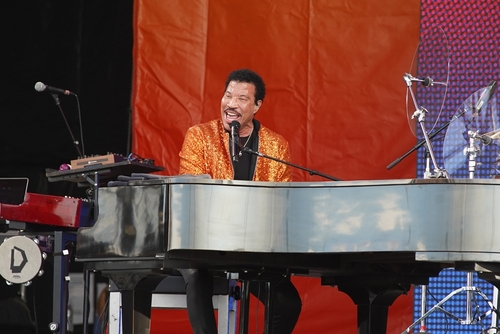
    Complete List Of Lionel Richie Songs From A to Z

    Lionel Richie’s solo catalog brings together intimate love songs, polished pop and R&B, dance-floor anthems, soundtrack recordings, country collaborations, and some of the most recognizable melodies of the past five decades. This complete A-to-Z guide gathers his album tracks, remixes, duets, featured appearances, charity recordings, and major solo releases through July 2026. Lionel Richie’s career took root in Tuskegee, Alabama, where his early fascination with music helped shape a life defined by melody, charisma, and exceptional songwriting talent. Richie first drew national attention as a member of the Commodores, who formed at Tuskegee Institute and developed from a funk-driven group

    The post Complete List Of Lionel Richie Songs From A to Z appeared first on ClassicRockHistory.com.

  • INFRARED MAGAZINE 2026-03-19 14:00:23

    VIA DOLORIS, the solo project of Oslo-based musician Gildas Le Pape, streams their debut album “Guerre et Paix” today through Black Metal Promotion. Across seven expansive compositions and a runtime of 48 minutes, the album […]

    The post appeared first on INFRARED MAGAZINE.

  • “There’s so much that needs to be confronted right now”: How Fox Lake are turning up the heat

    Fox Lake​’s veins are full of fire, and they want to give it to you too. In fact, they may have done so already. If you headed down early on Poppy’s recent UK tour you might have caught the Denver trio putting her fans through a thorough warm-up, with an arsenal of explosives tunes fusing the muscular swagger of nu-metal with the bravado of rap and the jaggedness of hardcore. 

    They thrive off the energetic exchange between them and the crowd, even those who are new to their game. After all, it’s what brought them to heavy music in the first place. ​“You go to a hardcore show or a nu-metal show, whatever it is, and there’s nothing like it,” notes guitarist Brandon Kemp, who’s dropping in alongside bassist Zach Swafford from the back rooms of Zurich’s Komplex 457. ​“The whole crowd is a part of the show, and I think that’s what makes it so special.” 

    Fox Lake March 2026 promo credit Thad Sisneros full length

    Formed in 2017, the trio – completed by vocalist Nathan Johnson – served the world a knuckle sandwich by means of introduction on 2020 debut Silence & Violence, but it was on last year’s follow-up New World Heat that they jumped up to the next level. That transmission of energy that matters so much is taking place on an even bigger scale now, but crucially, they want to see you use that fire for something.

    New World Heat’s thundering thesis is to always, always choose action over passivity. ​“There were a lot of people around us who we saw getting into the victim mentality and falling into bad habits, myself included,” explains Zach. ​“It’s very easy to get into comfortable habits that can actually be really self-destructive over a long enough period of time – especially things like doomscrolling. They seem so innocuous at the time, but it’s really, really detrimental. It’s about really challenging yourself and asking, ​‘What stuff benefits me, and what am I doing on purpose versus what am I allowing the world to determine for me?’”

    And there’s a bigger, more urgent component to this message. Fox Lake have no trouble with a political meaning being drawn from their music. In fact, they never want to leave their stance ambiguous – it’s free Palestine and fuck Trump, as they declare onstage every night – even if it’s not their defining quality. They want to catalyse meaningful change, not merely liking, sharing or to quote Zach’s example, posting squares for Black Lives Matter. In short: they want to see you out on the streets.

    “Especially in America right now, there’s so much that needs to be handled and so much that needs to be confronted, and so much that needs to be taken control of – as corny as it sounds, taking the power back and putting it back in the hands of the people,” asserts Zach. 

    “A lot of people are feeling really powerless and neutered by the system in a way that prevents them from doing anything, or feels like they’re prevented from doing anything. If you want to see something be different, then you have to act differently, and you have to encourage other people to act differently.” 

    Posted on March 19th 2026, 2:00p.m.

  • Watch Sunflower Bean’s Julia Cumming Activate Pop-Star Mode On Fallon

    Next month, Julia Cumming will release her first-ever solo album. For many years, Cumming has led the New York indie rock band Sunflower Bean; their debut album Human Ceremony came out almost exactly a decade ago. Now, Cumming is venturing off on her own to release the new album Julia, and people are treating it as a potential big deal. Edgar Wright, for instance, directed the video for lead single “My Life.” And last night, Julia Cumming performed that song on Jimmy Fallon’s Tonight Show.

    The post Watch Sunflower Bean’s Julia Cumming Activate Pop-Star Mode On <em>Fallon</em> appeared first on Stereogum.