Category: news

  • Incredible long-lost Black Sabbath live session from 1970 surfaces

    Three months after the release of their debut album, Black Sabbath travelled to Hilversum in the Netherlands to film a session for the short-lived Dutch TV show Doebidoe.

    Broadcast on Nederland 1 – the oldest TV channel in the country – Doebidoe was the predecessor of the long-running Top Pop and featured live performances from the likes of David Bowie (who performed Space Oddity in 1969), Deep Purple and local heroes Golden Earring, who appeared on the show several times.

    The Sabbath session found the band in peak form. They played a 40-minute set, performing blistering, often extended versions of songs from their debut album, including a version of The Wizard featuring different lyrics to the original and a rare live version of Warning. They also mimed a performance of Evil Woman for the broadcast.

    Now, the full, broadcast-quality audio from the live tracks – long thought to have been lost – has surfaced. Previously, only a 20-second live clip that surfaced on YouTube in 2013, showing Sabbath performing N.I.B. on Doebidoe (without audio), was evidence that any record of the session had survived, and broadcaster AVRO had claimed the tapes were destroyed in a fire.

    Posted by BlackSabbath on 

    The audio appears on an unofficial live album, The Lost 1970 Avro Sessions, released on the mysterious German label Avertigro, named in tribute to the band’s record label, Vertigo, and AVRO. The album is available (should any copies remain) as a limited edition of 666 copies.

    Thankfully for Sabbath fans, the audio is also on YouTube (embedded below) and on the Internet Archive, but it’s so good it deserves a full release. It’s what Record Store Day was built for.

    Three days after filming their session for Doebidoe, Black Sabbath appeared on the German TV show Beat-Club, playing Black Sabbath, Iron Man and N.I.B., as well as a soundcheck cover of Carl Perkins’ Blue Suede Shoes. The N.I.B. footage was finally released on Beat-Club’s YouTube channel earlier this year.

  • Dead Rock Heads Alive – by Rockcast.de – Folge 1 mit John Lennon

    Dead Rock Heads Alive: John Lennon, Ole Ohlendorff und die Geschichten hinter den Bildern

    Rockgeschichte trifft Kunst. Mit John Lennon starten Ole Ohlendorff und Tippi ihre neue gemeinsame Rockcast-Reihe. Im Mittelpunkt stehen Musiker, die Ole gemalt hat, ihre Lebensgeschichten und die Frage, was sie bis heute mit uns verbindet.
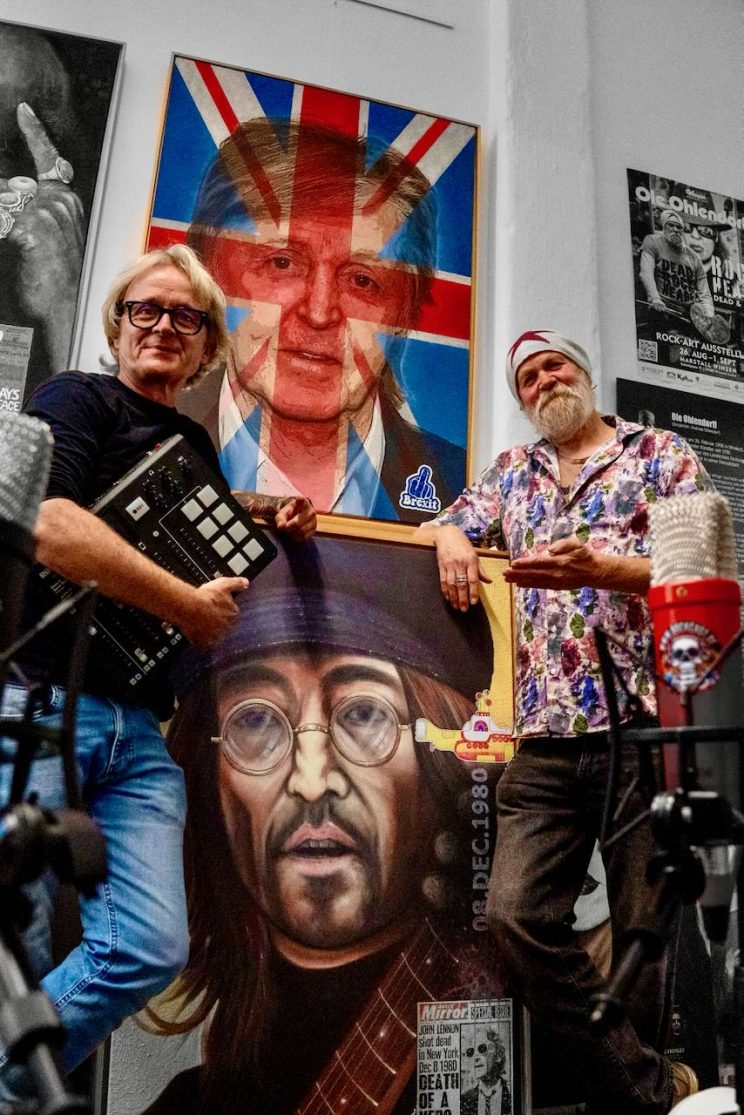
    John Lennon ist seit 1980 tot. Seine Musik lebt weiter. Und auch in der Kunst von Ole Ohlendorff nimmt der Beatles-Gründer einen besonderen Platz ein. Lennon war 1996 der erste Musiker, den der Künstler für seine Serie Dead Rockheads auf die Leinwand brachte. Fast 30 Jahre später bildet dieses Bild den Ausgangspunkt für ein neues gemeinsames Projekt mit Rockcast-Macher Tippi.

    Unter dem Titel Dead Rock Heads Alive sprechen die beiden künftig regelmäßig über Musiker, ihre Musik und die Geschichten hinter Oles Bildern. Geplant ist eine neue Folge alle zwei Wochen. Pro Ausgabe stehen ein oder zwei Künstler im Mittelpunkt. Den Auftakt macht John Lennon. Und das ist kein Zufall.
    John Lennon und ein Yellow Submarine

    Die Geschichte beginnt lange vor dem ersten Pinselstrich. Ole Ohlendorff erinnert sich an Weihnachten 1970. Damals bekam er von seinen Eltern ein großes Puzzle mit dem Motiv des Beatles-Films Yellow Submarine. Die Beatles waren ihm aus dem Radio bereits bekannt. Doch das Puzzle weckte seine Neugier auf die Band und ihre Welt.
    Jahre später führte ihn eine Reise nach London noch tiefer in die Geschichte der Fab Four. 1995, auf dem Weg ins neue Jahr, erkundete Ole die Stadt und folgte den Spuren der Beatles. Abbey Road, Carnaby Street und die Atmosphäre der britischen Musikgeschichte hinterließen ihre Wirkung.

    Zurück in Deutschland hörte er Beatles-Musik in seinem Atelier. Daraus entstand der Impuls, John Lennon zu malen. Am 26. Februar 1996, Oles Geburtstag, begann die Arbeit. Fertig war das Bild am Ostermontag desselben Jahres.

    Aus einem Musikerporträt wurde der Anfang einer ganzen Serie.
    Vom Polizisten zum Künstler

    Oles Weg in die freie Kunst verlief nicht geradlinig. Er arbeitete unter anderem als Polizist auf der Davidwache in Hamburg und sammelte Erfahrungen in verschiedenen Berufen. In den 1980er-Jahren begann er intensiver zu zeichnen. 1990 entschied er sich endgültig für die freie Kunst.

    Die Rockmusik begleitete ihn dabei von Anfang an. Sie lieferte ihm Themen, Erinnerungen und persönliche Bezugspunkte. John Lennon wurde zum ersten Künstler, mit dem sich diese Verbindung auf der Leinwand zeigte.

    Heute umfasst die Serie Dead Rockheads nach Oles Angaben 182 Musikerporträts. Dazu gehören Größen wie Jimi Hendrix, Janis Joplin und Jim Morrison.

    Wie aus einzelnen Bildern eine Serie werden sollte, erkannte Ole zunächst selbst nicht. Erst seine Frau Martina brachte den entscheidenden Gedanken ins Spiel. Bei einem Rundgang durch eine Ausstellung stellte sie fest, dass die Musikerporträts zusammengehörten. Damit war die Serienidee geboren.

    Ole malt keine Plattencover

    Wer Oles Bilder betrachtet, erkennt bekannte Gesichter. Doch ihm geht es nicht darum, eine Fotografie möglichst exakt auf die Leinwand zu übertragen.

    „Ich male keine Plattencover. Ich male Menschen“, lautet der zentrale Gedanke hinter seiner Arbeit.

    Ole beschäftigt sich intensiv mit dem jeweiligen Musiker. Er hört dessen Musik während des Malens oft in Endlosschleife. Dazu kommen Recherchen, persönliche Erinnerungen und Gespräche mit Menschen, die den Künstler erlebt haben oder seine Geschichte kennen.

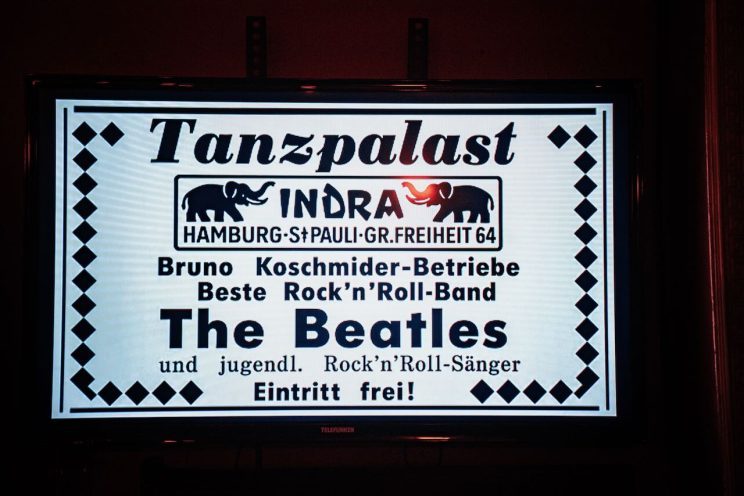
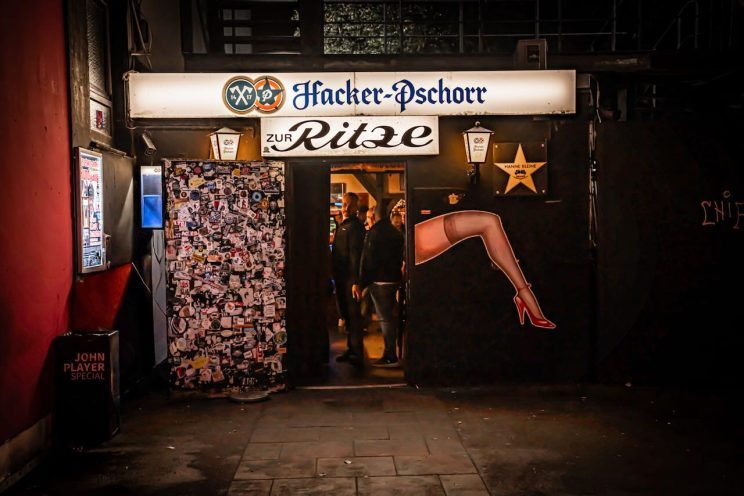
    Hamburg spielt dabei eine besondere Rolle. Die Stadt war für die Beatles ein wichtiger Ort in ihren frühen Jahren. Ole traf Zeitzeugen und Wegbegleiter, darunter den Star-Club-Fotografen Günter Zinth, den Musiker und Beatles-Kenner Ulf Krüger sowie den Hamburger Künstler Erwin Ross, der als „Rubens von der Reeperbahn“ bekannt war. Auch der Fotograf Robert Günther gehört zu den Gesprächspartnern, deren Erinnerungen in Oles Arbeit einfließen.
    So entsteht ein Bild aus unterschiedlichen Perspektiven. Die Musik gibt den Rhythmus vor. Die Recherche liefert den Hintergrund. Und der Malprozess entwickelt daraus eine eigene Geschichte.

    John Lennon: Öl, Collage und persönliche Erinnerungen

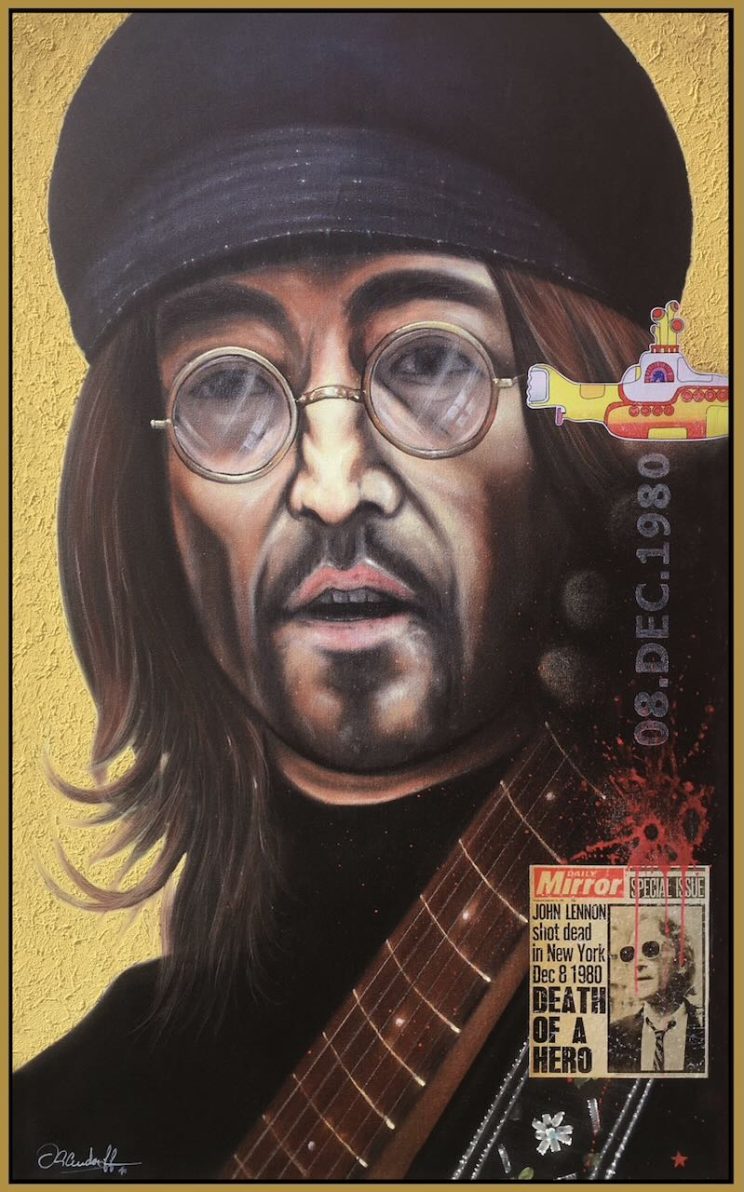
    Das Lennon-Porträt zeigt den Musiker mit seiner Gitarre und seiner charakteristischen Brille. Doch das Bild besteht aus mehr als dem Gesicht eines bekannten Rockstars.

    Ole arbeitete mit Öl und Collage. Das Yellow Submarine findet sich ebenso auf der Leinwand wie Lennons Todesdatum, der 8. Dezember 1980, und ein Zeitungsausschnitt des britischen Daily Mirror, der am folgenden Tag über den Mord an Lennon berichtete. Ein rotes Einschussloch gehört ebenfalls zur Bildgestaltung.

    Die einzelnen Elemente stehen für verschiedene Kapitel aus Lennons Leben. Sie verbinden Oles persönliche Erinnerungen an die Beatles mit der historischen Bedeutung des Musikers.

    Auch die Entwicklung Lennons spielte bei der Arbeit eine Rolle. Aus den frühen Jahren mit den Quarrymen und den Beatles führte sein Weg über musikalische Experimente bis zu einer eigenständigen Solokarriere. Songs wie „Instant Karma!“, „Working Class Hero“ und „Imagine“ zeigen unterschiedliche Seiten seiner Persönlichkeit.

    Ole beschreibt Lennon als eine vielschichtige Figur, deren Bedeutung weit über die Beatles hinausreicht. Für ihn gehört Lennon zu den prägenden Wurzeln der Rock- und Popmusik.

    Ein Song begleitete ihn beim Malen besonders: „Come Together“. Für Ole steckt darin auch eine Botschaft, die über die Musik hinausgeht. Menschen zusammenzubringen, statt neue Grenzen zu ziehen, ist ein Gedanke, der für ihn bis heute Bedeutung hat.

    Dead Rockheads und Rock Legends Alive

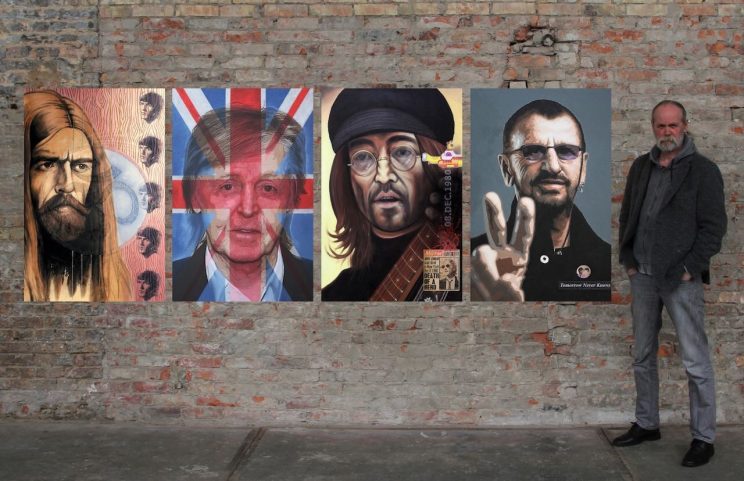
    2013 erweiterte Ole sein Konzept. Neben den verstorbenen Musikern der Dead Rockheads begann er, noch lebende Künstler zu porträtieren. Die neue Reihe heißt Rock Legends Alive.

    Beide Serien unterscheiden sich auch im Format. Die Dead Rockheads messen 80 mal 130 Zentimeter. Die Rock Legends Alive sind einen Meter breit und 1,40 Meter hoch. So bleiben die beiden Werkgruppen auch bei gemeinsamen Ausstellungen klar voneinander getrennt.
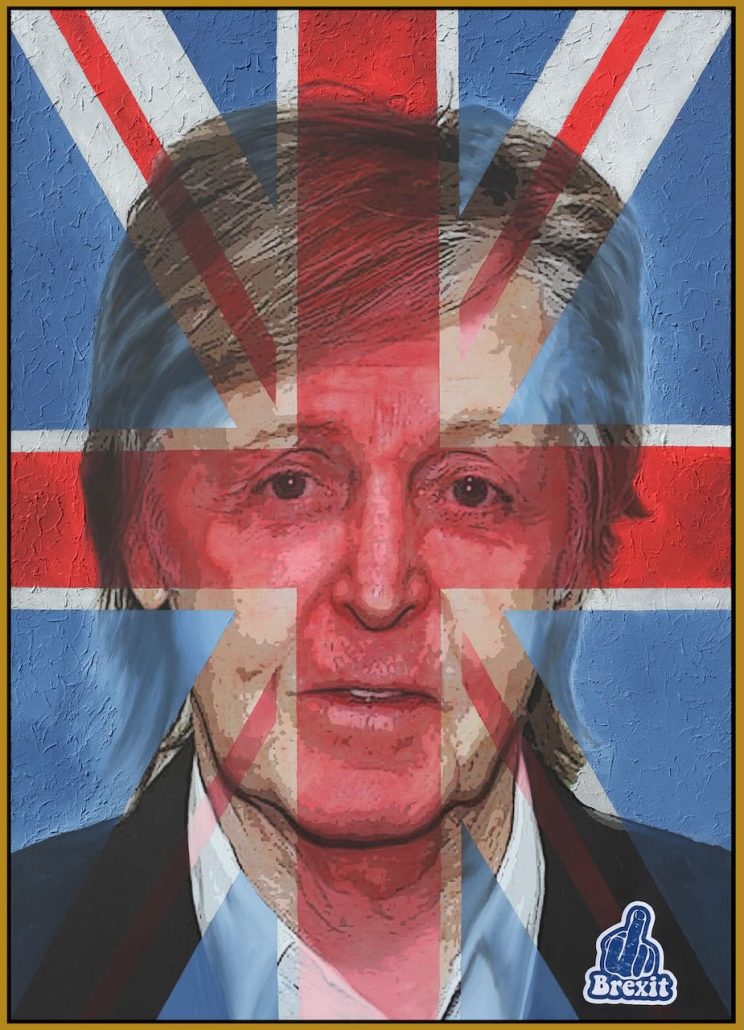
    Paul McCartney ist ein besonders passendes Gegenstück zu John Lennon. Beide verbindet die Geschichte der Beatles und eine der bekanntesten Songwriter-Partnerschaften der Musikgeschichte. Ole hat beide Musiker gemalt, allerdings in unterschiedlichen Serien.

    Beim Porträt McCartneys verarbeitet er ebenfalls aktuelle Geschichte. Eine Collage mit dem britischen Union Jack und dem Schriftzug „Brexit“ verweist auf den Austritt Großbritanniens aus der Europäischen Union. Ein ausgestreckter Mittelfinger ergänzt das Motiv.

    Auch hier geht es Ole nicht um ein glattpoliertes Abbild. Er möchte die Spuren des Lebens zeigen. Gesichter sollen Erfahrungen erkennen lassen. Seine Bilder dürfen Ecken, Falten und Widersprüche haben.

    Die Unterscheidung zwischen lebenden und verstorbenen Musikern ist für ihn mehr als eine Frage der Zuordnung. Ole berichtet, dass er Künstler nach ihrem Tod nicht einfach aus der Alive-Serie in die Dead Rockheads verschiebt. Wenn er einen Musiker nach dessen Tod erneut porträtiert, entsteht ein neues Bild. Denn nun rückt die Vergänglichkeit in den Mittelpunkt.

    Erinnerung braucht keinen Grabstein

    John Lennon wurde am 8. Dezember 1980 in New York ermordet. Eine konkrete Grabstätte, an der Fans seine sterblichen Überreste besuchen können, gibt es nicht. In New York erinnert Strawberry Fields im Central Park an ihn. Die Gedenkstätte ist eng mit dem Song „Imagine“ verbunden.

    Für Ole liegt Lennons bleibende Bedeutung ohnehin nicht an einem bestimmten Ort. Entscheidend ist die Musik und das, was sie bei Menschen auslöst. Auch jüngere Generationen reagieren auf die Beatles, wenn sie deren Songs hören.

    Genau diese Verbindung zwischen Musik, Erinnerung und Gegenwart macht Oles Arbeit aus. Die Porträts sind für ihn persönliche Hommagen an Künstler, die ihn über viele Jahre begleitet haben. Sie haben ihn getröstet, begeistert und durch unterschiedliche Lebensphasen getragen.

    Seine Bilder versteht er als Dankeschön an diese Musiker. Er malt nicht wahllos jeden bekannten Namen. Die Künstler, die er auf die Leinwand bringt, haben für ihn eine persönliche Bedeutung.

    Eine neue Reihe für Rockgeschichte und Kunst

    Mit Dead Rock Heads Alive führen Ole Ohlendorff und Tippi diese Gedanken im Rockcast zusammen. Die neue Reihe verbindet die Geschichten großer Musiker mit Oles künstlerischer Arbeit. Dabei geht es um bekannte Songs, persönliche Erinnerungen, historische Hintergründe und die Frage, was ein Musiker für Menschen bedeuten kann.

    Die erste Folge zeigt, wie viel Geschichte in einem einzigen Bild stecken kann. John Lennon steht für die Beatles, für musikalische Veränderungen und für eine Karriere, die weit über die gemeinsame Bandgeschichte hinausging. Gleichzeitig erzählt das Porträt von Oles eigener Entwicklung und vom Beginn einer Serie, die bis heute weiterwächst.

    Weitere Musiker stehen bereits auf dem Programm. In der nächsten Folge geht es um zwei geschminkte Typen. Mehr verraten Ole und Tippi noch nicht.

    Wer Ole Ohlendorff und seine Arbeit näher kennenlernen möchte, sollte auch den ersten gemeinsamen Rockcast hören. Dort erzählt Ole ausführlich von seinem Weg zur Kunst und von seinen Serien.

    Den Auftakt zu Dead Rock Heads Alive bildet John Lennon. Die Reise durch Rockgeschichte und Kunst hat gerade erst begonnen.

    Dead Rock Heads Alive mit Ole Ohlendorff und Tippi. Regelmäßig im Rockcast auf Rockcast.de.

    Den ersten gemeinsamen Rockcast mit Ole findest du hier:

    https://rock-music.net/ole-ohlendorff/
    Danke für´s Lesen und Hören. Punkt!

    Small paintings for sale & Artworks | Carré d'artistes

    Hamburg: Udo Lindenbergs Maler packt aus – „Einer meiner großen Heroes“

    Der Beitrag Dead Rock Heads Alive – by Rockcast.de – Folge 1 mit John Lennon erschien zuerst auf Live, laut, legendär!.

  • Ex-VCTMS Touring Bassist Davion Cutler Shares His Own Allegations Of Suffering Abuse From Meredith Henderson

    “During my time working for VCTMS, I was subject to many instances of verbal abuse, yelling, insults and in one case, even physical aggression from Meredith.”

    The post Ex-VCTMS Touring Bassist Davion Cutler Shares His Own Allegations Of Suffering Abuse From Meredith Henderson appeared first on Theprp.com.

  • Album Review: Urarv – Nychta Psychis

    Album Review: Urarv – Nychta Psychis

    Reviewed by Eric Clifford

    Urarv dropkicked off the promo list at me for one reason – the presence of Bjorn Dencker, vocalist for Thorns. I love that first (only, really) Thorns album, but I hadn’t kept up to any of the member’s extracurricular activities – which is possibly for the best considering that one of them did a stretch in prison for being an accessory to murder. Thorns’ own brand of black metal was a distinctly cold one. Not the cold you might find Abbathprancing about in, but the utterly inhumane void-spawned frigidity of long dead industrial machinery drifting through the vault of space, spinning forever where even starlight fears to shine. I suppose it was that same lightless cold that I was hoping for out of this Urarv release. And while that’s not wholly what I was in for…overall, I don’t feel too bad about it.

    Billed as avante-garde black metal, the band are undeniably a bit on the eccentric side, but less unapproachable than you might assume. There’s a sizeable post-punk influence, some intergalactic psychedelia courtesy of Blut Aus Nord, and a frosty core of treble-dialled-to-Saturn blackened goodness. Unconventional? Sure, but unconventional in the same way that fried pigeon would be. You probably haven’t had it before, but if you eat meat it’s unlikely to be anything you can’t handle. “Operation Genocide” is probably the closest it comes to some of the more outré  tomes in the black metal library, with cruel pike-thrust percussion keeping time to the dissonant stab of a descending guitar riff that then puzzlingly slips into a jaunty, if seasick, singalong section. It flits between its influences but manages nonetheless to come down on a cohesive sound of it’s own, which is always interesting if not always precisely my proverbial cup of tea. Opener “Dødheimsgard” sees the band channel their inner Motorhead fanatic through the midsection. The bass struts the fretboard, underpinning the earlier more traditionally second wave soundscapes with walking lines that counterpoint the fluttering strummed chords above it. The latter third of the song summons the airless horror of floating through the deep cosmos, high-pitched accents like twinkling starlight spotlighting the slow dread of your air supply dwindling to nothing. And then the title track kicks in with a warbling, catastrophically inebriated waltz and all that dread ratchets down a gear at bum-evacuating speed.

    Boiling it down to an unfair simplicity, the one sentence review would be that Nychta Psychis is in general very good but sometimes it’s experimental quirks do more harm than good. The vocal work is versatile but would the world really have been much poorer if some of the more eccentric inflections were reined in a bit? How much did we all need the “WOOO!”  in the title track at 1.32? It just sounds like Michael Jackson treading on a banana peel. It can seem a little bit goofy sometimes – I’m not against bands in the normally straight-faced black metal arts developing a sense of typically dry humour but the jiving leads at 1.42 of “Youniverse” did seem a bit cartoonish contrasted against the hellish stellar cataclysm the band then evokes at 2.25. Those old school heavy metal and punk elements add an undeniable sense of brawn and swaggering velocity to the album but make occasionally uneasy bedfellows for the scathing blackened firepower the band also calls to the fore at points. This isn’t a long album but nor are these short songs – 5 of them filling a 32 minute runtime. This means that while I feel like I’mmaking a mountain of a molehill a bit here, there wasn’t a single song that didn’t do something to jar me out of the spell the band was weaving the rest of the time.

    So the end result is uneven, but still, its potency shines through for the most part. That same “Youniverse” that I disparaged earlier wheels through the dark heart of alien nebulae, screeching notes slitting the black like comet trails. Maddened ambience swarms it, and the moments from 4.00 on make for some of the most sinister on the whole release. The bass  throughout keeps busy, burning it’s own paths forward that stray from the formula of just following the guitars as though shackled to their heel. It adds so much more texture than might otherwise exist. “When Consciousness…” zips blast sections that feel like the band has thrown a meteor shower at you together with the sort of drifting, cloudy psychedelia that might happen if Black Sabbath ever cracked open “Planet Caravan” and found that it contained a shitload of Dark Funeral albums. There’s gold here in undeniable quantity; that it is hoarded by a gremlin that makes frequent (if fleeting) decisions that I’d sooner it hadn’t made is a frustrating but ultimately survivable cross to bear.

    There’s a tremendous amount of arrogance in writing the following sentence, but here it is anyway: Urarv haven’t made my favourite black metal release of the year, though it certainly feels like they’re capable of writing something absolutely phenomenal if they are a little more critical of indulging their odd sides going forward. They’re all obviously excellent musicians, but more importantly they are interesting musicians. For all there are choices aplenty they make that exasperate me, not once do they traipse a micron towards the most fatal flaw of all – being boring. The decisions made, for better or worse, seize attention like a drill sergeant, unafraid to be risky or weird – and I find that deeply admirable in spite of itself.

    For all the latest news, reviews, interviews across the heavy metal spectrum follow THE RAZORS’S EDGE on facebook, twitter and instagram.

    The post Album Review: Urarv – Nychta Psychis appeared first on The Razor's Edge.

  • ’70s Rock Icon Says He’s Finished With Touring 56 Years After First Shows

    A legendary rocker who started touring in the ’70s is ready to stay home and not tour at all. He’s explaining why in a new interview.

    The post ’70s Rock Icon Says He’s Finished With Touring 56 Years After First Shows appeared first on Audio Ink Radio.

  • If Kansas’ Kerry Livgren had written Carry On Wayward Son one day later, it might never have been made

    By 1976 Kansas had released four US singles without bothering even the lower reaches of the chart. But their fifth attempt changed everything. In two separate interviews, guitarist and writer Kerry Livgren and bandmate Rich Williams told Prog how Carry On Wayward Son came together.

    Where did the inspiration for Carry On Wayward Son come from?

    Livgren: I have no idea! I was under such pressure to write the album at that point that I kinda launched myself into a gear that I had never had before. I was a writing machine. I’d come home from rehearsal having learned one song, and that night I’d write the next one. This went on for days.

    Steve Walsh wasn’t writing at that time, so it all fell to me. Carry On Wayward Son was the last one I wrote. It was the last night we were in Topeka. I came into the studio on the last day and said, ‘I think you better hear this one’. The guys looked at each other and said, ‘We gotta do this.’

    Williams: When Kerry brought it to the table our initial reaction was: ‘Oh fuck, we’ve got another song to do!’ We were in a rehearsal hall and the next day we were packing up and leaving to start recording.

    But as soon as we got over the laziness of not wanting to learn any more material, we realised Wayward Son was a very cool song. We knew right away that it was going to be replacing some other track.

    What was the reaction to it?

    Livgren: Well, it went close to the top of the charts and stayed there for some time. It was a song where every component was a hook – the opening riff, the verse, the chorus, the middle section. Even the guitar solo was approached that way.

    Did it help that that the single version was edited down to three and a half minutes?

    Wilson: It probably did – up until then, left to our own devices, it could’ve been a 15-minute song with a long Hindu middle or something!

    Did you feel like pop stars?

    Livgren: We never felt like pop stars. We’d been beating the road for years and making albums. But that song opened the doors to a whole audience. It was the difference between being an opening band and playing stadiums.

    Was having a hit a blessing or curse?

    Livgren: I’d say it’s a blessing. Even today, when the royalty cheques come in, it’s significant. Not only was it a financial blessing, but of course it opened up that whole new world of audiences for us. But it was also kind of a curse in that, as a writer, it increased the pressure on me to write hits. On the Point of Know Return album, we had to be all about writing another hit. Dust In The Wind was another similar case.

    Your songs put you on the map. You don’t like it? Maybe you need to try another job

    Rich Wilson

    It’s a gentle curse, though. I wouldn’t even use the word ‘curse.’ Living up to it was the hard. And that’s what became challenging for the band members – living up to that expectation.

    Do you ever tire of playing it live?

    Wilson: As soon as we start playing it, there’s such a reaction from the crowd. It’s tremendous to be a part of that. I can never understand people who say, ‘I get so sick of playing the same old fucking songs.’ It’s like, ‘Wow, they’re your songs; they’re what put you on the map. They’re why people are standing in front of you – and you don’t like it? Maybe you need to try another job!

  • Former VCTMS touring bassist Davion Michael Cuttler speaks out, backs abuse allegations

    Alleging verbal abuse, physical aggression and delayed payments during his time with the band

    Source

  • Unleashed pay tribute to Venom’s Cronos with “Countess Bathory” cover in Greece

    Revisiting a song they covered on their 1992 album, ‘Shadows in the Deep’

    Source

  • Complete List Of John Mellencamp Songs From A to Z

    John Mellencamp songs from a to z

    John Mellencamp built one of the most distinctive catalogs in American rock music, developing from the young singer initially marketed as Johnny Cougar into a songwriter whose music became inseparable from the Midwest. Born on October 7, 1951, in Seymour, Indiana, he began recording in the 1970s and gradually found his voice through plainspoken portraits of ambition, disappointment, small towns, and working lives. After the early albums Chestnut Street Incident, A Biography, and John Cougar, Mellencamp broke through with American Fool in 1982. Songs such as “Jack & Diane,” “Hurts So Good,” and “Pink Houses” made him a major rock

    The post Complete List Of John Mellencamp Songs From A to Z appeared first on ClassicRockHistory.com.