The .
The post The Jetsetters featuring Vixen and L.A. Guns members share video for debut single “Above The Noise” first appeared on Sleaze Roxx.
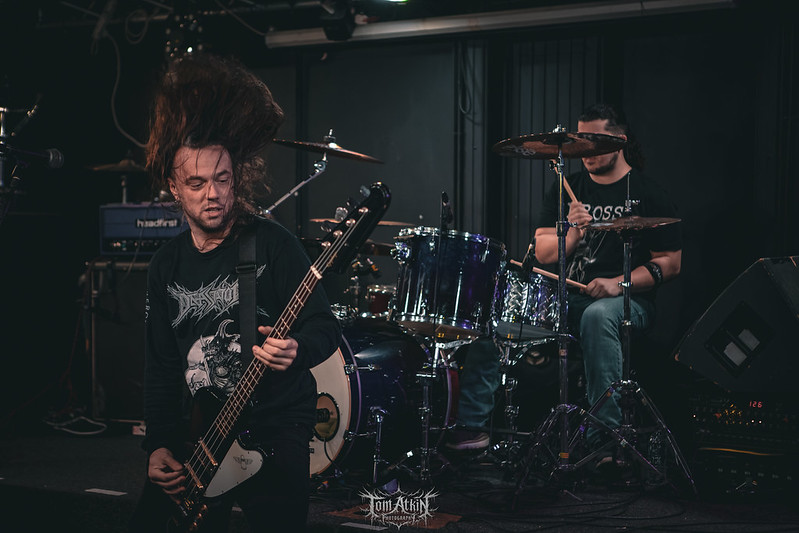
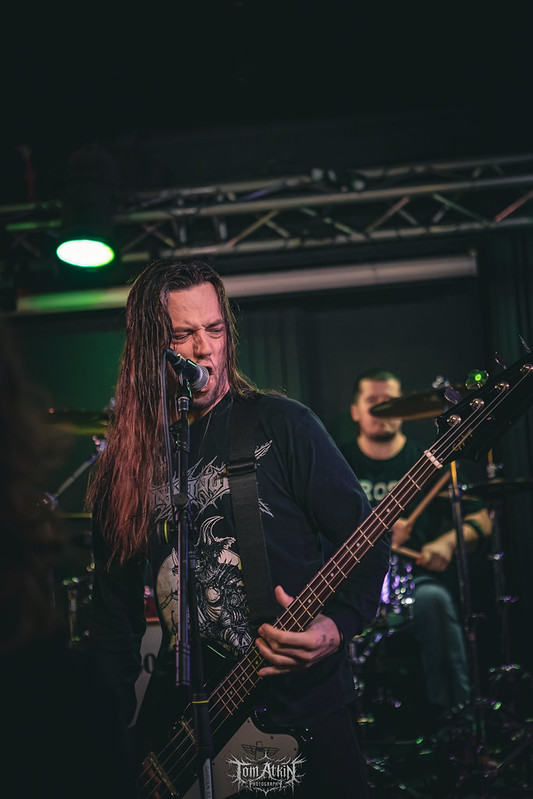
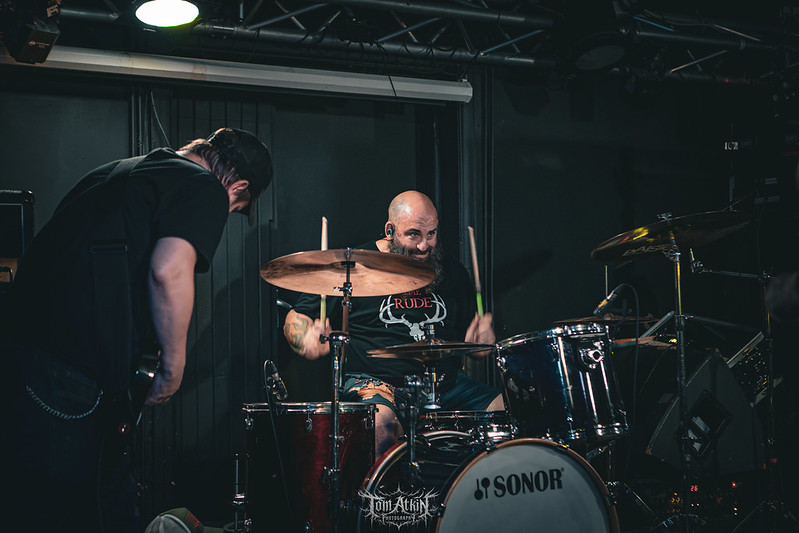
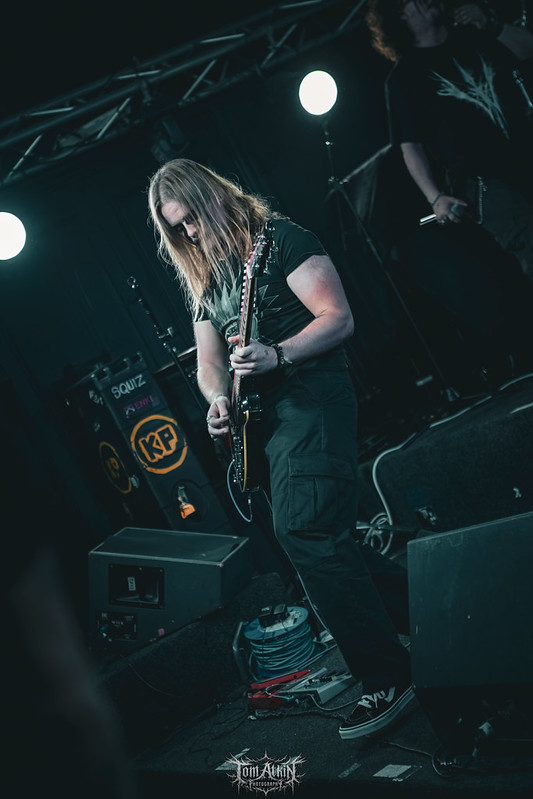
With thoughtcrimes & BORE opening.
The post The Dillinger Escape Plan Add Second Brooklyn Show To Their Final “Calculating Infinity” Tour appeared first on Theprp.com.
Foreigner, who are currently on the road with Lynyrd Skynyrd, have announced a thousand-dollar VIP ticket that will allow purchasers to sit onstage for three songs during the band’s set.
The new Golden Anniversary VIP Ticket promises to take fans “onstage and beyond”, and the list of incentives also includes access to a pre-show VIP event, a photo with the band, a laminated pass, early entry to the venue, a “golden ticket keychain” that provides access to upcoming events before the general public, a limited-edition 7-inch vinyl single containing previously unreleased recordings, an autographed and dated set list from the show, a tote bag and a bottle of Foreigner’s Backstage Bourbon.
The band, whose current touring lineup contains no original members, released a new live album, In The Eye Of The Storm, last month. The album was recorded in September 2025 on New York’s Ellis Island in the shadow of the Statue of Liberty, where they played for an audience of 250 fans.
Foreigner, who were fronted by four different singers in 2025, also premiered Feels Like the First Time – The Foreigner Musical at the Little Theatre on Long Island University’s Brookville campus in April of this year.
“And as we like to say about Foreigner, the rock star in Foreigner are the songs,” bassist Jeff Pilson told Bass Musician earlier this month. “Not the personnel, nothing else. It’s the songs.”
Foreigner’s Golden Tickets are available now. Full tour dates below.
Aug 04: Decatur Devon Lakeshore Amphitheater, IL
Aug 06: Saint Louis Hollywood Casino Amphitheater, MO*
Aug 07: Noblesville Ruoff Music Center, IN*
Aug 08: Cincinnati Riverbend Music Center, OH*
Aug 11: Nashville Ryman Auditorium, TN
Aug 13: Lincoln Pinewood Bowl Theater, NE
Aug 14: Kansas City Morton Amphitheater, MO*
Aug 16: Shakopee Mystic Lake Amphitheater, MN*
Aug 18: Toledo Zoo Amphitheater, OH
Aug 20: Camden Freedom Mortgage Pavilion, NJ*
Aug 21: Wantagh Northwell at Jones Beach Theater, NY*
Aug 22: Mansfield Xfinity Center, MA*
Aug 23: Saratoga Springs Performing Arts Center, NY*
Aug 27: Houston Cynthia Woods Mitchell Pavillion, TX*
Aug 28: Dallas Dos Equis Pavilion, TX*
Aug 29: Rogers Walmart AMP, AR*
Sep 16: Las Vegas The Venetian Theatre, NV
Sep 18: Macon City Auditorium, GA
Sep 19: Augusta William B. Bell Memorial Auditorium, GA
Sep 20: Wilmington Live Oak Bank Pavilion , NC
Sep 23: Salem Civic Center, VA
Sep 25: Bristol Hard Rock Live Bristol, VA
Sep 26: Beaver Dam Amphitheater, KY
Sep 29: Wichita Falls Kay Yeager Coliseum, TX
Oct 01: Tulsa River Spirit Event Center, OK
Oct 02: Norman Riverwind Casino , OK
Oct 06: Lubbock The Buddy Holly Hall of Performing Arts and Sciences, TX
Oct 07: Cedar Park H-E-B Center at Cedar Park, TX
Oct 09: Lake Charles The Grand Event Center at Golden Nugget, LA
Oct 13: San Antonio Majestic Theatre, TX
Oct 14: Corpus Christi American Bank Center Selena Auditorium, TX
Oct 16: El Paso Abraham Chavez Theatre, TX
Oct 17: Albuquerque Isleta Resort & Casino, NM
Oct 18: Scottsdale Talking Stick Resort, AZ
Oct 23: Highland Yaamava’ Theater, CA
Oct 24: Highland Yaamava’ Theater, CA
Oct 25: Funner Harrah’s Resort Southern California, CA
Oct 28: Saratoga The Mountain Winery @ 7:30 PM, CA
Oct 29: Friant Table Mountain Casino, CA
Oct 30: Lincoln Thunder Valley Casino & Resort, CA
Nov 01: Reno Ballroom, NV
* with Lynyrd Skynyrd
Oct 12: Berlin Max-Schmeling-Halle, Germany
Oct 13: Hamburg Barclays Arena, Germany
Oct 15: Hannover ZAG Arena, Germany
Oct 16: Düsseldorf PSD Bank Dome, Germany
Oct 17: Stuttgart Hanns-Martin-Schleyer-Halle, Germany
Oct 19: Frankfurt Festhalle Europe, Germany
Oct 20: München Olympiahalle München, Germany
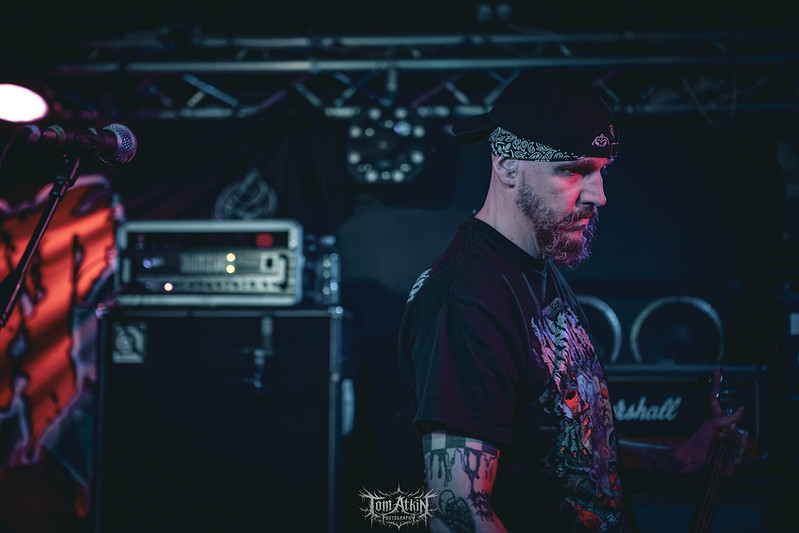
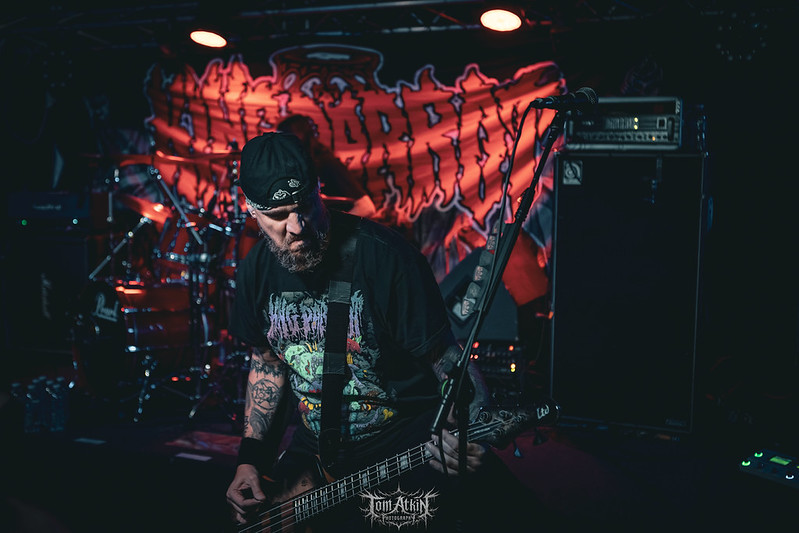
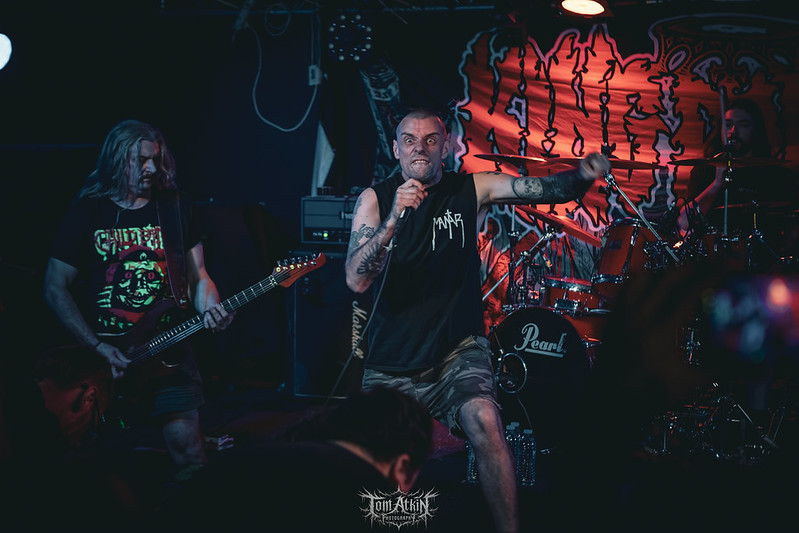
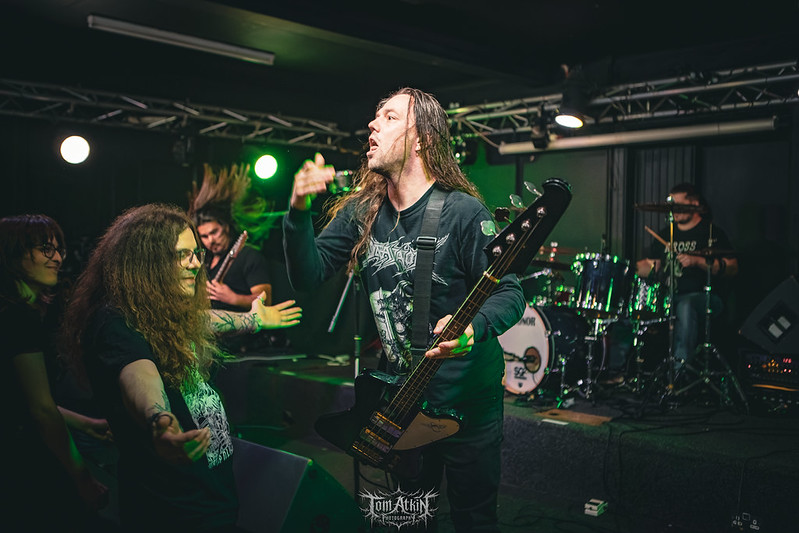
Interview by Thrasher Old-school death metal veterans Viogression return to Florida’s legendary Brass Mug to headline Friday night at Tampa Death Fest 2026. Spanning over […]
The post Unrelenting Assault: Viogression Headline Tampa Death Fest 2026 appeared first on Metal-Rules.com.
In an instant, your anxiety turned into fear.
In today’s society, existence itself seems to carry a surcharge. Rent, debt, subscriptions, productivity quotas, and social obligations extract their share until even drawing breath can feel taxed, as though staying alive requires a continuous payment in money, time, dignity, and pieces of the self. The bill is never fully settled; survival merely earns another fee on the statement.
That sense of compulsory remittance gives Las Vegas trio Past Self the cruel premise behind their latest K-Goth single, 제물 / Jemul. The song opens with guitars that seem to have been left ringing in an abandoned chapel while somebody downstairs argues with the gods. The notes jangle, smear, and hover around a rhythm section that keeps the song from floating off into the drywall. Past Self has built a track about sacrifice, social pressure, and spiritual extortion, which may sound like heavy business for a single, though popular music has survived worse moments involving yachts.
Musically, Past Self draws from Lebanon Hanover and The Cure, with echoing guitars and cold, suspended tones filling the spaces between the vocals. There is also the broad dramatic reach of The Horrors and a dense guitar wash that recalls My Bloody Valentine, though the trio handles those influences with enough personality to avoid sounding like three record collections wearing one trench coat. The arrangement remains clear beneath the haze, allowing every guitar figure and vocal phrase to land with purpose.
“제물 / Jemul translates to ‘an offering,’” says the band. “It refers to a society that constantly demands a piece of one’s soul as payment for being allowed to stay alive. The song aims to draw metaphorical ties between this concept and human sacrifices that a cult might make to appease their deities.”
The Korean verses trace anxiety as it curdles into fear, while hallucination, betrayal, absence, and ruined love gather around the image of an offering. Priests assemble near a bloodied altar, villagers turn judgment into entertainment, and a condemned figure becomes payment for everyone else’s comfort. The repeated calls for sacrifice grow more chilling each time, because crowds are always terribly organized once they have chosen somebody else to lose. The delivery carries dread without turning into melodrama. Korean and English move through the track as parts of the same damaged thought, giving the song a bilingual tension that deepens its sense of estrangement. The voices feel close enough to touch, yet emotionally stranded several rooms away.
Listen to 제물 / Jemul below and order the single here.
Past Self formed inside a College of Southern Nevada music production class, where Sung Joo Kim, Julian West of Spektor, and Holly Haywood of æther found common ground in texture, unease, and melody. They describe their music as “K-Goth,” a fitting name for a project that merges Korean and English lyrics with darkwave, shoegaze, and post-punk.
제물 / Jemul turns belonging into a blood tax and survival into a transaction. Nobody escapes cleanly; even the witnesses carry some of the stain home with them. By the final refrain, the altar feels less like ancient symbolism than an ordinary social arrangement with better robes.
Past Self will be touring Europe this fall! Catch them on the following dates:
Follow Past Self:

The post “Let Us Offer a Sacrifice” — K-Goth Trio Past Self Examines the Price of Survival in Haunting New Single “Jemul” appeared first on Post-Punk.com.
From the very first striking guitar riff, Segrëgates ignites an undeniable energy that hits the listener with the force of a punch. The opening notes of “No Rhyme or Reason” encapsulate a rawness that feels invigorating and essential. This is pure rock music, devoid of pretension. It’s the kind of song that demands to be experienced live in an atmosphere thick with the energy of an enthusiastic crowd.

The vocalist’s delivery is reminiscent of the guttural instinct embodied by Lemmy of Motörhead. With a commanding presence, they navigate the energetic landscape with a vocal intensity that resonates throughout. The gritty sound complements the band’s overall aesthetic. This music is designed for venues where perspiration and exuberance blend seamlessly. The olfactory concoction of sweat and beer further enhances the experience, taking listeners back to those late-night shows where the spirit of rock reigns supreme.
Segrëgates creates music that openly challenges the glossy, artificial sounds prevalent in today’s music industry. The current landscape often feels saturated with heavily produced tracks lacking genuine emotional depth. In sharp contrast, “No Rhyme or Reason” serves as a middle finger to this trend. It showcases the importance of a visceral connection between the musicians and their audience, one that cannot be replicated by machines or algorithms.
Many music lovers crave authenticity. Segrëgates delivers this in spades. Their music reflects a dedication to the craft, honed in rehearsal spaces. Each note serves as evidence of their commitment to the art form. This song becomes therapeutic, a necessary antidote to a world filled with superficial offerings. The raw energy radiates through the speakers, forcing listeners to confront the essence of real rock music.
Mosh pits, sweat-drenched bodies, and the visceral thrill of live performance come to mind when listening to “No Rhyme or Reason.” In these spaces, fans become one with the music, celebrating the communal spirit of rock and roll. The song embodies the boldness that characterized the genre’s golden eras, making it essential for anyone who cherishes authenticity in music.
The lyrical content is straightforward and unapologetic. There is an endearing irreverence that permeates the song. It resonates with listeners, inviting everyone to scream along. This is music meant to be shared, where the energy of the band and the audience merges into something greater than the sum of its parts.
Segrëgates has clearly positioned themselves. Their disregard for current industry trends, in favor of raw, unfiltered rock, may just be what the world needs right now. In an era preoccupied with technological advancements in music production, their approach feels like a breath of fresh air. They’re not just creating music; they are reviving a culture and instilling a sense of urgency.
The track is an invitation to embrace the messiness of life, celebrating the highs and lows that accompany the human experience. Segrëgates channels this energy forcefully, reminding us of the joy found in shared moments of rebellion and liberation. Their sound encourages listeners to lose themselves in the rhythm and indulge in the cathartic nature of heavy guitar riffs and pounding drums.
“No Rhyme or Reason” stands out as a remarkable manifestation of true rock ethos. Its powerful presentation and unapologetic energy shatter the veneer of modern musical complacency. Segrëgates delivers a much-needed reminder of what rock music can be—raw, real, and profoundly human.
Raw
If you love this music: Discover MoreFor fans of:
Motörhead
The post Segrëgates No rhyme or reason Review appeared first on Edgar Allan Poets – Noir Rock Band.
Prepare for an audacious and visionary musical journey with the song “Erased Faces” by the duo Liliane Bürli and Bujar Berisha. This track invites listeners into a psychedelic experience, rich in industrial tones and hypnotic elements that swirl around the mind. The imagery conjured is one where you find yourself in a Berlin’s club exuding vibrant energy at night while immersed in a hallucinogenic trip. This immersive experience captures the essence of what the music embodies.

The song opens with expansive pads that provide a canvas for listeners to explore. The collaboration with Dimitri Barbati adds depth to the sound, enhancing the track’s complex layers. Each note and beat pulsates with intention, drawing you into a realm where familiarity and novelty coexist. There is an intensity here, as the music wraps around you like a serpent, tightening and loosening, guiding you through its vision.
“Erased Faces” delves deep into philosophical themes, provoking thought about identity in society. The idea of being faceless emerges as a symbol of freedom, suggesting that in losing one’s identity, one might actually gain liberation from societal norms and control. The song oscillates between the notions of existential loss and the quest for freedom, prompting listeners to reflect on their own lives. It asks us whether conforming to societal expectations leads to a meaningful existence or if shedding those expectations facilitates a true sense of self.
DIE DIE BE challenges conventional thinking with their music. They aim to ignite strong messages that rebel against societal standards. In this new single, they encourage listeners to rethink the landscape of identity and individuality in a world engulfed by conformity. The duo emerges as progressive thinkers, inviting you to engage your mind and perhaps even open your ‘third eye,’ an enlightening concept in many spiritual traditions.
The track incorporates an eclectic mix of styles, showcasing influences that span various genres. This spontaneity enhances the overall experience, making the listener feel as if they are part of an unfolding performance.
Throughout the song, the rhythm becomes a heartbeat, pulsing with life. It is a call to arms and a soothing lullaby, encouraging self-exploration while simultaneously challenging established societal norms. This duality gives the song its strength, making it relevant in today’s world as we navigate issues of identity and freedom.
The imagery that accompanies “Erased Faces” further amplifies its impact. Visual elements of space, vibrancy, and shadow play out, urging the listener to engage not just audibly but also visually. This manifests a complete experience, making the music feel alive, almost organic. The sonic journey is enhanced by these elements, leading to bursts of color and light in the mind’s eye.
DIE DIE BE does not shy away from pushing boundaries. Their music embodies rebellion while also seeking connection. They invite you to join them in an exploration of the self and the complex layers of existence. The way they intertwine sound with message is not only innovative, but essential in a time when freedom of expression feels pressured.
“Erased Faces” is a thought-provoking and audacious exploration of self-identity and freedom. DIE DIE BE invites us to engage with our own narratives, highlighting the potency of music as both art and form of expression. The genre-defying blend promises to resonate with anyone seeking a deeper understanding of themselves against a backdrop of societal expectations.
Visionary
If you love this music: Discover MoreThe post DIE DIE BE Erased Faces Review appeared first on Edgar Allan Poets – Noir Rock Band.
The PGA Tour’s regular-season finale has arrived, and the Wyndham Championship field looks a little different than it did just days ago.
The post Multiple Golfers Suddenly Withdraw From the Wyndham Championship appeared first on Audio Ink Radio.
Founded by ex-Public Image Ltd./ Killing Joke drummer Martin Atkins and former R.E.M./ King Crimson drummer Bill Rieflin, industrial metal supergroup Pigface have always had a revolving, shape-shifting line-up, and have collaborated with artists such as Trent Reznor, Red Hot Chili Peppers bassist Flea, Pixies leader Black Francis, and members of Tool, Ministry, The Jesus Lizard, Swans, The Orb and more.
The group’s 2003 album Easy Listening… For Difficult Fuckheads is a typically eclectic affair, featuring cameos from Kittie‘s Fallon Bowman, Revolting Cocks frontman Chris Connolly, former Clash/PiL guitarist Levene and, on it’s very rude, expletives-laden closing track The Horse You Rode In On, magician, comedian and actor Penn Jillette, one half of superstar illusionist duo and Las Vegas fixtures Penn & Teller. Melody-wise, it’s a song unlikely to give Paul McCartney sleepless nights, but with Jillette spitting lyrics such as “Fuck all the people that God fucking killed“, “Fuck God“, “Fuck the KKK“, “Fuck poseurs“, “Fuck cops“, etc over grindingly funky beats, it sticks in the memory.
And if you want to point the finger at someone for Jillette’s “fuck list”, then Fuck Capitalism.
“I was indoctrinated by American corporations as part of an orchestrated plan to move us into rock ‘n’ roll,” Jillette told me in 2014. “They came up with The Monkees when I was 12, and that came on TV, and I bought their records and then The Monkees led me directly to the Mothers of Invention, who were on their TV show, and Jimi Hendrix, who opened for The Monkees, which led me to [Bob]Dylan. By the time I was 14 or 15 I was listening to Zappa, Velvet Underground, Dylan, Captain Beefheart, etc,. And that was all from The Monkees being on TV.”
Growing up in Greenfield, Massachusetts, the teenage Jillette wasn’t holding his breath for any major rock bands to pull into his “little dead factory town”, but, like the protagonist in a Bruce Springsteen song, his world would open up when he was old enough to drive.
“All that a driver’s license meant to me was the freedom to be able to see rock ‘n’ roll,” he explained. “When I first got a driver’s license, within a week, I drove 100 miles to Boston to see the Mothers of Invention. I drove up to Boston to see people like Chuck Berry, Jethro Tull, The Faces… but the life-changing one was seeing the Mothers: that 1973 tour when I was a child was one of the finest rock tours ever.”
By then, Jillette was playing music with local bands, first as a drummer, then as a bassist: “I basically loved rock ‘n’ roll so of course I wanted to play as well as listen.” The arrival of punk rock proved to be another liberating watershed moment for the New Englander.
“I was a fan of Jonathan Richman and the Modern Lovers first, then the Ramones,” he recalled. “And then a friend of mine who lived in England called me one day played Anarchy In The UK over the phone to me and said, ‘You have to find the Sex Pistols’, so the very first day that the Sex Pistols released anything in the US I had a copy. Teller and I actually had tickets to see the Sex Pistols in Atlanta on their very first US tour, but we got a show that night so we couldn’t go: shows were rare enough back then that we had to take every one we got, and so we had to miss the Pistols.
“From there I went to The Clash and Elvis Costello and Nick Lowe and that whole Stiff records set. And of course the Velvet Underground, who didn’t have to change their mould much to fit with the punks.”
“I was pretty into that New York rock ‘n’ roll scene. I was good friends with the Ramones, I was very, very good friends with Lou Reed, I went out with Debbie Harry for years.”
In her 2019 autobiography Face It, Harry credits Jillette with inventing (and patenting) an “orgasmatron” hot tub called the ‘Jill-Jet’ during their time together, but that’s a whole other story, so let’s not dwell. Harry also guests on two songs on Tattoo Of Blood, the alt. rock album that Jillette released under the name The Captain Howdy in 1994 on Shimmy Disc, the New York indie label founded by US underground legend Kramer.
“We just started hanging out in that world,” Jillette told me. “And then through Kramer I got into the whole Gwar, Butthole Surfers, Residents, alternative/noise/avant garde punk stuff. There were some very odd evenings back then. I’d finish up my show on Broadway and then hop in a limo and go downtown to CBGBs and play bass with Half Japanese or Mareen Tucker or Lou Reed, I’d be the bass player in punk bands while I was appearing on Broadway.”
The title track of the musician’s 1994 album was written by, and features, one of Jillette’s biggest musical heroes, and dearest friends, Lou Reed. Jillette was once the president of the Lou Reed Fan Club, a position he reluctantly resigned from when he and Teller became stars on Broadway. One night, as the pair began their show, they looked into the audience and saw Reed, and were so overwhelmed that they both “completely froze… could not function”, Jillette revealed in a 1997 interview.
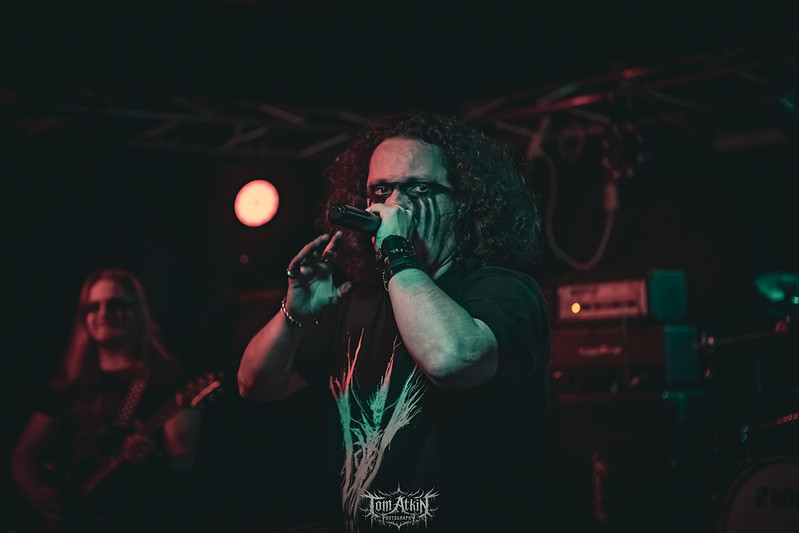
“After the show, Lou came up and said, ‘This isn’t a magic show, this is rock and roll’,” Jillette recalled. “And I, of course, being a cool New York suave man of six foot six and 20, 35 pounds, began crying, which really impressed Lou.
“Lou said, You know, we should hang out. And it took me about six months to get up the nerve to actually actually call him. After hanging out with Lou a little bit, Lou finally said, ‘You know, you you’ve really got to calm down if we’re going to be friends’.”
While Reed wrote the title track of Captain Howdy’s Tattoo Of Blood, the song was actually inspired by Jillette.
“Basically I’d got a tattoo without ink, which makes it hurt more and makes it bleed more, and Lou thought that was a really great idea,” Jillette explained. “The theory was all pain and no gain! I was at a biker convention, for Harley’s 90th anniversary, and all these biker guys were getting tattoos. And I said, ‘Well, my relationships never last more than two or three years, so I’ll get a tattoo without ink.’ So I basically just let the tattoo guy scrawl on me without ink to create all these bloody scars all over me. Lou thought that was very, very cool.”
Jillette continued his rock ‘n’ roll adventures into his sixties, with his occasional group, the No God Band, the mischievous, maverick spirit that has infused his ‘day job’ very much intact.
“We tend to play one benefit show a year,” he explained, “for the James Randi Educational Foundation, and we get a couple of thousand people to come, and play for free but ask if people will donate to the charity and we make $30,000 or $40,000 each time. It’s basic dirty rock ‘n’ roll, no barriers are being pushed at all, but there’s a lot of blasphemy and a lot of sex. I don’t think you ever really get more than two lines without a mention of either blasphemy or sex.”

Our 10 favorite Smiths songs celebrate the recordings we return to most often from one of the most distinctive bands of the 1980s. Morrissey’s dramatic, funny, and frequently wounded lyrics found their ideal musical setting in Johnny Marr’s inventive guitar arrangements, Andy Rourke’s melodic bass lines, and Mike Joyce’s forceful but flexible drumming. Formed in Manchester in 1982, the Smiths released four studio albums between 1984 and 1987. Their catalog was brief, but the band continually changed its approach, moving from sharp guitar pop and rockabilly rhythms to orchestral ballads, studio experimentation, and some of the most emotionally direct songs
The post Our 10 Favorite Smiths Songs appeared first on ClassicRockHistory.com.