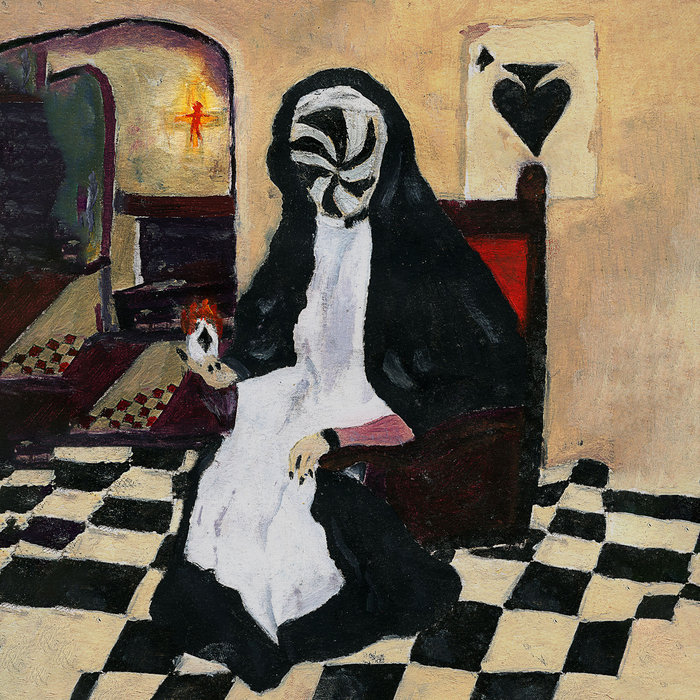
Tomates En Verano know exactly what a guitar is for: tension, impact, and the occasional act of vandalism. On El color del mar, the Mar del Plata trio turn shoegaze, gothic post-punk, and 1990s alternative rock into a record full of sudden pressure changes, serrated edges, and hooks that keep poking through the distortion. Five albums in, they sound less concerned with refinement than with making every shift in volume count.
Pixies are all over this record, and that is meant as praise. You hear it in the sudden changes of pressure, the clipped guitar figures, the way Ignacio Giobellina can leave a song hanging on a few dry notes before dropping something much heavier into the room. There’s some Joey Santiago in that instinct: the understanding that a guitar doesn’t need seventeen pedals and a doctoral thesis to make you nervous. There’s something in the way the guitars and melodies crash against each other that echoes Lush, while the more expansive passages carry the oceanic airiness of Slowdive’s Just for a Day. The Breeders, Liz Phair, and Sonic Youth all rub elbows here, too, without turning the album into a museum tour of shoegaze and alternative rock.
Carina Monjeau is the reason much of this works as well as it does. At times, her airy, cool delivery strongly recalls My Bloody Valentine’s Bilinda Butcher, sounding almost effortless while the guitars are busy throwing furniture around behind her. That contrast gives the record much of its personality. She never sounds as though she has to fight the arrangement for space, and Graham Sutton’s production deserves credit for that. Sutton, of Bark Psychosis, gives these songs mass without stuffing every available frequency until the record suffocates. The band’s solid bass lines carry as much character as a guitar hook, and Pedro Moscuzza’s drumming keeps the heavier sections from becoming a shapeless pile of amplification. There is muscle here, but there is also movement.
At times, El color del mar feels like something you might have stumbled across on a particularly strange Lilith Fair bill in 1997, right after a band indebted to The Breeders. It would feel equally at home on a Lollapalooza stage, with staff handing out earplugs to anyone braving the volume near the front. Farther back, some listeners might lie in the grass and give themselves over to the music’s reverie, looking up until they feel as though they could fall into the sky. The dayglo decade of the 90s hangs heavily over the album, yet the trio have enough personality to avoid sounding like collectors showing off their favorite records.
The title translates as The Color of the Sea, though the band connects it to internal conflict and the sensation of living in a world where everything seems slightly misplaced. That idea fits these songs rather well. They keep shifting their balance: thick guitars give way to cleaner passages, sweetness brushes against abrasion, and quieter sections make the harder moments hit with greater force.
Francisco Raccanello Monjeau adds piano to Algo común, while Luana Giobellina Monjeau of Buenos Vampiros plays bass on El color del mar and Todo comienza en casa. Both appearances broaden the arrangements without turning them into showcases.
After more than twenty years together, Tomates En Verano sound less interested in proving their credentials than in making a record with big guitars, strong songs, and enough instability to keep the volume knob within reach. El color del mar makes a convincing case that the old alternative-rock machinery still has plenty of dangerous moving parts.
Listen to El Color del Mar below, out now via Casa del Puente Discos. You can order the album here.
It takes a special artist to be part of a band that leaves a lasting legacy with pioneering or genre-defining bodies of work. It’s even rarer for a musician to do that twice. Still, that kind of impact isn’t unheard of. One such artist is 2026 Rock & Roll Hall of Fame inductee Peter Hook.
Hook helped define the post punk genre with his groundbreaking work in Joy Division and then did it again, this time in the new wave genre with New Order after the death of Joy Division’s Ian Curtis. Since 2010, Hook has celebrated the extraordinary legacy of his two bands with Peter Hook & The Light.
The band performs dual-set shows, with the first being a full play of a classic Joy Division or New Order album. The second set is an all-encompassing performance of the two bands’ greatest hits.
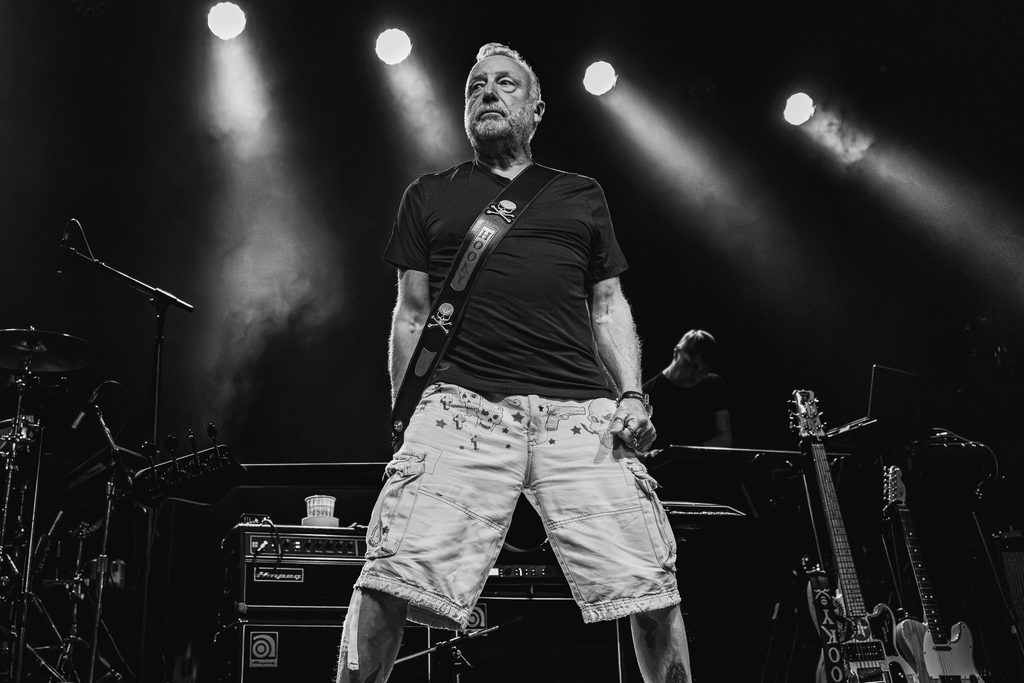
Dying Scene had the chance to check out the legend on his current tour during the band’s stop at First Avenue in Minneapolis.
Peter Hook & The Light Set One
On the current tour, Peter Hook & the Light are performing New Order’s 2001 album Get Ready. Get Ready came out long after New Order’s height in the mid to late 1980s. At the time of its release, the album was the group’s first in eight years, the longest time between releases for the band up to that point.
The record may lack some of the widespread popularity of the group’s landmark work, but it’s an underrated gem that fans should appreciate more. Even better, it sounds great live.
The album-opening track “Crystal” was a fan favorite among the packed crowd at First Avenue and is one of the album’s better-known songs. The song is an infectious six-minute blend of the band’s electronic and rock influences.
“Primitive Notion” is another track that really shines live. The song is the album’s clearest callback to the band’s earlier post-punk/goth sound, and it fits well with Peter Hook & The Light’s live sound. Hook’s vocals are noticeably deeper and more gruff than one would expect to hear on a New Order track, and that works great with “Primitive Notion”.
Overall, the first set was a great chance to revisit New Order songs that don’t always make their way onto Peter Hook & The Light setlists. This tour is a unique chance to hear the songs, since they were never properly toured when the album came out. Other standout tracks include “60 Miles an Hour” and “Someone Like You”.
Peter Hook & The Light Set Two
After a short break, Peter Hook & The Light returned to the stage for their second set. The set serves as a career-spanning retrospective of some of Joy Division and New Order’s greatest hits and most intense live tracks.
The band began the second set with a slew of hits from Hook’s earlier work in Joy Division. For a band that released only two studio albums, it’s hard to overstate how influential the group’s work was. That being said, it still sounds fresh live.
Standout songs like “Dead Souls,” “Warsaw,” “Disorder” and Transmission are equally as moody and rocking as they are catchy. Hook’s vocal style is perfect for the darker gothic aesthetic of Joy Division cuts.
After what felt like an endless run of classics, the group continued to play the hits, now focusing on the New Order era of the Peter Hook discography. The most notable part of the set came at the end, when a parade of new wave hits like “Bizarre Love Triangle,” “True Faith” and Blue Monday were played back-to-back. The songs are absolute classics that still whip the crowd into a frenzy.
Finally, the show ended with Joy Division’s defining track, “Love Will Tear Us Apart”. No matter how many times you hear it, the song is timeless, emotional, and raw. The cut also captures what makes both Joy Division and New Order special. The melodic synth line is far ahead of its time, but the moody and dark lyrical content is quintessential post-punk.
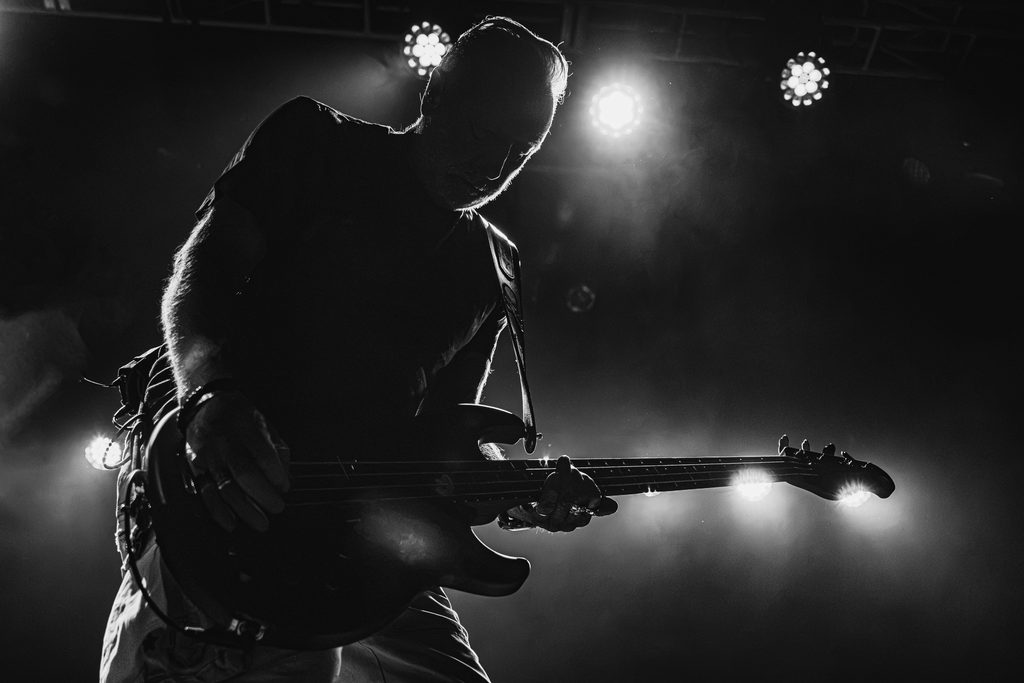
Overall, both sets delivered some excellent live moments. The band is tight and Peter Hook still puts on an incredible show, especially for a set that spans over two hours.
If you’re a fan of either band or even want to experience some legendary music, catch Peter Hook & The Light’s ongoing Get Ready tour. Check out some additional photos from the show below.
Anxious are currently on tour a massive North America supporting their label mates Citizen alongside Hotline TNT, Rocket, and Cryogeyser, and today they’re back with a fittingly huge new single Secret Weapon. Secret Weapon follows last month’s single Don’t Move and the two tracks represent the first new music from Anxious since the release of […]
Arankai is back with his latest single Convince Me off his upcoming sophomore album The Shape of Blue. Convince Me translates the vulnerability of feeling like you are relying on someone else to keep you going, but that reliance can ultimately bring you closer together like it did for Arankai and his now wife. The […]
Rock and roll has always been about momentum, whether it comes from the forward thrust of a driving beat, the restless spirit of the lyrics, or the cultural shifts the music helped ignite. Songs built around move, movin’, moving, and moves can turn that idea into physical freedom, emotional change, determination, escape, or pure rock and roll motion. These ten songs take that idea in very different directions. # 10 – Got This Thing On The Move – Grand Funk Railroad Grand Funk Railroad’s “Got This Thing on the Move” opens the band’s second studio album, Grand Funk, released in
Following the recent release of their stirring acoustic version of Horizon, Australian symphonic folk metal torchbearers VALHALORE have unleashed an epic new live video for The Storm, a track taken from the band’s latest studio album, Beyond The Stars. Capturing the power and energy of VALHALORE on stage, The Storm (Live) brings one of the […]
A moment in adulthood arrives, sooner or later, when your childhood neighborhood starts looking like a movie set built from memory: the curb seems smaller, the houses fake, the corner store guilty. NYIKO’s Neighborhood lives in that unnerving dislocation, where leaving home turns out to be less dramatic than realizing another place has become home while life made other plans.
The song has the good sense to keep its hands off the panic button, though. Guitars jangle with a tone that brings Echo and the Bunnymen to mind, while NYIKO sings with a wounded restraint that brushes against The Smiths and Choir Boy. The arrangement gives the melody room to wander, lets the bass and drums hold their ground, and trusts the ache in the vocal to do more work than production could.
NYIKO has moved through hip hop, piano songwriting, emo, hardcore, and electronic music, and you can hear the benefit of that restlessness in the way Neighborhood sidesteps purity tests. The song feels pop-minded without becoming smug about hooks, emotionally direct without begging for sympathy. Somewhere in its DNA sits the plainspoken intelligence of Magnetic Fields and Divine Comedy, that knack for taking a condition and phrasing it as though you overheard the right sentence at the wrong time.
Directed and edited by Sabrina Gimenez, the video for Neighborhood follows people moving separately through a residential area before their bodies begin slipping into rhythmic glitches. A twitch here, a repeated gesture there, then these isolated figures start syncing up, as if the neighborhood itself has found a tempo and decided everybody ought to obey it. At golden hour, they converge in a brief group movement before the pattern breaks apart. Everybody disperses, except one person who keeps going. NYIKO, who produced and choreographed the video, turns belonging into something halfway between comfort and contagion. Community looks beautiful for a second, then faintly sinister once you notice how easily individual behavior can fall into step.
Watch Neighborhood below:
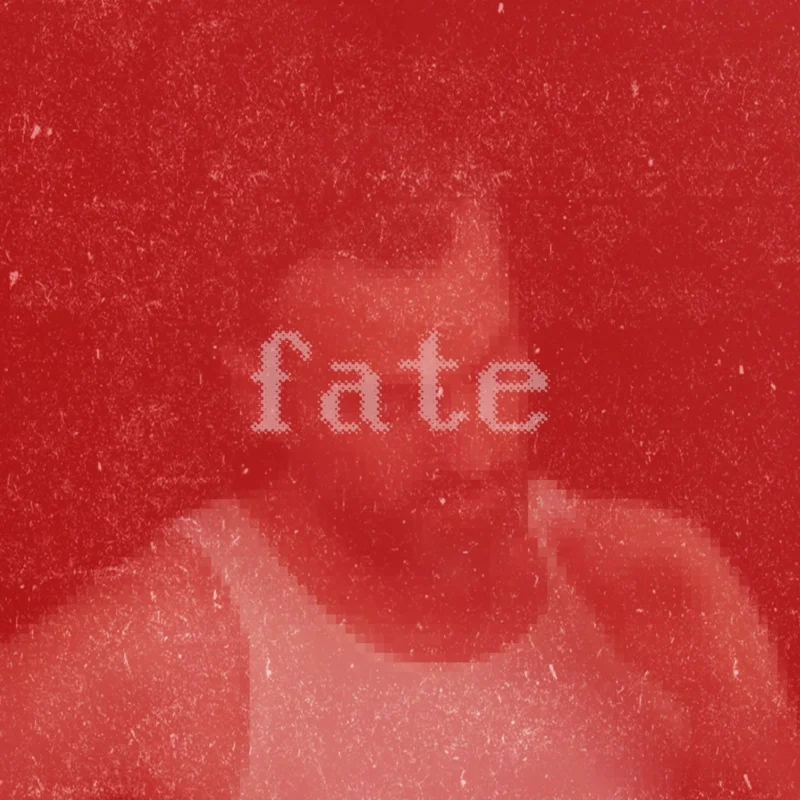
That idea runs straight into Fate, NYIKO’s sophomore album, released September 16 through Trailing Twelve Records. Across ten songs, he considers desire, identity, attachment, politics, memory, and the unseen systems nudging people toward choices they swear are entirely their own.
“I wanted to write an album about the invisible forces that shape our lives,” says NYIKO. “Whether it’s the internet, politics, nostalgia, celebrity culture, or our own attachment patterns, we spend so much time believing we’re making independent choices without realizing how much we’re being pulled by things outside ourselves. Every song asks the same question from a different angle: how much of our lives is fate, and how much is choice?”
Opening track O Primate sets chiming synthesizers against jangling guitars, its wavering electronic tones giving the brighter riffs an agreeable instability. Warm bass anchors NYIKO’s phrasing, which has something of The Smiths’ conversational elasticity: a melody that seems to discover its own argument as the sentence unfolds. Beneath that inviting surface sits a consideration of animal rights, human power, and the ease with which cruelty becomes ordinary. When clipped, piano-like keyboard notes enter midway through, they sharpen the arrangement without disturbing its composure. His measured delivery gives the subject room, keeping the listener close enough to sit with an uncomfortable question.
On Stay Young, hazy synthesizers and a gentle bass figure make way for a new wave vocal over unhurried drums. Its wish to suspend youth carries the knowledge that adulthood keeps changing the people and places we count on. As the bass grows fuller, guitars broaden into the generous shapes of 1980s pop-rock, with vocal harmonies adding lift. There is an appealing ease to the way these parts gather around the melody, each arrival making the song feel a little more expansive. For a few minutes, NYIKO makes holding on sound effortless, even as the title betrays how much effort might be involved.
The piano-led opening of camgirl brings Corey Hart’s earnest new wave balladry to mind, with soft vocals and small harmony accents lending the first stretch an almost private scale. Inspired by the psychological thriller Cam, the song follows a lonely fan who mistakes a sex worker’s paid attention for a romance. NYIKO lets us hear the tenderness that makes the misunderstanding persuasive to the person having it. Midway through, a funkier bass line, firmer drums, and more expressive guitars enlarge the arrangement, carrying his fantasy toward the proportions of a grand declaration. The musical uplift makes his certainty feel alarmingly easy to share.
Sugar brings a cooler, more physical tension, somewhere between Mareux’s controlled darkwave and Provoker’s bruised intimacy. Angular guitars interrupt the synth swells, while a substantial bass line gives the track weight and a certain weary grace. The album’s notes place it within the complexities of loving someone who works in the sex industry; desire, emotional distance, and control all bear on the relationship. NYIKO’s delivery catches that difficult balance between wanting another person and recognising how much of yourself you are surrendering to the arrangement. The rhythm keeps moving with an assurance the relationship seems unable to sustain.
“To me, Sugar is about temptation and control,” NYIKO confesses. “It’s what happens when lust overrides logic – when something looks sweet on the surface but rots you from the inside.”
Rippling synths introduce SUPERFAN, where a wistful vocal gradually acquires momentum from the drums and bass. Its apparent love song exposes the possessiveness that can turn celebrity admiration into entitlement. Chiming synthesizers and changes in pace give the arrangement a restless shape, repeatedly raising its emotional temperature before allowing it to settle. Those returns to relative calm are especially effective: NYIKO gives the melody enough breathing room for its sweetness to register. At each subsequent swell, the voice seems ready to make an enormous promise, leaving us to wonder who has actually agreed to receive it.
An extended guitar melody holds Shelter steady while warm bass and drums establish a more welcoming momentum. Here, the search for home settles on the emotional security another person can offer. NYIKO’s pop-rock delivery has room to open up, and the bright, bubbling synthesizer that introduces the chorus supplies a welcome burst of pleasure. The beat becomes easier to dance to as the song expands, giving its optimism a physical expression. After the fraught attachments of the preceding tracks, that sustained guitar line sounds particularly reassuring, carrying the tune through its changes with an unforced sense of continuity.
After Neighborhood, the title track Fate draws the album into darker territory. A compressed synthpop beat gradually comes into focus, revealing a wiry rhythm beneath NYIKO’s smooth delivery. Layered vocal harmonies lend the melody a slightly baroque elegance. The song explores an avoidant relationship, with desire repeatedly renewed by a lover’s retreat. Metallic keyboard tones and sighing synth pads enter around the midpoint, followed later by rippling melodic figures that make the arrangement feel increasingly unsettled. There is something rueful about how gracefully the vocals move through all this activity, as though the pleasure of singing could briefly make the uncertainty bearable.
Drifting synthesizers give Victim of No Consequence an airy entrance before a buoyant bass line and gently floating drumbeat take over. NYIKO returns to a Smiths-like cadence, surrounded by jangling acoustic guitar and bright electronic accents. It is among the album’s most immediately memorable songs, with a tune that almost supplies its own invitation to sing along. The lyrics follow two young men drawn toward incompatible realities through pandemic misinformation and conspiracy culture. That inviting arrangement becomes an especially pointed setting: a melody capable of bringing voices together accompanies a song about people losing the ability to agree on what is real.
Closing track Summer of Outrage opens out around warm bass, acoustic strumming, and a sustained guitar figure whose long, expressive reach recalls The Chameleons. The riff returns between verses, giving the song a recognizable center as NYIKO’s broad radio-pop vocal and bright synthesizers fill the space around it. Written in August 2020, the song holds the urgency of the Black Lives Matter protests alongside the isolation of lockdown and the exhausting churn of social media. Its public concerns eventually give way to a more personal grief over time apart from friends. A late passage of piano and voice brings that feeling into focus before the closing guitar expansion. The generosity of the melody makes a fitting conclusion to Fate: even after ten songs spent examining what draws people together and pulls them apart, NYIKO can still make connection sound possible.
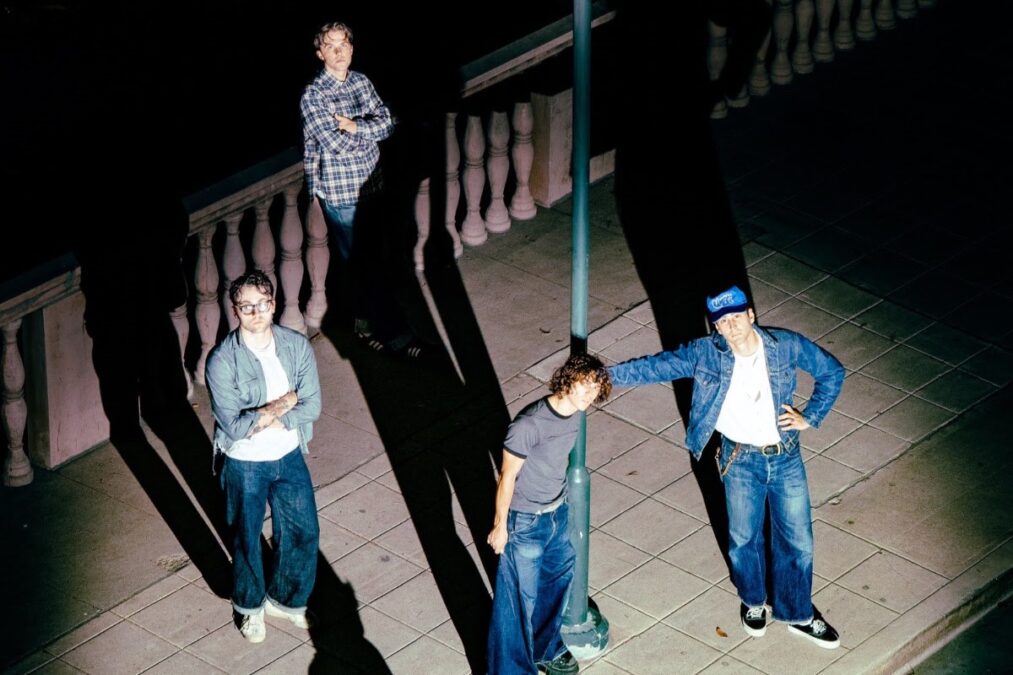 Anxious are currently on tour a massive North America supporting their label mates Citizen alongside Hotline TNT, Rocket, and Cryogeyser, and today they’re back with a fittingly huge new single Secret Weapon. Secret Weapon follows last month’s single Don’t Move and the two tracks represent the first new music from Anxious since the release of […]
 Arankai is back with his latest single Convince Me off his upcoming sophomore album The Shape of Blue. Convince Me translates the vulnerability of feeling like you are relying on someone else to keep you going, but that reliance can ultimately bring you closer together like it did for Arankai and his now wife. The […]
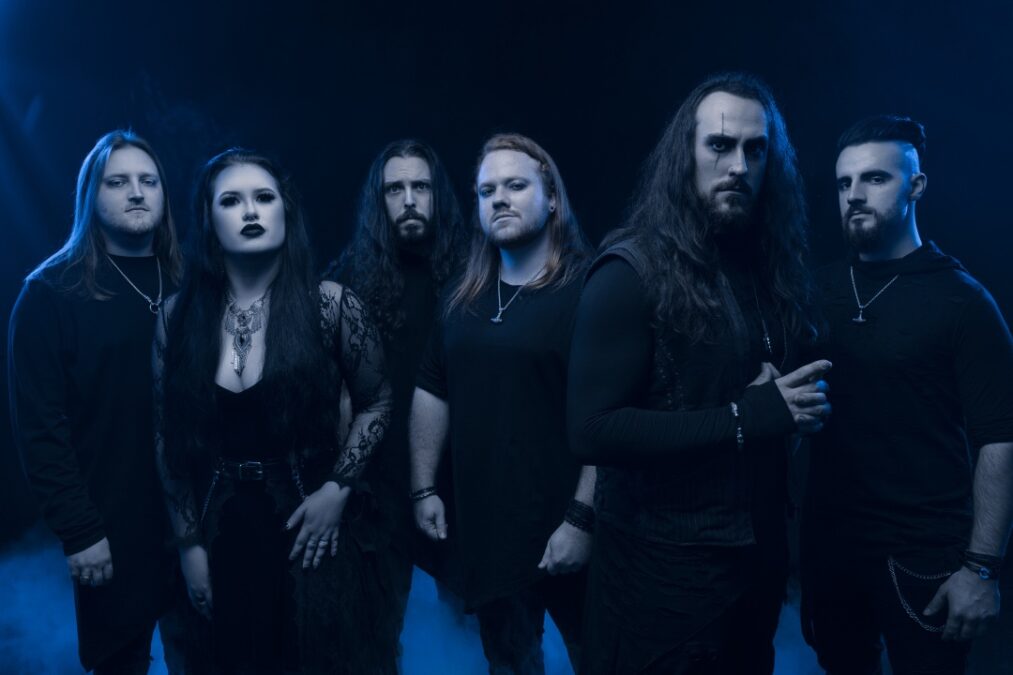 Following the recent release of their stirring acoustic version of Horizon, Australian symphonic folk metal torchbearers VALHALORE have unleashed an epic new live video for The Storm, a track taken from the band’s latest studio album, Beyond The Stars. Capturing the power and energy of VALHALORE on stage, The Storm (Live) brings one of the […]