Category: news
-
Ozzy Osbourne’s Fatherly Message to Kelly 3 Days Before He Died
Kelly Osbourne revealed the fatherly message that Ozzy shared with her prior to his death in July of 2026 during a new podcast appearance. Continue reading… -
Neil Young’s ‘Second Song’ Centers on Time and Reflection: Review
Neil Young dropped his 44th studio album at 80 years old, and two of the songs on it date back to the 1960s. Continue reading… -
Listening Now : Cloud Chamber – Drift
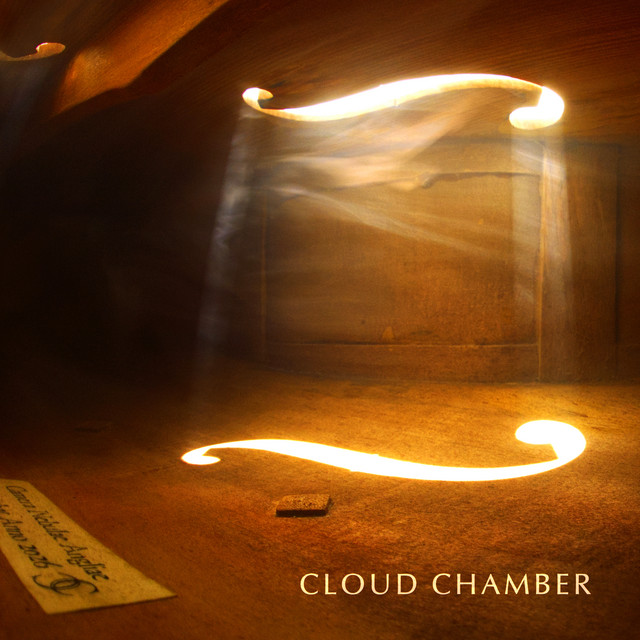
Cloud Chamber’s Drift is a hushed, beautifully atmospheric instrumental that unfolds with remarkable delicacy. Piano and cello move together in an intimate, contemplative dialogue, creating a sense of stillness and quiet emotional movement. There is a classical elegance to the piece, yet its cinematic sensibility gives the music a spacious, almost dreamlike quality. Drift feels less like a conventional composition and more like a fleeting moment suspended in time—subtle, luminous and deeply introspective. As the fourth glimpse into the duo’s forthcoming Skylines, it offers a graceful preview of an album shaped by decades of experience creating atmosphere and emotion through film music.
Connect:
-
Crystal Eyes – Reveal New Single And Video
Crystal Eyes have shared a video clip for “Metal Bound” single, which serves as a first taste of their next full-length instalment Thunder God. The latter comes out on October 30th, 2026.
Read more… -
DISGRUNTLED DAD REVIEWS With DAVE MUSTCOMPLAIN: ARCHGOAT – NIGHTBRINGER, LIGHTBRINGER

Alright, you remember that divine experience I mentioned in last week’s column? It turned out to be total bullshit, so forget I said anything.
I thought I could let it ride and reached out to my daughter Jessica to see if she wanted to reconnect, and she in so many words told me to go fuck myself. I figure if God had actually revealed Himself to me He would’ve at least let me speak to my libtard daughter again, but maybe I’m a fucking idiot.
The whole thing was probably a side effect from the Lipitor I started taking last week. Shit’s making me loopier than a goddamn shit house rat. It’s a shame, too. I’d have made a fucking excellent prophet, but looks like I’m gonna have to go the opposite route.
As such, here’s the new album by Archgoat.
Track 1: Invocation 666
Oooh, this is promising. All hail Satan!
Track 2: Nightbringer, Lightbringer
Don’t get me wrong, my newfound heretical status does not preclude me from thinking this song sucks shit. Singing sounds like a goddamn AMC Gremlin struggling to start. Am I required to like this just because I hate God now? If so, time to put on a happy face.
Track 3: The Dawn to Armageddon
Ugh, I haven’t seen my grandkids Lilianne and Connor in almost six years. Jessica’s probably got them specifying their pronouns on their math tests or whatever the fuck. They all have me blocked on Facebook, too, so they can’t see all the Kevin Sorbo tweet screenshots I’ve been sharing. Those poor kids are so effed.
Track 4: Iconoclasm the Nazarene
Alright, back to it. Is it just me, or is that album art a little too explicit? Nevermind, nevermind! I momentarily forgot about my newfound apostasy. I like this song, I think.
Track 5: Blood of Jesus Spilling Upon the Earth
Yep, way too explicit.
Track 6: The Stygian Millenium
You know, if you slowed down this beginning riff and maybe tuned it up a bit it would sound a bit more tolerable. Maybe recruited Paul Rodgers on vocals? I’m just spitballing here. Trying to help the Satanists out, that’s it.
Track 7: Invocation 999
Backwards speech?! Didn’t Tipper Gore and the PMRC teach us ANYTHING?! I’m starting to regret turning from God.
Track 8: Keys of Hell and of Death
Oh Christ, what the hell am I doing listening to this? I’m so sorry, God. I swear this must be the Lipitor again. Goddamnit, I really need to get off that shit.
Track 9: The Light Behind the Horns
I need this to end as soon as possible. I’ll have Doreen start up the car and get us over to Faith Lutheran before it’s too late.
Track 10: Reaper of Christianity
Ugh, how many songs are on this fucking album?!
Track 11: Obsidian Reflection of Anti-Light
OK, last track. Thank God. Sorry if my little crisis is keeping me from objectively reviewing this music. I hate it, for the record.
There you have it. For the sake of my immortal soul, 0/5 stars. Now if you’ll excuse me, I’m going to head to church to wash the stink of the infernal one from my person. Hopefully there’s a new Stryper album that I can review next week to offset this. Dave Mustcomplain out.
The post DISGRUNTLED DAD REVIEWS With DAVE MUSTCOMPLAIN: ARCHGOAT – NIGHTBRINGER, LIGHTBRINGER appeared first on MetalSucks.
-
Heavy Temple – To Release Live Album Next Month
Philadelphia’s heavy psych rock trio Heavy Temple has recently announced the release of a new live album Live From The Inner Sanctum, which is slated for release on October 9, 2026 through Magnetic Eye Records.
Read more… -
GONZO’S HEAVY ROUNDUP, END-OF-SUMMER EDITION
(Our Denver-based writer Gonzo had an eventful summer, and reported on some of those events in our pages, but he now returns to reviewing and recommending albums — six of them released earlier this year.) Well, fuck. To say the past three months have been busy would be my own personal understatement of the year. […]
The post GONZO’S HEAVY ROUNDUP, END-OF-SUMMER EDITION appeared first on NO CLEAN SINGING.
-
Linkin Park Albums Ranked

Linkin Park’s albums number eight across twenty-four years, and no other band in modern rock has a discography shaped quite like it. A debut that sold more than thirty million copies. A middle stretch that split the fanbase down the middle every single time. A seven-year silence after losing Chester Bennington. And then a 2024 comeback that worked far better than anyone had any right to expect. This is every Linkin Park album ranked worst to best.
How this ranking works
Three things: how strong the record is front to back, how far it moved the band, and whether it still holds up now.
That third one matters more with Linkin Park than with almost anyone, because this catalogue has moved around a lot in public estimation. The album that was once the most hated thing they’d made is now widely considered their most artistically ambitious. The one that sold thirty million copies is still the one everybody reaches for. And their most divisive record is the one that got reassessed hardest after 2017.
Sales aren’t the criterion here. If they were, this list would be two albums long.
Loaded Radio Recommends – The 13 Best Nu Metal Bands: The Genre-Defining Powerhouses That Shaped a Generation
8. One More Light (2017)

Key tracks: “One More Light,” “Heavy,” “Talking to Myself”
The most difficult listen in the catalogue, and the hardest one to write about.
One More Light arrived in May 2017 and pivoted hard into radio pop — glossy production, tropical-house textures, almost no guitars. To an audience who’d followed them since Hybrid Theory it felt like a rejection of everything the band was built on, and the reaction at the time was brutal.
Then Chester Bennington died in July, two months after release, and the entire record reframed itself overnight. The title track stopped being a soft ballad and became something almost unbearable. “Heavy” stopped being a pop single and became a document.
It’s eighth because the songs, judged as songs, are the thinnest thing they’ve put their name to — the sonic grit that defined them simply isn’t there. But it would be dishonest to rank it without acknowledging what it became. It’s a poignant record and a weak album, and both of those things are true at the same time.
7. Living Things (2012)

Key tracks: “Burn It Down,” “Lost in the Echo,” “Castle of Glass”
Solid and safe, which is a strange thing to say about a Linkin Park album.
Living Things was the reconciliation record — an attempt to fold the electronic experimentation of the previous two albums back into the stadium-rock engine that made them famous. “Burn It Down” and “Lost in the Echo” are genuinely excellent and both became permanent live fixtures.
The problem is the back half. It drifts, and for a band whose best records are all statements about something, this one plays like a very good collection of Linkin Park songs rather than a Linkin Park album.
Nothing wrong with it. Nothing essential either.
6. The Hunting Party (2014)

Key tracks: “Guilty All the Same,” “Rebellion,” “Keys to the Kingdom”
The rebellion record, and the one most likely to be reassessed upward over the next decade.
Sick of the digital polish, the band plugged back in and made something deliberately abrasive — punk and hardcore-inflected, live-sounding, aggressive in a way they hadn’t been since 2003. Tom Morello turns up on “Drawbar.” Daron Malakian of System of a Down plays on “Rebellion.” Page Hamilton of Helmet is on it too.
It proved they could still throw a punch when they wanted to, and “Guilty All the Same” is six and a half minutes of a band enjoying itself for the first time in years.
What keeps it at six is the absence of hooks. Linkin Park’s greatest skill was welding aggression to melody, and this record deliberately abandons half of that. Admirable. Not the thing people come to this band for.
5. From Zero (2024)

Key tracks: “The Emptiness Machine,” “Heavy Is the Crown,” “Two Faced”
The comeback that had no business working, and did.
Released November 15, 2024 through Warner Records, From Zero was the band’s first album in seven years and the first without Chester Bennington. It introduced Emily Armstrong of Dead Sara as co-vocalist alongside Mike Shinoda, and Colin Brittain on drums, replacing founding member Rob Bourdon.
The name is the most loaded thing about it. Before Linkin Park, the band was called Xero — so From Zero is a deliberate return to the beginning rather than a continuation.
“The Emptiness Machine” arrived as the first new Linkin Park music in seven years, and it answered the only question anyone had: does this work? Armstrong doesn’t imitate Bennington, which was the right call and the only survivable one. She’s a different singer with a different instrument, and the songs were written for her rather than adapted.
“Heavy Is the Crown” and “Two Faced” are direct descendants of the 2003 record. The production is grounded in the present rather than chasing it.
Critics landed broadly positive — some calling it the biggest comeback album in recent rock history, others noting it doesn’t touch their peak but stands as a genuine re-energised return. The Guardian said the sonic risks paid off handsomely.
Fifth, and I’d note that’s provisional. It’s two years old and everything above it has had at least a decade to prove it lasts.
4. A Thousand Suns (2010)

Key tracks: “Waiting for the End,” “The Catalyst,” “Iridescent”
Once the most hated album in the catalogue. Now, for a lot of people, the best one.
A Thousand Suns is a concept record about nuclear anxiety and human fragility, built as a continuous piece with interludes, spoken-word samples and almost no conventional song structures. In 2010 that read as pretension. Fifteen years on it reads as the only time this band made something nobody else could have made.
“Waiting for the End” is arguably the most beautiful song they ever wrote, and “The Catalyst” is the strangest single any major rock band released that decade.
Fourth because it isn’t front-to-back consistent — the interludes that make it cohere as a piece also make it a difficult straight listen. But it’s the record that proved they were artists rather than a formula, and the reassessment it’s had is entirely deserved.
3. Minutes to Midnight (2007)

Key tracks: “What I’ve Done,” “Bleed It Out,” “Shadow of the Day,” “Given Up”
The moment the nu-metal mask came off.
Working with Rick Rubin, Linkin Park stripped out the rap-rock scaffolding and made a straight alternative rock record. It was a genuine risk — they were the biggest band in the genre and they walked away from the thing that made them that.
It worked completely. “What I’ve Done” became one of the defining singles of the decade. “Bleed It Out” is still the best live song they have. “Given Up” opens with Bennington holding a scream for seventeen seconds, which remains one of the single most impressive vocal moments in rock.
And that’s the thing this album settled. Before Minutes to Midnight, Chester Bennington was a great nu-metal singer. After it, he was one of the greatest vocalists rock has produced in any genre.
2. Meteora (2003)

Key tracks: “Numb,” “Faint,” “Somewhere I Belong,” “Breaking the Habit”
The perfected formula.
If the debut was the lightning strike, Meteora is the storm that followed it. Every track is a potential single, the production is airtight, and Bennington’s delivery is at its absolute peak. “Numb” alone has outlived most of the decade it came from.
“Breaking the Habit” is the one to point at if you want to understand why this band mattered — a song with no guitars in the verses, strings underneath, and a chorus that does more emotional work than anything else in the nu-metal canon.
It’s second by an inch, and only because of the sheer cultural force of what came before it. On any other band’s discography this is a clear number one.
1. Hybrid Theory (2000)

Key tracks: “In the End,” “One Step Closer,” “Crawling,” “Papercut”
There isn’t another answer.
Hybrid Theory defined a decade, shifted more than thirty million copies, went Diamond in the United States, and permanently changed how rock, hip-hop and electronic music could coexist in the same song. It’s thirty-seven minutes with no filler on it at all.
And it did something that gets forgotten now because everybody copied it. Before this record, a rap verse and a sung chorus in the same rock song sounded like a novelty. After it, it sounded like the default. An entire generation of bands spent the following decade trying to write “In the End” and none of them got close.
“Crawling,” “Papercut,” “One Step Closer,” “In the End” — those aren’t album tracks, they’re the soundtrack to being fourteen in 2001 for a very large number of people who are now in their late thirties.
It’s the blueprint for everything that came after it in the genre, and twenty-six years on it’s still the undisputed top of this discography.
Check This Out – Limp Bizkit Albums Ranked: The Definitive Verdict on Nu-Metal’s Most Chaotic Catalog
Every Linkin Park album, ranked
8. One More Light (2017)
7. Living Things (2012)
6. The Hunting Party (2014)
5. From Zero (2024)
4. A Thousand Suns (2010)
3. Minutes to Midnight (2007)
2. Meteora (2003)
1. Hybrid Theory (2000)Linkin Park albums in release order
Hybrid Theory — 2000 · Chester Bennington era
Meteora — 2003 · Chester Bennington era
Minutes to Midnight — 2007 · Chester Bennington era
A Thousand Suns — 2010 · Chester Bennington era
Living Things — 2012 · Chester Bennington era
The Hunting Party — 2014 · Chester Bennington era
One More Light — 2017 · Chester Bennington era
From Zero — 2024 · Emily Armstrong eraSeven albums with Bennington. One, so far, with Armstrong.
Where this ranking will start arguments
A Thousand Suns at four will be too low for a certain kind of fan and far too high for another. That album has had the most dramatic reassessment of anything in the catalogue and there’s no consensus position on it. Mine is that it’s their bravest record and not their best one.
One More Light at eight is the hardest call on the page. Judged purely as songs, it belongs there. Judged as a document of what was happening to the man singing it, no ranking really applies. I’ve ranked the album and tried to be honest about the difference.
From Zero at five is provisional and I’ve said so. Two years isn’t enough to know.
The Hunting Party at six is the one I’d expect to move. Give that record another ten years and I suspect it climbs.
Hybrid Theory over Meteora isn’t seriously contested. If you only want one, take Meteora — it’s the better collection of songs. Hybrid Theory is the one that changed things.
If you want more of this, the full Loaded Radio rankings archive is here, and the Limp Bizkit discography is the obvious companion piece.
Where Linkin Park are now
Busy, and considerably bigger than anyone expected them to be again.
The current lineup: Mike Shinoda on vocals and everything else, Emily Armstrong on co-vocals, Brad Delson on guitar, Joe Hahn on turntables and samples, Dave “Phoenix” Farrell on bass and Colin Brittain on drums.
The From Zero World Tour opened on September 11, 2024 at the Kia Forum in Los Angeles — their first live performance since 2017 — and has run continuously since, taking in Europe, Asia and South America. It reached Australia in March 2026: Brisbane Entertainment Centre on the 3rd, Rod Laver Arena in Melbourne on the 8th, and Qudos Bank Arena in Sydney on the 14th, with Parkway Drive among the support.
Shinoda’s line on the return: getting back out on the road has been incredible, and the support has been overwhelming.
No ninth album has been announced. From Zero remains the most recent.
Twenty-six years, over a hundred million records sold, and a band that most people had written off entirely in 2018.
TL;DR
- Eight studio albums from 2000’s Hybrid Theory to 2024’s From Zero.
- Best: Hybrid Theory (2000). Over thirty million copies, Diamond certified in the US, and the record that made rap verses over rock choruses the default rather than a novelty.
- Worst: One More Light (2017). The thinnest set of songs in the catalogue, and a record that reframed completely two months after release.
- Most reassessed: A Thousand Suns (2010), once the most disliked album in the discography and now widely regarded as their most artistically ambitious.
- The comeback: From Zero arrived November 15, 2024 via Warner — their first album in seven years, introducing Emily Armstrong of Dead Sara on co-vocals and Colin Brittain on drums. The title references Xero, the band’s name before Linkin Park.
- Seven albums with Chester Bennington, one with Emily Armstrong.
- Over 100 million records sold worldwide.
FAQ
What is the best Linkin Park album?
Hybrid Theory, released in 2000. It sold over thirty million copies worldwide, was certified Diamond in the United States, and fundamentally changed how rock, hip-hop and electronic music could be combined in a single song. 2003’s Meteora is the closest challenger and arguably the better collection of songs, but Hybrid Theory is the record that changed the genre.
How many albums does Linkin Park have?
Eight studio albums: Hybrid Theory (2000), Meteora (2003), Minutes to Midnight (2007), A Thousand Suns (2010), Living Things (2012), The Hunting Party (2014), One More Light (2017) and From Zero (2024).
Who replaced Chester Bennington in Linkin Park?
Emily Armstrong, previously the frontwoman of Dead Sara, joined as co-vocalist alongside Mike Shinoda in September 2024. Colin Brittain also joined on drums, replacing founding member Rob Bourdon. Both made their studio debut on From Zero.
What does the album title From Zero mean?
It refers to Xero, the name the band used before becoming Linkin Park. Mike Shinoda has described the title as a deliberate return to the band’s beginnings rather than a continuation of what came before.
Which Linkin Park album sold the most?
Hybrid Theory, which is certified Diamond in the United States and remains one of the best-selling debut albums ever released. The band’s total worldwide sales exceed 100 million records.
Eight albums, two singers, and a comeback that wasn’t supposed to work. Is Hybrid Theory still untouchable, or has Meteora quietly overtaken it? Settle it in the comments. And keep it locked on the Loaded Radio stream — follow Loaded Radio for daily rock and metal news.
The post Linkin Park Albums Ranked appeared first on Loaded Radio.
-
Nordicwinter – Present ‘Nocturne In Gray’ Track
“Nocturne In Gray”, the second single from Nordicwinter‘s soon-to-be-released new studio album A Hopeless Dawn, has premiered online in the form of a lyric video.
Read more… -
Olivia Rodrigo Covers “Strong Enough” To Honor Sheryl Crow At BMI Troubadour Ceremony
BMI Nashville bestowed Sheryl Crow with the BMI Troubadour Award at a ceremony Monday night. At the performing rights organization’s Nashville office, an impressive assortment of talent showed up to honor Crow by performing her songs. Jason Isbell was there to do “Run, Baby, Run,” Melissa Etheridge sang “If It Makes You Happy,” Eric Church did “Leaving Las Vegas,” Lauren Daigle took a spin through “Every Day Is A Winding Road,” and Chris Stapleton performed “I Shall Believe.” And at the end of the night, Olivia Rodrigo made a surprise appearance.
The post Olivia Rodrigo Covers “Strong Enough” To Honor Sheryl Crow At BMI Troubadour Ceremony appeared first on Stereogum.