“His verse speaks to something we’ve talked about and that really needs to be heard: we differ politically and on other things, but we’ve stayed friends through it all…”
Old-school death metal veterans MASTER have released new single “Dust’s Arrival”, the latest preview of their forthcoming album Among the Seeds of Death. The record will arrive on 16 October and will be available on CD, vinyl, cassette and digital formats. The new track continues the sound that has long defined MASTER: a rough-edged mixture […]
Neelys Band This group’s weekly gig at Nashville institution American Legion Post 82 was required attendance even before their AmericanaFest blowout. Their performance alone was a thrill. Then came the special guests: Margo Price delivering a rip-roaring “9 to 5,” Shakey Graves joining Price for an incredible duet of “Islands in the Stream,” and Duane […]
Watch ARMORED SAINT’s “Not On Your Life” visualizer HERE.
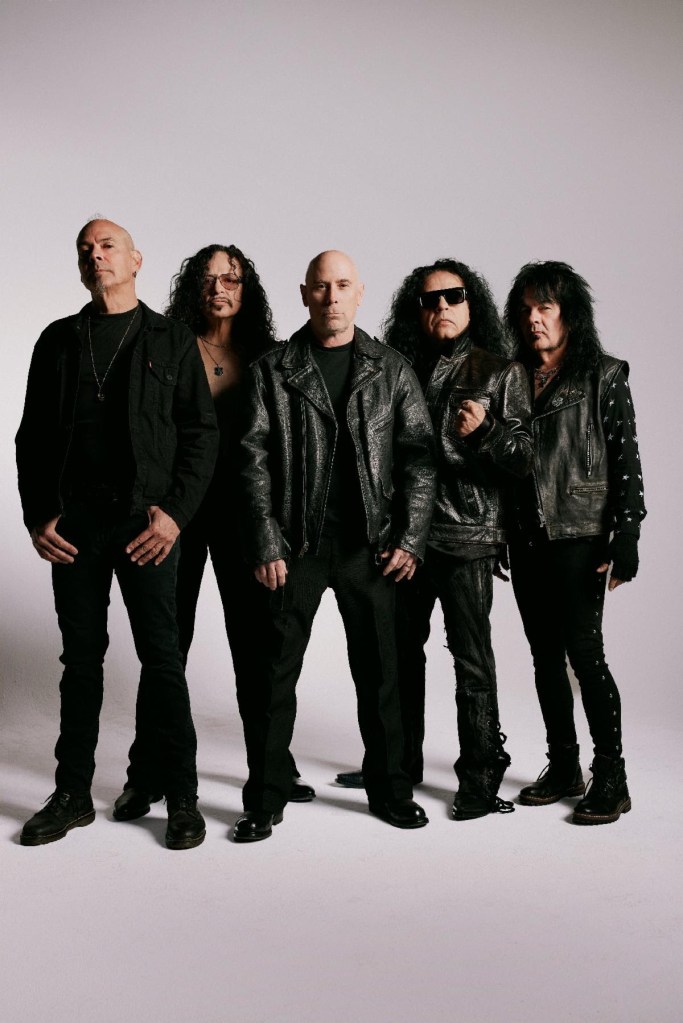
ARMORED SAINT today presents their visualizer for “Not On Your Life.” The track comes by way of the band’s critically acclaimed new full-length, Emotion Factory Reset, released earlier this year on Metal Blade Records. The kaleidoscopic clip was created by Costin Chioreanu of TWILIGHT13MEDIA.
Comments vocalist John Bush, “The opening lyrics are, ‘You already know my name is John Doe / Yeah you already know but still give it a go.’ I think Phil [Sandoval] had the term, ‘you already know.’ Rhyming, I was, ‘oh, okay, this is cool, like, John Doe.’ There are a couple meanings to it: the cool guy from X is John Doe. It also means that you don’t know who this person is. It led to me thinking in terms of something a little vague, which sometimes I like to do. You already know, yet you don’t know at the same time.
Phil sent me the phrase ‘from dollars to donuts,’ and I got ‘Heavens to Betsy.’ My mom was named Betty, and it’s a little nod to [Bitch vocalist] Betsy Bitch because she’s on Metal Blade. I thought, ‘why not just have a little correlation here.’ It’s a cool, great rock song, and it seems to be some people’s favorite.
The lyrics ‘dollars to donuts’ sounds like something somebody said on the streets of Manhattan in 1950. I also used the phrase ‘lying on the floor in the drunk tank.’ ‘Drunk tank’ is another term people don’t really use in 2026.”
Watch ARMORED SAINT’s “Not On Your Life” visualizer HERE.
Watch the band’s previously released video for “Every Man-Any Man” HERE, “Close To The Bone” HERE, and “Hit A Moonshot” HERE.
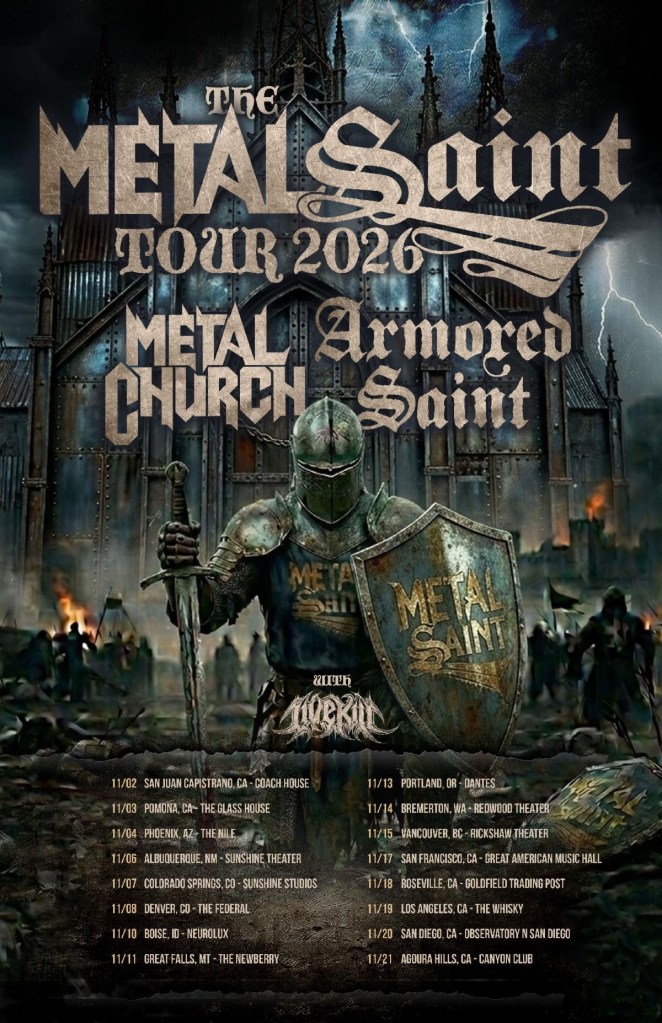
ARMORED SAINT will kick off their North American co-headlining tour with Metal Church this November. The Metal Saint Tour 2026 begins on November 2nd in San Juan Capistrano, California and runs through November 21st in Agoura Hills, California with support provided by LiveKill.
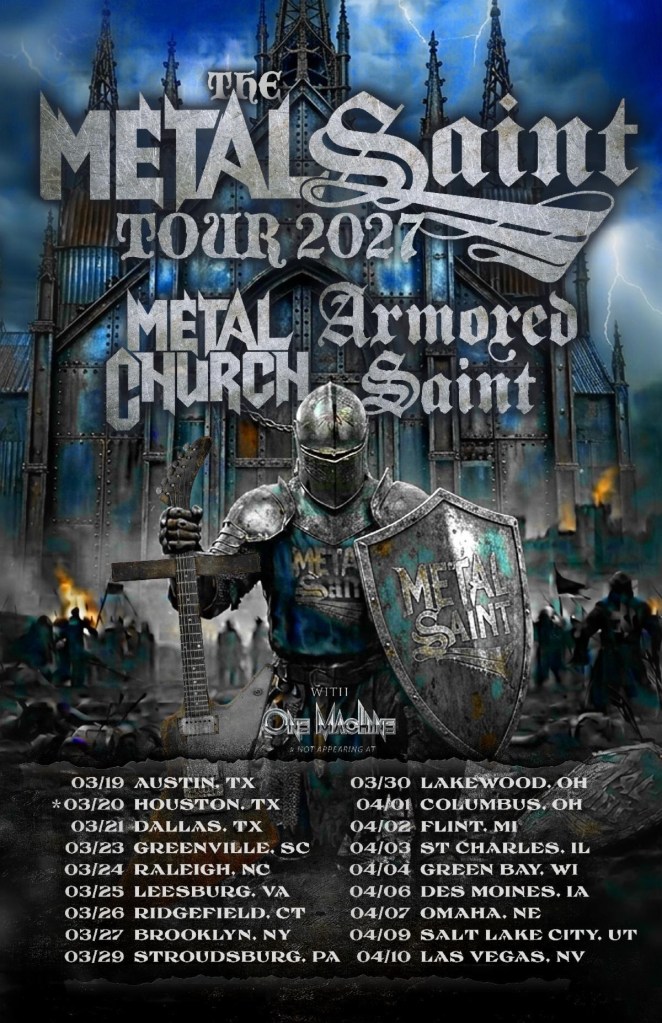
Following the fiery response both bands received during their recent shows together in Europe and fans’ excitement for the upcoming Fall shows, a Spring 2027 leg of this killer metal package has also been announced. The journey will commence on March 19th in Austin, Texas and close on April 10th in Las Vegas, Nevada. Support will be provided by One Machine.
Offers ARMORED SAINT vocalist, John Bush, “Three weeks in the Fall just didn’t seem enough so we decided to do another run of the Metal Saint tour in the Spring of 2027. Celebrating two classic bands from the ‘80s who also have new records out in 2026 is a no-brainer for any metal fan. Plus, there is still a lot of the country to cover. See you at the show!”
Comments Metal Church guitarist Kurdt Vanderhoof, “We are stoked to be heading back out on the road with our friends in ARMORED SAINT for another round of the Metal Saint Tour!”
Adds Metal Church drummer Ken Mary, “We are really looking forward to so many fans and friends on tour on this run and we are honored to be with our brothers in metal, ARMORED SAINT!”
ARMORED SAINT + METAL CHURCH w/ LiveKill: 11/02/2026 Coach House – San Juan Capistrano, CA 11/03/2026 The Glass House – Pomona, CA 11/04/2026 The Nile – Phoenix, AZ 11/06/2026 Sunshine Theater – Albuquerque, NM 11/07/2026 Sunshine Studios – Colorado Springs, CO 11/08/2026 The Federal – Denver, CO 11/10/2026 Neurolux – Boise, ID 11/11/2026 The Newberry – Great Falls, MT 11/13/2026 Dantes – Portland, OR 11/14/2026 Redwood Theater – Bremerton, WA 11/15/2026 Rickshaw Theater – Vancouver, BC 11/17/2026 Great America Music Hall – San Francisco, CA 11/18/2026 Goldfield Trading Post – Roseville, CA 11/19/2026 The Whisky – Los Angeles, CA 11/20/2026 Observatory North San Diego – San Diego, CA 11/21/2026 Canyon Club – Agoura Hills, CA
ARMORED SAINT + METAL CHURCH w/ One Machine: 3/19/2027 Come And Take It Live – Austin, TX 3/20/2027 Hells Heroes – Houston, TX * 3/21/2027 Granada Theater – Dallas, TX 3/23/2027 Radio Room – Greenville, SC 3/24/2027 Chapel Of Bonus – Raleigh, NC 3/25/2027 Tally Ho Theater – Leesburg, VA 3/26/2027 Ridgefield Theater – Ridgefield, CT 3/27/2027 St. Vitus – Brooklyn, NY 3/3/29/2027 Sherman Theater – Stroudsburg, PA 3/30/2027 Mercury – Lakewood, OH 4/01/2027 The Kings Of Clubs – Columbus, OH 4/02/2027 Machine Shop – Flint, MI 4/03/2027 Arcada Theater St – Charles, IL 4/04/2027 EPIC Events Center – Green Bay, WI 4/06/2027 Wooly’s – Des Moines, IA 4/07/2027 Matchbox – Omaha, NE 4/09/2027 Liquid Joe’s – Salt Lake City, UT 4/10/2027 House Of Blues – Las Vegas, NV
No One Machine
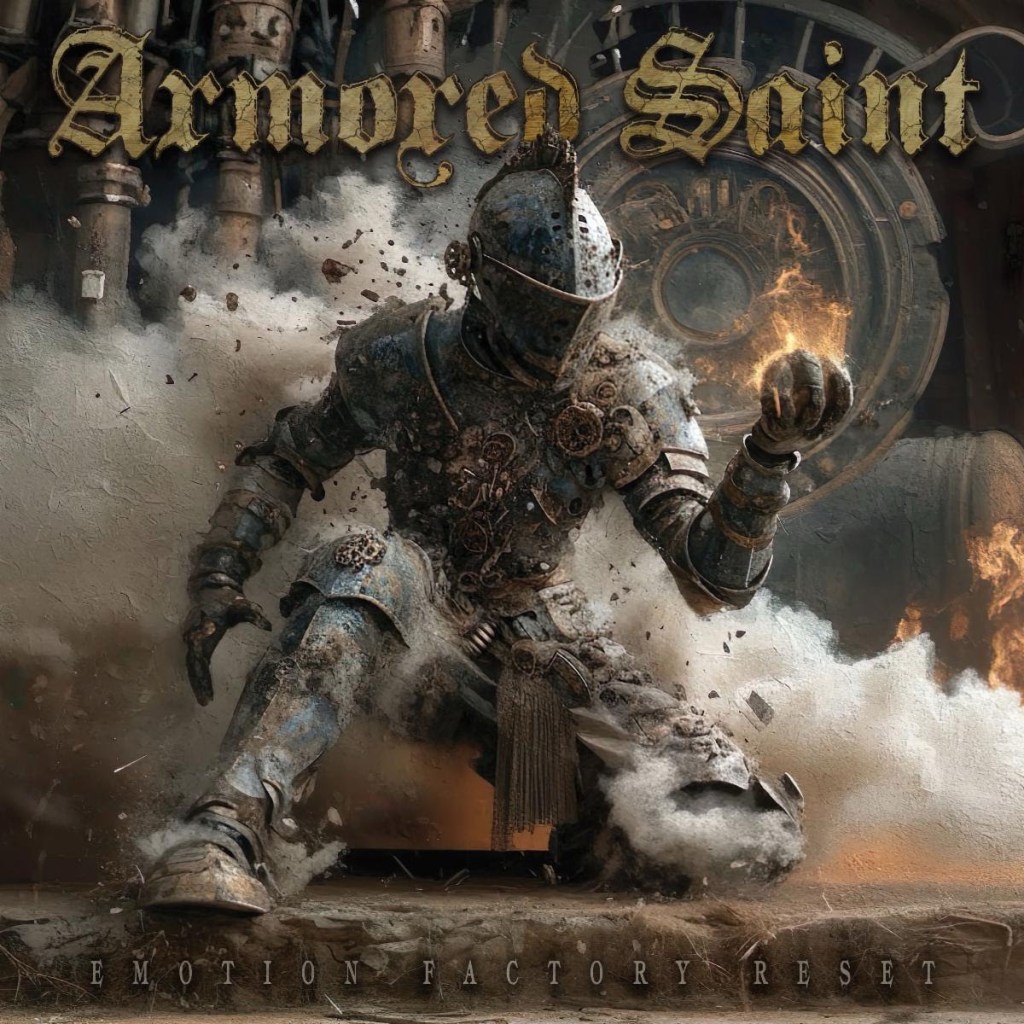
Emotion Factory Reset, ARMORED SAINT’s ninth studio album, is a resurrection of sorts, a tearing down and a rebuilding in eleven songs of diverse musicality and lyrical themes. Produced, as were the previous four albums, by bassist Joey Vera and mixed by Jay Ruston (Anthrax, Stone Sour), the record finds the quintet challenging themselves. Songs like “Close To The Bone,” “Hit A Moonshot,” and “Every Man-Any Man” have ARMORED SAINT honoring their past as one of the most respected and recognizable bands in heavy music while making forward-thinking music rooted in the present.
Emotion Factory Reset was recorded across several studios including 606 Studios, Secret Hand Studios, Skullseven Studios, Constantine Studios, and Bridge Recording, engineered by Oliver Roman, Bill Metoyer, Joey Vera, and Jason Constantine, and features cover art by DDKing.
Italian death-doom band ASSUMPTION will release their new album Paradox Of The Arrow on 13 November through 20 BUCK SPIN. Ahead of the six-track record, the band have unveiled “Tombs Upon The Sun”, one of the album’s more immediate pieces and an early glimpse into its shifting relationship with heaviness, atmosphere and time. Listen on […]
(written by Islander) Yesterday was another Bandcamp Friday, when the platform waives its revenue share so that artists and labels can take in more money from their sales. There will be two more of those this year, on November 6th and December 4th. In deciding what music to recommend in this column I nearly didn’t […]
Edinburgh metallers PERPETUA have unveiled “Veil Of Deception”, the lead single from their forthcoming EP Saviour To None. The four-track release will arrive on 6 November through BLEEDING ART COLLECTIVE. An official video accompanies the single, introducing an EP built around the Scottish band’s mixture of groove, thrash, melody and technical modern metal. Lyrically, “Veil […]
In December 2012, three members of Fleetwood Mac cried together, in public, at the memory of something that had happened all of 25 years previously.
Singer Stevie Nicks, guitarist Lindsey Buckingham and drummer Mick Fleetwood were doing a round of media interviews to announce the band’s 2013 tour when they were asked about the events of 1987, when Buckingham quit the band following the release of the album Tango In The Night.
Buckingham did not respond directly to the interviewer. Instead he turned to Nicks and Fleetwood and reiterated his reasons for leaving the group at a critical stage of their career: foremost among them, his sense that Nicks and Fleetwood had lost their minds and souls to drugs.
“What Lindsey said in that interview was very moving,” Fleetwood says. “He told us: ‘I just couldn’t stand to see you doing what you were doing to yourselves. Did you ever realise that? You were so out of control that it made me incredibly sad, and I couldn’t take it any more.’ It was really powerful stuff. This was someone saying: ‘I love you.’ It hit Stevie and me like a ton of bricks. And we all cried, right there in the interview.”
It was a moment that Mick Fleetwood describes as “profound”. But even after all these years, his memories of that time in 1987 are still raw. For when Lindsey Buckingham walked out on Fleetwood Mac, he did not go quietly. When Buckingham told the band he was leaving, it led to a blazing argument that rapidly escalated into a physical altercation between him and former lover Nicks, in which she claimed she feared for her life.
“It is,” Fleetwood says, “a pretty wild story. It was a dangerous period, and not a happy time.” And yet, for all the drama that came with it, Tango In The Night was a hugely important album for Fleetwood Mac. It became the second biggest-selling album of their career, after 1977’s 45-million-selling Rumours.
Just as Rumours had done in the 70s, so Tango In The Night defined soft rock in the 80s. Perhaps most significant of all, it marked the third coming of the Mac, following the successes of the Peter Green-led blues rock Mac of the late 60s and the Buckingham/Nicks-fronted AOR Mac of the 70s. And for Mick Fleetwood, it represented a personal triumph. While he freely admits that his own drug-fuelled insanity was instrumental in Lindsey Buckingham’s exit, it was Fleetwood who kept the band together once Buckingham had gone. And this was key to the success of Tango In The Night.
“My motto” Fleetwood says, “was ‘the show must go on’. It was almost an obsessive-compulsive desire to not give up. And it worked.”
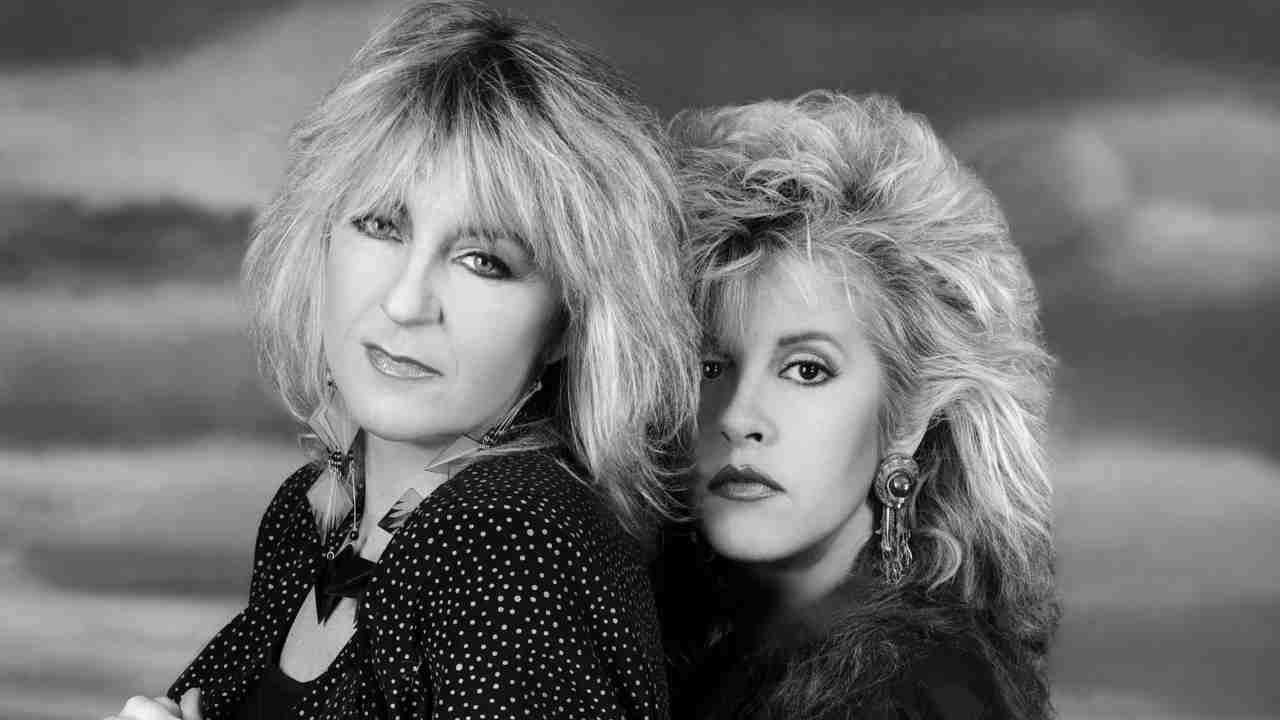
Fleetwood Mac’s Christine McVie and Stevie Nicks in 1987 (Image credit: Aaron Rapoport/Corbis via Getty Images)
There is an irony about Tango In The Night: that it began not as a Fleetwood Mac album but as a solo project by the man who would leave the band once it was completed.
In 1985, Lindsey Buckingham was writing and recording songs for what was planned as his third solo album. Fleetwood Mac had been on indefinite hiatus since 1982, following a world tour in support of their album Mirage. In that time there had been solo albums from the three singers: Nicks’ The Wild Heart sold a million copies; Christine McVie’s eponymous album yielded a US Top 10 hit with Got A Hold On Me; but, to Buckingham’s chagrin, his album Go Insane didn’t make the Top 40.
There had also been problems for them over these years. Nicks had been treated for drug addiction. More surprisingly, Mick Fleetwood had been declared bankrupt following a string of disastrous property investments. It was rumoured that Fleetwood Mac had split up.
“At that time,” Buckingham later admitted, “the group was a bit fragmented.”
By the end of ’85, Buckingham – working alone at his home studio in Los Angeles – had three songs finished: Big Love, Family Man and Caroline. But while he was busy making music, Mick Fleetwood was busy making plans to get the band back on track.
The wheels had been set in motion when Christine McVie recorded a version of the Elvis Presley hit Can’t Help Falling In Love for the film A Fine Mess – backed by Mick Fleetwood and the band’s other remaining founding member, her ex-husband John McVie. She invited Buckingham to produce, alongside engineer Richard Dashut.
“It was the first time for nearly five years that we’d all been in a working environment together,” Christine said. “We had such a good time in the studio and realised that we still had something to give each other in musical terms after all.”
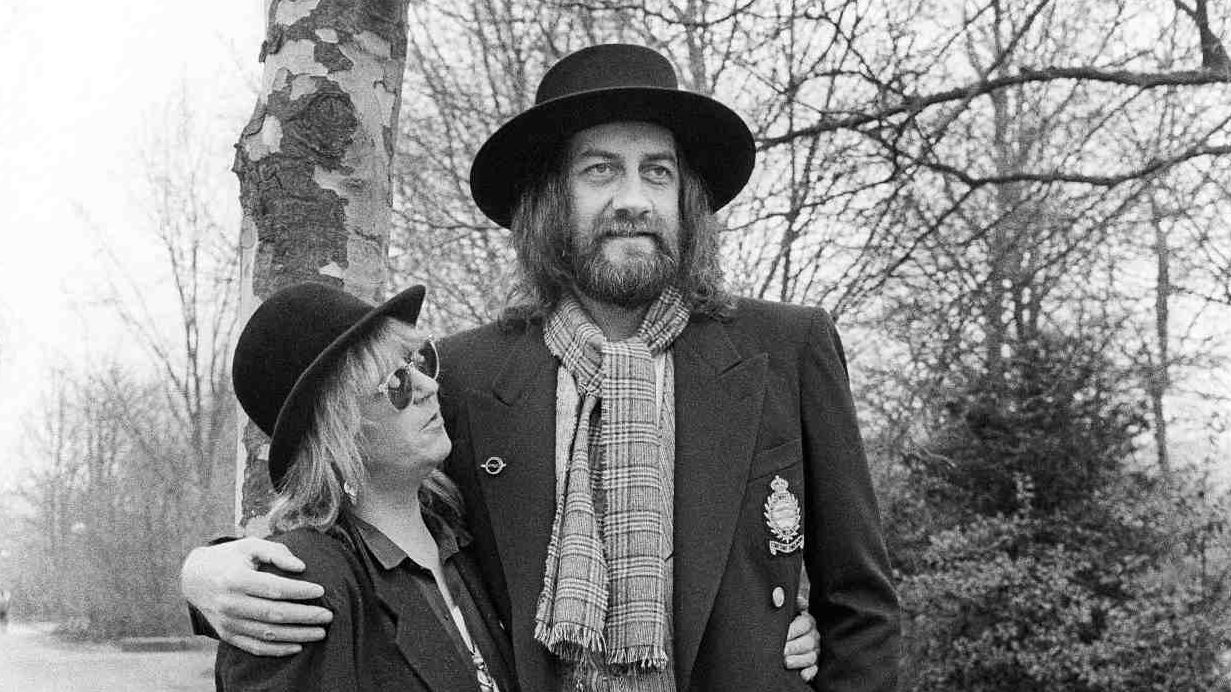
(Image credit: Rob Verhorst/Redferns))
Mick Fleetwood was more forthright. “The reality,” he says, “is that Fleetwood Mac were intending to make an album. And Lindsey was in many ways pressured into it. ‘Hey, we’re making an album – let’s go!’”
Buckingham relented, partly out of a sense of duty. “I had a choice,” he said, “of either continuing on to make the solo record, or to sort of surrender to the situation and try and make it more of a family thing. I chose the latter.”
What Fleetwood didn’t know is that Buckingham’s agreement was conditional. “I had the idea,” Buckingham said, “that that was going to be the last work with the group.”
For all that, Buckingham threw himself into the album. He either wrote or co-wrote seven of the 12 tracks that made the finished album. He also acted as co-producer with Richard Dashut. And it was at his home studio that most of the recording was done.
What was unusual about the recording of Tango In The Night was the absence of Stevie Nicks for much of the process. Nicks contributed three songs to the album, but was in the studio for only two to three weeks.
“She was not hugely present,” Fleetwood says. “I don’t remember why. And I don’t think we would remember – Stevie and me were nuts!”
Fleetwood says that he and Nicks were doing more cocaine during the making of Tango than when they were recording Rumours – an album on which they seriously considered thanking their drug dealer in the credits.
“Actually,” he admits, “it was way worse on Tango In The Night. For sure.”
“Certainly, I smoked a lot of pot. But I was never a big user of coke,” Buckingham notes. And by the mid-80s, he’d had enough.
“The subculture was pretty much at the point of burning itself out,” he recalled. “The ‘anything goes’ attitude that existed in the 60s had become something entirely different. But still, everyone thought you had to do certain things to play, and I don’t know that I ever thought about it that way.”
While Tango was being recorded at his home, he found a way of keeping the two cokeheads – plus assorted hangers-on – at a safe distance.
“Lindsey had a Winnebago put in his driveway,” Fleetwood says. “And that’s where Stevie and I would go with our wrecking crew. With me, the party never stopped. I was like Keith Moon. And for Lindsey, having that around his own house was a fucking nightmare. So he gave us our own house outside in the garden.
It wasn’t until years later that I asked him: ‘What was all that about?’ And he said: ‘I couldn’t stand having you punks in the house. You’d turn up at the studio with people that you’d met from the night before, and you’d start gooning around. You were too fucking crazy.’ Lindsey was never a drama queen, enjoying the 80s drug culture like Stevie and me. It wasn’t his scene. He wasn’t comfortable being around that much craziness. And we were blissfully unaware – completely oblivious to things that needed to be addressed.”
The drug taking was only one part of the problem. There were other things eating away at Buckingham.
For all the money and fame that Fleetwood Mac’s success had brought to him, Buckingham felt compromised on an artistic level – pressured by what Mick Fleetwood calls “this monolithic thing known as Fleetwood Mac”. There is, Fleetwood says, a “tortured side” to Lindsey Buckingham.
“Staying honest and staying creatively alive is very tricky in a commercial business,” Buckingham said. “You’re trying to hold on to a certain idealism, and not succumb to becoming a parody of oneself. Are you trying to flex your muscles creatively, or are you trying to sell records? In my mind it was pretty much clear-cut. There wasn’t a lot of middle ground.”
Buckingham felt he had won this battle with Tusk. The easy option for Fleetwood Mac would have been to make another Rumours. Instead, Buckingham spiked the Tusk album with weird, left-field songs such as the new wave influenced Not That Funny and the bizarre title track.
“A precedent was set by Tusk,” Fleetwood explains. “Lindsey could say: ‘I want to do this within the framework of Fleetwood Mac,’ without pissing everyone off.”
Buckingham loved the dichotomy in Tusk: the contrast between his songs and Stevie’s and Christine’s.
“You got that sweetness and me as the complete nutcase,” he said. “That’s what makes us Fleetwood Mac.” But he felt that the band’s next album, Mirage, was too lightweight, lacking the experimental edge of Tusk. And that nagging feeling returned to him as Tango In The Night was being completed. Buckingham had written many of the songs for the album. In addition, the songs he had recorded solo remained mostly untouched.
“Those songs,” Fleetwood says, “were already very sculpted. All we did was rip some drum machines off and put drums on.”
One trick of Buckingham’s, in Big Love, was especially brilliant. For the song’s climax, he used variable speed oscillators on his voice to create the effect of a male and female in a state of sexual excitement – the “love grunts”, as he called them.
“It was odd that so many people wondered if it was Stevie on there with me,” he said, a little disingenuously. Although there were other great songs on the album – slick pop rock tunes in the classic Fleetwood Mac style, such as Christine’s Little Lies and Everywhere, and Stevie’s Seven Wonders – Fleetwood calls Tango In The Night “Lindsey’s album”. But for Buckingham himself, there was a sense that in the transition from solo album to band album, something had been lost. A perfectionist, intensely analytical, he felt that Tango In The Night was too predictable, too safe.
“For political reasons, I was pretty much treading water,” Buckingham admitted. “We sort of lost the moment, going back to try to find that Rumours territory. I couldn’t do that as a producer and as a player. I was demoralised. Maybe I wasn’t even motivated to go back. I did the best I could.”
Fleetwood also believes that Buckingham felt undervalued in his roles of producer and arranger of others’ songs. “He was going, ‘Shit, does anyone ever realise what I do?’ Insecurities, we all have them, and that was part of Lindsey’s personality. I have insecurity even about walking on stage and thinking I can’t play drums. I don’t blame Lindsey for thinking: ‘It would be nice if someone thanked me for all the fucking work I’ve done!’”
But the biggest problem for Lindsey Buckingham was, of course, Stevie Nicks. “I’ve known Stevie since I was 16 years old,” he said. “I was completely devastated when she took off. And yet I had to make hits for her, I had to do a lot of things for her that I really didn’t want to do. And yet I did them. So on one level I was a complete professional in rising above that, but there was a lot of pent-up frustration and anger towards Stevie in me for many years.”
That frustration had first become evident on Rumours. Nicks wrote about Buckingham in the song Dreams, in which she sang the line: ‘Players only love you when they’re playing.’ Buckingham responded with Go Your Own Way, in which he claimed uncharitably, ‘Shacking up’s all you want to do.’ And over the years, things had only got worse.
“He got very angry with me,” Nicks said. “He tossed a Les Paul across the stage at me once and I ducked and it missed me. A lot of things happened because he was so angry at me.”
During one Fleetwood Mac show, Buckingham kicked out at Nicks. “It was just a little something coming through the veneer,” he said later. “There has been a lot of darkness. There was a time when I felt completely unappreciated by her.”
Buckingham’s frame of mind was not helped by the not inconsiderable success that Nicks enjoyed in her solo career. In 1981, her solo debut, Bella Donna, went to No.1 in US. Other hit albums and singles followed. Buckingham’s solo records sold next to nothing.
“Jealousy is the wrong word,” Fleetwood says. “But it was hard for Lindsey. The reality is, she’s Stevie Nicks! And Lindsey I think felt left out. That was his cross to bear.”
Despite the hostility, Nicks tried to retain sympathy for Buckingham. “Lindsey and I were really breaking up when we joined Fleetwood Mac. We’d lived together for five years. It’s one thing when you break up for that person to go their way and you to go your way, quite another to break up and have to sit together in the breakfast room of the hotel the next morning. Not easy.”
But neither Nicks nor Fleetwood saw what was coming. “We just didn’t realise quite how unhappy Lindsey was,” Fleetwood says. “He had to get out. And of course he did.”
Tango In The Night was released on April 13, 1987. The first single from the album, Big Love, was already a Top 10 hit on both sides of the Atlantic, and a tour was scheduled to begin in Kansas City on September 30. But when the band gathered at Christine McVie’s LA home to discuss plans for the tour, Buckingham told them he was out. And at that moment, it turned nasty.
It was Nicks who landed the first blow. “I flew off of the couch and across the room to seriously attack him,” she recalled. “And I did. I’m not real scary but I grabbed him – which almost got me killed.” Nicks ran out of the room with Buckingham in pursuit.
“He ended up chasing me all the way out of Christine’s maze-like house,” she said. ‘Then down the street and back up the street. And then he threw me against a car and I screamed horrible obscenities at him. I thought he was going to kill me, and I think he thought he was probably going to kill me too. And I said: ‘If the rest of the people in the band don’t get you, my family will – my dad and my brother will kill you.’” Buckingham walked away.
“We were all in shock,” Fleetwood says. “It was very upsetting for all of us, Stevie most of all.” But in this crisis, Fleetwood acted quickly. “Most people would go: ‘You’ve just made an album and one of your lead components is not there? You’d better retreat rapidly, lick your wounds and reassess what the hell you’re gonna do.’ Well, that was not what my mind told me to do. I went: ‘We’re not stopping.’ And literally within a week, I convinced everyone that we should not stop and have this be a catastrophic non-event and have no promotion for the album.”
Fleetwood was able to remain calm and pragmatic because he, and also John McVie, had been in this situation before – firstly, and most traumatically, when Peter Green, the original Fleetwood Mac’s guitarist, quit the band and the music business in 1970 after one too many bad acid trips.
“When we lost our mentor, Peter Green, we felt completely adrift,” Fleetwood recalls. “We went: ‘What the fuck are we going to do now?’ Seriously, I thought we’d never get over losing Peter. But we got through it. And then it became: there’s no such phrase as ‘the band’s going to break up’. And that became habit-forming. So when Lindsey left, we already had a blueprint.”
For the tour, Fleetwood brought in not one but two guitarists to replace Buckingham – a measure of Buckingham’s high calibre. Billy Burnette, the son of rockabilly singer Dorsey Burnette, was a country artist of minor repute. Rick Vito had worked with John Mayall, Jackson Browne and even David Soul. Fleetwood knew he was taking a risk.
“On paper,” he says, “it was sort of insane. But it worked.” It had to. “We still did that tour,” Nicks said, “because we we’d signed the contracts. We couldn’t call in and say: ‘Oh, we can’t do the tour.’ We had to do it. Or Fleetwood Mac would have been sued forever.”
The tour was a huge success. It wasn’t the same without Buckingham. Fleetwood accepts that. But the numbers – including eight sold-out shows at London’s Wembley Arena – spoke for themselves. And with the new-look Fleetwood Mac out on the road, sales of Tango In The Night went above and beyond Fleetwood’s expectations. In the UK the album went to No.1 on three separate occasions, and three singles went Top 10: Big Love, Little Lies and Everywhere. In the US those three tracks reached the Top 20, along with Seven Wonders, and the album sold three million copies in a year.
“The album was well received,” Fleetwood says. “Somewhat sadly, the kudos of that was never really fully attributed to Lindsey because he wasn’t present. But on the other hand, there’s a comedic sense to it – that we were promoting an album that was mainly his body of work.
“It was like Brian Wilson and the Beach Boys: ‘I’ve made the album, but now I’m staying at home.’ But also, when I look back, I see another example of how desperate Lindsey was to be heard. Basically, he was coerced and persuaded to do that album – mainly by me. And to his credit, he put aside everything that he’d dreamt of doing, including making his own album, for Fleetwood Mac. But then realised that he’d made a mistake and went: ‘Oh my God – I’ve got to get out.’ Lindsey was not being heard. We just didn’t get it. And really, I think that excuses him for letting the side down.”
Mick Fleetwood is not sure it is simple coincidence that Fleetwood’s two biggest-selling albums, Rumours and Tango In The Night, were made when the band was at its most dysfunctional. “Also,” he says, “I’m not sure I should be so proud of it.”
Equally, Fleetwood has reservations about Tango In The Night. “It’s an interesting album,” he says. “But it’s not my favourite Fleetwood Mac album sonically. We got a little too involved in electronic-y ways of doing things.”
But that album is undoubtedly a classic of its time. With it, Fleetwood Mac were reinvented for a new era. One of the biggest bands of the 70s became one of the biggest bands of the 80s. And from an album created amid chaos came some of the best songs of the band’s entire career. Even Lindsey Buckingham conceded this much.
“On the whole, that album is lacking in direction,” he said. “But there’s good stuff on there.” In the 90s, Buckingham rejoined Fleetwood Mac, and, more importantly, made his peace with Stevie Nicks. They have both come a long way since that dark day in 1987: Buckingham now married and a father of three, Nicks happily drug-free. All that remains between them is what Mick Fleetwood calls “the good stuff”.
“Stevie and Lindsey are not ‘in love’ but they love each other,” Fleetwood says. “And that’s why they’ve been able to get through some awful situations. There’s something I was asked recently: ‘What’s the most misconstrued thing about Fleetwood Mac?’ I said: ‘I don’t want to sound over-sentimental, but I think that people don’t actually understand that we really do love each other – a lot.’
“And you know, sometimes that’s been lost amid all the fear and loathing. But, to say the least, it’s been an interesting journey.”
Originally published in Classic Rock issue 189 (September 2013)