Category: news

  • Ruined Castles and the Gothic Imagination

    Ruined Castles and the Gothic Imagination

    Few images appear more frequently in Gothic literature than the ruined castle. Its towers crumble, and its corridors stand empty. Its walls bear the marks of centuries of neglect. Yet these structures are far more than dramatic settings. Ruined castles became some of the Gothic tradition’s most powerful symbols.

    They represent the collapse of once-great powers, the persistence of the past, and the unsettling realization that all human achievements eventually decay. At the same time, Gothic writers transformed these architectural ruins into reflections of psychological experience. Crumbling walls began to mirror crumbling minds. Abandoned halls became symbols of memory, repression, and hidden fears.

    This dual symbolism helps explain why ruined castles continue haunting literature, art, and popular culture. They remind us that decay is never merely physical. It is historical, emotional, and deeply human.


    Ruined Castles and the Gothic Imagination
    Ruined Castles and the Gothic Imagination

    Why Gothic Literature Needed Ruins

    The Gothic novel emerged during a period of profound social and political change.

    Across Europe, traditional systems of authority faced increasing challenges. Revolutions, industrialization, and changing social structures created uncertainty about the future. Many writers responded by turning toward the past.

    Ruined castles offered the perfect setting for these anxieties.

    They stood as visible reminders that power is temporary. Once-mighty families, kingdoms, and institutions could disappear, leaving only fragments behind.

    Unlike modern buildings, castles carried centuries of accumulated history. Their worn stones suggested forgotten stories, buried secrets, and unresolved conflicts.

    For Gothic writers, these structures became natural homes for mystery.

    The castle was not simply a backdrop.

    It became a symbol of history refusing to remain buried.


    The Castle of Otranto and the Birth of Gothic Architecture

    Horace Walpole’s The Castle of Otranto (1764) established many of the conventions that would define Gothic fiction.

    Its castle dominates the narrative. Hidden passages, mysterious chambers, supernatural events, and ancient secrets all unfold within its walls.

    The building functions as more than a location.

    It embodies the instability of inherited power.

    Throughout the novel, the castle’s oppressive atmosphere reflects the moral and political tensions surrounding the ruling family. The physical structure becomes inseparable from the history it contains.

    Walpole demonstrated that architecture could carry emotional and symbolic weight.

    Future Gothic writers would expand this idea, transforming castles into living representations of fear, memory, and decline.


    Ann Radcliffe and the Atmosphere of Decay

    Ann Radcliffe refined the Gothic castle into a more psychological symbol.

    In novels such as The Mysteries of Udolpho, decaying castles create emotional tension through atmosphere rather than direct horror.

    Long corridors, locked rooms, distant sounds, and deteriorating walls encourage characters and readers alike to imagine unseen dangers.

    Radcliffe understood that uncertainty often produces greater fear than certainty.

    The castle’s physical condition contributes directly to that uncertainty. Its deterioration suggests that order is breaking down and that hidden truths may emerge at any moment.

    By connecting architecture with emotional experience, Radcliffe helped establish one of Gothic literature’s defining principles:

    the environment can become a reflection of human fear.


    The Fall of Aristocratic Power

    One reason ruined castles became such enduring Gothic symbols is their connection to declining authority.

    These structures were originally built to project strength, permanence, and control. When Gothic writers depict them in ruins, they reverse that symbolism.

    The broken walls suggest vulnerability rather than power.

    The abandoned halls suggest absence rather than authority.

    As readers move through these fictional ruins, they encounter a world where old certainties no longer hold.

    This theme resonated strongly during the eighteenth and nineteenth centuries, when social hierarchies were changing rapidly throughout Europe.

    The ruined castle became a visual metaphor for a world in transition.

    Its decay reflected broader cultural anxieties about history, identity, and the future.


    When Architecture Becomes Psychology

    As Gothic literature evolved, ruined castles began acquiring meanings that extended beyond history and politics.

    Writers increasingly used architecture to represent psychological states.

    The crumbling castle no longer symbolized only the collapse of aristocratic power. It also became a reflection of fear, memory, guilt, and mental instability.

    This transformation proved crucial to the development of Gothic fiction.

    Architecture and psychology became intertwined.

    A deteriorating building could express emotions that characters struggled to articulate directly. Dark corridors suggested hidden memories. Locked chambers represented repression. Structural decay mirrored emotional collapse.

    The Gothic imagination discovered that ruins could reveal as much about the human mind as they did about history.


    Edgar Allan Poe and the House as Mind

    No writer explored this relationship more effectively than Edgar Allan Poe.

    Although The Fall of the House of Usher features a mansion rather than a medieval castle, it continues the Gothic tradition of architecture as symbolism.

    From the opening pages, the building appears inseparable from the fate of the Usher family. Cracks run through its walls. Decay touches every surface. The atmosphere feels heavy with sickness and despair.

    The structure becomes an external representation of the psychological condition of its inhabitants.

    As Roderick Usher’s mental state deteriorates, the house appears to deteriorate alongside him. The physical and emotional landscapes become impossible to separate.

    Poe understood that architecture could generate fear without relying on monsters or supernatural threats.

    The building itself becomes unsettling because it seems alive with memory, anxiety, and decline.

    This idea would influence generations of Gothic writers and filmmakers.


    Dracula’s Castle and the Geography of Fear

    Bram Stoker’s Dracula offers another influential example of Gothic architecture.

    Perched high above the surrounding landscape, Dracula’s castle functions as a threshold between familiar reality and the unknown.

    When Jonathan Harker arrives, he enters a world governed by different rules. Ordinary assumptions no longer apply.

    The castle’s isolation contributes significantly to its power.

    Its labyrinthine passages, locked rooms, and inaccessible spaces create a constant sense of uncertainty. Readers experience the same disorientation as Harker, never fully understanding what may be hidden beyond the next doorway.

    Like many Gothic castles, Dracula’s residence embodies both physical and psychological danger.

    The building traps characters within its walls while simultaneously confronting them with fears they cannot easily escape.

    Architecture becomes a mechanism of suspense.


    Why Ruins Feel Uncanny

    Part of the emotional power of ruined castles comes from their uncanny quality.

    They occupy a space between life and death, presence and absence.

    A ruin remains recognizable as a human creation, yet it no longer fulfills its original purpose. It exists as a fragment of something that once felt complete.

    This ambiguity creates unease.

    Visitors encounter traces of former lives without fully understanding them. Empty rooms suggest forgotten stories. Broken walls hint at vanished histories.

    The imagination instinctively attempts to fill these gaps.

    Gothic writers recognized this psychological response long before modern psychology attempted to explain it.

    Ruins encourage speculation because they preserve evidence of the past while withholding complete explanations.

    The result is a powerful mixture of curiosity and discomfort.


    The Castle as a Repository of Memory

    Ruined castles also function as containers of memory.

    Their walls seem to preserve traces of previous generations, forgotten conflicts, and unresolved histories.

    Characters in Gothic fiction rarely encounter castles as empty spaces.

    Instead, they enter environments saturated with the weight of the past.

    Family secrets, ancestral crimes, and hidden tragedies often remain embedded within the architecture itself.

    This relationship between memory and place helps explain why ruins continue appearing throughout Gothic literature.

    The castle becomes a physical representation of history’s persistence.

    The past may be forgotten, denied, or suppressed, but it never completely disappears.

    Within the Gothic imagination, ruined castles ensure that history always finds a way to return.


    Ruined Castles in Modern Gothic Fiction

    Although contemporary Gothic stories often move beyond medieval castles, the symbolism remains remarkably consistent.

    Modern writers and filmmakers continue using decaying architecture to explore themes of decline, memory, and hidden corruption.

    The physical structure may change, but its narrative function remains familiar.

    A deteriorating building still signals that something beneath the surface has begun to break apart.

    Guillermo del Toro’s Crimson Peak provides a striking example. Allerdale Hall is not a castle in the traditional sense, yet it performs the same symbolic role. Its collapsing foundations, leaking roof, and decaying interiors mirror the moral deterioration of the family that inhabits it.

    The building feels haunted not simply because ghosts appear within it, but because every room bears the marks of past secrets and unresolved tragedies.

    Architecture becomes memory made visible.

    The house itself tells part of the story.


    Mexican Gothic and the Reinvention of the Ruin

    Silvia Moreno-Garcia’s Mexican Gothic demonstrates how Gothic symbolism can evolve while preserving its essential themes.

    High Place functions much like the ruined castles of earlier Gothic fiction. Isolated from the outside world and burdened by a disturbing history, it becomes a physical manifestation of decay.

    The source of that decay, however, reflects modern concerns rather than medieval anxieties.

    Questions of colonialism, exploitation, inheritance, and family control replace many of the aristocratic fears found in eighteenth-century Gothic novels.

    Yet the underlying symbolism remains recognizable.

    The building conceals secrets.

    The past refuses to disappear.

    Psychological and physical deterioration become inseparable.

    The Gothic ruin survives because its symbolism remains adaptable.


    Why Ruined Castles Still Fascinate Us

    The enduring appeal of ruined castles extends beyond literature.

    Even people with little interest in Gothic fiction often find themselves drawn to abandoned fortresses, decaying mansions, and forgotten architectural spaces.

    Part of this fascination comes from the questions these places inspire.

    Who lived here?

    What happened?

    Why was this place abandoned?

    Ruins rarely provide complete answers.

    Instead, they invite speculation. Their incomplete nature encourages the imagination to participate in reconstructing lost histories.

    This process resembles the experience of reading Gothic fiction itself.

    Readers encounter fragments, clues, and mysteries, gradually building meaning from what remains hidden.

    The ruin becomes a collaboration between history and imagination.


    The Enduring Power of Gothic Ruins

    Ruined castles became central to the Gothic imagination because they unite two powerful forms of decay.

    The first is historical.

    Crumbling walls remind us that power, wealth, and social authority are temporary. Every empire, family, and institution eventually faces decline.

    The second is psychological.

    Gothic writers transformed architectural ruins into reflections of memory, fear, guilt, and emotional collapse. Buildings became mirrors of the mind.

    This combination explains why ruined castles continue appearing throughout Gothic literature, cinema, and art.

    They are not simply remnants of the past.

    They are symbols of what humanity fears most: loss, transformation, and the realization that nothing remains unchanged forever.

    From Walpole’s medieval fortress and Radcliffe’s decaying estates to Poe’s House of Usher, Dracula’s castle, and the haunted architecture of contemporary Gothic fiction, the ruin remains one of the genre’s most enduring images.

    Its stones may crumble.

    Its power over the imagination endures.


    Wear the Darkness

    If Ruined Castles and the Gothic Imagination resonates with your love of Gothic literature, dark symbolism, and haunted architecture, explore the Edgar Allan Poets store. Our designs celebrate the places, stories, and ideas that continue inspiring the Gothic imagination.


    Edgar Allan Poe Gothic apparel and noir-inspired fashion from the Edgar Allan Poets store


    Join the Noir Newsletter

    Receive more essays on Gothic literature, symbolism, dark history, haunted architecture, and the ideas that continue shaping Gothic culture.


    Frequently Asked Questions

    Why are ruined castles important in Gothic literature?

    Ruined castles symbolize historical decline, hidden secrets, and psychological decay, making them ideal settings for Gothic storytelling.

    What was the first Gothic castle in literature?

    Horace Walpole’s The Castle of Otranto established the castle as one of the defining symbols of Gothic fiction.

    Why is The Fall of the House of Usher important to Gothic architecture?

    Poe transformed architecture into psychological symbolism, using the House of Usher as a reflection of emotional and mental decline.

    How does Dracula use Gothic architecture?

    Dracula’s castle creates isolation, uncertainty, and fear while serving as a symbolic threshold between ordinary reality and the supernatural.

    Why do ruins continue to fascinate modern audiences?

    Ruins encourage imagination by preserving traces of the past while leaving important questions unanswered.


    The post Ruined Castles and the Gothic Imagination appeared first on Edgar Allan Poets – Noir Rock Band.

  • Jeff Tweedy Covers Twisted Teens

    Twisted Teens are all the rage. The New Orleans band just announced their third album of the year, The Holy Cross Tigers, to follow February’s Blame The Clown and July’s Florida Water Blues. Yesterday, Jeff Tweedy covered Blame The Clown‘s “Wild Connection” for his Substack.

    The post Jeff Tweedy Covers Twisted Teens appeared first on Stereogum.

  • Ocean Way Festival Canceled Due To Beach Erosion Weeks Before Debut

    Santa Monica’s inaugural Ocean Way Festival has been canceled. The event had been slated for Sept. 26 and 27 with headlining performances from the Killers and Olivia Dean, but it will no longer take place due to beach erosion.

    The post Ocean Way Festival Canceled Due To Beach Erosion Weeks Before Debut appeared first on Stereogum.

  • Why Asia Didn’t Hire ELO’s Roy Wood as Vocalist

    Carl Palmer recalls how close the supergroup came to being fronted by the Wizzard leader. Continue reading…
  • Listening Now : James E. Gray – Simulation

    James E. Gray’s Simulation explores the unsettling space between reality, mortality and the possibility that everything around us may be something less certain than it appears. The track carries a dark, atmospheric quality that fits naturally within its spooky alternative and space-rock aesthetic, creating a sense of unease without sacrificing its melodic character. After years of development from its original demo, the song feels deliberately considered, with its themes given room to unfold rather than being rushed. Simulation is an intriguing and cinematic piece that invites listeners to question what is real, what is imagined, and where the two begin to blur.

    Connect:

    Instagram

  • Mastodon Play Secret Atlanta Tour Warmup With Live Debuts, Rarities, & Baroness’ John Baizley

    In 2024, Mastodon played an intimate hometown warmup for their tour under the name Big Hairy Elephant. Last night, they did it again, this time at Atlanta’s Earl with Baroness’ John Baizley.

    The post Mastodon Play Secret Atlanta Tour Warmup With Live Debuts, Rarities, & Baroness’ John Baizley appeared first on Stereogum.

  • BLIND ILLUSION FEATURED BY BRAVEWORDS AHEAD OF STAGE FLIGHT: LIVE AT THE UC THEATRE RELEASE – @thebeast

    FOR IMMEDIATE RELEASE
    BLIND ILLUSION FEATURED BY BRAVEWORDS AHEAD OF STAGE FLIGHT: LIVE AT THE UC THEATRE RELEASE
    Progressive Thrash Metal Pioneers Prepare to Unleash Historic Live Album Featuring Original Vocalist David White
    Progressive thrash metal pioneers Blind Illusion have been featured by BraveWords in a new article spotlighting the band’s upcoming live album, Stage Flight: Live At The UC Theatre , arriving October 16 through Hectic Records / Bleeding Priest Records.
    The album captures a historic 2025 performance at the UC Theatre in Berkeley, California, featuring the return of original Blind Illusion vocalist David White during a special celebration surrounding Exodus’ 40th anniversary of Bonded By Blood .
    BraveWords highlights Blind Illusion’s unique progressive approach to thrash metal and the band’s nearly five-decade history, describing Stage Flight: Live At The UC Theatre as a release that connects the group’s legendary past with its continuing evolution.
    Founded in 1978 and led by mastermind Mark Biedermann , Blind Illusion continues to carry the legacy of its landmark 1988 debut, The Sane Asylum , while pushing its sound and history forward with a new generation of performances.
    Stage Flight: Live At The UC Theatre will be released October 16 as a limited-edition 12-inch vinyl LP, with only 500 copies being pressed through Hectic Records / Bleeding Priest Records. Digital pre-orders are also available.
    Blind Illusion is:
    Mark Biedermann – Lead Guitar / Vocals
    Martin Lacour – Lead Guitar
    Avery Thurman – Bass
    Phil Cosentini – Drum
    Check out the feature here: https://bravewords.com/news/blind-illusion-announces-stage-flight-live-at-the-uc-theatre-featuring-original-vocalist-david-white/


    Check them out on YouTube: 


    Connect: 
    https://blindillusion.bandcamp.com/album/stage-flight-live-at-the-uc-theatre
    https://www.instagram.com/blindillusionofficial
    https://www.facebook.com/officialblindillusion
    https://ffm.to/bclink1
    https://www.hectic.com/product/blind-illusion-live
    Contact:
    David Hecht
    Hectic Records
    david@hectic.com
  • “There was a giant, red welt on my chest, and at my feet there was a huge pig’s foot with a big toenail on it.” How the world’s weirdest band went from cult outsiders to MTV mainstays

    Primus are not like other bands. A bewildering anomaly for the last 40 years, these Bay Area oddballs must be the weirdest band ever to conquer the metal world. Record companies have no idea what to do with them, magazines tie themselves in knots trying to describe them, and their fans are almost as weird and unconventional as the band themselves. When Primus played at Lollapalooza in 1993, in support of their bizarrely successful third album, Pork Soda, the response was a little… well, meaty.

    “Back then I was a strapping young fellow and I’d play with my shirt off,” says singer and virtuoso bassist Les Claypool, whose band played their first UK dates in a decade this August.

    “I go up to the microphone and boom! It was like somebody punched me in the chest. I looked down and there was a giant, red welt on my chest, and at my feet there was a huge pig’s foot with a big toenail on it. There was a juggler at the festival, and he used to juggle chainsaws, and for some reason he’d cut up some pig onstage, so someone thought they’d be clever. ‘Pork soda? I’m gonna throw this pig knuckle at Les!’ If it had hit me in the face it would’ve fucked me up hard!”

    While Les never expected to be dodging chunks of pig carcass, he had already become accustomed to people reacting strangely to his band. Formed in El Sobrante, California, in 1984, when Les was 21 years old, Primus were anything but conventional.

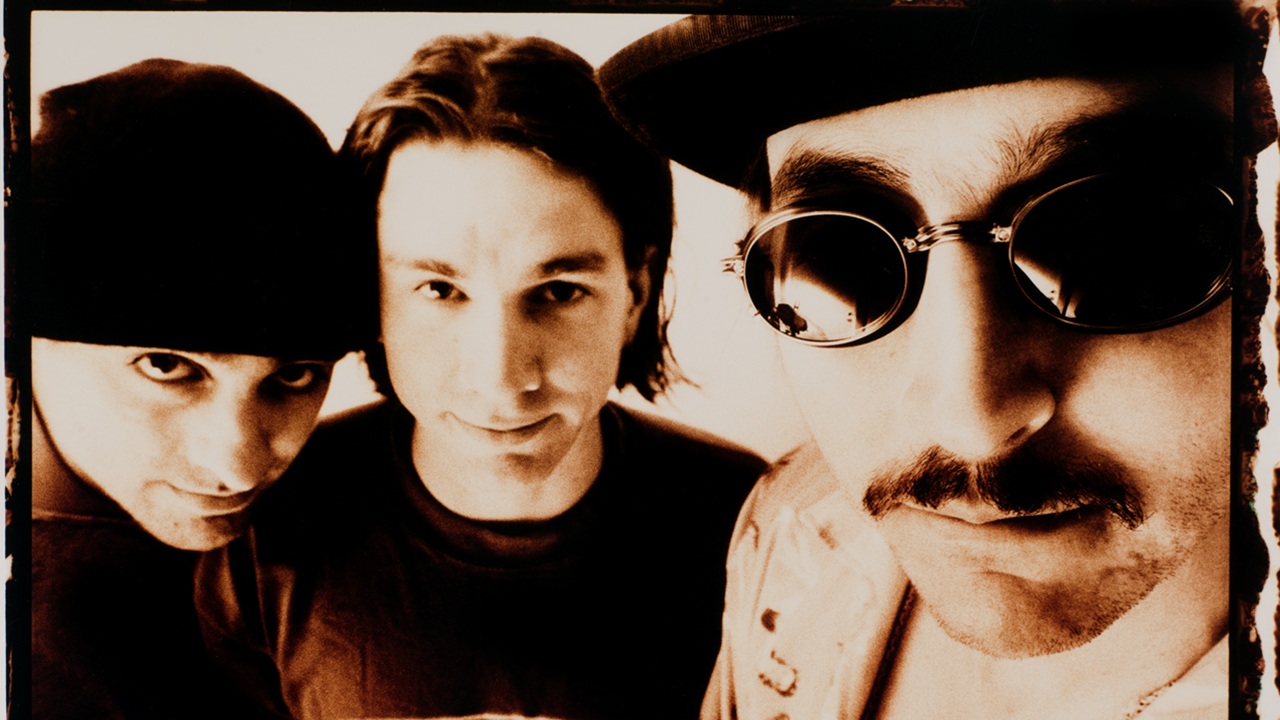
    These three guys, who didn’t necessarily fit together, just happened to have this amazing chemistry, and it became Primus.

    Les Claypool

    Inspired by a dizzying array of disparate influences, from Funkadelic and the Grateful Dead to Frank Zappa and Rush, they were never a metal band in any meaningful sense. In fact, after a brief involvement with Bay Area thrashers Blind Illusion, Les – who had gone to high school with Metallica’s Kirk Hammett – had primarily learned his trade via funk, jazz-adjacent improvisation and freewheeling jam band rock.

    After a slow gestation, during which Les worked with numerous drummers and guitarists, Primus finally coalesced around the now classic line-up of Les Claypool, guitarist Larry ‘Ler’ LaLonde and drummer Tim ‘Herb’ Alexander. They sounded heavy, funky and doggedly eccentric. It really shouldn’t have worked.

    “Once Larry and Herb showed up, it was like, ‘OK, I’m the only guy that has any kind of R’n’B or soul background’,” says Les. “Herb was this world music and Rush fanatic, and Ler came from the metal world. He was in Possessed when he was 15! But his heroes were Frank Zappa, Jerry Garcia and Eddie Van Halen. So it just became this weird hodgepodge. These three guys, who didn’t necessarily fit together, just happened to have this amazing chemistry, and it became Primus.”

    Being fiercely original has its benefits, but in mid-80s San Francisco Primus found themselves firmly out of the musical loop. The Bay Area thrash metal scene was absolutely flying, but it was no obvious home for this deeply peculiar power trio. Famously, Les auditioned for Metallica when they were searching for a replacement for the late Cliff Burton, but it quickly became apparent that he was too damn weird for the job.

    “We were always this weird band!” laughs Les. “Promoters didn’t know who to put us with! They put us on with Swans one time, and put us on with [cult Californian punk troupe] the Pop-O-Pies, but there was never really anyone for us to play with. Then suddenly, Fishbone and the Red Hot Chili Peppers would come to town, and we were like, ‘Woah, that’s cool!’ Then along came Faith No More, and we’d play with them too, and Mr. Bungle would open for us… so a scene developed in the Bay Area.”

    As heavy music entered a new and subtly radical era, Primus were still unlikely contenders for success, but Les had the ambition to back up his extraordinary musicianship and unique approach to songwriting. When his band’s local popularity increased, he asked his auto mechanic father for a favour.

    “Well, we were as poor as church mice, but I told my dad that if we recorded some live material and we pressed up some albums, I thought they would sell,” says Les. “So he loaned us $3,000, which was a big deal for a mechanic, and we took that money and we made that live recording, which became [debut release] Suck On This. We printed up 1,000 units and went around and sold them at local record stores and took that money and pressed up some more, and paid my father back.”

    Suck On This was released on Les’s own label, Prawn Song, in November 1989 and swiftly became a huge underground hit. Sensing an opportunity, the trio took the money they had made from selling their debut and hit the studio to record their debut studio album, Frizzle Fry, which emerged a few months later.

    We became the beaver band

    Les Claypool

    Full of songs that had been honed over their first few years as a live band, including Too Many Puppies and John The Fisherman, it was another word-of-mouth triumph and, against the odds, Primus were soon pursued by a number of record labels, including the recently founded Interscope Records.

    “My manager didn’t want us to sign with Interscope because they had no track record, the only thing they’d ever released was that song Rico Suave by [Ecuadorian rapper] Gerardo,” says Les. “But their A&R guy, Tom Whalley, came to one of our shows, and he saw the crowd going crazy, came backstage and said that he wanted to sign us! He knew nothing about us. He didn’t know that we’d already sold 80,000 records on our own. I said, ‘This is who we’re going with, because he wants us because of us, and not because we sold 80,000 records…’ and obviously it worked out!”

    Despite still being resolutely weird, Primus were well-suited to the musical developments of the early 90s. Their second album, Sailing The Seas Of Cheese, was widely associated with the then inescapable funk-metal movement that brought us the Chili Peppers, Faith No More and other bands that blended metal with slap bass, to varying degrees of efficacy.

    In truth, it was a much more perverse and distinctive piece of work, with two sort-of-hit-singles – Jerry Was A Race Car Driver and Tommy The Cat – that became ubiquitous on MTV. The latter song was also played by Primus during a cameo in movie sequel Bill & Ted’s Bogus Journey, which also helped to push the record towards its eventual gold status.

    Primus press shot 1995

    (Image credit: Niels van Iperen/Getty Images)

    In constant demand as a live act, they spent the next few years touring relentlessly, pausing occasionally to make new albums, including the dark and moody Pork Soda (1993) and Tales From The Punchbowl (1995), which provided Primus with their next significant hit, Wynona’s Big Brown Beaver. A scratchy, country-funk riot, with a suitably bizarre video, its popularity threatened to reduce the band to a novelty act.

    “Wynona’s Big Brown Beaver was a kind of double-edged sword,” says Les with a wry smile. “It was just going to be one of those upright bass and banjo ditties that we’d throw on a record for texture, but the record company picked it because it was catchy, and it became some kind of hit. But for a lot of people who didn’t necessarily know Primus, they thought we were a joke band after that. We became the beaver band!”

    To make matters worse, Wynona’s Big Brown Beaver was commonly interpreted as a rather unsavoury tribute to Hollywood star Winona Ryder. Awkward.

    “She approached me at a radio festival, and she was a little miffed. I said, ‘Hey, look, it’s not about you!’ In fact, it’s spelt differently! I just needed a name. It could have been Jessica or anything. But the song is literally about a beaver.”

    An even more significant encounter with pop culture came in 1996, when South Park creators Trey Parker and Matt Stone invited the band to record the theme song to their new TV show.

    I was thankful that we stopped before we shit our pants

    Les Claypool

    The duo had been fans of the band since they performed at the University Of Colorado in the 80s, for an event called Alferd Packer Day, named after the first person convicted of cannibalism in the United States during the gold rush era.

    Pre-South Park, Parker and Stone would later make their directorial debut with Cannibal! The Musical, which Les would pick up on VHS during a trip to Tower Records in London, not knowing that its creators were Primus fans.

    “I bought it because I remembered Alferd Packer Day, not knowing that Matt and Trey were the ones that made it. A few years later, we get a letter, ‘Hey, we’re big fans, can you do the theme song for this cartoon we’re doing?’ So we did it and obviously they’ve taken over the world!”

    Primus spent the rest of the 90s making more weird music. Tim ‘Herb’ Alexander quit, and was replaced by new drummer Bryan ‘Brain’ Mantia, with whom the band released the grubby and polarising Brown Album in 1997.

    “I relish the fact that it’s Tom Waits’ favourite Primus record,” says Les, referencing the grizzled American singer and frequent Primus collaborator. “He says, [gruff Tom Waits voice], ‘It sounds like it needs a good wash!’ Ha ha ha!”

    1999’s Antipop was even more polarising. Released as nu metal became the dominant force in mainstream heavy music, it featured appearances from James Hetfield, Tom Morello and ex-Police drummer Stewart Copeland, and the album’s first single, Lacquer Head, was controversially produced by Fred Durst. The band still sounded as unique as ever, but the album’s reliance on star cameos and the presence of the Limp Bizkit frontman divided fans.

    “It took a long time for me to be able to listen to Antipop, because it was an odd time for us as people,” Les explains. “It just got messy, we were in different head spaces. It was an awkward time. It was not fun anymore, so we stopped. I was thankful that we stopped before we shit our pants.”

    Primus called it quits in the year 2000. Les Claypool embarked on a dizzying array of other projects, including Oysterhead and Colonel Claypool’s Bucket Of Bernie Brains, before seeing the error of his ways in 2003, whereupon the classic Primus line-up, featuring a returning Tim ‘Herb’ Alexander, reformed for some celebratory live shows.

    The reunion did not last, and, by early 2010, Herb had fled the nest once again. He was replaced by Jay Lane (who’d also played with band in the late 80s), with whom the new-look Primus recorded 2011’s Green Naugahyde. By 2013, the latter was out and Herb was back in for a third go-round on the carousel.

    But as chaotic as Primus may have seemed from the outside, Les and Larry were still having fun. In 2014, they released their most out-there album yet, a full-scale interpretation of classic 1971 movie Willy Wonka And The Chocolate Factory.

    “There’s a few things, especially now I’m older, that I’ve had the idea to do, and I need to start knocking a few things off the list!” says Les. “I’ve always wanted to reinterpret the Willy Wonka movie. I told Ler that I wanted to do it and he was stoked. We only had a certain amount of time to perform it, because we had to get licences from Roald Dahl’s family, so it was one and done, but it was a lot of fun.”

    2017’s The Desaturating Seven was equally leftfield, based on Italian author Ul de Rico’s classic children’s book The Rainbow Goblins, which the frontman used to read to his children when they were little. To date, it’s the last record the band have released, though Les says they hope to have their first album in a decade ready to roll (almost inevitably, it will feature yet another drummer, John ‘Hoffer’ Hoffman, replacing the once-again-departed Herb Alexander).

    What Primus’s 10th album will sound like is anyone’s guess, though their new EP, A Handful Of Nuggs, gives a few clues, with strong echoes of the Frizzle Fry era filtered through a wonky, psychedelic lens (alongside a ripping version of Dio’s Holy Diver, sung in characteristically depressive fashion by cult clown Puddles Pity Party). But ultimately, who knows?

    “It’s part of the joy and part of the agony,” concludes Les. “I always joked that we were ‘psychedelic polka’, but we’re this odd, eclectic, dynamic mixture of fromage. We’re like the gum on the bottom of your shoe!”

    Funk? Metal? Psychedelia? Polka? Four decades in, and Primus remain gloriously unpredictable freaks following their own deranged logic. Long may they baffle.

    A Handfull Of Nuggs is out now via AFO Records.

  • Charli XCX Kicks Off Music, Fashion, Film Tour With Live Debuts & Underscores Collab

    It’s Music, Fashion, Film Fall. Charli XCX kicked off her tour for the phenomenal album in Philly last night, and the show had live debuts and an Underscores collab.

    The post Charli XCX Kicks Off <em>Music, Fashion, Film</em> Tour With Live Debuts & Underscores Collab appeared first on Stereogum.

  • Lil Durk Found Not Guilty Of Murder-For-Hire

    In late 2024, Lil Durk was arrested over a murder-for-hire plot that targeted rival rapper Quando Rondo. He was then hit with additional charges. On Friday (Sept. 11), the Chicago rapper was found not guilty on all charges.

    The post Lil Durk Found Not Guilty Of Murder-For-Hire appeared first on Stereogum.