Raven Records in Camden carries a warm, familiar energy by day, shaped by Chloe and Ben into a space people rely on. The shop blends an alcohol‑free bar with shelves of vinyl, giving the room a calm, inclusive feel where fans settle in with an alcohol‑free beer or a coffee as easily as they browse records. Regulars know how the space shifts when something special is happening. Chairs appear, displays are adjusted, and the room takes on a quiet anticipation without losing its sense of welcome.
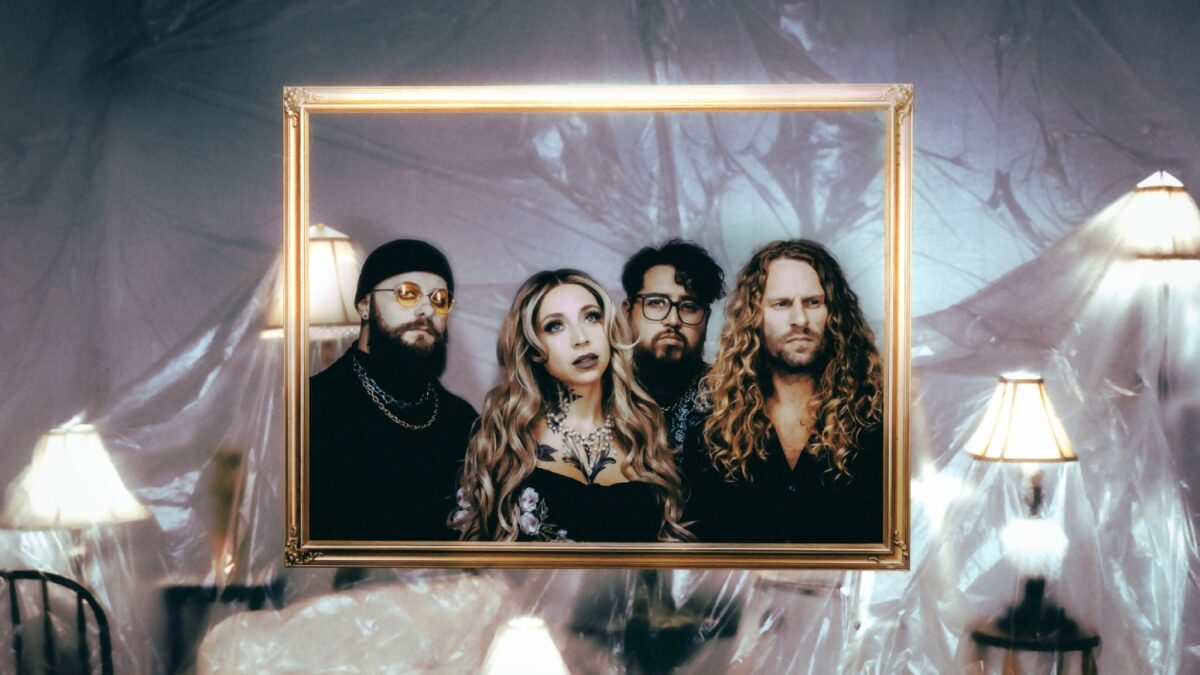
That atmosphere held steady for the Castle Rat event celebrating their latest album, The Bestiary, released last year. Riley Pinkerton, the Rat Queen herself, was the only band member present, arriving with the same grounded warmth she carries offstage. Chloe and Ben guided fans inside as the room filled and the air grew heavier with excitement.
Raven Records has a way of making strangers feel familiar. That feeling settled into the space as Riley took her seat, ready to speak openly about characters, chaos, and the world Castle Rat have built during the Rat Queen Q&A.
Riley began by talking about her relationship with London. Camden’s The Underworld remains the hottest show the band have ever played, with sweat dripping from the ceiling and raining back down onto the crowd.
She remembers the moment the audience began chanting a riff back at them, something she described as feeling uniquely British. The energy was intense, loud, and a little terrifying in the best way, and it left a mark on the band.
Castle Rat – Raven Records – August 2026. Photo: Rhys Tagg/MetalTalk
Castle Rat’s universe started as an accident. The band name came first, followed by a couple of shows, and then a Halloween booking in Brooklyn where every group on the bill was dressing up. Riley decided Castle Rat needed a queen, so she built the first version of the Rat Queen from cardboard, a hockey‑stick scythe, and a costume assembled with DIY determination.
The plague doctor mask came from a simple idea, the vampire guitarist felt right, and the rat priest emerged from improvisation. The band stepped into those characters for the first time that night, and the response felt electric. Riley realised they had stumbled into something larger than the room they were playing in.
The characters developed over time. Riley guided the look and feel, painting faces, building props, and helping the band find their own versions of the roles. In the early days, she did everyone’s makeup, which became too much to manage, but the others learned their designs, practised at home, and sent her progress photos.
The Rat Queen herself sits somewhere between Riley and the character. She described it as a spectrum, a blend, where she stands on stage with her shoulders back in a warrior stance while internally panicking about what song comes next.
The live show is built on confidence. Riley talked about the emotional range she carries into a day, and how stepping into costume forces her to set those feelings aside. Once she is on stage, there is no option to be anything other than the Rat Queen.
That transformation is empowering, a moment of escape that allows her to deliver something extraordinary. Fans connect with that commitment, and the realm feels real because the performers give themselves fully.
Castle Rat – Raven Records – August 2026. Photo: Rhys Tagg/MetalTalk
The choreography developed naturally. Some moments began as accidents, repeated because they were funny or felt right. Other sections, especially the battles, were shaped deliberately to avoid the band hitting each other mid‑swing. Everything is planned, but there is room for gestures and interactions that grow over time.
Riley spoke at length about Castle Rat’s recorded world. Their first album, Into The Realm, captured a band still finding its direction. She described it as a meandering journey where all the riffs lived in C, a murky snapshot of the band before the realm fully took shape. She remains proud of that record.
Castle Rat – The Bestiary
The Bestiary, their second album, came with pressure. Riley talked about how no one cares when you make a first album, but people cared this time. The Kickstarter went “absurdly well,” hitting its goal within minutes.
She woke up, made tea, checked her phone, and found the campaign already complete. By the end of the day, they had passed numbers they never expected. That support was thrilling, but it also created a weight.
Riley spoke honestly about the challenge of honouring fans without writing for approval, and how people can sense when an artist is not standing by their work.
The band recorded The Bestiary live in Woodstock, surrounded by snow and cold. They played together in a circle, choosing takes based on feel rather than perfection. Vocals and solos were overdubbed later, but the core of the album came from those sessions.
Riley described Crystal Cave as the most difficult song to finish. It was the last track they worked on, and the band disagreed on which take was best. She wanted to keep going, but it was the final day and no one else wanted to continue. Tensions were high, but they chose the performance she believed in.
Riley also spoke about future plans. Castle Rat have an Australian tour coming up, followed by bigger US stages and then a full focus on writing album number three. She has been working on new masks and designs.
Castle Rat – Raven Records – August 2026. Photo: Rhys Tagg/MetalTalk
Fans asked about expanding the lore into other mediums, and Riley mentioned discussions about books, comics, and even film. The band have joked on tour about a story where a kid discovers the Book Of Lore and stumbles into the realm, blending reality with fantasy and crossing paths with characters who feel both mythical and familiar.
She also mentioned whispers of UK dates in 2027, though she laughed about how little attention she pays to the calendar.
The Q&A closed with the same warmth it began with, and Chloe and Ben guided everyone outside for a short break before the Castle Rat signing at Raven Records. The heat inside the shop had built up with so many people in the room, and the fresh air offered a welcome pause.
Raven Records shifted again, chairs moved aside, a table set up for records, the signing, and even a handmade gift. One by one, Castle Rat fans filtered back inside, part of the same Camden alternative community that keeps the shop alive day after day.
Some brought freshly purchased vinyl, others held posters, and a few arrived with gifts or items they had made. Riley welcomed every person with a quiet word, a moment of recognition, and a smile that softened the theatrical edge of her character.
Castle Rat – Raven Records – August 2026. Photo: Rhys Tagg/MetalTalk
The signing moved at a gentle pace, giving each fan time to speak, share, or simply stand in front of someone whose work meant something to them. Many left with a cherished photo taken in the warm light of a shop that feels more like a community space than a venue. Raven Records held the room together, just as it always does.
Castle Rat’s universe keeps expanding because the band keep expanding. The characters evolve, the lore deepens, and the music shifts into new territory. Riley mentioned Type O Negative as a major influence, especially the darker, industrial flavours shaping their new direction. Her favourite song is Love You To Death, a track she described as so good she wonders if she will ever write anything that reaches that level.
For now, Castle Rat remain a band who built a world by accident and then chose to live in it. The Rat Queen stands at the centre of that world, shoulders back, sword raised, ready to lead fans into the realm night after night.
The sweat, the battles, the characters, the lore, all of it comes together to create something that feels both theatrical and deeply human. Castle Rat are not just performing in the realm. They are building it, one show, one record, one story at a time.
Castle Rat have launched their first-ever online webstore, where fans can purchase VIP passes, exclusive merch, album variants and much more. Check out Castle Market at CastleRat.com.
Following the international success of their critically acclaimed album ‘Wilderness Of Mirrors‘ and a triumphant first leg of their European tour featuring numerous sold-out shows, Tunisian-French progressive metal visionaries Myrath unveil their bold new interpretation of Sting‘s timeless classic ‘Shape Of My Heart‘. Few songs possess the universal appeal and enduring legacy of ‘Shape Of […]
Atlanta-bred guitarist, singer and songwriter Eddie 9V has released his new single, ‘Rock Your Baby’, a radically reimagined take on George McCrae’s 1974 #1 hit. The latest track from Eddie’s forthcoming album, ‘Down Here‘, out November 6th via Easy Eye Sound, was produced by GRAMMY® Producer of the Year winner Dan Auerbach and recorded live […]
Libby Dale’s Prayer is a bright and beautifully understated Americana track that turns a deeply personal theme into something warm, playful and uplifting. The gentle folk-pop foundation is enriched by organ and pedal steel, giving the song a distinctive vintage character while keeping the arrangement light and inviting. Dale’s expressive vocals carry the emotional weight of the lyrics, balancing vulnerability with a sense of optimism and self-compassion. There is a lovely contrast between the song’s pleading subject matter and its energetic musicality, making Prayer feel both intimate and celebratory. A heartfelt, melodic Americana piece with plenty of warmth and personality.
ABSOLUTE POWER have shared the title track of their forthcoming second album, “Needs Must When The Devil Drives”, due out on November 6, 2026 via Time To Kill Records. The song features former Judas Priest and Iced Earth vocalist Tim “Ripper” Owens, contributing his unmistakable screams to one of the album’s most powerful statements.
For Shane Embury, the track is also deeply personal, looking back at the environment in which he and Simon Efemey grew up and the role heavy metal played during their formative years:
“This song, whilst being title track of our new record, also talks about how both Simon and I grew up in the West Midlands listening to heavy metal of 1980’s, all the classics as you would expect. The areas where we both came from were very much industrial areas! Working class families and for us, as teenagers, heavy metal was our escape from the everyday realities of our areas. You did what you had to, just to get by. Needs Must When the Devil Drives!”
Fifteen years after the release of their self-titled debut, the heavy metal project founded by vocalist and producer Simon Efemey and Napalm Death bassist Shane Embury returns with a powerful celebration of classic heavy metal.
Drawing inspiration from the timeless legacy of Judas Priest, Saxon, Black Sabbath, Dio and the New Wave of British Heavy Metal, “Needs Must When The Devil Drives” combines old-school riffs, unforgettable melodies and larger-than-life songwriting, with the energy and attitude of a new era.
The world is in meltdown and we’re all going to hell in a handbasket. Thankfully, ABSOLUTE POWER are here to offer maximum-volume resistance to the madness, with their monumental second album, “Needs Must When The Devil Drives”.
ABSOLUTE POWER is the brainchild of vocalist and producer Simon Efemey and bassist/multi-instrumentalist Shane Embury, two heavy metal lifers who, between them, have left an indelible imprint on modern music.
Embury is the longtime bassist of grindcore pioneers Napalm Death, a band that began pushing music to its furthest extremes in the 1980s and has never stopped evolving. Efemey is one of the most influential British metal producers of his generation, having shaped the modern scene through his work with artists including Paradise Lost, The Wildhearts and Napalm Death, while also developing a reputation as one of the most charismatic figures behind the scenes.
Together, they spent five years crafting “Needs Must When The Devil Drives”, an exhilarating tribute to the classic heavy metal they grew up with, infused with the energy and attitude of 2026.
“I want people to have a good time in the old school way,” says Efemey of the album. “I want them to forget the mundane, boring or horrible parts of their jobs. I want them to forget themselves for a couple of hours. That’s what good music should allow us all to do.”
The album continues the vision that originally brought ABSOLUTE POWER together: a desire to recapture the sense of adventure, grandeur and excitement that defined the heavy metal of their youth.
“When we did the first album, we wanted to make songs like our heroes, Judas Priest, Saxon, the New Wave of British Heavy Metal, everything we liked as kids,” explains Efemey. “When we were on tour buses, we’d have a few drinks and start blasting old-school heavy metal like Black Sabbath or Dio. One day we said we should write our own tunes like that.”
The debut album was embraced by fans of traditional metal, and “Needs Must When The Devil Drives” expands on that foundation, delivering a collection of songs built around powerful riffs, memorable hooks and a strong sense of identity. The title itself comes from an old proverb that Efemey and Embury would jokingly repeat to each other during the recording sessions.
Alongside the title track, “Saviour” the song “Kernschmelze” showcases the band’s most direct and energetic side, while “Mountain Of Hope” increases the epic dimension that’s always been central to ABSOLUTE POWER. “Within” temporarily strips away some of the heaviness in favor of a more atmospheric and hypnotic approach, recalling the psychedelic spirit of 1970s classics such as Black Sabbath’s “Planet Caravan”.
The album features a reinterpretation of Queen’s 1978 classic “Sheer Heart Attack”, preserving the original’s punk-driven energy while adding the unmistakable personality of ABSOLUTE POWER.
Efemey and Embury invited several respected musicians to contribute to the album’s expansive sound. Former Judas Priest and Iced Earth vocalist Tim “Ripper” Owensreturns after appearing on the first record, delivering his unmistakable screams on the title track. The Mission and Tricky guitarist Mark Gemini Thwaite adds subtle layers and textures to several songs, expanding the band’s traditional metal foundation.
“I’ve known him for years,” says Efemey. “I recorded a demo for his old band years ago. I sent him some tracks and he put some magic on them. He added a little goth flavour to some of those tracks. It took it further than the first album, which was just straight-down-the-line traditional metal.”
Also appearing on the record are Napalm Death guitarist John Cooke and drummer Carl Stokes, whose career includes collaborations with bands such as Cancer and The Groundhogs.
At the heart of ABSOLUTE POWER, however, remains the partnership between Efemey and Embury. Both grew up in the West Midlands and shared formative experiences attending concerts at Birmingham’s legendary Odeon before following very different paths: Embury becoming one of extreme metal’s defining musicians, and Efemey establishing himself as a highly respected producer.
“Over the years our paths crossed, and we realized we had a similar love for music and a similar sense of humour – Monty Python, The Young Ones, really dark humour,” says Efemey.
Throughout his career, Efemey has worked with artists ranging from British indie heroes The Wonder Stuff to extreme metal pioneers Napalm Death, but his influence has always extended far beyond production. His larger-than-life personality and his approach to music have made him a unique figure within the British scene.
“You hear the stories from back in the day about these legendary bands and the mad stuff they’d get up to,” he says. “For me, that’s part of rock’n’roll. I never wanted to just be the guy sitting there in the studio nodding along with what bands say. It was more about entertaining people and entertaining ourselves.”
Yet behind all the chaos, Efemey has always remained focused on the most important element being the songs.
“We don’t take ourselves too seriously, but we’re serious about the music,” he says of ABSOLUTE POWER. “We reject ideas that aren’t good enough. Every song needs a good riff and a catchy melody. I wouldn’t let anything go out that was just fodder. That approach has always been prevalent in my work.”
That philosophy defines “Needs Must When The Devil Drives”. The album carries the confidence of a band that knows exactly what it wants to achieve, embracing the foundations of classic heavy metal while sounding fully alive in 2026. As the world falls apart around them, ABSOLUTE POWER stand tall, armed with riffs, melodies and songs built to last.
“I can’t think of many new British bands doing what we do,” says Efemey. “I think people like our stuff because it’s old-school with melodies you can sing along to. We use the formula from the 70s and 80s because we know it works. We make this kind of music because we love it and we want people to sing along with us.”
Track-list:
1. Needs Must When the Devil Drives (feat. Tim “Ripper” Owens) 2. Saviour 3. Kernscmelze 4. Stand Up and Be Counted 5. Within 6. Mountain of Hope 7. Insanity 8. Hammer of Justice 9. Praise the Fire 10. Sheer Heart Attack 11. Orphans of the Storm
Line-up:
Simon Efemey – vocals Shane Embury – Bass, Additional Instruments
Guests musicians:
Tim “Ripper” Owens – vocals (ex Judas Priest, Iced Earth) Mark Gemini Thwaite – guitars (The Mission, Tricky) John Cooke – guitar (Napalm Death) Carl Stokes – drums (Cancer, The Groundhogs) Joe Taylor – drums Dominik Gryzbon – lead guitar Ilsa Nielson – lead guitar
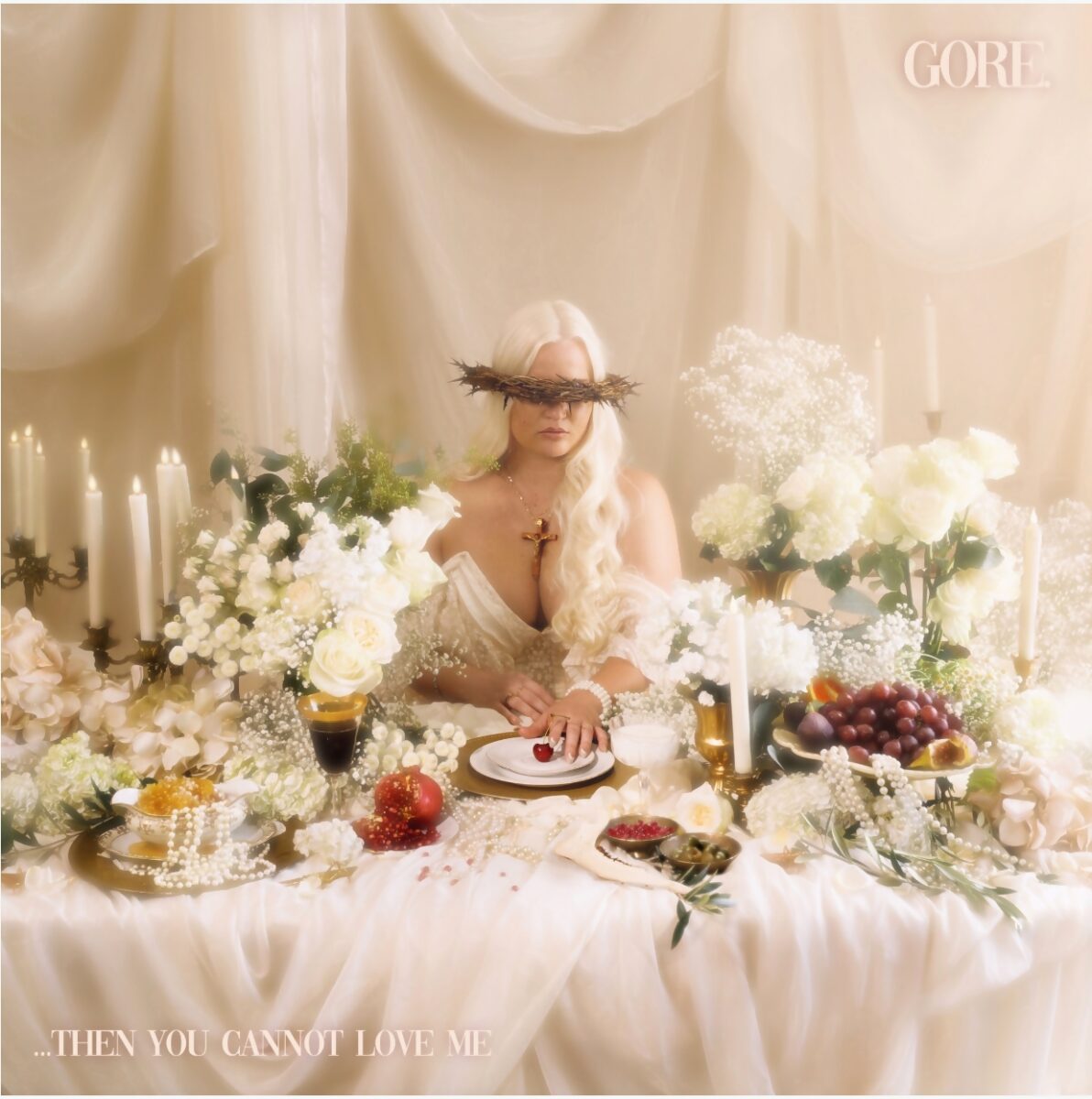
GORE. have revealed the details of a new EP titled ‘…Then You Cannot Love Me’, which will be released very soon indeed.
The EP will be released on October 09 via Spinefarm and serves as the follow-up to 2025’s ‘If You Do Not Fear Me…’. Very much the second half that makes up a poignant whole.
Vocalist Haley Roughton had this to say about completing the set:
“We always wanted to release it like that. We wanted a more looming, cynical sound in the first EP and as time went on, we wanted to develop the sound towards something closer to what we want to sound like as a band together. I’m hoping the fans, especially those who have been with us since day one, can see the evolution and how those two connect.”
The artwork looks like this:
Whilst the tracklisting is like this:
1. Lead Me To The Slaughter 2. Bones In the Garden 3. Crucified 4. Walk On Water 5. Hallowed Ground 6. Alone
You can hear the previously released ‘Lead Me To The Slaughter’, as well as the newly share ‘Crucified’, an insatiably catchy and beautifully patient piece of melodic brilliance.
Haley had this to add about the track:
“This song is about someone who is so seductive that they lead you right into temptation. They have you wrapped around their finger, and they know it. You idolize them. You try as hard as you can to resist, but there’s something both painful and pleasurable about their presence, so you give into them and whatever chaos you know they’ll bring.”
The band are set to support I Prevail on their upcoming tour across the UK. Here are the dates you can see them.
SEPTEMBER
19 – LEEDS O2 Academy 20 – GLASGOW O2 Academy 22 – MANCHESTER O2 Victoria Warehouse 23 – CARDIFF – Depot 25 – LONDON Alexandra Palace
La cosa nostra is back! American Mafia is back on Good Time Music with ‘Partners in Crime‘, a new ten-song album that features three remastered gems from the Holy Water era, the remixed 5-song EP ‘Made in New York‘, and two newly recorded, reimagined classics. American Mafia is a musical partnership between guitarist Thomas Jude […]
Mastodon’s first two albums, Remission and Leviathan, turned them into cult underground sensations, but it was 2006’s major label debut Blood Mountain that announced their arrival to the wider world. Hammer caught up with the prog metal boundary-pushers on the road that summer to talk psychedelics, mountaineering and ‘magical gnomes’.
Sky’s gone red again.
The noise is whirling rotor-blades glancing off rocks, and human voices stretching and screaming as one into a fierce, hot ash-flecked wind. A 90° incline with failure snapping at our heels and fate spunking in our faces. Traction. Grit. Endurance. Love and death in the afternoon going on here at Blood Mountain.
I’m listening to the new Mastodon album, Blood Mountain, and instead of noting the skilfull synthesis of their key influences – Melvins, The Call Of Ktulu, bits of Kyuss, bits of Slayer, seasickness and hallucinogens – my head’s stuck on two things. One: the colour of the sky in a level of a computer game I haven’t played since I was 13. Two: an abstract symbol of cod-philosophy in a ropey 1960s sci fi novel. It’s making my head feel fucking trippy.
“The blood could also mean ‘blood brothers’, you know?” suggests Mastodon guitarist Bill Kelliher. “Like, family as well. Our mountain. It’s our journey.”
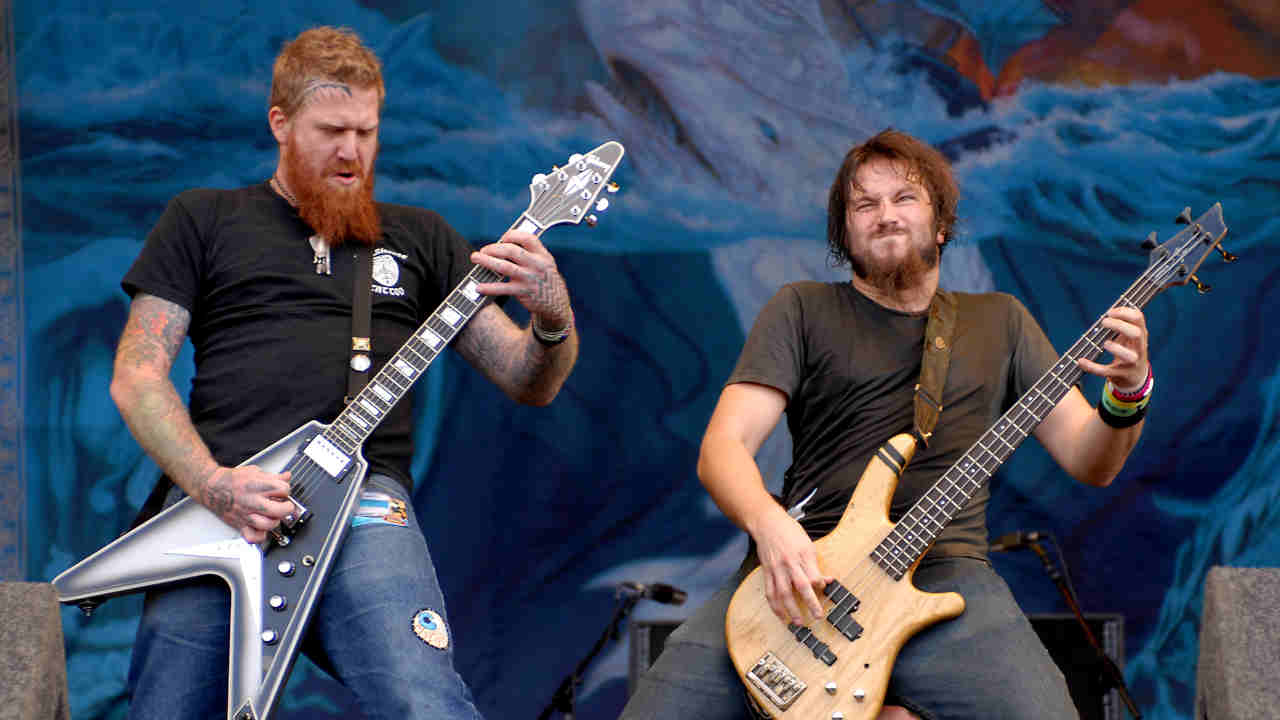
“Or it could mean the fuckin’ blood of many slain, tryin’ to get to the top,” snarls his Flying V-toting counterpoint, the ink-scrawled, demon-eyed Brent.
“It could be the blood of the devil that is us,” chuckles Bill, with only the mildest mock-profundity.
“Could be the fuckin’ blood comin’ outta the devil’s penis,” rages Brent, tattooed arms flailing around his head, eyes flying-saucer-wide. “Peein’ on the top of the mountain, tryin’ to wash us away… ”
“Wash away the sins. Of humanity,” says Bill solemnly.
“That’s right, dude.”
So what happens at the top?
Brent bounds into life, suddenly ferocious in the last minute of our hour long interview, glad that someone’s finally asked him an intelligent question for once. His voice distorting on our tape recorder as he manically rattles out his masterplan: “We place the crystal skull on to the top of the mountain where the blood is pourin’ outta the fuckin’ king of the dudes and we place the crystal skull inside of his belly – on this, like, perch – and get these like crazy magical powers and we all grow unicorns and chocolate feathers and we ride into outer space and we write a new album about the universe.”
Even if you haven’t been on the Mastodon trail since the beginning, tracking the hairy, lumbering four-headed beast as it crushed clubs and toilet venues around the world – never pausing, always looking for fresh meat – you will almost certainly have picked up a copy of 2004’s Leviathan after it was hailed by Hammer as officially the third greatest metal album of the past 20 years a couple earlier in 2006.
Despite its status, on first listen Leviathan doesn’t scan like the Master Of Puppets-esque masterwork that the Mastodon faithful proclaim it as. There isn’t any of the naïve, greedy, wolf-eyed ambition of young gods like Trivium. In its place there’s creaking beams, lurching seasick riffs, baleful bellowing and an epic story about whales. In many ways it’s scarcely even metal, Mastodon seemingly having more in common with under-the-radar noise assassins like Lightning Bolt or Comets On Fire than metal royalty like Metallica.
Mastodon didn’t ever pledge allegiance to any flag. They’re not here to defend the faith. They don’t exist to support Iron Maiden. They probably could care less what people think of them.
So why should you care?
Because Mastodon are monumental. Leviathan is monumental – like Slayer’s Reign In Blood, rather than a ‘classic metal album’ in its own right, it’s simply the most accurate, fully-realised representation of what Mastodon is, or was up to that point. Their endless live shows are monumental – non-stop touring has whipped them into nasty machines and a global audience into begging for something spectacular and soul-saving.
Having made the jump from cult noise stable Relapse records to the glittering palace of evil that is major label Warner Brothers, Mastodon are now equipped with the necessary firepower to blow holes into heavy metal’s armour. They could change everything. They have a new album, it’s called Blood Mountain.
“My grandfather has a photo of me in a diaper and I’m huggin’ a bass drum. I just looked at the drum set and it totally made sense for me to be behind that.” Brann Dailor has the look of a younger, prettier Josh Homme. Onstage his kit is dappled with polka dots like Randy Rhoads’ iconic Flying V guitar, and the doomed guitarist’s image adorns his kick drum. It makes sense, in a way – Brann is a virtuoso drummer, simply the best in metal this side of Dave Lombardo, but his drumming is supremely lyrical, not propulsive. It ripples into crescendos – crashing waves of percussion on Leviathan – spiralling into weirdly melodic passages, like Rhoad’s solos, while Bill and Brent’s guitars crunch angrily beneath him, like two slowly duelling Triceratops.
“My next door neighbour, John, would put this Judas Priest record on and I would sing to the record and he would play drums,” he remembers. “And we’d call my mom and his stepdad and give them concerts. I would steal my mom’s strobe and black lights and put up some posters and we’d be like, ‘Alright! We got ourselves a band’.”
Somewhere along the line Brann met Bill in their hometown of Rochester, New York, forming a musical alliance that threaded through myriad noisy incarnations.
“The first band was called Crinkled Pig,” recalls Bill. “We did all Sex Pistols and Ramones cover songs. And then there was Skullduggery, Death Comes Ripping, Lunchlady. Butterslacks. Uh… Girdle. Nurse Ratched. Brann and I played in a band called Lethargy. Goofy tech metal, slidey riffs, lots of harmonies, just really fast grinding sick vocals – really hard shit to play.”
After a stint in prog-metal mainstays Today Is The Day, the duo relocated to Atlanta on the eve of the millennium with the intention of advertising for new jamming partners. Within days they’d met another pair – Brent Hinds and his bass-playing best-buddy Troy Sanders, who shared a similar seven-year symbiotic history – at a High On Fire gig. Immediately, before any songs were written, Troy booked a tour for the unnamed group – who then had to recruit a vocalist (one Eric Saner), and nine songs were hastily written and recorded, to be sold at gigs. Saner soon departed the band – with Troy, Brent and assorted guests furthermore dividing vocal duties between themselves – although the demo resurfaced on Relapse under the title Call Of The Mastodon.
“We put these songs together and we said our music is never gonna go anywhere unless we take it to the people,” explains Troy, the towering and eminently likeable frontman. “We’re not gonna write a cool song, record it and it’s gonna get played on the radio somewhere. That was just never gonna happen.”
Conceived from the start as a touring entity, over the next couple of years, the “Dirtier… less layered” onslaught of Mastodon expanded, mellowed, got stronger and stranger – with a definite stylistic jump between 2001 debut Lifesblood and 2002’s Remission. But the switch from simply being face-melting firebrands to Mastodon, the canonised auteur of Leviathan, wasn’t prompted so much by a musical redress as an ideological one.
Brann saw the phrase “salt-sea mastodon”, referring to the monster whale in the opening pages of Herman Melville’s Moby-Dick and the band immediately fell in love with the parallels between the rolling, crashing unfathomable nature of the ocean and its whale – not to mention Ahab’s perilous voyage of discovery – and their own, then-undirected, tempestuous force.
The lyrics and – crucially – music for ‘Leviathan’ were scripted to Moby-Dick’s narrative, evoking almost magically the brine-drenched spirit of Melville’s work in a ferocious, alive and totally unexpected delivery.
“Once we had something to look at, it brought us together,” says Brann. “We were extremely focused after that.“ After Leviathan we had a reason to write songs,” says Brann.
Really, more than simply nicking an idea out of a dog-eared paperback left in a tour bus bunk, what changed is that Mastodon had stopped looking to other rock bands, other music, for inspiration, and looked instead for something more elemental. Bigger. More pure.
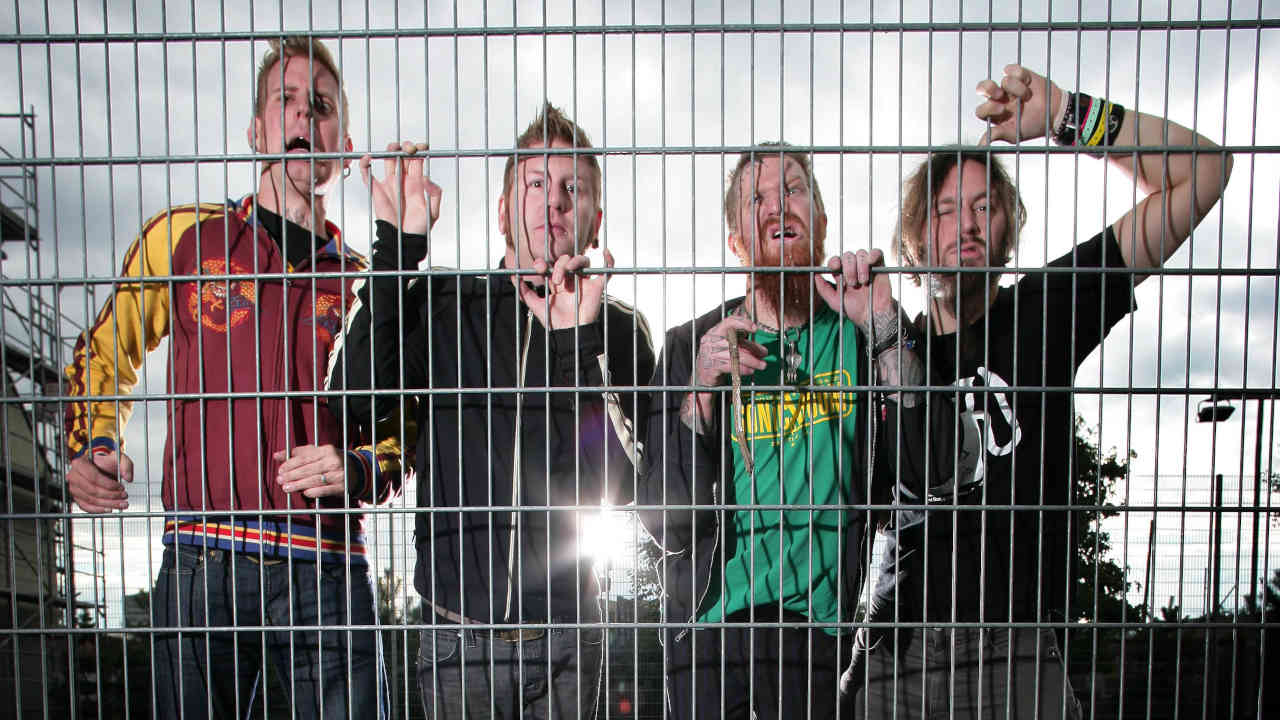
(Image credit: Mick Hutson/Redferns)
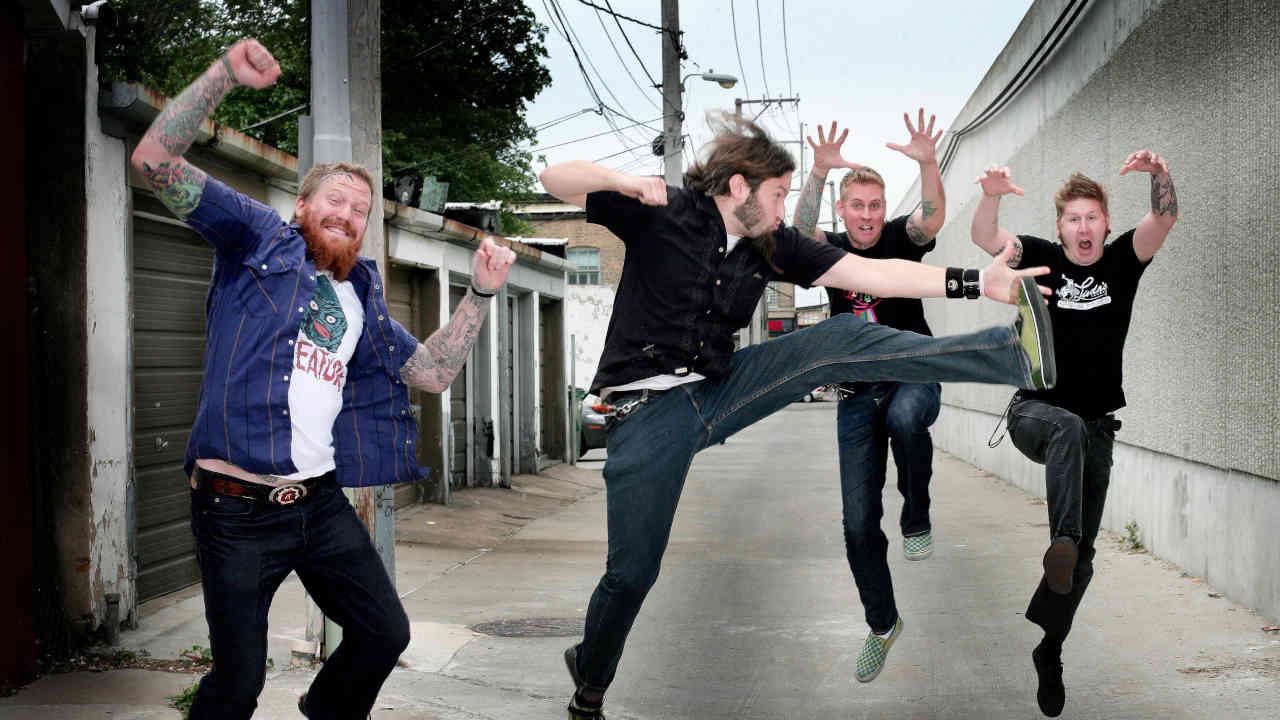
The noise is horrible, loud, fantastic. Troy clamps his hands over his ears, the grinning, perma-gurning face-of-Mastodon contorting to a painful grimace. Hammer photographer Mick Hutson pauses the shoot and looks up, waiting impatiently as the train thunders over the rickety, corroded Chicago railway bridge above us. Upon hearing it, Brent immediately snaps into position: legs splayed, head thrown back, arms slashing furiously at an imaginary Flying V, howling in delight as he envisions that abrasive metal-on-metal grind screaming out of guitar and speaker. “Oh man,” he mutters, shaking his head. “If only.”
Tonight Mastodon are performing at Chicago’s opulent Aragon ballroom – galleries fashioned into battlements and towers, a breathtaking vista of the cosmos, a painted galaxy, splashed across the ceiling – supporting Slayer on the US leg of their Unholy Alliance tour.
“I’m not the biggest Slayer fan in the world,” Brent admits. “I’m just not. But I do realise Slayer is one of the best bands in the world. You see them play live – they’re fuckin’ amazing! They BLOW ME AWAY every night, I’m like, ‘holy shit dude’.”
Don’t you see any parallels between what they do and what you do?
“I really don’t. To be honest with you. Because they totally go out there and thrash and shred. And we go kinda out there and fuckin’… POUND and… DROP. You know? Like BOOOM!! Waah!Krah!GAHkraar! BOOM!! We’re more like that. And they’re more like raddlyraddlyrahWOOROOWOOROOraddlyraaggggggggh!!”
Brent’s so cool. He never stops moving, never stops thinking, constantly grinning, twitching and verbalising – fixing you dead in the eye as he does so. Throughout our interview he will alternately fiddle with the substantial pile of mary jane in front of him, or snatch up a barbell – pumping iron and hissing out breath as we talk or he thinks, his head continually reeling back and forth.
In terms of writing and decision-making Mastodon is very much a democracy, but Brent is Mastodon’s Kerry King. Brent is fucking intense.
“But I think we’re both doing the same thing,” adds Bill.
“We’re both punishing,” considers Brent.
How do you feel when you’re playing your music? Do you think different? Do you see things?
“Yeah,” sighs Bill, nonchalantly. “When I’m in front of fuckin’ thousands of kids and my amp’s fuckin’ blarin’ and I’m just rockin’, jammin’ out, I feel… I feel good. It feels awesome. It’s a powerful thing.”
Brian Chippendale from Lightning Bolt once said that when they play, rather than model themselves on another band – like Slayer or whoever – they try to model themselves on, like, a storm. Or he envisions that if he drums fast enough that a weird magical being will appear, or a door will open up and elves will come running out. Do you visualise your music like that?
“We fuckin’ LOVE Lightning Bolt!” Brent explodes at the mention of the infamous math-metal duo. “Yeah, all that shit happens if you’re tripping on mushrooms or somethin’.”
“We had a couple of songs on Remission,” offers Bill. “For instance, we couldn’t come up with a name for one song, Trainwreck. And someone was like, ‘Man, that fuckin’ song! I can just envision this train like goin’ off the tracks and fuckin’ exploding!’ We were like, ‘Wow, cool!’ Or Motherpuncher? Our old singer was like, ‘Man! This song makes me wanna punch my mother!’”
“But as far as the way I physically feel when I’m playing music,” returns Brent thoughtfully, “I feel amazing. That’s why I do it so often and I thank my lucky stars that I get to do it for my livelihood nowadays. But, um, yeah, it makes me feel like fuckin’ portals and magical gnomes and all that shit. Totally.”
Do you ever try and write while tripping?
Brent snorts and shoots us a dismissive glare, like we just choked on my first doobie. “Oh fuck, yeah!”
What do Mastodon sound like on mushrooms?
“Oh, dude! I would totally love to take mushrooms and listen to Mastodon, anytime. I have mescaline! It’s this powder and it makes the walls fuckin’ start breathing and all that shit. It’s an American Indian thing.”
“They use it in a lot of rituals,” explains Bill. “To get on with mother nature. I dunno, I don’t mess with that shit any more. I did enough acid back in the day.”
“I might do a little bit of mescaline on this tour but that’s it,” reasons Brent. “I would never, ever do anything to fuck up the show. If I fuck something up I’m gonna get bummed out.” He darkens, glowering. “I’m gonna be Bummed Out Brent. And no one wants to be around Bummed Out Brent.”
(Image credit: Getty Images)
So… Blood Mountain. It’s not a particularly long album – 50 minutes – but it feels epic. It feels strenuous and hard; something that has to be endured. A trial by fire – something occult. It has moments of relapse, of tense, locked repose, but as exhilarating and fist-pumping as the songs are, everything feels steep – uphill. Maybe it’s the fiery, ascending guitar lines and cascading drums, or maybe it’s the ever-onwards, triumphant surge in Troy’s vocals as they urge us on.
Listening to the album from start to finish, you get the sense of ascending, enduring. Of climbing Blood Mountain.
“That’s exactly it,” exclaims Brent. “The sequencing, the climax of the middle… A band – or a group of people – tryin’ to fuckin’ climb a blood mountain, and it’s called Blood Mountain because it’s a fuckin’ dangerous, nervous situation, you know? It’s like tryin’ to do music, you know?”
“We’ve just taken on Warners now, and now it’s like this fuckin’ huge mountain that we’ve got to climb to the top of,” says Bill.
“Warner Bros is the blood mountain,” affirms Brent. “We’re also tryin’ to touch on all the elements as well. Like Remission had a fire theme – burning man and fuckin’ horses on fire and there was a flame for the logo. ‘Leviathan’ was water. Blood Mountain is a very earthy album. The next one will probably be very astrologically oriented.”
Blood Mountain… it’s got this weird ambience to it. I’ve been trying to put my finger on it for ages, but the closest I can come up with is this really abstract association. It reminds me of a level in the 90s computer game ‘Doom’, where you’re outside and the sky is just this strange deep red colour. But instead of it being a demonic or scary thing, it’s just this weird melancholic feeling – this empty, lost feeling. How do you engineer a mood like that?
The non-musical associations with the band – the name, the artwork – seem to feed into the music as much as describe it. Like the entity that is Mastodon is a kind of magic spell or whirlpool that drags in these different elements and associations and consumes them to make itself stronger.
“Basically it all stems from dreams,” nods Brent. “Dreams talked about and then turned into artwork and songs and situations.” He pauses. “There’s a lot of Masonic imagery too, which I love.”
Brent, the last time you were in this magazine the interviewer asked why you had a depiction of Baphomet tattooed across your back and you refused to say anything…
For the first time since I’ve met him, Brent quietens, his voice shrinking sharply. “That’s just a personal thing.”
That’s what you said last time!
He snaps defensively, “Yeah, well, what – do I have to answer different this time?”
What have you got to hide?
“Well…” he takes a deep breath. “I’m a Capricorn and I’m a Pagan. I don’t believe in one thing, I believe in the universe. Baphomet is woman, man, goat, child – it has every element to it…”
He gets visibly agitated and squirms uncomfortably. “That’s why I fuckin’ hate talking about this – people think it’s the devil and it’s not the devil at all. The devil is not Baphomet. The devil is Beelzebub. Two totally different things. This is a Pagan icon. I’m in love with goat imagery because I’m a Capricorn, I think. And I really don’t feel like describing that to most people, because to me, it’s really none of their business.”
“He was a goat in a previous life,” smirks Bill.
“I was a goat in a previous life!” Brent roars. “I wouldn’t doubt it, dude!”
The only other reference point I have for Blood Mountain is equally clumsy and suitably esoteric. In Philip K. Dick’s Do Androids Dream Of Electric Sheep? (the novel that inspired Blade Runner) future society is founded on a humanistic philosophy known as Mercerism.
To commune with Mercer – not so much a prophet as an eternal symbol of endurance and perseverance – citizens plug into a kind of virtual reality machine which allows them to visualise a mountainside. A barren ascent, with an old man in rags, Wilbur Mercer, slowly climbing, and the thoughts of whoever was logged in to the machine at that time humming powerfully as one as they struggle to ascend – pelted with rocks from unseen aggressors. Communing daily with the interface, no one ever reaches the summit. But that isn’t the point.
It’s all a bit far-fetched – not totally – but watching Mastodon grind out their weird, muscular hymns to ‘Cysquatches’ and sub-Paganistic (Paganism being a similarly humanistic and individually interpretive philosophy) forest deities, in the Aragon Ballroom, in Chicago, with a throng of metalheads saluting them, surging towards them, urging them on, you glean the relevance of the concept.
Mastodon, like the best heavy metal, engender a sense of community – of faith. The most human thing we can do is endure. Like Mercer, ‘Blood Mountain’ is a symbol of abstract faith. A demand that we should all aspire to a better time and place.
Mastodon’s metal is supreme rocket fuel. Ascend to this.