Blog

  • The Eternal Open More Horizons

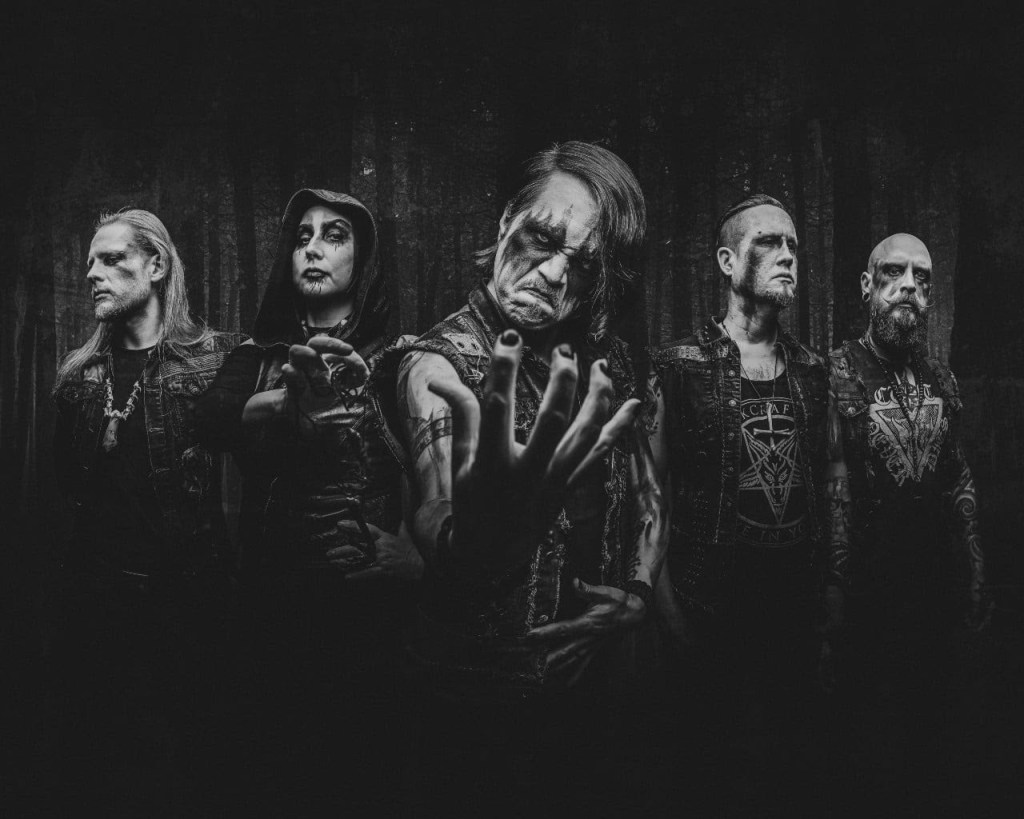
    Melancholic metallers The Eternal will deliver their seventh album of Gothic beauty and darkness in September.

    With members based in Melbourne and Helsinki, the band has enjoyed a productive period recently, with the release of the EP Celestial already this year.

    Obscured Horizons will surface on September 18, as the band prepare for their tour with Amorphis. Of the album’s latest single, vocalist and songwriter Mark Kelson says, “Colours Fade is about the shifting nature of perception, how memory, emotion, and time constantly reshape the way we see our lives. For me, it reflects that internal conflict between what we want to believe and what we know to be true.”

    Album pre-orders for all formats can be made here; check out the clip for Colours Fade below.

    , , ,
  • Underoath

    Underoath was originally published on HM Magazine by Nao Glover.

    Underoath was originally published on HM Magazine by Nao Glover.

  • Alex Lifeson on the battle behind Rush’s most divisive song, Subdivisions. “I was sitting there thinking, I can’t hear guitar”

    Rush were holed up in Le Studio, a residential recording facility tucked away in the mountains of Quebec, when it all got too much for guitarist Alex Lifeson. It was the summer of 1982, and the band were mixing Subdivisions, the track that would open their ninth studio album, Signals.

    Change was in the air in the wider music world. The hegemony of the guitar – for so long the weapon of choice for rock bands – was under threat from the technological advances made in the realm of electronic music. Synthesisers were moving in from the sidelines to become the pre-eminent instrument of the era.

    Rush themselves weren’t immune to this new trend – certainly not singer/ bassist Geddy Lee, a self-professed “synth geek” who had been incorporating synthesisers into the band’s music since 1977’s A Farewell To Kings. But for Alex Lifeson, Subdivisions marked the point where the balance between guitars and synths tipped in the wrong direction.

    “I was sitting there thinking: ‘I can’t hear guitar,’” says Lifeson, recalling the mixing process. “I’m a very easy-going guy, but I thought: ‘This is not right.’ So I pushed that fader up. I do remember Terry [Brown, producer] turning to me and smiling, and reaching over and pulling it back down. I could barely hear my guitar on that mix, and that just screams ‘wrong’ to me.”

    By Rush’s normally equable standards, this kind of passive-aggressive tussle was a blow-out of the highest magnitude. But Subdivisions certainly did feel like a departure. As the compact, synth-heavy opening track on Signals, it ushered in a new era for these former progressive rock heavyweights, one that would bring them more in line with contemporary bands such as The Police or Ultravox than with their 70s prog peers.

    The signs had been there on Rush’s previous album, 1981’s Moving Pictures, which expertly blended Lifeson’s guitar with Lee’s increasingly prominent keyboards. The two musicians had the wind in their sails from the success of that record when they began writing songs for the follow-up between legs of the Moving Pictures tour.

    “Sound-check was the best opportunity for us to throw some ideas around,” says Lifeson. “We would play a couple of songs in full, but we would also do a little bit of writing. I’m sure there are ancient cassettes somewhere with snippets of ideas that ended up on all our records.”

    Subdivisions emerged from the trio’s jam sessions, driven by Lee’s throbbing synth pulse. The band reconvened with Terry Brown in Le Studio in late 1981 to work on the live album Exit… Stage Left, and it was there that Peart began working the song’s lyrics, which revolved around suburban alienation and the nature of being an outsider – a subject that was close to home for three men who had grown up in the suburbs of Toronto. ‘In the high school halls, in the shopping malls, conform or be cast out,’ ran Peart’s lyrics, his critique of the push for uniformity amplified

    “[It was] an exploration of the background from which all of us (and probably most of our audience) had sprung,” the drummer later wrote in his diary. “One afternoon as I was idly polishing my car, Alex and Ged returned from working at the little studio, set up a portable cassette player right there in the driveway, and played me the musical ideas they had come up with for it.”

    Subdivisions would be given an early airing on the final leg of the Moving Pictures tour in the UK and America in late 1981. Bootleg recordings show that it was pretty much fully formed even then, albeit with Lifeson’s guitar much more prominent than it is on the finished studio recording. Rush returned to Le Studio in the early summer of 1981 to work on Signals. It was there that a shift in the track’s sound occurred, with Lee’s synths pushed to the forefront at the expense of Lifeson’s guitar

    “Ged’s obsession with synthesisers had a lot to do with this change in direction, plus the desire to go with a stripped down guitar component,” Terry Brown says now. “The band were also listening to The Police and Ultravox, to name just two of their influences at the time.”

    Lifeson’s annoyance over the vanishing levels of guitar on Subdivisions subsided, although it never completely dissipated. “It’s a strong song, it’s just the mix that I didn’t like,” he says. “I guess I just fought for my guitar rights for years after that.”

    Despite his reservations, Subdivisions was released in October 1982 as the second single from Signals. It was accompanied by a striking video shot in and around the suburbs of Toronto that captured the dislocation and ennui of suburban teenage life (the kid who appears in the video was first-time actor Dave Glover, a student at L’Amoreaux Collegiate Institute, which was used as a location in the video).

    “The video was really memorable,” says Lifeson. “And Neil’s lyrics really struck a chord with people, especially people who grew up in the suburbs like we did.”

    But Subdivisions and Signals marked a shift in Rush’s career – and not necessarily a good one, in the eyes of their fans. Their subsequent 80s albums followed the same, keyboards-forward path, although they hit a more even balance between guitars and synths. Still, Signals remains the most divisive album in Rush’s back catalogue, even if attitudes towards it have mellowed in the years since it was released. But ultimately, both the record and Subdivisions itself embody progressive rock’s boundary-pushing spirit just as much as earlier Rush albums 2112 or Moving Pictures had.

    “I guess you could stay where you are and do the same thing over and over and over again, but that’s not the kind of band we are,” says Lifeson. “Progress is important to us. We always need to go somewhere else. We always wanted to evolve.”

  • Kings of Chaos | August 1, 2026 | Agua Caliente Casino | Rancho Mirage, CA – Concert Review & Photo Gallery

    Review & photos by Ron Lyon

    Editor’s Note: When this concert concluded on August 1, no one inside The Show at Agua Caliente realized they had likely witnessed the end of an era. Days later, Glenn Hughes announced his retirement from touring and live performances as he prepares for open-heart surgery. His breathtaking performance that evening now carries even greater historical significance, transforming what was already an unforgettable night of classic rock into a potentially historic event. This performance could very stand as Glenn Hughes’ final public appearance before announcing his retirement from touring and live performances. Should he ultimately choose not to return to the stage, those in attendance witnessed the closing chapter of one of rock’s most remarkable live careers.

    Some concerts are built around nostalgia. Others are built around spectacle. Kings of Chaos somehow manages to deliver both while feeling completely alive in the moment.

    Matt Sorum’s revolving all-star supergroup returned to The Show at Agua Caliente with a lineup that most rock festivals would envy: Richie Sambora, Glenn Hughes, Kevin Cronin, Jack Blades, Steve Stevens, Bon Jovi guitarist Phil X, keyboardist Mike Mangan and bassist Eliot Lorango. Rather than functioning as a collection of celebrity cameos, the evening unfolded like an extended jam session among lifelong friends whose combined résumés include Bon Jovi, Deep Purple, REO Speedwagon, Night Ranger, Damn Yankees, Billy Idol, Guns N’ Roses, Velvet Revolver and The Cult. Sorum has assembled different versions of Kings of Chaos over the years, but this lineup possessed remarkable chemistry from the opening notes. The musicians weren’t not only revisiting classic songs — they were clearly enjoying the opportunity to perform each other’s catalogs while adding their own personalities to familiar material.

    Glenn Hughes

    The evening began with Glenn Hughes taking command of the stage. More than five decades into his career, “The Voice of Rock” remains a force of nature. His soaring vocals on Deep Purple classics “Highway Star,” “Stormbringer,” “Smoke on the Water,” and his signature scream in “Burn” immediately established the night’s high standard. Hughes’ vocal range remains astonishing, effortlessly reaching notes that singers half his age struggle to achieve. Steve Stevens and Phil X traded guitar lines with confidence, adding fresh energy without sacrificing the songs’ classic feel.

    Jack Blades and Matt Sorum

    Jack Blades followed with an equally entertaining set that blended Night Ranger favorites with Damn Yankees’ “Coming of Age.” A rocking version of “Don’t Tell Me You Love Me”, my personal favorite of his set, and the inevitable crowd favorite “Sister Christian” had the audience singing every word, while “Rock in America,” featuring Hughes sharing vocal duties, became one of the night’s first true all-star moments.

    Kevin Cronin

    Kevin Cronin then reminded everyone why REO Speedwagon spent decades filling arenas. His unmistakable voice has lost little of its warmth or character, and songs including “Take It on the Run,” “Keep Pushin’,” “Ridin’ the Storm Out,” and “Roll With the Changes” transformed the theater into one giant sing-along. Cronin’s easygoing stage presence contrasted nicely with the harder-edged performances surrounding him, providing one of the show’s emotional high points. He clearly relishes playing live with his friends.

    Richie Sambora

    Richie Sambora closed the featured sets with a quartet of Bon Jovi staples that demonstrated just how integral his voice and guitar playing were to that band’s legendary success. “It’s My Life,” “Wanted Dead or Alive,” “I’ll Be There for You,” and “Livin’ on a Prayer” generated the loudest audience response of the evening, with nearly every person inside The Show singing along. Sambora’s guitar tone remained instantly recognizable, while Phil X — Bon Jovi’s touring guitarist — added an interesting layer of symbolism as the two shared the stage.

    Steve Stevens

    Behind the featured vocalists, the supporting musicians deserve equal recognition. Steve Stevens delivered tasteful, technically brilliant solos without ever overpowering the songs. Phil X provided muscular rhythm and lead guitar work throughout the night while injecting his own personality into every performance. Keyboardist Mike Mangan quietly anchored the arrangements, often filling sonic spaces that many audience members likely didn’t realize were essential until they heard them performed live.

    Phil X

    When Jack Blades stepped away from bass to front Night Ranger and Damn Yankees material, bassist Eliot Lorango seamlessly assumed low-end duties, keeping the rhythm section locked in with Matt Sorum’s powerful drumming. His smooth transition allowed Blades the freedom to command the stage without missing a beat, a subtle but important contribution to the evening’s success.

    Eliot Lorango

    Sorum himself served as far more than simply the drummer. Acting as musical director, host and ringmaster, he kept the evening moving effortlessly while maintaining the relaxed atmosphere of musicians performing for the sheer joy of playing together. Behind the kit, his playing was controlled power, driving every song with the same authority that made him one of rock’s most respected drummers during his years with Guns N’ Roses, Velvet Revolver and The Cult.

    Matt Sorum

    Whether laying down the thunderous groove of Deep Purple classics, the arena-rock pulse of REO Speedwagon, or the swagger of Bon Jovi favorites, Sorum never overplayed. Instead, he delivered exactly what each song required, combining precision, feel and fills that energized both the audience and the musicians around him. Professional drummers often say that’s the mark of a great drummer, and it fits Sorum’s reputation. His enthusiasm proved contagious, especially during the encore of Led Zeppelin’s “Whole Lotta Love,” when virtually every performer joined together for one final celebration of classic rock.

    Mike Mangan

    Visually, the production matched the caliber of the musicians. Massive LED screens, dramatic lighting and a crisp, powerful sound mix gave every performer room to shine without overwhelming the intimate theater setting. For photographers, the evening offered no shortage of memorable moments—from close-up portraits of individual artists to full-band finales that perfectly captured the collaborative spirit of the project.

    Kings of Chaos succeeds because it avoids feeling like a tribute act or nostalgia package. These are the artists who helped create the soundtrack of classic rock, performing the songs they made famous while genuinely enjoying one another’s company. That authenticity cannot be manufactured.

    In an era when many legacy acts rely heavily on routine and predictability, Kings of Chaos remains refreshingly unpredictable. Saturday night’s performance in Rancho Mirage wasn’t simply another stop on a tour — it felt like witnessing a gathering of rock royalty that may never happen in exactly the same way again.

    For fans fortunate enough to be in attendance, it was a reminder that great songs, played by the musicians who helped define them, never lose their power. And for one unforgettable evening in the Coachella Valley, chaos sounded absolutely magnificent.


  • Held.

    Held. was originally published on HM Magazine by Nao Glover.

    Held. was originally published on HM Magazine by Nao Glover.