Much like his old Saddle Creek labelmate Conor Oberst, longtime Cursive frontman Tim Kasher is a director now. A couple of years ago, Kasher made his directorial debut with an independent found-footage horror feature called Who’s Watching. I haven’t seen it yet, but you can imagine that a film about a creepy, obsessive stalker might have certain resonance with some of Kasher’s lyrics. Kasher also did the music for Who’s Watching, and a soundtrack album is coming next month. Today, Cursive share the new song that they recorded for the movie.
(written by Islander) “Can you take some clean singing with some sci-fi shred?” That’s the quick pitch I received for this premiere from the publicist for Dying Victims Productions. Prudence would have dictated that I listen before responding, but Dying Victims hasn’t steered me wrong, even if the steering (stylistically speaking) is kind of like […]
The surviving members of Nirvana reunited on Sunday, Sept. 27, to collect MTV’s Video Vanguard Award at the 2026 MTV Video Music Awards, held at the Peacock Theater in Los Angeles. Dave Grohl, Krist Novoselic and Pat Smear took the stage to receive the honor, which is handed out to artists who reshaped the music video. Public Enemy‘s Chuck D presented it, and a reel of Nirvana‘s biggest clips and archival footage of the late frontman Kurt Cobain played beforehand.
Novoselic handled the acceptance speech, saying: “Thank you so much to Nirvana‘s fans around the world and to everyone at MTV. This award brings back so many memories of making those videos. We saw the dystopian pep rally with anarchist cheerleaders, our version of an Ed Sullivan‘s TV appearance, performing in a Wizard Of Oz-like Field Of Poppies, and so many more.”
He continued, “The ideas for those videos, all grew out of the vision of one of the greatest artists of all time, Kurt Cobain. Kurt was one of one. None of us could have imagined that our band, our sound or our aesthetic would mean so much to so many people. But ultimately, the music had a life of its own. It charted its own course.
“Nirvana continues to resonate so deeply because people are still hungry for authenticity or something real, something uncompromising. Something that tells you it’s just okay to come as you are. Kurt would have loved that legacy. Thank you all so much.”
Chuck D kicked off the presentation by saying the band always stayed “true to their vision,” then went on, “Their sound was loud, beautiful, daringly open. Their lyrics were poetic, raw, and deeply human. Their music videos defined an era.
“They were completely original and always fearless at a time when the status quo kind of got to the point of being formulaic.”
Nirvana shot seven music videos before Cobain died in 1994, among them “Smells Like Teen Spirit,” “Come As You Are,” “In Bloom” and “Heart-Shaped Box.” The win makes the band the first to take home the Video Vanguard Award since Duran Duran in 2003.
When MTV announced the honor on Sept. 9, its Instagram post read, “This day in 1992, Nirvana took to the VMAs stage for the first time — shaping music, culture and MTV forever.”
Nirvana is the ninth band to receive the award, joining The Beatles (1984), Bon Jovi (1991), Guns N’ Roses (1992), The Rolling Stones (1994), R.E.M. (1995), Beastie Boys (1998), U2 (2001) and Duran Duran (2003).
The band has a strong history at the VMAs, winning Best Alternative Video for “Smells Like Teen Spirit” in 1992, “In Bloom” in 1993 and “Heart-Shaped Box” in 1994. This year’s ceremony aired live on CBS and was simulcast on MTV.
“Smells Like Teen Spirit” was the single that flipped the music world on its head. Pulled from the band’s second album, Nevermind, the Generation X anthem turned the Seattle trio of Cobain, Novoselic and Grohl into the biggest band on the planet almost overnight and kicked off the alternative and grunge era of the 1990s. Its video, a high school pep rally that devolves into a mosh pit, put Cobain‘s raw performance and images of anarchy and alienation front and center. It quietly premiered on Sept. 29, 1991, on MTV’s 120 Minutes, and Nevermind went gold just five weeks after release.
In March 2025 Steven Wilson returned with The Overview, an album that even he admitted was prog. Comprising two tracks, the conceptual suite included lyrics from XTC’s Andy Partridge and visuals that were out of this world. Prog visited the musician at home to get the lowdown.
There’s a phenomenon that affects astronauts when they travel into space and look back at the Earth, called the overview effect. “It’s reportedly a cognitive shift that occurs that’s to do with perspective and how they feel about their lives,” says Steven Wilson, a man who hasn’t been into space yet but has thought about the overview effect a lot over the last couple of years.
“It’s a mental perspective – quite literally having an overview of where we fit in time and space, or some inkling of it, and understanding in a split second of just how insignificant we are.”
It affects different people in different ways. When actor William Shatner, at the age of 90, travelled into space aboard the Blue Origin shuttle in 2021, the former Captain Kirk had an overwhelmingly negative reaction. “He said he’d expect to feel this sense of euphoria – but all he felt when he looked back at the Earth was a sense of death and nothingness,” says Wilson, as we sit at right angles on a pair of sofas in the open-plan kitchen of his north London home. “Isn’t that funny? Of all the people.”
Others have found beauty or even comfort in something that only emphasises our ultimately insignificant place in an unmeasurable, potentially infinite universe. Steven Wilson can understand this. “Your life is futile, it’s meaningless – and isn’t that a wonderful thing?” he says with more relish than it probably warrants. “And I do mean that. We spend so much of our time anxious, stressed, worried about things that sometimes we just need an injection of perspective.”
The idea informs Wilson’s new solo album, tellingly titled The Overview. Across its two lengthy tracks – one 23 minutes, the other 18 – it makes a dizzying, dazzling journey from the surface of the Earth to the most distant reaches of the universe. Musically, it’s the most recognisably prog album he’s made since 2014’s The Raven That Refused To Sing, even if it shares little with that record’s self-conscious homage to vintage prog.
Instead, the new work offers a much more contemporary version of the genre. “This record is definitely more informed by the genre hitherto referred to as progressive rock,” he says wryly at one point. Conceptually, it’s extremely ambitious. It starts with an encounter with an alien on some unnamed moor and ends billions of light years away on the very edge of the universe, taking in everyday dramas on the streets of Swindon, the destruction of Earth and such vast cosmic phenomenon such as the Omega Centauri, the Andromeda galaxy and the Eridanus supervoid.
It’s an album about the rise of social media and the death of curiosity, about the existential futility and beauty of human life. But mostly it’s about perspective. As Wilson puts it: “Sometimes being reminded how insignificant you really are in terms of time and space can create a sense of perspective, in a positive way as well as a negative way.”
The whole album is about cosmic vertigo. That’s what the overview effect is
Prog has already heard The Overview through headphones; but before we sit down for the interview, he invites us through to his home studio to listen to it through the ultra-high-end equipment he uses in his capacity as both a musician and one of the most in-demand Atmos remixers around. Sitting in a high-backed chair, bathed in unearthly wall-mounted mood lights, a screen flickering with lines and numbers before us as the album bounces around the room like it’s alive, it feels like we’re on the deck of a spaceship.
The album’s two parts has two personalities. The first, Objects Outlive Us (“The human story,” as Wilson describes it), is detailed and protean – a suite of music that shifts from acoustic passages to warm electronics, capped by an all-time-great solo from guitarist and regular Wilson collaborator Randy McStine.
The second half, the 18-minute title track, is entirely different. More electronic, it evokes the sparseness and coldness of space – emphasised by the sound of Wilson’s wife, Rotem, dispassionately intoning numbers that correspond to increasingly vast distances from Earth and the cosmic phenomenon they represent. It may be a cognitive illusion of our own, but it evokes a sense of movement: a camera view of Earth as it gets more and more distant, pulling away until what Carl Sagan referred to as the “pale blue dot” vanishes; part of an ever-growing tapestry of galaxies and nebulae, as everything we know is erased by distance and time.
“What did you think of it?” asks Wilson, when Prog emerges, blinking, from the studio and touches back down on the sofa in the kitchen. It sounds brilliant, but it’s also thought-provoking, disorientating and existentially terrifying, in a good way. “I kind of want that,” he says. “The whole album is about cosmic vertigo. That’s what the overview effect is.”
The Overview is Wilson’s second solo album in less than 18 months, following 2023’s The Harmony Codex. He seems very proud of that fact. “It’s not quite up there with Taylor Swift knocking them out every year, but it’s not far off!” he says. “By the standards of musicians in their 50s it’s pretty good going.”
He admits he didn’t know what to do next after finishing The Harmony Codex. “Every time, I think, ‘How the fuck am I going to do another record? What the fuck am I going to do next? There’s nothing left in the well.’ I’m always thinking, ‘What can I do next that’s completely different?’”
These days we’re more interested in looking into the phone than we are looking up. It’s the enemy of curiosity
One of the things he considered was writing the music for an installation of some kind. He met up with Alexander Milas – former editor-in-chief of Prog’s sister magazine Metal Hammer, and founder of Space Rocks, a unique multimedia project that brings together science and the arts – with a view to collaborating on something. It was Milas who introduced Wilson to the overview effect. “It was the lightbulb moment,” he says. “I thought, ‘Oh Christ, there’s an album there, isn’t there?’”
Wilson has never had any particular interest in sci-fi, at least not in the kid-friendly Star Wars variety (the cold, existential sci-fi of Kubrick’s 2001: A Space Odyssey is a different matter). What he is interested in is space itself – the scale, the emptiness, the mindblowing incomprehensibility of the numbers involved. He starts reeling off stats.
“There are two billion trillion stars in the universe. That’s 23 zeros; I worked it out with Google! Earth has been here for four billion years, and we – as in humans of some sort – have been here for 300,000 years. That’s 0.007% of the time the Earth has existed.” How does that make him feel? “I don’t know,” he says, shaking his head like someone whose brain is in danger of short-circuiting from data overload. “I. Don’t. Know.”
The Omega Centauri globular cluster, top left, amid the southern Milky Way (Image credit: Getty Images)
He dove into research. Not books or movies, but facts. He spent a lot of time “mucking about” on an interactive website, Scale Of The Universe, which allows the user to zoom into the most infinitesimally small thing science can comprehend (the ‘string’ of string theory) and out to the most immeasurably large thing (the Hercules- Corona Borealis Wall, which stretches to an estimated 10 billion light years).
But it wasn’t just the daunting sizes and distances of these universal phenomena that were inspirational. It was the reality of space itself. “Space is very often portrayed as this kind of cuddly place, where people have adventures,” he says. “And the reality is the complete antithesis of that. It’s nothingness; it’s scary; it’s death. It’s fucking terrifying.”
Wilson’s journey to the stars began here in north London with a five-minute piece of music originally written for The Harmony Codex, but left out. “It was good, but I felt it was a bit too progressive for that record,” he says. The piece appears halfway through The Overview’s title track.
I told Randy McStine, ‘I don’t Comfortably Numb – I want something that’s similarly heroic and epic. Find a new way to speak in that vocabulary’
He admits he’s not the kind of person who “can go into a hotel room with an acoustic guitar and come out with something.” Instead, he develops ideas from piano melodies, drum patterns or keyboard textures. Lyrics, he says, slow down the flow of music. “They always come at the end. I can’t stop to write lyrics.”
These lyrics – and its overarching narrative structure – don’t feel like an afterthought. Musically and conceptually the pair of tracks are two sides of the same coin. “Objects Outlive Us is about what we do to the planet, juxtaposed with what’s going on on the other side of the universe. Then The Overview itself is basically about being lost in space, on the other side of the universe.”
Objects Outlive Us begins with an encounter with an alien, who asks, ‘Did you forget about us?” – plugging into another favourite Wilson theme: the idea that humanity has lost its curiosity. It also ties in with a recurrent bugbear: our obsession with screens, with gazing downwards at the internet rather than upwards.
“The first line on the album is, ‘I incline myself to space,’” he says. “The idea is that we no longer look up at the stars in the way that we used to in the 60s, when Kubrick made 2001 and everyone was obsessed with the Moon landing. These days we’re more interested in looking into the phone than we are looking up. It’s self-obsession; it’s narcissism – it’s the enemy of curiosity. Curiosity is one of the most undervalued human attributes. It’s what takes you to great music, to great movies, to other countries.”
For one sequence in Objects Outlive Us, Wilson enlisted the help of XTC’s Andy Partridge to write the lyrics. “The whole thing about Andy is that he’s brilliant at observing smalltown England,” he says. “I knew early on that I wanted a sequence that would be this juxtaposition of the triviality of human life with these nebulae exploding and black holes imploding on the other side of the universe. So I rang him and said, ‘I’ve got a challenge for you. I want smalltown soap operas juxtaposed with cosmic phenomena.’ And he said, ‘OK, I’m going to give it a try.’”
Partridge nailed the brief. That sequence, titled Objects: Meanwhile, offers pithy yet perfectly-drawn portraits of a shopper helplessly watching as her grocery bag bursts, spilling their contents in shapes that resemble star clusters; a distraught driver weeping in his car over the debt he owes as a star blinks out billions of light years away; or an elderly widow dreaming of dead spouses as “a nebula dives into our Milky Way.”
It disappoints me who people vote for, it disappoints me what they eat. But I think life is amazing – an incredible gift
“The idea was that you have these little soap operas in Swindon – because it’s Andy, obviously – which end with, ‘…Meanwhile, on the other side of the universe, this is going on…’” says Wilson. “Isn’t that fucking amazing?”
A subsequent section of Objects Outlive Us takes what Wilson calls “a nihilistic, doom vision of where we are right now as a planet”, before the remnants of humanity packs into an ark and heads for the stars. “The alien becomes our guide, and we end up literally floating in nothingness on the other side of the universe, billions and billions of light years away.”
Objects Outlive Us concludes with one of the album’s most transcendent moments courtesy of Randy McStine. The guitarist delivers a monumental solo, one worthy of David Gilmour or Steve Hackett. It’s the point of lift-off in more than one sense.
Wilson recalls: “What I said to him was, ‘We need to reinvent the classic rock solo. What I don’t want is Comfortably Numb – what I want is something that’s similarly heroic and epic. I want you to find a new way to speak in that vocabulary.’”
The result is a solo statement. It doesn’t sound like Comfortably Numb or Firth Of Fifth or any of the great 70s solos that defined the form, instead updating that heritage. Why didn’t Wilson play it himself? He laughs. “Honestly? I don’t think I’m good enough. I can shred a solo OK, but I bore myself. What’s beautiful about a soloist coming along is that they’ll give you something unexpected and make you rethink where the music is going to go. And that was what Randy did.”
If Objects Outlive Us sees humanity’s tiny, cosmically insignificant dramas playing out on the vast stage of the universe, the 18-minute title track flips things around. It features the aforementioned contribution from the album’s other notable guest, Rotem, making her third appearance on one of her husband’s albums, following The Future Bites and The Harmony Codex.
In a featureless, almost mechanical monotone that deliberately echoes HAL from 2001: A Space Odyssey, she relates a series of increasingly large numbers followed by the proportionately enormous cosmic phenomenon, representing both their size and distance from Earth. ‘Size beyond one megametre… 10 to the power of six… Ganymede, Callisto, Wolf 359…’ she recites, culminating with: ‘Size beyond one yottametre… 10 to the power of 24… Virgo super cluster, Eridanus supervoid, supercluster complex’, the latter one of the most distant structures discovered in the universe. It’s a lesson in contrasts.
I love so many different kinds of music that I didn’t think of myself as having a very limited pool of inspirations
“It all goes back to perspective,” he says. “That idea of cosmic vertigo. And that, by the way, is exactly why I think we’ve invented religion. Religion is a classic manifestation of cosmic vertigo: ‘I don’t understand my place in the world, I don’t understand the point of my life, there must be a reason for this – let’s invent religion.’ What amazes me is that it still clings on as an idea in such a big way when you think we should have evolved beyond that. To even understand even the very simplest, most basic facts about space, should be enough to disabuse anyone of the notion of God. But apparently it doesn’t.”
If he sounds disappointed by culture’s inability to let go of outmoded models of thinking, that’s because he is. “I’m a 57-year-old man – of course I’m disappointed,” he says with a laugh. “It disappoints me that people still believe in bullshit; it disappoints me who people vote for, it disappoints me what they eat. But at the same time, I think life is amazing. I think it’s an incredible gift.
“I look around the world and there’s so much to be fucking depressed and miserable about. But there’s also so much incredible stuff that we do – unbelievable, beautiful, inspiring, dazzling. It’s possible to hold those two things simultaneously in your mind: the logical and the illogical, the good and the bad.
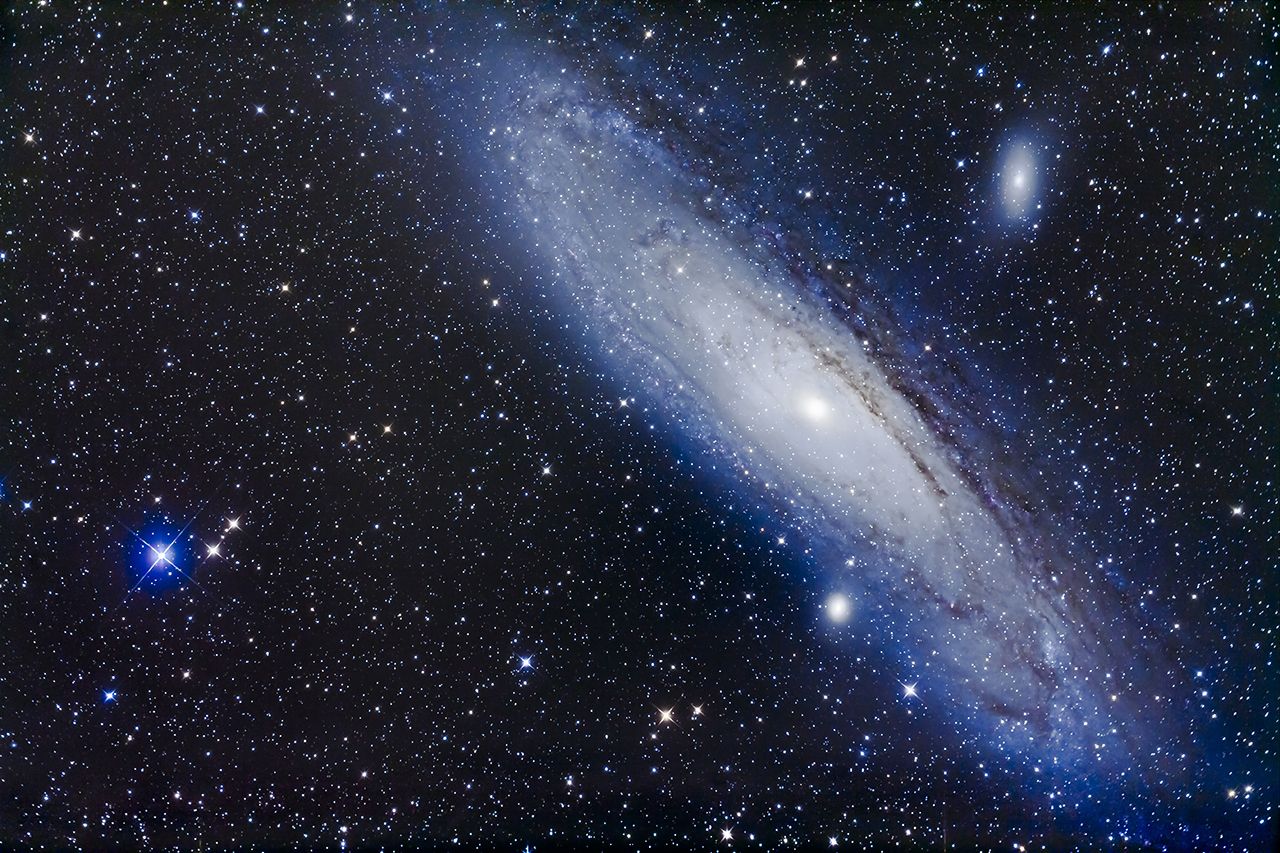
The Andromeda galaxy (Image credit: Getty Images)
“And one of the things The Overview is about is that once you realise just how futile your existence is, and what a random gift life is, you think, ‘OK, fuck it, I’m going to make the most of it.’ That’s the positive side to it. At the end of the day, your life is meaningless – so embrace it.”
He pauses. Suddenly the interstellar camera stops, reverses. In a fraction of a heartbeat, we’ve flashed back across tens of billions of light years and we’re back on a sofa next to a window in a kitchen in north London. “Do you want another cup of coffee?” he asks. In the face of a vast, unforgiving, incomprehensible universe, yes, another coffee would be nice.
If there’s a thread running through Wilson’s eight solo albums, it’s that no two sound the same. The Steven Wilson Solo Musical Universe stretches from the abrasive guitar rock of Insurgentes to the graceful art-pop of To The Bone, from the robots-dancing-on-a-production-line electronics of The Future Bites to the wilfully boundless multi-genre exercises of The Harmony Codex.
The Overview finds him broadly circling back to the same territory he explored on 2014’s vintage prog homage The Raven That Refused To Sing (And Other Stories), albeit in markedly different form. “To pre-empt a question you’re maybe going to come to, why have I gone back to a more progressive style?” he says. “It’s because that’s what the theme suggested to me. It all comes down to this idea of perspective. That immediately suggested something more long-form, more conceptual and, dare I say it, more progressive.”
Porcupine Tree ahead of our time in the way we infused big metal riffs with classic songwriting and electronic sound
So, you’ve made a prog album. “It’s definitely going to appeal to…” he starts to say, then laughs. “It’s a prog record, yes.”
Having to prise this admission out of Wilson shouldn’t be a surprise. His relationship with progressive music runs deep – he’s said that Pink Floyd were fused into his DNA as a child after being introduced to them by his late father. But it’s also a complicated one. His solo career has often seemed like an exercise in running away from the idea of being pigeonholed as a prog musician.
“Did I run away?’ he asks, almost to himself. “I guess I did. I think the simple answer is that I don’t think of myself as a generic artist. This is a progressive album, and I’ve made progressive albums before, but I never thought that was the extent of what I could do. Perhaps part of making records like The Future Bites, which is an electronic pop record, or The Harmony Codex, which is a fuck-knows-what- kind-of-record, and coming out the other side is that I feel like I can make a progressive rock album again and people aren’t going to say, ‘That’s all he does’ –because they know that isn’t all he does.”
Prog wonders if being pigeonholed was really that much of a fear. He thinks for a couple of seconds before answering. “It’s more that I listen to so many different kinds of music and I love so many different kinds of music that I didn’t think of myself as being someone with a very limited pool of inspirations. So when anyone would tell me that I’m a ‘progressive rock’ artist… yeah, I guess I’m in that tradition, but I also reserve the right to go off and do dark ambient drone music or noise music or electronic pop music.
“I’ve always kicked against the notion of being a generic artist, of being associated with only one genre and one musical style,” he continues. “The great movie directors are able to go from making a costume drama to a horror movie to a ghost movie. They can go from one thing to another and no one thinks that’s off. Do that as a musician… it’s hard to redefine yourself with every record you make. And yet the artists I admire the most are the ones that have done that.”
It sometimes seems like Wilson has a healthy disregard for what other people want from him. He doesn’t go out of his way to alienate his audience, but he certainly doesn’t pander to them. “I love the idea of confronting expectations,” he says. “People think I deliberately go out of my way to upset prog fans! There’s a small group of hardcore fans I probably would be very happy to upset: ‘If it doesn’t sound like it was recorded in a basement in 1972 with Mellotrons, it’s not proper music and people need to be educated to enjoy it.’
“Those people, I would be very happy to upset any day of the week, and I’ll go out of my way to upset them. But generally, people who like more progressive, more conceptual rock music, they’re much more open-minded than perhaps even they give themselves credit for.”
Still, it seemed like he did lose some of your audience with To The Bone and especially The Future Bites. Is that how it felt? “For sure.” DId that bother him? “Of course,” he admits. “It’s not my goal to lose people. But there is another side to that coin. The Future Bites got me so much more attention in parts of the media that had never paid me any attention before. While it wasn’t resonating so greatly with my fanbase, it was getting phenomenal reviews with the more indie, hipster people that hadn’t really paid attention to me before.
If people don’t like everything I do, they’re still curious. Even if it’s to moan that you’re not doing what they wanted
“Certainly this time around there are people paying attention to this record that would never have paid attention to The Raven 10 or 11 years ago, and that’s because I’ve made songs like King Ghost and Personal Shopper. Not that it was intentional – I want to make that clear. There was no masterplan: ‘I’m going to make this record and get more press on my side.’ The thing is, I don’t mind if people don’t like what I do. It’s when they dismiss it as trash…” That doesn’t really happen very often, though, does it? “I don’t know,” he says, shrugging. “I don’t read stuff online.”
A cynical view of The Overview – one that glosses over its brilliance – is that it’s a deliberate move to claw back some of those more dug-in prog fans lost through The Future Bites. “No, absolutely not,” he says emphatically. “Because if I were to do that, I would have done it with The Harmony Codex. It’s hard to answer that question, because on the one hand I’m aware that it’s going to happen; on the other hand it really wasn’t a motivating factor.
“I’m sure some people might draw that conclusion, but anybody who knows me well enough knows that wasn’t the case. Also, with my next record – whatever it is – I’ll be looking to do something completely different. Which will probably alienate people who like this record!”
Even before The Harmony Codex, Wilson reasserted his prog bona fides with the surprise return of Porcupine Tree after an 11-year hiatus with 2022’s Closure/Continuation album and a hugely successful tour. Where The Harmony Codex was written “before, during and after” the reunion, the new one is the first Wilson album to be written since then. Did the Porcupine Tree comeback feed into The Overview in any way? “It must have done, but I can’t tell you how, not in a conscious way,” he says. “Did I feel more liberated? No, because that’s never been an issue for me anyway.”
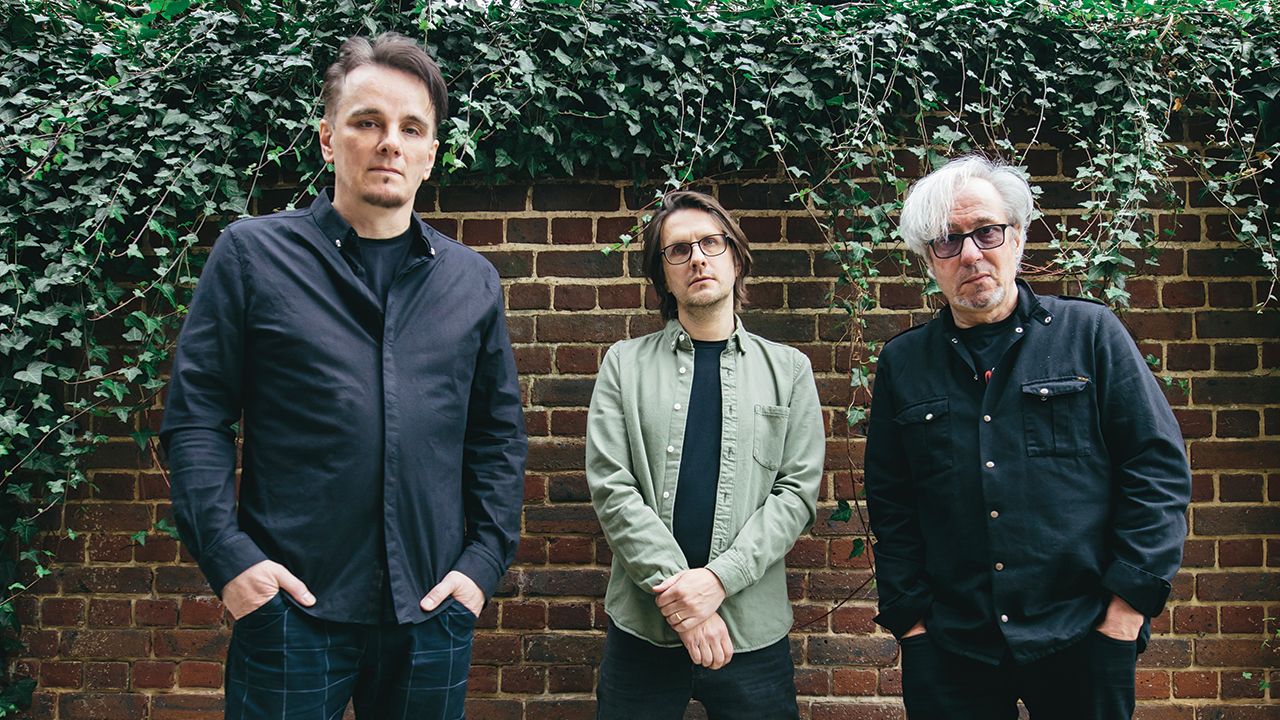
Porcupine Tree (Image credit: Derick Bremner)
The subsequent Porcupine Tree tour was a huge deal. Venue for venue, they played to more people than Wilson does as a solo artist. “For sure,” he says. Is that annoying? “Not at all. The reality is that Porcupine Tree came back and played to more people than Porcupine Tree did. When we stopped in 2011, the pinnacle was one night at the Royal Albert Hall.
“I played three nights at the Royal Albert Hall as a solo artist. When Porcupine Tree came back, it leapfrogged all that and we sold out Wembley Arena. I’m going to take a little bit of credit for that myself, having carried on as a solo artist. And Gavin Harrison being in King Crimson helped too.”
Does that mean people want a shot of nostalgia from old music more than they want to hear new music? “I’m not sure about that, because we made a point of playing the whole of the new record,” he says. “Everyone who comes to a show wants to hear their favourite songs; of course they do. That’s true of my solo shows – people want to hear The Raven That Refused To Sing and Harmony Korine.
“Maybe I’m flattering myself in saying this, but Porcupine Tree were a little bit ahead of our time in the way we infused big metal riffs with classic songwriting and electronic sound design. It was very unusual when we were doing it back in 2002, 2003. Since then it’s started to grow. A lot of bands sound like they have been quite influenced by us. In fact, I know there are a lot of bands who have been influenced by us.”
Porcupine Tree haven’t got any plans, but I think we’ll make another record. We really enjoyed making the last one
The surprise return after a decade of radio silence defines Wilson’s modus operandi. It’s not that he’s unpredictable – that suggests chaos and randomness, which don’t seem to be his style. It’s more that he thrives on confounding predictability, partly from fans but mostly from himself. Pretty much the only thing that links his solo albums is the impulse never to repeat himself. It‘s why he’s come back to prog – or at least a version of it – on The Overview.
“I always like to do the unexpected,” he says. “‘I always like to do something different to what I did before. I do really push my audience around, and for whatever reason – with the exception of the prog hardcore that have drifted away – they’ve stuck with me. Even if people don’t like everything I do, they’re still curious. Even if it’s to moan that you’re not doing what they wanted.”
There’s another thing that defines Steven Wilson, which is the fact that, in mainstream terms, he’s been on the outside looking in for the whole of his career. He’s had huge success within whatever fields he’s chosen to operate in, but he’s never crossed over to reach an entirely new audience. He’s one of the most successful cult artists on the planet, and there’s sometimes a sense that this frustrates him.
“Would I love to be embraced by the mainstream? I’d be lying if I said I wouldn’t. Would I love to have a Grammy, finally? Yes. Would I like to have the same level of respect afforded to Radiohead or feel like Thom Yorke digs what I do? Of course I would. Why am I never considered in the same breath as Thom Yorke? ’Cos I’m not as talented, I know that. Or it could just be down to the music I make. But yes, there’s a part of me that does crave that – the part of me that looks at Pink Floyd or Radiohead and says, ‘They never compromised and they’re household names.’”
On the other hand, you’ve done pretty well without mainstream approval. “Yeah, I’ve done alright. But wherever you are, you’re always looking in the distance at something you can never get to. You’re always looking at the horizon, and when you get there you’re still looking at the horizon. You can never reach it.”
On the near horizon for Wilson is a run of UK and European dates in May and June, including four nights at the London Palladium. Remarkably, it’s his first solo tour in seven years. He’ll be playing The Overview in full, together with a set of solo songs he says “will be informed by the style of the new record.”
So, a prog set, then? “I didn’t say that,” he replies good-humouredly. “But I think Prog readers will be happy with the set. I’m going to be doing more long-form tracks. That’s not a cynical thing – it feels like the right thing to do.”
And further out in the Wilson universe? It’s too early to think about a new solo album, but there will be one at some point. He’s not opposed to the idea of another Porcupine Tree album, either. “We haven’t got any plans, but I think we’ll make another record,” he says. “We really enjoyed making the last one, partly because nobody knew we were doing it. Everybody thought the band had gone away forever. We had so much fun, just the three of us without any agenda.
You can never second-guess what’s going to do well and what isn’t. So just do what you want
“One of the things we said at the end of the Closure/Continuation cycle was that if we were going to make another record, it would have to be something different that we feel is exciting. So yeah, I’d be surprised if we didn’t make another record.”
Given The Overview was seeded by a conversation about space, so Wilson is keen to dive deeper into that world. He invited astronomer Dr Stuart Clark – a member of prog rockers Storm Deva – to a recent Atmos playback of the album, and would like to involve astronauts with their experience of having gone into space. “Imagine someone who has actually experienced the overview effect talking about it,” he says. He has plans to visit an observatory in Chile to look first-hand into the cosmos.
Any musician could conceivably do this. What sets Steven Wilson aside is that he’s actually thinking about doing it. In a world where success is measured in streams and views and the luck of the algorithm, there’s something to be said for turning left when everyone else turns right. The sky isn’t the limit. That’s the whole point.
“Just be emboldened to do what the fuck you want,” he says. “These days, you can never second-guess what people want or what’s going to do well and what isn’t. So just do what the fuck you want. Being able to do that, that’s got to be the measure of success, right?”
Olivia Rodrigo has just kicked off what’s set to be the biggest tour of the year. The Unraveled Tour will see the most successful pop star of 2026 who isn’t called Taylor Swift or Bad Bunny playing 86 dates across North America and Europe in support of her third album, You Seem Pretty Sad For A Girl So In Love. But while her huge pop stardom is undeniable, the 23-year-old seems to be on an unlikely side-quest to become the most high-profile champion of 90s and 2000s alternative rock.
Rodrigo grew up listening to the bands her parents loved, including No Doubt, Pearl Jam, Weezer (her first ever-concert) and The White Stripes (in 2023, she said latter’s Elephant was the album she listened to the most). Her 2021 debut album, SOUR, owed a debt to 1990s pop-punk, while Rodrigo hailed ’90s alternative rock artists Babes In Toyland and Rage Against The Machine as core influences upon 2023‘s acclaimed follow-up, Guts.
In an interview with Rolling Stone at the time, Rodrigo revealed that, when she was a teenager, she would sleep with a turntable next to her bed, and her mother would wake her up each morning by dropping the stylus on Babes In Toyland’s Fontanelle album.
“Rock in that feminine way, that’s just the coolest thing in the world to me,” Rodrigo told the magazine, revealing that she tried to tap into the Minneapolis band’s aggression and energy on the punkier songs on Guts, particularly opening track, All-American Bitch.
“I think everyone can relate to being put in a box in some sense,” she said. “Something I always grappled with, especially when I was younger, is feeling like I couldn’t be angry or express dissatisfaction or complain for fear of being ungrateful. It was drilled into me, and it caused a lot of problems. I had all this anger bubbling up inside me – especially when you’re a teenager and you’re confused and you feel like the world is out to get you and you’re so insecure – and I’d have dreams where I was going crazy. I felt like I could never be like that in real life.”
Rodrigo also credited Rage Against The Machine for inspiring All-American Bitch‘s quiet/loud dynamics. “I have been listening to so much Rage Against The Machine this year,” she said. “That’s my favourite band right now. I would just play it over and over again on my way to and from the studio.”
She underlined her alt-rock bona fides by inviting The Breeders – the band featuring former Pixies bassist Kim Deal and her sister Kelley – to support her on the GUTS tour. Rodrigo first heard The Breeders’ 1993 single Cannonball as a teenager, and both the song and Kim Deal left their mark.
“I thought Kim was the coolest girl in the world,” Rodrigo told the New York Times of her love of The Breeders. “I’m very inspired by them and everything they stand for. They are absolutely iconic.”
“She’s a fantastic singer, really super at what she does, and she’s been very supportive of us,” Deal told Mojo. “There’s a section in her show where she’s at the piano and talks about how, for her, there’s ‘before hearing Cannonball’ and ‘after hearing Cannonball’, and how Cannonball broke her little brain.”
Rodrigo dialled things up even further earlier this year with the launch of the inaugural Daisy Chain Fields festival. A cross between landmark 90s festivals Lollapalooza and Lillith Fair, the female-led bill featured Stevie Nicks, Bikini Kill, Die Spitz, Doechii, KATSEYE, Garbage, Chappell Roan, The Breeders and more (profits were donated organisations including the Center For Reproductive Rights, National Women’s Law Center and Planned Parenthood, dedicated to supporting and advocating for women and girls).
“The lineup is truly insane and full of my heroes and friends,” Rodrigo said. “I firmly believe that joy, community, and music can be the drivers of meaningful change and I’m hopeful this festival will be just that.”
This alt-rock love-in goes both ways. Rodrigo brought The Cure’s Robert Smith onstage at her 2024 Glastonbury, with the pair duetting on covers of Cure classics Friday I’m In Love and Just Like Heaven. Smith returned the favour, appearing on the song What’s Wrong With Me from You Seem Pretty Sad For A Girl So In Love. “I bought Sour, and then Guts,” Smith told British Vogue. “Although most of the songs on those two albums are not really ‘aimed at my demographic’, they are all so good that it is hard not to fall in love with them.” (Tellingly, Rodrigo’s album also featured a song called The Cure, though he was absent from that one).
Smith isn’t the only alt-rock icon to receive this pop star papal blessing. Weezer joined Rodrigo onstage at Lollapalooza in 2025 to perform their mid-90s hits Buddy Holly and Say It Ain’t So, while David Byrne duetted with her on The Talking Heads’ Burning Down The House at the Governors Ball festival the same year. Alanis Morisette, No Doubt and Jewel have all appeared onstage with Rodrigo (so have Stevie Nicks and Billy Joel, proving she’s nothing if not generation-agnostic).
(Image credit: Kevin Mazur/Getty Images for Live Nation)
Not everyone is all in on the idea of Rodrigo as an alt-rock cheerleader. Courtney Love called her out over the similarity between a prom queen-style promotional photo for 2021’s SOUR Prom virtual concert and the cover of Hole’s 1994 album Live Through This. But any beef was quickly squashed after Rodrigo responded that she was “flattered that Courtney Love knows that I exist”. Fans of both musicians have pitched Love as a perfect addition to next year’s Daisy Chain Fields festival.
Given that she seems to relish sharing a stage with the musicians who make up her parents’ record collection, there’s every chance that The Unraveled Tour will see more guest appearances. It‘s reassuring to know that 90s and 2000s alternative rock is safe in the hands of a 23-year-old pop megastar.
I Prevail, Polaris and Gore, Depot Cardiff, 23.09.26
A sold-out Depot welcomed I Prevail, Polaris and Gore. to Cardiff for a night of heavy music, sweaty bodies and a crowd that seemed to get more lively with every set. The music got heavier, the pits got bigger and by the end of the night things had got very, very sweaty.
Flashing lights surrounding the floor drew everyone’s attention to the stage as Gore (8) opened with haunting vocals and strong screams, their darker atmospheric sound getting a sea of heads bopping almost in unison before the heavier moments got more bodies moving.
The pit was still more of a gentle jostle at this point, people lightly pushing each other, arms going over shoulders and smiles all round, with someone’s lost shoe eventually appearing above the crowd, being held in the air like a beacon. There was loads of energy on stage and phone torches appeared across the crowd during the slower moments, swaying above people’s heads before disappearing again when things picked back up.
Between sets the pits disappeared and everyone gathered in little groups chatting and sharing stories. It’s one of my favourite things about live music, one minute you’re being shoved around by a complete stranger and five minutes later you’re chatting away to them like you’ve known each other for years.
Polaris (9) came on noticeably heavier, but with enough melodic moments for people to sing along before it all got heavy again. The pits got bigger pretty quickly, circle pits opening up with more and more people piling in and the first beads of sweat starting to form on faces as The Depot got noticeably hotter.
Crowdsurfers also started to spawn above everyone’s heads and I somehow kept finding myself directly in the spawning points, taking the occasional foot in passing before watching another person disappear over the crowd towards the barrier. Arms were up, bodies were bouncing and even those staying around the edges of the pits were no longer standing still.
Another break meant a chance for a drink, some air and more chatting before I Prevail (9) came out heavy and hard and things got very sweaty, very quickly with their set in support of A Violent Nature. The crowd were singing along to favourites one minute and throwing themselves around again the next, and those beads of sweat from earlier were basically puddles by this point.
After spending most of the night around the edges I decided it was finally time to brave my first pit. Lots of pushing, kicking, arms and legs everywhere and at some point I inevitably ended up on the floor in a game of human dominoes. I barely had time to register I’d face-planted the concrete before several hands appeared and pulled me straight back up. I came away with a grazed knee, carried on and then went back in because apparently once wasn’t enough.
Walls of death started forming too, the crowd splitting before both sides ran at each other and collided in the middle, with bodies still flying overhead. As always though, the second somebody hit the floor there were hands reaching in to get them back up to safety.
Things slowed down later for a cover of Taylor Swift’s Blank Space, phone torches came back out and everyone got a much-needed chance to catch their breath before things picked up again.
That sense of community carried through the whole night. People spent the sets pushing each other around, catching strangers above their heads and picking each other up off the floor, then the music stopped and everyone went straight back to chatting and sharing stories.
I left The Depot sweaty, slightly battered, with a grazed knee and feeling it in pretty much every limb for the remainder of the week. It was worth every second.
Argentine duo Ca7riel & Paco Amoroso never cease to surprise. They’ve gone viral for their NPR Tiny Desk concert, dressed up like babies with Jack Black, and collabed with Robyn. This past week the experimental pair when on BBC Radio 1 Live Lounge and performed the most unlikely epic mashup: Spice Girls’ “Wannabe” and Dutch prog rock band Focus’ “Hocus Pocus.”