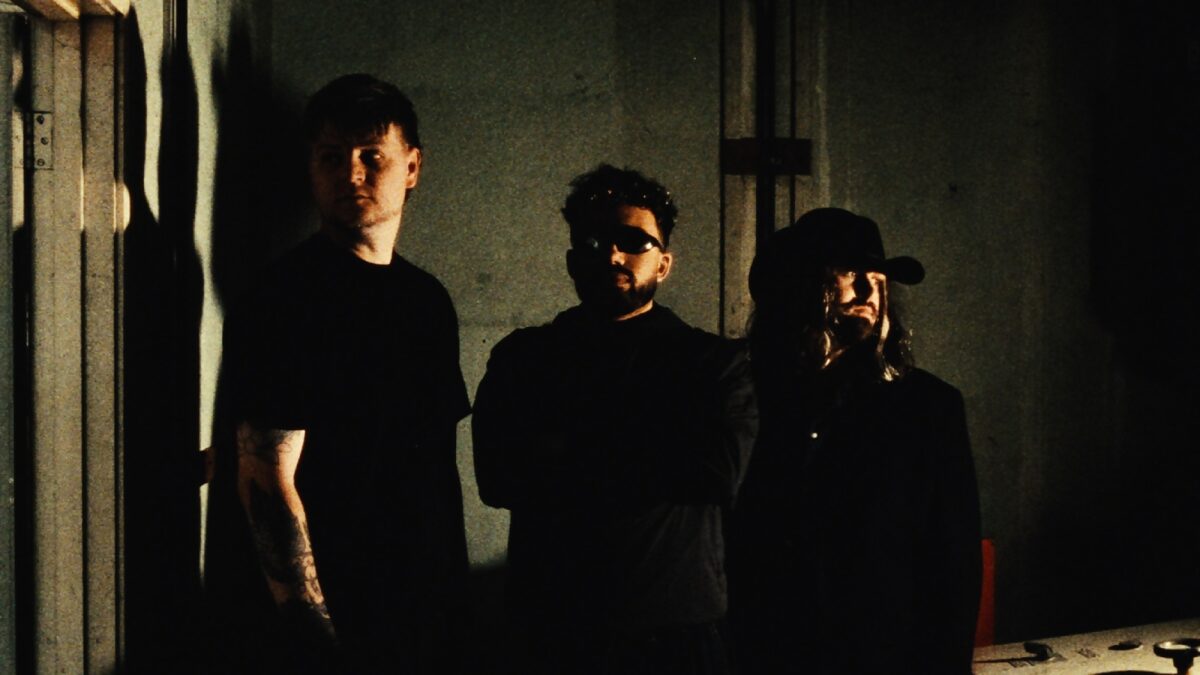
Germany is definitely one of my favorite places to go to for shows and festivals. And also because they have the best bands ever, like Wüstenberg, which I’ve had the pleasure of interviewing during Wacken Open Air.
Benedetta
I’m here with the amazing Wüstenberg. You are playing in the 35th anniversary of Wacken Open Air. How does it feel?
Wüstenberg
Well, it’s insane obviously, because this festival has so many legendary stories. I mean, people all over the world know this festival for obvious reasons. So we’re very lucky that, you know, hard rock gods and metal gods invited us to play at their festival. And I’m fairly sure at this point I got more congratulations messages than for my wedding.
Benedetta
So since you have a lot of experience in playing in live shows, but you also have experience in studio and recording, do you think that the life of an artist is lonely? Is lonely? Yeah.
Wüstenberg
If you want to spend time with your family, yes. If you want to spend time with good people, no. Yeah, I think it depends on in which state you are, because I think you meet so many great people, but you only meet most of them for a short amount of time. In a festival you meet people, you say hi, you drink a beer, and that would be the long version of meeting people. And then you travel further. I mean, it has some loneliness aspects to it, but then again you’re in your band, you’re in your peer group, and those people are closest to you, and most bands I guess for a reason say this is my second family, because you share a lot, you fight a lot, because there’s so much closeness and you have to agree on things. So I wouldn’t say it’s lonely, it’s very special. For me, in a way of looking at it, we are very lucky, because we are traveling with at least 12 people, so it’s a lot of good people around, you’re never lonely, no. And I think a very great aspect of that is, I don’t know if you know the feeling, but when you’re in a group of people, it can drain your social battery a lot, and it feels exhausting. But the great thing is, with this group, it feels like it recharges my batteries. Being with these folks is amazing.
Benedetta
Do you think that we will ever reach equality between men and women in the metal world?
Wüstenberg
Honestly, I don’t have the feeling that it’s unbalanced. I come from classical music, that’s why I know a lot of women, like Anne-Sophie Mutter, or Hilary Hahn, Julia Fischer, those are my idols. For me, it’s not unbalanced. In metal, there are a lot of men, but I can’t really think about it. It’s not my world, that’s why I can’t really think about it. I don’t really know. I think in the last years, it got closer to equality. But I’m not sure if we’re going to reach equality. So, I’m a lot on tour as a sound engineer, which is always like, “What’s going on? A woman on sound?” It’s always like, “Yeah, so what?” I’ve got the same ears as a man. And it gets more accepted. So, I started maybe 10 years ago, and it was way more often to get those questions than it is now. So, I guess we’re getting closer. Yes, definitely. Because, I don’t know why. So, I would at least hope that we get to equality sometime. Metal started off very chauvinistic in the 70s, 80s. The funny side note is that Rob Halford brought in all the looks, and he brought it from the gay scene. But that put aside, it started off very chauvinistic. And for the musicians, it left the heads at least around 2000, with metalcore and stuff. Men came in who weren’t looking at it like that. But as you said, it’s stuck in the heads with promoters, with labels and all that. If they see women, maybe it’s not conscious, but they think it’s not as worthy. And it’s terrible, absolutely terrible. Because women can do everything that men can. I mean, to state it for this year, there was Thundermother, which is a band only of women. I like them very much. They’re more hard rock than metal, I guess. But still, it’s a fantastic band. I guess I would have liked Nightwish too.
Benedetta
Guys, thank you so much for taking the time to do this with me. Is there anything else that you want to add to our readers of FemMetal?
Wüstenberg
Thank you, Benedetta, for having us.
The post “I would at least hope that we get to equality sometime” – interview with Wüstenberg first appeared on FemMetal – Goddesses of Metal.