Goh-Ka is the 14th studio album from Japan’s Sigh. Combing elements of black metal, thrash, prog and folk, it takes the listener on a journey over eleven tracks. With an hour of music it could have outstayed it’s welcome, but it flew by in a whirlwind of blast beats, folk interludes and huge riffs.
The first thing that struck me was the wild array of instrumentation, with synths, strings, pianos and all manner of traditional oriental instruments. Production wise, this album is a feat of enormous magnitude. All elements are blended expertly so you don’t question it when you hear oriental flutes paired with guttural vocals and blasting drums.
The vocalist has a wide range, from clean singing to searing growls, and every syllable is intelligible. Often black metal vocals can become a wash of harsh noise, but here the rhythmic patterns of the vocals are crystal clear. The riffs are huge, with dual guitars and blistering solos, and the drums are played with incredible virtuosity. My head was thoroughly nodding to thrash drums and blast beats by track two.
The vocalist has a wide range, from clean singing to searing growls, and every syllable is intelligible. Often black metal vocals can become a wash of harsh noise, but here the rhythmic patterns of the vocals are crystal clear. The riffs are huge, with dual guitars and blistering solos, and the drums are played with incredible virtuosity. My head was thoroughly nodding to thrash drums and blast beats by track two.
Track three brings the tempo down, switching between folk and huge riffs. Track six picks up the pace with a galloping riff, opening up into a huge chorus reminiscent of Wishbone Ash. Track eight is a blistering thrash masterpiece, erupting into blast beats before a huge chanted chorus.
The final track of the album is a ten minute prog epic. A huge head banging riff with pained screams, going into a waltzed light refrain, then straight back to the riffs. The track builds until it morphs into symphonic orchestration, then dissolves into binary messages received from another dimension. It’s then reborn as a piano lullaby to close out the album.
Goh-Ka rises and falls in tempo and mood at a natural pace, as if it’s a living breathing thing. Goh-Ka is a prog metal epic that should be consumed in full, taking you on a journey through multiple dimensions. 8/10
Shakra – Just Love Loud! (Frontier Records) [Keith Boswell]
Following on from their 2023 Invincible album the five piece from Bern in Switzerland Shakra, have just released their 15th album entitled Just Live Loud!
The album has 12 tracks is 56 minutes in duration and continues strongly in the melodic hard rock genre.
Shakra, with the gravely vocals of lead singer Mark Fox intermingled with the melodic shredding guitars and the very full and deep riffs make for a very interesting journey through the album. Notably there are many melodic and catchy hooks throughout which make it instantly attractive to listener.
The album opens up with an assault on the ears with songs including Let The Show Begin, Wasteland Warrior and Just Live Loud. All of which hit the very heavy rift laden heights that instantly warm you and get your feet tapping and head nodding. If this is the start of the album, I smile in anticipation of the further delights that await!
The fourth track Left Outside Alone is a cover of the of the Anastasia song of the 90s which features the superb voice of Seraina Telli. Fox’s gravely low voice is an instant hit in collaboration with Telli’s excellent, pitch perfect haunting delivery. That linked with tremendous guitar work truly enhances the original in my humble view.
Shakra – Just Love Loud! (Frontier Records) [Keith Boswell]
Following on from their 2023 Invincible album the five piece from Bern in Switzerland Shakra, have just released their 15th album entitled Just Live Loud!
The album has 12 tracks is 56 minutes in duration and continues strongly in the melodic hard rock genre.
Shakra, with the gravely vocals of lead singer Mark Fox intermingled with the melodic shredding guitars and the very full and deep riffs make for a very interesting journey through the album. Notably there are many melodic and catchy hooks throughout which make it instantly attractive to listener.
The album opens up with an assault on the ears with songs including Let The Show Begin, Wasteland Warrior and Just Live Loud. All of which hit the very heavy rift laden heights that instantly warm you and get your feet tapping and head nodding. If this is the start of the album, I smile in anticipation of the further delights that await!
The fourth track Left Outside Alone is a cover of the of the Anastasia song of the 90s which features the superb voice of Seraina Telli. Fox’s gravely low voice is an instant hit in collaboration with Telli’s excellent, pitch perfect haunting delivery. That linked with tremendous guitar work truly enhances the original in my humble view.
In the main, all the tracks within the album are of great standard unfortunately on the negative side a few of the offerings mid album tend to blur into one another which is a real shame.
However towards the conclusion of the album the track Higher Above The Storm starts slowly and builds to a crashing crescendo of drums and guitars solos which actually is very very good and I enjoyed thoroughly.
In conclusion, Shakra’s Just Live Loud! offers some great music and is crafted to a very high standard. It certainly lives up to the legacy and the quality of music that Shakra have built over their long career and it is certainly one for the newcomer, like myself, as well as the hardened fan.
The album has seen recent success in topping Swiss charts and continues to do well in Europe. 8/10
The Hu – Hun (Better Noise Music) [Jordan Griffiths]
The Mongolian folk-metal pioneers return with Hun, an album that demonstrates just how far their distinctive sound can go. Their traditional throat singing, Morin Khuur strings and pounding rock instrumentation remain at the heart of the band, and their sound.
However this time around, it seems that The Hu has leaned further into more accessible, area-sized songwriting. The result, creates an album, an 11 track run, of unmistakable Mongolian sound, traditional and authentic instrumentals, which leaves a mark that says “Yeah, they’re getting more comfortable with the modern metal world”.
Warrior Chant opens up this album and establishes its identity early. Deep, resonant vocals, with forceful percussion, and traditional instrumentation create a sense of.. Movement and ceremony, almost like a Mongolian army, marching and crossing the Mongolian Steppe.
Warrior Chant opens up this album and establishes its identity early. Deep, resonant vocals, with forceful percussion, and traditional instrumentation create a sense of.. Movement and ceremony, almost like a Mongolian army, marching and crossing the Mongolian Steppe.
It is music with physical weight, the entire opener is built with a crowd in mind. To start the movement early, and prepare you for what’s to come. I feel that it does what it’s designed to do, very well.
As the album transitions into the song, The Men, the more up-beat, head nodding, dance worthy rhythm kicks in, making this track into a mid-tempo and catchy almost 4 minutes.
As the album transitions into the song, The Men, the more up-beat, head nodding, dance worthy rhythm kicks in, making this track into a mid-tempo and catchy almost 4 minutes.
Gradually throughout this song, the intensity picks up, and then peaks with the Morin Khuur solo, and then continues with its intensity for a short while, before gradually settling back into a more calmer, unified ending. Which I do enjoy, as opposed to sticking with the heaviness throughout.
Echoes Of My Father is the fourth track in this album, and serves, in my humble opinion, as more of a reflective, meditative track, as opposed to a heavy, hard hitting, bone trembling alternative. Which, I also personally really like, it’s the calm before the storm, a little rest stop, before the rest of the journey of sorts. This track really executes what it sets out to do, very well!
This is when the heavier side of the album starts to pick up, it starts first and foremost with track 5 – Shadow, while not the heaviest track on the album, it serves as the introduction to what The Hu has to offer you this time around.
Echoes Of My Father is the fourth track in this album, and serves, in my humble opinion, as more of a reflective, meditative track, as opposed to a heavy, hard hitting, bone trembling alternative. Which, I also personally really like, it’s the calm before the storm, a little rest stop, before the rest of the journey of sorts. This track really executes what it sets out to do, very well!
This is when the heavier side of the album starts to pick up, it starts first and foremost with track 5 – Shadow, while not the heaviest track on the album, it serves as the introduction to what The Hu has to offer you this time around.
The heaviness on the album continues onto, and runs throughout Horsemen, The Real You, and Grey Hun. Creating a gradual increase of heaviness from the start of the album, reaching its height with the aforementioned songs, before coming back down and heading into Universe.
Greed sits as the 7th track, sitting between Horseman and The Real You, and while still being, heavy, of sorts, it sits as an outlier in terms of the heaviness of the above songs. It establishes itself as a more, darker, repetitive groove styled song, with the deep vocals, and the choice of guitars, it feels more like you’re a part of a ritual, than you are listening to a song.
Universe, what can I say about this one, it is by far, the band’s longest song to date, coming in at 8 minutes 43 seconds, and it does not disappoint, it starts very atmospherically, before taking your hand and leading you through a story of history, philosophy, and pride.
Greed sits as the 7th track, sitting between Horseman and The Real You, and while still being, heavy, of sorts, it sits as an outlier in terms of the heaviness of the above songs. It establishes itself as a more, darker, repetitive groove styled song, with the deep vocals, and the choice of guitars, it feels more like you’re a part of a ritual, than you are listening to a song.
Universe, what can I say about this one, it is by far, the band’s longest song to date, coming in at 8 minutes 43 seconds, and it does not disappoint, it starts very atmospherically, before taking your hand and leading you through a story of history, philosophy, and pride.
The vocals, all throughout are very expressive and intimate in a way that makes you feel like you’re a part of this journey with them. It does not overstay its welcome at all. This is less of a commercial metal hit song, and more of a cinematic story through the ages, and it feels that the album was built around, and lead up to this epic, and it did so amazingly.
I’ve saved this one for second to last, as I did not want to open on a semi – negative note, however, I feel that Lost Soul (Feat. Jonny Hawkins of Nothing More) was the weakest song within the album, overall. It starts off in a way that you would easily mistake the album you’re listening to, for being a playlist that’s on shuffle.
I’ve saved this one for second to last, as I did not want to open on a semi – negative note, however, I feel that Lost Soul (Feat. Jonny Hawkins of Nothing More) was the weakest song within the album, overall. It starts off in a way that you would easily mistake the album you’re listening to, for being a playlist that’s on shuffle.
Then the vocals of The Hu come into play, and you realise the stark contrast between Jonny Hawkins’ higher tone, indie style voice, and the darker, deeper vocals of The Hu. Creating a track that, in my honest opinion, I was not a fan of.
Second Face, brings back the rhythmic, and more up beat tone of The Hu, for one final song It’s definitely a major contrast in vibe compared to the epic 9 minutes of Universe, but it’s a welcome tempo change, and ends this album with an abrupt end, and a laugh.
In short, Hun is a very confident, deeply atmospheric release that, once again, proves these folk-metal pioneers can broaden their musical range without sacrificing the core beginnings and heritage that makes them so special.
Second Face, brings back the rhythmic, and more up beat tone of The Hu, for one final song It’s definitely a major contrast in vibe compared to the epic 9 minutes of Universe, but it’s a welcome tempo change, and ends this album with an abrupt end, and a laugh.
In short, Hun is a very confident, deeply atmospheric release that, once again, proves these folk-metal pioneers can broaden their musical range without sacrificing the core beginnings and heritage that makes them so special.
Even if a few choices don’t quite hit the mark, blending the traditional Mongolian strings with rhythms and contemporary rock yields an offering that feels genuinely authentic and bold.
This record serves as an impressive next step for a group that is clearly growing more at home with the full scope of their global impact, and I look forward to hearing what they have to offer next! 7/10
This record serves as an impressive next step for a group that is clearly growing more at home with the full scope of their global impact, and I look forward to hearing what they have to offer next! 7/10
Harlott – Exsequiis (Metal Blade Records) [Mateusz Stefanow]
As a longstanding Harlott fan, I’ve excitedly followed their journey since Proliferation released in 2015, and with the release of Exsequiis the Australian thrashers showcase their talents once again.
The whole album is peak thrash, with political lyrics that challenge the status quo, and the musicianship to create a scene for the messages to be conveyed through.
This aggressive and powerful album is introduced via Incipiam, a melodic track which slowly builds in intensity before crashing into the straight-into-your-face aggression of Void, The Messiah Simplex and one of the two previously released singles of Trial By Liar.
Once our baptism by thrash has been sufficiently progressed, we are treated to The God That Knows No Name, a punchy, gritty track that builds up to a harsh pre-chorus before grinding down to the almost worship-like grating of the chorus.
Once our baptism by thrash has been sufficiently progressed, we are treated to The God That Knows No Name, a punchy, gritty track that builds up to a harsh pre-chorus before grinding down to the almost worship-like grating of the chorus.
Featuring phenomenal lyricism such as ‘shed the blinding noose’ and ‘5 nails to hold you down, for the 5 sins that bought your crown, with the 5 thorns that pin your shame in place…’ provide a fresh twist on the iconic if not slightly overused 666 references in metal.
Then we are bombarded by Kleptogenesis, the most abrasive song on the album. This song may be considered the most thrash in the traditional sense, with its political messages, buzzsaw guitar work, great bassline and thundering drumming.
Then we are bombarded by Kleptogenesis, the most abrasive song on the album. This song may be considered the most thrash in the traditional sense, with its political messages, buzzsaw guitar work, great bassline and thundering drumming.
A Still More Glorious Dawn Awaits is catchy, and the cleaner backing vocals on the chorus adds depth without cluttering the sound of the track.
The album is a must-listen to fans of Municipal Waste, Havok and Warbringer, through the featuring of call and response vocals on some of the choruses and frequent showcasing of technical guitar solos and classic style thrash riffs to make you want to headbang along, an excellent addition to the Harlott discography. 8/10
The album is a must-listen to fans of Municipal Waste, Havok and Warbringer, through the featuring of call and response vocals on some of the choruses and frequent showcasing of technical guitar solos and classic style thrash riffs to make you want to headbang along, an excellent addition to the Harlott discography. 8/10

.jpeg)
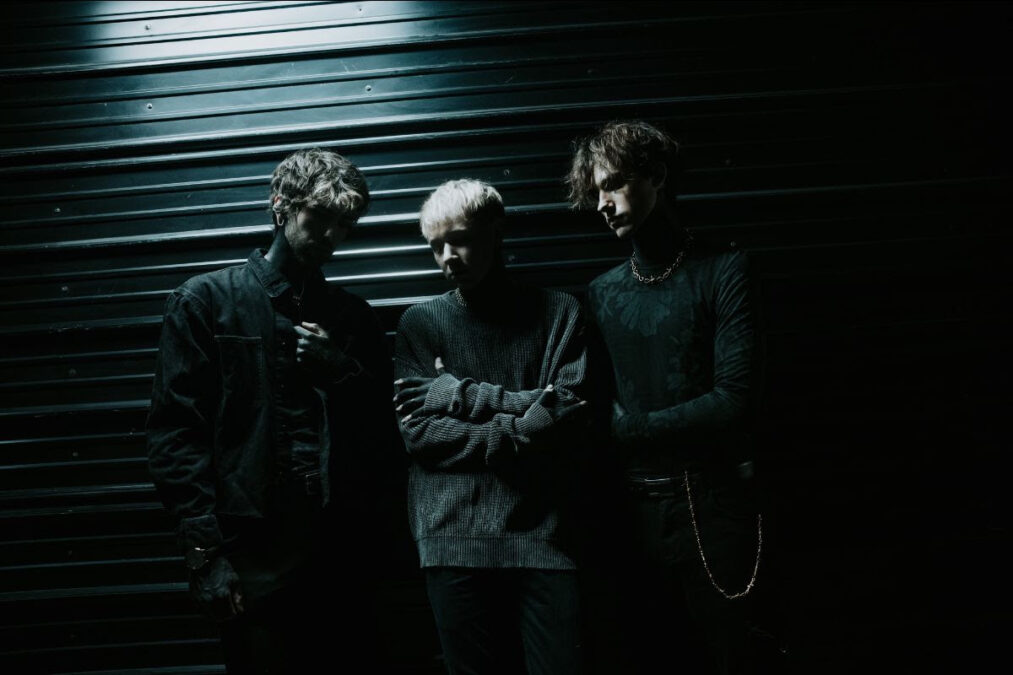 Glasswaves, an up ‘n’ coming, Rochester, New York-based trio that seamlessly blends dark pop, alternative rock, and electronic elements with a heavy and dynamic edge, recently announced their new album while(True). It arrives October 23 via SharpTone Records. Today, the band shares SCARed. The track is at once gorgeously creepy and crushing. It will escort […]
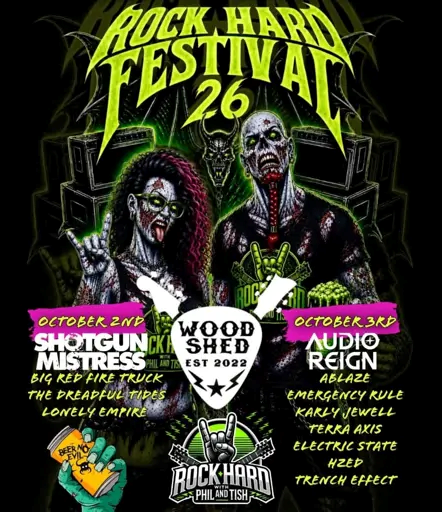 After eight months in the dark, the iconic Woodshed is opening its doors for one month only, and what better way to celebrate its return than with Rock Hard Fest ’26? Taking place on Friday 2 and Saturday 3 October, Rock Hard Fest ’26 will bring together 12 Australian rock and metal bands for two […]
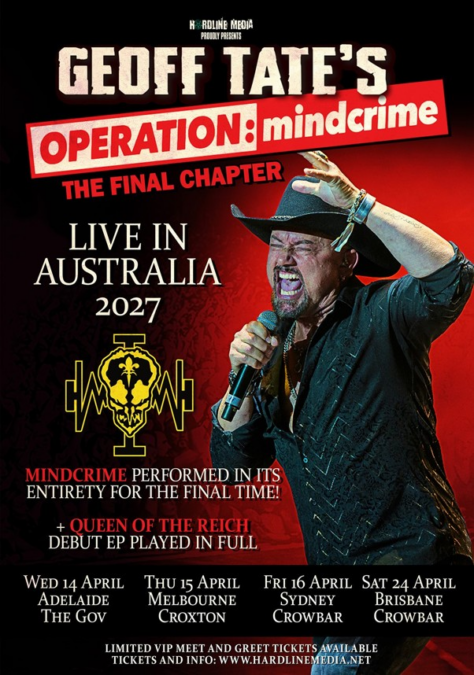 Organisers have heard the call, and have added a Brisbane show. See Geoff Tate perform Operation Mindcrime and the Queen of The Reich EP both in full, in BRISBANE, on Saturday 24th April at Crowbar. Don’t sit on this one; ALL pre-sales and VIP sold out for the other 3 shows, so Brisbane, get in […]
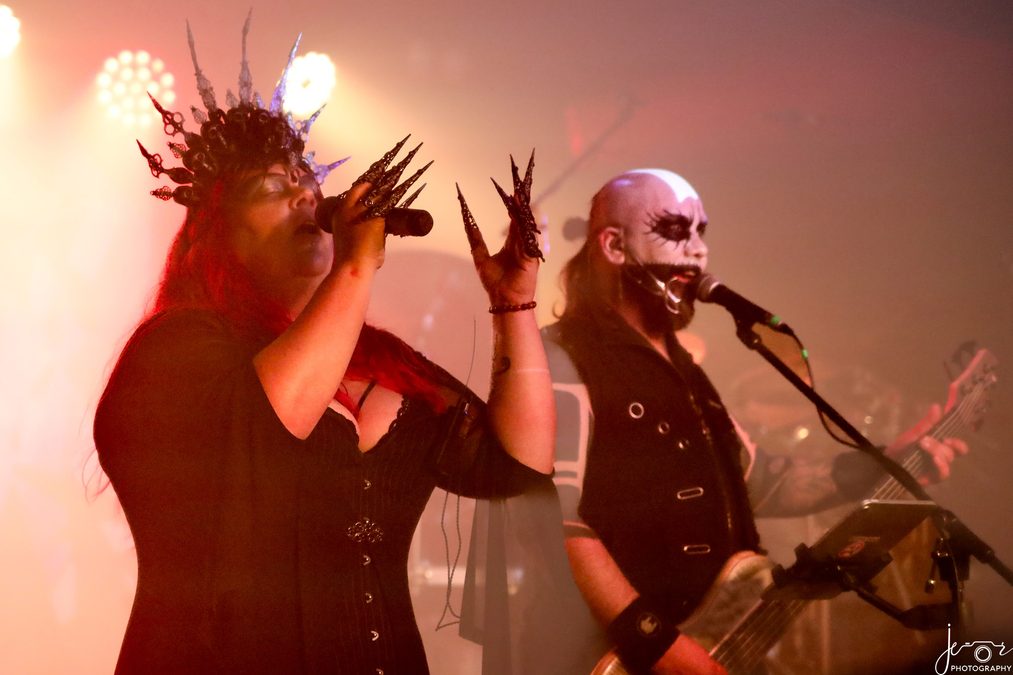 Pix by Jenna Flood Photography Review by Jenna Flood There was something significant about walking into Crowbar on a warm September night in Sydney knowing that, for many people in the room, this was a moment that had been a long time coming. Norwegian industrial metal band The Kovenant were finally performing in Australia, and […]
 Brooklyn alt-rock band Decades Late have spent three years working through a specific kind of nostalgia — not retro pastiche, but ’90s guitar music rebuilt with modern muscle. Their new EP, Dark Is the Light, Pt. 1 (out now), is the clearest statement of that project yet: four songs that move from jangle-pop to full-throttle shoegaze without […]
 Ska collective THE FAMILY BUSINESS LTD release their debut self-titled album on Hellcat Records. Drawing from the rich sonic textures of two-tone ska, the trio balances the bright, bouncy melodies of Jamaican ska with the two-tone punk commentary, heard on latest track, Bambi. The pulsing four-on-the-floor groove of Bambi meets ground-shaking bass, a vibrant horn […]
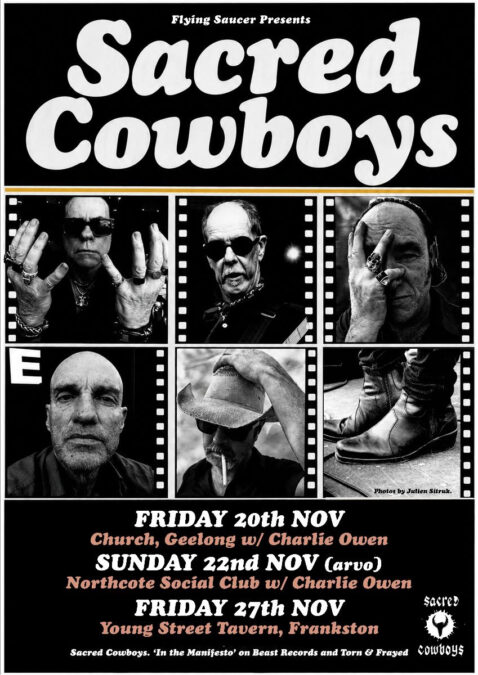 Legendary Melbourne band Sacred Cowboys are back with a handful of rare shows in November on the back of their latest album In The Manifesto. Sacred Cowboys shot to national notoriety in 1982 as a fun nihilistic jolt to the senses on national pop show Countdown. The band was formed by lead singer-songwriter Garry Gray […]