On October 2nd, two Scandinavian melodic death metal bands with Viking and Norse themes engraved into their music will release new albums. One very much at the peak of their career, having played every festival worth playing and selling millions of records worldwide. Of course, we’re talking about Amon Amarth. The other may not get the headlines on this day, but sure as hell deserve just as much praise.
The band in question, Brymir. Not a band many will know, as a discography of 4 albums seems fairly light. Then again, Napalm Records don’t sign nobodies! “What We Leave Behind” will be the fifth and ‘most sinister yet’ in the words of the band. Curiosity is now at its peak.
Maybe not quite sinister in the same way a black metal band like 1349 or Emperor would be (well more on that later). Though there’s something very exciting about Brymir’s sound! See, there’s a solid melodic death metal spine running through the early stages of the album, especially during ‘Sleipner’, achieved through the sharp yet aesthetically pleasing guitar riffs driving the sound. There’s a subtle symphonic edge too, with the synths and choir like backing vocals adding an epic feel to the mix. Though they take that epic feeling and up the ante several notches in ‘Tempest Bound’!
“Marching, banners high For Ares, Tyr or Mars Like children on an isle As all true deities cry”
Listen to that chorus on full volume and see how quickly you want to grab your shield and sword, and dive straight into battle! The verses are just as impactful too! Then it’s just an all out frenzy for the album’s title track ‘What We Leave Behind’. What a blistering lead guitar solo, and stunning chorus that will have strangers singing together in unison in arenas! Though the distorted guitars can provide plenty of bite when called upon!
See, there’s an underlying cinematic edge to the album. It’s almost as if there’s a guy in the band who works in the cinema industry as a sound designer…OH WELL there is! Whilst this is his day job, Viktor takes the lead vocal role by night for the band, and uses every ounce of his industry knowledge to give Brymir an almost unparalleled advantage.
Now, Brymir are far from a one trick pony. They can flex their black metal muscles, and shift the focus to becoming abrasive, dissonant, and sheer terror-inducing in songs like ‘True Darkness’ and ‘Buried Legion’! Think Emperor, especially with the underlying symphonic edge. This also gives an opportunity for Joona to show off his guitar skills…and he has every right to! Now their claims of this being their most sinister album starts to make more sense!
With such high intensity output, it’s easy to become fatigued and overstimulated. That’s why the clever deployment of a few ‘breather’ songs like ‘Thy Self The Highest Love’ and the aptly named ‘Moment Of Silence’ are essentially low stimulus instrumentals to give you that much needed time for reflection and opportunity to process everything that’s just bombarded your senses. After all, sometimes what a band DOESN’T play is just as important as what they do play. As paradoxical as that sounds. ‘The Roaring King’ also plays into that theme of low stimulation and whilst the full band return here, this is by far the slowest song on the album. Yep, Brymir understands human psychology!
Now the final song. We have a full blown power metal anthem ‘How Much Is The Fish?’’, a Fintroll or Korkiplannin style rawkus drunken tavern dance along to end the album! Hang on… it’s a Scooter cover?! Shows what I know! Well, I’m not normally into covers but if you can take an internationally renowned powerhouse of a Eurotrance artist, take their song and completely reimagine it your own unique style, then cover as many as you want!
Well, that was a journey! A multilayered complex package and a fully guided tour around several sub genres of metal that should be at opposition with one another, yet somehow gets melted into one easily digestible and thoroughly enjoyable package! This is easily in my top 10 metal albums of the year! Hopefully “What We Leave Behind” doesn’t get left in the shadows of Nordic giants Amon Amarth on October 2nd…
Some albums take a few plays to sink in, while others make you fall in love at first listen. The giddy pop rush of Amelia & The Housewives is definitely in the latter category. But that doesn’t make it a superficial experience: come for the catchy tunes, by all means, but stay for the wry […]
Live Review: I Prevail – O2 Victoria Warehouse, Manchester
22nd September 2026 Support: Polaris, Gore Words: Oli Gonzalez Photos: Tim Finch
A night of discovery for those like myself making their first dive into the world of I Prevail, having barely known them or the supports. But judging by the quantity of people arriving in Polaris and I Prevail tshirts, it was clear it wasn’t the first rodeo for many. This night also marked almost a full calendar year since the band’s latest opus ‘Violent Nature’ had hit the Spotify servers and the record stores. This was amongst conversation from attendees as we all navigated the usual and seemingly never ending network of rails to get into the venue that IS necessary but seems tedious. What isn’t necessary is the battle with Ticketmaster’s app and the issues this can cause if you get bad reception and create a single point of failure…ANYWAY that’s a conversation for another day.
Once inside, a very healthy turn out already despite early 6pm doors. Over an hour before the first band though? Perhaps caused by the drop out of a support act.
How do bored metalheads pass the time? Build a pyramid of cups right in the middle of the venue, of course? Anything to pass the time, ey? The lights went down and it was time for our first band. How long would the cup pyramid last?
Gore: ‘’They’ll probably be death metal’’ my dumbass thought and wrongly assumed. Especially after the lights had gone down and we were introduced to a blistering rave dance soundtrack making the air feel like a Saturday night! Assumptions, the brother of all muck ups, right? Well, it wasn’t long before chaos ensued. Despite Hayley’s clean and soaring vocals, she could flick a switch and unleash demonic growls, like that of Tatiana Shmayluk from Jinjer! Given the crushing yet sparkly clean tones blasting from the guitar and bass, that technical metal sound made that comparison complete. This was the perfect antecedent to a nice early circle pit…around the pyramid cup, which sadly fell. Maybe due to the serious air being pushed out by the band’s drummer too. ‘Paralysed’ represented a highlight of a painfully short 30 minutes, with more than you’d expect singing along. Hayley spoke of her admiration of this and also the sincere gratitude she felt whilst playing in front of what she described as the biggest crowd they had ever played to. With her day job in NASA and working with astronauts, what heights can the band she sings for reach?
The lineage of Aussie metalcore is there for all to admire. Thy Art Is Murder, Parkway Drive, Northlane, and A Night In Texas (having released a new album this month). Northlane had played the exact venue two months prior at Radar Festival, and now it was Polaris’ turn! Everything about the visual display and the polished sound made this feel like a masterclass in modern metalcore! The sound quality matched only by the energy of the band, with front man Jamie singing like his life depended on it! Still early in the tour, their energy levels were still high, but you got the feeling that they give this all out performance no matter where they play. Their infectious spark was more than matched by the crowd, with circle pits well and truly in motion and some serious heat being generated; thank god for the air con! This isn’t really one you can over analyse, just a major surprise and a genuine privilege to have seen a world class act and pioneer for the genre. Could I Prevail top that?
The place was packed out long before tonight’s headliners had even taken to the stage. There was no room to swing a cat, with most people having their elbows pinned to the sides, like a T-rex. Then the lights went down for the final time, the roars the most deafening this time. Once the first few notes of ‘NWO’ rang out, the whole arena became a battleground with several hundred people bouncing up, down, side to side or into each other. I Prevail had conquered even before their first song had finished! Though they were only just getting started.
A stream of bodies went airborne towards the barrier, with the stream of crowd surfers never slowing down. The heat was on, in more ways than one, with the mass quantities of bodies and movement, and also the pyrotechnics adding that firepower and star quality! Yeah, the crowd was pretty damn wild on this Saturda…SORRY TUESDAY NIGHT. It’s still hard to believe this was a school night. How many people would be phoning in sick to their day jobs the next day?
Inviting Hayley from Gore for guest vocals for ‘Paradise’ was a cool moment indeed, but why not also have Polaris’ Jamie join in too or for a different song? Who knows. A throw back to the early 90s with a cover of Metallica’s ‘Sad But True’ ensued…or at least the first verse and chorus of it. The crowd was naturally thinning and the survivors remained deep into their set. The final furlong.
“We won’t do the narcissistic thing and walk off then come back on, we’re gonna keep this party going!”
Well, it was one last chance. One last hurrah. ‘Gasoline’. The place erupted. This was carnage. But the kind where everybody could join in on – old, young, big, short, any gender. Isn’t that what the metal community is all about? What a moment and what a blistering set from I Prevail! I went in uninitiated and not knowing much, but came away fully respecting the band!
A solid night overall with excellent pacing, and a nice early 10.20 finish for the oldies who prefer that!
The party line to toe is that the 1990s was a tough time for metal. But… really? Was it, though? The rise of Fear Factory, Machine Head, Korn, grunge, black metal, death metal’s dalliance with the mainstream, the Peaceville three, Swedish melodeath… that all sounds pretty good to us, and it’s just the tip of the iceberg.
Basically, when people are talking about the death of metal in the 1990s, they tend to mean the confusing, ill-advised and often just frankly appalling cack put out by many of the genre’s biggest established names during that period. There’s no doubt that the decade was not so kind to the thrash and hard rock bands of the 80s.
There are a few of the 90s big boys here as well, and there are some omissions from the decade that might seem obvious to some readers. Like Machine Head’s divisive The Burning Red, that isn’t included here due to 2001’s atrocious Supercharger being even worse. Ditto the criminally underrated Load series by Metallica, which are very good records and a quantum leap away from St. Anger. Carcass’ Swansong is actually great (yes it is), so that’s never getting in. Same for Judas Priest’s Jugulator and Ministry’s Filth Pig, which are both far better records than you remember. And Motley Crue’s risible Generation Swine, is left out because… well… are Motley Crue a “brilliant” band? No, obviously not.
They all just made it out unscathed, but here are 10 albums we just cannot defend.
Exodus – Force of Habit (1992)
So, in the 90s Metallica sold out and made a hard rock album, and all the other thrash bands stayed true, right? Sorry, but we’re calling bullshit. There are a few examples of this idea being nonsense on our list, but none stinkier than Exodus’ fifth album from 1992. Most of Force Of Habit is pretty unmemorable groove metal that attempts to mix itself with the darkness of Alice In Chains, which is not what we want from Exodus. But really this album is on this list thanks to one song: the truly woeful Rolling Stone cover Bitch. A song where the Bay Area’s most notorious metal band enlist a brass section (lads, what were you thinking?) then proceed to try and impersonate the good-time funk metal of Extreme. It’s a ludicrous idea that’s appallingly executed, it pretty much represents the absolute nadir of thrash metal, and might be the single worst song on this entire list. And you got annoyed about Nothing Else Matters? Give your head a wobble.
Danzig – Blackacidevil (1996)
Glenn Danzig: the evil Elvis and a man who released some sublime and essential goth-laden alternative metal in the early part of the 90s. But by 1996, Danzig was looking a little old hat. He decided to combat this by looking at the success of White Zombie, Ministry and Nine Inch Nails, and jump onto the industrial metal bandwagon. A bandwagon with a set of wheels that were rapidly in the process of failing during the second half of the 90s. If industrial metal needed saving, Blackacidevil was certainly not the album to do it. Sounding dated pretty much before it was even made, the sound of Glenn binning off his smoky croon to belch all over the Republica B-side electronics of a song like Sacrifice was eye watering enough to smear his entire fanbases’ mascara. Glenn soon realised and retreated back to his Roy Orbison records, with his leather trousers between his legs.
Body Count – Violent Demise: Last Days (1997)
It was a different time, guys! Ice-T and Body Count have always gone out of their way to be as provocative as possible, and are still doing it to this day. And that’s fine. But there are certainly some moments in their career that aren’t as challenging and necessary as Cop Killer, and are, in fact, just grotty and ill advised – and most of them happen to be on Violent Demise. Like the lyrics of Strippers, for example. But it’s the jaw-droppingly offensive I Used To Love Her, where Ice puts himself in the shoes of OJ Simpson as he murders his ex-wife – a crime he was famously acquitted of – that really does it. It’s a hot potato he’s handling, and it certainly burnt our hands. Ultimately this was just a very bad idea – quite how it got made without some record executive rightly putting a stop to it is frankly baffling.
Iron Maiden – Virtual-XI (1998)
The mid 90s were the lowest point of Iron Maiden‘s career. After managing to keep their heads above water with Fear Of The Dark on the strength of the title track alone, the band lost their iconic frontman Bruce Dickinson and replaced him with Wolfsbane vocalist Blaze Bayley. 1995’s The X Factor wasn’t great, but many were willing to give Maiden the benefit of the doubt. That last little bit of belief in Maiden as a force was totally extinguished by Virtual XI three years later. The album was inspired by both their upcoming video game and the 1998 World Cup (?), which is obviously not what you want from a legendary heavy metal band.
Listening back to it today, Maiden have never sounded so tired or so old hat as they do here, even on records that were released nearly two decades after this. The plodding, folk-tinged prog of The Angel And The Gambler feels longer than a prison sentence, When Two Worlds Collide would be rejected by Spinal Tap for being too ridiculous, and The Educated Fool sounds like a load of pissed up football hooligans doing an impression of a metal band. Bless Blaze, he did his best, but this album has been rightly forgotten.
Van Halen – III (1998)
Van Halen were just a soap opera in the 90s: falling out with Sammy Hagar and trying to reunite with David Lee Roth, before settling on former Extreme frontman Gary Cherone for 1998’s ill-fated III. Amazingly, Eddie Van Halen spoke gushingly about the working relationship the band had with Cherone for his sole album with the band, both prior to release and in the years that followed. But, with all due respect to Eddie, this is comfortably the weakest album of the band’s career.
The tight, taut, brevity of their debut and 1984 had been replaced with pointlessly long, overwrought and dull songs, with none of the outrageous OTT personality that made them so exciting. Cherone was essentially a “yes man”, allowing Van Halen to indulge every idea that Eddie had, with the nadir coming on the six-minute plus album closer How Many Say I, where the guitarist inexplicably takes lead vocals with disastrous results. They might have thought it was the greatest musical relationship they had ever had as a band, but everyone else thought it sounded like the greatest guitarist of all time deeply inhaling a jar of his own farts.
Slayer – Diabolus in Musica (1998)
Exhibit-B in our counter argument on the classic, “Metallica sold out and all the other thrash bands didn’t.” Oh yeah? Got any explanation for why Slayer sound like a nu-metal band on this album? In the years since Diabolus In Musica, guitarist Kerry King has been at pains to remove himself from the creation of the album.
This is clearly the most simplistic Slayer record in their catalogue. That’s fine when they get it right, like on the excellent Stain Of Mind, where Slayer actually sound like a pretty good version of Static-X. Although, shouldn’t the bar be a little higher for the greatest thrash metal band of all time? We think so, but that’s not the real problem here. Ultimately songs like Overt Enemy and In The Name Of God sound like a sort of lobotomised, dopey, plodding version of the band that wrote some of the most thrilling metal ever. It might not be a truly terrible record like some on this list, but it’s arguably worse: a Slayer album that just rolls along, all of it forgettable and aimless, before politely ending. Our Slayer would never…
Sepultura – Against (1998)
To be fair, Sepultura were on a bit of a hiding to nothing in the late 90s. With the acrimonious departure of frontman Max Cavalera after their superb Roots album in 1996, and with Max hitting the ground running with his Soulfly project and getting their well-received self-titled debut out before the Seps had even announced his replacement, many people had already written the band off.
Against was the first album to feature new frontman Derrick Green, and although he is a much-loved part of the band now, back then he was still finding his feet. Against sort of bears the hallmarks of a Sepultura album, but without ever really sounding as confident, controlled or, crucially, catchy as they had on the four world-beating albums that had come before. Instead, songs like Old Earth and Common Bonds just resemble shells of Sepultura ideas, all tribal rhythms and big riffs, but lacking hooks or personality. The balance would eventually be struck, but, first go or not, this is a messy effort.
Paradise Lost – Host (1999)
Is Host actually a bad album, or is it just a result of metal fans’ snobbiness at a formerly brutal band bringing in a whole new set of influences? To be honest, the two aren’t mutually exclusive. Yes, the reaction of the metal community to the doom metal maestros going all electro-pop was certainly over-the-top, but Paradise Lost didn’t really help themselves with the record.
The band had never really had a problem penning memorable hooks and songs previously, even when they were going for full-blown heaviness, so quite why the choruses seemed to desert them here is anyone’s guess. Paradise Lost going full Depeche Mode is not a terrible idea, but the latter are stadium-bothering megastars because they write huge pop songs, and, with the exception of the lovely Harbour, this album is a bit of a barren wasteland for moments that sucker onto your brain as this style should. Plus, the production of the songs themselves sound malnourished and sparse where they should sound bombastic and huge. It took a 2018 remaster to really fill the album out. But by that point, the damage was done.
Megadeth – Risk (1999)
Exhibit-C and the absolute knockout blow to the idea that thrash bands “kept it real” during the 90s. Listening back to Risk today, it’s amazing that Dave Mustaine actually could believe that this turgid slice of radio rock would be a musical risk in any way. Although, writing a song like the opening track Insomnia, which sounds like Def Leppard getting off with the Happy Mondays, and letting anyone hear it, does feel like a risky thing to do if you want people to think you are actually good at making music.
The album’s best-known song Crush ‘Em was written by Mustaine in the hope that it would end up being a huge sporting anthem to be played in stadiums around the US, but it doesn’t sound big enough to be suitable for Scunthorpe vs Barrow in the Papa John’s Trophy group stage, let alone the World Series. The difference between The Black Album and Risk is, on the surface and stylistically, very little. But the main thing that sets them apart is that while Metallica wrote Enter Sandman and Sad But True, Megadeth wrote faux cowboy, Bon Jovi shite like Wanderlust, and tried to marry Rush and the Goo Goo Dolls on Breadline. They couldn’t even sell out properly.
Coal Chamber – Chamber Music (1999)
Admittedly it’s something of a stretch to call Coal Chamber a “brilliant band”, but when you consider just how big a deal they were in the nascent nu-metal movement, it feels fair to include Chamber Music. Because Coal Chamber’s second album was a disaster. Opening song Tragedy features the kind of vocoder that you have to assume they thought would help them sound futuristic, but actually just sound like a pissed up Daft Punk hiccupping into a kebab. Burgundy sounds like Sloth from The Goonies trying to cover Faith No More, and the truly bewildering cover of Peter Gabriel’s Shock The Monkey, which ropes in Ozzy Osbourne (who sounds like he’s just been dragged out of bed at half five in the morning and kicked into a vocal booth) set a new low benchmark for nu-metal bands covering 80s pop songs. It’s an album that turned Coal Chamber from one of metal’s hottest bands to a joke in just under an hour.
Strange Fruit: Drips EP Tip Top Recordings 12” & Download Out now Jakarta four-piece Strange Fruit insulate and excavate with their latest 12” of sublime, melodious intent. Humane robot music for motorways and lazy A-roads alike. MK Bennett finds […]
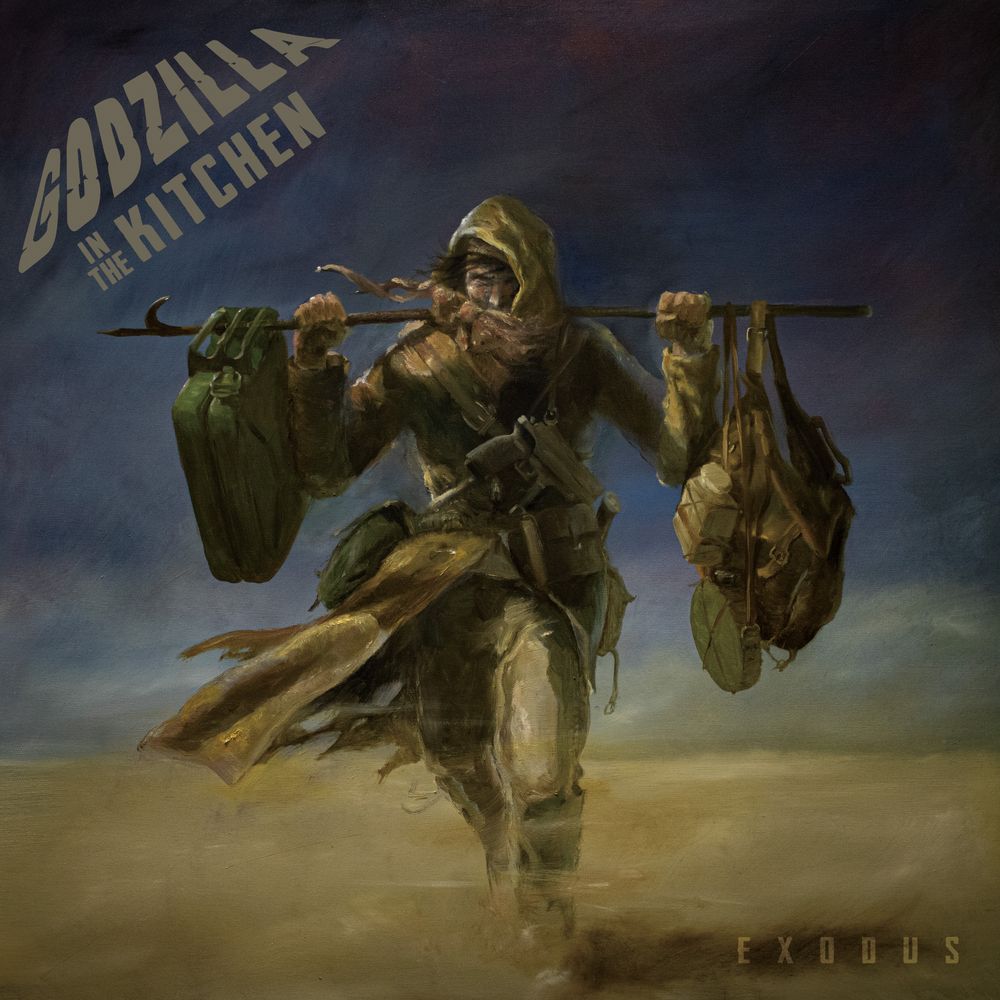
Leipzig alternative metal Godzilla In The Kitchen enters a explosive new era with their single, “Nothing For None.” Marking the band’s historic transition from a heavy instrumental project to a fully vocal-driven power trio, the track introduces bassist Simon Ulm’s commanding vocals alongside guitarist Eric Patzschke and Brazilian drumming powerhouse Thiago Presto. Fusing their signature blend of stoner, progressive, and psychedelic rock with a newfound, relentless aggression, the band channels the weight of modern turmoil into a massive wall of sound. Released via Tonzonen Records, “Nothing For None” kicks off a prolific year of music with unmatched intensity, sweeping grooves, and raw, atmospheric power.
Their fourth single Humility takes aim at bad journalism, “scientism” and a lack of critical source evaluation, at a reading culture where headlines become truth, half-knowledge becomes certainty and a short social media post becomes a substitute for expertise. Humility reminds us that authority does not guarantee truth, and that true wisdom begins with recognising the limits of our own knowledge.
Musically, the song ranks among the most progressive and hardest-hitting tracks on the album. Odd time signatures, an unexpected interlude and a catchy chorus collide with Alternative Metal, Stoner and Progressive influences. I find it intense, very original and in between genres, with a very interesting melodic part in the middle, with spoken word parts reminding me of Phil Anselmo and some Fates Warning vibes. Both performance and production are top notch, the riffs sound massive.
Give it a go by clicking on the Spotify player below and follow Godzilla In The Kitchen if you like what you hear.
Blackened death metal ensemble Azarath have debuted a music video for “Herald Of The Unseen”, the newest single and closing track off their forthcoming studio album Scorn Eternal. Read more…
Hailing from Nashville, Tennessee, Sona Bliss blends influences past and present to create a heavy sonic assault packed with unstoppable pop hooks.
The current lineup features John Checuga (vocals/guitar), Trent Harmon (drums/vocals), and Dylan Cessna (bass/vocals), building on the foundation originally laid by John alongside longtime friends Jim Bashaw, Baz Cooper, and Phil Armato. The band is currently putting the final touches on a new full-length record set to drop in 2026.
I love the sound and the mood of their new song Take A Ride. It’s Energetic, no frills, with fantastic guitars, a very dynamic rhythm section and energetic vocals. It’s catchy and enjoyable from start to finish. The song is part of the playlist Rock Rotation. Give it a go by clicking on the Spotify player below and follow Sona Bliss on social media if you like what you hear.
Melodic black/death metal band from Finland, I Helvete, is all set to release their third long player Halla on November 6th, 2026. For a preview, check out two new track via Bandcamp widget below. Read more…