Blog
-
Is Stella Lefty’s ‘Boston’ the Song of the Summer?
Jon and Joe battle through an 8-song bracket of this summer’s biggest hits — including Stella Lefty’s rising “Boston” — to determine the winner for 2026. -
ORBSTRUCT – ‘A Decade of Transcendence’ Anniversary Concert Film
Ten years after their formation and less than a year after the release of‘Ostracism’, their third full-length album, ORBSTRUCT return with‘A Decade of Transcendence’ — a live concert film celebrating the band’s first decade of existence, recorded live in Kraków, Poland. The live release features a complete live performance comprising nine songs selected from the band’s three full-length […] -
CHRIS HOLMES Facing Second Cancer Battle Following Prostate Cancer Diagnosis
Former W.A.S.P. guitarist Chris Holmes has revealed that he is once again battling cancer. After successfully overcoming throat and neck cancer in 2022, the guitarist has now been diagnosed with prostate cancer and is currently undergoing radiotherapy in France.
Holmes previously received financial support from fans through a crowdfunding campaign that helped cover the costs of his treatment during his first cancer battle. Now, he and his wife, Catherine, have launched another fundraiser as medical expenses continue to mount.
According to the couple, Holmes‘ current treatment extends beyond what his health insurance will pay for. While emergency coverage has allowed him to begin radiotherapy, many other essential medical costs remain their responsibility, leaving them with significant debt as treatment continues.
In a statement shared with supporters, Holmes and Catherine explained the situation:
“We never imagined we would have to write something like this again. In 2022, just after two years of Covid lockdown, Chris faced throat cancer. A GoFundMe carried us through an impossible moment. We were deeply grateful, and we hoped we would never have to ask again.
Today life has placed us in another hard situation, and we want to speak about it honestly.
Chris has begun radiotherapy in France for prostate cancer. The treatment is essential and cannot be interrupted.
Because of an administrative error linked to our marriage registration, the health insurance system placed Chris under “emergency only” coverage. He had to wait three months before receiving any care at all, and only the radiotherapy given during the month of July is covered.
Everything else falls to us:
- Hormone therapy (standard and new generation)
- Scans and PET scans
- Biopsy and blood tests
- Daily travel to and from the hospital
This has already left us with €20,000 in medical debt, and the treatment ahead will keep adding to it every month.
Chris must remain in France to receive radiotherapy. Leaving the country would risk his emergency status lapsing, so he cannot travel and therefore cannot work.
Chris has given everything to his music and to the people who listen to it. It is his whole life. Today we cannot carry this alone.
We are grateful to France for granting the emergency coverage that allowed Chris to begin radiotherapy. Now we ask, humbly, for help covering everything else.
If you are able to give, even a small amount, it goes directly to the medication, medical exams, and transport Chris needs to finish his treatment safely. And if you cannot give, your messages, your love, and your presence mean just as much.”
The new diagnosis comes four years after Holmes‘ successful treatment for throat and neck cancer. As he undergoes radiotherapy, he remains in France because leaving the country could affect the emergency medical coverage that currently allows him to continue treatment.
With Holmes unable to travel or perform while receiving care, the fundraiser is intended to help cover ongoing expenses that include hormone therapy, medical testing, transportation, and other treatment-related costs that are not covered by insurance.
The post CHRIS HOLMES Facing Second Cancer Battle Following Prostate Cancer Diagnosis appeared first on Sonic Perspectives.
-
Atmospheric post-metal/sludge trio PALEGAZER sign with Octopus Rising, release debut single “Imminence”
Portuguese atmospheric post-metal/sludge trio Palegazer have officially joined the Octopus Rising / Argonauta Records roster and celebrate the announcement with the release of their powerful debut single, “Imminence,” available now on all digital platforms. Listen to “Imminence” here: https://tidal.com/album/546812582/u Hailing from Porto, Palegazer craft immersive sonic landscapes where haunting melodies collide with overwhelming heaviness. Blending the expansive atmospheres of post-metal with the crushing weight […] -
New Megadeth Vinyl Release “Fast Hits” Expected In August
There’s some mystery surrounding the apparent Walmart exclusive compilation however.
The post New Megadeth Vinyl Release “Fast Hits” Expected In August appeared first on Theprp.com.
-
THE NOCTAMBULANT Unveil Video For “San Martino” Ahead Of New Album ‘Revival’
Ancient spirits and deep dwelling creatures are to be found in “San Martino“, the new single and video release from THE NOCTAMBULANT. Drawing from the traditions of Blues, Rockabilly, Goth rock and American Country, THE NOCTAMBULANT have developed their sound in an embrace of Southern Gothic. The forthcoming full length album Revival will arrive on September 18, 2026, via Terminus Hate City. “‘San […] -
Alexisonfire Share Official Footage Of Their 2026 Long Beach, CA ‘Vans Warped Tour’ Set
The group ran through 8 songs for that set last weekend.
The post Alexisonfire Share Official Footage Of Their 2026 Long Beach, CA ‘Vans Warped Tour’ Set appeared first on Theprp.com.
-
DECONSEKRATED – Chilean occult death metal force to release sophomore album “The Inexorable Transcendence of Death”
Nuclear Winter Records proudly announces the release of DECONSEKRATED‘s sophomore album, “The Inexorable Transcendence of Death”, set for release on October 2, 2026 on LP, CD, and MC formats. Over the past decade, Chile has established itself as one of the world’s premier breeding grounds for uncompromising death metal, and DECONSEKRATED are poised to further strengthen that reputation with an album that […] -
BLOOD OF THE EARTH Recruits Thy Will Be Done’s J. COSTA As Vocalist

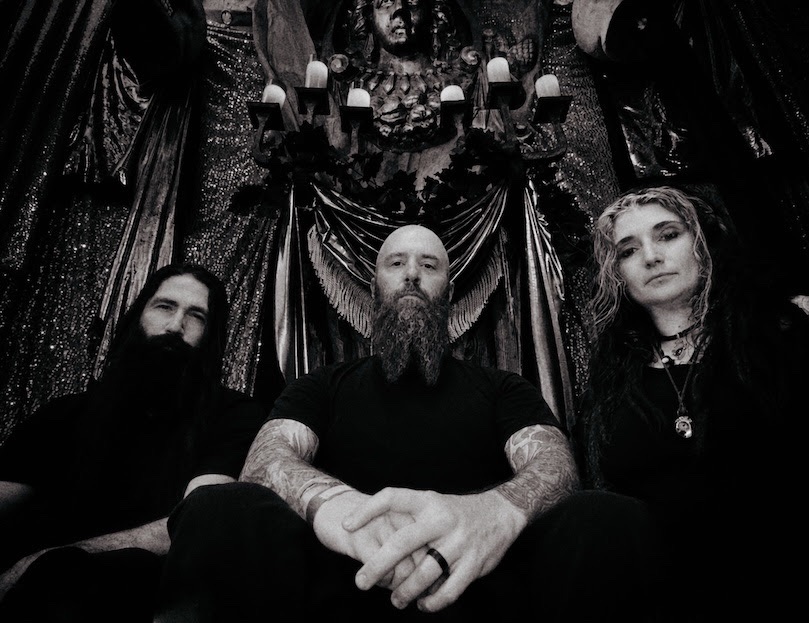
First Performances With New Lineup Revealed;
New Music Coming SoonTampa sludge/doom warriors BLOOD OF THE EARTH have officially welcomed J. Costa (THY WILL BE DONE) as the band’s vocalist, ushering in a bold new chapter for the heavy trio founded by Jeff Golden (ex-CROWBAR) and Katie Golden (ex-THE CONVALESCENCE).
Originally conceived as an instrumental project built around crushing riffs, towering atmosphere, and cinematic scope, BLOOD OF THE EARTH has evolved into a fully realized force with the addition of Costa, whose commanding voice adds a visceral new dimension to the band’s immense sonic weight. The lineup’s chemistry has already laid the foundation for a wealth of new material, with more details to be revealed soon.
Commenting on the addition of Costa, Jeff Golden says:
“Blood of the Earth has been a vision of mine for over ten years. I first became friends with J. Costa in 2010 when I was playing bass for Thy Will Be Done, during my first U.S. and Canadian tour. When Katie and I started writing new music after our first instrumental EP, we immediately knew J. was the voice we’d been searching for. So I sent him some of the material, he sent back his vocal ideas, and we were blown away. J. brings so much power, and presence to Blood of the Earth.”
Fans will also have their first opportunity to experience the band’s new lineup live as BLOOD OF THE EARTH announces its first two performances featuring Costa on vocals. The shows mark the live debut of this new era for the band and offer an early glimpse of what’s to come.
BLOOD OF THE EARTH Tour Dates:
Oct 2 – Wallingford, CT – Cherry Street Station
Oct 3 – Brooklyn, NY – Lucky 13Additional news, music, and live dates will be announced in the coming weeks.
About BLOOD OF THE EARTH:
Blood Of The Earth is the convergence of weight, intention, and atmosphere, founded by married duo Jeff Golden (ex-Crowbar) and Katie Golden (ex-The Convalescence), and completed by the commanding presence of vocalist J. Costa (Thy Will Be Done).
Forged from crushing sludge, doom, and post-metal, the band channels immense heaviness into songs built on tension, atmosphere, and emotional impact. Their music balances monolithic riffs with cinematic textures, creating an immersive listening experience that is both punishing and deeply evocative.
With J. Costa’s unmistakable voice now completing the lineup, Blood Of The Earth stands poised to unleash its most powerful and fully realized work to date.
Follow BLOOD OF THE EARTH:
Facebook | Instagram | Bandcamp | Spotify | Apple Music

-
CJ McCreery Was Fired By Lorna Shore Amid Abuse Allegations — Six Years Later He’s Signed To A Label And Fronting A New Band

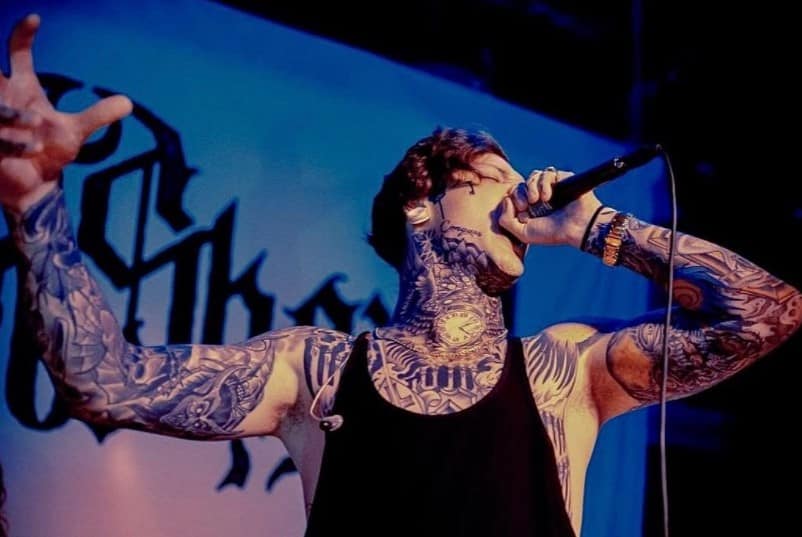
CJ McCreery sang on one Lorna Shore album. He was fired a month before it came out. Six years on, he’s signed to Seek & Strike, fronting a band called Immortal Disfigurement, with a debut EP out and the first European tour of his career behind him. Here’s the full story of what happened, what he said about it, and where he actually ended up.
Why People Are Still Searching His Name
If you found your way here through Lorna Shore, the sequence probably went something like this. You got hooked by Will Ramos. You worked backwards through the catalogue. You hit Immortal — the 2020 record, the one with the orchestral sweep and the black metal edge — and something didn’t add up, because the guy singing on it isn’t the guy in every video you’ve watched.
That’s CJ McCreery. He’s the only vocalist besides Tom Barber and Will Ramos to front a Lorna Shore studio album, and his entire tenure lasted about a year and a half.
The Short Version
McCreery came up in Pittsburgh deathcore act Signs Of The Swarm. In 2018, Tom Barber left Lorna Shore for Chelsea Grin, and McCreery was announced as the replacement. The band signed to Century Media, recorded Immortal, and rolled out singles through late 2019 — “This Is Hell,” “Darkest Spawn,” “Death Portrait,” the title track.
Then in December 2019, with the album already pressed and a release date locked for January 31, Lorna Shore abruptly parted ways with him. Allegations of sexual misconduct and mental abuse had surfaced online.
The band was left with a genuinely brutal decision: shelve a record they’d spent a year making, or release an album sung by a man they’d just fired. They released it. Immortal came out on schedule with McCreery’s vocals fully intact, and went on to become one of the most acclaimed records in their catalogue.
McCreery surfaced roughly six months later with a public statement, saying “I can assure you that these accusations are all lies…” No charges were ever filed and the allegations were never tested in court. He has consistently denied them.
Lorna Shore, meanwhile, brought in a touring fill-in named Will Ramos in March 2020. You know how that turned out.
 LIVE & LOUD: Stream the World’s Hardest Radio Station 24/7
Where He Actually Went
This is the part most write-ups never get to, and it’s the reason this page exists.
McCreery stayed quiet for about two years. Then in early 2022 he confirmed he had new material recorded. That April, the band was formally revealed as Immortal Disfigurement, with the debut single “Dragged Through The Inferno” arriving April 15.
The lineup raised eyebrows immediately. On guitar: Josh Freeman, formerly of A Wake In Providence — the same band Will Ramos came out of. On bass: Shane Slade of Winds Of Plague. This wasn’t a bedroom project. These were working musicians in the scene.
Progress came in fits. “There Is No Light” followed, then “King” in August 2023 — symphonic, enormous, with orchestration handled by Harry Tadayon.
Then it stalled hard. A debut album slated for early 2024 was postponed while the band was still unsigned. Then Tadayon walked as chief songwriter and the album was delayed again, taking six finished songs with him. For a band that had been building slowly for three years, losing the person writing the material is close to a death blow.
They survived it. In May 2025, Immortal Disfigurement signed to Seek & Strike — a label with Orbit Culture and Upon A Burning Body on the roster — and marked it with “Gospel Of Annihilation.” Then on October 17, 2025, the debut EP Hell Is Right In Front Of Us arrived, led by the single “Hellhole.”
Nearly six years after being fired, he had a label, a record out, and a band that stuck.
Where Things Stand Now
The comeback picked up serious speed in 2026.
Guitarist Jacob Toy came aboard — and there’s a neat symmetry to it, because Toy and McCreery spent four years together in Signs Of The Swarm before either of them ended up here. The band now runs as McCreery on vocals, Freeman and Toy on guitars, Shane Slade on bass and Suki behind the kit.
More significantly, they finally got on the road. Immortal Disfigurement played the first tour of their existence this summer — a European run supporting German slam merchants Gutrectomy that ran from June 19 through July 4, taking in Nummirock in Finland, Vienna, Oberhausen, Tilburg, Kortrijk, Plymouth, a London date at New Cross Inn, and Fajt Fest in the Czech Republic. They also turned up at Rockfest in Turku.
For a band that spent four years releasing singles into the void while their album kept slipping, actually crossing an ocean and playing festivals is the real milestone. Studio projects are easy to start. Touring is where you find out if something is a band.
McCreery has been keeping busy elsewhere too — he turned up as a guest vocalist on I Am Mook’s single “Carotid” in May, from their EP Eradication Protocol, another Seek & Strike release.
As of today there’s still no full-length album. Hell Is Right In Front Of Us remains the band’s only record.
Also Recommended – Lorna Shore Albums Ranked: From 2015 Deathcore Roots to the Latest ‘Everblack’ Mastery
The Part Nobody Agrees On
Here’s where we’re going to stop narrating and let you argue.
McCreery’s return has been one of the most divisive storylines in deathcore. One camp points out that nothing was ever proven, no charges were filed, he denied everything, and a man shouldn’t be permanently unemployable over accusations that never reached a courtroom. The other camp points out that Lorna Shore — the people who actually knew him and had the most to lose — cut him loose inside a week, and that speaks louder than any statement.
Both of those positions are held sincerely by a lot of people. We’re not going to tell you which one is right.
What’s not in dispute is the strangest detail in the whole story: Immortal is still out there, still streaming, still one of the best-reviewed things Lorna Shore ever put their name on — and Will Ramos still performs songs from it night after night. Six years later, McCreery’s voice is on a record the band can’t disown, and his old bandmates’ new frontman sings his parts to arenas.
That’s about as complicated as a legacy gets.
Check This Out – Deathcore Bands Ranked: The Top 13 That Still Define Heavy Music Right Now
TL;DR
- CJ McCreery is the vocalist on Lorna Shore’s 2020 album Immortal, the only studio album he appeared on with the band.
- He joined Lorna Shore in 2018 from Signs Of The Swarm, replacing Tom Barber, who left for Chelsea Grin.
- Lorna Shore fired him in December 2019 after allegations of sexual misconduct and mental abuse surfaced. No charges were filed and the allegations were never tested in court. McCreery publicly denied them.
- Immortal was released as scheduled on January 31, 2020 with his vocals intact, and became one of the band’s most acclaimed records.
- He now fronts Immortal Disfigurement alongside guitarists Josh Freeman and Jacob Toy, bassist Shane Slade and drummer Suki.
- The band signed to Seek & Strike in May 2025 and released their debut EP, Hell Is Right In Front Of Us, on October 17, 2025.
- In June and July 2026 they played the first tour of their career, a European run supporting Gutrectomy. No full-length album has been released yet.
FAQ
Who is CJ McCreery?
CJ McCreery is an American deathcore vocalist best known for fronting Lorna Shore on their 2020 album Immortal. He previously sang for Signs Of The Swarm and now fronts Immortal Disfigurement.
Why did CJ McCreery leave Lorna Shore?
He didn’t leave — Lorna Shore fired him in December 2019 after allegations of sexual misconduct and mental abuse surfaced online. The allegations were never tested in court and no charges were filed. McCreery has publicly denied them.
Is CJ McCreery on the Lorna Shore album Immortal?
Yes. Immortal is the only Lorna Shore studio album featuring McCreery on vocals. It was released January 31, 2020, roughly a month after he was fired, with his performance left intact.
What band is CJ McCreery in now?
He fronts Immortal Disfigurement, a symphonic deathcore band featuring guitarists Josh Freeman and Jacob Toy, bassist Shane Slade of Winds Of Plague, and drummer Suki. The band signed to Seek & Strike in 2025.
Has Immortal Disfigurement released an album?
Not a full-length. Their debut EP, Hell Is Right In Front Of Us, was released on October 17, 2025 via Seek & Strike, led by the single “Hellhole.” A full album has been in development for several years through multiple delays.
Is Immortal Disfigurement touring?
Yes. The band played the first tour of their career in summer 2026, a European run supporting Gutrectomy that ran from June 19 to July 4 and included festival appearances in Finland and the Czech Republic.
Who replaced CJ McCreery in Lorna Shore?
Will Ramos joined as a touring fill-in in March 2020 and was made permanent in 2021. He has since become one of the most recognisable vocalists in modern metal, following the viral success of “To The Hellfire.”
Alright, this one splits the room every single time — six years on, has CJ McCreery earned a second act, or did that door close in 2019? Make your case in the comments, and follow Loaded Radio for daily rock and metal news.
The post CJ McCreery Was Fired By Lorna Shore Amid Abuse Allegations — Six Years Later He’s Signed To A Label And Fronting A New Band appeared first on Loaded Radio.