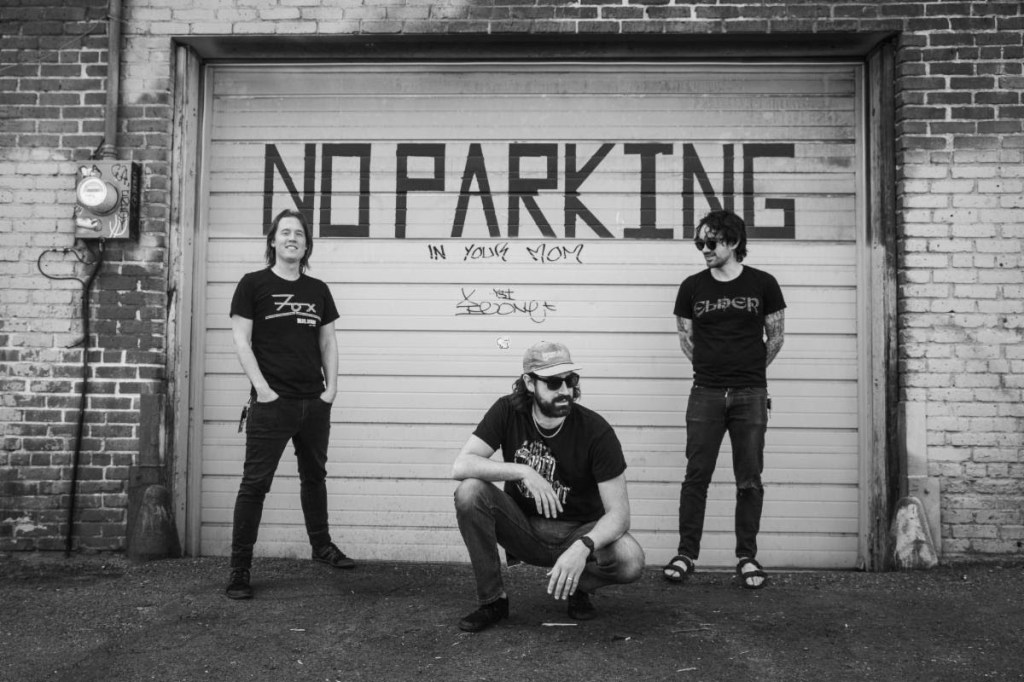
SloNewsLife’s Time Is a Used Car Salesman is an inventive and reflective composition that blends indie folk songwriting with experimental sonic textures. Beginning with an intimate and understated foundation, the track gradually expands into a landscape of ambient noise, radio interference, and atmospheric detail, mirroring its themes of time, memory, and grief. The unconventional arrangement serves the song’s emotional core effectively, creating a sense of disorientation that feels both purposeful and compelling. Rather than relying on dramatic gestures, the track unfolds patiently, rewarding attentive listening. Time Is a Used Car Salesman showcases SloNewsLife’s distinctive creative approach and ability to transform everyday sounds into something thoughtful and emotionally resonant.
The Cure’s return to the European festival circuit has already brought a new live lineup, a run of deep-cut setlists, and Robert Smith’s latest cross-generational collision with Olivia Rodrigo. It also has brought the clearest update yet on the next Cure album — and the one after that.
In a new BBC Radio 6 Music interview tied to the band’s Primavera Sound appearance, Smith said The Cure’s follow-up to 2024’s Songs Of A Lost World is complete and nearing delivery to Universal. “We did record three albums’ worth of songs,” Smith said, adding that “the second one’s done.”
That album, however, is not the brighter Cure record. Smith described the immediate follow-up as “more dismal than Songs Of A Lost World,” quickly catching himself over the severity of the word, and said the record is emotionally connected to the last album while coming at the material from “a different perspective.”
The third album is another matter. Smith said that record is “really, really upbeat” and “really poppy,” though he framed the phrase in Cure terms: “my idea of Cure pop.” He also joked that it is “probably 20 BPM slower” than anything Olivia Rodrigo does.
Smith had already pointed toward this two-album path late last year. In a December 2024 interview with Absolute Radio’s Danielle Perry, he said another Cure album was “pretty much ready to go,” calling it a companion piece to Songs Of A Lost World. He also described a third record as “completely different,” made from “late-night studio stuff,” some of it “really, really good” but “very, very different.”
The update arrives as The Cure have returned to the stage with Eden Gallup in the live lineup. Eden, son of longtime bassist Simon Gallup, joined Robert Smith, Simon Gallup, Jason Cooper, Roger O’Donnell, and Reeves Gabrels at Primavera Sound in Barcelona, taking up the space left by the late Perry Bamonte, the band’s guitarist and keyboardist, who died in December at 65.
There is a sharp Cure symmetry in that transition. Bamonte first entered The Cure’s orbit as a roadie and Robert Smith’s guitar tech in 1984, became a full-time member in 1990, and later rejoined the band in 2022 for the Shows Of A Lost World tour. He played guitar, six-string bass, and keyboards across Wish, Wild Mood Swings, Bloodflowers, Acoustic Hits, and 2004’s The Cure. Eden’s own route into the band also began from inside the band’s pathway from roadie to band member. He had already stepped in dramatically at Fuji Rock Festival in Japan in 2019 (and at Austin City Limits that same year), filling in on bass when Simon Gallup was unable to travel because of a serious personal situation. Smith said at the time that Eden looked after Simon’s bass tuning, had known The Cure his whole life, and stepped into the show after a quick rehearsal.
Once again, the current festival sets have also treated The Cure’s catalog as something more alive than a fixed repertoire of songs. At Primavera, the band played a 29-song set heavy on classics but light on new-album material, reviving “2 Late” and “Wrong Number” for the first time since 2019, “alt.end” for the first time since 2018, and “Mint Car” for the first time since 2016. “Burn” also returned with Smith breaking out the double flute.
Two nights later at North Festival in Porto, Portugal, the rarities continued. The Cure brought back “Treasure” from Wild Mood Swings for the first time since 2013 and opened the first encore with “In Your House,” played live for the first time since 2011. That encore became a compact Seventeen Seconds suite, with “In Your House,” “M,” “Play For Today,” and “A Forest” played back to back.
And then there is Olivia Rodrigo. At Primavera, Rodrigo brought Smith out during her surprise set to debut “What’s Wrong With Me,” a new duet and, as Rodrigo told the crowd, the first song she has ever done with a featured artist. “I can’t believe that this song exists with the person it exists with,” she said from the stage.
That appearance followed their Glastonbury 2025 collaboration, when Rodrigo introduced Smith as a personal hero and brought him out for “Friday I’m In Love” and “Just Like Heaven.” Those performances were later released as a BBC recording, with the artists’ proceeds from the Cure covers benefiting Doctors Without Borders.
For a band that once made fans wait 16 years between studio albums, The Cure suddenly have a great deal in motion. Smith claims one finished album is on deck, with another, more upbeat one waiting behind it; Eden Gallup has stepped into the live band’s latest configuration; and the festival setlists are already reaching beyond the obvious. And while the endsong of their 2024 Grammy award-winning album Songs Of A Lost World may have sounded final, The Cure are acting as if several new chapters of the band’s nearly 50-year history are about to be written.
The Cure’s summer run continues this week, with the band moving from the first wave of Iberian festival appearances into a long stretch of European dates that runs through the end of August. The remaining itinerary includes festival stops at Nova Rock, Firenze Rocks, Pinkpop, Isle of Wight, Roskilde, Open’er, Rock Werchter, Pohoda, Electric Castle, Paléo, Øya, Way Out West, and Rock en Seine, along with headline dates in Cardiff, Dublin, Belfast, Berlin, Nîmes, Vilnius, Tallinn, Manchester, Edinburgh, and Bordeaux.
The Cure 2026 Tour Dates:
06/12 – Nickelsdorf, Austria @ Pannonia Fields II — Nova Rock 2026
06/14 – Florence, Italy @ Ippodromo del Visarno — Firenze Rocks
Jay Madera’s Forty Winks is a thoughtful and introspective songwriter-driven piece that explores themes of acceptance, renewal, and emotional release. Anchored by reflective lyricism and a carefully crafted arrangement, the song captures the moment when worry begins to loosen its grip and a new perspective starts to emerge. Madera’s storytelling approach lends the track a genuine sense of depth, allowing its themes to resonate without becoming overly sentimental. The composition unfolds with patience and purpose, balancing vulnerability with quiet optimism. As a preview of the forthcoming album Backroom Blight, Forty Winks offers an engaging glimpse into Madera’s mature songwriting and keen observational voice.
Marred with spite We carry all the secrets We’re told to just accept
How long can a society keep looking away before the bill comes due? That question sits at the center of “Back to Life,” the latest single and video from BOCANEGRA, the Peruvian-American post-punk, goth, and electro-rock project led by multi-instrumentalist Carlos Bocanegra with co-producer and bassist Pablo Aranzazu.
Written as a primal cry against immoral powers, political corruption, and the public’s grim tolerance for daily atrocity, “Back to Life” channels rage through a hard-driving collision of synth-rock, goth, and industrial-edged alternative music. The track nods toward the 90s Grebo rush of Pop Will Eat Itself, EMF, and Carter USM, with the sharpened aggression of early Nine Inch Nails pushing through its electronics, guitars, and lockstep drums.
“Back to Life” is a brooding, Industrial-wave track built around a steady pulse, dark guitars, and a sense of mounting pressure. BOCANEGRA uses the song as a confrontation with numbness, denial, and collective despair, turning its title into more of a shock than a gentle resurrection. Rather than offering comfort, the track pushes toward awakening: a forceful break from the things people bury, excuse, or pretend not to see.
The lyrics move through sickness, false saviors, blame-shifting, and social paralysis, framing survival as an act of rupture. Lines such as “How long will we pretend” and “jolt you back to life” give the song its central tension: the desire to shake the living out of a state that already resembles sleep. As the rhythm drives forward, the track turns frustration into motion, carrying its disgust toward a point of release.
The video for “Back to Life” unfolds as a dark, glitch-heavy performance piece, moving between three distinct visual worlds: a low-lit wall of monitors, an intimate lounge setup, and a blue-lit band performance space. It opens in near darkness, with a silhouetted figure framed against a stack of glowing screens, their distorted images giving the clip a surveillance-room, late-night static feel. From there, the video cuts to the band seated together on a couch beneath red lamps, staring into the camera with a tense, almost confessional stillness as Bocanegra delivers the song.
Those warmer, close-quarters scenes are intercut with performance footage, in which the band plays in a dimly lit room bathed in blue, purple, and green light, surrounded by curtains, brick, drums, guitars, and window-like panels that suggest a city-at-night backdrop. As the track builds, the edit becomes more unstable: silhouettes bend across the monitors, the image breaks into digital glitches, camera angles tilt, and ghosted overlays blur the line between the lounge, the screen-filled room, and the live performance. By the final stretch, the video leans fully into the song’s intensity, ending on the recurring image of the monitor wall before cutting to the title card.
Watch the video for Back To Life below:
BOCANEGRA is a bilingual post-punk, goth, and electro-rock band that blends sensual vocal lines with aggressive, often brutal musical backdrops. Formed in Peru in the 2000s, the project rose within the country’s alternative rock scene while carrying a bicultural perspective shaped by Carlos Bocanegra’s life between South America and the United States. Their songs move between English and Spanish, giving the band a voice that crosses borders without sanding down its edges.
Working with industrial and post-punk auteur Martin Atkins — Nine Inch Nails, Killing Joke, Public Image Ltd., Pigface — BOCANEGRA released their first single, “Love (the) Machine,” a biting critique of the Bush administration that reached #14 on the Peruvian Modern Rock Charts. The video was placed in heavy rotation on MTVLA and VH1LA, carrying the band across Latin America. The follow-up single, “Sombras,” arrived with a video by Grammy-winning director Percy Cespedez.
After several major South American tours, BOCANEGRA went on hiatus when Carlos returned to the United States. In early 2026, the band officially reactivated after a decade away with a remastered release of “Charlemagne.” Now, with “Back to Life,” BOCANEGRA return with their first new single in more than eleven years, responding to US global policy, political cruelty, and the chaos of those who wield power without care for the lives caught beneath it.
“Back to Life” features Carlos Bocanegra on vocals, guitars, and synths; Pablo Aranzazu on bass; and Dom Rubano on drums. The track was produced and mixed by BOCANEGRA and mastered by Brent Lambert at Kitchen Mastering.
Listen to Back to Life below, and order the single here.
Jack White has again announced a new album without actually announcing it. The second and final installment of Third Man Records’ new Release Lab video series — ostensibly an educational deep dive into release strategies and the “mechanics of the music industry” — contains news of White’s seventh solo album.
There are albums that stand as career milestones, and then there are albums that feel like personal reckonings. Scheduled for a June 12 release, Isle of Hope is very much a reckoning, but it is also as much about hope as the title implies. The guitarist, songwriter, and torchbearer of one of Southern rock’s most revered bloodlines channels grief, love, and hard-earned wisdom into what may be the most compelling statement of his career.
Named after the coastal community outside Savannah where the record was written and recorded, Isle of Hope finds Betts looking inward, away from the long shadow of legacy and toward his own artistic identity. Produced by nine-time Grammy winner Dave Cobb, known for his work with Chris Stapleton, John Prine, Sturgill Simpson, Jason Isbell, and Rival Sons, among others, it was recorded in a remarkably swift five-day session. The album embraces an organic, roots-driven approach that allows its emotional core to breathe. The result is a collection of songs that feels both timeless and deeply personal.
The album opens on a deeply emotional note with “Heartache.” The slow, crying slide guitar and accompanying lead lines capture the grief and sadness at its core. Betts posted with the release of the album’s second single, “Written shortly after losing my dad, it is a song for anyone who has ever lost someone they love. It got me through some rough times, and I hope it can help others, too.” Dickey Betts passed away in April 2024 at the age of 80 and was, without a doubt, the most influential force in Duane’s life. “Reckless” may be one of my favorite tracks, an upbeat tale about overcoming self-inflicted struggles that closes with an excellent Allman-esque jam.
Isle of Hope continues to explore real-life themes that Betts delivers with hints of retrospective regret and confident hope. “Pills and Liquor” is an upbeat, honky-tonk-style rocker about getting sober again, while “Winners of War” is a more melodic look back at friends who were lost. As Betts stated to People, the song “is straight addiction… it’s a love letter to the darkness and the great memories of that time all encapsulated into one.” There are themes of accountability in “Keep My Hands Clean” and the importance of staying grounded and humble in the thoughtful “Manatee River.”
There is reverence for lost love in “Silver Afternoon,” the salvation brought by love in the slow, twangy “Into the Void,” and the idea that love is all you need when you’re on the run in the rocking first single, “Down to Houston.” The third single, “Best Wishes,” was described by Betts on his Facebook page as a “feel-good summer jam.” He also elaborated on the song in the press release, stating, “Life is like this constant accumulation of experiences. Sometimes, they come so fast, they kind of pile up before we can fully appreciate them. The idea of ‘Best Wishes’ is a reminder to take some time to reflect and appreciate those experiences.”
While Betts’ lineage will inevitably draw comparisons, one of Isle of Hope‘s greatest strengths is how confidently it stands on its own merits. Cobb’s production wisely avoids over-polishing the performances. The guitars remain front and center, but there is a sensibility and warmth that recalls classic Americana and roots rock as much as Southern rock staples. Every musician contributes to the album’s rich landscape, from Johnny Stachela’s complementary guitar work to Philip Towns’ tasteful keyboard textures and Bekka Bramlett’s soulful backing vocals.
That balance between honoring tradition and forging a distinct identity also flows through the songwriting. Tracks such as “Reckless” and “Pills and Liquor” showcase a grittier edge, while “Silver Afternoon” and “Into the Void” explore vulnerability. Co-written with longtime collaborator Stoll Vaughan, the material demonstrates a maturity that extends beyond the recording studio.
Betts described the intent behind the album in an interview with People: “Music is the sanctuary, music is the medicine, so this is kind of the sanctuary—that’s just your little piece of land, it’s your Isle of Hope.” Indeed, Isle of Hope is not whimsical party music. It is thought-provoking and introspective, offering words of wisdom from someone who has seen and experienced life in the fast lane since childhood.
The Review: 8.5/10
Can’t Miss Tracks
– Heartache – Reckless – Pills and Liquor – Down to Houston – Best Wishes – Manatee River
“First they came for the Communists. And I did not speak out. Because I was not a Communist.” — Martin Niemöller
Martin Niemöller’s postwar confession endures because it names the machinery of abandonment with terrifying clarity: the bargain of silence, the cowardice of believing that someone else’s persecution can remain someone else’s problem. The warning is not frozen in the past; it is a pattern, a sequence, a door opened inch by inch until no one is left outside the reach of the boot.
Weimar Berlin, for all its contradictions and dangers, became one of the great queer capitals of the modern world. Its bars, cafés, publications, clubs, and social networks offered a fragile but extraordinary public life for queer and trans people. Magnus Hirschfeld’s Institute for Sexual Science stood at the center of that world: a place of research, healthcare, advocacy, and early gender-affirming understanding. Berlin police even issued “transvestite certificates” that could help protect some gender-nonconforming and trans people from arrest.
The Nazis understood exactly what that visibility meant. After taking power, they moved quickly to dismantle Germany’s queer culture: closing bars and meeting places, banning publications, harassing organizations, and, in May 1933, looting Hirschfeld’s Institute and destroying much of its archive in the Berlin book burning. Paragraph 175, already part of German law, was revised in 1935 into a broader and harsher weapon against gay men and men accused of sex with other men. Tens of thousands were arrested; thousands were sent to concentration camps. Queer women, trans people, and gender-nonconforming people were persecuted through other laws, police practices, denunciations, and the regime’s broader campaign against anyone deemed outside the Nazi “national community.”
This is why it is both grotesque and ridiculous for any faction of the left to imagine it can purchase safety by abandoning trans people. The rest of the LGBTQ community is next. Then every other person who refuses the shape of obedience: the migrant, the dissident, the disabled, the artist, the worker, the Jew, the Muslim, the anti-fascist, the woman who will not submit, the person whose body or faith or language or love is not “theirs.” Reactionary power does not stop when one group is sacrificed. It treats that sacrifice as permission.
That abandonment—that betrayal, that bitter recognition that someone you thought was standing beside you has quietly crossed the street—is what burns at the heart of Catherine Moan’s latest single, “Enemy.”
Influenced by broken friendships and liberal politicians abandoning trans rights, “Enemy” is a high-energy synth-pop declaration of war against those who have given up on you. It is not a plea for understanding. It is the moment the pleading stops.
The song rides a bouncy bass-synth pulse with a disco snap, a Moroder-via-Donna Summer rhythm wrapped in cool electronic charges. Moan’s vocals move between warmth and frost: sighed dream-pop melodies drifting through sleek synth architecture, with shimmering electronic lines spiraling upward between verses like alarm lights in an empty corridor. Beneath its pop surface, the track is all teeth. The hook lands with a simple verdict: “Guess you’re my enemy now.”
The video for “Enemy” turns that emotional rupture into a paranoid spy-thriller chase. Through circular binocular views, CCTV-like distortion, and split-screen surveillance, Moan appears as a suited figure on the move: black blazer, white shirt, dark sunglasses, and briefcase in hand. She stalks through fluorescent parking garages, concrete stairwells, urban plazas, and strange civic spaces with the tense precision of someone both hunting and hunted.
Figures blur in the background. A double seems to trail her. A face appears on a stark “HAVE YOU SEEN MY ENEMY?” poster, transformed into a black-and-white warning sign. Moan peers through binoculars from behind stone walls and trees, checks her watch, takes a phone call, and races beneath chains and railings as the video cuts between stealth, pursuit, and confrontation. The sickly green tint and VHS-like scan lines give the whole thing the air of a recovered government tape, a dossier from some alternate 1984 where friendship has become surveillance and betrayal has become statecraft.
CM Ultra is the latest shimmering synth-pop masterwork from LA-based artist Catherine Moan. Five years after her debut album—released through Philadelphia’s Born Losers Records—her distinctive mix of 80s new wave, early 2000s synth pop, and modern electronic dance gains a bold new dimension. Both production and songwriting have evolved to surpass her initial efforts. Beneath its playful surface, the album harbors lyrical reflections on media-driven psychological battles, political struggles against queer rights in America, and her personal navigation through these turbulent times. With an optimistic sonic palette, CM Ultra emerges as a deeply intimate yet vibrant statement, truly worth the wait.
Catch Catherine Moan on tour this summer with Born Losers labelmate Johnny Dynamite.
Live Dates:
July 22 — Los Angeles, CA — Zebulon
July 29 — San Francisco, CA — Kilowatt Bar with Johnny Dynamite
July 31 — San Diego, CA — Soda Bar with Johnny Dynamite
August 21 — Brooklyn, NY — Public Records with Johnny Dynamite
August 22 — Philadelphia, PA — PhilaMOCA with Johnny Dynamite