KING ULTRAMEGA, the all-star tribute project honouring the music and legacy of Chris Cornell, returns with its latest single, “Birth Ritual,” a reimagining of the SOUNDGARDEN deep cut originally featured on the legendary Singles movie soundtrack. Arriving one day after what would have been Cornell’s 58th birthday, the release also lands amid the continued celebration of Singles’ 30th anniversary, adding another layer of […]
Few American bands made violin, synthesizer, hard-rock guitar, and philosophical songwriting feel as naturally connected as Kansas. Their music could move from chamber-like intricacy to arena-sized choruses without losing its sense of searching, giving songs such as “Carry On Wayward Son,” “Dust in the Wind,” and “Miracles Out of Nowhere” a life far beyond their original era. This A-to-Z guide traces that catalog through studio recordings, orchestral reinterpretations, bonus tracks, and rare releases. Kansas, the American rock band rooted in Topeka, Kansas, began as a fusion of local musicians combining their talents in the early 1970s. The lineup that became
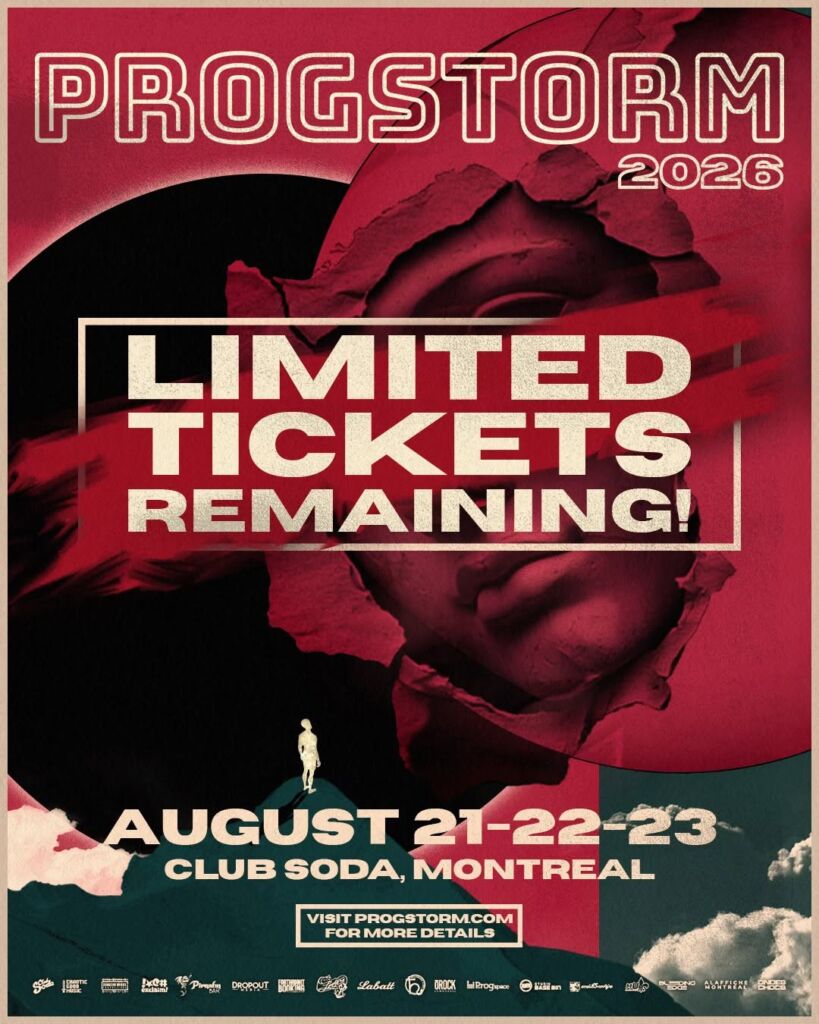
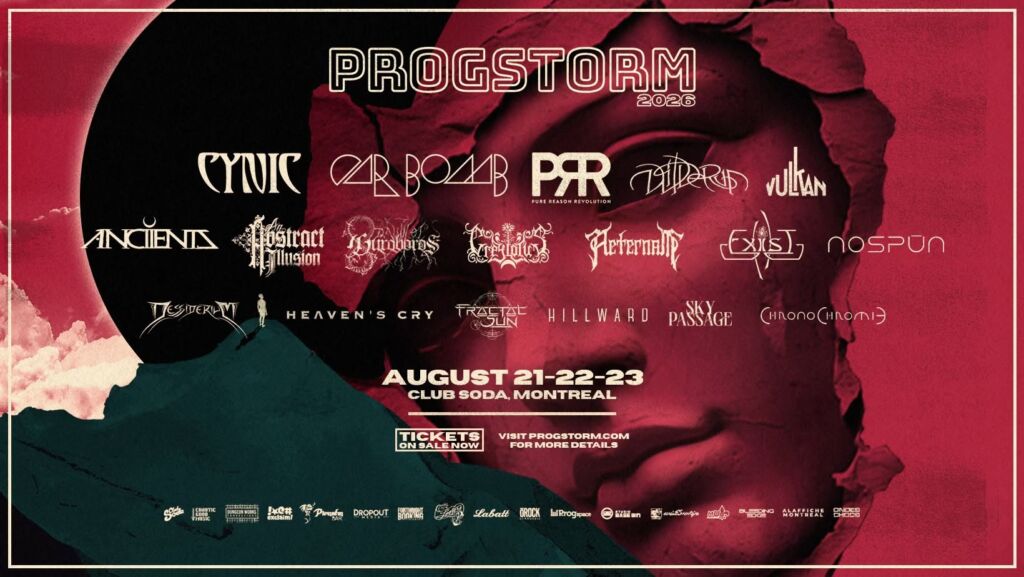
Canada didn’t have a festival built entirely around progressive metal until Jici and Ed decided that was a problem worth solving themselves. ProgStorm launched in Montreal as the country’s first festival dedicated exclusively to the genre, and its second edition arrives considerably bolder than its first: Cynic, Car Bomb, and Pure Reason Revolution headline a lineup that also carves out real space for the genre’s next wave, acts like Nospūn, Fractal Sun, and An Abstract Illusion. Car Bomb returns to Montreal after 15 years away. Pure Reason Revolution makes its first North American appearance in two decades. Bands are crossing oceans to play a festival that didn’t exist three years ago, and fans are crossing them right back just to be there.
We caught up with co-founders Jici and Ed to talk about what the first edition taught them, how they’ve built a lineup that spans everything from technical extremity to atmospheric restraint, the logistics of coordinating international bookings for a niche audience, and why they think prog metal fans, wherever they’re from, tend to find each other and feel a little less alone once they do.
ProgStorm has grown significantly between its first and second editions. What lessons did you learn from the inaugural festival that directly influenced your plans for 2026?
Jici: The first edition definitely gave us the confidence that we were able to grow into something bolder, like securing an iconic venue such as Club Soda and reaching out to top-class bands like Cynic, Car Bomb, and Pure Reason Revolution, just to name a few. We also realized during that first edition that our intuition was right and that there was definitely a scene for this kind of niche prog metal festival, not only in Montréal, but also among so many dedicated prog fans from all over the world who are ready to get on a plane just for this. And contacts, that’s the big one that makes all the difference.
Ed: The first edition was a huge milestone that really brought us together as a solid team and gave us a strong framework for how we do things. Everything was brand new back then, which came with its share of unique challenges and surprises. But we lived through it, learned from it, and this time around, we actually planned for it! As Jici said, building contacts is a major factor, but I also think many bands and fans have heard of us now and know how well we host. For a niche community like prog metal, word of mouth goes a very long way.
Montreal has a rich metal history, but progressive metal has traditionally been underserved by dedicated festivals. What convinced you that the time was right to launch Canada’s first festival devoted entirely to progressive metal?
Jici: The story is that my bandmates in Voidchaser and I had just been invited to ProgPower Europe, and we were so excited about it. At some point, we started talking about why we didn’t have our own prog metal-specific festival in Montréal, or even in Canada. That’s when I decided we should just do it ourselves. The next day, we had a meeting with The ProgSpace, and soon after I called my friend Eddy because I had a feeling this was something he would love to be part of. I think I was right!
Ed: I think we both grew up feeling envious of all the amazing festivals and tours that happen largely outside of North America, and I think we’ve always had that question: Why not here? Montreal has a rich metal history, as you say, and more than a handful of bands here have been pushing the music genre for decades now. So why not here? I had that same question after playing at ProgPower Europe with The Anchoret the year before I returned with Voidchaser, but I somehow accepted that it was the natural order of things. Until I received Jici’s call asking me: Why not? I don’t think I needed that much convincing at that point, haha!
This year’s lineup balances legendary names like Cynic, Car Bomb and Pure Reason Revolution with newer acts such as Nospūn, Fractal Sun and An Abstract Illusion. How do you approach building a lineup that appeals to longtime prog fans while also introducing them to the genre’s next generation?
Jici: Having our own progressive metal bands, Voidchaser and The Anchoret, and being inspired by the many bands in the genre makes us very aware of the community, what bands have great momentum, which ones are the next big things, and which ones have already made a big impact on this music. I’d say it’s both a logical process and a very intuitive one. It’s difficult to qualify, but we’re constantly talking about potential additions to future lineups.
Ed: I think we somewhat act as each other’s soundboards, throwing out ideas and seeing what sticks, what makes sense. I think we are fans first, and being part of the community, we understand and appreciate the music and the bands. And, we love discovering new acts that blow our collective minds. Because of this, one of the festival’s mission statements is to give a platform and showcase lesser-known bands that we truly believe deserve to be seen and heard and supported!
Was there one particular band you considered your biggest “get” this year, either because of scheduling challenges or because you’ve wanted them since the festival was first conceived?
Jici: Wilderun, Anciients, and Nospūn were some of the first bands we thought about when we first started planning ProgStorm. We reached out to them for the first edition, but it didn’t work out at the time. So we’re very happy to finally have them for the 2026 edition! We’re very proud of all the bands on the lineup, but of course being responsible for bringing Car Bomb back to Montréal after 15 years, Pure Reason Revolution back to North America after 20 years, and presenting the North American premieres of bands like An Abstract Illusion and Vulkan is incredibly special. On top of that, allowing these bands to share the stage with a legendary band like Cynic… all of this is a very special feeling.
Ed: Oh, there are definitely a few pie-in-the-sky bands we are proud to present this year…but I don’t think I can choose a favourite. As Jici puts it, all of this is truly a very special feeling.
Many of this year’s performances are rare North American appearances or long-awaited returns. How difficult is it to coordinate these bookings, especially for bands with limited touring schedules?
Jici: Inviting bands from another continent, like An Abstract Illusion, Pure Reason Revolution, Vulkan, or Fractal Sun, is definitely a challenge, but not an impossible one. Some of them are coming for a simple fly-in, fly-out, while for others we’re helping produce a couple of Canadian shows after the festival.
Ed: I think that because this is our second edition of the festival, we have a lot more experience with managing time zones and coordinating touring schedules this time around.
Progressive metal has become remarkably diverse, encompassing everything from classic prog to djent, technical death metal and post-metal. How important is stylistic diversity when curating ProgStorm?
Jici: It is very important, actually. Of course, the identity of ProgStorm Festival is that it’s a festival dedicated to progressive metal. But the way we see it, the genre is not monolithic. There are many subgenres, and there’s a continuum between the extreme and the more melodic, or between the technical and the emotional. We try to bring together fans of all these different styles under one roof.
Ed: What exactly is Prog, anyway? It’s the eternal debate amongst fans and musicians alike. I think we enjoy heavy, dramatic, complicated, avant-garde, and button-pushing music as a whole and that seeps into the Progstorm identity of “progressive metal,” which is, if you think about it, a very umbrella term for such diverse music.
What has surprised you the most about the response from fans outside Canada? Have you seen attendance from countries or regions that exceeded your expectations?
Jici: Especially during the first few months of ticket sales, it’s mostly people from outside Canada who buy their tickets because they’re planning a trip around the festival. It’s something that amazes us every single time, seeing hundreds of people crossing oceans and traveling hundreds or even thousands of kilometers to come to our festival. We’ll never take that for granted.
Ed: The response has been absolutely incredible. Seeing this humble new festival grow into a major destination for so many people is a beautiful shock we are still trying to process. As I’ve mentioned, growing up, I was always envious of the amazing festivals and tours across Europe. Now, seeing so many European attendees flying directly to Montreal just for ProgStorm is truly surreal. In a way, ProgStorm has become both a destination and a bridge—bringing people together from all corners of the globe and making the world feel just a little bit smaller.
Independent festivals face enormous logistical and financial challenges. What has been the biggest obstacle in turning ProgStorm from an idea into a sustainable annual event?
Jici: Like any business, the first few years are much riskier. But Eddy and I have had many conversations about our risk tolerance because we deeply believe in this project, both in the short and long term. We’re learning a lot by observing more experienced promoters, and we do our best to put ourselves in the best possible position to face those challenges. We want to do this for at least as long as our friends at ProgPower Europe and ProgPower USA, who have recently celebrated, or are about to celebrate, their 25th anniversary.
Ed: Risk tolerance and resource management are a big one, for sure. It is important for us to keep the festival true to our vision and stay independent. The first edition acted as a proof of concept, but this still is a very niche festival, and so I think a big challenge is finding sponsorship.
How involved are the artists themselves in shaping the festival experience? Do bands ever recommend other acts or influence future booking decisions?
Jici: We have a lot of bands recommending other bands to us, or encouraging them to apply for ProgStorm, and we’re always open to that. The friends of our friends are our friends, so it always helps us make contact or know that we probably share similar values with a band if they’ve been recommended by a band we already trust.
Ed: All in all, the prog metal community is a very small, tightly-knit one where word of mouth goes a long way. As cliché as this sounds, ProgStorm really is the friends you make along the way – the relationships you develop shape us as human beings and have more than a hand in shaping the festival.
If someone has never attended ProgStorm before, what do you think they’ll discover here that they wouldn’t experience at a larger, more mainstream metal festival?
Jici: The French-Canadian hospitality! I think part of the stereotype about us is true, and it shows in the way we treat every artist and every person attending the festival. We do our best to make everyone feel welcome and important. Also, the prog metal community is an incredibly passionate one. When a prog metal fan meets another prog metal fan, it’s like you feel a little less alone for a second, and you instantly know you share the same love for weird music (and I mean that as a compliment).
Ed: The vibrant city of Montreal has a welcoming character, but the sense of community and passion ProgStorm has for its city, the people, and the music is really hard to put into words. Expect to be welcomed, to have a great time, discover your new favourite band, eat poutine and make new friends!
The progressive metal scene has become increasingly fragmented into subgenres. Do you see ProgStorm as a festival that celebrates that diversity, or are you trying to define a broader identity for modern progressive music?
Jici: We leave room for the different subgenres within progressive metal, and that creates space for extreme bands like Dawn of Ouroboros, Car Bomb, and Greylotus, as well as more atmospheric and contemplative bands like Pure Reason Revolution or Hillward, for example.
Ed: We’re all for diversity and discovery! Progressive music is hard to pin down to a single style, and I think that this is what really makes us love it even more! The important thing with ProgStorm is to present the best possible context for all the different bands to shine and complement each other.
Five years from now, what would success look like for ProgStorm? Are you hoping to remain an intimate destination festival, or do you envision expanding into one of North America’s premier progressive music events?
Jici: With time, I simply hope that people from Montréal and beyond will continue coming together at ProgStorm Festival for a full weekend celebrating the music we all love. I hope people will come to see Montréal as an important destination for progressive metal, where they’ll be used to seeing both their favorite artists at ProgStorm and rare gems making their Canadian or North American debut. That’s my vision.
Ed: Exactly! Being a destination, a meeting point for this beautiful community of music lovers is the only metric of success I truly, deeply care about. The sense of community, more specifically of giving back to the community that has been so kind to us and our bands and projects, is really at the crux of why we do what we do.
Are there any dream headliners or reunion performances that remain at the top of your wishlist?
Jici: Yes, and I’m not going to tell you who they are, but stay tuned, because we already have some of them planned for the 2027 edition!
Ed: Haha! 2027 and beyond! But yes, let’s keep the surprises – it is half the fun after all!
How do you balance commercial realities with artistic ambition when booking a festival aimed at such a passionate—but relatively niche—audience?
Jici: We have a very clear vision for ProgStorm, and because we have that vision, we find solutions around it. Passion comes first, then business and finances find a way.
Ed: It’s not as much of a tightrope as it seems, more like two different buckets altogether. First comes passion, as Jici puts it – always! The rest follows organically, and keeping our goals in mind and close to the heart, decision-making becomes that much easier.
If you could change one misconception people have about progressive metal today, what would it be?
Jici: Some people think prog is just musical masturbation. They have a hard time with odd time signatures, microtonal music, or complex techniques. For me, music and art in general don’t have to be pretty; they can also be disruptive and uncomfortable. Prog metal is a form of art that allows for so many emotions because it pushes the limits of what’s musically possible. That’s something I love about the genre: being moved, surprised, or even disturbed… reacting to music I never could have imagined.
Ed: I’ll ask again, what exactly is prog? I think Prog is all about the musical journey. It’s a long-form type of media format that exists despite social media increasingly pushing for smaller and shorter, one-and-done formats. Prog is not only about pushing the limits of technical ability, but about saying something new and leaving the world a better place for it.
In this day and age of social media, where influencers constantly woo sponsors and opinions are carefully crafted to enrage, it seems the willingness to not take oneself too seriously is becoming a lost art form. Southern California’s Mike Jacoby is a light in that darkness. From an album cover shamelessly imitating Elvis and The […]
There’s nobody in rock music quite like Robyn Hitchcock. Come to think of it, there’s nobody quite like Robyn Hitchcock in anything. A childhood fan of psychedelia and the 60s music he spent his teens immersed in, until the dam broke about the time of punk. But instead of being like everyone else and emulating Sid Vicious, Hitchcock and his new band The Soft Boys owed a debt to a different Syd – Barrett, once of Pink Floyd.
In the 80s he ditched the Boys and embraced the new decade by sounding exactly the same, except with a new level of strangeness and maturity. Songs like Brenda’s Iron Sledge perfected Hitchcock’s unique vision. Now he wrote and recorded immaculate guitar pop welded to lyrics that owed as much to Salvador Dali as to Syd Barrett. The result was a growing following that spilt over from British cult to American college radio, and Hitchcock found himself friends with R.E.M. and the subject of his own concert film directed by Jonathan Demme.
Over the years, Hitchcock’s unique blend of guitar pop, classic songwriting and, for want of a better phrase, skew-whiff psychedelic perspectives on life, love and the pursuit of colourful frogs has always avoided the whimsy that sometimes mars British tea-and-cakes psychedelia. His hinted at a stranger, spookier and much weirder art of darkness. Yes, he wrote Brenda’s Iron Sledge, but he also wrote My Wife And My Dead Wife.
These days he’s lived long enough to have published a second autobiography, and is living in possibly the least Robyn Hitchcock-y city on earth, Nashville. What has changed? Only the world. Because over tens of albums, from The Soft Boys to The Egyptians to the shining now, he’s ploughed a furrow that would be lonely if so many of us weren’t drawn to it.
Now, with his twenty-fifth album, The Confuser, he’s produced one of his best, a collection of confident, certainty-filled songs about an uncertain, unconfident world (“This record seems to be about disintegration,” Hitchcock notes). Old themes re-emerge – there are ghosts and there are dead people – but also there’s a sense of someone in control of their talents.
Songs like How To Feel Alright and the brilliantly named I Am This Thing are Hitchcock at his melodic and verbal best. With guest appearances (Gillian Welch, Kimberley Rew) and a production by Brad Jones that’s simple but brings out the best in the songs, The Confuser showcases Robyn Hitchcock’s talent for combining the enigmatic with the concise. It’s his best album this century.
For centuries, the literary world measured greatness by the size of a battlefield. Poetry was expected to tell stories of kings, generals, and heroes whose names echoed across cities, while the gods lingered just beyond the horizon, shaping the fate of empires. The greatest works of literature were vast epics, celebrating conquest, honor, and war. Scale was everything. The quiet terrain of the human heart, particularly the inner lives of women, was rarely considered worthy of the same attention. Then, in the seventh century BC, on the Aegean island of Lesbos, one woman lifted a lyre and quietly redirected the course of poetry itself.
Sappho stepped away from the epic tradition rather than trying to compete with it. Where others chronicled wars and immortalized legendary rulers, she turned her attention to desire, longing, jealousy, and heartbreak, the conflicts carried not across kingdoms but within a single soul. Writing in the first person, she transformed lived experience into poetry with an intimacy that felt entirely new, laying the foundations of what would become lyric poetry.
In Sappho’s world, poetry was not meant to live silently on a scroll. It was performed before an audience, sung to the music of a lyre, where melody and verse became inseparable. Ancient tradition credits her with introducing the plectrum, the earliest known guitar pick, allowing the strings to be played with greater force and clarity. Her words were not simply read. They were heard, carried by music that gave every line a physical presence and invited listeners into the emotional landscape she had created.
On Lesbos, she built more than a body of work. She created an artistic world centered on women, one that existed beyond the expectations of a male audience. Her poetry spoke openly of love and desire between women without apology or qualification, offering experiences that had long been absent from the literary record. In doing so, she quietly challenged the assumption that only the triumphs of warriors deserved to endure. The emotions she placed at the center of her work possessed a permanence all their own.
The centuries that followed became a struggle over memory itself. Conservative Greek scholars, and later the medieval Church, regarded Sappho’s independent and openly queer voice as something that should not be preserved. Her poems were copied less and less. Scrolls disappeared. Much of her work was lost, whether through deliberate destruction or the quiet neglect that can erase a library as effectively as fire.
Yet her voice refused to vanish.
Today, only fragments and a small number of complete poems remain, but those surviving lines continue to stand among the earliest and most influential works in the Western poetic tradition. Even Plato recognized what history could not dismiss, naming her “The Tenth Muse.” It is a remarkable legacy for a poet whose life’s work survives largely in pieces, each fragment offering only a glimpse of a voice that once filled rooms with music.
The questions that surrounded Sappho have never entirely faded. Every generation decides which voices belong at its center and which are expected to remain at the margins. Women are still asked to soften their perspective, reshape their stories, or fit comfortably within traditions they did not create. Sappho chose another path. She did not wait for permission to enter an existing stage. She built one of her own, proving that the most enduring revolutions are not always fought with armies or crowns. Sometimes they begin with a single voice, a handful of strings, and the courage to sing a different story. More than two and a half millennia later, even the surviving fragments are enough to remind us that some voices leave marks no amount of silence can erase.
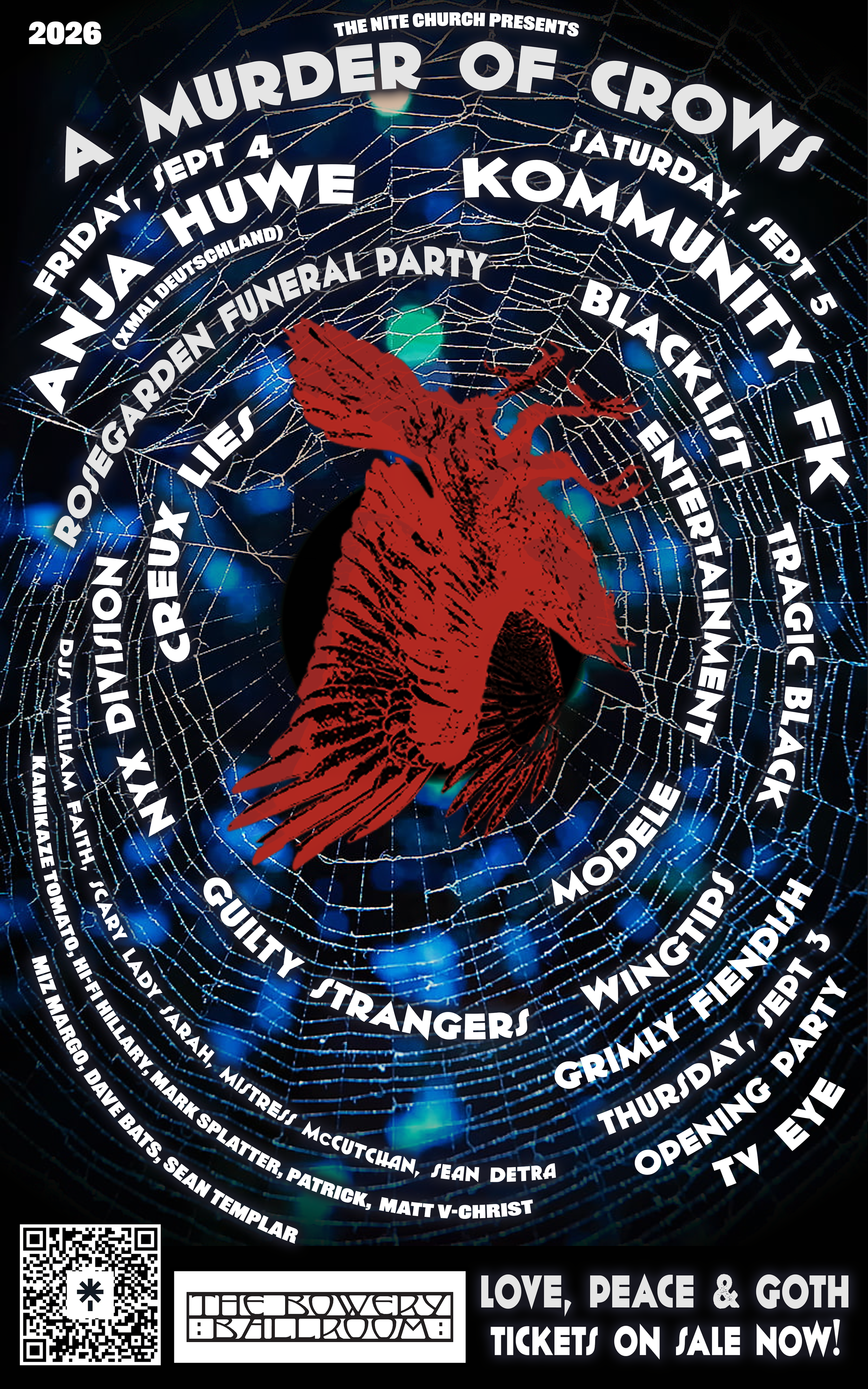
A Murder of Crows returns to New York this September for its eleventh edition, again bringing together artists from across the goth, deathrock, darkwave, and post-punk spectrum. Presented by The Red Party and The Nite Church, the 2026 festival runs from Thursday, September 3 through Sunday, September 6, with an opening party at TV Eye, two main nights at Bowery Ballroom, and a livestreamed closing party.
The central attraction is a pair of Bowery Ballroom bills on September 4 and 5, led by two figures with deep ties to the music’s formative years: Anja Huwe, the former singer of German post-punk pioneers Xmal Deutschland, and Los Angeles deathrock veterans Kommunity FK. Around them, the festival has assembled a cross-generational roster of established underground bands and newer acts from the United States and Canada.
Founded in 2015 after a late-night conversation among scene regulars at Leipzig’s Wave-Gotik-Treffen, A Murder of Crows began as a small Mercury Lounge gathering. It has since grown into one of New York’s most dependable annual dark-music weekends: a festival built around bands that are often overlooked by conventional promoters, plus the DJs, photographers, record collectors, and longtime friends who keep the city’s goth community connected year-round.
Friday, September 4 — Bowery Ballroom
Friday’s program is topped by Anja Huwe, whose work with Xmal Deutschland helped establish a sharp, severe strain of early-’80s German goth and post-punk. Her appearance gives the weekend a direct link to that era, while the rest of the night points toward the scene’s present.
Dallas goth-rock outfit Rosegarden Funeral Party joins California darkwave band Creux Lies, Portland’s Nyx Division, and California’s Guilty Strangers. It is a strong first-night bill, moving from Huwe’s foundational presence through bands that have kept the genre active in clubs, independent venues, and festival rooms on both coasts.
Saturday, September 5 — Bowery Ballroom
Kommunity FK headlines Saturday’s lineup. Formed in Los Angeles at the dawn of the 1980s, the band remains a vital name in the West Coast deathrock and post-punk tradition, with a catalogue that has continued to find new listeners among younger goth audiences.
They will be joined by New York’s Blacklist, whose dark, guitar-driven post-punk has long been part of the city’s underground fabric; Utah deathrock band Tragic Black; Georgia outfit Entertainment; and Ontario’s Modele. The second night promises the rougher, more guitar-forward side of the festival’s programming, with hometown veterans sharing the stage with bands from farther afield.
Opening and Closing Parties
The weekend begins Thursday, September 3 at TV Eye in Ridgewood with the official opening party. Wingtips and Grimly Fiendish will perform live, followed by A Night of a Thousand DJs, featuring Sean Templar, Dave Bats, Patrick, Hi-Fi Hillary, Scary Lady Sarah, William Faith, Mistress McCutchan, Miz Margo, Kamikaze Tomato, Detra, Matt V-Christ, and Mark Splatter. Entry to the opening party is free with a two-day festival pass.
The formal in-person program closes Saturday night, but the festivities continue on Sunday, September 6 with a livestreamed closing party via twitch.tv/redpartynyc.
A Murder of Crows XI takes place at Bowery Ballroom on September 4 and 5. Doors open at 7 p.m.; the events are 21+. Find tickets and complete festival information here.
A Murder of Crows XI 2026 Lineup:
Thursday, September 3 — TV Eye: Wingtips, Grimly Fiendish, A Night of a Thousand DJs
Another anniversary for the band, another opportunity to do something special for the fans and all that. Formed in 1976 by guitarist Mick Jones, Foreigner are now five decades old. Cue a bunch of birthday shenanigans of varying quality.
In The Eye Of The Storm is a live album soundtrack to the concert film of the same title, due for release this summer, so named because at the time of recording on Ellis Island, in September 2025, a massive thunderstorm rolled across New York and almost rained off the filming session. Rather than capturing lightning in a bottle, however, this marketing story somewhat overpromises when it comes to thrills and spills. The eye of a storm in this instance is, notably, rather calm, that word more apt when describing the five tracks taken from the event.
What we have here, of course, is a lineup that doesn’t include any of the original members, although legendary vocalist Lou Gramm and original keyboard player Al Greenwood do put in an appearance and spice things up a bit, Gramm flexing his lung power alongside long-serving vocalist Kelly Hansen and relative newcomer Luis Maldonado.
Keeping things comfortable, we get Double Vision, Feels Like The First Time, Hot Blooded and Long, Long Way From Home from the first two studio LPs, plus, inevitably, I Want To Know What Love Is from Agent Provocateur. It’s all fine and delivered with plenty of passion, although presenting the songs as discreet tracks with almost zero crowd noise means almost zero live atmosphere.
The other half of the album comprises a live acoustic set from Brooklyn’s Dumbo House club and includes Blue Morning, Blue Day, Fool For You Anyway, Juke Box Hero and a punchy eight-minute take on Hot Blooded; the cover of Bridge Over Troubled Water, while perfectly pitched, is a bit of a sombre outlier in the middle of a rather polite party. Compared with the full-powered first half of the record, the acoustic set is, ironically, more characterful and fun, allowing for some lively jamming, although it suffers from the same lack of atmospheric frisson.
Concert films are often hit-and-miss, their soundtracks perhaps even more so. In The Eye Of The Storm is not going to be rubbing shoulders with the classics, and not even going to trouble much of Foreigner’s own live output. Ultimately, it’s a bit of an anniversary curio, a pleasant souvenir to add to the collection.
Iron Maiden have thanked fans who attended Eddfest earlier this month in a six-minute video that takes viewers behind the scenes at Knebworth Park and features contributions from band leader Steve Harris.
In the blurb accompanying the video, the band thank the fans who attended the festival, their merch partners, and the crew, before revealing that the Maiden-branded parasols at Eddie’s Dive Bar were stolen on opening night and expressing their disappointment.
“Not cool, guys,” they say. “Literally.”
Highlights of the video include Harris exploring the festival site and embracing former Irons singer Blaze Bayley, footage of the Infinite Dreams Experience and the Unfair Funfair, as well as live and backstage footage of the band.
“I walked around before the public came in,” says Harris. “I went around and looked at all the stuff. It’s just amazing. All the museum stuff. It was just outrageous, really.”
Harris also reveals that he watched the sets by all the Irons-connected bands he chose to perform on the first night of the festival. This lineup included Bayley, Stray, Gypsy’s Kiss, Maiden United 1980, Airforce and Tony Moore’s Awake.
Iron Maiden kick off the North American leg of the Run For Your Lives tour in Toronto at the end of August, which is followed by dates in Central and South America, New Zealand, Australia and Japan. Full schedule below.
Iron Maiden: 2026 Run For Your Lives tour
Aug 29: Toronto Scotiabank Arena, ON Aug 30: Toronto Scotiabank Arena, ON Sep 03: Montréal Parc Jean-Drapeau, QC Sep 05: Harrison Sports Illustrated Stadium, NJ Sep 06: Harrison Sports Illustrated Stadium, NJ Sep 09: Boston TD Garden, MA Sep 11: Bristow Jiffy Lube Live, OK Sep 12: Charlotte Truliant Amphitheater, NC Sep 15: Hershey Hersheypark Stadium, PA Sep 17: Louisville Louder Than Life Festival, KY Sep 19: Shakopee Mystic Amphitheater, MN Sep 22: Chicago Credit Union 1 Amphitheatre, IL Sep 25: Los Angeles BMO Stadium, CA Sep 27: Los Angeles BMO Stadium, CA Sep 29: San Antonio Alamodome, TX Oct 02: Mexico City Estadio GNP Seguros, Mexico
Oct 05: San Salvador Estadio Jorge “Mágico” González, El Salvador Oct 08: San José Estadio Nacional, Costa Rica Oct 11: Bogotá Vive Claro, Colombia Oct 14: Quito Estadio Atahualpa, Ecuador Oct 17: Lima Estadio Nacional, Peru Oct 20: Buenos Aires Estadio Hurácan, Argentina Oct 21: Buenos Aires Estadio Hurácan, Argentina Oct 25: São Paulo Allianz Parque, Brazil Oct 27: São Paulo Allianz Parque, Brazil Oct 28: Curitiba Arena da Baixada, Brazil Oct 31: Santiago Estadio Nacional, Chile Nov 01: Santiago Estadio Nacional, Chile
Nov 07: Auckland Spark Arena, New Zealand Nov 08: Auckland Spark Arena, New Zealand Nov 11: Adelaide Entertainment Centre, Australia Nov 13: Melbourne AAMI Park, Australia Nov 15: Sydney Allianz Stadium, Australia Nov 18: Brisbane Entertainment Centre, Australia Nov 19: Brisbane Entertainment Centre, Australia Nov 24: Yokohama K-Arena, Japan Nov 25: Yokohama K-Arena, Japan
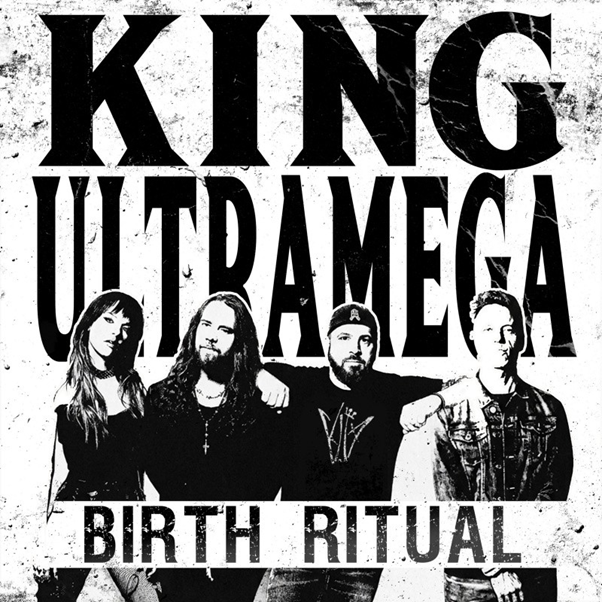 KING ULTRAMEGA, the all-star tribute project honouring the music and legacy of Chris Cornell, returns with its latest single, “Birth Ritual,” a reimagining of the SOUNDGARDEN deep cut originally featured on the legendary Singles movie soundtrack. Arriving one day after what would have been Cornell’s 58th birthday, the release also lands amid the continued celebration of Singles’ 30th anniversary, adding another layer of […]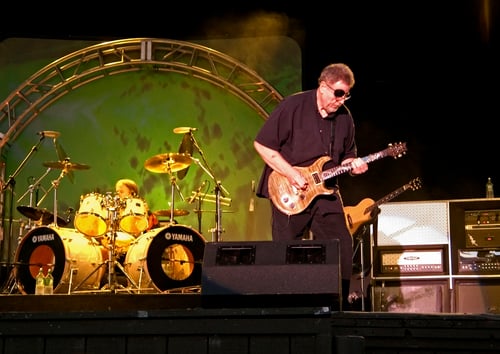
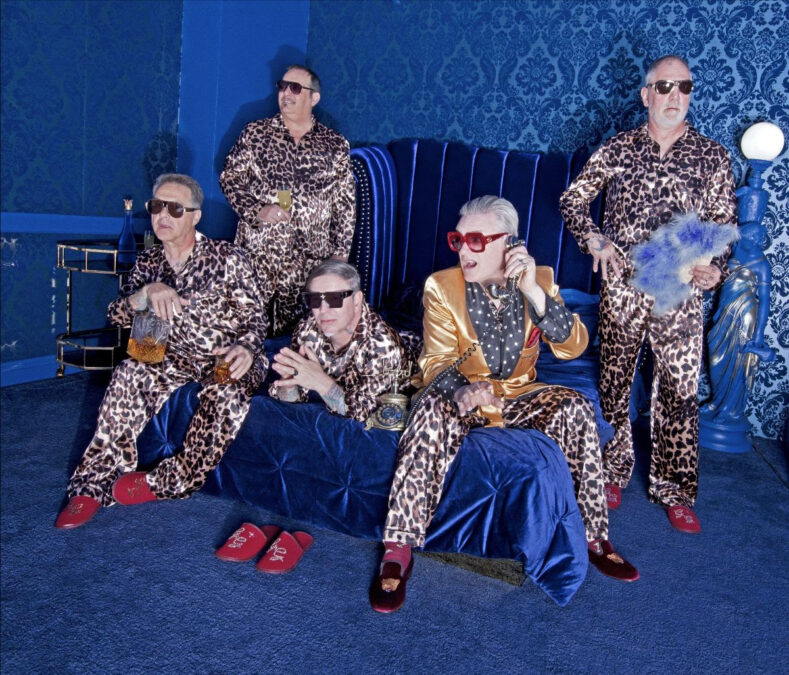 Spike And The Gimme Gimmes have just released We Are The World.