Just ahead of their set at this year’s ‘RPM Fest’.
The post High On Fire Reveal Three New North American Shows For September appeared first on Theprp.com.
Just ahead of their set at this year’s ‘RPM Fest’.
The post High On Fire Reveal Three New North American Shows For September appeared first on Theprp.com.
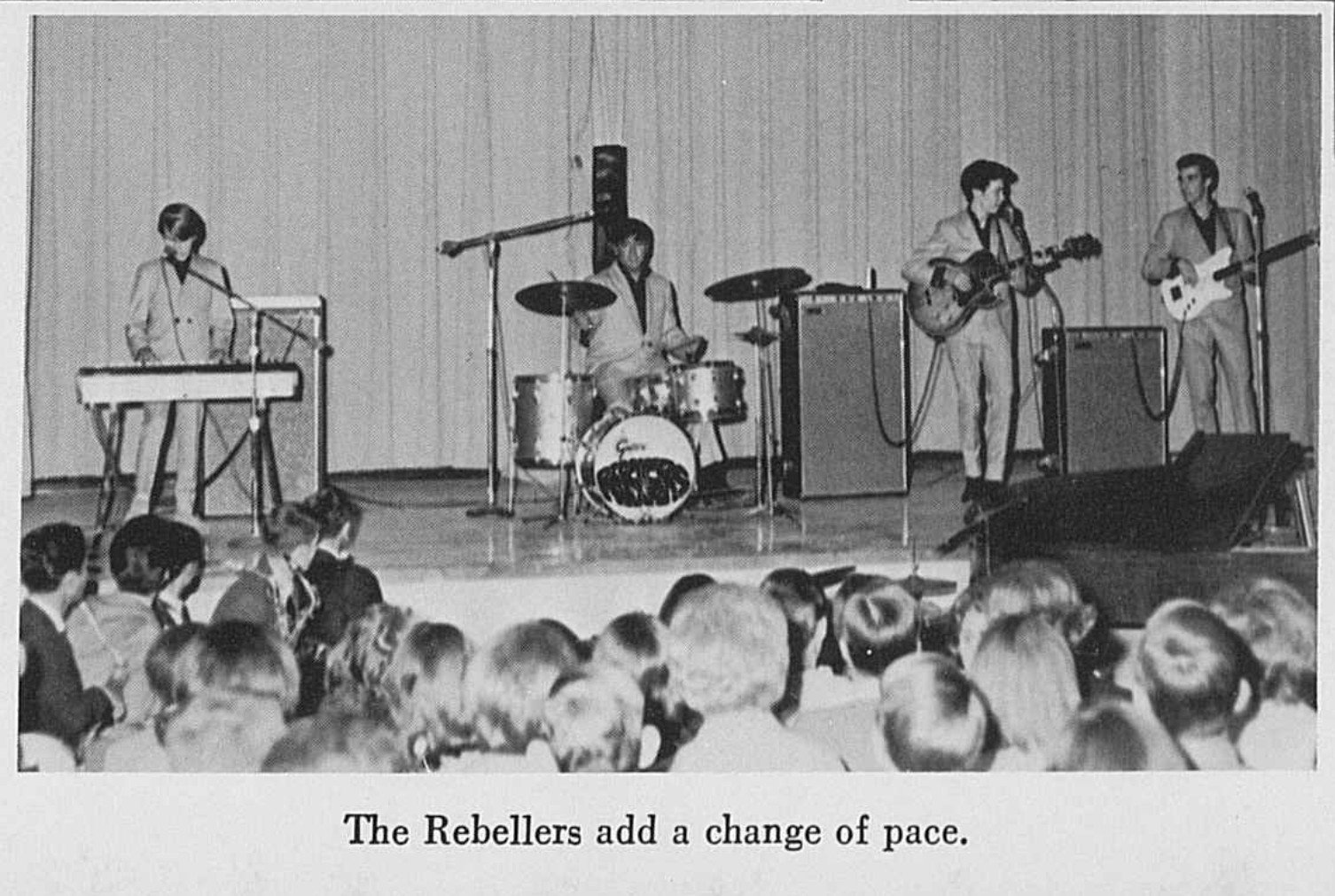
The Rebellers came from the Houston, Texas metro area, recording James Manlove’s original song “The New Generation” for Orbit Records 1114 in the summer of 1967.
Members included:
James Manlove – lead vocals, rhythm guitar
John Manlove – keyboards and vocals
Jeff Gray – bass guitar and vocals
David Rodriguez – drums
The flip, “The Common People” was written as “Love of the Common People” by the prolific songwriting team, John Hurley and Ronnie Wilkins.
Early versions of the Cicadelic compilation Three O’Clock Merrian Webster Time included “The New Generation” mistakenly attributed to the Nomads but with the correct writing credit. This has led some website to include James Manlove as a member of the Nomads, which I believe is incorrect.
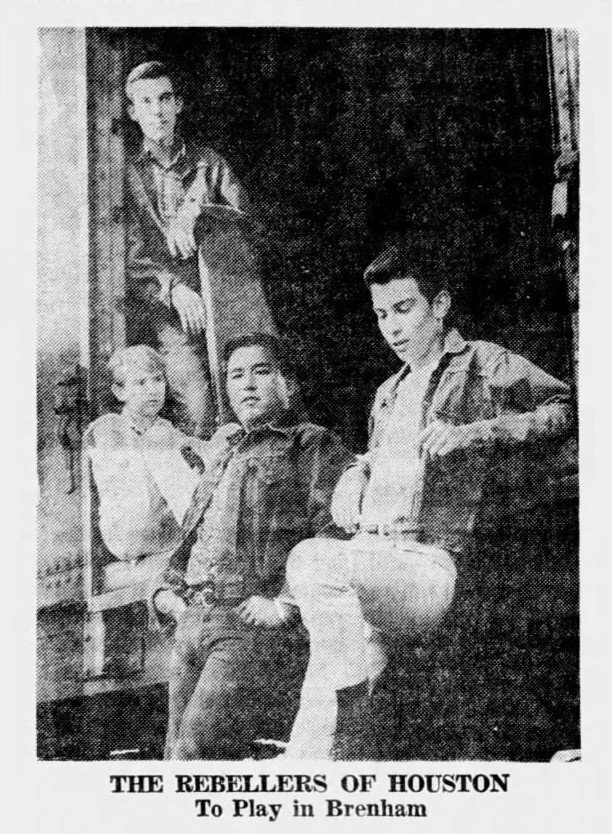
The November 19, 1967 Houston Post nowsounds calendar ran a photo of the Rebellers.
From a photo in the 1968 Milby High School Yearbook, the Rebellers played Milby High School’s Valentines Varieties show that year.
According to his Discogs profile, David Rodriguez was a member of the group, but a commentator on youtube listed the drummer as “Pete”.
Gig list compiled from the Houston Post nowsounds calendar and other news items:
September 20, 1966: there’s a notice of the Rebellers at a benefit with Jack Jones, Garry Mann, the Bachelors and Tommy Graham at the Gulfgate Cellar Club, but that may be a little early for this band, whose frequent gig listings start in May, 1967.
Friday, May 19, 1967: at Insight Au Go Go, 12826 Beaumont Highway 90
Friday, May 26 and Saturday May 27, 1967: at Lions Club Hall, Friendswood, Highway 518
Saturday, June 3, 1967: at Grand Prix, Bay City
Tuesday, June 13, 1967: at Conroe Ballroom, Gladstell West off 45
Friday, June 16, 1967: at the Dungeon in Spring
Saturday, June 17, 1967: at Sea Isle Teen Dance in Galveston
Tuesday, June 20, 1967: at Love Street Light Circus
Wednesday, June 21, 1967: at Hullabaloo
Tuesday, June 27, 1967: at Conroe Ball Room
Saturday, July 1, 1967: at Insight Au Go Go
Saturday, July 15, 1967: at Sea Isle Teen Club, Galveston
Saturday, July 22, 1967: at Buddy McGregor Saturday Show, Foley’s Town Hall
Wednesday, July 26, 1967: at Fun Corral, 9801 Airline
Saturday, July 29, 1967: with the Entire Thing at Sea Isle, Galveston
Friday, August 18, 1967: at the Vault, Pasadena
Saturday, August 19, 1967: at Deer Park Civic Center
Wednesday, August 23, 1967: at Carousel Skating Rink, 9190 Old Katy Road
Thursday, August 24, 1967: at KNUZ back-to-school festival at Sharpstown Center
Friday, August 25, 1967: at Teen Hall, Bryan TX
Saturday, August 26, 1967: at Ken Grant Show, Sharpstown Shopping Center 2 PM, and Insight Au Go Go, Beaumont Highway
Friday, October 6, 1967: at Teen Hall, Bryan
Friday, October 20, 1967: at Lodge Pokrok, 15th and Beall
Saturday, November 4, 1967: at Lions Club, Pearland
Saturday, November 11, 1967: at Kerwin High School, Galveston
Friday, November 17, 1967: with Lemon Fog, Soul Searchers, Duke & the Kingsmen, and the Inquisitions at San Jacinto High School Soul Spectacular
Saturday, November 18, 1967: with Audio Manifesto at Mount Carmel High
Wednesday, November 22, 1967: at Brenham Hanger Club
Friday, December 15, 1967: at the Vault, Pasadena
Saturday, December 2, 1967: at Taylor Hall, Pasadena
Saturday, December 23, 1967: at Nottingham Forest Country Club
Friday, January 12, 1968: at Lodge Pokrok
Saturday, January 27, 1968: at Milby High School
Saturday, February 10, 1968: at Love Street Light Circus
February ?, 1968: Milby High School’s Valentines Varieties show
Friday, March 22, 1968: at the Vault, Pasadena
Friday, April 19, 1968: at Teen Hall, Dickinson
Saturday, May 4, 1968: with Ninth Street Bridge, Lemon Fog, Apollos at Taylor Hall, Pasadena
Saturday, June 8, 1968: Jamaica Beach, Galveston
Friday, June 21, 1968: at Lodge Pokrok
Saturday, June 29, 1968: at Sea Isle, Galveston
Saturday, July 20, 1968: at DERA Hall, Orange
Friday, August 2, 1968: at the New Vault, Pasadena
Instead of asking fans to mourn, Jack is encouraging everyone to celebrate the man who gave generations of rock and metal fans music.
The post The Anniversary of Ozzy Osbourne’s Death Comes With a Request From His Son appeared first on Audio Ink Radio.

Those who thought LOVE became a thing of the past when Arthur Lee passed away two decades ago don’t seem to really know the American band’s history and aren’t aware that one of the ensemble’s founding members, Johnny Echols, is … Continue reading
The post Johnny Echols Brings LOVE Classics Alive On Concert Album appeared first on DMME.net.
Release me from this curse- let my blood flow
As above, we will meet below
Casting a midnight shadow, Bleached Cross opens up their latest single, Blood Moon, with guitars that seem to hang above the song like pale fire, while the drums advance at a funereal pace and the synthesizers spread a cold, metallic glow. The final preview of Wrath, due July 24 through New Morality Zine, finds the Chicago band stretching dark wave toward blackened grandeur without losing the pull of a huge chorus. Every part leans toward catastrophe, yet the song keeps one hand firmly around a love story.
Lyrically, the song traverses fallen kingdoms, fields of impaled bodies, and a private apocalypse populated by obedient demons. Its vampiric imagery carries a conspicuous echo of Francis Ford Coppola’s Bram Stoker’s Dracula: a bereaved lover who feels betrayed by God, moves through the remains of Vlad the Impaler’s cruelty, hungers for blood beneath a crimson moon, and vows to find the beloved in any lifetime. The connection lies more closely with Coppola’s romantic reinvention than with Stoker’s original novel, as grief becomes damnation and desire reaches across centuries in search of reunion.
Blood, sacrifice, and eternal return crowd the verses, but Bleached Cross never allows the imagery to collapse into decorative horror. The violence springs from devotion warped beyond reason. Love has outlived the beloved, leaving behind something feral, blasphemous, and prepared to cross any border that death tries to enforce.
“This song is about eternal love, devotion, and the idea of fate bonding people together even beyond death, as love is the one thing death is unable to take away from the living,” says the band. “The ending implies the taking of someone else’s life to ease their suffering, knowing fate will bind you together again in the next life, but it can also be interpreted as killing yourself to be with someone who has passed…both ideas come up in other songs on the album.”
That final ambiguity cuts straight through the song’s gothic romance. Mercy and murder begin to resemble one another; suicide appears as both surrender and reunion. The guitars climb in patient layers, the rhythm section keeps the procession moving, and the synthesizers thicken the air until the closing passage surges outward in a blast of melody and ruin.
The song’s last ascent offers no clean resolution. Instead, Bleached Cross leave the listener inside the vow itself, where love survives by becoming monstrous enough to follow the dead through every kingdom, lifetime, grave, and promised return. Like Dracula mistaking damnation for fidelity, the song makes eternal love inseparable from the curse that sustains it.
Listen below:
Formed remotely in 2019 by Zak and Alex, Bleached Cross grew from a file-sharing project between Chicago and San Diego into a full live band. Their early demos, split with Shamewave, 2022 self-titled LP, and 2024 collaboration with The True Faith gradually fused post-punk, industrial music, blackened hardcore, and noise rock into a severe but flexible language. Blood Moon shows the band handling that language with new confidence.
Recorded with Andy Nelson at Bricktop Recording during 2025, Wrath circles grief, guilt, death, and redemption across ten tracks. Here, those concerns become a feverish vampiric romance, full of crimson mountains, impaled bodies, infernal vows, and impossible loyalty.
Listen to Blood Moon below, and order Wrath here.
Next month, Bleached Cross will team up with Milwaukee screamo band snag for a tour across the U.S. that begins August 4 in Indianapolis, IN, at Healer.
August Tour Dates:
Follow Bleached Cross:

The post “Release Me From This Curse” — Love Never Dies in Bleached Cross’ Vampiric Single “Blood Moon” appeared first on Post-Punk.com.
If you’d been hanging out in Los Angeles any time in the summer of 1966, there would have been a high chance of stumbling across Arthur Lee. He might have been wearing just one shoe, or swimming trunks; he’d almost certainly be peering over a pair of psychedelic sunglasses. But then Lee could do what the hell he wanted. Barely 21 years old, he was the undisputed King Of The Sunset Strip: the most arrogant, brown-eyed, handsome man in Hollyweird. Lee and his band, Love, were helping usher in a whole new era of Californian music.
Sure, there were more commercially successful bands: The Byrds already had a run of hit singles and a European tour under their buckskin jackets by early ’66, and Brian Wilson was taking the Beach Boys to new creative heights even as his psyche crumbled under the weight of it all. But neither had such a charismatic, striking frontman as Lee. A singer and multi-instrumentalist, he was a lightning rod for the denizens of the burgeoning West Coast underground. “He cut an imposing figure,” says Jimmy Greenspoon, a future member of Love’s LA contemporaries Three Dog Night. “He had a mesmerising presence, a Pied Piper who would lead Love’s audience to a different form of consciousness.”
Love were the unsung heroes of the musical Big Bang that took place in 1966, although they have long been overshadowed by bands such as the Grateful Dead, Jefferson Airplane and especially one-time acolytes The Doors. If Love are remembered today, it’s for their third album, 1967’s Forever Changes, a masterpiece of baroque psychedelia. But a year before that, they blew a hurricane through Los Angeles. And Arthur Lee was at the eye of the storm.

In the sun-bleached Los Angeles of the 1960s, Lee stood out from his peers. An only child, he was born in Memphis to a white jazz musician father and a mother with both African-American and Native-American roots. He was unambiguous about ethnicity. “I’ve been black my whole life,” he said in the 70s. By the time he was five, his parents had divorced and he’d moved with his mother, Agnes, to the historic West Adams district of Los Angeles.
As a swaggering teenager brimming with attitude, his musical tastes encompassed Nat King Cole and Johnny Mathis to The Beatles, The Who and the Rolling Stones (he once compared himself to Mick Jagger – “a black American imitating a white Englishman imitating a black American”). One big influence close to home were The Byrds, who he first saw at Hollywood club Ciro’s in 1964. “I heard Mr Tambourine Man, and didn’t have to hear any more,” he later recalled. “I’d been writing things like that for a long time, but they didn’t fit the shows I was doing. Now here was something not quite dance music but definitely folk rock.”
Lee’s early attempts at music were naïve. As Arthur Lee And The LAGs (the acronym stood for ‘Los Angeles Group’, in the same way that Booker T’s MG’s was a shortening of ‘Memphis Group’) he recorded a single, the Booker T-inspired instrumental The Ninth Wave, for Capitol Records.
Lee wasn’t just keeping songs for himself. In 1964 he wrote My Diary for R&B singer Rosa Lee Brooks. Searching for musicians to play on the session, he enlisted a little-known guitarist from Seattle called James Marshall Hendrix, who had recently been playing with the Isley Brothers. “I wanted someone who could sound like Curtis Mayfield,” he later said of Hendrix.
The pair had a mutual respect, but also an uneasy relationship. Lee would claim that the guitarist took some of his cues from him. “Jimi’s brother told me Hendrix took a look at my first album and said: ‘I think I’ll try it this way’. He stole my dress attire, and I don’t appreciate that shit. But then I can’t play the guitar like him at all.”
That might have been true, but then Lee could sure write great songs, some of which he gifted to other LA acts. They included Everybody Jerk and Slow Jerk, recorded in 1964 by Ronnie & The Pomona Casuals on the back of the Jerk dance craze, and I Been Trying, cut by Little Ray the following year.
Other songs he kept for himself. Most notable was Luci Baines, a Latino-influenced garage rock call-out-the-dance stomp modelled on the Isley Brothers’ Twist And Shout and named after the daughter of then-US Vice President, Lyndon B Johnson. The track was recorded by Arthur’s latest band, the American Four – Lee plus his childhood friend from Memphis, guitarist Johnny Echols, and John Fleckenstein and John Jacobson, a pair of schoolfriends they met in Hollywood. Luci Baines was the first time anyone had captured Lee’s maniacal vocal and adrenalised, proto-punky thrash. He had finally found his own voice.
The American Four rehearsed in Arthur’s mum’s garage, before launching themselves on the burgeoning LA club circuit in late 1964, playing anything from chintzy nightclubs to seedy backrooms. Lee’s volatile temperament and take-no-shit approach was evident early on. During a break between sets at one show, a fist-fight broke out between Lee and Fleckenstein in the parking lot. “Fleck was a football star at Hollywood High School,” John Jacobson recalled, “but Arthur put him down in two punches.”
In April 1965, the American Four took up residency at Brave New World, a gay bar on Melrose Avenue. Gradually, the existing clientele drifted away, replaced by a straight crowd. At the same time, the American Four changed their name to the Grass Roots, inspired partly by Message To The Grass Roots, an album by black American activist Malcolm X, as well as being a nod to their drug of choice.
Over the next few months, musicians drifted in and out of the Grass Roots. One was guitarist Bobby Beausoleil – ‘Bummer Bob’ to his bandmates – who joined when Lee decided he wanted to focus on singing and banging a tambourine. When Lee was unable to pay his wages, Beausoleil was fired. He subsequently fell in with Charles Manson’s ‘Family’, and is currently serving a life sentence for stabbing a schoolteacher to death in 1969.
Beausoleil’s replacement would prove to be much more significant to the band. Bryan MacLean was a hip LA musician and scenester. Born to wealthy Hollywood stock, he’d befriended Jack Nicholson, dated Liza Minnelli and wangled a job as David Crosby’s gofer on a recent Byrds tour, before unsuccessfully auditioning for a role in The Monkees. MacLean’s red-blond hair and Wasp-y good looks were matched by his musical talents. Cannily, one of the reasons Arthur hired him was because of his connections to the Byrds’ crowd – including their groupies – who he could draw to his band’s shows.
There was just one obstacle. Another, more successful LA band were using the Grass Roots moniker, forcing a seething Lee to change the name of his own band. In Bryan MacLean and Johnny Echols’s version, they passed a billboard advertising Luv Brasseries on Melrose Avenue. When Johnny informed Bryan that Arthur used to work there, they decided to present the name to the singer, albeit in a more traditional spelling. And so, in August 1965, the Grass Roots became Love.
For all his talent, Lee – and Love – could easily have been overlooked had Jac Holzman, president of New York’s Elektra Records, not decided to take a trip to the West Coast in late 1965. Having missed out on the Lovin’ Spoonful, and tiring of the Big Apple’s tourist-trap folk scene, Holzman flew to LA in search of something new. Browsing local listings for ideas, he was drawn to a show by Love at Bido Lito’s Club, a claustrophobic brick enclave in a cul-de-sac known as Cosmo Alley. Holzman was instantly sold.
“I saw Arthur on stage,” Holzman says today, “and I knew this was ‘my band’ and that I was going to do whatever it took to sign Love. If the hairs on the back of my neck go up, I pay close attention. Bido Lito’s was a scene from Dante’s Inferno: bodies crushing into each other; silken-clad girls with ironed blonde hair. Love were cranking out [covers of] Hey Joe and My Little Red Book, a song by Bacharach & David in the Woody Allen movie What’s New Pussycat? – hip but straight. And here was Arthur Lee going at it with manic intensity.”
Love didn’t have management or a booking agent, which allowed Holzman to deal directly with Lee. When he offered the band a deal with his label, there was little reluctance from Lee. Within a few weeks, Elektra had rushed them into Sunset Sound Studio to record their debut album, with Holzman producing his first rock record alongside trusted accomplice Mark Abramson and 21-year-old engineer Bruce Botnick. The latter was amazed that the band completed the task. “Arthur was stoned twenty-four hours a day,” he later recalled.
Most of the songs that made up the album were already in Love’s live set, including the MacLean-written Softly To Me. “We were just getting the hang of it when we made the album,” MacLean said.
As well as Lee, Echols and MacLean, playing on the Love album were ex-Surfaris bassist Ken Forssi and Swiss-born drummer Alban ‘Snoopy’ Pfisterer. The latter replaced Don Conka, who had been sacked after spiralling into heroin addiction. Conka was the subject of Signed DC, a detailed account of a user every bit as harrowing as the Velvet Underground’s Heroin, which it preceded by six months.
The Velvets themselves were early Love fans – their guitarist Sterling Morrison remembered his band’s attempts to cover Love’s raucous version of My Little Red Book, trying to unravel the rhythm and failing miserably. The rest of the Love album bridged the worlds of Californian folk rock, proto-garage rock and the first glimmerings of psychedelia, even if it didn’t quite scale the same heights as The Byrds.
Featuring a distinctive logo designed by Elektra’s Bill Harvey, the cover of Love showed the band in the grounds of The Castle, the red-brick mansion in LA’s Beachwood Canyon once owned by horror star Bela Lugosi. Love had taken up unofficial residence in The Castle, squatting there in early 1966. They would be visited by friends and fellow musicians including Jim Morrison, Nico, John Phillips of the Mamas And The Papas and the Rolling Stones’ Brian Jones.
“Enter The Castle at your own risk,” Lee recalled. “The doors were always open. There was no violence in The Castle though, no guns. The bands never fought each other. Oh, but one day I was leaning off my balcony and Bryan MacLean wandered up to Jim Morrison by the pool and Jim slapped him round the face. Funniest thing I ever seen.”

Holed up in their own Xanadu, Lee and Love would ingest copious LSD and then hit town to bask in starlight. Their reputation was spreading, their profile growing as they were moving up the LA food chain. “It was crazy because we’d been living in a cheap motel room, but now we had cars and were dating Playboy bunnies,” says Johnny Echols. “Anything you imagine happening at the Playboy Mansion happened at The Castle. The Castle was a Love Inn where local musicians would socialise and party.”
Despite the wanton air of hedonism in which he was immersed, Lee handled Love’s finances. “I wasn’t materialistic,” he told me, “I just didn’t trust the others with the money.” Not that he himself was hugely reliable.
“He wanted a five-thousand-dollar advance for the record,” says Herb Cohen, who managed the band briefly. “So Love arranged to meet Holzman at the bank. Jac cashed the cheque and counted out the five-thousand dollars in fifty-dollar bills, after which Arthur tells the other guys ‘Wait at the hotel. I have to get something.’ Arthur returns a few hours later and shows them a two-door Gullwing Mercedes, telling them that this was for the band and their equipment. No one says a word. Then he hands each guy a hundred dollars – all that’s left of the advance.”
“Arthur had a curious sense of cubic capacity,” says Holzman. “That car was just big enough for him, his girlfriend and his brand new harmonica.”
Lee got a dose of reality when Love came out in March 1966, and it only made No.57 on the Billboard chart. My Little Red Book, released as their first single, didn’t do much better.

It was on stage where Love truly ruled. Michael Stuart, drummer with local LA outfit the Sons Of Adam and a future member of Love, saw plenty of shows where Lee lorded it over his group.
“Arthur was decked out in his multicoloured sunglasses, combat boot – one only – and scowl, banging the hell out of his tambourine,” he recalls. “John Echols had a lead-guitar style like no other: loud and frantic, soft and melodic. Jazz, rock, classical and flamenco… he could do it all. Played a double-necked Mosrite twelve-string and six-string – equally accomplished on either neck. Bryan MacLean, eyes closed, head tilted to his chest, appeared to be asleep while he played.”
Despite the apparent air of bliss, there were strains between Lee and MacLean. Jealous of the attention his bandmate was getting from the girls, Lee would openly criticise his playing. MacLean’s mother, Elizabeth McKee, witnessed this friction at one gig in mid-1966. “I had never seen Love live, and I went to the Whisky,” she remembered. “I got right under Bryan’s nose, and Arthur was saying to him: ‘Don’t play, you’re out of tune!’ Bryan kept his eyes straight ahead, kept playing and ignored him.”
That summer, Love left LA to show the San Francisco hippies how it was done. They played three shows at the Avalon Ballroom’s Hupmobile-8 in May, with Captain Beefheart and Janis Joplin watching from the wings. In July they headlined the Independence Ball over the Grateful Dead at the Calliope Warehouse in San Francisco, and topped the bill over Big Brother And The Holding Company at the Avalon Ballroom again. In August they astounded the Fillmore auditorium, before returning to LA for a series of Whisky A Go Go shows – including matinees – with The Doors as special guests.
Doors drummer John Densmore was an early fan of Love and of Lee’s. “I was a jazz snob running round Hollywood,” he says. “I stumbled in and here’s this group who are mixed racially, deafeningly loud, wearing ridiculously tight pants and fringe jackets. My mind was blown. They looked amazing and they were brilliant on stage.”
Love’s breakthrough finally came with the single 7 & 7 Is, which reached No.33 in the US in July 1966, giving both Love and their label, Elektra, their first hit. Sonically, it was breakneck punk 10 years before punk, but the inspiration was purely lysergic. Drummer ‘Snoopy’ Pfisterer described the single as “acid-flash imagery – me and Arthur took a lot of LSD together in that period”. They would need 40 takes to get it right, something that caused tension. “Arthur told me exactly how he wanted to play it,” said Snoopy. “Because of that he thinks he played it! The only take you hear is mine.”
By the time Love entered RCA Studio B in September 1966 to record their second album, Da Capo, Pfisterer had been moved from drums to organ and harpsichord – an indication of Lee’s ever-increasing ambition. Aware of Jim Morrison’s ambition “to be as big as Love”, Lee pulled out all the stops.
Da Capo was a tripped-out masterpiece. Or at least side one was. Gloriously psychedelic and melodically ornate, with Latin American overtones demo’d on his black Gibson acoustic, Lee exchanged the occasional morass of the debut for six pristine, classic pop songs: Stephanie Knows Who (about a girl caught in a love triangle between Lee and MacLean); MacLean’s Orange Skies, ¡Que Vida!, 7 & 7 Is, The Castle (a wanderlust musing on returning to mother, or going to Mexico) and the gorgeous She Comes In Colors. Integrating session man Tjay Cantrelli’s flute and Snoopy’s harpsichord, Lee wrote the latter about his acid fuck buddy Annette Ferrell. It was later ‘borrowed’ by the Stones on She’s A Rainbow.
Side two was taken up entirely by the 19-minute wig-out Revelation (aka John Lee Hooker). Do Love fans ever play this? Not so often. “Oh, that long song,” Bryan mused. “It was a shame. We should have had more songs. But we didn’t.” Echols, who steered Revelation, disagreed. “An underrated song. The live version is really cool, one of the first true fusion jams which allowed the musicians to stretch out, and take solos. It was meant to be live in the studio, with the audience from Bido Lito’s dancing as we played.”
Pfisterer’s replacement on drums, Michael Stuart, remembered the stop-start nature of recording the track. “We took regular breaks to smoke Arthur’s blond Afghan,” he said. Lee’s own interest in Revelation was minimal.
Halfway through a four-album deal, the sales figures were depressing: Da Capo made No.80. Chances were blown. After appearing on teen TV shows Hullabaloo and American Bandstand in spring ’66, lip-synching to My Little Red Book and the bittersweet A Message To Pretty, Love were ostracised because they had blanked presenter Dick Clark (“Hey, I hear you guys live in a castle?” Silence. “We must visit – for a second”).
They bamboozled the press with a couldn’t-give-a-shit stance, including the influential KRLA Beat, whose reporter they insulted when she visited The Castle and heard Bryan having sex in another room. He claimed he was too ill to be interviewed. “The new album will be prettier sounding… easier to listen to,” Lee told her. Unaware her subjects were tripping, the writer concluded: “Only when a group really reaches the top can their careers withstand what they may suffer from being continually rude and uncaring to fans and reporters alike. In my opinion, Love will soon be on many blacklists in the music industry, rather than ‘In My Little Red Book’, where they want so badly to belong.”
Love’s biggest problem, however, was Lee’s refusal to tour outside California. Holzman implored him to bring Love to New York, but Lee wouldn’t budge. “He was jealous of The Doors’ success”, says Holzman. “But he wouldn’t travel far from his perch in LA.” Ever enigmatic, Lee had his reasons. On ¡Que Vida! (meaning ‘a wonderful life’) he sang: ‘With nickels and dimes, you soon will have a dollar/Am I in your time, I see no need to swallow/Or catch a plane to travel, my mind’s not made of gravel.’
Photographer Guy Webster took the back cover image for Da Capo. “I took individual group member shots against a white background, with Arthur Lee in prime position,” he recalls. “I doubt if they were in my studio for an hour. Arthur shook my hand and said: ‘Do what you want with the cover, I really don’t care.’ He was nonchalant, to say the least.” So much so that the front cover of Da Capo is a virtual re-enactment of its predecessor.
Love ended 1966 with three nights at the Fillmore, headlining over Moby Grape, showcasing all of Da Capo. But things were shifting. Buffalo Springfield had landed, and Jim Morrison had given Lee a tape of The Doors’ forthcoming debut album. Radio was playing the Beach Boys’ Good Vibrations. But Lee foresaw only bad things. Ken Forssi and Johnny Echols were heading towards heroin addiction. Lee left The Castle and moved to Mulholland Drive, where Forssi would shoot up. “Then we’d look down over the city, Arthur staring and wondering about the ambulances and the sirens,” recalled Forssi.
Lee’s mind was already elsewhere. As Da Capo ebbed away, he began constructing his masterpiece, Forever Changes, which would emerge more than a year later – a lifetime in the late 60s. That album would fare even worse than Love and Da Capo, but it would be garlanded belatedly as one of the great albums of the era.
Love split in the early 70s, after a final album, False Start, most notable for featuring Lee’s old buddy Jimi Hendrix playing guitar on one track. Lee embarked on an erratic solo career that wasn’t helped by his struggles with drugs; he was jailed for 12 years in 1996 under California’s ‘three strikes’ law for negligent discharge of a firearm (he served five years). When he was diagnosed with the myeloid leukaemia that would eventually kill him in 2006, a group of celebrity fans, including Robert Plant, Ian Hunter and Ryan Adams, banded together for a tribute concert to raise money for his medical bills. His flame might have burned bright for a brief length of time, but it left an indelible mark on everything that followed.
“We opened the gate for The Doors, Buffalo Springfield and all the groups that followed,” Lee once said. “We were the beginning, the ones who spread the scene to San Francisco. We were only a small spark on the Sunset Strip at first, but we became a wildfire.”
 Wacken Open Air 2026 is sold out! All 85.000 tickets for the 35th edition of the festival taking place from July 29 to August 1 have been sold. “We’re delighted to celebrate this anniversary with such a huge crowd,” says W:O:A founder and promoter Thomas Jensen. “Preparations here in the North are continuing at full […]

Every era that seemed ready to leave Cher behind instead handed her another stage. She entered the 1960s beside Sonny Bono, became a solo chart force and television star, rebuilt herself as an Academy Award-winning actress, returned to rock radio in the 1980s, and then altered the sound of dance-pop with “Believe.” Her A-to-Z song history is therefore less a straight line than a sequence of reinventions, stretching from folk-rock and story songs to disco, power ballads, movie music, ABBA interpretations, holiday recordings, and late-career collaborations. The entertainment industry has never seen another force quite like Cher. With an unmistakable
The post Complete List Of Cher Songs From A to Z appeared first on ClassicRockHistory.com.