Mint Condish stumble gloriously into chaos on Rat Utopia, an unhinged folk-punk fever dream filtering modern society through the lens of John Calhoun’s infamous behavioral experiments. What begins with Americana grit quickly mutates into something far stranger and more confrontational, balancing nervous energy, aggressive outbursts, and darkly satirical storytelling. There’s an appealing roughness to the whole thing, as if the song might collapse at any second but somehow keeps pushing forward through sheer conviction. Created by a lifelong bassist stepping into solo territory for the first time, Rat Utopia feels raw, unpredictable, and refreshingly unconcerned with polish or safety.
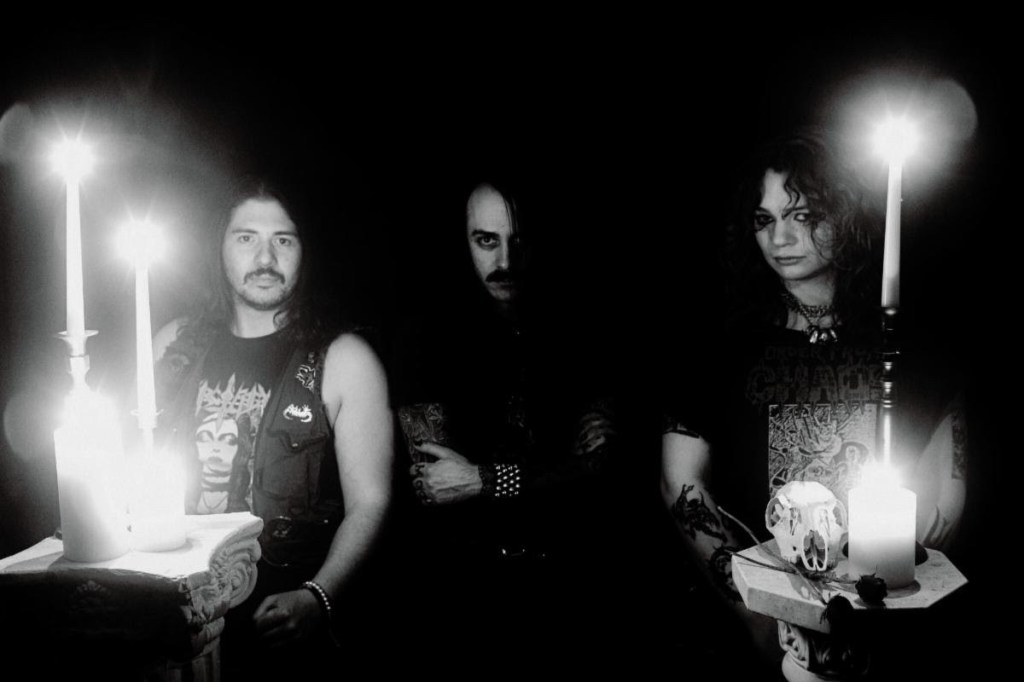
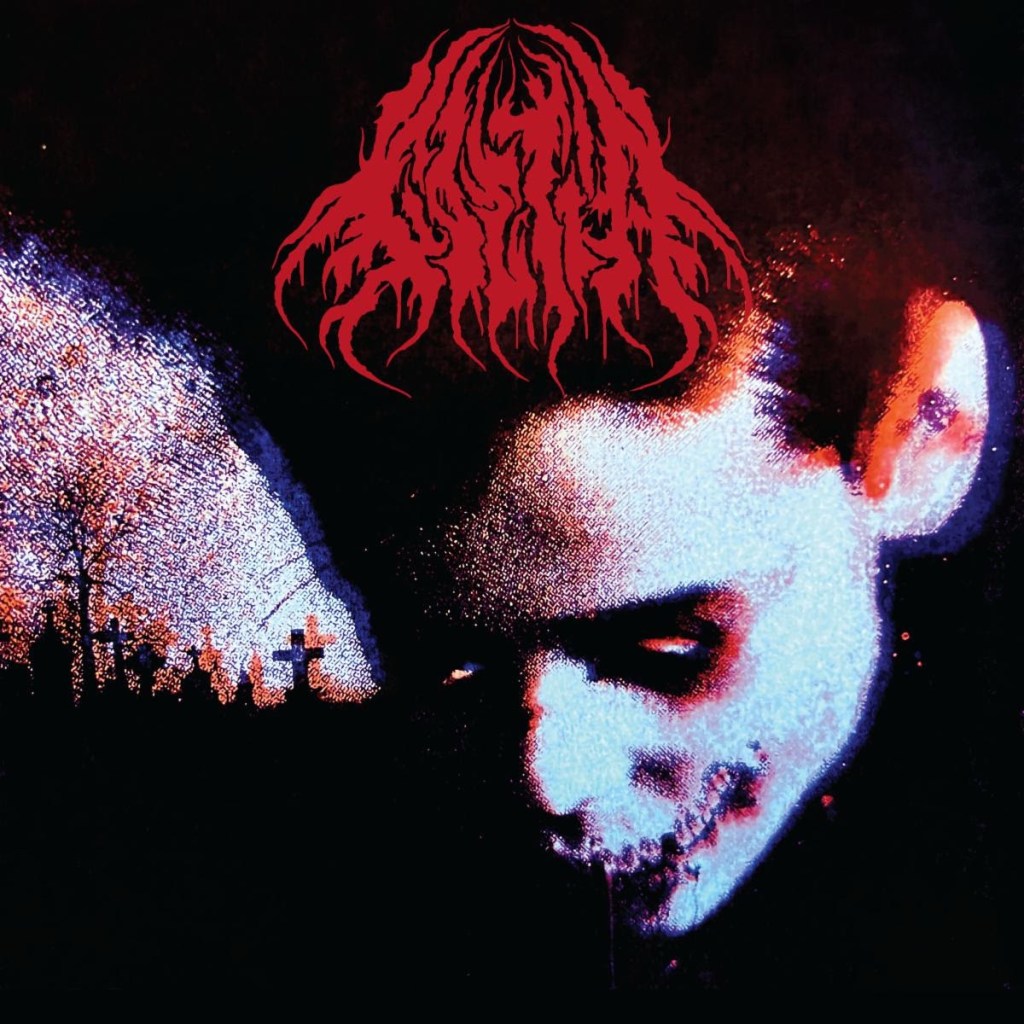
Washington, DC death metal outfit GOETIA will release their debut full-length, Mortuary Cult, on June 12th via Carbonized Records.
GOETIA was forged in the Fall of 2022 by bassist/vocalist Matt Scott, guitarist Demir Soyer, and drummer Nadia Tydings-Lynch. Soyer and Scott previously played together in the DC death metal band Perpetuated, with Tydings-Lynch filling in on drums for their last show. Embracing the chemistry of this lineup led to the immediate founding of GOETIA following the performance.
Influenced by the likes of Morbid Angel, Terrorizer, and Kreator, GOETIA self-released their first EP in May of 2023 which was re-released on Persistent Vision Records followed by regular touring throughout the year.
The band’s second EP, Tomb Essence, dropped in 2024 via Heavy & Fast Records, and finally a 7” in 2025 on Voice Of The Cielago (run by Scott). These three EPs form a loose trilogy centered on occult themes, all recorded and mastered by Matt Michel (Viva Studio) and Will Killingsworth (Dead Air Studios) respectively.
This year’s Mortuary Cult LP was written and recorded during these years by the same team, amidst tours alongside Altars, Vastum, Healing Magic, and others. The debut full-length is more conceptually driven, featuring ten tracks inspired by experiences in an old cemetery in the Washington, DC suburbs. Musically the aim is the same; fast paced death metal with an abundance of guitar solos and blast beats.
In advance of the record’s release, today the band unleashes the title track and first single. Scott elaborates, “‘Mortuary Cult,’ along with all the tracks on this album, was inspired by a local cemetery I used to visit frequently. Cemeteries are very peaceful places but also have a strange feeling of being liminal spaces. People come to them for a variety of reasons, so each song on the album is meant to represent the feeling of a particular trip. For this track, I was exploring the idea of people visiting for a sinister purpose, the worship of the dead through ritual. This was one of the first tracks written for the album, and the speed and structure helped define the tone of the entire record.”
Mortuary Cult was recorded by Matt Michel at Viva Studio and mixed by Will Killingsworth at Dead Air Studios with cover artwork by Chris Taylor and logo by Matt Scott.
Mortuary Cult will be released on CD, LP, cassette, and digital formats.
Find North American preorders HERE, European preorders HERE, all other international orders HERE and digital orders HERE.
Mortuary Cult – Track Listing:
1. At Eternity’s Gate
2. Lanterns Of The Dead
3. Posthumous Execution
4. Mortuary Cult
5. Corpse Candle
6. Earth Inferno
7. Bestial Tomb
8. Excarnation
9. Tortures In Time
10. Eternal Samhain
GOETIA Live: 6/19/2026 Rock Room – Pittsburgh, PA 6/20/2026 The Baby G – Toronto, ON 6/21/2026 TBA – Quebec City, QC 6/22/2026 Geno’s – Portland, ME 6/23/2026 Ralph’s Rock Diner – Worcester, MA 6/24/2026 Nikki Lopez – Philadelphia, PA 6/25/2026 Fuzzy Cactus – Richmond, VA 6/26/2026 Static Age – Asheville, NC 6/27/2026 Bogg’s – Atlanta, GA 6/28/2026 Mad Malt’s – Huntsville, AL 6/29/2026 DRKMTTR – Nashville, TN 6/30/2026 Hi Tone – Memphis, TN 7/01/2026 Fubar – St. Louis, MO 7/02/2026 Reggie’s – Chicago, IL 7/03/2026 Black Circle – Indianapolis, IN 7/04/2026 Gazebo Park – Huntington, WV 7/10/2026 DC9 – Washington, DC * Record Release Show *
GOETIA: Matt Scott – bass, vocals Demir Soyer – guitars Nadia Tydings-Lynch – drums
Afterlife craft a hypnotic descent into memory and emotional projection on Lovers Maze, a haunted alt-pop piece shimmering with nocturnal melancholy. Working between Copenhagen and Paris, Olivia Danielsson builds an immersive world where sleek synths, blurred club textures, and layered vocals drift through themes of longing and psychological disorientation. The track moves like a half-remembered dream, balancing elegance with emotional unease while never losing its addictive pulse. Inspired by mirrored reflections and inner confinement, Lovers Maze feels cinematic in the truest sense, unfolding like a late-night hallucination where desire, nostalgia, and identity quietly collapse into one another.
Motionless In White has announced Decades, the band’s seventh studio album, due July 17 via Roadrunner Records. Alongside the announcement, the band released a lyric video for lead single “Playing God,” which features a guest appearance by Slipknot frontman Corey Taylor. Additional guest spots on the album include Skylar Grey and Dark Divine‘s Anthony Martinez.
The quintet — vocalist Chris Motionless, guitarists Ricky Olson and Ryan Sitkowski, drummer Vinny Mauro, and bassist Justin Morrow — recorded Decades in upstate New York and Los Angeles with co-producers Drew Fulk and Justin “JD” deBlieck. The album draws on the band’s full stylistic range — metal, hardcore, goth, industrial, and electronic — while pushing into new territory.
On “Playing God,” Motionless said, “I can’t believe how aggressive Corey sounds. It’s an observational commentary on toxic Internet culture and the people who perpetuate it. The Internet has gotten worse and worse to the point where only negativity, hatred, and lies are at the forefront of everything you see. It’s very frustrating because I thought social media was supposed to be a mechanism to connect, but all it does is divide.”
Reflecting on the band’s longevity and the new record’s identity, Motionless said, “We were never afraid to take risks. This band has not only lasted two decades, but we’ve also outlasted all of the obstacles we’ve faced. We’re still grinding. No matter how far we expand the universe that is Motionless In White, we’re going to preserve the heart, soul, and roots of where we came from. We are never going to abandon heartfelt, emotional, and heavy songs. We are never going to abandon what mattered to us the most when we started. We’re finding new ways to emphasize those stories with exciting sounds and looks, but the vision is the same. It’s always been this grand, dramatic, and theatrical entity. I’m proud we haven’t gotten comfortable.”
Motionless added: “Decades is definitely heavier than some of our past albums. Our current world breeds more aggressive energy, anger, and resistance.”
Decades tracklist:
“Decades”
“log_in//crash_out”
“R.I.P.” (feat. Skylar Grey)
“Fight Like Hell”
“Playing God” (feat. Corey Taylor)
“All That I’ve Ever Known”
“Blood Rave” (feat. Anthony Martinez)
“Love At First Bite”
“Count Back From Zero”
“Blood Pact”
“Afraid Of The Dark”
“Sunglasses At Night”
“Hollywood” (bonus track)
“Fight Like Hell” (feat. Outlier) (bonus track)
Motionless In White is currently on a North American arena run with Bring Me The Horizon. The band’s next headlining outing, “The Sweat And Blood Tour,” kicks off July 14 in Bridgeport, Conn., and runs through Aug. 15 in Sterling Heights, Mich., with support from Lorna Shore, Fit For A King, and Static Dress. The run — the band’s first U.S. headline tour in nearly three years — includes their first-ever headline performance at Red Rocks.
EVERGREY, Gothenburg’s masterminds of melancholia, release another song leading up to their upcoming fifteenth album, Architects Of A New Weave, out June 5, 2026, via Napalm Records. The encouraging new single Leaving The Emptiness offers a chorus that breaks through like sunlight piercing storm clouds. More than 30 years into their career, EVERGREY reshape their […]
Today, the world’s fastest band speeds up and into its biggest, boldest and most electrifying era to date: DRAGONFORCE have announced Alissa White-Gluz as their newest member and first frontwoman. In a momentous union of two storied and unstoppable forces, the preeminent pioneers of extreme power metal will now be joined by one of metal’s […]
In 2026, one of Australia’s most prolific live performers will deliver mind-bending musicality across the country with guitarist, producer and composer extraordinaire PLINI today announcing a headline run on home soil, fresh off the release off his hotly-anticipated new album An Unnameable Desire with special guests DELTA SLEEP (UK) for all dates, CENOBIA for Brisbane, […]
The Kerwick Hotel in Redbank, Brisbane comes alive on May 30 as Auditory Attack Volume One fires up for a night of free live music. Gutterfire, 308, F.U.C and Light Eater are your nominated noise merchants for the evening, with a series of raffles throughout the event where you can win a stack of prizes […]
Disclaimer: I received this product in exchange for my honest review. The Metalverse is an independent website, and all opinions expressed are our own. We thank the team at Kiwi Ears and Linsoul for giving us this opportunity.
VST Review Table
AUDIO PRODUCT NAME
9.1
The Metalverse Score
Pros
Slamming but controlled sub-bass
MEMS driver brings airy, pleasant treble
Strong instrument seperation and soundstage
Solid, aliminum build
Cons
Mids sit slightly recessed, not a vocal-focused IEM
Kiwi Ears launched in 2019 and has wasted absolutely no time making a name for itself in the in-ear monitor space. In just a few years, they've put out a range of well-regarded IEMs that consistently outperform their price tags—something that's easier said than done in a market flooded with options. Their approach tends to favor clean, neutral-leaning tuning with enough musical character to keep things interesting, and they've earned credibility through collaborations with respected community voices like Crinacle. With the Halcyon, Kiwi Ears aiming to make a statement about what's possible in driver technology at this price point.
What Is the Kiwi Ears Halcyon?
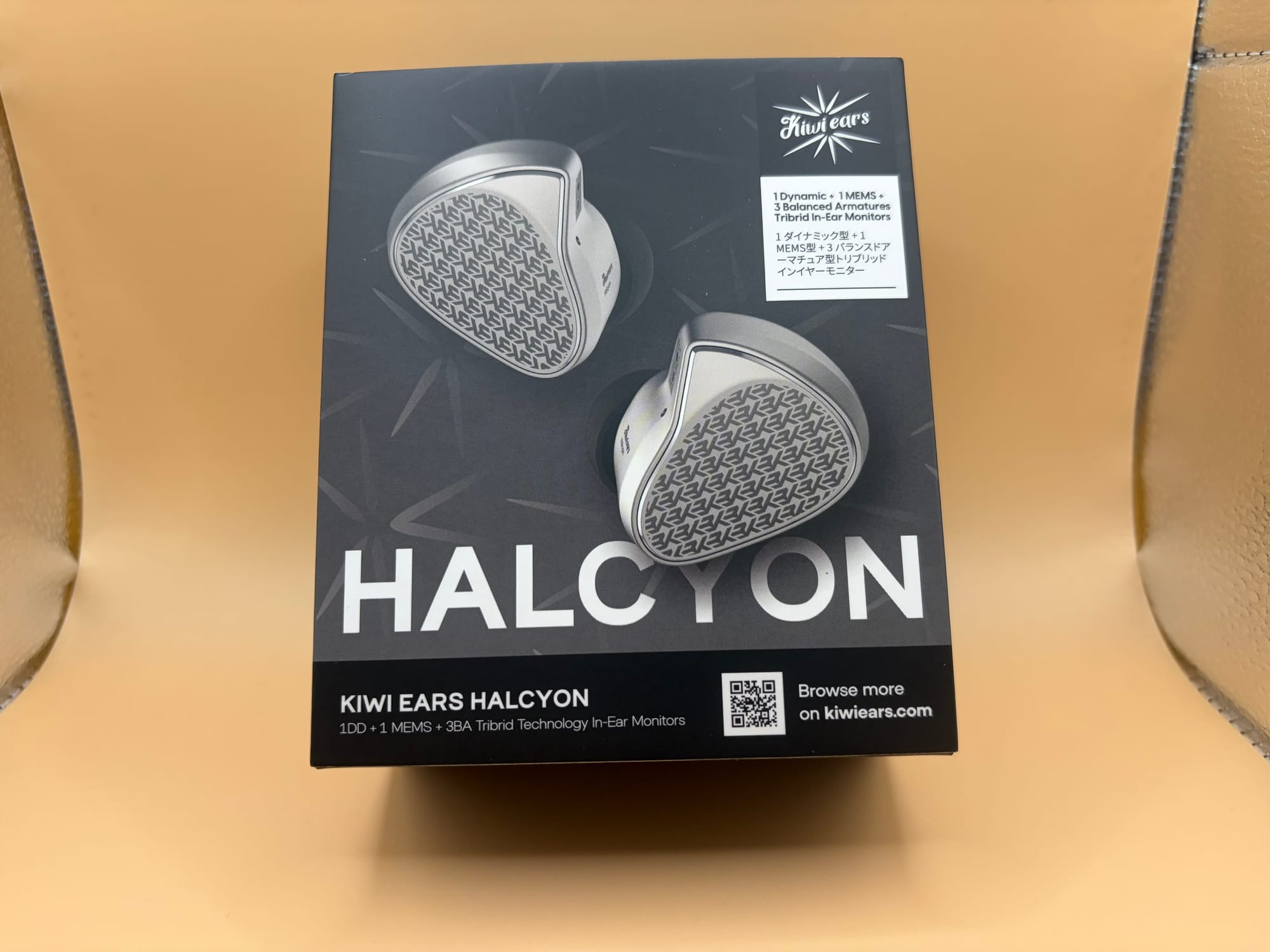
The Halcyon is Kiwi Ears' most technically ambitious release to date, and it comes with a claim to history: it's the world's first in-ear monitor to combine a MEMS driver with a dynamic driver and three balanced armatures inside a single shell. Five drivers total, three different driver types, one cohesive IEM—that's the pitch.
Each driver handles a specific slice of the frequency range. The 10mm composite dynamic driver takes care of the sub-bass, two custom DEK-series balanced armatures cover the midrange, a WBFK-series balanced armature handles the upper frequencies, and then the USound MEMS driver comes in at the very top of the range to cover ultra-high-frequency transients with a speed and precision that conventional drivers can't match.
So what exactly is a MEMS driver? MEMS stands for Micro-Electro-Mechanical Systems. Rather than using a traditional voice coil and diaphragm, the USound MEMS driver is a solid-state silicon-based component that works via the piezoelectric effect. No coil, no magnet, no moving membrane—just an incredibly fast, tiny piece of silicon that excels at reproducing the upper reaches of the frequency range with exceptional clarity and transient speed. It's the same technology used in hearing aids and AR/VR audio systems, and Kiwi Ears is one of the first to integrate it into a tribrid IEM configuration like this.
The Kickstarter launch had a goal of raising $10,000 and, at the time of writing, is now at over $180,000 raised, showing the excitement for this release.
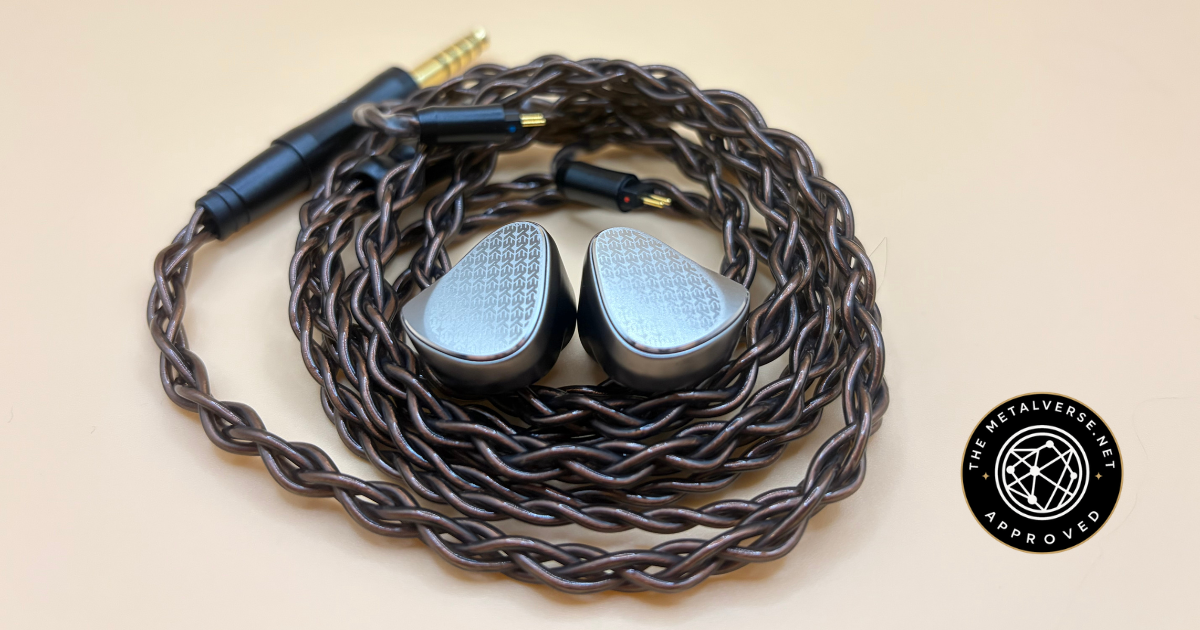
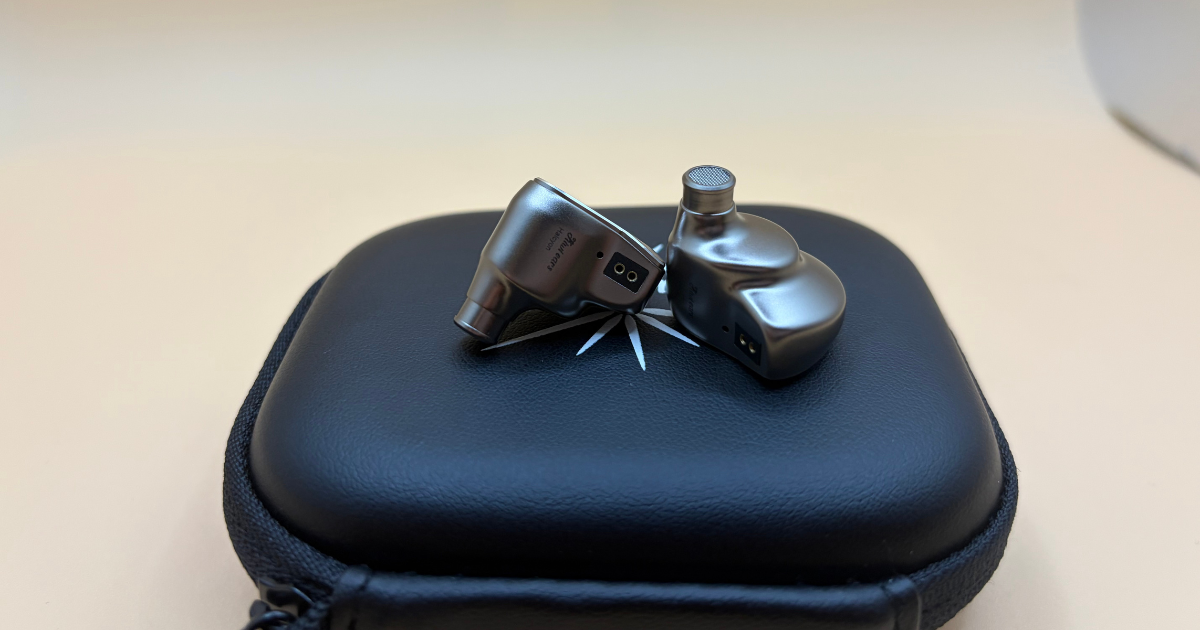
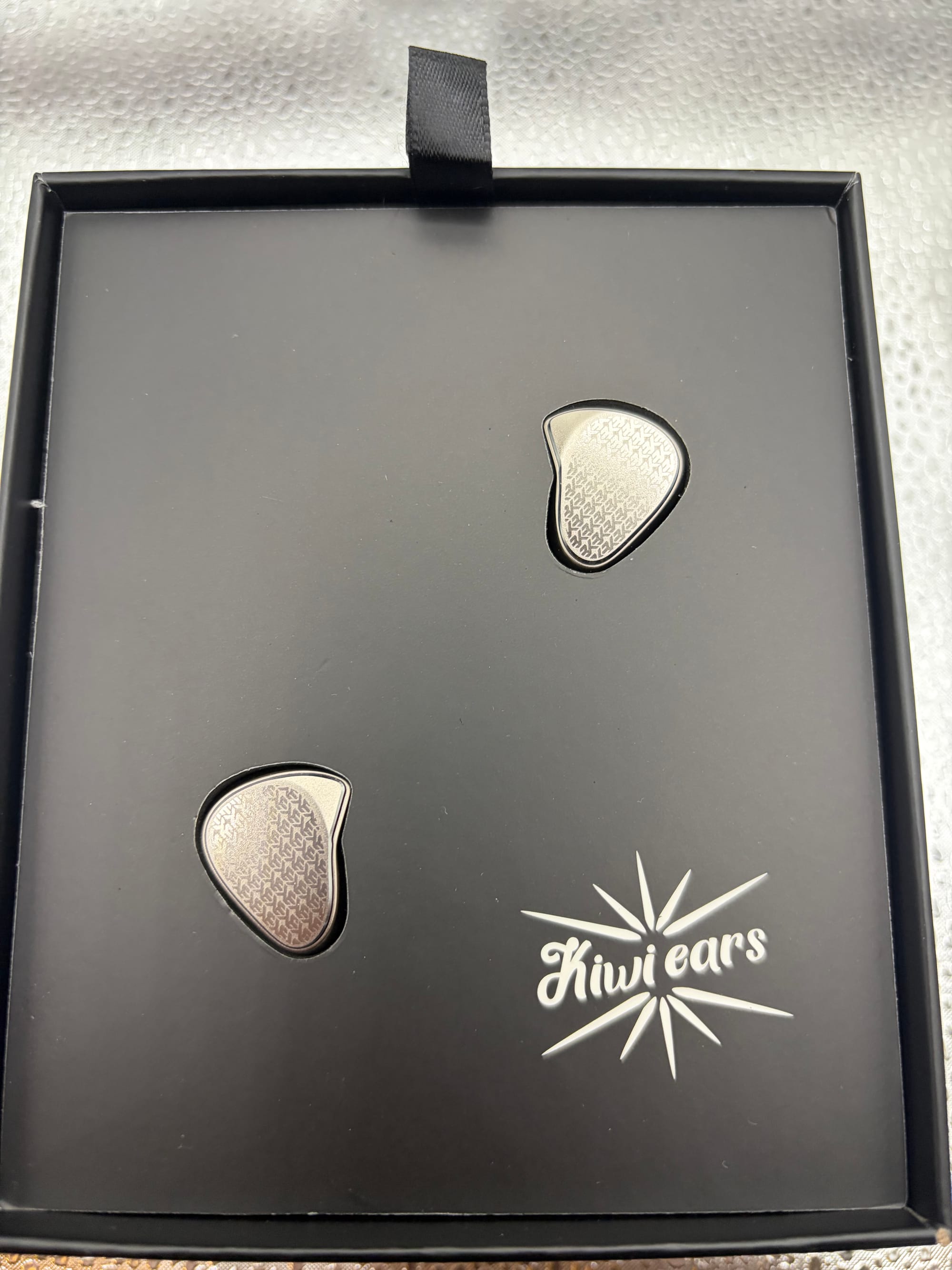
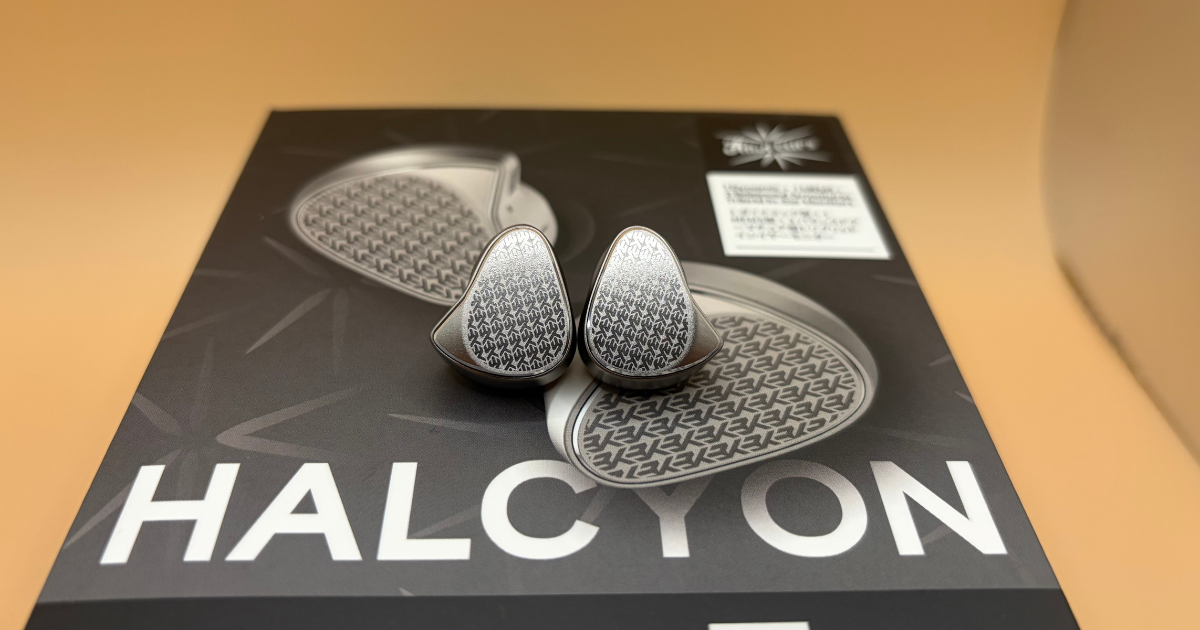
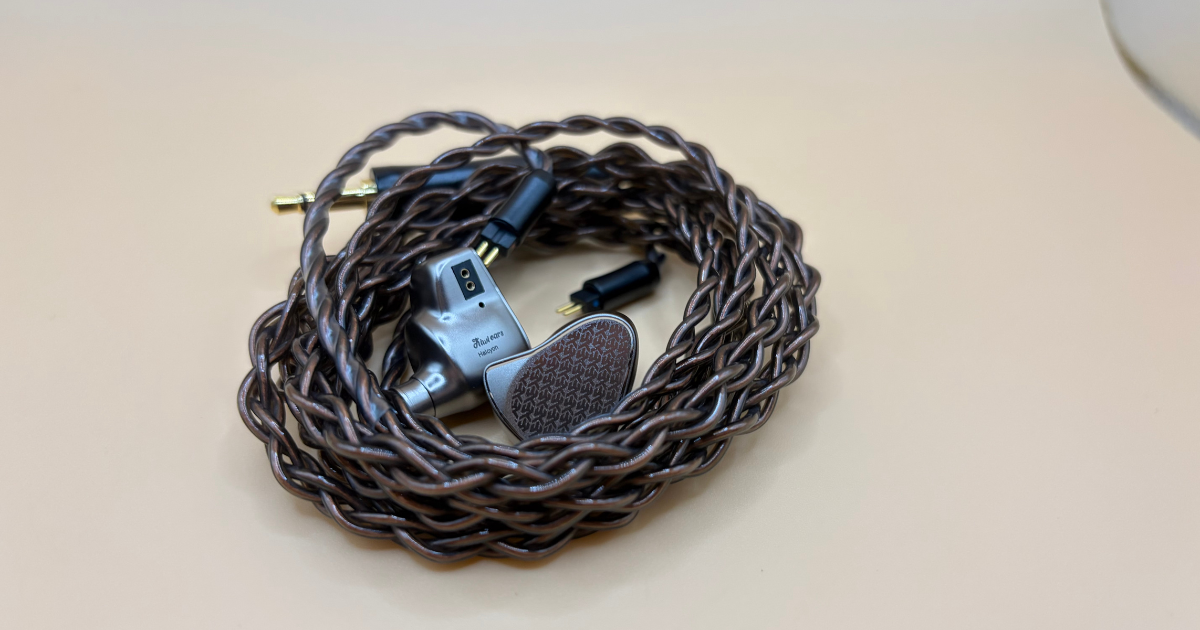
When I picked up the Halcyon, the first thing I noticed was how solid it feels. The CNC-machined aluminum housing is tight, seamless, and polished. There's no flex, no creaking, no rough edges anywhere. For an IEM that launched via Kickstarter starting at $199, the physical quality is seriously impressive and gives the impression of something that costs significantly more.
The shell itself is compact and ergonomically contoured, with a smooth matte finish that resists fingerprints well. The faceplate design features a subtle laser-etched pattern that's elegant. The 0.78mm 2-pin connector is a standard, widely supported format, which means aftermarket cable compatibility won't be an issue down the road.
Unboxing
What's in the Box
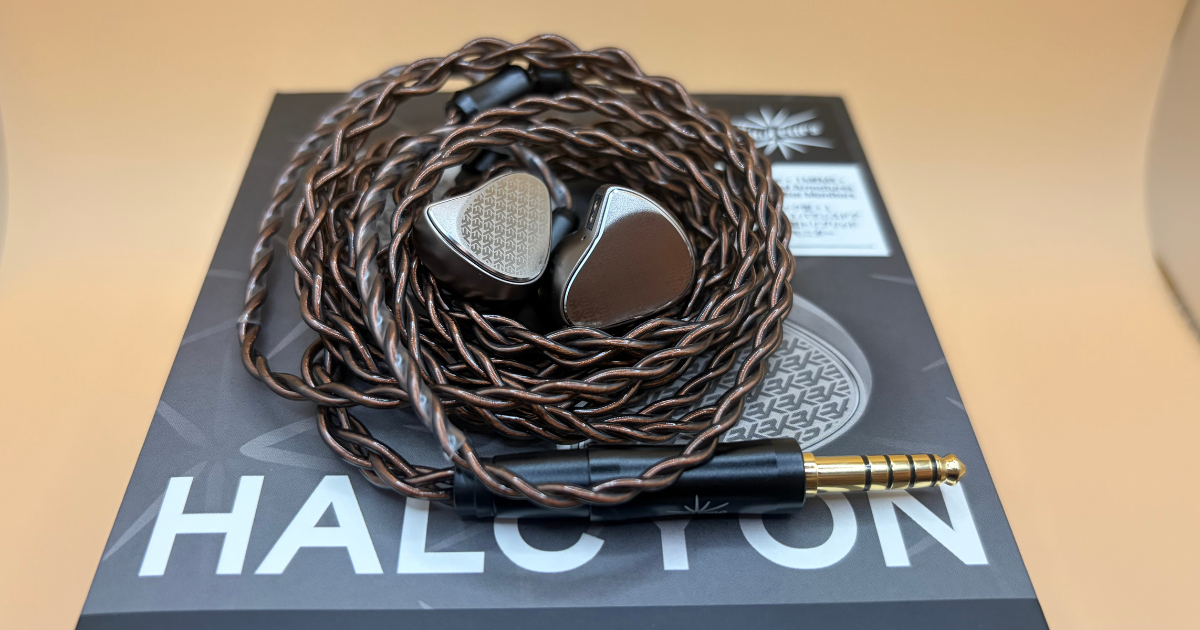
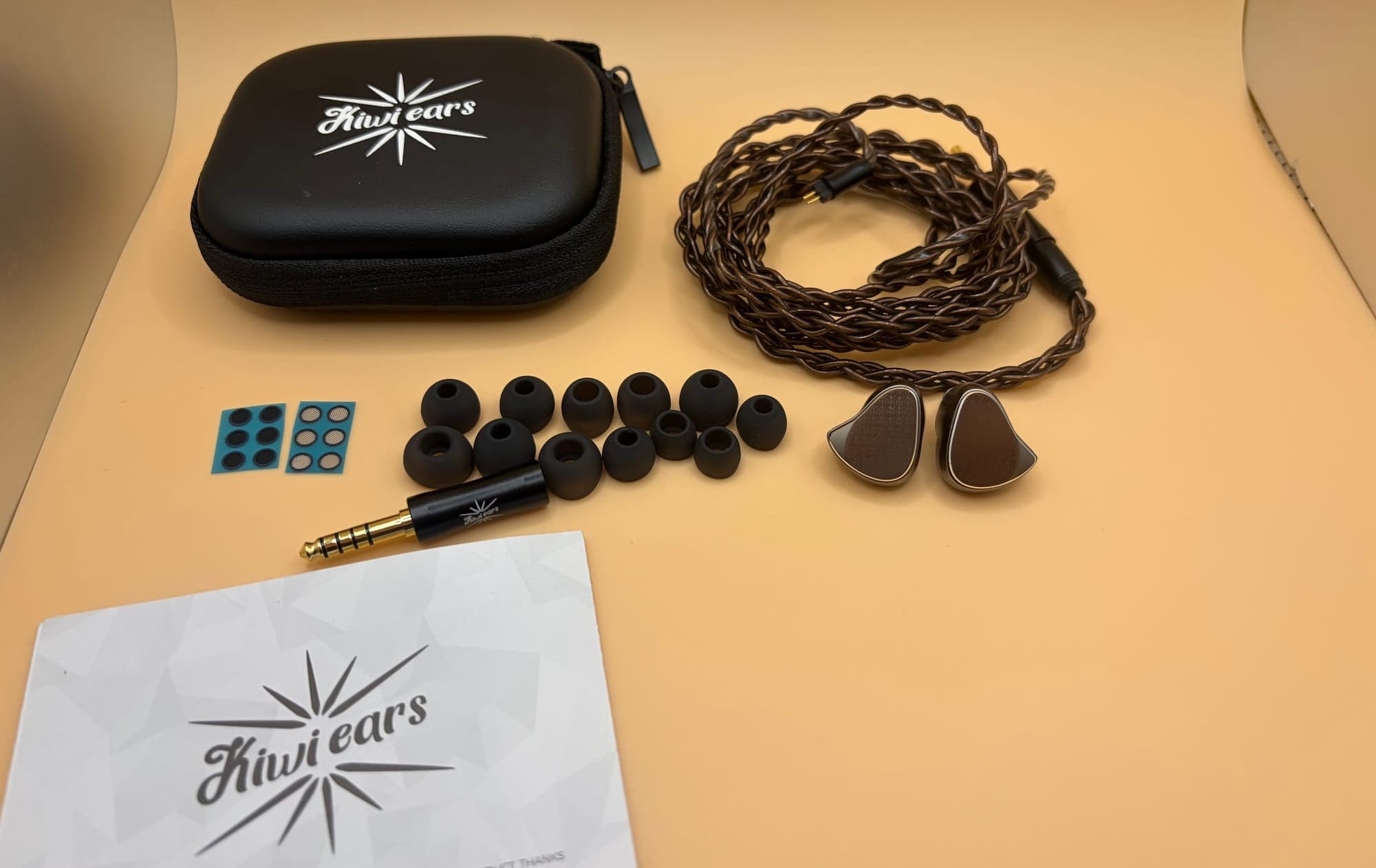
Inside the box you'll find the Kiwi Ears standard hard-shell carry case (compact but functional), the modular OFC braided cable with swappable 3.5mm and 4.4mm terminations, two sets of silicone ear tips in wide and narrow bore sizes, and a couple of sets of spare nozzle filters. The modular cable termination system is appreciated—being able to switch between single-ended and balanced output without sourcing a new cable is a thoughtful inclusion at this price.
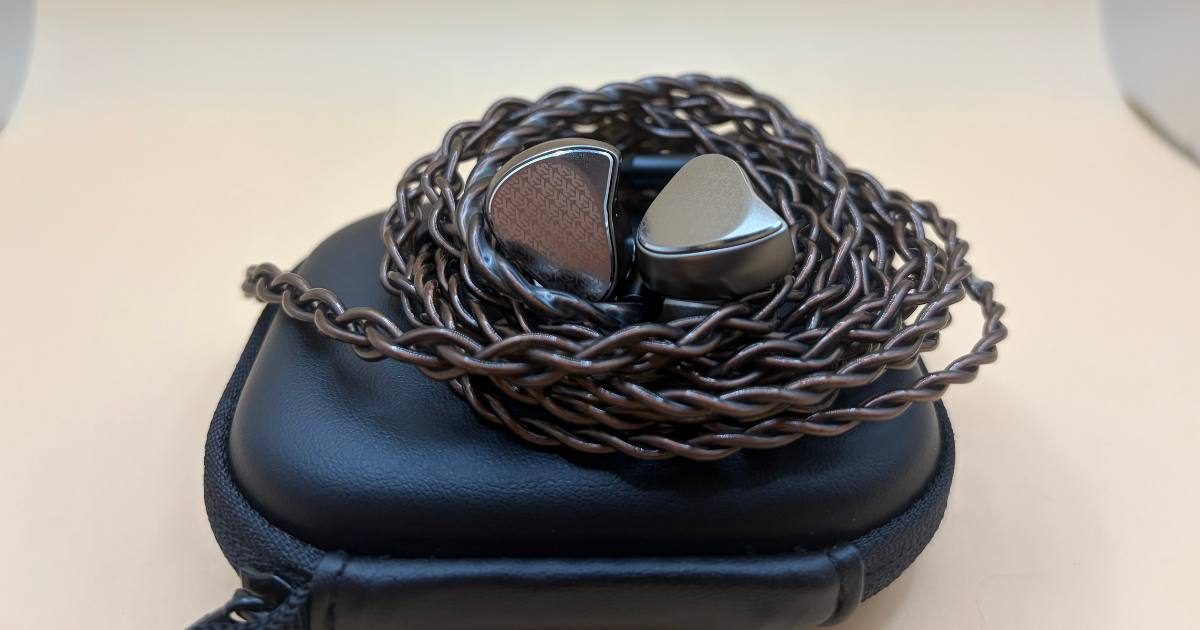
I liked the bronze color of the cable and found it to feel quite durable, even if it isn't one of the more tangle-proof cables I've used. The ear tips are serviceable, but nothing special; I found myself tip rolling for some time before settling on a pair of SpinFits I preferred over the included tips.
For those who want expanded functionality, Kiwi Ears offers an optional USB-C cable with integrated custom DSP equalization that pairs with a companion app for adjustable sound profiles, as well as an optional boom microphone cable for gaming and call use.
Sound Quality
Overall Sound
The Halcyon lands in a tuning space that's best described as studio monitor-leaning neutral with a sub-bass enhancement. Kiwi Ears built in an 8dB sub-bass boost that rolls off cleanly around 200Hz, which means the low end has real weight and presence without bleeding warmth or bloom into the midrange. The result is a clean, articulate listen that feels balanced and refined, with plenty of energy in the low end to keep it engaging rather than overly clinical. This is the kind of tuning that works across a wide range of genres without ever really offending.
Bass
The low end is one of the Halcyon's biggest strengths. That 10mm composite driver delivers sub-bass rumble that's quite visceral—the kind you feel as much as hear—while maintaining excellent control and definition. Drop an electronic or hip-hop track on these and the low end grabs you immediately. Bass lines have texture and body, and the articulation is sharp enough that you're hearing every note distinctly rather than a wall of low-frequency blur.
Where things get slightly nuanced is in the mid-bass. The Halcyon's emphasis sits clearly in the sub-bass, so while the depth is excellent, these IEMs have a more "rumbley" than mid-bass "punchy" sound. Overall, the bass is much above average for the $200 price range and brought a lot of songs to life the way many other sets haven't for me.
Mids
The midrange on the Halcyon is clean and accurate, but it does take a slight back seat in the overall presentation. Instruments resolve naturally, and there's nothing plasticky or unpleasant about the tonality—it just doesn't leap forward in the mix the way the bass and treble do.
For most music genres—electronic, rock, jazz, classical, even pop—this works completely fine. Where it becomes slightly noticeable is with intimate vocal performances. Female vocalists can lose some of their presence and emotion in this presentation. If your library leans heavily on singer-songwriter, folk, or any vocal-centric genre, the slightly recessed mids might leave you wanting just a touch more presence. Personally though, I found the tradeoff to be worth it, and even when listening to vocal-heavy pop songs, I found the Halcyon to be quite enjoyable. It's not broken by any means, but it's an honest trade-off in Kiwi Ears' tuning priorities here.
Treble
This is where the MEMS driver gets to show off, and it delivers. The treble on the Halcyon is one of the most naturally extended and airy presentations you'll find in an IEM under $300. High frequencies are detailed and open, with a sense of space and decay that sounds convincingly real rather than artificially boosted or crunchy —a concern with some other MEMS and piezo-based implementations on the market. I found myself noticing microdynamics in the very high treble registers that other IEM sets couldn't recreate the same way.
Cymbals, hi-hats, bowed strings, acoustic guitar shimmer—all of it comes through with excellent clarity and control. Nothing is sibilant, nothing is brittle, and there's no listening fatigue even at higher volumes. The MEMS driver handles ultra-high frequency transients with speed that conventional drivers typically struggle with at this price, and the payoff is a top end that feels effortless and spacious. Treble-sensitive listeners can approach this one without worry.
Timbre, Soundstage & Imaging
Getting five drivers from three different technologies to sound like one coherent instrument is a real engineering challenge, and Kiwi Ears handles it well. The Halcyon doesn't have any obvious crossover artifacts or disconnected frequency regions—the transition from the dynamic driver bass up through the balanced armature mids and into the MEMS-assisted treble sounds smooth and unified throughout.
Timbre is natural and believable across instruments. Acoustic instruments have convincing texture, and nothing sounds synthetic or BA-tinny in the mids. The MEMS contribution at the top adds air without making things sound artificially bright.
Soundstage is wider than average for the price range, with decent depth that gives the presentation a three-dimensional quality rather than a flat, left-right-only stage. It's not a cavernous, out-of-head experience, but it's spacious enough to give complex mixes room to breathe. Imaging is also a highlight—instrument placement is precise and easy to track, with strong separation that keeps busy passages from turning into a wall of sound. Detail retrieval is genuinely impressive for the price, surfacing subtle elements in recordings that cheaper IEMs flatten over.
Comfort & Isolation
The Halcyon's compact shell size is practical. Despite housing five drivers, the aluminum housing stays small and lightweight, sitting comfortably in the ear without digging or creating pressure during extended sessions. The ergonomic contouring works well for most ear shapes, and because the shell doesn't protrude awkwardly, side-sleeping or wearing these under headphones is reasonable.
Passive isolation is solid—good enough for commuting, public transit, or working in a noisy environment without needing to crank the volume. It won't isolate like a custom IEM, but it performs better than most open or semi-open alternatives in its price class.
One important caveat worth repeating: the Halcyon is moderately power-hungry for an IEM. At 29 ohms and 109dB sensitivity, it'll play fine out of a phone, but it noticeably opens up with a proper dongle DAC or DAP behind it. If you're planning to run these out of a laptop headphone jack, you might not be hearing the best version of them. A budget dongle like the FiiO KA13 or similar will make a meaningful difference.
How Does the Halcyon Compare?
Kiwi Ears Halcyon vs. Binary Acoustics EP321 MEMS (~$309)
The EP321 is the other highly discussed MEMS IEM on the market right now, making this comparison the most technologically relevant one. Both IEMs leverage MEMS driver technology, but they approach it differently. The EP321 leans harder into a reference-forward, technically precise presentation with a more forward upper frequency response, while the Halcyon is warmer and more musical in character. The Halcyon wins on sub-bass depth, overall tonal balance, and pure listenability for long sessions. The EP321 may edge it for listeners who prioritize raw treble detail and analytical listening. At its Kickstarter pricing, the Halcyon is the better value play for most people.
Kiwi Ears Halcyon vs. Kiwi Ears Orchestra II ($349)
The Orchestra II is Kiwi Ears' established higher-end set and the natural in-house comparison. The Orchestra II is the more musically engaging, emotionally rich listen of the two — especially for acoustic instruments and vocals, where it has noticeably more warmth and fullness. The Halcyon strikes back with better sub-bass extension, stronger technical separation, and that uniquely capable MEMS treble. If vocal and acoustic music dominate your listening, the Orchestra II might still be the more satisfying choice. If you want cutting-edge driver tech, a more technical sound profile, and a lower price of entry, the Halcyon wins that argument. (I actually preferred the Halcyon after comparing both)
Final Verdict
The Kiwi Ears Halcyon is easy to get excited about—and fortunately, the actual listening experience mostly backs up that excitement. The sub-bass is deep and satisfying, the MEMS-powered treble is special for this price range, the build quality flatters the asking price, and the technical performance puts a lot of more expensive IEMs on notice.
The mids sitting slightly recessed is a trade-off worth knowing about and the stock accessories could be more generous for a Kickstarter product making bold first-in-the-world claims. You'll also want a real source behind this to get everything it can deliver.
But step back and look at what you're getting: a five-driver, three-technology tribrid with genuine world-first engineering, in a premium metal shell, at $199 on launch day. That is an exceptional value. For audiophile IEM buyers in the sub-$260 range, the Halcyon belongs on your shortlist. I've tested 6 pairs of In-Ears/Headphones from Kiwi Ears so far, and the Halcyon is my favorite so far. Easy recommendation.




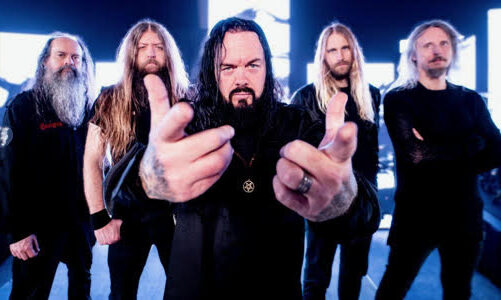 EVERGREY, Gothenburg’s masterminds of melancholia, release another song leading up to their upcoming fifteenth album, Architects Of A New Weave, out June 5, 2026, via Napalm Records. The encouraging new single Leaving The Emptiness offers a chorus that breaks through like sunlight piercing storm clouds. More than 30 years into their career, EVERGREY reshape their […]
 Today, the world’s fastest band speeds up and into its biggest, boldest and most electrifying era to date: DRAGONFORCE have announced Alissa White-Gluz as their newest member and first frontwoman. In a momentous union of two storied and unstoppable forces, the preeminent pioneers of extreme power metal will now be joined by one of metal’s […]
 In 2026, one of Australia’s most prolific live performers will deliver mind-bending musicality across the country with guitarist, producer and composer extraordinaire PLINI today announcing a headline run on home soil, fresh off the release off his hotly-anticipated new album An Unnameable Desire with special guests DELTA SLEEP (UK) for all dates, CENOBIA for Brisbane, […]
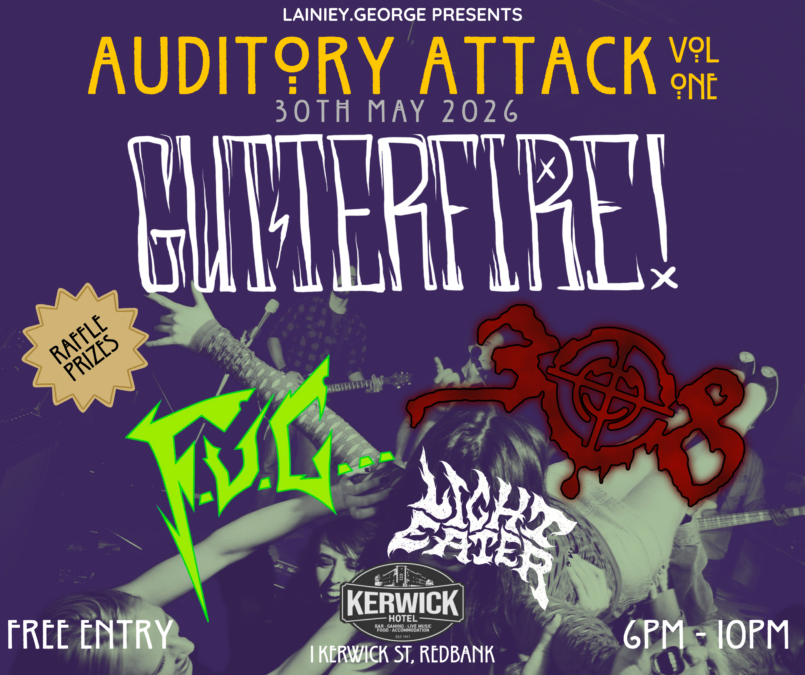 The Kerwick Hotel in Redbank, Brisbane comes alive on May 30 as Auditory Attack Volume One fires up for a night of free live music. Gutterfire, 308, F.U.C and Light Eater are your nominated noise merchants for the evening, with a series of raffles throughout the event where you can win a stack of prizes […]