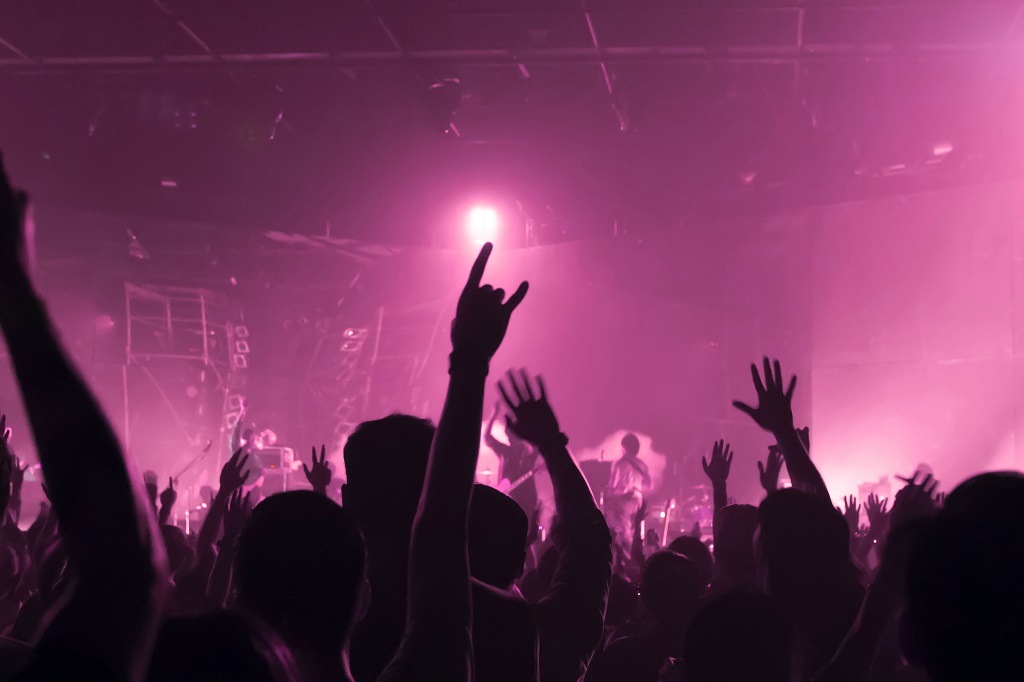
Danish quartet Speedslut is excited to unveil details in what will be their debut full-length instalment. Due out on June 26th, 2026 via Listenable Records, it’s going to be entitled Cimbrian Rites. Official first single, “Dark Night Riders”, drops May 20. Read more…
The last night of the SPEED UK tour went off in Camden Town at the Electric Ballroom, and yeah, it got wild. I did not really know what to expect from a proper Hardcore show, but what I saw with SPEED was not just punches and chaos in the pit. It felt like something bigger, raw, messy, but also kind of special.
Did anyone actually warn the security at the barricades before the show?
Judging by their faces halfway through the set, it did not look like they had any idea what was coming. Still, respect to them, as they handled the madness all night.
SPEED – Electric Ballroom, Camden – 22 April 2026. Photo: Antonio Giannattasio/MetalTalk
SPEED kicked things off with AIN’T MY GAME from their latest EP, and straight away, the pit felt like another world, with sweat, movement, and no stopping. From there, it never really slowed down.
The band not just stand out because of their stage presence, though, as they were everywhere, moving nonstop, tight and locked in. What really hit was the feeling behind it all. You could hear the passion in every word from the singer, Jem Siow, whether he was shouting lyrics or just talking to the crowd.
SPEED – Electric Ballroom, Camden – 22 April 2026. Photo: Antonio Giannattasio/MetalTalk
There was a Palestinian flag on stage, hard to miss, and Jem took a moment to talk about inclusion and thank everyone for being there.
It actually meant something. It showed why Hardcore still matters and that it’s not dead. With bands like Whispers coming all the way from Thailand, where Hardcore does not get much attention, it made that even clearer.
SPEED – Electric Ballroom, Camden – 22 April 2026. Photo: Antonio Giannattasio/MetalTalk
SPEED mixed new tracks across their setlist, such as PEACE and ALL MY ANGELS, with older ones like REAL LIFE LOVE and KILL CAP, and every single one pushed the pit harder.
It built up step by step, from two-stepping and moshing, to a huge circle pit, to full chaos.
There were also moments where everything just went off script, Jem swapping with bassist Aaron Siow on vocals and guest appearances from singers from the opening bands jumping in for a few lines. For the last night, SPEED went all in.
SPEED – Electric Ballroom, Camden – 22 April 2026. Photo: Antonio Giannattasio/MetalTalk
At one point, Jem told everyone to make the whole place shake. And honestly, it felt like the barricades did not even exist anymore. He literally said, “There are no barricades here.”
That’s when it really went crazy. Bodies flying from the stage into the crowd, the crew hyping people up to get involved. Crowd surfing turned into people climbing on stage just to throw themselves back into the pit again.
Then somehow, in the middle of all that chaos, a transverse flute showed up on stage. Yeah, really.
SPEED – Electric Ballroom, Camden – 22 April 2026. Photo: Antonio Giannattasio/MetalTalk
SPEED closed with THE FIRST TEST, and Jem just went for it on the transverse flute, joined by the whole crew and members from other bands playing a normal flute. People in the crowd were trying to follow along with whatever they had.
It was weird, chaotic and honestly one of the best moments of the night, though it is hard to even pick a highlight because the whole show just worked.
SPEED – Electric Ballroom, Camden – 22 April 2026. Photo: Antonio Giannattasio/MetalTalk
SPEED is something you have to experience raw. Even with barricades there, they did not really stop anything, maybe just gave security a second to breathe. People still made their way on stage, still jumped straight back into the pit.
This is the kind of show you do not just see once. The energy, the honesty, the way they connect with the crowd, it hits hard, both emotional and aggressive at the same time.
SPEED – Electric Ballroom, Camden – 22 April 2026. Photo: Antonio Giannattasio/MetalTalk
Whispers
Whispers are one of those bands that either hit you hard or leave you standing there asking what just happened? We are talking about Whispers, a band from Thailand that are starting to make serious noise in the Hardcore scene, not just in Asia but beyond.
Whispers – Electric Ballroom, Camden – 22 April 2026. Photo: Antonio Giannattasio/MetalTalk
Opening for Speed was not just a warm-up slot, as it felt more like a warning shot. Their sound is rough and intense, mixing modern Hardcore with beatdown touches and a tight, almost suffocating tension.
The guitars hit you straight on, sharp and heavy, while the rhythm section keeps pushing forward the whole time, never letting you relax, not even for a second.
Whispers – Electric Ballroom, Camden – 22 April 2026. Photo: Antonio Giannattasio/MetalTalk
On stage, Whispers have something a lot of bands want, but not many actually have, in a real presence. It is not just about energy, as it is also about controlling the chaos.
The frontman ‘Mike’ leads the set like it is some kind of shared ritual, pulling the crowd in with a raw intensity. It feels like the best parts of modern Hardcore, but angrier and less polished or Bangkok Evilcore, as they describe themselves.
Whispers – Electric Ballroom, Camden – 22 April 2026. Photo: Antonio Giannattasio/MetalTalk
Whispers turned their set into a short, brutal experience that did exactly what it needed to do and left the crowd soaked in sweat and ready for more.
Whispers – Electric Ballroom, Camden – 22 April 2026. Photo: Antonio Giannattasio/MetalTalkWhispers – Electric Ballroom, Camden – 22 April 2026. Photo: Antonio Giannattasio/MetalTalkWhispers – Electric Ballroom, Camden – 22 April 2026. Photo: Antonio Giannattasio/MetalTalkSPEED – Electric Ballroom, Camden – 22 April 2026. Photo: Antonio Giannattasio/MetalTalkThe post SPEED Turn Camden Into Chaos At Electric Ballroom Finale first appeared on MetalTalk – Heavy Metal News, Reviews and Interviews.
Nashville blues-infused Southern rockers Parker Barrow return with their first new music of 2026 with their latest single ‘Blinded‘ released Wednesday April 29th. From today, the single is available on all streaming platforms here. The track is part of the band’s upcoming highly anticipated sophomore album ‘Hold the Mash‘, due for release on Friday July 17th. […]
Cradle of Filth's Dani Filth opens up about writing his autobiography, preparing for a U.S. tour and shares an update on his collaboration with Ed Sheeran. Continue reading…
With a name like that and an album cover featuring a vivisected human head, you’d be forgiven for thinking that Nequient play a form of knuckle-dragging brutal death. Instead, the Chicago four-piece specializes in a brand of chaotic, grinding metallic hardcore that recalls the frenetic math explosion of the early 2000s. Avarice is the band’s third full-length and promises a “unique synthesis of extreme metal and hardcore” to “blast listeners out of complacency with withering screeds against the malignant forces ravaging our world.” Despite some solid releases from last year, it’s been a while since new mathcore shook me to the bone and reminded me of modern existence’s inherent fragility. Nequient have the requisite political bile coursing through their veins—the same volatile fuel that powers the genre’s most unhinged eruptions—but is Avarice actually worth your time, or just another flailing heap of panic chords destined to suffocate beneath a pile of white-belt-era clichés?
On Avarice, Nequient paints an anarchic arras with a dizzying amount of stylistic touchstones. The band combines the unhinged frivolity of The Sawtooth Grin with the fast-paced stop/start violence of The HIRS Collective, and loads their tracks with riffs that actually stick, echoing early Converge at their most surgical. The twist? These songs breathe. Longer runtimes turn what could be scattershot spasms into fully realized compositions, bolstered by a wide palette of metallic textures. Blackened tremelos (“Christofascist Zombie Brigade”), demented odd-meter thrash gallops (“Brain Worms”), and sludged-out funeral dirges (“Splenetic And Moribund”) are all threaded together with mathy convulsions Nequient execute with unnerving precision. Throughout the record, the band moves between ideas at a dizzying pace, consistently impressing with bewildering moments of aural chaos.
More than just a collection of moments, the songs on Avarice are propelled by relentless pacing and tangible chemistry among the band members. Nequient’s secret sauce lies in the interplay between Patrick Conahan’s disorienting guitar cascades and drummer Chris Avgerin’s dextrous, fill-heavy style. Conahan glides between mosh-ready grind parts (“Mad King / Fool”), undulating, deathy descents (“Rintrah Roars”), and unsettling noise-rock lurches (“Siege Mentality”). Avergin follows along expertly, always mirroring the spastic guitarwork with tasty, intuitive drum parts that guide the ear and ground the anarchy. Aaron Roeming provides the low-end thunder and adds a purposeful heft that thickens the chunkier riffcraft while vocalist Jason Kolkey leads the charge, alternating between a sassy, vitriolic spew and full-bodied death growls while delivering caustic epithets about the horrors of modern life. Kolkey’s acerbic lyrics pull the whole disgusting package together, melding poetic death metal abstraction with punk’s immediacy and sharpening the record’s nihilistic aura into a potent weapon aimed at a broken system.
In fact, Nequient is almost too adept at channeling the noxious undercurrent of societal id, leaving precious little room to breathe across Avarice’s full-frontal assault. Longer tracks usually ease up on the throttle and inject variety with less frantic, slower sections, like with a menacing sludge-into-breakdown (“Rintrah Roars”), or a hazy, chordal comedown (“Stochastic Terror”). Still, I find myself wanting just a touch more space to find my bearings during full-album listens. Avarice is well-paced, and there are more than enough ideas to keep the 40-minute runtime interesting, but it’s missing one or two blissed-out melodic ideas1 or jaw-dropping displays of contrast to elevate it to the peak of the mathcore mountain. This doesn’t prevent Avarice from being a stunning display of technical aggression, but it does mean more than a few spins to decipher its labyrinthine heaviness.
Nequient really impressed me with this one. Avarice is a nerve-flayed, teeth-grinding listen that captures the low-grade panic and spiritual exhaustion of modern life with alarming precision. Rather than settling for dime-a-dozen mathcore spasms or rote metallic bludgeoning, the Chicago crew stitches together dissonance, groove, chaos, and razor-wire technicality into something far more purposeful. It’s punishing without being empty, intricate without disappearing up its own ass, and memorable enough to demand repeat spins. If you’re craving chaotic metallic extremity that does more than regurgitate the usual suspects, Nequient have your number.
Super Sometimes have released another slice of sheer pop-punk perfection, set to appear on their upcoming album ‘Show The World What’s Underneath’.
Titled ‘Learned My Lesson’, it’s a track that pulls from the most melodically addictive parts of the genre. There’s the sun-stained catchiness of the early 00’s sound, mashed together with the earnest, thoughtful stance that has defined it over the last decade, whilst also showcasing that their reference points stretch even further than the confines of pop-punk. The result is absolutely astonishing, the sort of song that gets trapped in your head and refuses to budge. Matched with the respect and understanding the band have for the culture they are pushing forward, it’s another reason to be very excited about whose hands the scene is currently in.
The band had this to say about it:
‘“Learned My Lesson” is a staple track on the record that we wrote in a single afternoon with Chris Freeman of Hot Mulligan. Chris really pushed our boundaries on this track, challenging us not to make just another run-of-the-mill pop-punk song—and that’s exactly what we did. With a greater reliance on pop-leaning melodies, synth, organ, and tambourine, the song was intentionally very different from most of our older work in order to let the melodies and lyrics speak for themselves. Taking direct influence from Bloc Party and Hot Mulligan (obviously), this song is a true testament to us being more than just your standard pop-punk band—in the best way.”
‘Show The World What’s Underneath’ will be released on May 15 via Pure Noise Records.
It will also feature the excellent ‘Afterthought’ which sounds like this:
The band are currently out supporting Arm’s Length on tour across the US alongside The Callous Daoboys and Harrison Gordon. Here’s where you’re going to get to catch them.
APRIL
29 – CHARLOTTE The Underground
MAY
01 – NASHVILLE Brooklyn Bowl Nashville 02 – ATLANTA Buckhead Theatre 03 – ORLANDO House of Blues of Orlando 05 – DALLAS The Echo Lounge & Music Hall 06 – AUSTIN Emo’s Austin 08 – PHOENIX Crescent Ballroom 09 – SAN DIEGO House of Blues San Diego 10 – ANAHEIM House of Blues Anaheim 11 – SACRAMENTO Ace of Spades 13 – SEATTLE Neptune Theatre 14 – BOISE The Shredder 15 – SALT LAKE CITY The Depot 17 – DENVER Summit Music Hall 19 – ST LOUIS Delmar Hall 21 – CHICAGO House of Blues Chicago 22 – DETROIT St. Andrew’s Hall 23 – CLEVELAND House of Blues Cleveland 24 – TORONTO Danforth Music Hall
Rock history usually gets told through albums, tours, legendary shows, and public feuds. Yet much of rock’s culture was built after the final encore, in dressing rooms, hotel suites, clubs, diners, buses, and private rooms where access mattered almost as much as talent.
The afterparty side of rock history matters because it shaped careers, reputations, myths, scandals, friendships, and harm. Some nights created creative circles. Others exposed how fame could warp consent, safety, money, and accountability.
Why Afterparties Became Part Of Rock Culture
Rock grew out of nightlife. Early performers played clubs, dance halls, radio events, and rough touring circuits where the evening rarely ended when the music stopped. Musicians had to meet promoters, charm local press, talk to fans, and build relationships city by city.
The Beatles’ years in Hamburg show how strongly rock was shaped by late-night culture. Before global fame, they played long sets in the Reeperbahn district, a nightlife area filled with clubs, sailors, drinking, sex work, and constant noise. Those rooms forced them to become sharper, louder, tougher, and more adaptable.
That pattern carried into later rock. The show was the public product. The afterparty was where relationships formed, stories spread, and mythology gathered speed.
The Afterparty Was Also A Workplace
Informal settings often determined formal career opportunities and industry decisions|Shutterstock
Fans often imagine afterparties as pure chaos. In many cases, they worked like informal business meetings.
A manager might speak with a promoter about a return date. A journalist might collect details for a profile. A photographer might capture an image later printed in a magazine. A record-label rep might test whether a band had the charisma to justify more investment.
Bill Graham’s rise as a concert promoter shows how important relationships were behind the scenes. His work with the Fillmore and major acts such as the Grateful Dead, Jefferson Airplane, Jimi Hendrix, Santana, Led Zeppelin, and the Rolling Stones helped professionalize rock promotion. Access, trust, room control, and backstage politics were part of that world.
Common After-Hours Spaces
Space
Role In Rock Culture
Risk
Dressing room
Press, guests, photos, quick deals
Weak boundaries
Hotel suite
Private celebration, networking
Isolation, drugs, exploitation
Local club
Scene-building, discovery
Violence, substance abuse
Tour bus
Band bonding, travel
Exhaustion, no privacy
Promoter room
Money, favors, bookings
Informal pressure
Those rooms could open doors. They could also hide behavior that would never survive daylight.
Sunset Strip And The Power Of Access
Cultural influence often depended more on proximity than talent alone|Shutterstock
Los Angeles turned afterparty access into social currency. The Sunset Strip was a meeting ground for musicians, actors, photographers, journalists, models, publicists, and fans trying to get close to the center of the culture.
Groupie history sits at the heart of that story. Pamela Des Barres and other women around the 1960s and 1970s rock scene have argued that many so-called groupies were serious listeners, muses, stylists, connectors, and cultural participants. They influenced fashion, language, social codes, and the emotional mythology around rock stars.
Yet nostalgia can blur disturbing facts. Reports on the Los Angeles rock scene of the early 1970s describe underage fans, sometimes 13 or 14, gaining access to famous musicians. Older media often treated those stories as naughty folklore rather than legal and ethical failures.
That contradiction is hard to ignore. Some women helped shape rock culture. Others were exploited by powerful men and protected systems.
Hotel Suites Turned Excess Into Legend
By the 1970s, arena rock changed the scale of afterparty culture. Larger venues created more distance between stars and fans. Hotel suites became controlled spaces where managers, roadies, security, radio people, promoters, and selected guests decided who entered.
Led Zeppelin became the emblem of that era. Their tours mixed immense musical influence with stories of drug use, destruction, intimidation, and sexual misconduct. Manager Peter Grant also changed touring economics by helping artists claim a larger share of concert revenue. That same protective wall, useful against exploitative promoters, also helped insulate artists from consequences.
The hotel suite became rock’s unofficial theater. Away from the cameras, entertainment could be loud or surprisingly ordinary, from drinking and storytelling to card games such as Lucky 9, where chance and quick decisions shape the room’s mood.
Punk Shrunk The Room
Punk reacted against arena rock’s money, distance, and spectacle. The rooms got smaller. The barriers between band and audience became thinner. Yet afterparty culture did not disappear.
At CBGB in New York, musicians, writers, artists, fans, and future collaborators often shared the same grimy space before and after sets. The Ramones, Blondie, Talking Heads, Television, Patti Smith Group, Richard Hell, the Dead Boys, the Cramps, Joan Jett, and others passed through that world.
There, the afterparty felt less like velvet-rope luxury and more like a workshop. Bands formed. Arguments turned into songs. Critics watched new scenes being born in real time.
Still, small scenes carry their own pressure. Reputation moves quickly. Access can become leverage. A close community can protect people, or silence them.
Studio 54 And The Celebrity Turn
Studio 54 was not a rock club in the narrow sense, but it showed how rock stars became part of celebrity nightlife. Elton John, members of Blondie, Aerosmith, the Rolling Stones, and other music figures mixed with actors, designers, models, writers, and socialites.
The lesson was clear: being seen could matter almost as much as performing. Rock stars became fashion figures, gossip-column subjects, and nightlife symbols. The afterparty helped create modern celebrity culture, where access, image, and exclusivity became part of the brand.
Altamont Broke The Illusion
Altamont in 1969 remains one of rock’s darkest public lessons. The Rolling Stones’ free concert ended in violence after Hell’s Angels were used for security. Meredith Hunter, an 18-year-old fan, was killed near the stage.
Altamont was not a private afterparty, but it exposed the same dangerous faith in atmosphere over planning. Rock culture often trusted charisma, rebellion, and “good vibes” to manage situations that required structure, security, and accountability.
Modern live-event safety standards now treat crowd control, security planning, temporary structures, emergency response, and risk management as core parts of production. Rock learned that lesson slowly and painfully.
Drugs, Alcohol, And The Self-Destruction Myth
Rock writing has often treated substance use as proof of authenticity. A trashed hotel room became a funny anecdote. A collapse became part of the legend. A dangerous night became evidence that someone lived fully.
Research paints a colder picture. Studies of nightlife environments link bars, clubs, and entertainment districts with higher levels of substance use and related harm. Rock touring added its own pressures: poor sleep, isolation, public expectation, easy access to drugs and alcohol, and unstable support systems.
The “27 Club” myth also shows how fans turn tragedy into pattern. Brian Jones, Jimi Hendrix, Janis Joplin, Jim Morrison, Kurt Cobain, and Amy Winehouse are often grouped through age.
A BMJ study found no special death spike at 27, although famous musicians did face elevated mortality risk during young adulthood.
The danger was never mystical. The danger came from fame, pressure, addiction, isolation, and an industry that often profited from instability.
The Workers Behind The Wild Nights
Afterparty stories usually center on stars. Crews carried much of the burden.
Roadies, drivers, sound engineers, lighting crews, security staff, runners, assistants, and venue workers kept tours moving while others were encouraged to lose control. They handled lost gear, intoxicated performers, damaged rooms, police calls, aggressive guests, and impossible schedules.
For workers, the afterparty was often extra labor. They had responsibility without glamour and, at times, without real authority.
Why Fans Avoid The Topic
Fans often prefer clean mythology. The song survives more easily when the surrounding story stays vague.
Several reasons keep afterparty history half-hidden:
Nostalgia turns dangerous nights into comic legends.
Celebrity teams controlled access and reputation.
Fans fear losing emotional attachment to beloved music.
Private rooms rarely produced reliable records.
Old norms hid behavior now seen more clearly as abuse.
A serious reading of rock history does not require rejecting the music. It requires seeing the full system around it.
Rock After Dark Tells The Fuller Story
The afterparty side of rock history is not a footnote. It shaped careers, images, scenes, and scandals. It helped build creative communities, but it also exposed the cost of fame without boundaries.
After midnight, rock often revealed what the stage lights left out: ambition, power, desire, exhaustion, labor, and damage. The music still matters. So does the room where the mythology was made.


 With a name like that and an album cover featuring a vivisected human head, you’d be forgiven for thinking that Nequient play a form of knuckle-dragging brutal death. Instead, the Chicago four-piece specializes in a brand of chaotic, grinding metallic hardcore that recalls the frenetic math explosion of the early 2000s. Avarice is the band’s third full-length and promises a “unique synthesis of extreme metal and hardcore” to “blast listeners out of complacency with withering screeds against the malignant forces ravaging our world.” Despite some solid releases from last year, it’s been a while since new mathcore shook me to the bone and reminded me of modern existence’s inherent fragility. Nequient have the requisite political bile coursing through their veins—the same volatile fuel that powers the genre’s most unhinged eruptions—but is Avarice actually worth your time, or just another flailing heap of panic chords destined to suffocate beneath a pile of white-belt-era clichés?