The last place you want to stay at.
The post Static Dress Premiere “…Hospice” Music Video appeared first on Theprp.com.
The last place you want to stay at.
The post Static Dress Premiere “…Hospice” Music Video appeared first on Theprp.com.
Last summer Alex G released his latest LP Headlights. I thought it was great at the time, and I still do, too! But even with ten studio albums and a major label deal to his name, Alex G still maintains some proximity to his reputation as a DIY hero who does things his own way,…
The post Alex G Shares <em>Headlights</em> Outtake “Good Green Friend” appeared first on Stereogum.
It was next to debut.
The post Six Feet Under Debut “Mister Blood And Guts” Music Video appeared first on Theprp.com.

Zakk Wylde’s Ozzy albums number six across thirty-seven years, and no other guitarist in Ozzy Osbourne’s solo career came close to that. Randy Rhoads made two. Jake E. Lee made two. Wylde arrived in 1987 as a twenty-year-old from New Jersey with a bullseye Les Paul and a demo tape, and he was still there at the end. These are the six records they made together, ranked worst to best — and the one at the top has a genuine claim to being one of the greatest metal albums ever made.
Three things: the strength of the songs, how much of the record is genuinely Wylde’s, and whether it holds up now rather than then.
That middle criterion matters more here than on a normal discography ranking. These are Ozzy albums, not Zakk albums, and his fingerprints are much heavier on some than others — he has full songwriting credit across most of the catalogue but was brought in largely as a player on one of them.
Where his contribution is the whole record, it ranks higher. Where he’s executing someone else’s vision, it doesn’t.
Loaded Radio Recommends – THE MADMAN UNFILTERED: 13 Facts About Ozzy Osbourne’s Attempted Murder, The Bat, and The Alamo

The verdict: A high-gloss experimental pivot, made while the duo were fighting the grunge explosion.
Produced by Michael Beinhorn, Ozzmosis is a strange, atmospheric beast. It arrived at the peak of the alternative boom and it frequently feels caught between Ozzy’s appetite for Beatles-shaped ballads and Wylde’s appetite for crushing skulls.
“Perry Mason” has one of the most tectonic riffs of the decade, and Wylde’s playing on “See You on the Other Side” is genuinely beautiful. But the production is dense and digital in a way that hasn’t aged well, and the number of outside writers gives it a commercial sheen that makes it feel less like a band record than anything else here.
A fan favourite for its moody textures. It’s also the album where Wylde has the least room to do what he actually does best.

The verdict: A nu-metal-inflected comeback that brought Wylde back after his first long absence.
After a six-year studio gap, Wylde returned with a darker, sludgier tone that mirrored the rise of his own band. Down to Earth was Ozzy’s answer to the early-2000s metal landscape, and it’s a meat-and-potatoes riff record in the best sense.
“Gets Me Through” is one of the most honest and vulnerable things Ozzy ever sang — a song addressed directly to his own audience about what they mean to him. “Junkie” and “Facing Hell” both land hard.
The criticism it takes is fair: it occasionally sounds like a Black Label Society album with Ozzy singing. And there’s a specific reason it sits at five rather than higher — Wylde played on it but wasn’t credited as a songwriter, which makes it the one record in this six where the guitar is his and the writing isn’t.
A focused, professional metal statement. Just not really his.

The verdict: The aggressive era. Down-tuned, relentless and unapologetic.
Critics have generally called this the weakest of the six. For anyone who came to Ozzy specifically for Wylde’s playing, it’s a gold mine.
This was the first album Ozzy recorded entirely sober, and the clarity in his delivery is audible. Wylde’s guitar work is arguably at its most frantic anywhere in the catalogue, using down-tunings that make “Not Going Away” land like a body shot. “I Don’t Wanna Stop” proved the pair could still write a genuine radio anthem two decades in.
What holds it back is the mastering. It’s a product of the loudness war and it is exhausting across a full sitting, and a couple of the mid-tempo tracks are filler.
But it captures a specific moment — Ozzy and Zakk at their most muscular — better than anything else they did.
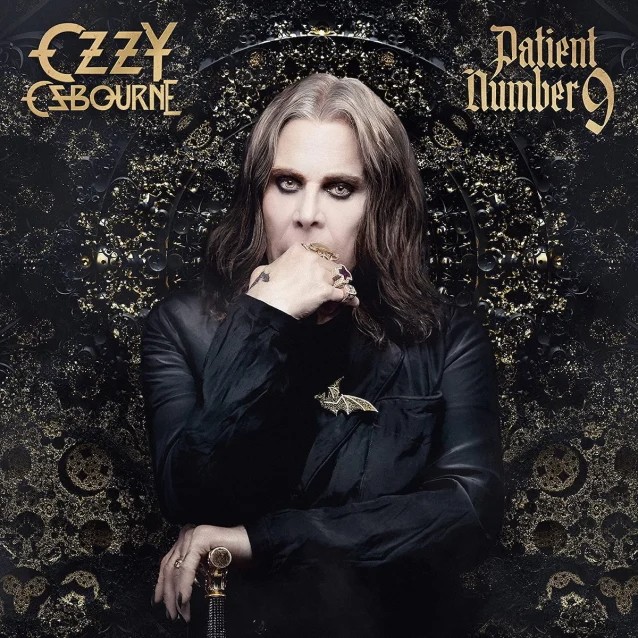
The verdict: The Grammy-winning swan song, and proof the fire hadn’t gone out.
Patient Number 9 is famous for its guest list — Jeff Beck, Eric Clapton, Tony Iommi — and that’s precisely why Wylde’s role on it gets undersold. He was the musical anchor of the whole project, and his work on “Parasite” and “Nothing Feels Right” is what gives the record its sense of continuity with everything that came before.
Produced by Andrew Watt, it’s a heavy, sophisticated and genuinely moving farewell. What’s striking is the maturity of the playing — Wylde’s solos here aren’t fast for the sake of it. They’re melodic and restrained in a way that matches the vulnerability in Ozzy’s ageing voice.
A near-perfect studio exit for the longest partnership of Ozzy’s career.

The verdict: The seismic debut that introduced the pinch-harmonic king.
From the moment the “Miracle Man” riff arrives, the landscape shifts. A twenty-year-old Wylde brought a ferocious, blonde-maned energy that Ozzy badly needed after Jake E. Lee’s departure — and a style that took Randy Rhoads’s precision and welded it to raw Southern-fried aggression.
“Crazy Babies,” “Breaking All the Rules” and “Fire in the Sky” are foundational texts of late-eighties metal. Wylde’s pinch harmonics became his signature overnight, and the chemistry between his playing and Ozzy’s voice was immediate rather than developed.
It’s beaten only narrowly, and only by the sheer completeness of what came next.

The verdict: The masterpiece, and the peak of the partnership.
This is where everything aligned. The songwriting — with lyrical contributions from Lemmy Kilmister — produced a record with no skips on it, and it manages to be heavy, radio-friendly and experimental simultaneously, which almost nothing else in metal pulls off.
The title track’s hypnotic bassline and talk-box solo are still legendary. “Mama, I’m Coming Home” became the definitive power ballad of its era. And “Road to Nowhere” and “Mr. Tinkertrain” sit at opposite poles — bluesy soul against pure intensity — without the album feeling incoherent.
Wylde’s performance here is his magnum opus. Not just with Ozzy: with anyone, in any band, at any point in his career.
No More Tears isn’t only the best Zakk-era Ozzy record. It has a genuine claim to a place among the greatest heavy metal albums ever made, and it represents the absolute summit of a thirty-seven-year working relationship.
Check This Out – The Ultimate Ranking: The Top 13 Jake E. Lee Era Ozzy Osbourne Songs
6. Ozzmosis (1995)
5. Down to Earth (2001)
4. Black Rain (2007)
3. Patient Number 9 (2022)
2. No Rest for the Wicked (1988)
1. No More Tears (1991)
No Rest for the Wicked — 1988
No More Tears — 1991
Ozzmosis — 1995
Down to Earth — 2001
Black Rain — 2007
Patient Number 9 — 2022
Two that fall outside the studio ranking but belong in the conversation.
Just Say Ozzy (1990) is a six-track EP capturing the No Rest for the Wicked touring band, and it’s the earliest proper document of what Wylde could do in a room.
Live & Loud (1993) is the monster. Recorded across the No More Tears tour, it’s two hours of the partnership at its absolute height, and for a lot of people it’s the definitive Ozzy live record full stop.
Neither is ranked above because they’re documents rather than statements. Both are essential.
Worth knowing, and it’s the detail that gives this page a reason to exist beyond nostalgia.
Wylde has said that Ozzy was texting him about a new album right before he died — something described as melodic but heavy, a follow-up to Patient Number 9.
It never got made. Ozzy died on July 22, 2025, two weeks after the Back To The Beginning show in Birmingham, at 76. The cause was a heart attack, with a long battle with Parkinson’s disease and complications from earlier spinal injuries as contributing factors.
So six albums is the final number, and it’s fixed. Which is unusual — most of these rankings carry an implicit “until the next one.” This one doesn’t.
Context that makes the six-album number land properly.
Randy Rhoads made two studio albums with Ozzy — Blizzard of Ozz and Diary of a Madman — before dying in 1982. His legend is untouchable and it rests on roughly eighteen months of recorded work.
Jake E. Lee made two: Bark at the Moon and The Ultimate Sin. His era gets consistently undervalued and produced some of the sharpest playing in the catalogue.
Zakk Wylde made six, across four separate decades, with two departures and two returns in between. He was there for the sober era, the nu-metal era, the reality-TV era and the farewell. Nobody else was in that chair for anything like that long.
Ozzy called him a surrogate son, and by the end that wasn’t hyperbole. Wylde has spent the years since carrying more than one legacy — he’s played guitar in the reactivated Pantera since 2022, taking on Dimebag Darrell’s parts, alongside Black Label Society and Zakk Sabbath.
Down to Earth at five will annoy people who rate it highly, and it’s the placement most worth explaining: Wylde played on it but took no songwriting credit, which on a list about his albums is a real distinction rather than a technicality.
Black Rain above Patient Number 9? No — and some will argue it should be. The counter-case is that Black Rain is the more purely Wylde record while Patient Number 9 is the better album.
No More Tears over No Rest for the Wicked is the one that isn’t really in dispute. The debut changed his life. The follow-up is the one that changed metal.
If you want more of this, the full Loaded Radio rankings archive is here, and the Black Sabbath discography is where the whole story starts.
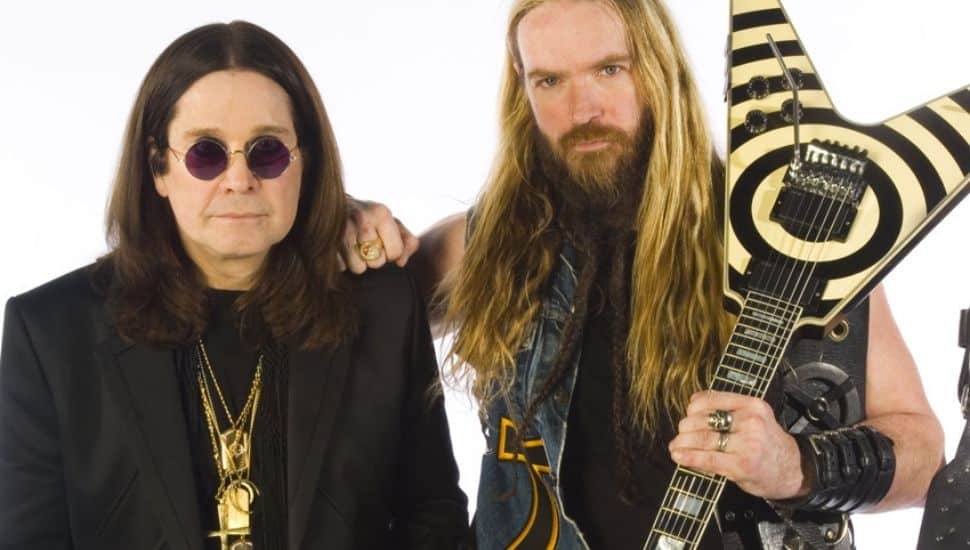
Six studio albums: No Rest for the Wicked (1988), No More Tears (1991), Ozzmosis (1995), Down to Earth (2001), Black Rain (2007) and Patient Number 9 (2022). That’s more than any other guitarist in Ozzy’s solo career — Randy Rhoads and Jake E. Lee each made two.
No More Tears, released in 1991. It’s the commercial and creative peak of the partnership, with no weak tracks, lyrical contributions from Lemmy Kilmister, and what is widely regarded as Wylde’s finest recorded guitar performance. No Rest for the Wicked (1988) is the closest challenger.
No Rest for the Wicked, released in 1988. Wylde joined after submitting a demo tape, replacing Jake E. Lee, and was twenty years old at the time of recording.
Zakk Wylde. He remained Ozzy’s primary guitarist through to the singer’s death in July 2025, playing on his final studio album and appearing at his final live performances. Ozzy publicly referred to him as a surrogate son.
Wylde has said Ozzy was texting him about a new album — described as melodic but heavy — shortly before his death, as a follow-up to Patient Number 9. Ozzy died on July 22, 2025 at the age of 76, and the record was never made.
Six albums, thirty-seven years, and a partnership that outlasted everything else in Ozzy’s solo career. Is No More Tears really untouchable, or does the 1988 debut take it? Settle it in the comments. And keep it locked on the Loaded Radio stream — follow Loaded Radio for daily rock and metal news.
The post Zakk Wylde’s Ozzy Albums, Ranked appeared first on Loaded Radio.
“From Hell I Rise (Extended Deluxe Edition)” will be out in June.
The post Kerry King To Release Deluxe Edition Of “From Hell I Rise” With His Own Demo Vocal Tracks & The Band’s First-Ever Live Performance appeared first on Theprp.com.
(written by Islander) For nearly a decade we’ve been recommending the recordings of the Brisbane-based black metal band Graveir, and we’re doing it again today. Their discography to date has included a pair of albums — Iconostasis (2016) and King of the Silent World (2020) — plus an EP and a pair of splits. And […]
The post AN NCS PREMIERE: GRAVEIR — “A FUTILE EXHORTATION” appeared first on NO CLEAN SINGING.
Familiarize yourself with the dates.
The post Loathe, Fleshwater & Prostitute Reveal Fall North American Tour appeared first on Theprp.com.
Where they from?
Richmond, Virginia. The Mets have lost 15 of their last 17 games. The Rangers did not make the playoffs, the Knicks are struggling in their first round matchup with the Atlanta Hawks and the Jets are starting Geno Smith at quarterback. There is nothing good on the horizon, all hope is gone, life is a tale told by an idiot. Etc.
Why the hype?
Killing Pace are another finest example of that micro-genre of hardcore bands that integrate blast beats and overall fast parts into their malignant stew of modern hardcore a la Ingrown, Shackles and most famously Nails (YOU WILL NEVER BE ONE OF US!). This might not appeal to grindcore diehards (aka nerds) but to quote Marge Simpson “I think it’s neat!” Every song here feels fast, pissed-off and like it was shot out of a cannon.
Latest Release?
HCPM out now on Triple B Records. The cool thing about bands that mix hardcore and grind is always the feeling of intense urgency. Every song here is so in-your-face and relentless, it’s like getting a colonoscopy at 100 miles per hour and the blast parts aren’t merely transitional, they provide an intensity only matched by the unrelenting severity of the beatdown parts. I’m gonna listen to this over and over while I watch all of my professional sports teams fail me in various ways.
The post Blast Worship: Killing Pace appeared first on Decibel Magazine.