The tireless young Chicago power-pop auteur Kai Slater is a member of Lifeguard, and he also makes his own shimmering ’60s-style gems under the name Sharp Pins. He’s really, really good at it. Slater, still in his early twenties, released the excellent Sharp Pins album Balloon Balloon Balloon last year. Since then, Sharp Pins have appeared on the Red Xerox compilation, reissued the 2023 tape Mod Mayday 23, and released the one-off single “Saturday Sun.” Early next year, we’re getting a new Sharp Pins EP.
Slipknot have sparked fresh speculation after a series of mysterious posters began appearing in cities around the world, including London. The striking red posters feature the band’s iconic Tribal S logo alongside the name of the city and the message unlock.slipknot1.com, directing fans towards a new online campaign.
First appearing across North and South America, more have appeared across Europe today, including this one on Clerkenwell Road in North London.
Fans who log into the site are greeted with the numbers 09 28 surrounding the bands iconic tribal S logo, suggesting an announcement this coming Monday.
This all follows the surprise reveal of the bands new single ‘Arsenal’ last week.
What is going on in the Slipknot camp? It seems we wont have long to find out!
The end is nigh for British industrial metal pioneers Godflesh. Justin Broadrick announced earlier this year that the hugely influential band would be calling it quits after 38 tumultuous years. Decay is the first detonation in a two-pronged blood and thunder grand finale that allows Broadrick to end Godflesh’’s studio legacy on his own terms after a serious abdominal surgery dictated he could no longer perform the band’s punishing, spiteful music live. It’s sad because the choppy, venomous grind of “Living/Ending” shows that Godflesh is still a pretty lethal band. “Master and Slave” crawls desperately along some filthy Birmingham back alley, equal parts Swans and Scott Walker. The material was largely written at the same time as 2023’s Purge, so fans of that record take note. Everyone else: enter at your own risk.
Continuing from last year’s EP, Parasite, the fruit in the bowl of Cell Rot’s cover art has shriveled, rotted, and the mold has spread. On the first part of this two-halved piece, the powerviolence act warned us of the harm we’re causing our earth. Humankind is the parasite, stifling the resources for all living things and burning the planet for momentary AI satisfaction, for soulless imagery and videos that will never amount to the passion of man-made work. Paradise furthers that anger, pissed off and hopeless that we’ve gone too far. The aptly-titled intro track (and the only taste of what’s to come so far), “Paradise/Parasite” tethers the two releases together with a building hardcore tension. Harsh vocals scream about what we desire and how we’ve ruined it alongside mid-tempo drumming and a sneering guitar riff. It’s one of the catchiest hardcore songs of 2026 and with the first half of this project an infuriated, relentless powerviolence assault, the rest of this album should get a few data centres demolished.
BRAT’s latest album, Manslayer, thrives on Liz Selfish’s deep guttural growls, heavy riffs, hardcore breakdowns, and sharp tempo changes. The title track opens with “Hell hath no fury / Like a woman scorned,” setting the tone for a record consumed with revenge and female rage. “Femicidal Vengeance” imagines gruesome retribution against men, while “Spit on His Grave” directs that fury toward an abuser. “Aileen Wuornos” invokes the serial killer through lyrics of rape, exploitation, and revenge. Over 17 tracks, though, the reliance on gutturals and breakdowns becomes repetitive, with songs blurring together.
“Botch Tox” does not blur with the rest of Manslayer, if only because it’s strangely at odds with the album. Its fixation on Botox, cosmetic surgery and “perfect plastic” directs its contempt toward women who participate in the beauty industry. It feels divisive, pitting women against one another over heavily scrutinized choices. On an album invested in female anger, revenge and empowerment, that hostility towards women feels like an odd contradiction.
From Dennis J. Seese’s track premiere of “The Feeling Destroyer”:
Critical Defiance channels the suffocating South American darkness of their distinguished forefathers in Sarcófago and Sepultura. “The Feeling Destroyer” accelerates at a frantic, damn near untenable pace, proto-black metal vokills spewing antisocial venom until the song crashes into a wall of absolutely bonkers soloing. Extra bonus points are awarded for the unexpected inversion of an old-school metal trope as a foreboding acoustic piece plays at the end of the track.
Where Shadows was faster and more venomous in its riffing and drumming, clearly pulling from Evanescent Everfading-era demos, Sins dips its toes into a more sophisticated and dynamically varied approach more reminiscent of August Wernicke, Fall of the Leafe’s second album. However, make no mistake: The Archaic Sins is no slouch.
Crazed, nay, deranged black metal overflowing with melody, as if Countess Valentina Carmilla Iskariot attached a car battery to Vinterland. The overabundance of shredding and solos indicates Noblesses is for rockstars, yet doesn’t feel disingenuous to black metal’s cold heart if only because it isn’t joyous.
Ear Music [Release date : 25.09.26] The half life of many Francis Rossi / Bob Young songs seems to extend way beyond the music of other artists. The Way We Were Volumes 1 and 2 are the living proof. Most … Continue reading →
Prior this Friday’s official release of Manslayer record, Brat present a video clip for the last new track in preview called “Speculum Bleed”. Read more…
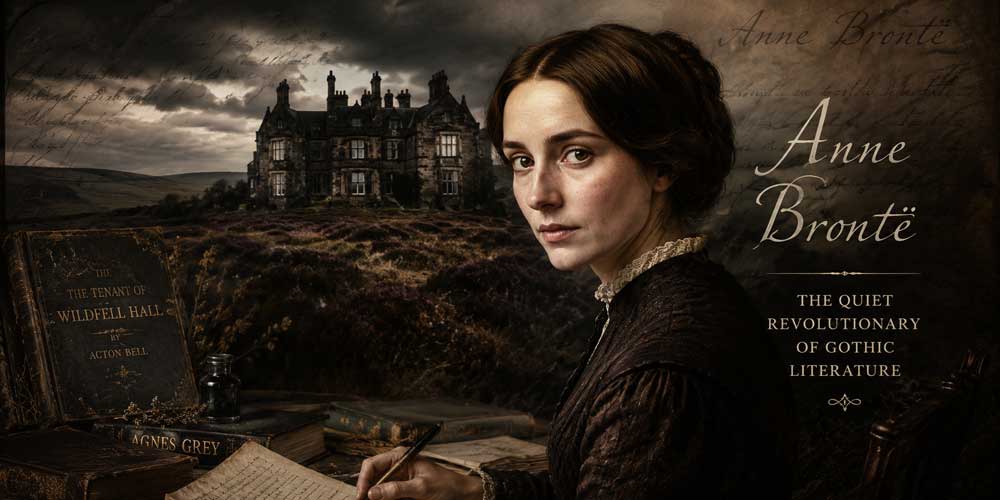
Anne Brontë: The Quiet Revolutionary of Gothic Literature
When readers think of the Brontë sisters, they often remember Charlotte’s passionate heroines or Emily’s haunting vision of Wuthering Heights. Anne Brontë, the youngest of the three sisters, has long stood in their shadow. Yet modern scholars increasingly recognize that her quiet voice concealed one of the most radical literary minds of the era.
Rather than relying on dramatic Gothic spectacles or tragic romances, Anne confronted horrors that existed inside ordinary homes. Emotional abuse, alcoholism, manipulation, loneliness, and the legal power husbands held over their wives became the true monsters of her fiction.
More than two centuries after her birth on January 17, 1820, Anne Brontë’s novels continue feeling remarkably modern. Many readers now view her not only as an important Gothic writer but also as one of the earliest literary voices to argue openly for women’s independence and psychological dignity.
Growing Up in Haworth Parsonage
Anne Brontë was born on January 17, 1820, in the village of Thornton, Yorkshire. Shortly afterward, the Brontë family moved to Haworth Parsonage, where the surrounding moors would become one of the most influential literary landscapes in English history.
Tragedy shaped Anne’s childhood from an early age. Her mother died when Anne was only an infant, and two older sisters, Maria and Elizabeth, died after attending the harsh Clergy Daughters’ School at Cowan Bridge. These losses profoundly affected the surviving Brontë children and helped create the atmosphere of grief, solitude, and introspection that later permeated their writing.
Together with Charlotte, Emily, and their brother Branwell, Anne developed elaborate imaginary worlds filled with kingdoms, political intrigue, and richly detailed characters. These childhood stories became an extraordinary apprenticeship in fiction, allowing the siblings to develop their literary voices years before publication.
Life at Haworth was intellectually stimulating but emotionally isolated. The windswept Yorkshire moors, the nearby graveyard, and the quiet rhythm of village life created an environment where imagination flourished alongside constant reminders of mortality.
The Most Realistic of the Brontë Sisters
Anne’s literary approach differed significantly from those of Charlotte and Emily.
Emily embraced emotional extremes and symbolic landscapes, while Charlotte explored passionate inner lives shaped by social expectation. Anne instead turned her attention toward everyday reality.
Her fiction drew heavily upon direct observation. Having worked as a governess for several years, she understood the complex social hierarchy of Victorian households and the limited choices available to women without wealth or legal independence.
Rather than presenting Gothic terror through ghosts, supernatural events, or mysterious castles, Anne revealed something arguably more disturbing: the ordinary respectability behind which cruelty, addiction, manipulation, and psychological suffering could remain hidden.
This realism made her novels unusually controversial because readers recognized the society she described. The horrors she depicted existed not in distant medieval ruins but within respectable Victorian homes.
The Tenant of Wildfell Hall: A Victorian Revolution
Published in 1848 under the pseudonym Acton Bell, The Tenant of Wildfell Hall immediately challenged Victorian assumptions about marriage, morality, and women’s rights.
Its heroine, Helen Graham, arrives mysteriously at the isolated Wildfell Hall with her young son, refusing to explain her past. Gradually, readers discover that she fled an abusive marriage in order to protect both herself and her child from her husband’s alcoholism, infidelity, and moral corruption.
For Victorian audiences, the novel proved deeply unsettling. English law offered married women almost no independent legal identity. Leaving one’s husband, especially while taking a child, violated both social expectations and legal convention.
Anne nevertheless portrayed Helen’s decision as morally courageous rather than scandalous. Instead of condemning a woman who resisted abuse, the novel questioned the social system that left women so vulnerable in the first place.
Today, many literary historians regard The Tenant of Wildfell Hall as one of the earliest feminist novels in English literature because it directly confronted domestic violence, coercive control, addiction, and female autonomy decades before such subjects became widely discussed.
Agnes Grey and the Quiet Gothic
Before writing The Tenant of Wildfell Hall, Anne published her first novel, Agnes Grey, in 1847.
Based largely on her own experiences as a governess, the novel follows a young woman struggling to preserve her integrity while working for wealthy families who treat both servants and children with indifference or cruelty.
Unlike many Victorian novels, Agnes Grey contains very little outward drama. Its power comes from emotional observation. Anne carefully exposes the loneliness, humiliation, and moral compromises that often accompanied a governess’s life.
The novel also illustrates Anne’s distinctive approach to Gothic literature. Rather than relying upon haunted castles or supernatural mysteries, she found darkness within ordinary existence. Isolation, social inequality, and emotional neglect became forms of psychological imprisonment every bit as unsettling as traditional Gothic settings.
This restrained realism distinguishes Anne from many of her contemporaries and explains why modern readers increasingly view her work as psychologically sophisticated.
The Hidden Gothic of Anne Brontë
Anne Brontë rarely employed the supernatural, yet her novels remain deeply connected to the Gothic tradition.
Her stories replace ghosts with guilt, castles with isolated manor houses, and physical imprisonment with emotional oppression. The source of terror is not the unknown but the familiar.
Wildfell Hall itself embodies this approach. The decaying mansion overlooking an isolated landscape creates an atmosphere of mystery long before readers understand Helen Graham’s past. Like many Gothic houses, the building appears to preserve painful memories that refuse to disappear.
Anne understood that the greatest horrors often emerge not from supernatural forces but from ordinary people capable of manipulation, addiction, cruelty, and emotional control. In this sense, her fiction anticipates the psychological Gothic that would flourish in the twentieth century.
Her novels ask readers to recognize that evil does not always announce itself dramatically. Sometimes it enters quietly through respectability, social convention, and everyday domestic life.
Lesser-Known Facts About Anne Brontë
Although Anne is frequently described as the quietest Brontë sister, her life contains many surprising details.
Like Charlotte and Emily, she originally published under a masculine pseudonym. She became Acton Bell, while her sisters wrote as Currer and Ellis Bell. The three women believed female authors would struggle to receive serious critical attention in Victorian England.
Anne was also the only Brontë sister to have worked extensively outside the family home for several different employers. Her experiences as a governess provided firsthand knowledge of class divisions, child-rearing practices, and domestic abuse that later became central to her fiction.
Perhaps most remarkably, Charlotte Brontë herself initially suppressed the republication of The Tenant of Wildfell Hall after Anne’s death. Believing the novel too shocking for Victorian readers, Charlotte limited its circulation for many years. As a result, Anne’s literary reputation remained overshadowed for generations despite the novel’s extraordinary originality.
Only during the twentieth century did scholars begin fully recognizing the importance of Anne’s work, particularly her exploration of women’s legal rights, psychological trauma, and moral independence.
A Voice Far Ahead of Its Time
Anne Brontë died of tuberculosis on May 28, 1849, at only twenty-nine years of age.
She was the first of the surviving Brontë siblings to die, leaving behind just two completed novels and a collection of poetry. Although her literary career lasted only a few years, it demonstrated a remarkable willingness to confront subjects that many Victorian writers preferred to avoid.
Anne refused to romanticize destructive behavior or soften the realities of domestic abuse, addiction, and emotional manipulation. She believed literature should tell the truth about human experience, even when that truth made readers uncomfortable.
At the time of her death, few could have imagined that the quiet youngest sister would one day be regarded as one of the nineteenth century’s most progressive novelists. Her greatest recognition would arrive not during her lifetime, but generations later.
Anne Brontë’s Enduring Legacy
For decades after her death, Anne Brontë remained the least celebrated member of one of literature’s most famous families. Readers admired Jane Eyre and Wuthering Heights, while The Tenant of Wildfell Hall received comparatively little attention, partly because Charlotte Brontë discouraged its republication after Anne’s death.
During the twentieth century, however, literary scholars began reassessing Anne’s achievement. Rather than viewing her realism as less imaginative than Emily’s or less passionate than Charlotte’s, critics increasingly recognized it as her greatest strength.
Today, The Tenant of Wildfell Hall is widely regarded as one of the earliest feminist novels in English literature. Its exploration of coercive control, alcoholism, women’s legal vulnerability, and psychological resilience anticipated social debates that would not become widespread until many decades later.
Anne’s influence extends beyond feminist literature. By locating Gothic terror within ordinary domestic life, she helped shape the development of psychological fiction, demonstrating that the most frightening monsters are often neither supernatural nor imaginary but painfully human.
More than two centuries after her birth, Anne Brontë is no longer remembered simply as the youngest Brontë sister. She stands as an original literary voice whose quiet realism permanently expanded the possibilities of Gothic and Victorian fiction.
Wear the Darkness
If Anne Brontë’s quiet Gothic world speaks to your love of Victorian literature, dark aesthetics, and timeless storytelling, explore the Edgar Allan Poets store. Our designs celebrate Gothic literature, Edgar Allan Poe, classic authors, and the beauty of the darker imagination.
Join the Noir Newsletter
Receive more essays exploring Gothic literature, Victorian authors, dark history, noir psychology, Edgar Allan Poe, and the writers who transformed the darker side of literature.
Frequently Asked Questions
Why is Anne Brontë considered ahead of her time?
Anne Brontë openly addressed domestic abuse, alcoholism, women’s legal rights, and emotional manipulation decades before these subjects were widely discussed in Victorian literature. Many scholars now regard The Tenant of Wildfell Hall as one of the earliest feminist novels in English.
What is Anne Brontë’s most famous novel?
The Tenant of Wildfell Hall, published in 1848 under the pseudonym Acton Bell, is her best-known work. It follows Helen Graham, a woman who escapes an abusive marriage to protect both herself and her son.
How does Anne Brontë differ from Charlotte and Emily Brontë?
While Charlotte emphasized emotional passion and Emily embraced symbolic Gothic landscapes, Anne focused on psychological realism. Her novels explore the hidden suffering of ordinary domestic life rather than dramatic or supernatural events.
Did Anne Brontë write Gothic literature?
Although she rarely used ghosts or supernatural elements, Anne employed many Gothic themes, including isolation, repression, decaying houses, psychological conflict, and moral darkness. Her work helped shape the development of psychological Gothic fiction.
Why was Anne Brontë overlooked for so long?
After her death, The Tenant of Wildfell Hall was not widely republished for many years, partly because Charlotte Brontë considered its subject matter too controversial. As a result, Anne’s literary achievements remained overshadowed until twentieth-century scholars reassessed her work.
After perking up our ears with a pair of tracks last year, the genre-blurring London quartet RIP Magic have spent 2026 compounding their already-significant buzz. They got James Murphy himself to produce January single “5words,” which was rad, then dropped two more heaters, “Screwdark” and “Light Over There.” Today, the inevitable album announcement has finally arrived, and along with it, another cool RIP Magic song.
KING DIAMOND‘s Halloween, the three-track LP picture disc originally released in 1986, will be re-released worldwide with new art by Mario Lopez on October 23rd via Metal Blade Records, just in time for the season!
The Halloween title track comes off KING DIAMOND‘s debut album, Fatal Portrait (1986), as does “The Candle,” which served as the opening track on Fatal Portrait, and was part of the early storytelling approach that would become central to KING DIAMOND‘s future discography. “The Lake,” while recorded during the same general period as Fatal Portrait and associated with those sessions, wasn’t included in the original nine-track album.
Halloween was produced by KING DIAMOND and Rune Höyer with production assistance by Michael Denner and engineered by Roberto Falcao.
Halloween LP Track Listing:
A1. Halloween
B1. The Candle
B2. The Lake
KING DIAMOND Halloween Lineup:
King Diamond – lead vocals, backing vocals
Andy LaRocque – lead guitar
Michael Denner – lead guitar
Timi Hansen – bass guitar
Mikkey Dee – drums
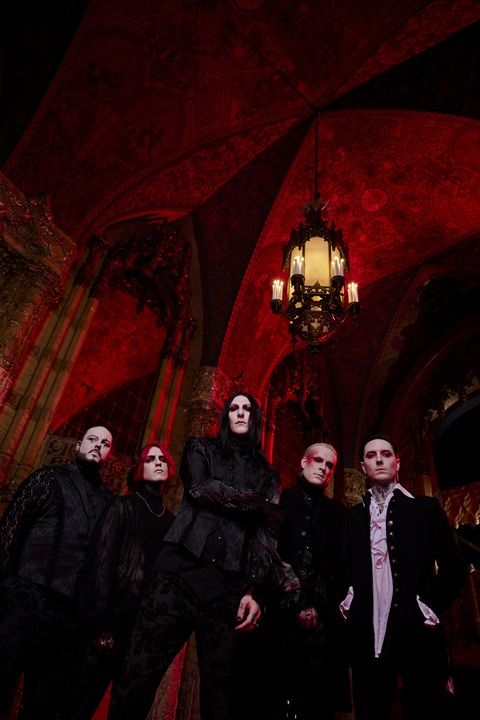
Alexandra Palace, London, February 14, 2026. Motionless In White are playing their biggest-ever UK tour and tonight’s show is off to a scorching start. Meltdown is a suitably explosive opener, accompanied by huge gouts of pyro while members of The Cherry Bombs – the alternative dance troupe led by Corey Taylor’s wife, Alicia Taylor – stalk the stage twirling glowing torches. They switch to angle-grinders for the cybermetal pulse of Sign Of Life, but the overall effect is no less stunning.
With a little space to breathe, the house lights come on and frontman Chris Motionless surveys the vast crowd in front of him. “I’m just going to stare at you guys for a second, is that cool?” he asks. “It is Valentine’s Day after all, I just want to adore you.” There’s a touch of canny showmanship to all this, but it’s not just banter. The singer has a look that suggests he’s close to being overwhelmed by the experience.
“I sent the video straight to my girlfriend afterwards and joked that I should have had them wish her a happy Valentine’s Day,” Chris tells us today. “I walked away from that show with the kind of feeling like you want to call your parents and be like, ‘We did it, guys.’ It was such a triumphant moment. This isn’t just one of the best shows of the UK ever, this is one of our best shows of all time.”
Motionless In White’s last album, 2022’s Scoring The End Of The World, only narrowly missed the Top 10 of the US Billboard 200, but it was towards the end of that touring cycle that they suddenly found themselves playing a succession of sold-out arenas. Some two decades after they started this band, with no more ambitions than “to jump in a van and live out the fantasy of being on the road”, Motionless In White had finally arrived.
I want to get punched in the face when I listen to this record
Chris Motionless
Chris is joining us today from his home in Scranton, Pennsylvania – perhaps still best known to non-residents as the setting of the US version of The Office. He is, he says, using the limited time he has before Motionless In White’s never-ending tour schedule sweeps him away to Australia, to do “all kinds of house projects”.
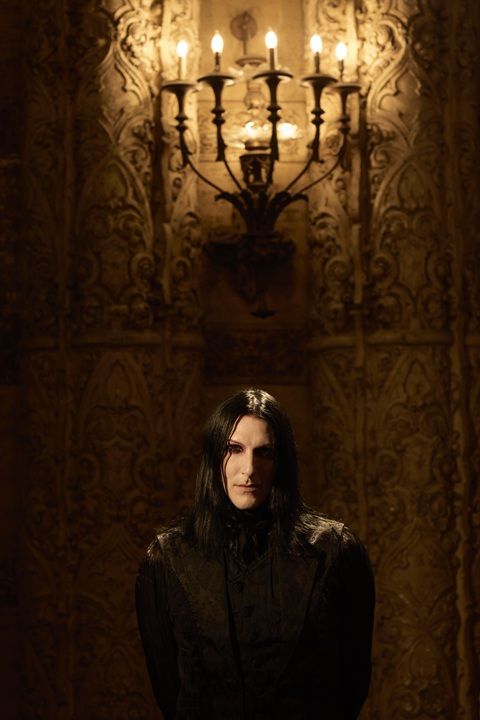
Without the usual pale make-up he looks healthy and even a little tanned, long hair framing a casually bearded off-duty face. He also looks confident and relaxed, as well he should. There are more of those arena-sized venues looming across North America. There’s the little matter of a headlining slot at next year’s Bloodstock. And, right here and now, the band are about to release their brand new seventh album, Decades.
If the aptly titled Scoring The End Of The World rampaged out of a global lockdown with a sense of untrammelled release, Decades is an even more explosive statement. A big part of MIW’s appeal is their ability to blur boundaries, incorporating elements of industrial, electronica, rap, pop and more while always eventually circling back to the slamming metalcore heft of their earliest releases.
On Decades – an album that celebrates the band’s 20 or so years in existence – they throw in sounds picked up from every part of that journey, mix them up and turn everything up to 11.
“I want to get punched in the face when I listen to this record, because we have not had a record that aggressive since [2010 debut] Creatures,” Chris grins. “Every other record has had a lot of slow and mixed songs. This one is just energy of different variations and I felt like that is the message.”
It sounds like the album was a blast to make. As it turns out, it wasn’t. Chris says it came closer than ever before to breaking his love for making music – but more on that later.
Decades also marks another peak in a journey that the youngsters who formed the band could barely have conceived of. The band that would become Motionless In White came together in 2004 and chose their current name on New Year’s Day, 2005. The mathematically astute may notice that this makes the band at least 21 years old, but the frontman used his prerogative to name 2026 as their 20th anniversary year.
“I wanted to have earned it,” he explains. “Technically, we’re 21 years with the name, but we didn’t do our first real tour until 2006. You can play local shows with cover songs mixed in, but we weren’t a band until we had all original songs.”
Their first ‘proper’ gig was a local show supporting then-rising emo stars Senses Fail at The Staircase in Pittston, Pennsylvania in 2005.
“We didn’t even have our first demo fully finished, but I found the promoter through a friend and I called him every other day for a month straight,” Chris remembers. “Finally he just gave in, and we went out there like we were the headliners. It was cringy as hell looking back, but at the time it was the coolest thing ever!”
As soon as they could, they piled into a van (a cheap Ford Econoline that they all lived in, equipped with a trailer for the gear and a replica Triceratops skull mounted on the front) and headed out. The first few shows of their first tour had to be abandoned, after they broke down in a snowstorm and were forced to sleep on the floor of a rest stop on the side of the Interstate. They had to pool every penny to get fixed up and back on the road, but there was no way that was going to stop them.
Nothing I do can have any success if I’m not healthy
Chris Motionless
Which isn’t to say that every member of the fledgling band had the same long-term drive and commitment as the frontman. Even as they built up a cult following through constant roadwork and releases such as their 2007 EP, The Whorror, and 2010 full-length debut, Creatures, that early line-up went through a lot of churn. By 2013, Chris was the sole original member.
“When we started, it was just friends wanting to play music and tour, but I don’t think people at that moment were in it for a lifelong career scenario,” he shrugs. “We’ve had some members dealing with health issues and some just move on to other things. Thankfully, it’s been cool, because all the iterations have, in my opinion, improved the band.”
Even with a turnaround resulting in eight ex-members, MIW have remained largely drama-free, in the public arena at least. Asked if there’s been a deliberate policy of keeping any issues behind closed doors, Chris concedes that there’s “definitely been some stuff with former members of the band and their behaviour justified them being removed from the band”.
The only real public spat involved “a situation that we were pretty upset about as a band, because we felt betrayed”, he adds. Fifteen years on, he’s still reluctant to name names or point the finger, but he’s clearly talking about guitarist Thomas ‘TJ’ Bell, who ditched Motionless for Escape The Fate. In a rare diss-post at the time, they said he “basically fucked us last minute” and questioned his commitment to the band and fans.
Still, one dispute with an ex-member and a minor beef with Ronnie Radke – and who hasn’t had beef with Ronnie Radke? – is a remarkably trouble-free track record for 20 years of existence. That genre-splicing musical explosion has always been a big part of Motionless In White’s appeal, but so has Chris Motionless, also known as Chris Cerulli, himself. He’s the outcast rebel you could take home to meet your nan; unfailingly polite, respectful to his fans and seemingly wholesome in a scene that frankly hasn’t always been all that it could.
Motionless In White have enjoyed a far more stable line-up over the second half of their career, but Chris is undoubtedly its figurehead. Asked whether he is also its undisputed leader, he takes a second to gather his thoughts.
“Around the 2011-2012 timeframe, I feel like everyone had a democratic vote and we didn’t have a leader,” he says at last. “It was so chaotic and nobody could ever make a decision and… so I felt like I needed to take control of the band. Once we went in that direction, we became a lot more professional and business-oriented. The democracy is still alive today. Everyone has a say and a vote and gets to speak their mind, but it’s always because I’m bringing them something ahead of that for us to discuss and figure out. So yeah, I would say I am the leader, or the person with the forward vision.”
The frontman’s drive is undoubtedly why Motionless In White are where they are today. The first time this writer interviewed Chris Motionless was shortly after the release of Creatures. The singer was rightly and inordinately excited by the fact that Twisted Sister legend Dee Snider was appearing in the video for Immaculate Misconception.
Even then he oozed ambition, but he was also awkward and very guarded, seemingly weighing every word before he’d allow it to leave his lips. The Chris in front of us today still puts thought into everything he says, but he’s a lot more confident and relaxed. More comfortable in his own skin, perhaps?
“You are very right,” he smiles. “I have always been introverted. I’m not so much of a people person that I know how to say the right thing, and I worried with social anxiety. I’ve just had so many years of doing it that it’s not like a desensitisation, it’s more like, ‘Oh, it’s not as bad as I was worried about.’ So it didn’t feel like there was an internal implosion, I think I just care less about being serious now. I don’t care about a lot of things I used to care about, and that’s been quite liberating.”
Jonathan WeinerJonathan Weiner
It hasn’t, though, been plain sailing to get to this point for either the singer or the band as a whole. When Hammer spoke to Chris in 2017, as they were about to release their fourth album, Graveyard Shift, it felt like a pivotal time. MIW had their dedicated fans, but they seemed to have hit a plateau.
Keyboardist Josh Balz – then the longest-serving member after Chris – had left the band, which hit the singer hard. He was also dealing with the fact that his dad had just had a heart attack, and questioning the future of the band and his own place in life.
“Life and mortality and intention of living became more of a focal point of mine,” he nods. “When you’re younger you feel invincible, and you don’t really worry about your family. And then it just hits you like a train one day, and you develop these different feelings about what life is and what you’re doing and your choices and everything.”
One way that Chris dealt with this torrent of feelings was through attending therapy.
“The number one thing I learned was that nothing I do can have any success if I’m not healthy,” he reflects. “If I’m not putting any work into me as just a human being – band aside, friendships aside, family aside – then everything else is liable to suffer. That was something that I put off, and admittedly still very much do. It’s rather clichéd to be like, ‘How can you love anything else if you don’t love yourself?’ but it’s true.
“The biggest benefit to spending the time on therapy is that now, any time things become incredibly overwhelming or stressful, I can always be like, ‘How can I make this better by stepping away and sorting through what I need out of this situation, and then go forward after that?’”
MIW’s fifth album, 2019’s Disguise, also gave the singer an extra outlet for processing many of the issues he’d been struggling with, the title track examining what happens when you mask your true self while battling the demons inside. It was well-received among the faithful, even if it didn’t move their career much further along in terms of finding the end of that plateau.
Then came Scoring The End Of The World, which finally saw them come into their own. It wasn’t instant. The venues kept getting bigger and bigger over a four-year touring cycle, but does the singer now feel like the band have experienced a glow-up, to use the vernacular?
“Totally a glow-up, deadass for sure. Print that!” he hoots. “If the kids want to keep the glow-up going on, you can direct that right over here, ’cause we’ll be happy to keep playing these badass shows.”
When it comes to the reasons behind MIW’s recent and still burgeoning success, he’s modest about the band’s own input.
“I think that’s a little bit of a result of rock music in general just thriving, and in the past couple of years it’s gone crazy,” he says. “We just happened to be in the right place in our career where as it trickles down from these big bands like Bring Me and Bad Omens – we’re next underneath that, where people are discovering our music.”
The guest appearance of Bryan Garris from Knocked Loose on Scoring The End Of The World track Slaughterhouse and a reciprocal appearance by Chris on the hardcore superstars’ You Won’t Go Before You’re Supposed To song Slaughterhouse 2 probably won’t have hurt, either. Asked if that unlocked any new fans for them, he nods.
“I think most of the people that we have had on a song have, but that’s not the reason we do it. We do it because we love those artists or feel they’re right for the song.
“I think some of the Knocked Loose fanbase are too cool for Motionless In White, so it’s cool that if they’re forced to be exposed to us, so to speak, at least there’s a song they could probably vibe with,” he adds with a self-deprecating grin.
With the band on an upward trajectory, it might seem like the process of making a new album marking their time together would be a celebratory affair. Not so, according to Chris.
“Making this latest record was as close as I’ve come to walking away from the band,” he sighs. “I wouldn’t, because it’s the only thing I know – the only thing I love and I’m passionate about. To walk away would feel like such a betrayal of the time spent and invested in this.”
The problem wasn’t writer’s block, he says, but more the sheer amount of work involved. “I ground myself to the bone for this record,” he admits. “I was going into these toxic cycles of workaholism and just burnt myself out. It took a little bit of my passion away, because it felt like a job for the first time, so I definitely wanted to walk away and come back to it. That’s part of why it took so long.”
It should also be noted that Decades did not start life as an album to mark the band’s 20th anniversary. A number of songs feature lyrics that circle around the theme of fear and no longer being afraid. When we tell him that, he smiles like we’ve unearthed a secret.
“The record was initially meant to be Afraid Of The Dark. So we went into the record, this is the theme, it’s about not being afraid to step into the unknown. As things took more and more time to get done, I recognised: ‘We’re coming up on 20 years here, that shifts what all of this is about. It still works, because the songs Decades and Afraid Of The Dark are the bookend messages.”
The tortuous and thematically revised process of piecing the album together resulted in a bigger pile of rejected songs than ever before. This included what Chris describes as arguably his favourite cut from the sessions. He declines to provide a title, but reveals that it was a “sad, slow, emotional song” in the same vein as R.I.P..
“Nothing has ever prohibited us from having multiple slow songs before, but I just felt like this record is supposed to be about fucking pure raw energy,” he says.
One song that bleeds raw energy and that Chris did love working on is Playing God, which features an absolutely feral guest performance from Slipknot’s Corey Taylor.
“That’s a great way to put it,” beams Chris. “I wasn’t in the room with him, but I don’t even know if I would have been able to get through it if I were, as I’d have been laughing and crying at the same time. He was very communicative and super-cool around the whole process, and when I heard it for the first time I was actually confused, because he did even more than I thought he was going to. When you’re asking someone that you either idolise or that’s just in a bigger position than you to sing, there’s an anxiety like you don’t want to overstep. But it seemed like he genuinely wanted to be a part of it on a bigger level.”
The album also features guest spots from singer-songwriter Skylar Grey (on R.I.P.) and Anthony Martinez of Dark Divine (on Blood Rave). As a metalcore act with a penchant for make-up and a dark gothic bent, the latter can clearly be seen as following in MIW’s footsteps, and Chris now finds himself in the position of mentor as well as mentee.
“I definitely resonate with what they’re doing and what they want to do, and I want to support that,” he says. While emphasising that he’s not comparing the stature of his own band to Slipknot’s, he adds that one of the most inspirational things about the Iowa legends has always been their willingness to take newer bands out – including Motionless In White.
Over the course of two decades, Motionless In White have got to tour with the likes of Slipknot, Lamb Of God and Alice Cooper. They became Warped Tour mainstays and have played countless European festivals. They’ve sold out Alexandra Palace, and icons such as Corey Taylor, Korn’s Jonathan Davis and Cradle Of Filth’s Dani Filth have guested on their albums.
Next year they’ll be headlining Bloodstock and playing a whole bunch of songs from Decades that will undoubtedly be new fan favourites by then. There have been a lot of highs, and there will surely be more to come, but, perhaps surprisingly, it’s not these undoubted peaks that Chris Motionless cherishes the most.
“Sure, I have a lot of favourite shows that I’ve loved, but nothing beats my favourite times of being crammed in the van with my best friends,” he says wistfully. “Nothing beats getting caught stealing food from Walmart because we were broke as fuck. Those are the moments that me and my friends bonded over the most, and I’m so grateful I got to experience that.”
Decades is out now via Roadrunner. Motionless In White headline Bloodstock Festival in the UK in August 2027.