Black Veil Brides have shared the official visualizer for “Revenger”, the latest single from their upcoming album Vindicate, set for release on May 8 through Spinefarm. The track features a guest appearance from Machine Head frontman Robb Flynn and centers on the idea of vengeance viewed through a distorted lens—more fantasy than justice.
On this release, Black Veil Brides—Andy Biersack, Jake Pitts, Jinxx, Lonny Eagleton and Christian Coma—continue to expand their sound while keeping their core identity intact.
Biersack explains the concept behind the track: “I have always been interested in the sort of ethical dilemma that we have culturally of cheering for justice. I thought it would be an interesting exercise to write lyrics from the perspective of someone who is trying to seek out the ultimate form of justice.”
That perspective also influenced the decision to bring in another voice. “Because I was writing from someone else’s voice, this felt like the kind of song that would be best served by having someone else’s voice on the song. So, we brought in Robb Flynn of Machine Head. The reason he came to mind first was of course his voice, tonality and style I thought was perfect for this. He is also someone who was one of the first real defenders of Black Veil Brides. In the early days when we were getting absolutely shit on by every other metal band, Robb Flynn and Machine Head stood up for us and said positive things about us and has maintained that for years and years.”
Biersack adds: “I think it’s one of my favorite songs on the record.”
The “Revenger” concept also extends beyond music. A companion novel titled “Revenger”, written by Biersack and released through Simon & Schuster, is available now.
With Vindicate approaching, Black Veil Brides are building momentum through a series of singles. The record runs from the opening “Invocation To The Muse” to the closing “Eschaton”, covering a wide range of moods and arrangements. Tracks like “Bleeders”, “Hallelujah”, “Certainty” and “Vindicate” point to a band continuing to evolve while holding onto the theatrical edge that has defined their catalog.
German avantgarde death metal pioneers DARK MILLENNIUM unveil their second single and lyric video, “Witchcraft Island”, taken from the upcoming studio album “COME”, set for release on May 22nd, 2026 via Massacre Records. WATCH THE LYRIC VIDEO HERE: https://youtu.be/5Nt6OSj2H28 PRE-ORDER THE ALBUM HERE: https://massacre-records.com/drkmillennium_come_sale/ Following the previously released first single “Amber”, which introduced listeners to the album’s hypnotic and immersive atmosphere, “Witchcraft Island” […]
Today, PRIDE OF LIONS, led by Jim Peterik and Toby Hitchcock, are proud to announce their new album, ‘Unbridled,’ set for release on July 10th via Frontiers Music Srl. Produced by Jim Peterik and mixed by Larry Millas, ‘Unbridled’ marks the eighth studio album from PRIDE OF LIONS. To celebrate the announcement and offer fans […]
The bass guitar is the most misunderstood weapon in the heavy metal armory. To the uninitiated, it’s the “quiet” part of the mix; to the true headbanger, it is the tectonic plate that prevents the entire genre from collapsing into a hollow mess of treble. A legendary bassist is more than a rhythm keeper—they are a sonic architect. They bridge the gap between the frantic violence of the drums and the melodic assault of the guitars, providing the “weight” that you feel in your chest long before you hear it in your ears.
TL;DR:
While guitarists often hog the limelight, the low-end frequencies provided by these 13 legends are the actual foundation of heavy metal. From the doom-laden foundations of Geezer Butler to the technical lead-bass wizardry of Cliff Burton and Steve Harris, these musicians transformed the bass from a background support tool into a primary melodic force that defined entire subgenres.
From the blues-drenched doom of the 1970s to the tech-death complexity of the modern era, the instrument has evolved from a simple root-note anchor into a lead powerhouse. The 13 individuals on this list didn’t just play the bass; they weaponized it. They pushed four, five, and six strings into territories that redefined musical physics. If you want to understand the true power of the riff, you have to look at the foundations. Make sure you tune into the Loaded Radio live stream and subscribe to the Loaded Radio Podcast to hear these low-end legends in full, uncompressed glory.
Reginald “Fieldy” Arvizu didn’t just play bass for Korn; he created a percussive dialect that defined the nu-metal explosion. By de-emphasizing the midrange and cranking the treble and bass, Fieldy turned his five-string Ibanez into a rhythmic machine gun that rattled with a distinctive “click.” His style was heavily influenced by hip-hop and funk, favoring a percussive slap-and-pop technique over traditional fingerstyle.
This approach allowed the bass to sit alongside the drums as a primary rhythmic driver rather than just mirroring the detuned guitars. At Loaded Radio, we know that Fieldy’s rattling low-end is as essential to the Korn sound as Jonathan Davis’s vocals—it’s the sound of an entire generation of metalheads exploring groove over speed.
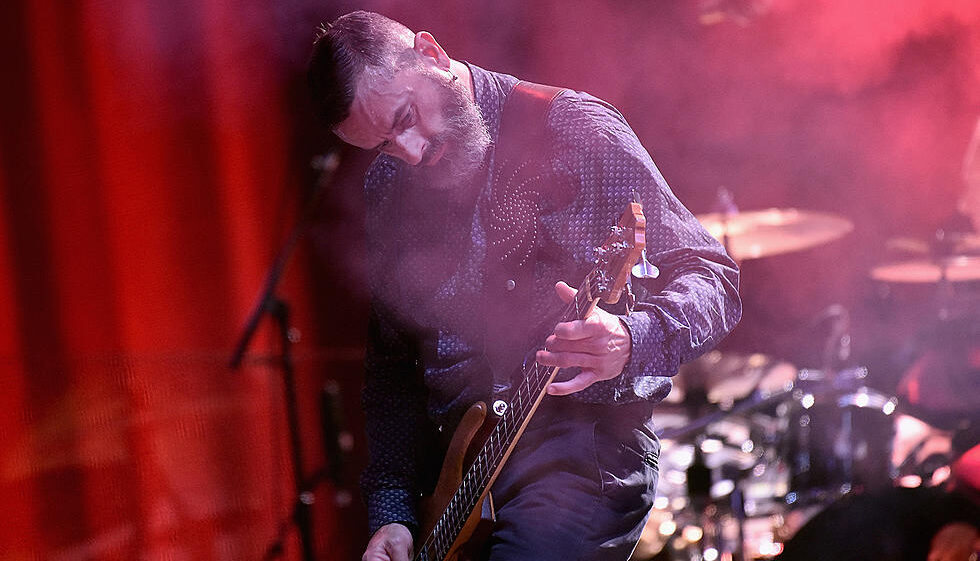
12. Justin Chancellor
Since joining Tool during the Ænima era, Justin Chancellor has redefined the bass as a primary melodic architect in progressive metal. Unlike bassists who merely provide a foundation, Chancellor uses an expansive array of effects—chorus, wah, and delay—to sculpt intricate soundscapes that carry the emotional weight of the song.
His ability to navigate Danny Carey’s complex, polyrhythmic drumming while maintaining a hypnotic, lead-driven melody is unparalleled. Tracks like “Forty Six & 2” and “The Pot” demonstrate his knack for creating riffs that are as harmonically sophisticated as they are heavy. Chancellor’s work is a masterclass in how to use the four-string to create atmosphere, tension, and release within the labyrinth of prog-metal.
Steve DiGiorgio is a pioneer who brought the fluid, fretless complexity of jazz-fusion into the most brutal landscapes of death and thrash metal. Renowned for his work with Death on the seminal Individual Thought Patterns, DiGiorgio used his custom fretless basses to weave sliding, melodic lines through the chaotic precision of Chuck Schuldiner’s compositions.
While his technical proficiency is staggering, it’s his creative fearlessness that sets him apart. By refusing to hide behind the wall of distorted guitars, he proved that the low-end could be intellectual, expressive, and devastatingly aggressive all at once. His presence in Testament further solidified his reputation as the “go-to” titan for any band needing a sophisticated, world-class foundation.
10. Robert Trujillo
Long before he became the longest-serving bassist in Metallica history, Robert Trujillo was the high-octane pulse of Suicidal Tendencies and the funk-metal mad scientist behind Infectious Grooves. Trujillo is a physical powerhouse whose finger-style speed and precision rival the fastest pick-users in the industry.
Since joining Metallica in 2003, he has served as the band’s sonic stabilizer, bringing a grounded, massive tone that bridged the gap between their thrash roots and stadium-rock anthems. His “crab-walk” stage presence is iconic, but it’s his rock-solid consistency and ability to adapt to any subgenre—from hardcore punk to epic thrash—that makes him an indispensable legend in the metal canon.
9. Alex Webster
In the relentless world of extreme metal, Alex Webster is the undisputed gold standard for technical excellence. As a founding member of Cannibal Corpse, Webster developed a unique three-finger “gallop” technique that allows him to match the most frantic, tremolo-picked guitar riffs note-for-note without losing clarity.
He is a scholar of the instrument who has written instructional books on the craft, proving that death metal bass isn’t just about speed—it’s about mathematical precision and harmonic depth. His work is a testament to the idea that the low-end can match the intensity of the fiercest guitar work, providing a subterranean layer of complexity that keeps the music from descending into noise.
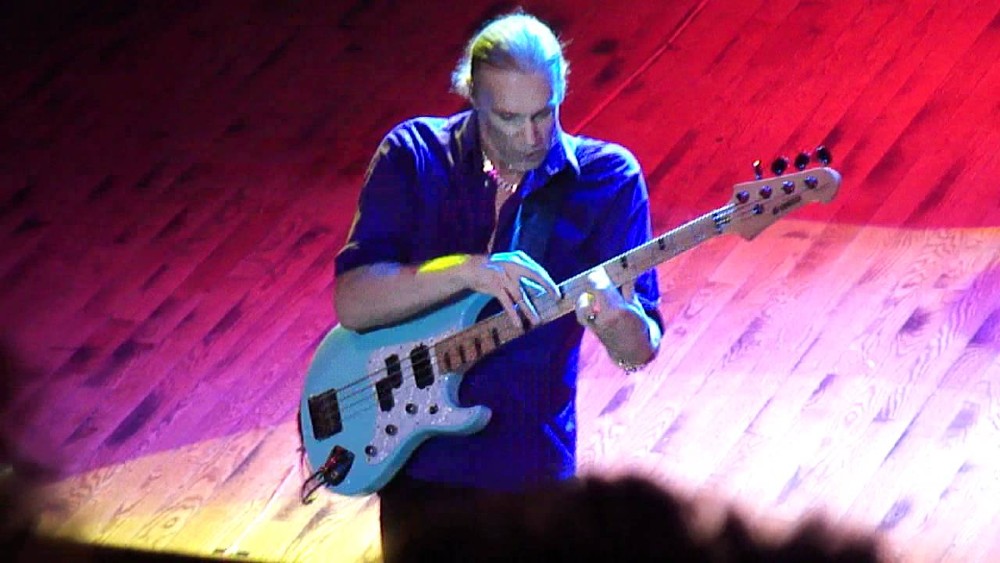
8. Billy Sheehan
Commonly referred to as the “Eddie Van Halen of the Bass,” Billy Sheehan is a virtuoso who fundamentally changed the instrument’s lead-potential. His stint in David Lee Roth’s solo band saw him trading dizzying, high-speed solos with Steve Vai, utilizing two-handed tapping and neck-bending techniques that were previously reserved for guitarists.
Sheehan’s tone is just as unique as his playing; using a dual-output “stereo” setup, he maintains a clean low-end while sending a distorted signal to a separate amp for lead-clout. He is a constant innovator who shattered the ceiling of what a four-string could achieve, proving that the bassist could be the most flashy and technically proficient member of the group.
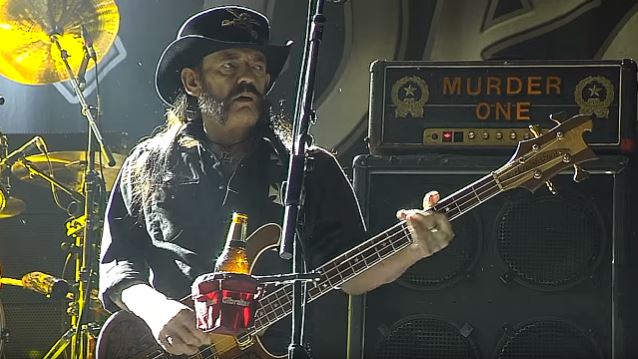
7. Lemmy Kilmister
Lemmy Kilmister wasn’t just a bassist; he was the sonic embodiment of the rock and roll outlaw. Armed with a Rickenbacker and a stack of Marshall amps cranked to the point of structural failure, Lemmy created a distorted, chord-heavy wall of sound that acted more like a rhythm guitar than a traditional bass.
His aggressive, pick-driven style bridged the gap between the speed of punk and the weight of metal. As the leader of Motörhead, Lemmy didn’t play for the critics—he played for the roar. His influence is etched into the DNA of every high-speed riff ever written, and his “no-nonsense” approach remains the benchmark for the “spirit” of heavy music. Without Lemmy, the very concept of “Speed Metal” simply wouldn’t exist.
In the hyper-calculated world of Dream Theater, John Myung is the silent assassin. Known for his flawless execution of some of the most complex music ever composed, Myung utilizes six-string basses to provide a level of harmonic depth that anchors the band’s prog-metal odysseys.
His ability to synchronize with John Petrucci’s unison lines at breakneck speeds—often involving odd-time signatures and frantic finger-tapping—is nothing short of supernatural. Myung is a disciplined master who shuns the spotlight, letting his fingers handle the heavy lifting. He is the anchor that allows Dream Theater to explore the furthest reaches of technicality without drifting away from the rhythmic core.
5. Peter Steele
Peter Steele was a gothic metal titan who used the bass as a weapon of sheer atmosphere. Standing 6’8″, Steele created a sludge-filled, chorused tone that sounded like a cathedral collapsing in slow motion. His style was deeply melodic yet devastatingly heavy, providing the emotional spine for Type O Negative’s dark, melancholic discography.
By processing his bass through industrial-grade distortion and delay, he created a sound that was as deep as his baritone vocals. Steele was a visionary who proved that the bass didn’t just have to be a rhythmic anchor; it could be the haunting, atmospheric center of a band’s entire identity, blending the gloom of Black Sabbath with the melodicism of the Beatles.
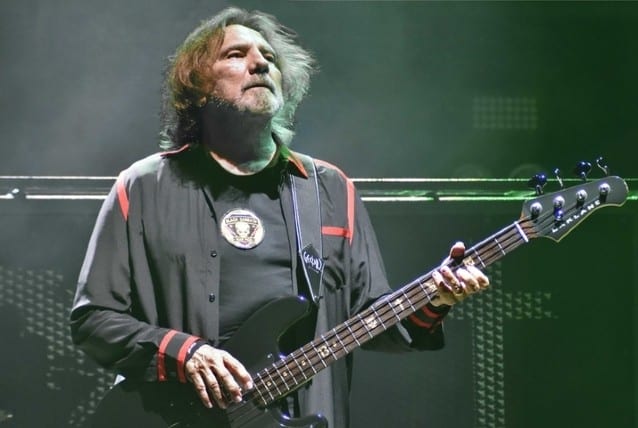
Geezer Butler is the architect of the heavy metal bass line. As a founding member of Black Sabbath, he was the first to realize that the bass needed to sound like “doom” to match Tony Iommi’s slab-heavy riffs. By down-tuning and incorporating wah-pedals, he provided the thick, sludge-filled foundation that birthed an entire genre.
Beyond his playing, Geezer was the band’s primary lyricist, weaving the occult and sociopolitical themes that define metal’s aesthetic. Every bassist on this list—and every metal band in existence—owes a debt to Geezer Butler. He is the man who turned the low-end into a harbinger of darkness, forever changing the trajectory of music.
3. David Ellefson
The “Thoroughbred of Thrash,” David Ellefson was the benchmark for precision in the 1980s thrash scene. His sharp, pick-attack-heavy style provided the crystalline clarity needed to cut through Dave Mustaine’s complex, mathematical guitar orchestrations. From the iconic, groove-laden intro of “Peace Sells” to the frantic, technical marathons of Rust in Peace, Ellefson’s playing was defined by its grit and mathematical accuracy.
He remains the gold standard for thrash-metal “pick” players, proving that to play thrash correctly, you need a bassist who can lock in with the drums while maintaining the frantic energy of a lead guitarist.
2. Steve Harris
Steve Harris is the heartbeat and commanding officer of Iron Maiden. As the band’s founder and primary songwriter, he invented the “Maiden Gallop”—a rhythmic triplet pattern that has become the blueprint for Power Metal and the New Wave of British Heavy Metal. Using high-tension flatwound strings and a percussive finger-style, Harris often leads the band’s melodies, driving them forward with a relentless, galloping energy.
He is the ultimate commander of the four-string, a bassist who proved that you could build a global heavy metal empire on the back of a P-Bass. His influence on the genre’s songwriting and rhythmic structure is unmatched.
1. Cliff Burton
Cliff Burton was a musical visionary who fundamentally changed the trajectory of Metallica and heavy metal forever. A classically trained musician who brought the theory of Bach to the aggression of thrash metal, Cliff transformed the bass into a lead powerhouse. His use of distortion and wah-wah on tracks like “Anesthesia (Pulling Teeth)” and “For Whom the Bell Tolls” proved the bass could be a solo instrument of incredible emotional range and power.
He was the musical soul of Metallica, the “teacher” who pushed the band to explore melodic depths and complex arrangements. His tragic passing in 1986 left a void that can never be truly filled, but his legacy remains the undisputed gold standard for the low end.
Fresh off the announcement of their third studio album, The Karma Effect are a band firmly on the rise, blending vintage ’70s swagger with a sharp, modern edge. Despite being spread across the UK, the quintet has cultivated a stadium-sized live show and a cohesive sound rooted in a shared love for rock legends like … Continue reading Headline Act: The Karma Effect
A new solo project with a distinctive atmosphere is emerging from the depressive and atmospheric black metal underground. Under the name Oak of Weeping, this one-man act is preparing to unveil its debut full-length album. At the heart of the project lies suffering, despair, and existential struggle, all closely intertwined with biblical texts. Due for […]
Korn have released a new track, “Reward The Scars”, tying it to the upcoming Diablo IV: Lord Of Hatred expansion. The song is available now, with the expansion set to launch across platforms on April 28.
“Reward The Scars” is the first new material from Korn since Requiem arrived in February 2022. The album, produced by Chris Collier alongside the band, debuted at No. 1 on Billboard’s Hard Rock Albums chart. It moved 23,000 equivalent units in its first tracking week, with 20,000 coming from pure sales. The record also reached No. 2 on both the Top Rock Albums and Top Alternative Albums charts, and landed at No. 14 on the Billboard 200.
In mid-2021, bassist Reginald “Fieldy” Arvizu stepped away from touring, explaining he needed time to “heal” after “falling back” on some of his “bad habits.” Since then, Suicidal Tendencies bassist Roberto “Ra” Díaz has handled bass duties on the road. Even with his absence from live shows over the past five years, Fieldy still performed on Requiem.
Over the course of their career, Korn have sold more than 40 million records worldwide, earned two Grammy Awards, and maintained a steady global touring presence. Their impact across metal, rock and alternative circles remains strong, influencing newer artists while continuing to evolve their own sound.
Their reach goes beyond sales and awards. As The Ringer put it, they are “a genuine movement in a way bands cannot be now,” reflecting how their approach to genre and identity reshaped expectations within heavy music.
Ukraine’s melodic black metal band DEUS SABAOTH drops new single ‘Last Gleam’, taken from the band’s highly anticipated second full-length album Distortion of Lies, set for release on May 29th, 2026 via Paragon Records. “I kept going until the light thinned out, and my name was never called again. What I carried was mine to bear, and when I’m gone, […]
Today, Italian death metallers CHRONIC HATE unleash their brand new single “Blastphemy”, offering another fierce preview of their upcoming album “Defeating The Oblivion Of Life”, set for release on May 29th, 2026 via Time To Kill Records. The band delivers a track that channels the essence of classic ’90s death metal while injecting a sharper, contemporary edge. “Blastphemy” stands out for its tightly structured […]