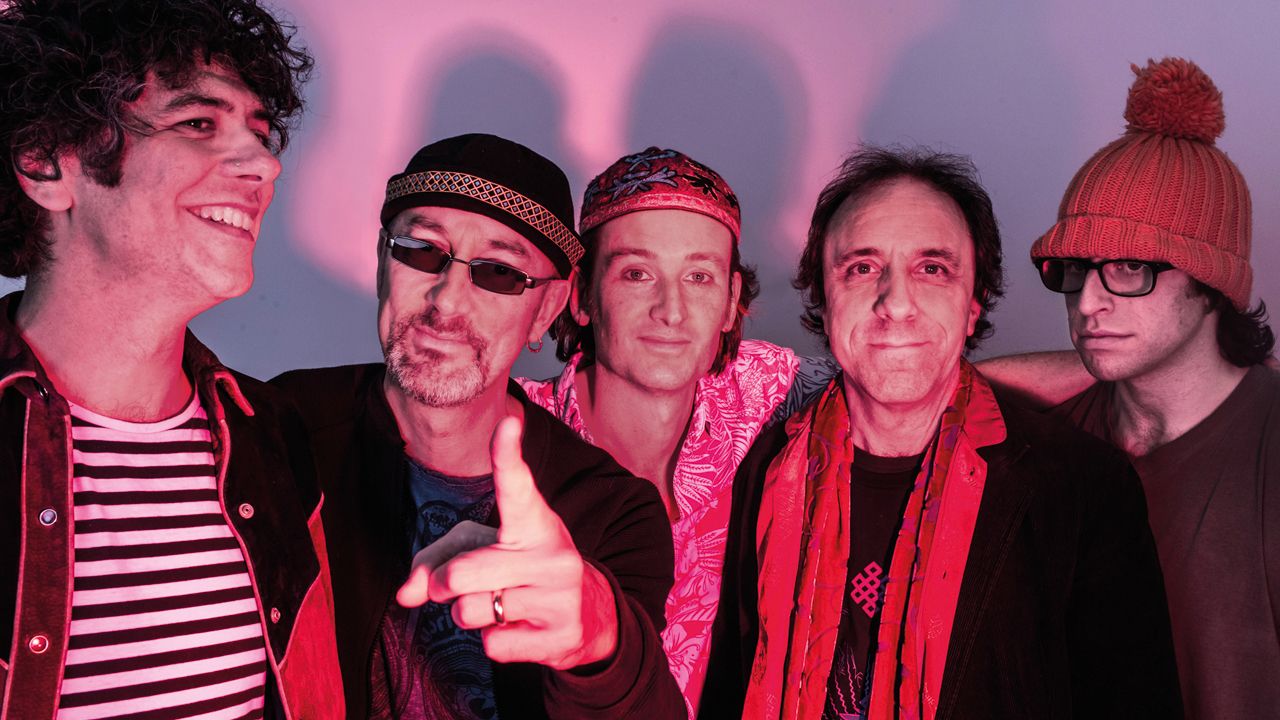
Today marks 100 years since the birth of John Coltrane, the saxophone genius whose playing changed the face of jazz. Naturally, there are festivities afoot, including the release of some long-mythologized live recordings.
Following the release of Parker Barrow’s sophomore album Hold The Mash, the Nashville blues-infused Southern rockers are pleased to announce that the UK-based southern blues country rock band, Wood Burnt Red, will be their special guests on their November and December UK tour.
The announcement coincides with the release of Parker Barrow’s cover of The Black Crowes’ “My Morning Song” which is taken from their latest album Hold The Mash. The track is available on Spotify.
The new album features songs from last year’s Hold the Mash EP, including the singles “Make It,” “Novocaine,” “The Healer,” and “Glass Eyes Cryin’,” plus the new songs including “Nothin’ Left To Save,” and “Ruby’s Reckoning.”
Parker Barrow’s “vintage-shop rock” sound features elements of rock, southern rock, blues, and soul; but the band’s brand of music is unmistakably and distinctly their own.
You will find an impressive mix of influences, both old and new, threaded throughout the band’s sound, including the Rolling Stones, Blackberry Smoke, Allman Brothers Band, Aerosmith, Tedeschi Trucks, the Black Crowes, Whiskey Meyers, and Led Zeppelin.
Parker Barrow has earned a reputation for their powerhouse live shows – blending hard-hitting blues, classic rock swagger, and Southern firepower. The band thrives on connecting with their fans and will continue bringing their message to the people across the US and Europe throughout 2026. Parker Barrow’s music channels the spirit and rebellion of true rock and roll – with no apologies.
Hailing from Worcestershire, UK, Wood Burnt Red are riding high with the recent release of their critically acclaimed debut album, Hold On Tight. It’s an album the four-piece were born to make. It’s a thunderous, heartfelt statement from a band hitting full stride. Rooted in country, fueled by rock and roll, and forged from real-life stories that hit hard because they are true, it delivers eleven tracks of unfiltered emotion, huge hooks, and raw Southern-rock fire from one of the UK’s most exciting new bands.
Bursting with country soul, southern rock fire, and the band’s unmistakable grit, the album arrives alongside their latest single “Best Things,” captures the song’s sharp wit and infectious energy. Their singles “Fire Me Up” and the aforementioned “Best Things” have received heavy airplay on Planet Rock Radio.
Husband-and-wife duo Megan Kane (lead vocals) and Dylan Turner (drums) lead Parker Barrow. The band name is a homage to Bonnie Parker and Clyde Barrow – the infamous American bank robbers during the early 1930’s Great Depression.
A random encounter in 2019 paired Kane with Turner, who was on the hunt for a new singer. Two weeks later they were on the road together, driven by one goal: making their musical dreams a reality. In 2023 Parker Barrow expanded with the full-time inclusion of guitarist and musical director Alex Bender.
Turner lays down a heavy groove while Kane’s electrifying, soulful vocals soar high over the top. Bender’s inventive riffs and fiery playing pull it all together, creating Parker Barrow’s signature sound. The band is rounded out by Will Tipton (guitar), Kyle Priber (bass guitar), and Eric Safka (keyboards).
Parker Barrow’s debut album Jukebox Gypsies was released in 2023 to glowing reviews from music press and fans around the world; with the single “Back to Birmingham” racking up 1.2 million YouTube views.
Their singles, “Make It,” “Blinded,” and “Nothing Left To Save,” are regular staples on Planet Rock Radio. The band are relentlessly on tour and recently supported Blackberry Smoke in the US.
British alt-shoegaze outfit OVERSIZE have returned with a stunning new single, Separate, released via SharpTone Records. Marking a powerful new chapter, the band return a year after the release of their debut album, Vital Signs, to introduce brand-new vocalist Nick Nowak. The band commented: “We’re incredibly excited to start this new chapter, not just with […]
Schadenfreude time! In recent years, Eric Deters, a right-wing YouTuber who has unsuccessfully run for office multiple times in his native Kentucky, has hosted an event called Patriot’s Day Freedom Fest at his Morning View farm in Northern Kentucky, just outside Cincinnati. Deters has called it “the best MAGA event, no question,” and past versions have drawn thousands of people. This year’s Freedom Fest was scheduled to go down this Saturday, with a list of speakers that included Kid Rock, Dog The Bounty Hunter, and various Republican politicians and media figures. It won’t happen because only six people bought VIP tickets.
Metalcore heavyweights Northlane have shared Crucified, the latest single from their upcoming seventh studio record, Anemoia, out everywhere October 30. The band have also just announced that Melbourne fans can celebrate the release with the band at New Guernica in Collingwood on October 30. The release party will feature an album listening session, a DJ […]
Canadian progressive rock duo Crown Lands released their latest acclaimed album Apocalypse in May of this year, and with the band gearing up for a Canadian headline tour, they entered Chalet Studios to perform some tracks from the album live.
Kevin Comeau comments: “For me, what separates a good band from a great band is what they can do as a live band. When there are no tricks or backing tracks. Just the musicians in the room.
We wanted to capture ourselves as honestly as we could with this live series. I’m very happy with the way that we captured the band at Chalet studio. Chalet is probably my favourite place to be in the entire world. I spend as much time there as I can. In fact, I married my wife there 3 years ago!
It’s always a treat to get in that room with Cody and play as well as we can together. We recorded a few takes of each song and picked the best performance.
Our friend Luke filmed the ordeal, using a bunch of stationary GoPro cameras. I think we ended up with 10 different angles!
I’m thrilled with the way this turned out. It’s a truly honest document of how we sound and how we play at this moment in time. Just two big music nerds playing the best we can, and having fun along the way.”
The band recently walked away with band of the year, album of the year and video of the year at the 2026 DREAMS Awards in Durham, Canada. As mentioned, the band will be touring Canada in October & November this year, and you can find the full list of dates below:
October 29th – Farm League Brewing, Cambridge, ON October 30th – Farm League Brewing, Cambridge, ON November 6th – The Biltmore Theatre, Oshawa, ON November 12th – Bridgeworks, Hamilton, ON November 13th – Rum Runners, London, ON November 14th – Warehouse Concert Hall, St. Catherines, ON November 20th – The Broom Factory, Kingston, ON November 21st – Overflow Brewing Company, Ottawa, ON
Musically and creatively, Apocalypse marks a clear turning point. After completing Rituals entirely in their home studio, the band gained the confidence to take near-total control of the production process.
Guitarist/bassist/keyboardist Kevin Comeau explains: “That record gave us the confidence to realize we could make a Crown Lands album in our own space, without a major-label budget or a big, fancy studio.” That confidence carried directly into Apocalypse, with much of the album written and recorded in the same room the band has worked in since 2020. To enhance the album’s most crucial moments, Crown Lands selectively collaborated with producers NickRaskulinecz and David Bottrill.
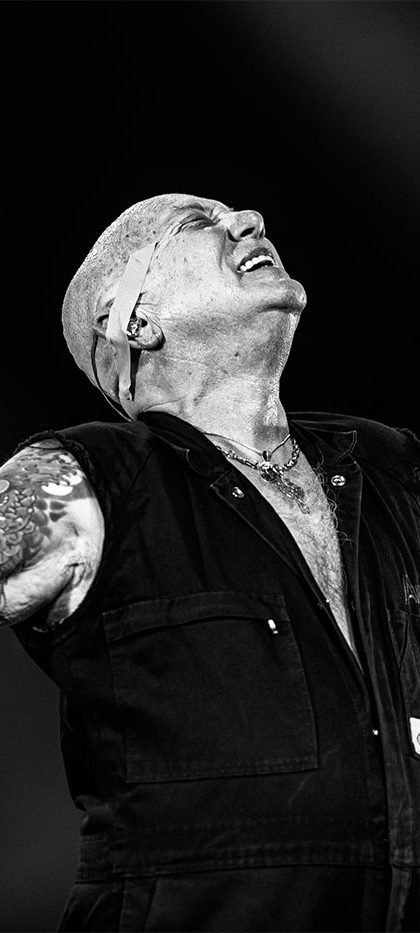
Manche Menschen hinterlassen mehr als Songs und Erinnerungen. Manche Menschen werden Teil der eigenen Geschichte. Für das Wacken Open Air war Angry Anderson genau so ein Mensch.
Vor mehr als 26 Jahren spielten Rose Tattoo zum ersten Mal auf dem Acker – und kamen seitdem immer wieder. Doch die Aussies waren nicht einfach eine Band auf einer W:O:A-Bühne. Angry und „the guys“ haben dieses Festival mitgeprägt: Sie waren dabei, als mit The Company of Snakes und Molly Hatchet die „Night to Remember“ ihren Anfang fand. Und als Angry und die Jungs in Wacken das Album „25 to Life“ aufnahmen, sagte er zum Publikum: „We are walking on Holy Ground.“ Ein Begriff der seitdem untrennbar mit diesem Festival verbunden ist – so wie es auch Angry immer sein wird.
Über all die Jahre wurden aus Begegnungen Wiedersehen und aus Wiedersehen Freundschaft. Ob in Wacken oder am anderen Ende der Welt in Australien: Angry war nicht nur diese unverwechselbare Stimme, dieser tätowierte, kompromisslose Rock’n’Roller auf der Bühne. Er war ein unglaublich herzlicher, feiner Mensch. Eine Legende ohne Allüren. Einer von uns.
Noch in diesem Sommer durften wir ihn und Rose Tattoo ein weiteres Mal bei uns erleben: Angry lieferte ein Konzert ab, das uns nicht mehr loslassen wird. Niemand hätte zu diesem Zeitpunkt ahnen können, dass es seine letzte Wacken-Show sein sollte.
Tief traurig verneigen wir uns heute vor diesem kleinen Mann, der für uns zu den Allergrößten zählt. Danke, Angry. Für all die Jahre, für all die Male Wacken, für deine Freundschaft und für den Rock’n’Roll.
Daevid Allen died of cancer in March 2015, aged 77 – but he’d had no intention of Gong dying with him. Tasked with taking up the baton, Kavus Torabi and his next generation began their new era with 2016 album Rejoice! I’m Dead! – and told Prog how they’d done it.
Kavus Torabi is addressing the somewhat incredible situation in which he and his Gong bandmates find themselves. “You really have to not think about it because otherwise you become too reverential,” he says. “We’re going to have to do this our way.”
Gong fans will be familiar with the situation, and it’s quite a story. Over the past few years, the band have been undergoing something of a musical renaissance, with leader Daevid Allen assembling a new line-up including Brazilian guitarist Fabio Golfetti (from Violeta de Outono) and bassist Dave Sturt (whose credits include Jade Warrior and Bill Nelson). In 2014, Allen recruited Torabi as an additional guitarist, despite having never heard the Knifeworld, Guapo and ex-Cardiacs man actually play.
But only a few months later, Allen announced that he had been diagnosed with cancer and would be unable to fulfil the world tour booked to promote latest album I See You. Reluctantly, but with his full encouragement, the rest of the band agreed to do the shows without him. And to their surprise, a new chemistry developed.
“Each night we sent Daevid recordings or links to YouTube, and from his sick bed in Australia, he wrote gushing praise about what had happened to the band and how this was exactly what he had hoped,” says Torabi. “By the end of the tour, and with the full blessing of Daevid, we decided to carry on.”
Allen had clearly been planning his legacy carefully, and had every intention that Gong should live on without him. “For the last few years, he was always talking about a continuation; he was always looking for a new direction,” says Sturt.
The people he’d entrusted had been well chosen for their strong identification with Allen’s ethos and its unique sound. Sturt was attracted to the “craziness mixed with musical complexity,” while for Golfetti, hearing Gong in his teens had made him want to be a musician in the first place.
Torabi was another teenage obsessive. “When I first heard Flying Teapot, it was everything I’d been looking for,” he says. The outsider, countercultural stance was also hugely important. “Absolutely! It’s only when you start meeting bands that you realise how few actually think that way.”
“It’s never conformed, which is probably why it’s never made any money,” comments Sturt, with characteristic dry wit.
Gong’s decision to continue without any original members isn’t without precedent – Golfetti cites the Sun Ra Arkestra; Torabi mentions Napalm Death – but what’s different is their commitment to respect the band’s heritage but to take it somewhere new.
“We were all fairly sceptical,” Torabi admits. “But we’re not one of those bands where you’ve got one original member and a load of young dudes playing the old material. It’s kind of a brand new band, but with this blueprint to draw from and create stuff in the style of. It’s more like a political party… one that’s getting more extreme!”
There’s no question that it’s still Gong. “As a fan, I know for a fact that the version we do of Master Builder is outrageous,” says Torabi. “It’s so out there – Steve Hillage loves it,”
Sturt agrees: “There’s been lots of discussions with the old guard. They all want it to carry on. They appreciate where we’re taking it. Steve has been very supportive.”
“And [former bassist] Mike Howlett was incredibly flattering about the new album,” adds Torabi.
I had a bit of a meltdown. Having signed a record deal, we didn’t have any songs. Dave got it in the ear – I was just freaking out
Kavus Torabi
The record in question is Rejoice! I’m Dead!, a stunning hour of modern psychedelic/ progressive music that affirms the new Gong as a serious creative force in their own right. While there are connections back to the classic Radio Gnome Invisible trilogy from the mid-70s, and particularly to the heavier sound of Planet Gong’s Floating Anarchy, it’s a vital and exciting piece of work with brilliant playing throughout from Torabi, Golfetti and Sturt, plus returning sax and flute player Ian East and new drummer Cheb Nettles.
“As soon as we started playing with Cheb, a new dynamic was created,” says Torabi. “During the big improvisational parts in the middle of things like You Can’t Kill Me, we really started feeling, ‘We’ve got something here.’ The music started going in directions it hadn’t done previously. So we knew that if we got to make another record, it was going to be really good.”
Yet despite their self-belief, the pressure to deliver was still high. “We all knew this had to be an amazing album, because otherwise that’d be the end of it. If it had just been Angel’s Egg 2, or even I See You 2, people weren’t going to buy into it.” Perhaps inevitably, nerves kicked in. “I’m always the stressy one, and once we got locked into it happening, I had a bit of a meltdown,” he confesses. “I was so worried because, having signed a record deal, we didn’t have any songs. Dave got it in the ear – I rang up and was just freaking out!”
Sturt adds: “But just from the first session between myself, Kavus and Ian, loads of ideas came out, many of which ended up on the album. And then Fabio sent through a demo of five or so ideas, and everything coalesced within a few weeks.”
Daevid thrived on the whole Occupy movement, and he loved the idea of standing up to The Man
Dave Sturt
Allen’s presence was still being felt by the band, as Sturt elaborates: “I could absolutely imagine Daevid dancing round the rehearsal room, because it really felt like he would have loved what we’d done. We were firing on all cylinders, which is what he would have wanted.”
Allen is also literally present on the album, with old recordings of his voice popping up on a couple of songs. Beatrix in particular sounds like a poignant dispatch from the afterlife (where, naturally, everybody speaks French). But while retaining the charm and eccentricity of Gong, Rejoice! I’m Dead! is a good deal less whimsical than previous releases, with the band emphasising the more radical agenda that Allen was increasingly pushing in his lyrics. There’s certainly no mention of gnomes or pixies.
“The Pot Head Pixies thing was Daevid’s vision – it would have been bogus to take that on and write another chapter,” says Torabi. “But with the more radical thing, that was something we could all take on. It was nice that Daevid was steering the ship this way because we all get that.”
“He thrived on the whole Occupy movement, and he loved the idea of standing up to The Man,” adds Sturt.
Allen had tapped into this growing feeling of popular discontent on I See You with lines such as: ‘This revolution will replace all those greedy capitalists who so fucked up.’ On the new album, the Sturt-penned Model Village shares the sentiment, being a Floydian vision of suburban hell where ‘Power and riches reside in the hands of the few.’
Even more strident, and perhaps the most un-Gong-like song on the album, is the predatory sturm und drang of Kapital, which comes on like a demonic cross between Sabbath’s Children Of The Grave and Eno’s Blank Frank. Even more surprising, it’s the one song on Rejoice! I’m Dead! that’s an Allen composition.
It’s like we’re in a teenage band, only everybody’s really good now!
Kavus Torabi
“When we heard Kapital, we all wanted to do it,” says Torabi. “It’s like, ‘My God, this is Gong’s most metal tune! And if we’re going to go metal, let’s go metal up the ass!’ But at the core of it, it’s a Daevid Allen song. It’s not like we took liberties.”
The other overriding theme of the album, from the title onwards, is, of course, Allen’s death. “As this is the transitional album, it felt important to make it about Daevid, like this was handing over the baton,” says Torabi. “Daevid seemed to have a certainty about death – he certainly embraced it.
“One night in Brazil, he had become convinced that this was the night he was going to die – he had his body painted all white and had a death ceremony. Then the following morning, he found out that [former drummer] Pierre Moerlen had died. He said he realised he’d had a premonition, but it was about the wrong person.”
Yet despite this talk about death, the mood in the Gong camp is exuberant – it’s the confidence of a band who know they’ve pulled off something special.
“All my experience before joining Gong feels like it was building up to this point,” says Sturt.
Torabi is equally upbeat: “It’s like we’re in a teenage band, only everybody’s really good now! I just want us to make another record, and I really want to go out and start playing this music.”
Finnish melodic black metal riff wizards Autumnfall have finally returned with The Archaic Sins, their fourth full-length and the follow-up to the shimmering diamond of perfection that was The Archaic Shadows. Much to my delight, Sins follows the same foundational principle as Shadows before it–aside from one bespoke new song, every track here is born of the demos from Jussi Hänninen’s legendary melodic black metal band Fall of the Leafe, whose 1996 demo Storm of the Autumnfall gave way to this current band’s namesake.
Where Shadows was faster and more venomous in its riffing and drumming, clearly pulling from Evanescent Everfading-era demos, Sins dips its toes into a more sophisticated and dynamically varied approach more reminiscent of August Wernicke, Fall of the Leafe’s second album. However, make no mistake: The Archaic Sins is no slouch. There are plenty of blast beats and tremolo picking and fiery vocals to go around on tracks such as “Pulse,” but the album also demonstrates the growth in Jussi’s songwriting abilities. That sentiment particularly shines on songs like “Dark Goddess” and “The Timeless Kin,” the latter being one of the highlights of Sins. That growth paired with his current sense of what a finished song should be in the present day indicates that his instincts have always been razor sharp, and that he was significantly ahead of his time.
The Archaic Sins is the perfect sister album to The Archaic Shadows, and in Jussi’s own words, “These songs have been haunting me for over two decades because I always thought they didn’t deserve to be forgotten. Finally I think my work is now completed and there are no more ghosts bothering me.” The Archaic Sins is a treasure trove of melody and harmony, elevated further by Tero Ruohonen’s hellacious vocals and Olli Pirkkanen’s excellent drumming. Listen to the record in full before it releases Friday.
Sour Widows’ new record Sigil is going to be good. We know this from the advance singles “Blood In The Grass” and “Lucky Star,” the latter of which earned a spot on our list of the 5 best songs of the week. Now, they’re back with an alluring slowburner called “Choke Chain.”
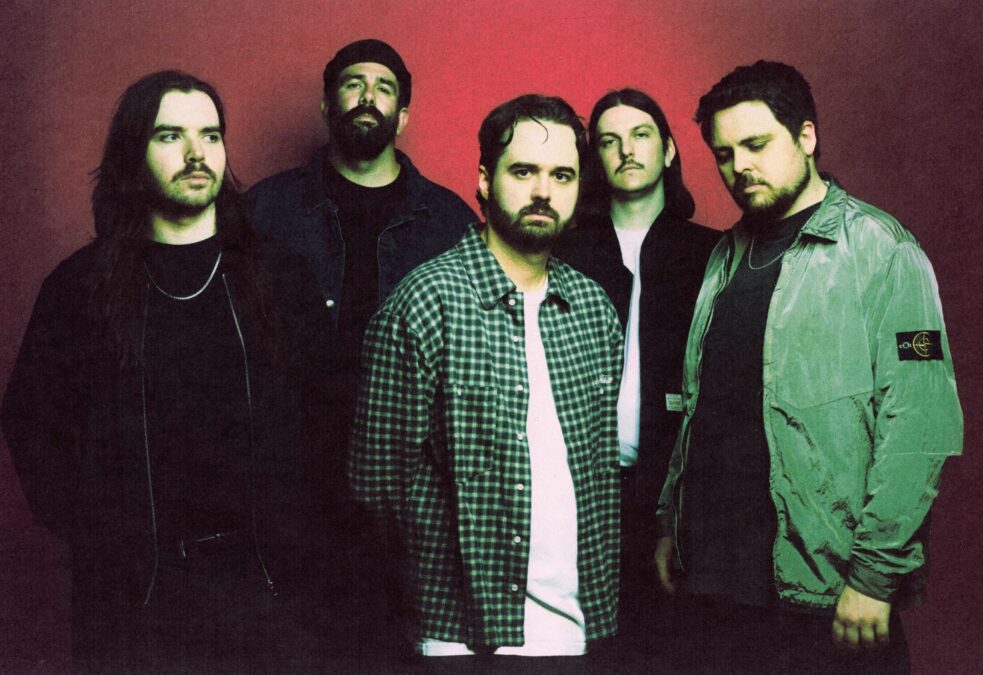 British alt-shoegaze outfit OVERSIZE have returned with a stunning new single, Separate, released via SharpTone Records. Marking a powerful new chapter, the band return a year after the release of their debut album, Vital Signs, to introduce brand-new vocalist Nick Nowak. The band commented: “We’re incredibly excited to start this new chapter, not just with […]
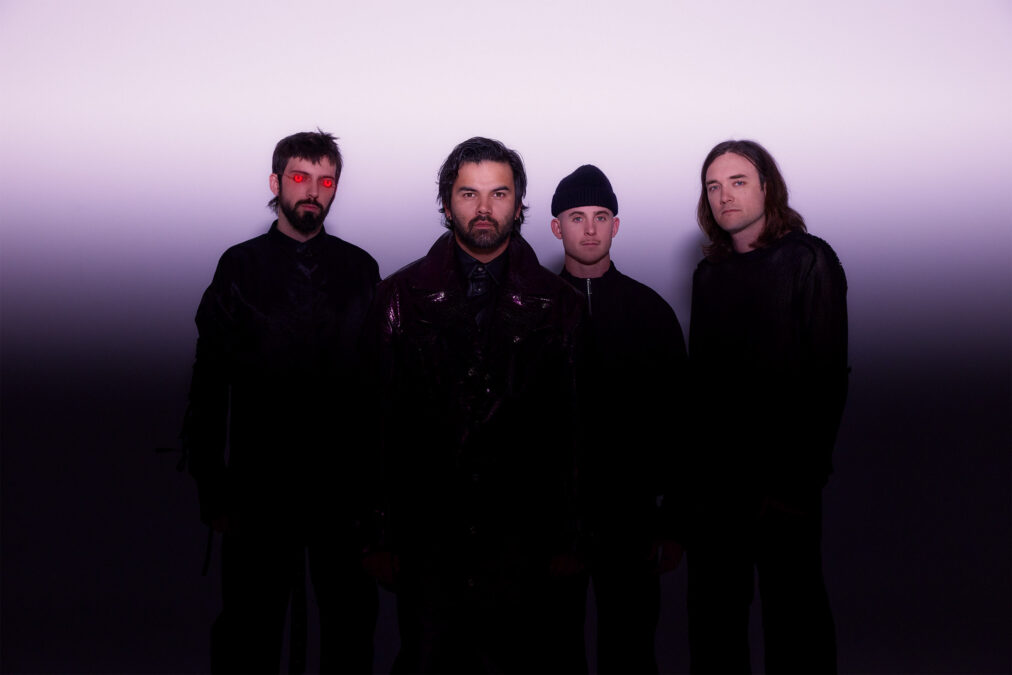 Metalcore heavyweights Northlane have shared Crucified, the latest single from their upcoming seventh studio record, Anemoia, out everywhere October 30. The band have also just announced that Melbourne fans can celebrate the release with the band at New Guernica in Collingwood on October 30. The release party will feature an album listening session, a DJ […]